

Project Replicator and the Rise of Robot Swarm Warfare

Project Replicator represents one of the biggest changes in modern military thinking. Instead of relying on a handful of costly weapons, it explores how thousands of intelligent autonomous systems can work together to complete missions faster, smarter, and more efficiently. In this guide, you will discover how this strategy works, why it matters, and how AI is helping shape the future of defense.
Project Replicator Redefines Modern Military Strategy
Project Replicator is transforming modern defense by combining AI, autonomous drone swarms, and affordable military technology into a faster and more scalable battlefield strategy.
Military history has always shown that every major technological breakthrough eventually changes the way wars are fought. From the invention of aircraft to precision-guided missiles, each advancement has forced military planners to rethink old strategies. Today, another transformation is taking place, and it is being driven by autonomous technology and AI. Project Replicator stands at the centre of this change by introducing a completely different approach to battlefield operations.
Rather than investing only in a limited number of expensive military platforms, Project Replicator focuses on building thousands of affordable autonomous systems capable of working together. This strategy recognises that future conflicts will demand speed, flexibility, and the ability to respond to changing situations within seconds instead of hours.
From my perspective, this approach reflects how warfare is evolving in the digital age. Modern conflicts no longer depend solely on stronger weapons. Success increasingly depends on faster decision making, intelligent coordination, and the ability to deploy large numbers of connected systems across land, sea, and air.
Instead of protecting a few valuable assets at all costs, military planners are beginning to prioritise mission success through numbers, resilience, and continuous adaptation. This marks a significant change in strategic thinking.

The Origin Behind Project Replicator
Project Replicator is a modern defense initiative that uses thousands of low cost autonomous systems working together through AI to improve battlefield speed, flexibility, and operational effectiveness.
The idea behind Project Replicator did not appear overnight. Defence organisations around the world have spent years studying how autonomous systems, robotics, and AI could improve military readiness. Growing geopolitical competition, rapid advances in commercial drone technology, and improvements in machine learning encouraged defence planners to explore entirely new operational models.
The programme emerged from the understanding that future battlefields may involve thousands of autonomous platforms operating simultaneously. Rather than matching expensive systems against equally expensive threats, the strategy focuses on producing numerous lower cost autonomous assets that remain effective even when individual units are lost.
Historical developments help explain why this concept became important.
| Year | Event | Description |
|---|---|---|
| Early 2000s | Growth of military drones | Unmanned aircraft became valuable tools for surveillance and reconnaissance missions. |
| 2010s | Commercial drone expansion | Affordable drones became widely available and demonstrated practical capabilities in many industries. |
| Early 2020s | Increased use of drone swarms | Military planners observed how coordinated drone operations could overwhelm traditional defences. |
| Mid 2020s | Project Replicator introduced | Defence leaders proposed rapidly deploying thousands of autonomous systems to strengthen deterrence and operational readiness. |
Looking at this progression makes it clear that Project Replicator is not an isolated invention. It represents the next logical step in decades of technological progress.
Why Modern Warfare Needed A Different Approach
Traditional military equipment remains highly capable, but it often comes with major limitations. Advanced fighter aircraft, warships, missile systems, and armoured vehicles require enormous investments, extensive maintenance, and long production schedules. Replacing damaged equipment can take years.
Modern conflicts move much faster than they once did. New threats can appear with little warning, and commanders must react almost immediately. Waiting months or years to replace equipment is becoming increasingly impractical.
Project Replicator addresses this challenge by emphasising scale rather than exclusivity.
Instead of depending on one costly platform, military leaders can send large numbers of autonomous systems that coordinate with each other throughout the operation.
This creates several practical advantages. Missions continue even if some units are lost. Multiple objectives can be addressed simultaneously. Operational risk becomes spread across many smaller assets instead of being concentrated in a single platform.
In my opinion, this reflects a much more resilient model for modern defence because it accepts that losses are sometimes unavoidable while ensuring the overall mission remains achievable.
AI Powers Every Layer Of Project Replicator
Artificial intelligence is the technology that allows Project Replicator to function effectively. Without AI, coordinating thousands of autonomous systems would place an impossible workload on human operators.
AI continuously gathers information from cameras, sensors, communication systems, radar inputs, satellite imagery, and navigation equipment. It rapidly processes this information and helps autonomous platforms understand their surroundings.
Instead of waiting for direct human instructions after every movement, autonomous systems can recognise obstacles, adjust flight paths, identify changing conditions, and coordinate with nearby units.
Let me explain this in the clearest, simplest terms.
Imagine hundreds of people trying to complete a giant puzzle without speaking to each other.
Completing the task would take more time and create unnecessary confusion.
Now imagine everyone sharing information instantly while understanding exactly which piece they should place next. That is similar to how AI enables autonomous drone swarms to cooperate.
This capability dramatically increases operational speed while reducing delays caused by manual coordination.
Autonomous Systems Learn Through Continuous Information Sharing
One of the most impressive characteristics of Project Replicator is the ability of autonomous systems to exchange information continuously.
Every drone or robotic platform collects valuable observations throughout a mission. These observations may include terrain conditions, weather changes, moving targets, communication signals, or unexpected obstacles.
Instead of keeping that information isolated, autonomous systems distribute it across the entire network. Every connected unit benefits from the discoveries made by others.
This creates an operational picture that constantly improves as the mission progresses.
From my perspective, this shared awareness is more valuable than any single piece of equipment because better information usually leads to better decisions.
Unlike traditional systems that depend heavily on central command, distributed autonomous networks remain effective even when communication becomes difficult. Individual units continue operating while supporting the larger mission through intelligent cooperation.
Swarm Intelligence Creates A New Level Of Battlefield Coordination
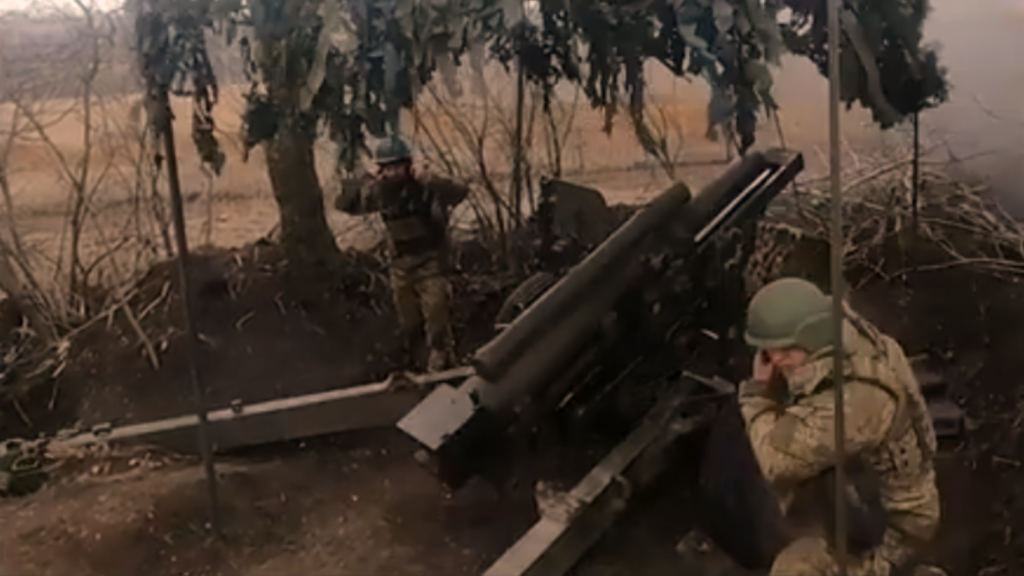
One of the defining strengths of Project Replicator is swarm intelligence. While many people focus only on the number of drones involved, the real advantage comes from how these autonomous systems work together. A single drone can perform useful tasks, but hundreds or thousands acting as one coordinated network create an entirely different level of capability.
Nature offers excellent examples of this concept. Birds flying in formation constantly adjust their positions without colliding. Fish move through the ocean in large schools while reacting almost instantly to danger. Ant colonies complete complex tasks even though each ant follows only simple behavioural rules.
Project Replicator applies similar principles through AI. Every autonomous system follows programmed objectives while continuously communicating with nearby units. If one drone changes direction or detects a threat, the surrounding systems immediately adapt their own behaviour.
This cooperative approach allows the swarm to complete missions that would be extremely difficult for individual platforms operating alone.
Quantity Becomes A Strategic Advantage
For decades, military planners measured strength by the sophistication of individual weapons. While advanced technology remains essential, Project Replicator introduces another important idea. Large numbers of capable autonomous systems can sometimes achieve greater operational success than a few highly expensive assets.
Think of an air defence system whose primary role is to identify and intercept approaching threats in real time.
It performs exceptionally well against a small number of aircraft or missiles. However, when confronted with hundreds of autonomous drones arriving from multiple directions, the challenge changes dramatically.
Every interceptor launched reduces available defensive resources. Eventually, even advanced defence systems can become overloaded simply because too many targets appear at the same time.
This concept is often described as saturation. Rather than relying on overwhelming firepower, Project Replicator uses overwhelming numbers combined with intelligent coordination.
From my perspective, this strategy reflects practical thinking rather than technological competition alone. Instead of trying to build the single most advanced platform, it asks how available resources can produce the greatest operational effect.
Cost Efficiency Changes Defence Planning
Military technology has become increasingly expensive over the past several decades. Developing advanced aircraft, naval vessels, missile systems, and sophisticated vehicles often requires enormous financial investment and years of engineering.
Project Replicator challenges this traditional model by promoting affordable autonomous systems that can be manufactured much more rapidly.
The financial advantages extend beyond initial production.
Lower-cost autonomous systems may reduce maintenance expenses, simplify replacement planning, increase production speed, expand operational flexibility, minimise strategic risk, and allow defence organisations to distribute resources more effectively across multiple missions.
This does not mean expensive military equipment becomes unnecessary. High-performance aircraft, submarines, and strategic defence systems will continue playing important roles. Instead, Project Replicator introduces a balanced force where affordable autonomous platforms complement larger military assets.
In my opinion, combining both approaches creates a more adaptable defence structure capable of responding to a wider range of challenges.
Real World Examples Already Demonstrate The Concept
Although Project Replicator represents a modern strategic initiative, many of its underlying ideas have already appeared in real conflicts.
Commercial drones have demonstrated remarkable effectiveness during reconnaissance, surveillance, logistics, intelligence gathering, and limited precision strike operations. Their relatively low cost allows organisations to deploy them in significant numbers without risking extremely valuable equipment.
These experiences have influenced military planners worldwide.
Instead of viewing autonomous drones only as supporting equipment, defence organisations increasingly recognise them as core operational assets capable of shaping battlefield outcomes.
Search and rescue operations also illustrate the value of coordinated autonomous systems. After natural disasters, multiple drones can quickly divide affected areas into sectors. Each platform searches independently while sharing information with the rest of the network. Survivors may be located much faster than would be possible using a single aircraft.
Agriculture provides another useful example. Autonomous drones monitor crops, identify irrigation problems, detect plant diseases, and collect environmental information simultaneously across large farming regions.
These civilian applications demonstrate that the technologies supporting Project Replicator have practical value far beyond military operations.
Human Decision Making Still Remains Essential
One common misunderstanding is that autonomous military systems completely replace human decision makers. That is not the objective.
AI excels at processing enormous amounts of information, recognising patterns, calculating possible responses, and coordinating multiple autonomous platforms. Human operators continue providing strategic direction, establishing mission objectives, supervising operations, and making decisions involving legal, ethical, and political consequences.
This partnership between people and AI is likely to define future military operations.
Machines provide exceptional speed and consistency. Humans contribute judgement, experience, creativity, and accountability.
From my perspective, maintaining meaningful human oversight is one of the most important principles for responsible defence innovation.
Ethical Questions Continue To Grow
Every major technological breakthrough introduces new ethical challenges, and Project Replicator is no exception.
As autonomous systems become increasingly capable, governments, researchers, defence organisations, and international institutions continue discussing important questions.
How much independence should autonomous systems receive during military operations?
Who remains accountable if an autonomous platform makes an incorrect decision?
How should international law evolve to address increasingly intelligent military technologies?
Can autonomous systems distinguish accurately between legitimate military objectives and civilian environments?
These discussions are becoming more urgent because technology continues advancing rapidly.
Developing clear international standards will help ensure autonomous systems are deployed responsibly while reducing unnecessary risks during future conflicts.
Responsible innovation requires balancing technological progress with legal accountability, transparency, and humanitarian considerations.
Global Impact Of Project Replicator
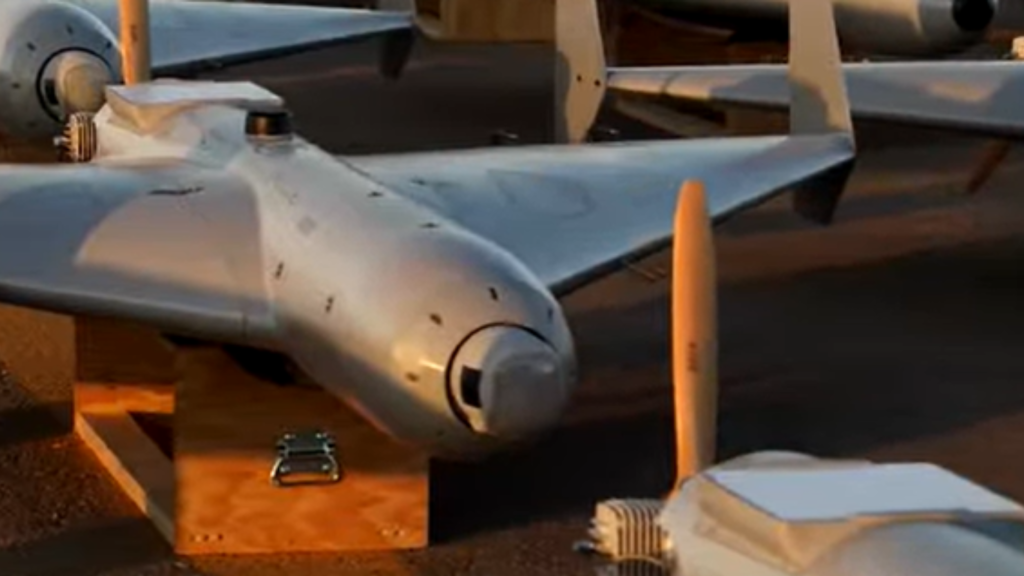
Project Replicator extends far beyond military planning. Its influence reaches international security, defence economics, technological innovation, industrial manufacturing, and even civilian research. As more countries invest in AI and autonomous systems, the balance of global power is gradually shifting from owning the most expensive equipment to developing the smartest and most adaptable technologies.
Traditionally, military strength was measured by the number of soldiers, tanks, fighter aircraft, and warships a nation possessed. While those capabilities remain important, future military readiness will increasingly depend on how quickly autonomous systems can be produced, deployed, updated, and coordinated.
This creates new opportunities for nations with smaller defence budgets. Instead of attempting to match larger military powers weapon for weapon, they may invest in scalable autonomous technologies that offer significant operational value at a lower cost.
I believe this is one of the biggest strategic transformations the world has witnessed in the twenty-first century. Technology is making military capability more dependent on innovation than on sheer financial resources alone.
Faster Decision Making Shapes Future Conflicts
Modern conflicts evolve at extraordinary speed. Information moves instantly across satellites, sensors, communication networks, and intelligence platforms. Military commanders must process this information and respond within moments.
Project Replicator supports this requirement by enabling autonomous systems to perform routine operational tasks while continuously analysing changing conditions.
AI helps prioritise information, identify potential threats, recommend possible responses, and coordinate autonomous assets much faster than traditional command structures alone.
This acceleration offers important operational advantages.
Commanders receive improved situational awareness.
Autonomous systems react immediately to environmental changes.
Mission objectives can be adjusted while operations continue.
Resources are allocated more efficiently.
Overall battlefield coordination improves significantly.
Even with these capabilities, experienced military leaders remain responsible for making strategic decisions that require human judgement and accountability.
Defence Industries Are Entering A New Era
Project Replicator is also influencing how defence manufacturers design future technologies.
For many years, defence companies concentrated primarily on producing fewer but increasingly sophisticated military platforms. Today, greater emphasis is being placed on scalable manufacturing, modular systems, software development, AI integration, and rapid production techniques.
Future autonomous platforms may receive software improvements much like modern smartphones receive operating system updates. Instead of replacing entire systems, manufacturers could improve capabilities through secure software upgrades.
This approach shortens development cycles while allowing defence organisations to respond more quickly to emerging threats.
In my opinion, software innovation will become just as important as mechanical engineering in determining future military capability.
Civilian Industries Can Benefit From The Same Technology
Although Project Replicator is designed for defence purposes, many of its underlying technologies have significant civilian applications.
Autonomous coordination, intelligent navigation, distributed sensing, and AI powered decision making already support many commercial industries.
Examples include disaster response, emergency medical support, environmental monitoring, infrastructure inspection, agriculture, shipping, logistics, mining, construction, and scientific research.
Following major earthquakes or floods, coordinated autonomous drones could rapidly survey damaged areas, identify blocked roads, locate survivors, and deliver emergency supplies before rescue teams arrive.
Agricultural organisations may deploy intelligent drone fleets to monitor crop health, analyse soil conditions, optimise irrigation, and improve harvest planning.
Energy companies can inspect pipelines, offshore platforms, wind farms, and electrical infrastructure without exposing workers to unnecessary danger.
These examples demonstrate that technological innovation developed for defence often creates valuable solutions for society as a whole.
Challenges That Cannot Be Ignored
Despite its advantages, Project Replicator also introduces important challenges that governments and international organisations must address carefully.
Cybersecurity becomes increasingly important because autonomous systems depend heavily on secure communications and reliable software. Any attempt to interfere with these systems could create operational risks.
Electronic warfare presents another challenge. Communication signals may be disrupted, navigation systems may experience interference, and autonomous platforms must continue operating safely under difficult conditions.
Supply chains must also remain resilient. Producing thousands of autonomous systems requires reliable access to advanced electronics, processors, batteries, communication equipment, and specialised manufacturing facilities.
Training represents another essential requirement. Military personnel must learn not only how to operate autonomous platforms but also how to supervise AI assisted decision making responsibly.
International cooperation will also become increasingly valuable as countries establish standards covering safety, accountability, cybersecurity, and responsible deployment of autonomous technologies.
The Future Of Project Replicator
Looking ahead, Project Replicator is likely to continue evolving as AI becomes more capable and autonomous technologies mature.
Future systems may demonstrate improved navigation, greater environmental awareness, stronger cybersecurity protection, longer operational endurance, enhanced communication networks, and more advanced collaborative decision making.
Robotic ground vehicles, underwater autonomous platforms, aerial drone swarms, and intelligent maritime systems may eventually operate together as one connected network across multiple operational environments.
AI will continue improving the ability of these systems to analyse information, coordinate movements, prioritise objectives, and adapt to unexpected situations while remaining under responsible human supervision.
From my perspective, the greatest achievement of Project Replicator is not simply producing more autonomous systems. It is creating an entirely new way of thinking about military operations where intelligence, flexibility, affordability, and cooperation become equally important.
CONCLUSION AND BRAND CREDIBILITY
Project Replicator demonstrates that the future of defence is no longer defined only by larger weapons or more expensive military platforms. Success increasingly depends on intelligent coordination, scalable autonomous systems, and AI that can process information faster while supporting better human decision making. This strategy reflects a practical response to the changing nature of modern warfare, where speed, adaptability, and resilience are becoming the foundations of operational success.
As autonomous technology continues to advance, governments, defence industries, researchers, and policymakers must work together to ensure these capabilities are developed responsibly and used with strong ethical oversight. Balancing innovation with accountability will determine whether these powerful technologies strengthen global security while reducing unnecessary risks.
Project Replicator is more than a defence initiative. It represents a new chapter in military innovation and offers valuable lessons that extend into disaster response, logistics, infrastructure management, agriculture, and many other civilian sectors. The technology behind it has the potential to improve lives far beyond the battlefield when applied responsibly.
This comprehensive insight is created exclusively for worldstan.com, where advanced technology, AI research, defence innovation, and future focused analysis are presented with accuracy, clarity, and a commitment to delivering trustworthy knowledge for readers around the world.