

Swarm Intelligence in Drone Warfare vs Defense System
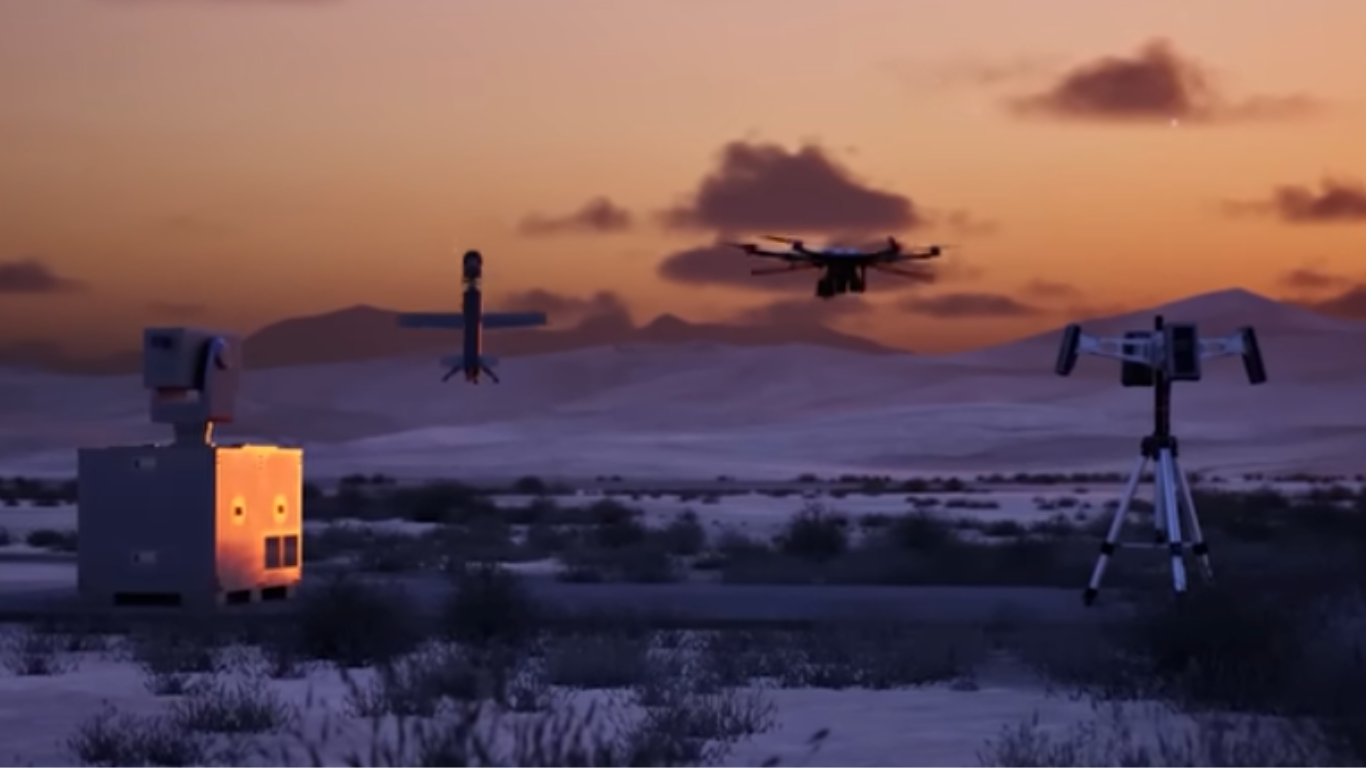
Swarm Intelligence in Drone Warfare is changing the way people think about military power, and its impact is already visible on today’s battlefields. This guide will help you understand how hundreds of intelligent drones can work together, why this technology matters, and how it is shaping the future of defense in simple, practical language.
Understanding Swarm Intelligence in Drone Warfare
Swarm Intelligence in Drone Warfare is transforming modern defense through coordinated AI driven drones, advanced battlefield decision making, and next generation countermeasures.
For decades, military strength was measured by the size of an army, the number of tanks, or the power of fighter aircraft. Those factors still matter, but modern conflicts have introduced a new element that is changing military planning across the world. Intelligent software, autonomous machines, and connected systems now play a major role in determining success on the battlefield.
One of the most remarkable changes in modern drone warfare is the rise of swarm intelligence.
This approach offers something traditional military platforms cannot easily achieve. Even if several drones fail or are destroyed, the remaining drones continue their mission by adapting to changing conditions. This flexibility makes swarm technology both effective and difficult to defeat.
The idea is surprisingly simple. Nature has demonstrated this behavior for millions of years. Birds fly together without colliding, fish move as one group to escape predators, and ants discover efficient paths to food without a central commander. Engineers have studied these natural systems and applied similar principles to autonomous drones using AI, sensors, and wireless communication.
Even though it sounds futuristic, this technology has advanced well beyond the experimental stage.

How the Technology Evolved
Swarm Intelligence in Drone Warfare uses connected autonomous drones that cooperate in real time to complete military missions, overwhelm defenses, and improve battlefield adaptability with AI powered coordination.
Military drones have progressed rapidly during the past few decades. Early unmanned aircraft mainly performed surveillance and reconnaissance. Improvements in computing power, navigation systems, and AI gradually expanded their capabilities from observation to autonomous decision support and coordinated missions.
The journey toward intelligent drone swarms reflects steady technological progress rather than one sudden breakthrough.
| Year | Event | Description |
|---|---|---|
| 1990s | Growth of military drones | Unmanned aircraft became valuable for surveillance and intelligence gathering. |
| Early 2000s | Better navigation systems | GPS, digital communications, and improved sensors increased drone effectiveness. |
| 2010s | AI integration | Machine learning helped drones recognize objects, avoid obstacles, and support autonomous navigation. |
| Late 2010s | Swarm experiments | Defense researchers successfully tested multiple drones working together through decentralized coordination. |
| 2020s | Operational deployment | Drone swarms gained increasing attention as military forces explored practical battlefield applications and counter swarm technologies. |
This steady evolution demonstrates that swarm technology is the result of decades of research in robotics, AI, communications, and autonomous control rather than a single invention.
Why Swarm Intelligence Is Different
Traditional military operations usually depend on a clear chain of command. Orders travel from commanders to individual units, and every platform performs a specific assignment.
Swarm Intelligence in Drone Warfare follows a different philosophy.
Every drone collects information independently through cameras, radar, infrared sensors, navigation systems, and environmental monitoring equipment. Instead of waiting for instructions from one command center, drones exchange information with nearby members of the swarm. This shared awareness allows the group to react almost instantly when circumstances change.
Imagine a group searching for a moving target. One drone identifies unexpected obstacles while another discovers a safer route. Seconds later the entire swarm adjusts its flight path without requiring direct human intervention.
This decentralized structure removes one of the greatest weaknesses found in conventional military systems. There is no single command node whose destruction immediately ends the mission.
The result is a highly flexible network capable of continuing operations even under difficult combat conditions.
The Role of Artificial Intelligence
Artificial intelligence provides the decision making capability that allows swarm systems to function efficiently.
Every drone continuously receives large amounts of information from cameras, sensors, positioning systems, weather measurements, and communication links. AI processes this information within fractions of a second and recommends the best action.
Some drones may monitor enemy movement while others map terrain or identify possible threats. As conditions change, AI updates priorities across the entire network.
This cooperative process allows each drone to contribute to the overall mission without requiring every decision to come from a human operator.
Let me explain this in the clearest, simplest terms.
Think about a football team. Every player understands the overall strategy, but each player also reacts independently depending on what happens during the match. Nobody waits for the coach to shout instructions before making every pass. Drone swarms operate in a similar way by combining individual decisions with shared objectives.
The faster these decisions happen, the greater the operational advantage.
Modern AI also helps drones improve navigation, reduce collisions, identify obstacles, estimate risks, and prioritize targets based on mission objectives. These capabilities continue improving as algorithms become more accurate and computing hardware becomes smaller and more powerful.
In practical military environments, this combination of AI and autonomous cooperation allows drone swarms to complete tasks that would be extremely difficult for individual aircraft operating alone.
Core Components That Power Drone Swarms
Swarm Intelligence in Drone Warfare depends on several advanced technologies working together at the same time. While the idea of hundreds of drones flying in coordination may seem complex, the system is built from a few essential building blocks. Each component supports the others, creating a network that is intelligent, flexible, and highly responsive.
The first component is the sensor system. Every drone carries multiple sensors that continuously collect information about the surrounding environment. These may include optical cameras, infrared imaging devices, radar sensors, GPS receivers, altitude sensors, and obstacle detection systems. Together, they provide the drone with a detailed understanding of its surroundings.
The second component is communication. Drones constantly exchange information with nearby members of the swarm. Instead of sending every piece of data back to a single command center, they share important updates directly with one another. This creates a decentralized communication network that remains active even if several drones lose contact or are destroyed.
The third component is onboard computing. Modern processors are capable of analyzing incoming information within milliseconds. They help drones calculate flight paths, avoid obstacles, identify targets, and coordinate movement with neighboring drones.
Finally, artificial intelligence acts as the decision-making engine. AI evaluates the available information and determines the most suitable action based on mission goals and current battlefield conditions. Every drone contributes to the overall mission while maintaining enough independence to react immediately when situations change.
Together, these technologies transform individual drones into a coordinated intelligence network rather than isolated flying machines.
How Drone Swarms Communicate Without Central Control
One of the most remarkable features of swarm technology is its decentralized structure.
Traditional military operations often depend on a command headquarters that distributes instructions to every unit. Destroying that headquarters can seriously disrupt operations.
Drone swarms operate differently.
Each drone communicates directly with nearby drones through secure wireless links. Information travels throughout the network, allowing every member to remain informed without relying on one controlling computer.
Imagine a group of hikers exploring a forest. If one person discovers a blocked path, everyone nearby immediately changes direction and shares that information with others. No single leader has to issue commands to every individual. The group naturally adapts together.
Drone swarms follow a similar principle.
This design offers several important advantages. Communication remains active even if some drones fail. The network automatically reorganizes itself. Routes are recalculated instantly, and surviving drones continue the mission with minimal interruption.
From a defense perspective, eliminating one drone rarely affects the entire operation because intelligence is distributed across the whole swarm.
This resilience is one of the main reasons why military researchers continue investing in decentralized autonomous systems.
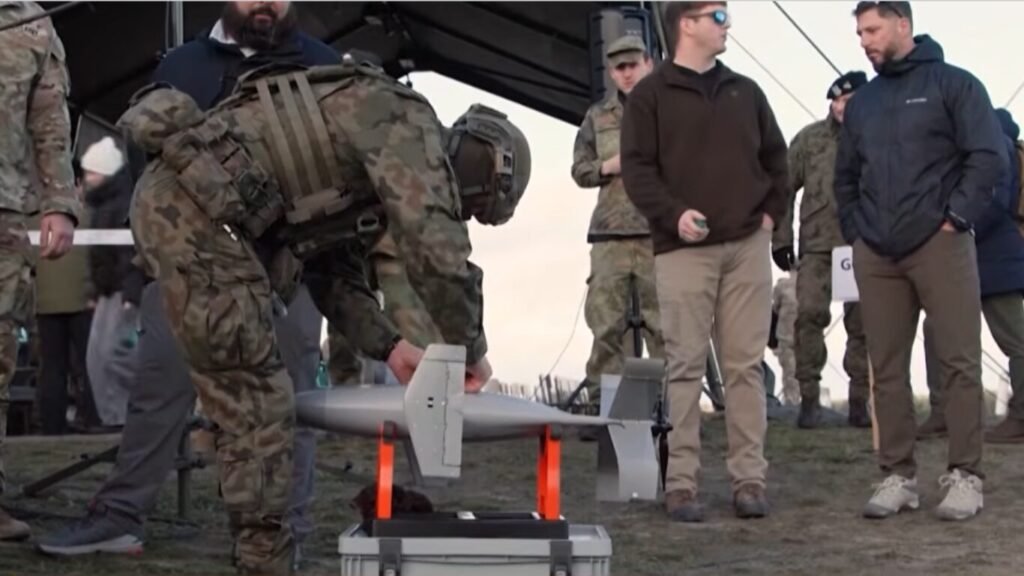
Strategic Advantages on the Modern Battlefield
The growing interest in Swarm Intelligence in Drone Warfare comes from the practical advantages it offers during military operations. These benefits are changing how defense planners think about future conflicts.
Greater Operational Flexibility
Battlefields rarely remain predictable for long. Weather changes, targets move, communication networks become disrupted, and unexpected threats appear without warning.
These drone swarms can respond quickly whenever the situation changes.
If one flight path becomes dangerous, nearby drones calculate alternative routes. If new intelligence identifies another priority target, the swarm can redirect part of its force while the remaining drones continue the original mission.
This level of adaptability reduces delays and increases operational effectiveness.
Higher Mission Survivability
Traditional military systems often depend on protecting expensive equipment.
Drone swarms distribute risk across many smaller platforms.
Losing several drones may reduce the swarm’s overall strength, but it usually does not end the mission. Remaining drones reorganize themselves and continue operating.
This ability makes swarm operations more resilient than many conventional systems.
Lower Operational Costs
One advanced missile or combat aircraft may cost millions of dollars to develop and deploy.
Many swarm drones can be manufactured at a much lower cost.
This changes the economics of military planning.
Instead of risking one extremely expensive platform, commanders can deploy numerous affordable autonomous systems capable of completing similar objectives through cooperation.
This cost advantage has attracted significant attention from both large military powers and smaller nations seeking effective defense capabilities.
Faster Decision Making
Human operators remain essential in military planning, but they cannot process thousands of data points every second.
AI enables drone swarms to evaluate information almost instantly.
Threats can be detected earlier.
Safer flight paths can be selected automatically.
Targets can be prioritized based on changing battlefield conditions.
These rapid decisions improve mission performance while reducing response times.
Reduced Risk to Military Personnel
Every military operation carries risks for soldiers.
Autonomous drone swarms allow dangerous reconnaissance, surveillance, and monitoring missions to be performed without placing personnel directly in harm’s way.
Human operators continue supervising overall objectives, but drones handle many hazardous tasks independently.
Reducing unnecessary exposure helps protect valuable human resources while maintaining operational effectiveness.
Real World Applications Beyond Direct Combat
Although military operations receive most of the attention, swarm technology offers valuable applications outside direct battlefield engagements.
Border security agencies can deploy coordinated drones to monitor large areas more efficiently than individual aircraft.
Disaster response teams may use swarms to locate survivors after earthquakes, floods, or hurricanes by covering wide regions simultaneously.
Search and rescue operations benefit from multiple drones scanning forests, mountains, or coastal areas much faster than traditional methods.
Environmental monitoring organizations can observe wildfires, monitor wildlife populations, inspect forests, and measure environmental changes using coordinated autonomous aircraft.
Critical infrastructure inspections also become more efficient. Large power lines, oil pipelines, rail networks, bridges, and industrial facilities can be inspected by drone swarms that divide work intelligently across multiple units.
These peaceful applications demonstrate that the underlying technology itself is neither positive nor negative. Its impact depends entirely on how governments, organizations, and society choose to use it.
The same intelligent coordination that supports military missions can also improve disaster relief, environmental protection, infrastructure management, and public safety.
Challenges Facing Swarm Intelligence in Drone Warfare
While the advantages of Swarm Intelligence in Drone Warfare are impressive, the technology is far from perfect. Every major innovation creates new opportunities, but it also introduces new weaknesses. Military planners, engineers, and policymakers understand that autonomous drone swarms present technical, legal, and ethical challenges that cannot be ignored.
Understanding these limitations is just as important as understanding the benefits because future defense strategies must prepare for both.
Electronic Warfare Remains a Major Threat
Drone swarms rely heavily on communication and navigation systems. If these systems are disrupted, the entire mission can become much more difficult.
Electronic warfare is designed to interfere with an enemy’s electronic equipment through signal jamming, spoofing, or cyber attacks. Since swarm drones exchange information continuously, disrupting that communication may reduce coordination or confuse navigation.
Military researchers are developing stronger encryption, secure communication protocols, and alternative navigation methods that reduce dependence on satellite signals. Some advanced systems are also being designed to continue operating with limited communication by allowing each drone to make more independent decisions.
Even with these improvements, electronic warfare remains one of the biggest challenges facing autonomous drone operations.
Cybersecurity Risks Continue to Grow
Every connected system creates potential entry points for cyber attacks.
If attackers gain access to a swarm’s communication network, they could attempt to intercept information, disrupt missions, or manipulate drone behavior.
For this reason, cybersecurity has become an essential part of modern defense planning.
Developers are investing in secure software architecture, encrypted communications, continuous authentication, and AI powered threat detection to protect autonomous systems from digital attacks.
As drone technology advances, cybersecurity will become just as important as physical defense.
Ethical Questions That Require Global Discussion
The increasing use of autonomous systems has sparked important debates around the world.
One of the biggest questions concerns responsibility.
If an autonomous drone identifies the wrong target, who should be held accountable?
Should responsibility belong to the military commander who approved the mission?
Should it belong to the engineers who designed the software?
Or should responsibility remain with the organization operating the technology?
These questions have no simple answers.
International experts continue discussing legal frameworks that balance military effectiveness with humanitarian principles. Establishing clear rules before autonomous technologies become even more widespread will help reduce uncertainty during future conflicts.
Civilian Protection Must Remain a Priority
Modern battlefields often exist close to populated areas.
Cities contain homes, hospitals, schools, transportation systems, and essential infrastructure. Distinguishing between military objectives and civilian environments becomes increasingly difficult.
Although AI continues improving target recognition, no technology is perfect.
Unexpected weather, damaged infrastructure, poor visibility, or incomplete information may affect decision making.
For this reason, human supervision remains critical during military operations involving autonomous systems.
Responsible deployment should always prioritize civilian safety alongside operational objectives.
Global Security and Strategic Stability
Lower production costs make swarm drones accessible to more countries than many traditional military platforms.
This creates both opportunities and concerns.
Smaller nations can strengthen national defense without purchasing extremely expensive weapons.
However, easier access also increases the possibility that advanced autonomous technology could spread beyond established military organizations.
International cooperation, responsible technology sharing, and export controls will play important roles in maintaining long term strategic stability.
Balancing innovation with security will remain one of the defining challenges of future defense policy.
Countermeasures Against Drone Swarms
The ongoing progress in swarm technology is driving equally fast advancements in modern defense systems.
Military organizations recognize that no single defensive solution can stop every type of drone swarm. Instead, modern defense strategies combine multiple technologies into integrated protection systems.
This layered approach increases the likelihood of detecting, tracking, and neutralizing incoming threats before they reach their objectives.
Artificial Intelligence Powered Defense Systems
One of the most effective responses to autonomous drone swarms is the use of AI itself.
Advanced defense platforms analyze enormous amounts of radar information, sensor data, and aerial activity within seconds.
Instead of focusing only on individual drones, AI identifies movement patterns across the entire swarm.
This allows defense systems to predict likely flight paths, estimate intended targets, and recommend interception strategies before the swarm reaches critical locations.
As AI algorithms continue improving, defensive systems are becoming faster, more accurate, and increasingly capable of responding automatically to complex threats.
Directed Energy Technologies
Laser based defense systems have attracted growing interest because they offer rapid engagement against multiple aerial targets.
Unlike conventional missiles, directed energy systems can engage drones at a much lower operational cost once deployed.
High energy laser beams travel at the speed of light, making them particularly useful against fast moving or closely grouped drone formations.
Although environmental conditions such as rain, dust, or smoke may reduce effectiveness, continued research is improving reliability under different operating conditions.
Many defense experts believe directed energy technologies will become an important layer of future air defense networks.
Electronic Countermeasures
Electronic countermeasures focus on disrupting the communication links that allow drones to cooperate.
Signal jamming may interrupt coordination between drones.
Navigation interference can reduce positioning accuracy.
Spoofing techniques attempt to mislead autonomous systems by transmitting false information.
However, this remains an ongoing competition.
As countermeasure technology improves, drone developers create stronger communication protocols and more resilient navigation systems.
Both offensive and defensive capabilities continue evolving together.
Layered Integrated Defense
Modern military planners increasingly recognize that relying on one defensive technology is not enough.
An effective defense combines several protective layers working together.
These layers may include radar surveillance, electro optical sensors, AI powered threat analysis, electronic warfare systems, interceptor drones, missile defense, and directed energy weapons.
Each layer addresses different stages of an incoming attack.
If one defensive measure becomes ineffective, another layer provides additional protection.
This comprehensive approach significantly improves overall resilience against complex drone swarm operations.
Worldstan Expert Perspective
From my perspective, Swarm Intelligence in Drone Warfare represents more than another military innovation.
It reflects a broader transformation in how technology influences global security.
Throughout history, military superiority often depended on larger armies, stronger weapons, or greater industrial capacity. Today, intelligent software, autonomous coordination, and rapid information processing are becoming equally important.
Countries investing in AI research, robotics, secure communications, advanced sensors, and cybersecurity are building capabilities that will influence defense planning for decades.
At the same time, technological progress should never replace responsible decision making.
Innovation without accountability creates unnecessary risks.
Responsible development requires transparent policies, international dialogue, continuous human oversight, and careful consideration of humanitarian principles.
The future battlefield will likely reward those who combine advanced technology with thoughtful leadership rather than those who simply possess the largest number of autonomous systems.
This balance between innovation and responsibility will shape the next generation of global defense.
In the final part, we will summarize the key insights, explore the future outlook of Swarm Intelligence in Drone Warfare, and conclude with Worldstan’s exclusive perspective.
Future Outlook of Swarm Intelligence in Drone Warfare
The pace of innovation in autonomous defense technology shows no sign of slowing down. As AI becomes more capable and computing hardware continues to shrink, drone swarms will become faster, smarter, and more efficient. Future systems will likely perform complex missions with greater accuracy while requiring less direct human control.
Researchers are already exploring drones that can learn from previous missions, cooperate with ground robots, communicate with satellites, and support manned aircraft during military operations. These connected systems could create a highly intelligent battlefield where information moves almost instantly between every platform.
Another important development will be the integration of edge computing. Instead of sending data to distant servers, drones will process information onboard. This reduces delays, improves response time, and allows autonomous decisions even when communication networks are limited.
AI will also continue improving object recognition, route planning, threat prediction, and mission coordination. As machine learning models become more advanced, drone swarms will be able to operate in increasingly complex environments with greater precision.
However, technological progress alone will not determine the future. International cooperation, responsible regulation, cybersecurity, and ethical governance will influence how these systems are developed and deployed across the world.
The Balance Between Innovation and Responsibility
History shows that every major military innovation changes both strategy and global politics. Aircraft transformed warfare during the twentieth century.
Precision-guided weapons transformed the way armed forces planned military operations in later years.
Autonomous systems now represent the next stage of that evolution.
The challenge is ensuring that technological capability is matched by responsible leadership.
Military organizations must continue investing not only in stronger autonomous systems but also in secure software, reliable communications, human oversight, and international standards that reduce unnecessary risks.
Public discussion also has an important role. Citizens, researchers, policymakers, engineers, and defense professionals should all contribute to conversations about how autonomous technologies should be governed.
The objective should never be simply building smarter machines.
The objective should be building safer, more accountable, and more responsible defense systems.
Practical Lessons From Today’s Drone Revolution
Several important lessons are already becoming clear.
First, numbers alone no longer define military strength. Intelligence, coordination, and adaptability are becoming equally valuable.
Second, AI has moved beyond supporting military operations. It is increasingly becoming part of operational decision making by helping autonomous systems react faster than traditional command structures.
Third, cybersecurity has become inseparable from national defense. Protecting software, communication networks, and digital infrastructure is now just as important as protecting physical assets.
Finally, no single technology provides complete security. Effective defense requires multiple protective layers working together through AI, sensors, electronic warfare, interception systems, and continuous intelligence gathering.
These lessons will influence military planning for many years.
Why This Technology Matters Beyond Defense
Although much attention focuses on military applications, the research behind swarm intelligence has much wider value.
Coordinated autonomous systems can improve disaster response by locating survivors after earthquakes or floods. Environmental agencies can monitor forests, wildlife, and coastlines more efficiently. Emergency services may deploy drone swarms to assess dangerous areas before rescue teams arrive.
Agriculture, infrastructure inspection, scientific research, and maritime monitoring may also benefit from autonomous cooperation.
These peaceful applications remind us that technology itself is neither positive nor negative.
Its impact depends on the choices people make.
When developed responsibly, swarm intelligence has the potential to improve both national security and civilian life.
Key Takeaways
Swarm Intelligence in Drone Warfare represents a major shift in military thinking because it replaces centralized control with distributed intelligence.
AI enables drones to cooperate, adapt, and make rapid decisions while sharing information across an entire network.
Decentralized communication improves resilience by removing single points of failure.
Lower operational costs allow broader access to advanced autonomous capabilities.
Electronic warfare, cybersecurity, legal responsibility, and civilian protection remain significant challenges.
AI based defense systems, electronic countermeasures, directed energy weapons, and layered security provide promising methods for defending against drone swarms.
Future success will depend on combining technological innovation with responsible governance and international cooperation.
Conclusion
Swarm Intelligence in Drone Warfare is no longer a distant concept discussed only in research laboratories. It has become an important part of the changing landscape of modern defense, influencing how military organizations prepare for future challenges. Intelligent coordination, autonomous decision making, and connected technologies are reshaping battlefield strategy in ways that were almost impossible to imagine only a few years ago.
The greatest lesson is not simply that autonomous drones are becoming more capable. It is that success in future conflicts will depend on the ability to combine AI, secure communications, human expertise, and responsible leadership into one balanced system. Technology can provide remarkable advantages, but lasting security will always require thoughtful planning and ethical responsibility.
As research continues, governments, defense organizations, and technology developers must work together to ensure these powerful systems are guided by clear principles, strong cybersecurity, and meaningful human oversight. That balance will determine whether future innovations strengthen global stability or create new risks.
Swarm Intelligence in Drone Warfare will continue to influence military strategy for years to come, but understanding both its opportunities and its challenges is the first step toward preparing for that future.
This original research, expert analysis, and unique perspective are proudly and exclusively delivered by worldstan.com, where complex defense technologies are transformed into practical knowledge that everyone can understand.