

Table of Contents
ToggleWhen people hear Centaur Warfare (MUM-T), they often imagine science fiction, but in reality, it is already shaping modern defense systems where humans and machines operate as one coordinated force. This article explains how this concept is changing military thinking in a very practical and real-world way.
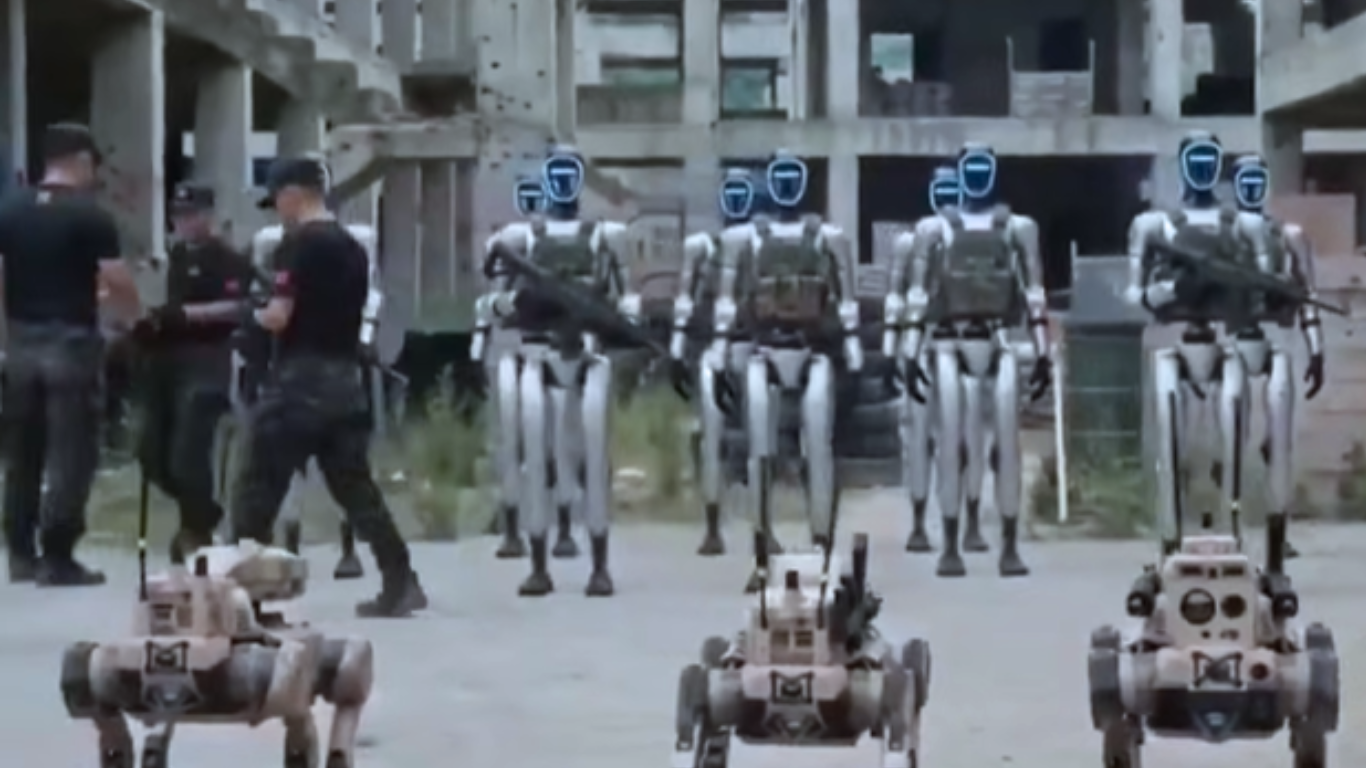
Defining the Centaur:
Centaur Warfare comes from the idea of combining human intelligence with robotic strength. Just like a centaur in mythology is half human and half horse, this concept describes a battlefield where soldiers do not act alone anymore. Instead, they are supported by intelligent machines that extend their reach, awareness, and speed.
From my perspective, this shift is not about replacing humans. It is about removing physical limits. A soldier can now think, decide, and command while machines handle dangerous or repetitive tasks. This balance is becoming the foundation of modern defense planning.
In real-world operations, unmanned systems such as drones and ground robots already assist troops in surveillance, target tracking, and logistics. The centaur concept simply connects all of this into one intelligent ecosystem.
Soldier-Robot Coordination:
The heart of Manned-Unmanned Teaming lies in coordination. Soldiers are no longer isolated decision-makers. Instead, they work with robotic systems that act like force multipliers.
For example, a small infantry unit can now operate with aerial drones scanning ahead, ground robots carrying supplies, and AI systems analyzing threats in real time. This reduces risk and increases operational efficiency.
What stands out is how naturally this teamwork is developing. Soldiers are trained to treat these systems like extensions of their own senses. A drone becomes their eyes in the sky. A robot becomes their shield in dangerous terrain.
In my observation, the biggest advantage here is not speed alone. It is clarity. With better data and fewer blind spots, teams make smarter decisions under pressure.
Decision Making:
One of the most important aspects of Centaur Warfare is how decisions are shared between humans and machines. Humans still control ethics, strategy, and final judgment. Machines, on the other hand, handle precision, calculations, and rapid analysis.
This balance is critical. Machines can process massive amounts of battlefield data within seconds, but they lack moral reasoning. Humans bring judgment, context, and responsibility.
For instance, if an autonomous system identifies a potential threat, it does not act independently without human approval in most modern frameworks. This ensures that technology supports decision-making instead of replacing accountability.
From a practical point of view, this partnership reduces mistakes. Human fatigue is a real issue in conflict environments, and machines help reduce cognitive overload by filtering information and highlighting what truly matters.
Real-time Connectivity:
Centaur Warfare cannot function without strong communication systems. Low-latency data links are the backbone of MUM-T operations. These systems ensure that information flows instantly between soldiers, drones, command centers, and autonomous units.
Imagine a battlefield where every second counts. A delay of even a few moments can change outcomes. Real-time connectivity ensures that updates about enemy movement, terrain changes, or system alerts are shared instantly.
This is where modern defense networks are investing heavily. Satellite systems, encrypted communication channels, and edge computing all play a role in keeping the battlefield connected.
In my view, connectivity is what transforms individual tools into a unified intelligence system. Without it, Centaur Warfare would remain fragmented and ineffective.
Practical Impact on Modern Warfare:
The real-world impact of MUM-T is already visible. Military units are using drone swarms for reconnaissance. Ground robots are used in explosive detection. AI systems assist in mission planning.
What makes this evolution significant is scalability. Even small units can now access advanced capabilities that were once limited to large military forces.
Another important impact is safety. By transferring high-risk tasks to machines, human lives are better protected. This does not remove danger entirely, but it significantly reduces exposure in critical situations.
From a strategic point of view, nations adopting Centaur Warfare gain faster response times and better situational awareness. This creates a major shift in global defense balance.
Ethical and Operational Balance:
One concern that always comes up is ethics. As machines become more involved in warfare, questions about control and responsibility become more important.
Centaur Warfare addresses this by keeping humans in the decision loop. Machines assist, but they do not fully decide lethal actions in most current doctrines.
This balance is essential for maintaining accountability. Technology can evolve quickly, but ethical frameworks must evolve alongside it.
In my opinion, this is where most countries will face their biggest challenge. Building technology is easier than building trust in how it is used.
Future of Hybrid Soldier Systems:
Looking ahead, Centaur Warfare will continue to evolve. We will likely see deeper integration between soldiers and AI systems. Wearable interfaces, predictive analytics, and autonomous support units will become standard tools.
The future soldier will not operate alone. They will function inside a network of intelligent systems that continuously adapt to the environment.
This does not mean humans become less important. In fact, their role becomes more strategic. They will focus on leadership, judgment, and coordination while machines handle execution and data processing.
At Worldstan, this perspective is presented as a shift toward hybrid intelligence, where success depends on how well humans and machines understand each other.
Conclusion:
Centaur Warfare (MUM-T) is not a distant concept anymore. It is actively shaping how modern military systems are designed and deployed. The combination of human intelligence and robotic precision creates a new kind of operational strength that neither could achieve alone.
The real value of this system lies in balance. Humans provide meaning and direction, while machines provide speed and accuracy. Together, they form a unified force that is more capable, more aware, and more responsive.
As this technology continues to grow, the focus must remain on responsible use, strong communication systems, and ethical control. The future of warfare will not be purely human or purely machine. It will be a partnership between both.
FAQs:
1. What is Centaur Warfare (MUM-T)?
It is a military concept where humans and unmanned systems work together as a unified team to improve battlefield performance.
2. Why is it called Centaur Warfare?
The term comes from mythology, representing a hybrid of human intelligence and machine power working together.
3. How does manned-unmanned teaming work?
Human soldiers control and coordinate robotic systems such as drones and ground robots for support in operations.
4. Are robots replacing soldiers in Centaur Warfare?
No, robots assist soldiers but do not replace human decision-making or responsibility.
5. What role does AI play in MUM-T?
AI helps analyze data, detect threats, and improve decision-making speed in real time.
6. Why is real-time communication important?
It ensures instant data sharing between humans and machines for faster and more accurate decisions.
7. What is the future of Centaur Warfare?
It is expected to grow into fully integrated human-machine systems that enhance strategy, safety, and efficiency.