

How Artificial Neural Networks Work in AI
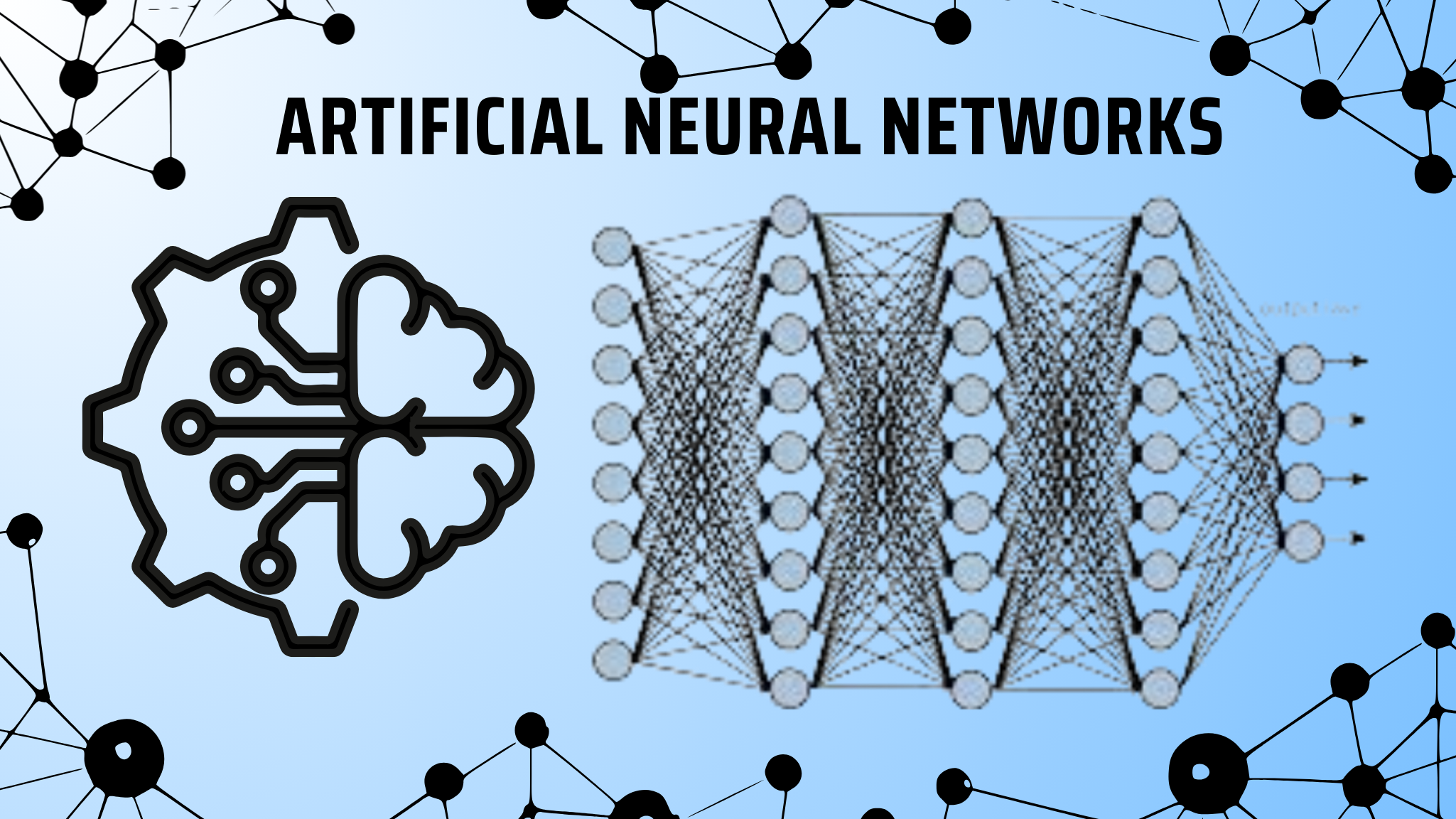
Artificial Neural Networks are the foundation of many modern artificial intelligence systems. From image recognition and language processing to recommendation engines and predictive analytics, these powerful models help machines learn from data and make intelligent decisions. In this comprehensive guide, you will discover how Artificial Neural Networks work, why they are important, and how they continue to transform the future of technology.
Artificial Neural Networks (ANN) A Complete Professional Guide
Artificial intelligence has transformed the way organizations operate, innovate, and solve complex challenges. Among the many technologies powering this transformation, Artificial Neural Networks stand out as one of the most influential developments in modern computing.
When people interact with voice assistants, receive personalized recommendations, use facial recognition systems, or benefit from automated medical diagnostics, Artificial Neural Networks often work behind the scenes. These sophisticated computational models allow machines to learn from experience and continuously improve their performance.
Here’s the simplest way to understand it.
Artificial Neural Networks are computer systems inspired by the human brain. They learn patterns from data, make predictions, recognize relationships, and support intelligent decision-making across countless industries.
Today, Artificial Neural Networks serve as the foundation of deep learning, machine learning, and many advanced artificial intelligence applications. Their influence continues to grow as businesses seek smarter, faster, and more reliable solutions.
This comprehensive guide from worldstan.com explores every important aspect of Artificial Neural Networks, including their architecture, learning process, applications, advantages, limitations, ethical concerns, and future opportunities.
Understanding Artificial Neural Networks
Artificial Neural Networks are computational models designed to imitate certain aspects of biological neural systems. While they do not function exactly like the human brain, they borrow key concepts from neuroscience to process information and learn from data.
An Artificial Neural Network consists of interconnected processing units called artificial neurons. These neurons communicate with one another through weighted connections and collectively solve complex computational tasks.
Unlike traditional software that follows fixed instructions, Artificial Neural Networks learn from examples. The more relevant data they receive, the better they become at recognizing patterns and making accurate predictions.
This learning capability makes them highly valuable in environments where rules are difficult to define manually.
The History Behind Artificial Neural Networks
The origins of Artificial Neural Networks can be traced back to the 1940s.
Researchers sought ways to replicate human thinking through mathematical models. Early pioneers developed simplified representations of biological neurons and explored how networks of these units could perform logical operations.
The introduction of the perceptron in the 1950s marked a major breakthrough. This early neural network demonstrated that machines could learn directly from data rather than relying solely on programmed rules.
Interest in neural networks fluctuated over several decades. Limited computing power and data availability slowed progress during certain periods. However, advances in hardware, algorithm design, and data storage eventually reignited enthusiasm.
The emergence of deep learning in the 2010s propelled Artificial Neural Networks into the spotlight and established them as a dominant force in artificial intelligence.
How Artificial Neural Networks Work
At a high level, Artificial Neural Networks process information through layers of interconnected neurons.
Each neuron receives input values, performs calculations, and passes the resulting output to other neurons within the network.
The process follows several important stages:
- Data enters the network.
- Inputs are multiplied by weights.
- Bias values adjust calculations.
- Activation functions determine outputs.
- Results move through multiple layers.
- The final layer generates predictions.
The network continuously adjusts internal parameters to improve accuracy over time.
This iterative learning process enables Artificial Neural Networks to discover patterns that may be difficult for humans to identify manually.
Components of Artificial Neural Networks
Every Artificial Neural Network contains several essential components.
Input Layer
The input layer receives raw information from external sources.
Examples include:
- Images
- Text
- Audio
- Sensor readings
- Financial data
This layer serves as the entry point for information processing.
Hidden Layers
Hidden layers perform most of the network’s computational work.
These layers identify relationships, extract features, and create increasingly sophisticated representations of data.
As networks become deeper, they can learn highly complex patterns.
Output Layer
The output layer delivers final predictions or classifications.
Depending on the application, outputs may represent:
- Categories
- Probabilities
- Numerical values
- Decisions
Weights and Biases
Weights determine the importance of connections between neurons.
Biases provide flexibility by allowing neurons to activate more effectively under different conditions.
Together, weights and biases form the learnable parameters of the network.
Why Are Activation Functions Important
Without activation functions, Artificial Neural Networks would behave like simple linear models regardless of their size.
Activation functions introduce non-linearity, allowing networks to learn complex relationships.
Popular activation functions include:
- Sigmoid
- Tanh
- ReLU
- Leaky ReLU
- Softmax
Among these, ReLU remains one of the most widely used due to its efficiency and strong performance in deep learning models.
Neural Network Training
Training is the process through which an Artificial Neural Network learns from data.
The network compares its predictions with actual outcomes and measures the difference using a loss function.
The objective is simple:
Reduce prediction errors as much as possible.
Training generally involves:
- Feeding data into the network
- Generating predictions
- Calculating errors
- Updating parameters
- Repeating the process
After numerous iterations, the network gradually improves its performance.
What Is Backpropagation and Why Does It Matter
Backpropagation is one of the most important algorithms in neural network training.
When the network makes an error, backpropagation calculates how much each parameter contributed to that mistake.
The algorithm then distributes error information backward through the network and adjusts weights accordingly.
Without backpropagation, training deep neural networks would be extremely difficult and computationally expensive.
Its development played a crucial role in the success of modern artificial intelligence systems.
Gradient Descent and Optimization
Optimization techniques help Artificial Neural Networks learn efficiently.
Gradient Descent is the most common optimization method.
The algorithm continuously moves network parameters toward values that reduce prediction errors.
Popular optimization approaches include:
- Gradient Descent
- Stochastic Gradient Descent
- Mini-Batch Gradient Descent
- Adam Optimizer
- RMSProp
These methods improve learning speed and model performance.
Feedforward Neural Networks
Feedforward Neural Networks represent one of the simplest ANN architectures.
Information moves in a single direction:
Input → Hidden Layers → Output
There are no feedback loops.
These networks work well for:
- Classification
- Regression
- Pattern recognition
- Forecasting
They continue to serve as fundamental building blocks in machine learning.
Deep Neural Networks and Deep Learning
Deep learning refers to Artificial Neural Networks that contain multiple hidden layers.
The additional depth allows networks to learn hierarchical representations of data.
Lower layers identify simple features.
Higher layers combine those features into more advanced concepts.
This capability enables remarkable performance in tasks involving:
- Images
- Speech
- Language
- Video
- Complex decision-making
Deep learning has become one of the fastest-growing fields in artificial intelligence.
Convolutional Neural Networks
Convolutional Neural Networks, commonly called CNNs, are specialized neural networks designed primarily for visual data.
CNNs automatically identify important image features such as:
- Edges
- Shapes
- Objects
- Textures
Applications include:
- Facial recognition
- Medical imaging
- Autonomous vehicles
- Security systems
- Manufacturing inspection
CNNs have dramatically improved computer vision capabilities across industries.
Artificial Neural Networks in Machine Learning
Machine learning focuses on enabling computers to learn from experience.
Artificial Neural Networks represent one of the most powerful machine learning techniques available today.
They excel when dealing with:
- Large datasets
- Complex relationships
- High-dimensional information
- Dynamic environments
Organizations increasingly rely on ANN models to generate insights and automate decision-making processes.
Real-World Applications of Artificial Neural Networks
Artificial Neural Networks are used almost everywhere in modern technology.
Healthcare
Healthcare organizations use neural networks for:
- Disease diagnosis
- Medical imaging analysis
- Drug discovery
- Patient risk assessment
Finance
Financial institutions leverage ANN systems for:
- Fraud detection
- Credit scoring
- Risk management
- Market forecasting
Retail
Retail companies use neural networks to:
- Recommend products
- Predict demand
- Optimize inventory
- Personalize customer experiences
Transportation
Transportation systems benefit through:
- Route optimization
- Traffic prediction
- Autonomous driving
- Fleet management
Manufacturing
Manufacturers employ ANN solutions for:
- Predictive maintenance
- Quality control
- Process automation
- Supply chain optimization
Advantages of Artificial Neural Networks
Artificial Neural Networks provide numerous benefits.
Key advantages include:
- Ability to learn complex relationships
- High predictive accuracy
- Strong adaptability
- Scalability
- Automation capabilities
- Feature learning
- Continuous improvement through training
These strengths make them attractive for solving difficult business problems.
Challenges and Limitations
Despite their power, Artificial Neural Networks are not perfect.
Common challenges include:
- Large data requirements
- High computational costs
- Long training times
- Limited interpretability
- Risk of overfitting
- Bias in training data
Organizations must address these challenges to ensure responsible AI deployment.
Ethical Considerations in Artificial Neural Networks
As Artificial Neural Networks become more influential, ethical concerns continue to grow.
Important considerations include:
- Algorithmic bias
- Data privacy
- Transparency
- Accountability
- Security
- Fairness
Responsible development practices help organizations build trustworthy artificial intelligence systems.
Future Trends in Artificial Neural Networks
The future of Artificial Neural Networks looks extremely promising.
Several emerging trends are shaping the next generation of intelligent systems.
These include:
- Explainable AI
- Self-supervised learning
- Neuromorphic computing
- Hybrid AI models
- Edge AI
- Generative AI integration
- Energy-efficient neural networks
Researchers continue to develop innovative architectures that improve performance while reducing computational demands.
Why Artificial Neural Networks Will Continue to Shape Artificial Intelligence
Artificial Neural Networks have already transformed industries worldwide.
Their ability to learn from data, adapt to new situations, and solve increasingly complex problems positions them at the center of future innovation.
As computing resources improve and research advances, ANN models will become even more capable, accessible, and impactful.
Businesses that understand and embrace these technologies will gain significant competitive advantages in the years ahead.
Conclusion
Artificial Neural Networks have evolved from simple theoretical concepts into one of the most powerful technologies driving modern artificial intelligence. Their ability to learn, adapt, recognize patterns, and support intelligent decision-making has transformed industries ranging from healthcare and finance to manufacturing and transportation. While challenges such as interpretability, computational costs, and ethical concerns remain important, ongoing innovation continues to make these systems more effective and trustworthy. As the world moves deeper into the age of intelligent automation, Artificial Neural Networks will remain a core technology behind future breakthroughs. At worldstan.com, we believe that understanding ANN fundamentals today is one of the smartest investments anyone can make for navigating the rapidly changing landscape of artificial intelligence tomorrow.