

Autonomous Tank Platoons and AI Battlefield Power
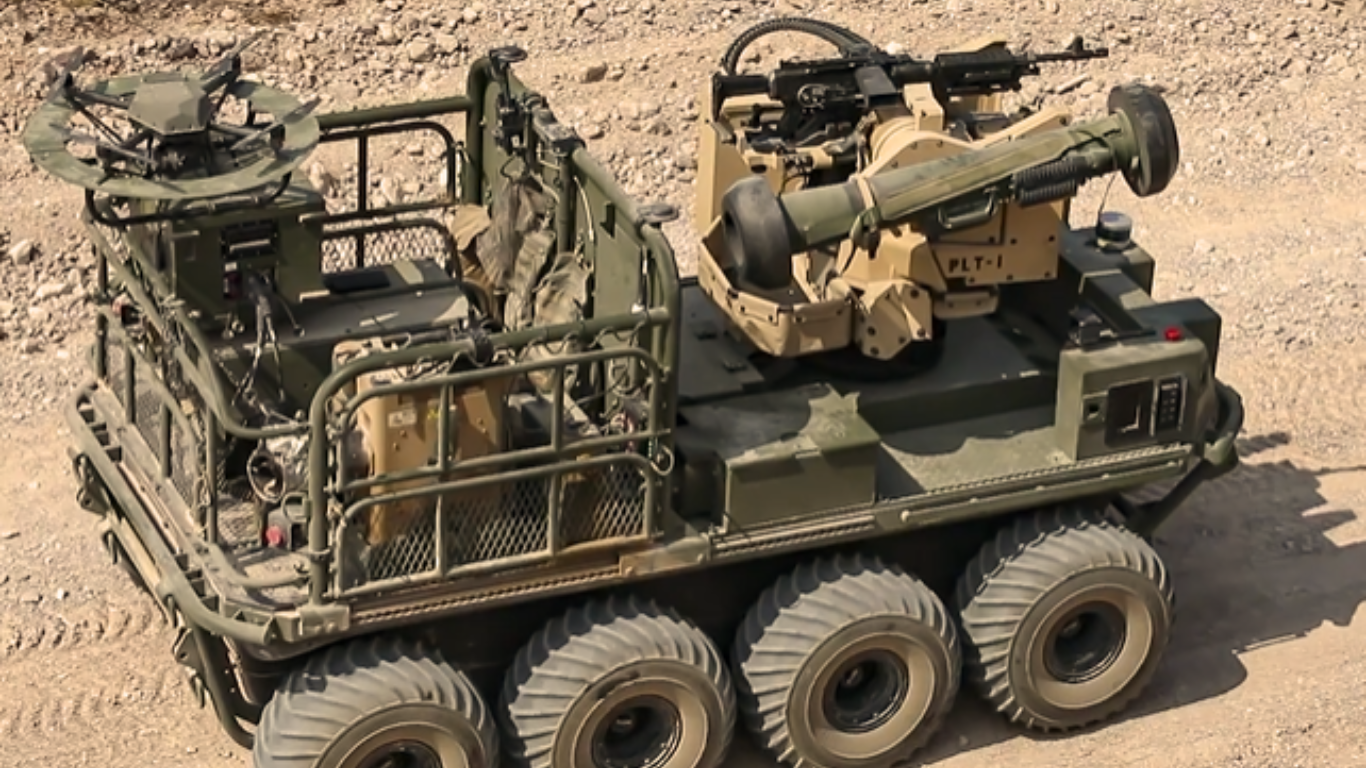
Autonomous tank platoons are no longer a concept of the future they are rapidly becoming a defining force in modern warfare, reshaping how battles are fought, decisions are made, and victories are secured.
How Autonomous Tank Platoons Are Changing Combat
Autonomous Tank Platoons are transforming modern military operations through AI, advanced sensors, real time coordination, and intelligent battlefield decision making.
Autonomous Tank Platoons
Modern warfare is changing faster than ever, and Autonomous Tank Platoons are becoming one of the biggest reasons behind that transformation. In this guide, you will discover how these intelligent combat systems work, why military forces are investing in them, and what challenges must be solved before they become a common part of future battlefields.
For decades, tanks have represented strength, protection, and battlefield dominance. They have played decisive roles in major conflicts because they combine heavy firepower, strong armor, and the ability to move across difficult terrain. While these qualities remain valuable today, the battlefield itself has changed dramatically. Modern conflicts demand quicker decisions, constant awareness, and the ability to react to threats within seconds. This changing environment has encouraged defense organizations around the world to develop smarter military technologies.
One of the most important developments is the rise of Autonomous Tank Platoons. Instead of depending entirely on human crews, these advanced combat systems use AI, intelligent sensors, and secure communication networks to perform many battlefield tasks on their own. Their purpose is not simply to replace traditional tanks but to improve military operations by making them faster, safer, and more efficient.
Unlike conventional armored units, autonomous platoons operate as connected teams. Every vehicle continuously collects information from its surroundings, exchanges data with nearby units, and adjusts its actions according to changing battlefield conditions. This constant flow of information creates a coordinated force that can respond much faster than isolated vehicles operating independently.
Military planners see this technology as more than another equipment upgrade. It represents a different way of thinking about armored warfare. Instead of relying only on the experience of individual crews, commanders can use intelligent systems capable of processing enormous amounts of battlefield information almost instantly.
From my perspective, this represents one of the most significant military innovations of the modern era. Tanks have always been powerful machines, but combining them with AI creates an entirely new level of operational capability. The real value is not just automation. It is the ability to transform information into meaningful battlefield decisions within moments.
The Evolution of Tank Warfare
Autonomous Tank Platoons are AI powered unmanned combat vehicles that work together to detect threats, share battlefield information, and support faster, safer, and more precise military operations.
The history of armored warfare demonstrates how military technology has continuously adapted to changing threats. Early tanks were developed to overcome trench warfare during the First World War. Over time, improvements in engines, armor, weapons, and electronics turned tanks into the backbone of many modern armies.
The latest stage of this evolution focuses less on mechanical improvements and more on intelligence. Modern military research aims to create vehicles capable of understanding their environment, recognizing dangers, and supporting commanders through intelligent decision making.
The journey toward autonomous combat systems did not happen overnight. Every generation of military technology introduced new capabilities that gradually reduced the workload placed on human operators.
| Year | Event | Description |
|---|---|---|
| 1916 | First combat tanks introduced | Armored vehicles entered battlefield operations for the first time during the First World War. |
| 1940s | Improved armored warfare tactics | Tanks became central to fast moving combined military operations. |
| 1970s | Digital fire control systems | Computers improved targeting accuracy and battlefield effectiveness. |
| 1990s | GPS and battlefield networking | Military vehicles gained better navigation and communication capabilities. |
| 2010s | AI assisted military systems | Artificial intelligence began supporting surveillance, targeting, and mission planning. |
| 2020s | Autonomous Tank Platoons research | Multiple defense organizations accelerated development of intelligent unmanned armored vehicles. |
Looking at this progression, it becomes clear that autonomy is not a sudden revolution. It is the natural result of decades of technological advancement across computing, communications, robotics, and AI.
Understanding Autonomous Tank Platoons
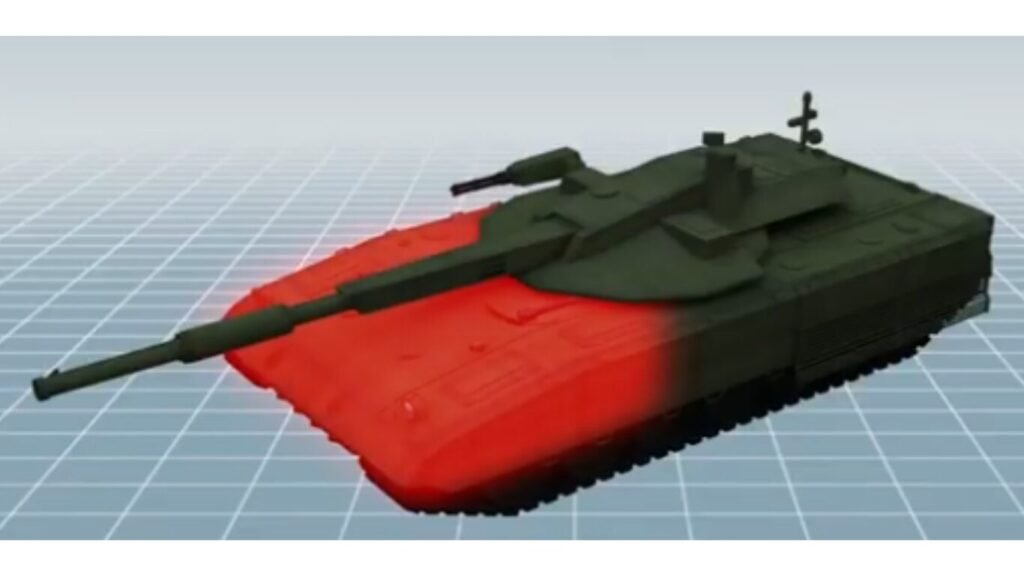
An Autonomous Tank Platoon is a coordinated group of unmanned or highly automated armored ground vehicles capable of performing military missions with limited human involvement. These vehicles are designed to cooperate continuously rather than operate as isolated machines.
Each vehicle carries powerful computing hardware that processes battlefield information collected through multiple sensors. Instead of waiting for every command from a human operator, the system evaluates available information, recommends actions, and in some situations executes tasks automatically according to predefined operational rules.
This does not mean human commanders disappear from military operations. In many real-world scenarios, people continue supervising missions, approving strategic objectives, and monitoring overall battlefield activity. The autonomous systems mainly handle rapid tactical decisions that would otherwise consume valuable time.
One feature that makes these platoons particularly effective is cooperation. Every vehicle contributes information to the entire formation. If one unit detects an obstacle, identifies hostile movement, or discovers a safer route, the remaining vehicles immediately receive that information through secure communication links.
This shared awareness allows the platoon to behave almost like a single intelligent system rather than separate armored vehicles working independently.
Why Militaries Are Investing in Autonomous Tank Platoons
Military organizations constantly search for technologies that improve operational success while reducing risks to personnel. Autonomous Tank Platoons address several important military objectives at the same time.
First, they help protect soldiers by removing crews from extremely dangerous combat environments. Missions involving minefields, contaminated areas, or intense enemy fire can potentially be performed without exposing personnel to direct danger.
Second, AI systems process information much faster than human operators. Modern battlefields generate enormous amounts of data through satellites, drones, surveillance systems, radar, and reconnaissance units. Human teams cannot analyze every piece of information instantly, but intelligent algorithms can organize, prioritize, and distribute critical intelligence within seconds.
Another important advantage is operational endurance. Human crews require food, rest, and recovery during prolonged operations. Autonomous systems can continue functioning for much longer periods provided that fuel, maintenance, and communication support remain available.
Economic considerations also influence military planning. Although developing intelligent combat vehicles requires major investment, reducing long-term personnel requirements and improving operational efficiency may lower certain operational costs over time.
From my perspective, the greatest benefit lies in information management rather than automation itself. Winning future conflicts will depend increasingly on which side understands the battlefield first and responds the fastest. Intelligent armored systems significantly strengthen that capability.
Core Technologies Behind Autonomous Tank Platoons
The effectiveness of Autonomous Tank Platoons depends on several advanced technologies working together as one integrated system. No single technology creates battlefield autonomy on its own. Instead, multiple components continuously exchange information to support accurate and timely decisions.
Artificial intelligence forms the central decision making engine. AI analyzes sensor information, recognizes patterns, identifies possible threats, predicts movement, and recommends appropriate responses.
Sensor fusion combines information collected from different detection systems. Cameras provide visual images, radar detects moving objects, LiDAR measures distances with exceptional accuracy, and infrared equipment identifies heat signatures even during darkness or poor weather.
Secure communication networks allow every vehicle within the platoon to exchange information almost instantly. Continuous communication enables coordinated movement, shared situational awareness, and synchronized tactical responses.
High performance computing hardware processes enormous amounts of information directly inside each vehicle. Fast processing reduces delays between detecting an event and taking appropriate action.
Advanced navigation systems combine satellite positioning, terrain mapping, inertial navigation, and obstacle detection to guide vehicles through challenging environments where traditional navigation methods may become unreliable.
Together, these technologies create intelligent armored platforms capable of understanding complex situations far beyond what earlier generations of military vehicles could achieve.
How AI Powers Autonomous Tank Platoons
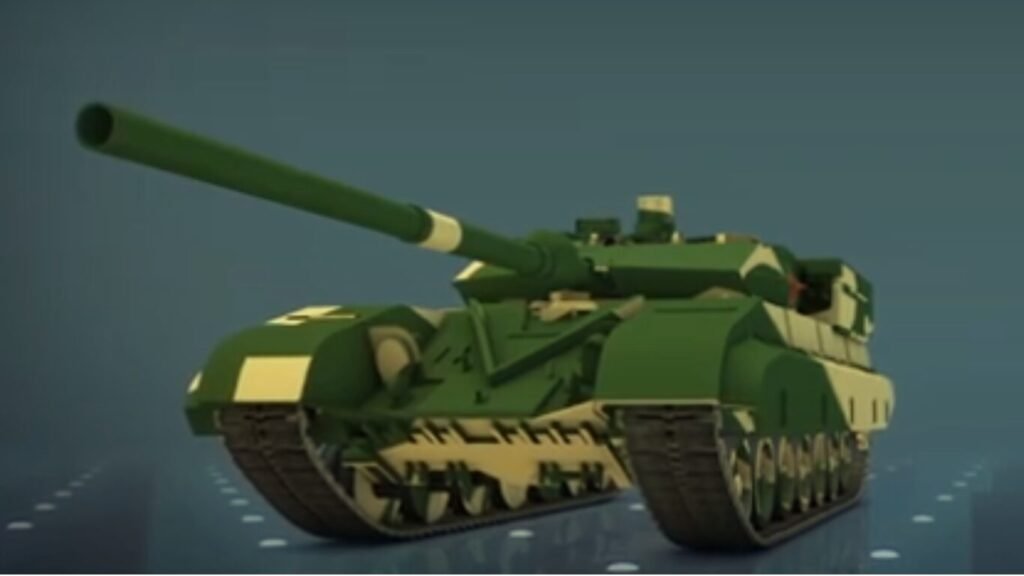
The intelligence inside Autonomous Tank Platoons comes from AI working together with powerful software, high-speed processors, and continuous streams of battlefield data. Unlike traditional military vehicles that depend almost entirely on human operators, these systems can recognize situations, evaluate possible actions, and respond within moments. Human commanders still define mission goals and operational limits, but AI handles many of the calculations that would otherwise take valuable time.
The first step begins with data collection. Every autonomous vehicle constantly observes its surroundings through cameras, radar, LiDAR, infrared sensors, acoustic detectors, and navigation equipment. Each sensor captures different information. Cameras recognize visible objects, infrared systems detect heat signatures, radar tracks movement over long distances, and LiDAR builds detailed three-dimensional maps of the environment.
The collected information arrives simultaneously, creating an enormous amount of raw data every second. Processing this information quickly is impossible without AI. Intelligent algorithms organize the incoming data, remove unnecessary information, compare it with known patterns, and identify objects that require immediate attention.
For example, if multiple sensors detect a moving armored vehicle, AI compares its size, speed, thermal signature, movement pattern, and location before classifying it as friendly, hostile, or unknown. Instead of relying on one sensor, the system combines evidence from several sources to improve confidence in its assessment.
This integrated approach significantly reduces the possibility of making decisions based on incomplete information.
Let me explain this in the clearest, simplest terms.
Imagine several experienced observers standing around the same battlefield, each looking from a different direction. Individually, each observer notices only part of the situation. Together, they create a complete picture. AI performs a similar role by combining information from many different sensors into one accurate battlefield view.
From my perspective, this coordinated intelligence is what separates modern autonomous combat systems from earlier generations of military automation.
Sensor Fusion Creates Complete Battlefield Awareness
One of the greatest strengths of Autonomous Tank Platoons is their ability to understand the surrounding environment far better than traditional armored vehicles.
Human crews mainly depend on visual observation and communication from nearby units. Autonomous systems expand this awareness by continuously combining information from multiple technologies at the same time.
Sensor fusion enables the vehicle to verify observations before acting. If heavy dust blocks the camera view, radar and infrared systems continue tracking nearby movement. If rain affects one sensor, others continue supplying reliable information.
This layered awareness improves operational reliability under difficult battlefield conditions.
Urban combat presents an excellent example. Buildings, narrow streets, smoke, damaged infrastructure, and civilian movement create an environment where visibility changes constantly. AI continuously updates battlefield maps as new information becomes available, allowing vehicles to adjust routes and identify safer paths without waiting for manual instructions.
The ability to maintain awareness despite changing conditions gives autonomous formations an important operational advantage.
Communication Between Every Vehicle
An autonomous platoon becomes truly effective only when every vehicle communicates continuously with the others.
Instead of operating independently, every platform shares discoveries across the entire formation. If one vehicle identifies hostile activity several hundred meters ahead, the remaining vehicles immediately receive the warning.
This shared intelligence creates a constantly updated operational picture across the platoon.
Communication networks also allow vehicles to distribute responsibilities automatically. One unit may monitor a specific road while another protects the flank. A third vehicle may provide surveillance using long-range sensors while the remaining vehicles prepare defensive positions.
Because every vehicle understands the overall mission, temporary communication interruptions do not necessarily stop operations. Individual units continue performing assigned objectives while reconnecting whenever communication becomes available again.
Modern military communication systems also include encryption, authentication, and anti-jamming technologies designed to protect battlefield information from interception or manipulation.
Reliable communication remains one of the most critical foundations of autonomous military operations.
Intelligent Navigation Across Complex Terrain
Battlefields rarely resemble smooth roads or predictable environments. Autonomous armored vehicles must travel across deserts, forests, mountains, damaged cities, rivers, and rough terrain while avoiding obstacles that may appear without warning.
AI continuously evaluates terrain conditions before selecting the safest and most efficient route.
Instead of following fixed paths, autonomous systems adapt to changing environments in real time. If a bridge collapses or debris blocks a road, nearby vehicles immediately calculate alternative routes while maintaining platoon coordination.
Navigation software also considers vehicle performance characteristics such as weight, ground pressure, turning radius, fuel efficiency, and weapon orientation before choosing movement paths.
This flexibility allows military formations to maintain operational momentum even when battlefield conditions change unexpectedly.
In my opinion, intelligent navigation represents one of the most practical applications of AI because mobility has always been essential for battlefield success.
Decision Making at Machine Speed
One of the defining advantages of Autonomous Tank Platoons is the speed at which AI processes information.
Human commanders often receive intelligence from multiple sources at once. They must analyze reports, communicate with different units, evaluate risks, and issue instructions while events continue changing around them.
AI dramatically shortens this process.
Instead of examining information one report at a time, intelligent software analyzes thousands of variables simultaneously. It predicts possible enemy movement, estimates threat levels, recommends tactical responses, and continuously updates battlefield priorities.
This rapid decision support allows commanders to focus more on strategy while AI manages many immediate operational calculations.
It is important to understand that speed alone does not guarantee better decisions.
Military operations remain unpredictable. Unexpected civilian movement, deceptive enemy tactics, damaged infrastructure, and changing weather conditions introduce uncertainty that even advanced AI cannot completely eliminate.
For this reason, many defense organizations continue supporting the concept of meaningful human oversight for critical battlefield decisions.
Battlefield Coordination Without Constant Human Commands
Traditional armored formations depend on continuous communication between commanders and vehicle crews.
Autonomous Tank Platoons reduce this dependency by allowing individual vehicles to coordinate automatically within established mission objectives.
Suppose one vehicle encounters heavy resistance during reconnaissance. Nearby units immediately adjust their positions, provide support, establish defensive coverage, or search for alternative routes without waiting for detailed instructions from headquarters.
Every vehicle understands both its individual responsibilities and the broader mission.
This distributed coordination improves operational flexibility while reducing delays caused by centralized command structures.
Military analysts often describe this as decentralized battlefield intelligence because decision making is shared across the formation rather than concentrated in one location.
Such flexibility becomes especially valuable during high intensity combat where communication networks may become disrupted or overloaded.
Human Control Still Matters
Although Autonomous Tank Platoons demonstrate impressive technological capabilities, complete independence from human supervision remains unlikely in the foreseeable future.
Military commanders continue making strategic decisions that involve political objectives, legal responsibilities, ethical considerations, and mission priorities.
AI performs exceptionally well when processing information, identifying patterns, and recommending tactical responses. Human judgment remains essential whenever uncertainty, moral responsibility, or unexpected circumstances influence battlefield decisions.
This balanced partnership between people and intelligent machines currently represents the most practical direction for autonomous military development.
Rather than replacing military professionals, AI strengthens their ability to understand rapidly changing situations and respond with greater confidence.
From what I have observed, the most successful future battlefield systems will combine the strengths of experienced human leadership with the speed, precision, and analytical capability offered by intelligent autonomous technologies.
Strategic Advantages of Autonomous Tank Platoons
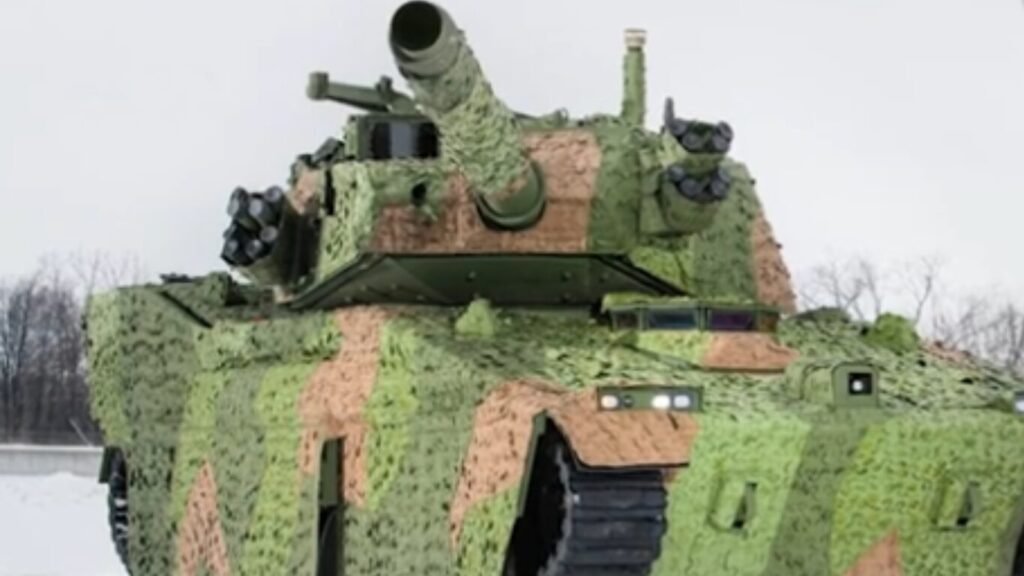
The growing interest in Autonomous Tank Platoons is driven by the practical advantages they can provide during military operations. Modern battlefields demand speed, accuracy, flexibility, and constant awareness. Armies that can process information faster and react more effectively often gain a significant operational advantage.
Autonomous systems are designed to support these objectives. They reduce the burden on human crews, improve battlefield coordination, and allow commanders to respond to rapidly changing situations with greater confidence. While no technology can guarantee victory, intelligent armored formations have the potential to reshape how military operations are planned and executed.
One of the most important benefits is the ability to maintain continuous operational readiness. Unlike human crews, autonomous vehicles do not experience fatigue, stress, or reduced concentration after long hours of operation. As long as fuel, maintenance, and communication systems remain available, they can continue supporting missions for extended periods.
This sustained capability becomes particularly valuable during prolonged military campaigns where maintaining constant battlefield pressure may influence operational success.
Protecting Soldiers Through Unmanned Operations
Perhaps the greatest advantage of Autonomous Tank Platoons is reducing the exposure of military personnel to dangerous combat situations.
Traditional armored vehicles require trained crews to operate inside heavily protected compartments. Although modern armor provides substantial protection, tanks still face threats from anti-tank missiles, explosive devices, drones, artillery, and precision-guided weapons.
Removing the crew from these platforms fundamentally changes how mission risks are managed.
Commanders can assign autonomous systems to highly dangerous reconnaissance missions, route clearance operations, or contested urban environments without immediately placing soldiers in direct danger.
This approach does not eliminate battlefield risks entirely because military personnel remain responsible for planning, supervision, logistics, and maintenance. However, reducing direct exposure during high-risk operations can significantly improve overall force protection.
From my perspective, protecting trained military personnel while maintaining operational effectiveness represents one of the strongest arguments supporting autonomous battlefield technology.
Faster Decisions During Combat
Modern warfare moves at an extraordinary pace.
Information arrives continuously from satellites, reconnaissance aircraft, surveillance drones, radar systems, electronic monitoring equipment, and frontline units. Human decision makers must process enormous amounts of information while events continue changing every second.
Autonomous Tank Platoons help solve this challenge by using AI to analyze battlefield information almost instantly.
The system evaluates threats, identifies safe movement routes, predicts possible enemy actions, and recommends responses before human operators could manually complete the same analysis.
Rapid information processing allows commanders to concentrate on broader mission objectives while AI supports immediate tactical awareness.
In high-intensity combat, even small improvements in decision speed may influence operational outcomes.
Improved Battlefield Coordination
Traditional military formations often rely on centralized command structures where instructions move from senior commanders down through several organizational levels before reaching frontline units.
Autonomous systems introduce a more flexible approach.
Every vehicle continuously exchanges information with nearby units. Instead of waiting for detailed instructions, the platoon automatically adjusts movement, formation, surveillance priorities, and defensive positioning according to changing battlefield conditions.
For example, if one vehicle discovers a blocked route, nearby vehicles immediately calculate alternatives while maintaining overall mission objectives.
This level of coordination improves operational efficiency without removing strategic control from military leadership.
Distributed intelligence also increases resilience because the mission does not depend entirely on one decision point.
Greater Precision During Military Operations
Accuracy has become increasingly important in modern warfare.
Military operations frequently occur near civilian populations, critical infrastructure, or humanitarian areas where unnecessary damage must be minimized whenever possible.
Autonomous Tank Platoons combine high-resolution sensors, AI analysis, and advanced targeting systems to improve battlefield precision.
The system evaluates multiple sources of information before identifying potential targets. It continuously compares visual images, thermal signatures, radar information, movement patterns, and mission rules before recommending engagement.
Although no technology can completely eliminate operational mistakes, combining multiple verification methods helps reduce unnecessary targeting errors.
Precision also improves resource management by reducing unnecessary ammunition expenditure and supporting more effective mission planning.
Adaptability Across Different Combat Environments
Every battlefield presents unique challenges.
Open deserts require long-range observation and rapid movement.
Dense forests restrict visibility while creating opportunities for concealed threats.
Mountain regions introduce navigation difficulties and communication obstacles.
Urban environments combine narrow streets, damaged infrastructure, civilian movement, and complex tactical situations.
Autonomous Tank Platoons continuously adapt their behavior according to surrounding conditions.
AI adapts to changing battlefield conditions by modifying flight paths, threat assessments, observation techniques, and communication strategies in real time.
This adaptability allows military forces to respond more effectively across a wide variety of operational environments without redesigning the entire mission plan.
The ability to learn from changing conditions represents one of the defining characteristics of intelligent military systems.
Force Multiplication Through AI
Military planners often use the term force multiplier to describe technologies that increase operational effectiveness without requiring proportional increases in personnel or equipment.
Autonomous Tank Platoons have the potential to serve this role.
Instead of relying on larger military formations, modern intelligent systems boost the effectiveness of current forces through rapid data analysis, better coordination, and a clearer understanding of the battlefield.
AI assists commanders by filtering overwhelming amounts of battlefield information into practical recommendations.
This support allows experienced military leaders to make better informed decisions while maintaining overall command authority.
From my perspective, AI should not be viewed primarily as a replacement for military professionals. Its greatest value comes from strengthening human decision making with timely and reliable information.
Challenges Facing Autonomous Tank Platoons
Despite remarkable technological progress, Autonomous Tank Platoons still face important limitations that cannot be ignored.
Developing intelligent combat systems is far more complicated than simply installing advanced software inside armored vehicles.
Real battlefields remain unpredictable.
Weather conditions change unexpectedly.
Communication networks may become unreliable.
Electronic interference can disrupt navigation systems.
Hostile adversaries deliberately try to trick intelligent sensors by creating false or misleading signals.
Each of these challenges affects operational performance.
Understanding these limitations is essential for realistic military planning.
Reliability Under Unpredictable Conditions
AI performs exceptionally well when operating within environments similar to those used during training and testing.
Actual battlefields rarely remain predictable.
Heavy smoke, dust storms, damaged buildings, extreme weather, destroyed infrastructure, and rapidly changing tactical situations create conditions that differ significantly from controlled testing environments.
Unexpected civilian movement may further complicate decision making.
An autonomous system must distinguish between military targets, humanitarian personnel, emergency responders, and civilians while operating under significant time pressure.
Even highly advanced algorithms can experience uncertainty when information becomes incomplete or contradictory.
Continuous testing, simulation, and operational evaluation remain necessary before autonomous systems achieve widespread battlefield deployment.
Cybersecurity Risks
One of the most serious concerns surrounding Autonomous Tank Platoons involves cybersecurity.
These vehicles depend heavily on software, digital communication, navigation systems, and interconnected battlefield networks.
Every connected system creates potential opportunities for cyber attacks.
Hostile actors may attempt to interfere with communications, manipulate sensor information, disrupt navigation, or introduce false battlefield data.
Successful cyber attacks could reduce operational effectiveness or create confusion during critical military operations.
For this reason, cybersecurity receives as much attention as armor protection and weapon performance during modern defense development.
Future autonomous military platforms will require continuous software updates, advanced encryption, intrusion detection systems, and multiple layers of digital protection.
Strong cybersecurity will remain one of the defining requirements for trustworthy autonomous combat systems.
Ethical and Legal Questions
As Autonomous Tank Platoons continue moving from research programs toward operational deployment, technology is no longer the only issue that deserves attention. Ethical responsibility and international law have become equally important. The ability to build intelligent combat vehicles does not automatically answer the question of how they should be used.
One of the biggest concerns is the role of AI in lethal decision making. Modern AI can analyze information at incredible speed, but deciding when force should be used involves much more than data processing. Military operations often involve uncertainty, rapidly changing conditions, and situations where human judgment remains essential.
Many defense experts support the idea that AI should assist commanders rather than completely replace them. Human supervision helps ensure that military actions remain consistent with operational objectives, legal requirements, and humanitarian principles.
Another important issue is accountability. If an autonomous system makes an incorrect decision that results in unintended harm, determining responsibility becomes difficult. Questions immediately arise about whether accountability belongs to military commanders, software developers, defense manufacturers, or the organization operating the system.
At present, these questions remain the subject of international discussion. Governments, defense organizations, legal experts, and technology researchers continue working toward practical frameworks that balance innovation with responsibility.
From my perspective, technological progress should always be accompanied by clear rules. Powerful military systems require equally strong governance to ensure they remain under meaningful human control.
International Regulations and Military Policy
The rapid development of AI has challenged existing military regulations across the world. Many international agreements were created long before autonomous combat systems became technically possible. As a result, current legal frameworks do not always address the unique challenges presented by intelligent military platforms.
Several countries have introduced national strategies for responsible AI development, while international organizations continue discussing possible standards for autonomous weapons. These discussions focus on transparency, accountability, cybersecurity, operational safety, and the continued involvement of human decision makers.
Although complete global agreement has not yet been achieved, there is growing recognition that autonomous military technologies require international cooperation.
Future regulations are expected to address areas such as operational testing, verification standards, AI reliability, cybersecurity requirements, and ethical oversight before widespread deployment becomes common.
Military innovation continues advancing rapidly, but responsible governance will remain equally important for long-term stability.
Future Development of Autonomous Tank Platoons
The next generation of Autonomous Tank Platoons is expected to become even more intelligent, more connected, and more adaptable than today’s experimental systems.
Future AI models will likely improve their ability to recognize complex battlefield situations, identify hidden threats, and support commanders through more accurate operational recommendations.
Sensor technology will also continue advancing. Higher-resolution cameras, improved thermal imaging, longer-range radar, and more capable LiDAR systems will provide increasingly detailed battlefield awareness.
Communication networks are expected to become faster and more secure, allowing autonomous vehicles to exchange larger amounts of information with minimal delay. This continuous information sharing will strengthen platoon coordination and improve mission effectiveness.
Future vehicles may also integrate more closely with drones, reconnaissance aircraft, satellites, and other autonomous platforms. Instead of operating as independent systems, they could become part of a much larger connected defense network where every platform contributes information to a shared operational picture.
As computing power continues increasing, AI will be able to process more information while reducing response times even further.
From what I observe, the future battlefield will depend less on isolated military platforms and more on intelligent cooperation between multiple autonomous systems operating together.
The Role of AI in Next Generation Armored Warfare
AI will remain the driving force behind future autonomous armored operations.
Instead of focusing only on automation, future research aims to improve reasoning, adaptability, and mission support. AI systems will continue learning from simulations, operational testing, and controlled training environments to improve their ability to recognize complex situations.
Another important area of development is predictive analysis. Rather than simply reacting to enemy movement, AI may estimate possible future actions based on historical patterns, terrain conditions, and real-time intelligence.
Maintenance will also become smarter. AI can monitor engine performance, suspension systems, electronics, fuel consumption, and mechanical components to predict maintenance requirements before failures occur.
As a result, maintenance delays are reduced, and operational readiness remains higher.
Logistics may benefit as well. Intelligent planning systems can recommend efficient supply routes, coordinate fuel delivery, and optimize maintenance schedules across large military formations.
These improvements demonstrate that AI contributes to military effectiveness in many different ways beyond direct combat operations.
Practical Lessons for Defense Planning
The development of Autonomous Tank Platoons provides several important lessons for military organizations.
First, technology alone does not guarantee operational success. Training, doctrine, cybersecurity, logistics, and leadership remain essential components of effective military capability.
Second, AI should be viewed as a decision support tool rather than a complete replacement for experienced military professionals. Human judgment continues to provide flexibility, ethical reasoning, and strategic understanding that machines cannot fully replicate.
Third, cybersecurity must receive continuous attention throughout the entire life cycle of autonomous military systems. Strong digital protection is just as important as physical armor.
Finally, international cooperation will play an important role in developing common standards that encourage responsible innovation while reducing unnecessary risks.
These lessons will influence military planning long after autonomous technologies become widely available.
Conclusion
Autonomous Tank Platoons represent one of the most significant developments in modern defense technology. By combining AI, advanced sensors, secure communications, and intelligent coordination, these systems have the potential to improve battlefield awareness, increase operational efficiency, and reduce risks for military personnel.
At the same time, this technology introduces new responsibilities. Reliability, cybersecurity, ethical oversight, legal accountability, and meaningful human control must continue developing alongside technical innovation. A balanced approach will help ensure these powerful systems support both national security and responsible military operations.
The future of armored warfare will be shaped by intelligence as much as firepower. Nations that successfully combine advanced technology with sound strategy, effective training, and responsible governance will be better prepared for tomorrow’s security challenges.
Autonomous Tank Platoons are no longer just an emerging concept. They are becoming an important part of the ongoing transformation of military operations, and understanding their capabilities today helps us better prepare for the future.
This original research and expert analysis is proudly presented exclusively by worldstan.com, where complex defense technologies, AI innovations, and future security trends are explained with clarity, accuracy, and practical insight for readers around the world.