

If you want to understand where modern combat is heading, you need to look closely at Q-UGVs in urban warfare, because these robot dogs are quietly becoming the most reliable scouts in cities where human soldiers face the highest risk.
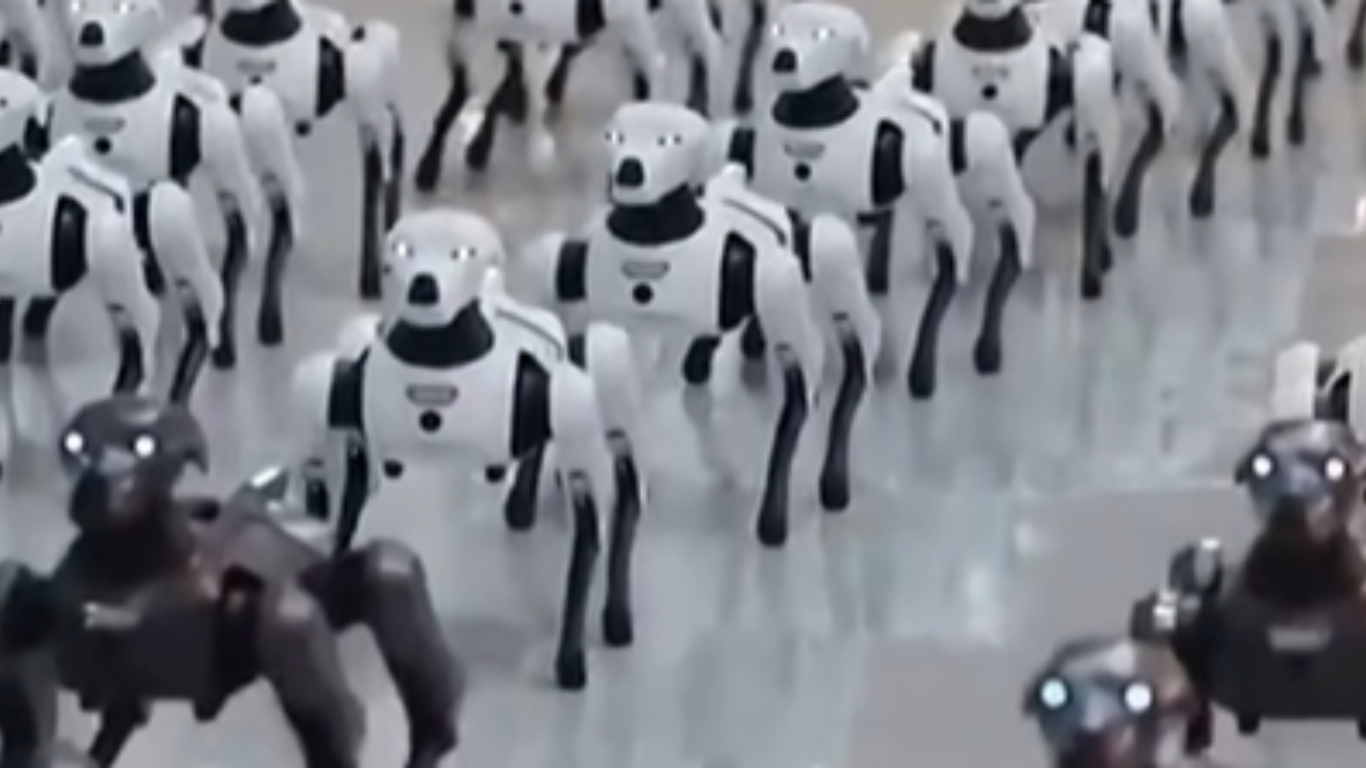
Table of Contents
ToggleQ-UGVs in Urban Warfare: Why Robot Dogs are the Future of City Combat?
When I first started studying military technology, I used to think drones in the sky were the biggest shift in warfare. That belief does not hold anymore. The real change is happening on the ground, and it is happening quietly. Q-UGVs, which many people casually call robot dogs, are starting to redefine how armies move, observe, and survive in dense urban environments.
Cities are chaotic during conflict. Buildings collapse. Roads get blocked. Visibility drops. Human soldiers face constant uncertainty. This is exactly where Q-UGVs begin to prove their worth. They are not emotional. They do not panic. They move with precision and gather data that humans simply cannot access safely.
From my perspective, the real power of these machines is not just their movement. It is their ability to reduce risk while increasing awareness. That combination is rare in warfare.
Defining Q-UGVs: Understanding Quadrupedal Unmanned Ground Vehicles:
Q-UGVs are robotic systems designed with four legs, allowing them to move like animals. This design is not accidental. Nature has already solved the problem of mobility in rough terrain, and engineers are simply copying that solution.
Unlike traditional wheeled robots, Q-UGVs maintain balance on uneven surfaces. They can climb stairs, step over debris, and adjust their posture in real time. In simple terms, they behave more like a trained animal than a machine.
I believe this is where their psychological advantage also comes in. Soldiers often feel more comfortable working alongside a system that moves naturally rather than something that looks rigid and mechanical. It builds trust faster, which is critical in high-stress environments.
These machines are equipped with cameras, sensors, and communication tools. They act as the eyes and ears of a unit. They go first so humans do not have to.
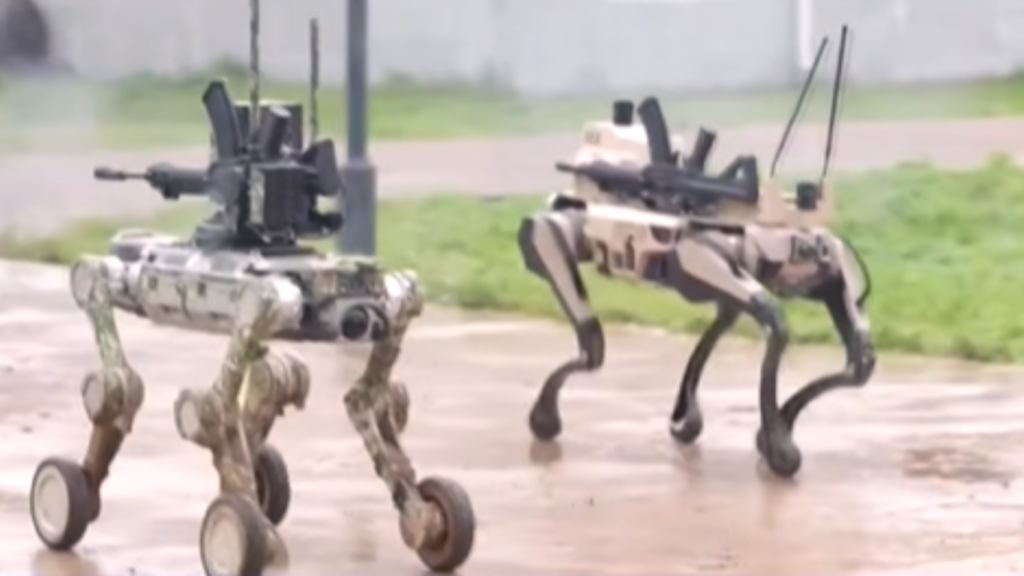
Terrain Versatility: Why Four Legs Are Better Than Wheels in Rubbled Cities:
Urban warfare is messy. Roads are rarely usable. Buildings collapse without warning. Vehicles get stuck. This is where traditional systems fail.
A wheeled robot depends on stable ground. The moment that ground disappears, its usefulness drops sharply. Q-UGVs do not have that limitation. They step over obstacles instead of trying to roll through them.
I have seen real-world testing scenarios where robot dogs move through rubble that would completely stop a small vehicle. That difference is not small. It can be the deciding factor between success and failure of a mission.
In my opinion, terrain versatility is the single biggest reason why Q-UGVs are gaining attention so quickly. Armies are realizing that mobility in unpredictable environments is more valuable than speed on perfect roads.
Surveillance and Recon: Using Thermal and LiDAR Sensors for Scouting:
Information wins wars. This is not a new idea, but the way information is gathered is changing fast.
Q-UGVs are equipped with thermal imaging and LiDAR sensors. Thermal sensors allow them to detect heat signatures, even in complete darkness. LiDAR creates detailed 3D maps of the surroundings.
This combination gives commanders a clear picture of what lies ahead. Hidden threats become visible. Movement behind walls can sometimes be detected. Unknown spaces become mapped environments.
From a practical standpoint, this reduces guesswork. Soldiers no longer have to enter blind areas without data. That alone can save lives.
I personally see this as the most immediate benefit of Q-UGVs. They turn uncertainty into information, and in warfare, that is everything.
Tunnels and Tight Spaces: Their Role in Modern Underground Warfare:
One area that many people overlook is underground combat. Tunnels, basements, and narrow corridors are becoming more common in modern conflicts.
These environments are dangerous. Visibility is low. Movement is restricted. Communication can fail. Sending human soldiers into such spaces is always risky.
Q-UGVs are perfectly suited for this role. Their compact size and flexible movement allow them to navigate tight areas with ease. They can enter spaces where humans would struggle or hesitate.
I think this is where their future role will expand the most. Underground warfare is not going away. If anything, it’s happening more frequently.
Having a reliable robotic scout in these environments is not just helpful, it is necessary.
Conclusion:
When you step back and look at the bigger picture, Q-UGVs are not just another piece of military equipment. They represent a shift in how risk is managed on the battlefield.
Instead of exposing soldiers to danger first, machines take that role. Instead of guessing what lies ahead, data provides clarity. Instead of being limited by terrain, movement becomes adaptable.
In my view, robot dogs are not replacing soldiers. They are extending their capabilities. They are giving them better information, safer options, and more control over uncertain environments.
That is why Q-UGVs in urban warfare are not just a trend. They are a direction. And if you follow defense technology closely, you will notice that this direction is only moving forward.
This insight, analysis, and perspective are crafted uniquely for Worldstan, where the goal is not just to inform but to explain what truly matters in the future of warfare.