

Autonomous Combat Engineers Transform Modern Warfare

Autonomous combat engineers are quietly reshaping how modern armies operate, handling dangerous tasks like mine clearance, logistics, and battlefield construction while keeping human soldiers out of harm’s way.
Beyond Combat Robots in Military Engineering and Logistics
Mine Clearance
Autonomous Combat Engineers use intelligent robotic systems to clear mines, transport supplies, build battlefield infrastructure, and operate safely in hazardous environments, helping modern armies complete dangerous missions with greater speed, precision, and reduced risk.
Autonomous Combat Engineers are transforming military engineering through intelligent robotics that improve mine clearance, logistics, battlefield construction, and hazardous response while reducing risks to human personnel.
Modern warfare is no longer defined only by powerful weapons or larger armies. Success increasingly depends on how quickly forces can move, adapt, protect personnel, and maintain operations under extremely difficult conditions. This is exactly where Autonomous Combat Engineers are making a remarkable difference. These intelligent robotic systems are designed to perform engineering and support tasks that have traditionally exposed military personnel to significant danger. Rather than replacing human expertise, they work alongside soldiers, completing hazardous missions with greater consistency while allowing military teams to focus on strategic decision making.
Military engineering has always played an essential role in every conflict. Roads must remain open, obstacles need to be removed, bridges have to be constructed, damaged infrastructure requires repair, and defensive positions must be established before operations can continue. Every one of these responsibilities demands time, specialised equipment, and experienced personnel. Introducing autonomous systems into these missions allows many of these difficult jobs to be completed with less human exposure to danger.
These robotic systems are especially valuable because they can perform critical tasks in hazardous environments that are too risky for people. Dangerous terrain, unexploded explosives, collapsed structures, contaminated areas, and active combat zones present constant challenges during military operations. Autonomous engineering platforms can enter these locations first, gather information, complete assigned tasks, and reduce uncertainty before soldiers arrive.
In my view, this represents one of the most responsible applications of advanced military technology. Instead of increasing destruction, these systems are primarily designed to improve safety, enhance operational efficiency, and reduce unnecessary casualties. When technology protects lives while improving mission performance, it delivers value beyond simple battlefield advantages.
The Growing Importance of Military Engineering
Military engineering has quietly supported armies throughout history. Every successful military campaign has depended on engineers who prepared roads, crossed rivers, removed obstacles, repaired damaged infrastructure, and established secure defensive positions. Although weapons often receive public attention, engineering units frequently determine whether military forces can continue advancing or maintain operational momentum.
The evolution of military engineering has followed advances in technology. Early engineers relied entirely on manual labour, simple construction tools, and mechanical equipment. As vehicles, heavy machinery, communications, and computer systems developed, engineering capabilities expanded significantly. Today, artificial intelligence, robotics, autonomous navigation, and advanced sensors are creating another major transformation.
| Year | Event | Description |
|---|---|---|
| Ancient Era | Early military engineering | Armies built bridges, defensive walls, and temporary roads using manual labour. |
| 1914 to 1918 | First World War | Combat engineers became essential for trench construction, obstacle removal, and bridge building. |
| 1939 to 1945 | Second World War | Engineering vehicles and explosive disposal techniques expanded rapidly. |
| Late 20th Century | Robotics introduced | Remote controlled systems began assisting with bomb disposal and hazardous operations. |
| 21st Century | Autonomous engineering | Intelligent robotic platforms now support engineering, logistics, reconnaissance, and hazardous response missions. |
Looking back at this progression, it becomes clear that engineering has always evolved alongside military technology. Autonomous Combat Engineers are simply the next logical step in improving operational effectiveness while reducing human risk.
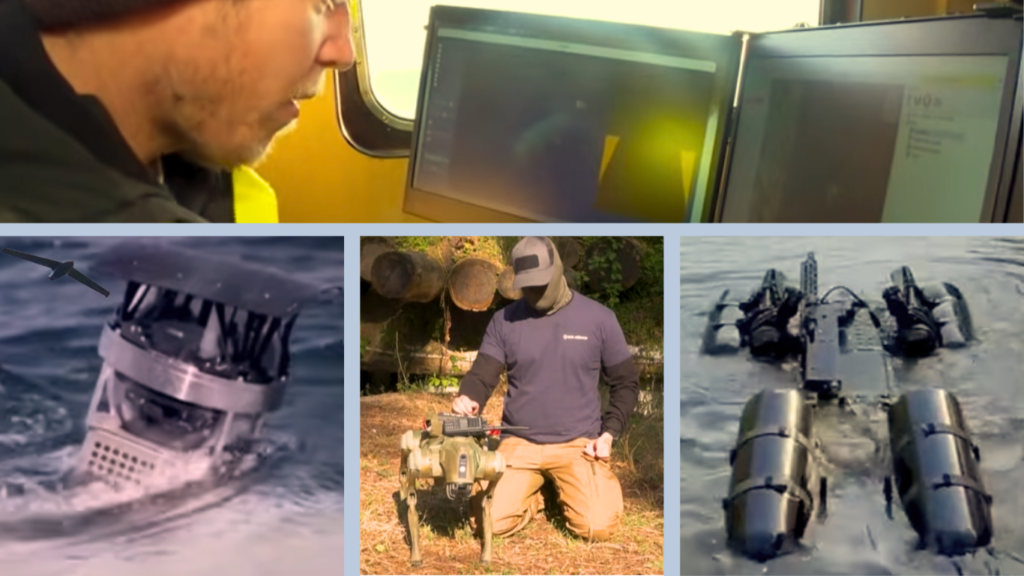
How Artificial Intelligence Supports Autonomous Combat Engineers
Artificial intelligence forms the decision making foundation behind many autonomous engineering systems. Instead of relying entirely on remote operators, these machines can process information from multiple sensors, analyse their surroundings, identify obstacles, and recommend or perform appropriate actions. This allows operations to continue even when communication with human controllers becomes limited.
Modern engineering robots combine several technologies into one integrated platform. Cameras provide visual awareness, radar scans surrounding terrain, laser mapping systems create detailed environmental models, thermal imaging identifies heat sources, and specialised detectors locate explosives or hazardous materials. By processing information from multiple sources, AI creates a detailed and reliable understanding of everything happening around it.
Let me explain this in the clearest, simplest terms.
Imagine a highly trained engineer who never becomes tired, constantly observes every direction at once, instantly compares thousands of data points, and reacts within fractions of a second. That gives a simple picture of how AI assists these engineering robots. Human operators still supervise missions, but intelligent software helps the machines perform many routine decisions automatically.
I believe this partnership between people and intelligent machines will remain the most effective model. Human judgement continues to guide strategic decisions, while AI handles repetitive calculations, environmental analysis, and precision tasks that computers perform exceptionally well.
Mine Clearance Saves Lives Before Battles Begin
One hidden threat has challenged military operations for generations. Landmines and improvised explosive devices remain among the most dangerous obstacles any military force encounters. Unlike visible enemy positions, these hidden explosives create uncertainty with every step, slowing troop movements and increasing casualties.
Traditionally, combat engineers manually searched for explosive devices using handheld detectors, specialised equipment, and years of experience. Although these professionals perform extraordinary work, the risks have always remained extremely high. Autonomous Combat Engineers significantly reduce those dangers by allowing robotic systems to inspect hazardous areas before soldiers enter them.
As they move across areas suspected of containing mines, these robotic vehicles continuously scan the terrain to detect potential threats. Advanced metal detectors identify buried metallic objects, ground penetrating sensors examine soil composition, thermal cameras detect unusual temperature differences, and chemical sensors recognise explosive residue. Artificial intelligence evaluates these readings together, helping distinguish genuine threats from harmless objects.
Once suspicious devices are detected, several responses become possible. Some robotic platforms simply mark dangerous locations for explosive disposal teams. Others use precision robotic arms to investigate the object from a safe distance. Certain specialised systems can even neutralise explosive devices using carefully controlled mechanical or explosive methods without exposing soldiers to unnecessary danger.
From my perspective, the greatest benefit extends beyond removing explosives. Confidence changes everything during military operations. When troops know the route ahead has already undergone detailed robotic inspection, they can concentrate more effectively on their assigned objectives instead of worrying about every step they take.
This improvement in confidence also increases operational speed. Convoys experience fewer unnecessary delays, engineering teams complete missions more efficiently, and commanders gain greater flexibility when planning movement across uncertain terrain.
Sensors That Make Detection More Accurate
The remarkable performance of Autonomous Combat Engineers depends largely on their sophisticated sensor systems. No single detector identifies every possible threat, which is why modern engineering robots combine several complementary technologies.
Visual cameras recognise changes in terrain and identify suspicious objects resting on the surface. Thermal imaging highlights unusual heat patterns that may indicate recently disturbed ground or concealed electronic devices. Laser mapping systems measure precise distances while generating highly detailed three dimensional terrain models. Ground penetrating radar examines subsurface structures, revealing buried objects invisible from above. Chemical detectors identify microscopic traces of explosive compounds that remain after manufacturing or handling explosive materials.
Artificial intelligence analyses these information sources simultaneously. Instead of depending upon one sensor, the system compares evidence collected from every detector before assigning confidence levels to potential threats. This layered approach greatly improves reliability while reducing unnecessary false alarms.
In my opinion, this demonstrates one of the strongest advantages of intelligent automation. Rather than replacing experienced engineers, AI provides them with more complete information, allowing better decisions under demanding operational conditions.
Military Logistics Keeps Every Mission Moving
Many people naturally associate military success with advanced weapons or highly trained soldiers. While those elements certainly matter, every experienced commander understands that reliable logistics often determines whether an operation succeeds or fails. Armies cannot continue fighting if food, fuel, medical equipment, spare parts, water, or ammunition fail to reach the right place at the right moment.
Autonomous Combat Engineers are becoming an important part of this logistics network. Instead of depending entirely on traditional supply vehicles travelling predictable routes, modern forces can use autonomous ground vehicles and aerial drones to transport essential equipment across challenging environments. This creates more flexible supply chains that continue operating even when roads become damaged or dangerous.
Mountain ranges, flooded regions, deserts, forests, and urban battlefields each create unique transportation problems. Conventional trucks may struggle to reach isolated units, while helicopters can become expensive or vulnerable during certain missions. Autonomous delivery systems provide an additional option by moving supplies through routes that minimise exposure while maintaining regular deliveries.
One practical advantage is their ability to operate around the clock. Unlike human drivers, autonomous logistics platforms do not become physically exhausted during long missions. They can continue following assigned routes while constantly monitoring terrain, avoiding obstacles, and adjusting navigation based on changing battlefield conditions.
From my perspective, dependable logistics rarely receives the recognition it deserves. History repeatedly demonstrates that armies capable of maintaining reliable supply chains usually gain significant operational advantages over forces that struggle with transportation and resupply.
How Logistics Drones Improve Frontline Support
Logistics drones have progressed far beyond simple experimental projects. Many modern defence organisations now evaluate or deploy unmanned aerial systems capable of transporting valuable cargo directly to operational units. Their primary purpose is not replacing every existing transport vehicle but filling critical gaps where conventional methods become too dangerous or too slow.
A drone carrying emergency medical supplies can travel directly to isolated personnel without requiring roads or large landing areas. This flexibility becomes especially valuable when infrastructure has been damaged or natural obstacles prevent normal vehicle movement.
Ammunition delivery offers another excellent example. Frontline units occasionally consume supplies faster than expected during extended operations. Rather than exposing multiple personnel to hostile conditions while transporting replacement ammunition, autonomous aerial systems can complete much of the journey independently before soldiers safely retrieve the delivered equipment.
Medical support represents another area where these technologies show tremendous promise. Emergency bandages, blood supplies, antibiotics, communication equipment, portable oxygen, and trauma kits can all reach injured personnel much faster through autonomous delivery systems.
I believe this humanitarian benefit deserves equal attention alongside military efficiency. Saving valuable minutes during emergency medical situations may significantly improve survival rates while reducing unnecessary exposure for rescue teams.
Intelligent Route Planning Improves Every Delivery
Artificial intelligence does far more than simply guide autonomous vehicles from one location to another. Modern systems continuously analyse multiple factors before selecting the safest and most efficient route available.
Navigation software evaluates terrain elevation, road conditions, weather information, known hazards, communication coverage, fuel consumption, and mission priorities. As new information becomes available, the system updates travel plans without requiring complete human intervention.
Suppose heavy rainfall suddenly damages a planned supply route. Instead of waiting for new manual instructions, an autonomous logistics platform can calculate an alternative path while keeping mission objectives unchanged. Likewise, if reconnaissance identifies a newly hazardous area, intelligent navigation software can redirect deliveries through safer corridors.
This adaptive decision making allows military operations to continue under rapidly changing circumstances. Human commanders remain responsible for overall mission planning, while intelligent systems handle countless navigation calculations much faster than traditional methods.
One important advantage is consistency. Computers do not become distracted, emotionally overwhelmed, or physically fatigued during repetitive navigation tasks. They continue processing information continuously, supporting more reliable logistics throughout extended operations.
Rapid Battlefield Construction Creates Immediate Protection
Engineering support extends far beyond transportation and logistics. During active operations, military personnel frequently require immediate defensive structures that provide protection against incoming threats. Waiting several hours for traditional construction methods may expose troops unnecessarily, particularly during fast moving operations.
Autonomous Combat Engineers introduce a different approach by combining robotic construction equipment with intelligent planning software. These specialised machines can excavate trenches, construct protective barriers, reinforce defensive positions, and prepare temporary infrastructure much faster than conventional manual methods under comparable conditions.
Imagine arriving in unfamiliar terrain where immediate protection becomes essential. Instead of assigning large engineering teams to begin digging manually, autonomous construction systems can begin work almost immediately. Multiple robotic platforms operate simultaneously, completing excavation with remarkable precision while reducing physical demands placed upon military personnel.
From my perspective, rapid construction directly supports force protection. Every minute saved while establishing defensive positions increases operational security and improves the safety of deployed personnel.
Building Bridges Restores Operational Freedom
Natural obstacles frequently slow military movement. Rivers, damaged highways, collapsed bridges, and destroyed transportation routes may interrupt carefully planned operations if engineering support cannot respond quickly enough.
Autonomous bridge deployment systems offer an increasingly valuable solution. Some engineering platforms carry modular bridge components that can be positioned with minimal human involvement. Others prepare bridge foundations, stabilise surrounding ground, or assist larger engineering teams during assembly.
Temporary bridges do not need to remain permanently installed. Their purpose is restoring mobility quickly so personnel, vehicles, humanitarian aid, or emergency equipment can continue moving toward operational objectives.
Bridge construction has always required remarkable engineering skill. Intelligent robotic assistance now accelerates many preparation stages while allowing experienced engineers to supervise complex structural decisions rather than performing every physically demanding task themselves.
I find this combination especially impressive because it illustrates how automation complements professional expertise instead of replacing it. Machines perform repetitive heavy work, while skilled engineers maintain responsibility for structural safety and mission success.
Urban Engineering Presents New Challenges
Modern military operations increasingly occur in densely populated environments where damaged buildings, blocked streets, collapsed infrastructure, and narrow access routes create highly complex engineering problems.
Autonomous Combat Engineers equipped with advanced mapping systems can safely enter unstable areas before larger engineering teams arrive. Their sensors create detailed digital maps showing damaged structures, accessible routes, hazardous debris, and potential obstacles.
This information supports more effective planning while reducing unnecessary risk. Rather than relying solely on limited visual observation, commanders receive highly detailed environmental assessments generated through robotic reconnaissance.
Urban environments also require exceptional precision. Construction work must often occur within confined spaces surrounded by existing infrastructure. Intelligent robotic equipment provides controlled movement that reduces accidental damage while improving engineering accuracy.
In my opinion, this capability will become increasingly important as future military operations continue adapting to more complex operational environments.
Hazardous Environments Demand Robotic Assistance
Some military missions involve dangers that protective clothing alone cannot fully overcome. Chemical contamination, biological hazards, radioactive materials, industrial accidents, and toxic spills create environments where prolonged human exposure becomes unacceptable.
Autonomous Combat Engineers provide essential support under these conditions. Their specialised equipment allows them to enter contaminated areas, identify hazardous substances, collect environmental samples, measure contamination levels, and assist decontamination operations without placing additional personnel at unnecessary risk.
Hazard detection requires extraordinary accuracy. Small measurement errors may expose responders to significant danger or unnecessarily restrict safe operational areas. Intelligent robotic platforms continuously monitor environmental conditions while transmitting detailed information to command centres.
These systems also maintain careful records throughout each mission. Every measurement, location, movement, and environmental change becomes part of a digital operational history that assists later analysis and recovery planning.
From my perspective, protecting responders during hazardous operations represents one of the strongest arguments for continued investment in autonomous engineering technologies.
Learning From Civilian Innovation
Interestingly, many technologies supporting Autonomous Combat Engineers first demonstrated their value outside military environments. Robots have assisted emergency responders after earthquakes, inspected damaged industrial facilities, explored hazardous mines, and entered nuclear accident sites where human access proved impossible.
These civilian experiences helped engineers improve mobility, sensor accuracy, communication systems, and robotic durability before adapting similar technologies for defence applications.
| Year | Event | Description |
|---|---|---|
| 1986 | Nuclear accident response | Remote robotic systems demonstrated the importance of reducing human exposure during hazardous operations. |
| Early 2000s | Disaster response robotics | Robots supported search, inspection, and damage assessment following major disasters. |
| 2010s | Advanced autonomous navigation | Artificial intelligence improved robotic mobility, mapping, and environmental awareness. |
| 2020s | Military engineering integration | Defence organisations expanded autonomous engineering capabilities for logistics, construction, and hazardous response. |
This gradual evolution demonstrates that innovation often develops through cooperation between civilian research and defence engineering. Improvements achieved in one field frequently create valuable opportunities in another.
Communication Between Autonomous Engineering Systems
One of the most impressive capabilities of Autonomous Combat Engineers is their ability to work together instead of operating as isolated machines. Modern military robotics increasingly relies on secure communication networks that allow different autonomous platforms to exchange information in real time.
For example, an unmanned ground vehicle clearing a road can immediately notify a logistics drone that the route is now safe for supply delivery. At the same time, another engineering robot may receive updated terrain information to begin constructing a temporary defensive position nearby. This constant flow of information allows multiple systems to support the same mission with greater coordination.
Artificial intelligence manages much of this communication by organising incoming data, identifying priorities, and sharing only the information each platform requires. This reduces unnecessary network traffic while helping commanders maintain a clear picture of the battlefield.
From my perspective, this cooperative approach is where the true strength of autonomous engineering lies. Individual robots are valuable, but connected systems working as one intelligent network can achieve far greater operational efficiency.
Human Operators Continue to Lead Critical Decisions
Although autonomous technology has advanced rapidly, human expertise remains central to military engineering. These robotic systems are designed to support trained personnel rather than replace them.
Experienced engineers continue making strategic decisions, evaluating operational risks, approving engineering plans, and supervising complex missions. Artificial intelligence assists by processing large amounts of information much faster than people can, but final responsibility still belongs to qualified military professionals.
This partnership combines the strengths of both sides. Machines perform repetitive, hazardous, and highly precise tasks without fatigue, while human operators contribute judgement, experience, creativity, and ethical responsibility.
I believe this balanced relationship offers the safest and most practical direction for future military engineering. Technology becomes most valuable when it strengthens human decision making instead of attempting to replace it completely.
Cybersecurity Protects Autonomous Operations
As autonomous engineering systems become more connected, protecting them against cyber threats becomes increasingly important. A robotic engineering vehicle depends on software, communication links, navigation systems, and onboard computers. Each of these components must remain secure throughout every mission.
Military cybersecurity teams develop multiple layers of protection to prevent unauthorised access, data manipulation, or communication interference. Secure encryption protects transmitted information, while authentication systems verify that commands come only from authorised personnel.
Artificial intelligence also contributes to cybersecurity by continuously monitoring system behaviour. If unusual activity appears, intelligent security software can identify abnormal patterns, alert operators, and isolate affected systems before problems spread across the wider network.
In my opinion, cybersecurity should receive the same level of attention as physical engineering equipment. Even the most advanced robot cannot perform effectively if its digital systems are not adequately protected.
Training the Next Generation of Military Engineers
Introducing autonomous engineering technology also changes how military personnel are trained. Future combat engineers will need knowledge that extends beyond traditional construction and mechanical skills.
Training programmes increasingly include robotics, artificial intelligence, autonomous navigation, sensor technology, digital mapping, cybersecurity, and data analysis. Engineers must understand both how these machines operate and how to work alongside them during real missions.
Simulation technology plays an important role in this learning process. Virtual environments allow operators to practise hazardous engineering scenarios without exposing personnel or equipment to unnecessary risk. Engineers can repeat difficult exercises, evaluate different solutions, and gain valuable experience before entering operational environments.
Continuous learning will remain essential because autonomous technologies continue evolving rapidly. New software, improved sensors, and more capable robotic platforms require regular training updates throughout a military career.
Advantages That Extend Beyond the Battlefield
Although much attention focuses on combat applications, many technologies developed for Autonomous Combat Engineers also provide important benefits during humanitarian and disaster response operations.
After earthquakes, floods, landslides, or industrial accidents, autonomous engineering robots can inspect damaged buildings, search unstable areas, identify hazardous materials, and assess infrastructure before emergency workers enter dangerous locations.
Autonomous logistics vehicles may transport food, clean water, medical supplies, and communication equipment into communities where roads have become blocked or damaged. Engineering robots can also help remove debris, reinforce damaged structures, and support temporary bridge construction that restores access for emergency responders.
These wider applications demonstrate that investment in military engineering technology often produces benefits extending well beyond national defence.
I find this dual purpose especially encouraging because innovations originally developed for military safety frequently improve emergency response capabilities for civilian communities as well.
Current Challenges Facing Autonomous Combat Engineers
Despite impressive progress, Autonomous Combat Engineers still face several technical and operational challenges.
Extreme weather conditions can affect sensors and navigation systems. Thick smoke, heavy rainfall, deep snow, dust storms, and dense vegetation may reduce visibility and complicate autonomous movement. Engineers continue improving sensor fusion so robots maintain reliable performance under these demanding conditions.
Power management also remains an important consideration. Autonomous vehicles require dependable energy systems capable of supporting extended missions without frequent maintenance or battery replacement. Advances in battery technology, hybrid power systems, and energy-efficient computing continue improving operational endurance.
Communication reliability presents another challenge. Some operational environments may limit radio signals or satellite connectivity. Future autonomous systems will require even greater independence so they can safely continue assigned tasks when communications become temporarily unavailable.
Cost is another practical factor. Developing highly specialised engineering robots requires significant investment in research, manufacturing, testing, and maintenance. However, many defence experts believe that reducing casualties, improving operational efficiency, and increasing mission success justify these long-term investments.
The Future of Autonomous Military Engineering
The future of Autonomous Combat Engineers will likely involve even greater intelligence, flexibility, and cooperation between robotic systems.
Artificial intelligence will continue improving environmental awareness, allowing robots to better understand changing terrain, recognise hazards more accurately, and recommend engineering solutions with greater confidence.
Future platforms may operate in coordinated teams where ground vehicles, aerial drones, amphibious systems, and engineering equipment share information continuously while adapting to changing mission requirements.
Machine learning will further improve operational performance by allowing systems to analyse previous missions, identify successful engineering strategies, and support better planning for future operations.
Advanced materials may produce lighter, stronger engineering vehicles capable of operating longer while carrying heavier equipment. Improvements in robotics will also increase construction precision, allowing autonomous systems to build protective structures more quickly and efficiently than ever before.
From my perspective, the future is not about replacing military engineers. It is about providing them with intelligent tools that improve safety, increase productivity, and allow them to focus on the complex decisions that only experienced professionals can make.
CONCLUSION AND BRAND CREDIBILITY
Autonomous Combat Engineers represent far more than another step in military automation. They show how intelligent technology can support people by taking on some of the most dangerous engineering tasks while improving precision, efficiency, and operational safety. From clearing hidden explosives and delivering essential supplies to constructing battlefield infrastructure and working safely in contaminated environments, these systems are steadily changing how modern military engineering is performed.
Throughout this guide, we have explored how artificial intelligence, robotics, advanced sensors, and autonomous navigation work together to strengthen military engineering. While these technologies continue to evolve, one principle remains constant. Human expertise, leadership, and accountability remain at the centre of every successful operation. Intelligent machines provide speed, accuracy, and endurance, but experienced professionals continue making the decisions that shape every mission.
Looking ahead, future developments will likely introduce even smarter engineering platforms capable of working together across land, air, and hazardous environments. Improvements in artificial intelligence, energy systems, secure communications, and robotics will expand their capabilities while making them more reliable under demanding conditions. At the same time, responsible development, strong cybersecurity, international cooperation, and clear operational standards will remain essential to ensure these technologies are used safely and ethically.
From my perspective, the greatest achievement of Autonomous Combat Engineers is not simply completing engineering work more quickly. Their greatest value lies in protecting human life. Every mine safely detected, every hazardous area inspected by a robot instead of a soldier, every emergency medical delivery completed by an autonomous system, and every defensive position built with reduced risk demonstrates how technology can support both operational success and human safety.
Modern defence is increasingly about intelligent support rather than overwhelming force alone. Engineering, logistics, infrastructure, mobility, and protection have become just as important as traditional combat capabilities. Autonomous engineering systems strengthen all of these areas, making military operations more resilient, adaptable, and sustainable in increasingly complex environments.
As research continues, cooperation between engineers, software developers, defence organisations, policymakers, and academic institutions will play a major role in shaping the next generation of autonomous military engineering. Continuous innovation must be balanced with transparency, rigorous testing, legal oversight, and respect for international humanitarian principles. Responsible progress will ensure these technologies remain reliable tools that enhance security while reducing unnecessary risks.
Autonomous Combat Engineers will continue influencing the future of military engineering for many years to come. Their growing role reflects a broader transformation in defence technology where intelligent systems improve decision making, strengthen logistics, support engineering operations, and help protect the people who serve on the front lines.
This comprehensive research and professional analysis has been carefully prepared exclusively for worldstan.com, where we remain committed to delivering original, trustworthy, research-driven insights into artificial intelligence, military technology, defence innovation, and the emerging technologies shaping the future of global security. Every article published by worldstan.com is created with a strong focus on accuracy, clarity, practical value, and responsible knowledge sharing for readers around the world.