

Cyber Security in Robotics Can War Robots Be Hacked
Battlefield Robot Cybersecurity is becoming one of the most important parts of modern defence. Behind every intelligent military robot is a complex digital system that must stay protected from cyber threats, and this guide explains how secure technology keeps these machines operating safely in combat.
Can Battlefield Robots Be Hijacked
Battlefield Robot Cybersecurity explains how military robots are protected against hacking, malware, GPS spoofing, signal jamming, and modern cyber warfare threats.
Modern military robots are among the most advanced machines ever developed. They can patrol dangerous areas, carry heavy equipment, detect hidden threats, and support soldiers without becoming tired. Because of these abilities, many people assume these systems are almost impossible to stop. The truth is quite different. Every advanced robot depends on software, electronic hardware, communication networks, and AI to perform its tasks. If any of these systems are compromised, the robot itself can become vulnerable. This is why Battlefield Robot Cybersecurity has become a major priority for defence organisations around the world.
As military technology evolves, cyber warfare is becoming just as important as traditional combat. A powerful robot is valuable only when its digital systems remain secure. Even the strongest armour cannot protect against a successful cyber attack. Modern conflicts increasingly show that protecting information, communication, and software is just as important as protecting soldiers and equipment.
Why Modern Battlefield Robots Need Strong Cybersecurity
Battlefield robots are no longer simple remote-controlled machines. They operate using powerful processors, AI algorithms, sensors, cameras, navigation systems, and encrypted communication links. Every component works together to help the robot understand its surroundings and carry out missions safely.
These machines constantly exchange information with military command centres, satellites, drones, and nearby units. This continuous flow of information improves decision-making, but it also creates opportunities for cyber attackers. Every digital connection becomes a possible target.
From my perspective, the greatest challenge is not building smarter robots. The real challenge is ensuring those intelligent machines remain trustworthy under every condition. A robot that loses its digital security can quickly become a risk instead of an advantage.
Battlefield Robots Are Mobile Computers
The easiest way to understand military robots is to think of them as highly specialised computers designed for combat environments. They process huge amounts of information every second. Cameras capture images. Radar scans the surroundings. Sensors measure movement, heat, sound, and distance. AI analyses all this information before deciding what action to take.
Because these systems depend on software, they face many of the same cybersecurity threats that affect traditional computer systems. Hackers do not always need to damage the machine physically. Instead, they attempt to manipulate the information flowing into or out of the robot.
This shift has changed military planning significantly. Today, protecting software has become almost as important as improving weapons or armour.
The Growing Importance of AI in Military Robotics
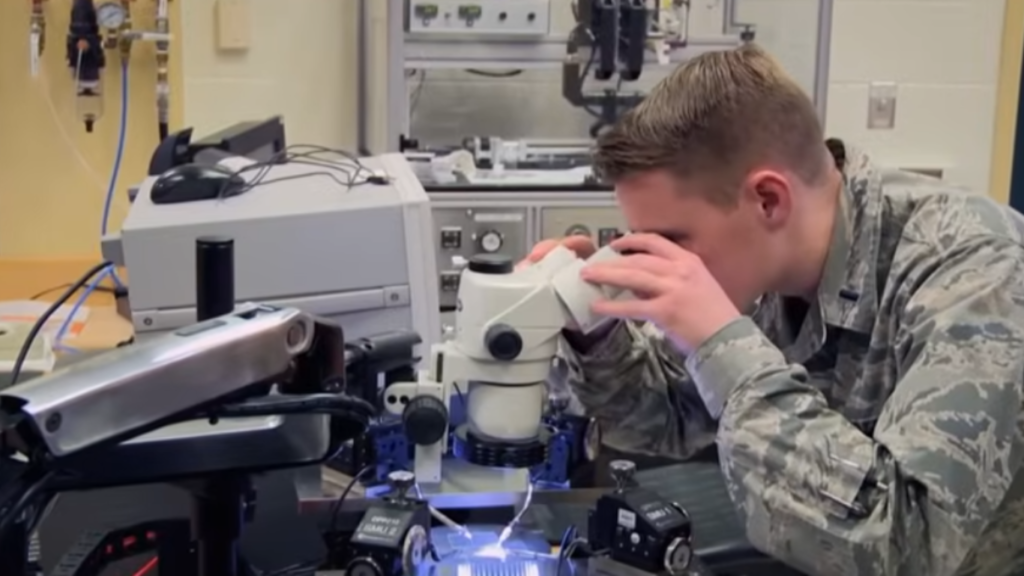
Battlefield Robot Cybersecurity protects military robots from hacking, malware, signal jamming, and GPS spoofing through encryption, secure hardware, authentication, and advanced cyber defence systems.
AI allows battlefield robots to recognise objects, identify obstacles, select safe routes, monitor large areas, and assist soldiers during dangerous missions. Instead of following simple programmed instructions, AI helps machines learn from surrounding conditions and react more intelligently.
For example, an autonomous reconnaissance robot may detect unusual movement, compare it with previous observations, identify potential threats, and immediately notify military operators. This rapid decision-making improves operational efficiency while reducing risks for human personnel.
However, AI also introduces new cybersecurity challenges. If attackers manipulate the data that AI receives, the system may produce incorrect decisions. False information can be just as dangerous as direct hacking because the robot believes it is responding correctly.
Let me explain this in the clearest, simplest terms.
Imagine giving incorrect directions to an experienced driver. Even though the driver has excellent skills, following false directions still leads to the wrong destination. AI systems face similar problems when attackers successfully manipulate incoming information.
The Evolution of Military Robotics
| Year | Event | Description |
|---|---|---|
| 1960s | Early military robotic research | Defence organisations began exploring remotely operated machines for hazardous missions. |
| 1980s | Advanced surveillance systems | Improved sensors and electronics expanded military robotic capabilities. |
| 1990s | Digital battlefield communication | Military robots became increasingly connected through secure communication networks. |
| 2000s | Widespread deployment | Ground robots and unmanned systems supported explosive disposal, surveillance, and reconnaissance missions. |
| 2010s | AI integration | Artificial intelligence improved navigation, target recognition, and autonomous decision support. |
| 2020s | Cybersecurity focus | Defence agencies placed greater emphasis on securing military robots against advanced cyber threats. |
Real World Cyber Threats Against Military Robots
Modern cyber attacks rarely focus on brute force alone. Instead, attackers search for weaknesses in communication systems, software updates, wireless signals, operating systems, authentication methods, and connected networks.
A military robot may never experience a direct physical attack, yet still become ineffective if communication is interrupted or software is manipulated remotely. Even temporary disruptions during critical missions can affect operational success.
Around the world, defence organisations continue investing heavily in cyber defence because they recognise that future conflicts will involve both physical and digital battlefields working together.
Why Digital Security Determines Mission Success
Military operations often involve multiple robots working alongside drones, surveillance aircraft, command centres, satellites, and soldiers. Every device exchanges valuable information throughout the mission.
Secure communication ensures commands reach the correct machine, sensor data remains accurate, and operators maintain confidence in every decision. Without strong cybersecurity, misinformation can spread rapidly through connected systems.
The future of military robotics depends not only on developing more capable machines but also on creating stronger digital protection that can adapt to increasingly sophisticated cyber threats.
Signal Jamming and Electronic Warfare
One of the oldest yet most effective cyber threats against military robots is signal jamming. Most battlefield robots rely on wireless communication to exchange commands and operational data with control stations. If an attacker successfully blocks these signals, the robot may lose contact with its operator.
The consequences depend on how the robot has been designed. Some systems immediately stop moving, while others return to a predetermined safe location. More advanced platforms may continue operating autonomously until communication is restored. Even so, losing contact during a critical mission can reduce effectiveness and place nearby forces at greater risk.
Electronic warfare units are continuously developing stronger jamming technologies capable of disrupting radio frequencies over large areas. Defence engineers respond by designing communication systems that automatically change frequencies, strengthen signals, and identify interference before it becomes a serious problem.
GPS Spoofing Can Mislead Autonomous Systems
Unlike jamming, GPS spoofing does not block navigation signals. Instead, attackers transmit fake positioning information that appears genuine to the receiving robot.
As a result, an autonomous ground vehicle may believe it is travelling along a safe route while actually moving into dangerous territory. A reconnaissance drone could report incorrect coordinates, causing commanders to make decisions based on false information.
Modern military navigation systems reduce this risk by combining satellite navigation with inertial measurement units, terrain mapping, onboard sensors, and AI-based position verification. When multiple navigation methods agree, the robot can recognise suspicious GPS data and ignore false signals.
From my perspective, combining several navigation technologies is far safer than depending on a single source of information. Redundancy remains one of the strongest forms of digital protection.
Malware Is More Dangerous Than Many People Realise
Most people associate malware with personal computers, but military robots can also become targets. Malicious software may enter a system through compromised updates, infected maintenance equipment, removable storage devices, or weaknesses in communication networks.
Once installed, malware can interfere with normal operations in many different ways. It may delay system responses, disable cameras, interfere with sensors, modify mission data, or interrupt communication with command centres.
The most serious cyberattacks usually happen silently, making them difficult to detect before they cause harm. Rather than completely shutting down a robot, sophisticated malware may slowly change behaviour without immediately attracting attention. Small changes in navigation, timing, or sensor readings can gradually affect an entire military operation.
For this reason, defence organisations continuously monitor software behaviour to identify unusual activity before it develops into a serious security incident.
Protecting Hardware Against Physical Tampering
Cybersecurity is not limited to software alone. Physical hardware also requires strong protection because captured equipment can reveal valuable intelligence.
If an enemy gains access to processors, storage devices, or communication modules, they may attempt to extract confidential information or reverse engineer military technology. Preventing this requires specialised hardware security measures.
Modern military robots increasingly use tamper-resistant components designed to detect unauthorised access. If someone attempts to dismantle protected hardware, the system may automatically erase sensitive information or permanently disable important security functions.
Secure processors, encrypted storage, protected memory, and trusted hardware modules all contribute to making captured equipment far less valuable to an adversary.
Secure Boot Protects System Integrity
One of the most important security technologies inside modern military robots is the secure boot process.
Whenever a robot starts, secure boot verifies that every piece of software comes from an authorised source. If any file has been modified without approval, the system refuses to load it.
This prevents attackers from secretly replacing legitimate software with malicious code before deployment.
Secure boot also creates confidence for military operators because they know the robot is running verified software instead of unauthorised programs that could affect mission performance.
Encryption Keeps Military Communications Safe
Every command sent to a battlefield robot carries operational importance. Likewise, every video feed, sensor reading, and intelligence report travelling back to military commanders may influence tactical decisions.
Encryption protects this information by converting it into unreadable data while it travels across communication networks. Only authorised systems possessing the correct digital keys can interpret the information correctly.
Without encryption, attackers could intercept sensitive communications, analyse military activity, or attempt to alter transmitted data.
Modern defence communication systems regularly update encryption keys and use multiple layers of protection to reduce the chances of interception. Even if attackers capture encrypted traffic, understanding its contents remains extremely difficult.
Authentication Prevents Unauthorised Control
Protecting communication involves more than encryption alone. Battlefield robots must also verify the identity of anyone attempting to communicate with them.
Authentication confirms that commands originate from trusted military networks, blocking signals sent by unauthorised transmitters.
Today’s military networks often combine several verification methods before accepting critical instructions. These may include encrypted digital certificates, secure device identification, unique authentication keys, and behavioural analysis that continuously monitors communication patterns.
By combining several layers of protection, this approach greatly lowers the risk of hackers gaining control of an autonomous platform through fake command signals.
AI Helps Defend Against Cyber Attacks
AI is becoming an important defensive tool as well as an operational technology.
Instead of waiting for human analysts to notice suspicious behaviour, AI continuously observes network activity, communication traffic, software performance, and system health. When unusual patterns appear, security software can immediately alert operators or isolate affected systems before the attack spreads.
If a battlefield robot unexpectedly communicates with an unauthorised device or begins acting outside its normal behaviour, AI can quickly identify the irregular pattern and raise an alert within moments.
This rapid detection allows cybersecurity teams to investigate problems before they grow into larger operational failures.
Rather than replacing cybersecurity professionals, AI acts as a powerful assistant that improves speed, accuracy, and overall situational awareness during military operations.

Building Multiple Layers of Defence
No single cybersecurity technology can completely protect a battlefield robot. Defence organisations understand that determined attackers constantly search for new weaknesses. This is why modern military robots rely on multiple security layers working together rather than a single protective system.
A layered defence begins with secure hardware, continues through trusted software, extends to encrypted communication, and finishes with continuous monitoring. If one security measure is bypassed, several additional protections remain in place. This greatly reduces the chance of a successful attack.
From my perspective, this strategy reflects one of the most important principles in cybersecurity. Never depend on one solution when several independent protections can work together.
Continuous Software Updates Improve Security
Cyber threats change rapidly. A security system that performs well today may become outdated as attackers discover new techniques.
Military software developers regularly release security improvements that close newly discovered weaknesses before they can be exploited. These updates strengthen encryption, improve authentication, fix programming errors, and enhance overall system stability.
Unlike consumer devices, military software updates undergo extensive testing before deployment. Engineers must ensure that every update improves security without affecting the robot’s performance during demanding operations.
Keeping software current has become one of the simplest yet most effective ways to maintain strong cybersecurity throughout the life of a military robot.
Training Human Operators Remains Essential
Even the most advanced robotic platform still depends on skilled human operators. Technology alone cannot guarantee cybersecurity if users fail to follow proper security procedures.
Military personnel receive specialised training to recognise suspicious behaviour, protect sensitive information, verify communication channels, and respond quickly to possible cyber incidents.
Operators also learn how to identify warning signs that may indicate attempted interference. Unexpected navigation changes, unusual communication delays, abnormal sensor readings, or unexplained software behaviour can all signal that a system requires immediate investigation.
Well-trained personnel often become the strongest defence against sophisticated cyber attacks because they combine technical knowledge with practical battlefield experience.
Cybersecurity During Joint Military Operations
Modern military missions frequently involve cooperation between different branches of the armed forces and allied nations. Ground robots, surveillance drones, aircraft, naval vessels, satellites, and command centres must exchange information securely throughout an operation.
This level of coordination requires common cybersecurity standards that allow trusted systems to communicate while preventing unauthorised access.
Shared encryption methods, secure authentication protocols, standardised communication procedures, and continuous monitoring help maintain operational security across complex multinational missions.
As military cooperation grows, protecting shared digital infrastructure becomes just as important as protecting individual robotic systems.
Future Challenges for Battlefield Robot Cybersecurity
The future promises even more capable autonomous systems. Robots will analyse larger amounts of information, operate independently for longer periods, and cooperate with other intelligent machines across wide operational areas.
While these improvements increase military capability, they also create additional cybersecurity challenges. Larger networks provide more communication pathways, more software components, and more opportunities for attackers to search for vulnerabilities.
Future defence systems will likely use AI-driven cyber protection that continuously adapts to emerging threats. Instead of relying only on predefined security rules, intelligent security platforms will learn from new attack patterns and automatically strengthen their defences.
Quantum-resistant encryption, advanced behavioural analysis, zero-trust network architecture, and self-healing software are also expected to become increasingly important in protecting military robotic systems.
Ethical Responsibility in Secure Military Robotics
As battlefield robots become more autonomous, cybersecurity also becomes an ethical responsibility. Protecting these systems is not only about preserving expensive equipment but also about reducing unnecessary risks to soldiers and civilians.
A compromised robot could unintentionally enter restricted areas, collect incorrect intelligence, or interfere with humanitarian operations. Strong cybersecurity helps ensure that autonomous systems continue operating within authorised missions and under responsible human supervision.
Responsible development means considering security from the earliest design stages rather than treating it as an additional feature after deployment.
Practical Lessons for Defence Organisations
Several important lessons emerge from the growing importance of cybersecurity in military robotics.
- Design security into every stage of robotic development.
- Protect both hardware and software against evolving threats.
- Encrypt every communication channel.
- Verify every command before execution.
- Monitor systems continuously using AI-assisted security tools.
- Train operators regularly to recognise cyber threats.
- Update software throughout the operational life of every robotic platform.
Following these principles creates stronger, more reliable military systems capable of operating safely in increasingly complex digital battlefields.
Conclusion
Battlefield Robot Cybersecurity is no longer an optional feature reserved for advanced defence programmes. It has become a fundamental requirement for every military robot operating in today’s connected combat environment. As autonomous systems continue to evolve, protecting software, communication networks, navigation systems, and onboard AI will be just as important as improving armour, mobility, or firepower.
The future of warfare will be shaped not only by intelligent machines but also by the strength of the cybersecurity protecting them. Nations that successfully combine advanced robotics with resilient cyber defence will be better prepared to face the increasingly sophisticated challenges of modern conflict.
At worldstan.com, we remain committed to delivering original, research-driven, and easy-to-understand insights into defence technology, AI innovation, cybersecurity, and the future of intelligent warfare. Our goal is to help readers understand the technologies shaping tomorrow’s battlefield through trusted, human-focused, and high-quality content.