

Ethics of Lethal Autonomous Weapons Explained
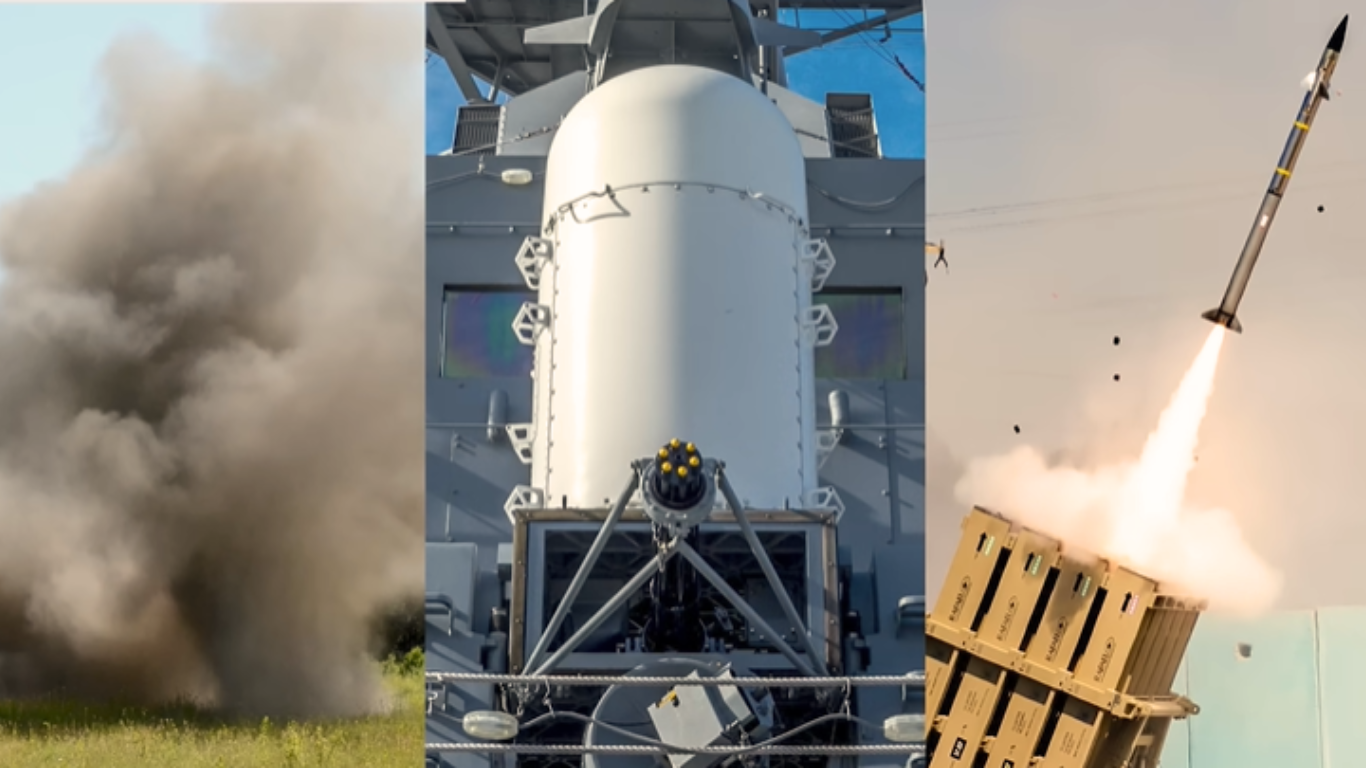
Ethics of Lethal Autonomous Weapons is becoming one of the most important discussions in modern defense technology. As AI continues to transform military operations, understanding where innovation should stop and human responsibility should begin has never been more important. In this guide, you will discover how these intelligent systems work, why experts remain divided, and what their future could mean for global security.
Understanding Ethics of Lethal Autonomous Weapons
Ethics of Lethal Autonomous Weapons explores how AI powered military systems make decisions, the risks they create, and why responsible human oversight is essential for the future of global security.
The rapid growth of AI has transformed almost every industry, from healthcare and transportation to education and manufacturing. Defense technology is also experiencing this transformation. Among the most significant developments is the emergence of Lethal Autonomous Weapons Systems, commonly known as LAWS. These systems are designed to identify, track, select, and attack targets with little or no direct human intervention after activation.
The discussion surrounding the Ethics of Lethal Autonomous Weapons is not simply about advanced military equipment. It is about the values that define humanity. For centuries, decisions involving the use of force have depended on human judgment, responsibility, and accountability. As intelligent machines become increasingly capable of making complex decisions in fractions of a second, society must determine whether those responsibilities should ever be transferred to software.
Military planners often view autonomous systems as a way to improve operational efficiency, reduce casualties among soldiers, and respond more quickly to emerging threats. At the same time, legal experts, scientists, engineers, and human rights organizations continue to raise serious concerns about allowing AI to make irreversible decisions involving human lives.
This debate is not limited to laboratories or research institutions. Governments, defense organizations, international legal bodies, and technology companies are actively discussing how autonomous weapons should be regulated before they become even more capable.
How Lethal Autonomous Weapons Work
Ethics of Lethal Autonomous Weapons focuses on whether AI powered military systems should be allowed to make life and death decisions without direct human control, balancing innovation, accountability, and international security.
To understand the ethical debate, it is essential to first understand how these systems operate. Although different countries develop different technologies, most autonomous weapons share several common components that work together as an integrated system.
The first component is AI powered data processing. Modern AI models learn from enormous collections of information that may include satellite imagery, radar signatures, infrared images, vehicle characteristics, communication patterns, and battlefield movement. Through machine learning, these systems recognize patterns that help classify objects and identify potential threats.
The second component consists of advanced sensors. Instead of relying on a single source of information, autonomous systems combine multiple sensor technologies to improve accuracy. Radar detects objects over long distances, infrared sensors recognize heat signatures, optical cameras capture visual information, while LiDAR creates detailed three dimensional maps of surrounding environments. By combining these technologies, the system develops a more complete understanding of the battlefield.
The third component is real time analysis. Every second, enormous amounts of sensor information flow into onboard computers. AI continuously evaluates this information, compares it with previous knowledge, estimates possible risks, and predicts how a target may behave.
Finally, decision making software determines what action should be taken. Depending on the level of autonomy, the system may simply recommend a target to a human operator, request confirmation before engagement, or independently carry out an attack after meeting specific operational conditions.
While this process appears highly sophisticated, every stage still depends on probabilities rather than absolute certainty. AI does not truly understand context in the same way humans do. It identifies statistical patterns, not human intentions.
Levels of Human Control
One of the most important concepts in the Ethics of Lethal Autonomous Weapons is the amount of human involvement during military operations. Experts generally describe three broad categories of control.
Human in the Loop
In this model, AI assists military personnel by collecting information, identifying possible targets, and recommending actions. However, a human operator must approve every engagement before force is used.
Many experts consider this approach the safest because meaningful human judgment remains part of every critical decision. Human operators can recognize unusual situations, interpret unexpected behavior, and prevent unnecessary harm that an AI system might overlook.
Human on the Loop
Here, autonomous systems perform many operational tasks independently while humans supervise the mission. Operators monitor system behavior and retain the ability to intervene if something appears incorrect.
This model offers faster responses than fully manual operations while preserving a level of human oversight. However, as system speed increases, human supervisors may have only a few seconds to react, raising questions about whether oversight remains genuinely effective.
Human out of the Loop
The final stage represents the greatest ethical concern. Once activated, the weapon independently identifies targets, decides whether they meet engagement criteria, and launches attacks without requiring further human approval.
Supporters argue that this level of autonomy allows extremely rapid responses during missile defense or electronic warfare. Critics respond that removing human judgment from lethal decisions creates unacceptable legal and moral risks.
Why Military Organizations Are Investing in Autonomous Systems
Many governments continue investing in autonomous military technologies because they offer significant operational advantages under demanding battlefield conditions.
One major advantage is speed. Modern conflicts develop rapidly, especially when missiles, drones, or electronic attacks occur simultaneously. AI systems can analyze thousands of incoming signals almost instantly, allowing faster defensive responses than human operators alone.
Another benefit is continuous operation. Human personnel require rest, food, and protection. Autonomous systems can operate for extended periods while maintaining consistent performance under difficult environmental conditions.
Scalability also makes these systems attractive. Coordinated groups of autonomous drones can perform surveillance, reconnaissance, electronic warfare, logistics support, and defensive operations across large areas simultaneously. This distributed capability may improve operational flexibility while reducing dependence on large numbers of personnel.
Cost efficiency also influences military planning. Although advanced autonomous systems require significant investment during development, automation may reduce long term operational expenses by improving efficiency and lowering the need for continuous human deployment in dangerous environments.
Despite these advantages, technology alone cannot resolve the deeper ethical questions surrounding responsibility, accountability, and the value of human judgment. These concerns become even more important as autonomy increases and AI assumes greater control over critical military decisions.

The Strategic Benefits of Lethal Autonomous Weapons
As military technology evolves, autonomous weapons are becoming more capable than ever before. Defense organizations see them as powerful tools that can improve battlefield awareness, increase operational speed, and reduce risks to military personnel. These advantages explain why many countries continue investing heavily in AI-driven defense systems.
One of the greatest strengths of autonomous weapons is rapid decision support. Modern battlefields generate enormous amounts of information every second. Satellites, surveillance drones, radar stations, electronic sensors, and communication networks constantly produce data that human operators cannot analyze quickly enough. AI processes this information almost instantly, helping commanders respond before threats become more dangerous.
Another important advantage is improved precision. Modern AI systems combine information from multiple sensors instead of relying on a single source. This allows them to build a more complete picture of the battlefield and identify potential threats with greater accuracy. While no technology is perfect, combining several sources of information often improves overall targeting performance.
Autonomous systems also increase operational endurance. Unlike human soldiers, machines do not become exhausted, distracted, or emotionally overwhelmed during long missions. They can monitor large areas continuously, making them valuable for border surveillance, maritime security, missile defense, and reconnaissance missions.
Another growing advantage is coordination between multiple autonomous platforms. Groups of intelligent drones can communicate with one another, divide tasks automatically, and adapt to changing battlefield conditions. This concept, commonly known as swarm operations, allows many smaller systems to work together as one coordinated force.
From a strategic perspective, these capabilities may help reduce military casualties by placing machines in situations that would otherwise expose soldiers to extreme danger. Mine clearance, hazardous reconnaissance, chemical monitoring, and high-risk surveillance are examples where autonomous technology may save human lives.
However, every technological advantage also introduces new responsibilities. Greater capability must always be matched by stronger oversight.
Ethical Challenges That Cannot Be Ignored
The discussion surrounding the Ethics of Lethal Autonomous Weapons becomes most important when examining the risks associated with allowing machines to make lethal decisions.
The first concern involves meaningful human control. Military commanders remain responsible for decisions made during combat. If AI independently selects and attacks a target, determining whether meaningful human judgment still exists becomes increasingly difficult.
Many experts believe humans should remain directly involved whenever deadly force is used. Human judgment includes compassion, contextual understanding, cultural awareness, and moral responsibility. These qualities cannot simply be programmed into software.
Another serious concern is accountability. If an autonomous weapon mistakenly attacks civilians or protected infrastructure, responsibility becomes difficult to assign.
Could responsibility belong to the military commander who approved deployment?
Should the software developers be blamed because they created the algorithm?
Does responsibility fall upon the manufacturer who built the hardware?
Is it the government’s duty to accept complete responsibility when deploying autonomous systems?
Current international law does not provide universally accepted answers to these complex questions. This legal uncertainty remains one of the largest obstacles to widespread deployment of fully autonomous weapons.
Bias within AI systems creates another challenge. Machine learning models perform only as well as the information used during training. If training data contains gaps, inaccuracies, or hidden biases, the resulting decisions may also become inaccurate.
In civilian applications, an incorrect recommendation may create inconvenience.
On a battlefield, an incorrect identification may cost innocent lives.
That difference makes ethical design far more important in military AI than in most commercial technologies.
The Risk of Escalation
One concern that receives increasing attention is the possibility of unintended military escalation.
Autonomous systems respond much faster than humans. While this speed offers tactical advantages, it may also reduce opportunities for diplomacy, verification, or de-escalation during rapidly developing conflicts.
Consider a situation where two autonomous defense platforms continuously monitor one another.
One system incorrectly interprets a routine movement as preparation for an attack.
It immediately launches defensive measures.
The opposing system detects those actions and interprets them as aggression.
Within seconds, both systems continue responding automatically without either government initially intending to start a conflict.
Although this example is simplified, it demonstrates why researchers continue studying escalation risks associated with highly autonomous military technologies.
Human decision makers often pause, request additional intelligence, communicate with allies, and evaluate political consequences before taking action.
Machines operate according to programmed logic and statistical confidence rather than diplomatic judgment.
This difference may significantly influence future conflict management.
International Discussion and Regulatory Efforts
Governments around the world recognize that autonomous weapons present challenges extending beyond national borders.
International discussions have focused on creating common standards that balance technological innovation with humanitarian responsibility.
Several organizations have encouraged continued debate regarding acceptable limits for autonomous military systems. Many experts argue that meaningful human control should remain a mandatory requirement whenever lethal force is authorized.
Others support legally binding international agreements that clearly define prohibited forms of autonomous weapon deployment.
Some countries emphasize maintaining flexibility because AI technologies continue evolving rapidly. They argue that overly restrictive regulations could slow defensive innovation while potential adversaries continue developing advanced capabilities.
This difference in national priorities explains why international negotiations have progressed gradually.
Despite differing opinions, there is growing agreement on several broad principles.
Human accountability should never disappear.
Civilian protection must remain a priority.
AI systems require extensive testing before deployment.
Transparency should increase public trust.
International cooperation remains essential because autonomous weapons may affect global security rather than individual nations alone.

Historical Development of Autonomous Military Technology
Understanding how autonomous weapons evolved helps explain why today’s ethical discussions have become increasingly urgent.
| Year | Event | Description |
|---|---|---|
| 1940s | Early Guided Weapons | Initial guided missile systems introduced automated navigation concepts. |
| 1970s | Precision Guided Munitions | Computer assisted targeting improved battlefield accuracy. |
| 1990s | Network Centric Warfare | Military networks enabled faster sharing of battlefield intelligence. |
| 2000s | Advanced Military Drones | Unmanned aerial systems became widely used for surveillance and targeted operations. |
| 2010s | Rapid Growth of AI | Machine learning significantly improved object recognition, navigation, and decision support capabilities. |
| 2020s | Increasing Military Autonomy | Defense organizations accelerated research into autonomous drones, robotic vehicles, intelligent missile defense, and AI assisted combat systems. |
The journey from simple automated guidance to highly intelligent autonomous systems illustrates how rapidly military technology has advanced. What once required constant human control can now be performed with increasing independence, making ethical oversight more important than ever.

Practical Solutions for Responsible Development
Finding the right balance between innovation and responsibility is one of the greatest challenges facing modern defense technology. Simply rejecting autonomous weapons is unlikely to stop technological progress. At the same time, allowing unrestricted development without safeguards could introduce unacceptable risks. A practical approach requires cooperation among governments, researchers, engineers, military leaders, and international organizations.
The first priority should be preserving meaningful human control. AI can assist with surveillance, threat detection, navigation, and battlefield analysis, but the final decision to use lethal force should remain with a qualified human operator. Human judgment brings experience, ethical reasoning, and an understanding of complex situations that software cannot fully replicate.
The second priority is developing transparent AI systems. Many advanced machine learning models function as black boxes, producing decisions without clearly explaining how those conclusions were reached. In military operations, this lack of transparency creates significant challenges. Explainable AI can help commanders understand why a system identified a target or recommended a specific action. Better transparency also supports accountability when reviewing military operations.
Rigorous testing is another essential requirement. Autonomous systems should undergo extensive evaluation under realistic battlefield conditions before deployment. Testing should examine not only technical performance but also unusual situations, communication failures, environmental changes, and unexpected civilian activity. The goal is to identify weaknesses before they can cause harm during real missions.
Cybersecurity must also remain a central consideration. Autonomous military systems depend heavily on software, communication networks, and digital infrastructure. If hostile actors successfully interfere with these systems through cyber attacks, the consequences could be severe. Strong encryption, secure communication channels, continuous monitoring, and regular software updates are essential for protecting autonomous platforms against manipulation.
International cooperation represents another important solution. Military technology continues evolving across national borders, making global dialogue increasingly valuable. Shared standards for safety testing, operational transparency, and responsible deployment could reduce misunderstandings and improve international stability.
The Role of AI in Future Military Operations
AI is expected to influence nearly every aspect of future defense operations. Its role extends far beyond autonomous weapons alone. Intelligent software already assists military organizations by analyzing intelligence reports, monitoring satellite imagery, predicting equipment failures, supporting logistics, and improving cybersecurity.
On future battlefields, AI will likely function as an advanced decision support partner rather than simply replacing human operators. Commanders may receive real time recommendations based on thousands of incoming data sources, helping them understand rapidly changing situations more clearly.
For example, AI can combine information from drones, satellites, radar systems, weather reports, and communication networks into a single operational picture. Instead of manually reviewing each source, military personnel receive organized information that supports faster and more informed decision making.
Autonomous ground vehicles may transport supplies across dangerous terrain, reducing the exposure of soldiers to hostile environments. Intelligent naval systems could patrol strategic waterways for extended periods without requiring large onboard crews. Air defense platforms may identify incoming threats within seconds, giving operators additional time to respond.
These applications demonstrate that AI has tremendous potential to improve military effectiveness while also reducing certain operational risks. However, expanding AI capabilities should never eliminate human responsibility.
Technology should strengthen human decision making rather than replace moral judgment.
Real World Examples of Autonomous Defense Technology
Several defense technologies already demonstrate increasing levels of autonomy, even though many still operate under human supervision.
Modern missile defense systems can automatically detect incoming threats, calculate interception paths, and launch defensive interceptors within seconds after receiving authorization. Their extremely rapid response helps protect military bases and civilian populations against fast moving aerial attacks.
Self-operating surveillance drones monitor large areas on their own, collecting valuable intelligence with cameras, thermal imaging, radar, and other modern sensing equipment. Instead of continuously controlling every movement, operators supervise missions while AI manages navigation and obstacle avoidance.
Unmanned ground vehicles are increasingly being tested for logistics support, reconnaissance, explosive ordnance disposal, and hazardous material detection. These systems reduce human exposure to environments that present significant physical danger.
Naval forces are also exploring autonomous surface vessels capable of conducting long duration patrols, monitoring maritime activity, and supporting reconnaissance missions.
These examples illustrate that autonomy already exists across many areas of military technology. The ongoing ethical discussion focuses not on automation itself but on determining how much independent authority these systems should receive when human lives are at stake.
Why Ethics Must Guide Innovation
Throughout history, technological progress has often advanced faster than laws and public policy. AI is moving along a similar course.
New capabilities continue emerging while governments and international organizations work to establish appropriate legal and ethical frameworks.
The Ethics of Lethal Autonomous Weapons reminds us that technological capability alone should never determine what becomes acceptable in society.
Just because AI can perform a task does not automatically mean it should perform that task without limitations.
Developers play an important role by designing systems that prioritize safety, reliability, transparency, and accountability.
Military organizations must ensure that operational effectiveness never overshadows humanitarian principles.
Governments must develop policies that protect both national security and fundamental human rights.
Academic researchers should continue evaluating AI performance under realistic conditions while identifying potential risks before deployment.
Citizens also have a voice in shaping future policy through informed public discussion. Understanding how autonomous weapons function allows society to participate in meaningful conversations rather than reacting only after new technologies become widespread.
Let me explain this in the clearest, simplest terms.
AI is an incredibly powerful tool, but it does not possess human wisdom, empathy, compassion, or moral responsibility. Those qualities remain uniquely human. As AI becomes increasingly capable, preserving these values becomes even more important than improving computational performance.
The future of defense will not depend solely on faster algorithms or more intelligent machines. It will depend on how wisely humanity chooses to use them.

Looking Ahead to the Future of Autonomous Warfare
The next decade is expected to bring remarkable changes to military technology. AI is advancing rapidly, sensors are becoming more accurate, and communication networks are growing faster and more secure. Together, these developments will make autonomous defense systems more capable than ever before.
Future military platforms may operate across land, sea, air, space, and cyberspace at the same time. AI could coordinate information from thousands of connected systems, helping commanders respond to threats with greater speed and accuracy. Autonomous drones may work alongside crewed aircraft, robotic ground vehicles could support soldiers during difficult missions, and intelligent naval systems might patrol strategic waters for weeks without returning to base.
Despite these possibilities, the future should not be measured only by technological progress. It should also be measured by the strength of ethical principles guiding that progress. Every new capability must be matched with responsible governance, transparent decision making, and continuous human oversight.
History has repeatedly shown that powerful inventions bring both opportunities and risks. Nuclear technology transformed energy production while also creating devastating weapons. Cyber technology connected the world while introducing new security threats. Artificial intelligence is following a similar path. Its long term impact will depend on how wisely governments, industries, and societies choose to develop and regulate it.
Balancing Innovation and Human Responsibility
Innovation has always played a major role in national defense. Countries invest in research because they must protect their citizens, respond to evolving threats, and maintain security in an increasingly complex world. AI has become an important part of this effort because it can process information, recognize patterns, and support decision making far faster than traditional systems.
However, innovation should never exist without responsibility. Military superiority alone cannot justify removing human accountability from decisions involving the use of lethal force. Ethical leadership requires balancing operational effectiveness with respect for human dignity, international law, and humanitarian values.
Responsible development means designing systems that are reliable, transparent, secure, and carefully tested before deployment. It also means ensuring that commanders fully understand the strengths and limitations of the AI tools they use. Human operators should remain prepared to intervene whenever circumstances change or unexpected situations arise.
Another important consideration is education. Engineers developing military AI should receive training not only in computer science but also in ethics, international humanitarian law, cybersecurity, and risk management. Likewise, military personnel should understand how AI reaches conclusions so they can identify situations where additional human judgment is required.
Why Public Awareness Matters
Many people associate autonomous weapons with science fiction, but the underlying technologies already exist in different forms. Public understanding is therefore becoming increasingly important.
Citizens influence public policy through informed discussion, academic research, democratic institutions, and responsible journalism. When people understand both the benefits and limitations of AI powered defense systems, debates become more balanced and constructive.
Media organizations, educational institutions, and research platforms all have a responsibility to present accurate information rather than sensational headlines. Complex technologies deserve thoughtful analysis supported by evidence instead of fear or unrealistic expectations.
Building public awareness also encourages transparency. Governments and defense organizations may be more willing to establish clear policies when informed citizens actively engage with these important issues.
Expert Perspective on the Future
From my perspective, the future of military AI should not be viewed as a choice between embracing technology or rejecting it completely. The better path lies in responsible innovation supported by clear ethical boundaries.
AI will continue improving. Computing power will increase. Sensors will become more capable. Decision support systems will grow more sophisticated. None of these developments can realistically be stopped.
The real challenge is ensuring that technological progress always serves humanity rather than replacing human responsibility.
Meaningful human control should remain the foundation of every decision involving lethal force. Transparency should become a standard feature rather than an optional enhancement. International cooperation should continue developing common principles that reduce misunderstandings and promote global stability.
If governments, researchers, engineers, and military leaders work together, autonomous technologies can strengthen security while respecting the values that define responsible societies.
Frequently Asked Questions
What are Lethal Autonomous Weapons Systems
Lethal Autonomous Weapons Systems, or LAWS, are military platforms that use AI, sensors, and software to identify, select, and engage targets with varying levels of human involvement.
Why is the Ethics of Lethal Autonomous Weapons important
The Ethics of Lethal Autonomous Weapons is important because it addresses whether machines should be allowed to make life and death decisions, how accountability should be maintained, and how civilians can be protected during armed conflict.
Can AI completely replace human soldiers
No. AI can support surveillance, logistics, navigation, intelligence analysis, and target recognition, but human judgment remains essential for ethical decision making, accountability, and compliance with international humanitarian law.
What is meaningful human control
Meaningful human control means that qualified human operators remain responsible for supervising and authorizing critical military decisions, particularly those involving the use of lethal force.
What is the biggest challenge facing autonomous weapons
One of the greatest challenges is balancing technological innovation with ethical responsibility while ensuring transparency, accountability, cybersecurity, and compliance with international legal standards.
CONCLUSION AND BRAND CREDIBILITY
The Ethics of Lethal Autonomous Weapons will remain one of the defining discussions of this century as AI continues to reshape defense technology. Intelligent systems can improve military efficiency, strengthen security, and reduce risks to personnel, but they must never replace human responsibility when decisions involve human life. Responsible innovation requires strong oversight, transparent AI, meaningful human control, and international cooperation to ensure technology serves humanity rather than undermining it.
As governments, researchers, engineers, and military leaders shape the future of warfare, ethical leadership will be just as important as technological advancement. The choices made today will influence global security for generations to come, making informed discussion more valuable than ever.
This comprehensive insight into the Ethics of Lethal Autonomous Weapons is exclusively researched and presented by worldstan.com, where advanced AI, defense technology, and future innovation are explained with clarity, accuracy, and a commitment to trustworthy knowledge.