

Predictive Ballistics AI Smart Weapons Rise
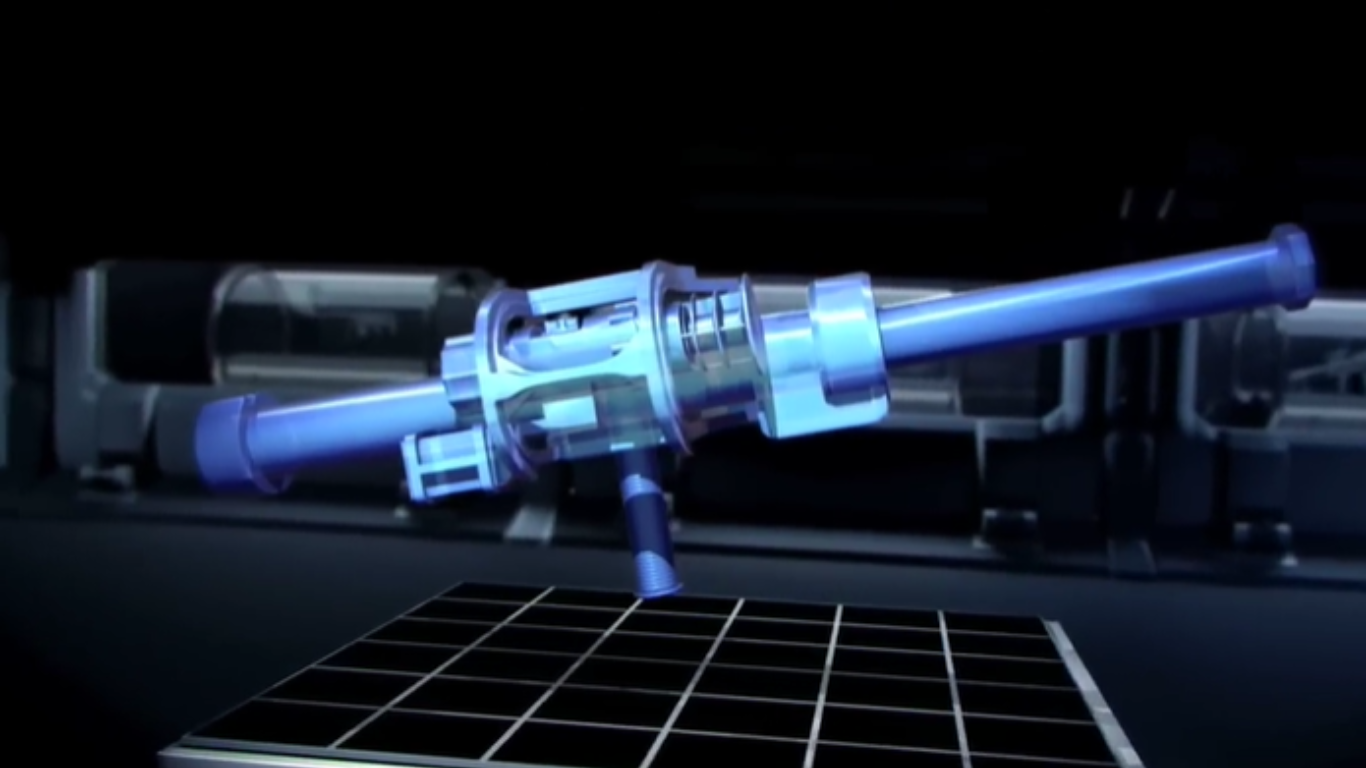
Predictive Ballistics is changing how modern soldiers aim, fire, and make decisions in combat. What once depended on years of experience can now be supported by intelligent technology that works in real time. This guide explores how AI is helping create faster, smarter, and more accurate battlefield performance without losing the importance of human judgment.
Predictive Ballistics The AI Enhanced Small Arms Revolution
Predictive Ballistics is transforming modern combat by combining AI, smart optics, advanced sensors, and real time calculations to improve battlefield accuracy and decision making.
For generations, battlefield accuracy depended almost entirely on the person behind the weapon. Skilled marksmen spent years learning how wind, temperature, elevation, breathing, and movement influenced every shot. Every successful hit represented discipline, patience, and countless hours of practice. Those skills remain valuable today, but technology has begun changing how accuracy is achieved.
Predictive Ballistics represents one of the most significant advances in modern defense technology. Instead of relying only on human calculations, AI now helps process enormous amounts of information within fractions of a second. Environmental conditions that once required careful estimation can now be measured instantly through intelligent sensors and powerful onboard processors.
This evolution is much larger than improving accuracy. It is changing how individual soldiers interact with their equipment, make decisions, and respond under pressure. The battlefield is becoming increasingly driven by information, and predictive systems are ensuring that information reaches the person who needs it most at exactly the right moment.
Many conversations about military innovation focus on drones, autonomous vehicles, or advanced missile systems. Those technologies certainly deserve attention. However, one of the most important developments is happening much closer to the individual soldier. AI is quietly becoming part of everyday infantry equipment, making traditional rifles far more capable than ever before.
From my perspective, this transition deserves far greater attention because it affects nearly every level of military operations. When intelligence is built directly into a soldier’s primary weapon, the impact extends beyond individual accuracy. Entire units benefit from faster engagements, improved coordination, and greater operational confidence.
Unlike many experimental technologies that remain inside research laboratories, predictive ballistics has already moved into practical testing and early deployment. Several defense organizations around the world continue investing heavily in intelligent optics and advanced targeting systems, demonstrating that this technology has become a serious priority rather than a distant concept.
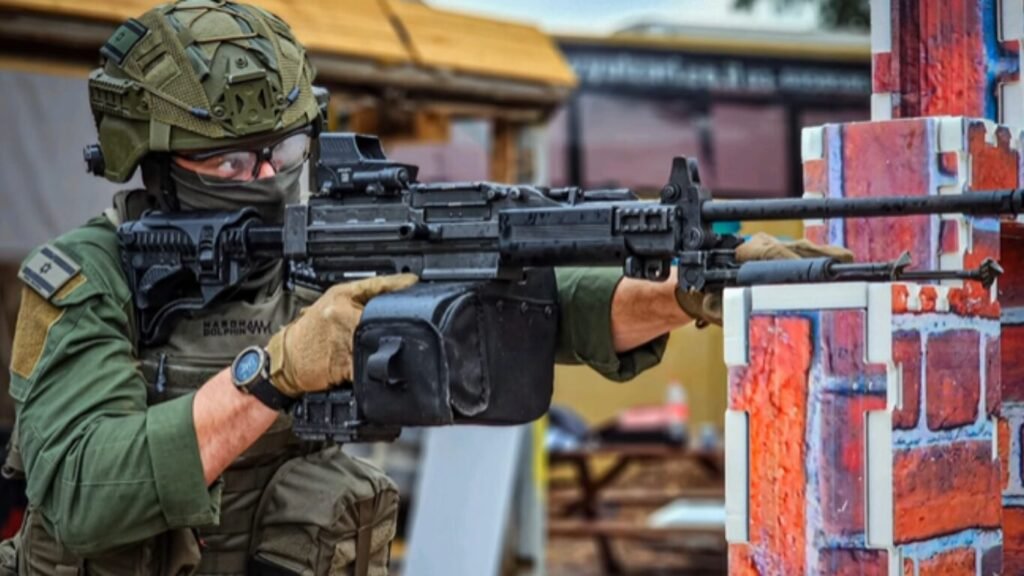
How Predictive Ballistics Works
Predictive Ballistics uses AI, smart sensors, and advanced optics to calculate bullet trajectories in real time, helping soldiers improve accuracy while adapting instantly to changing battlefield conditions.
Understanding predictive ballistics becomes much easier when thinking about everything that influences a single bullet after it leaves the barrel. Gravity immediately begins pulling the projectile downward. Wind changes its direction. Air density affects resistance. Temperature influences bullet performance. Distance changes bullet drop. Even the Earth’s rotation can influence extremely long range shots.
Traditionally, experienced shooters learned to estimate these conditions through years of practice. While experienced professionals remain remarkably skilled, even the best human calculations require time and concentration. Combat situations rarely provide that luxury.
Modern predictive ballistics systems gather information continuously through multiple integrated sensors. These sensors monitor surrounding environmental conditions while internal processors analyze the collected information using sophisticated AI algorithms. Within milliseconds, the system predicts the bullet’s expected flight path and calculates the most accurate aiming solution.
Instead of presenting dozens of complicated numbers, the technology displays a simple corrected aiming point inside the optic. This allows the shooter to maintain focus on the surrounding environment rather than performing complex mental calculations.
The result feels natural from the user’s perspective. Rather than replacing human judgment, the technology removes unnecessary complexity, allowing the operator to concentrate on awareness, communication, and tactical decision making.
This balance between human control and intelligent assistance is one of the strongest aspects of predictive ballistics. AI handles repetitive mathematical calculations while the soldier remains fully responsible for mission decisions and engagement choices.
The Smart Scope Ecosystem
The most visible part of predictive ballistics is the smart scope. Although it may appear similar to a traditional rifle optic, its internal capabilities are dramatically different.
Modern smart optics combine several technologies into one integrated platform. High precision sensors measure environmental conditions continuously. Advanced processors evaluate incoming information almost instantly. Digital displays provide real time visual guidance that helps shooters make more informed decisions.
Imagine observing a target through a scope that constantly updates itself as surrounding conditions change. Wind speed increases. The temperature shifts. Humidity changes. The target moves slightly. Instead of requiring manual adjustments, the intelligent optic recalculates the solution automatically.
This creates a smoother shooting experience where information is presented clearly without overwhelming the operator.
One particularly interesting factor is the Coriolis effect. Although most people rarely think about it, the Earth’s rotation can slightly influence extremely long distance shots. Traditionally, only highly experienced long range shooters considered this variable during specialized missions. Intelligent ballistic systems can automatically include this calculation whenever necessary, improving consistency while reducing workload.
Another important advantage lies in continuous data processing. Unlike manual calculations performed once before firing, AI systems continue updating information until the trigger is pressed. This means adjustments remain accurate even when environmental conditions change rapidly.
Let me explain this in the clearest, simplest terms.
A traditional rifle scope helps you see your target. A smart scope helps you understand your target and the environment around it. Instead of simply magnifying an image, it becomes an intelligent assistant that continuously analyzes changing conditions and recommends the best aiming solution.
From an operational perspective, this represents a major improvement because the shooter spends less time calculating and more time observing the surrounding battlefield. Maintaining awareness often proves just as valuable as achieving perfect accuracy.
Another strength of these systems is their ability to integrate multiple hardware components into one unified platform. Laser range finders, atmospheric sensors, digital processors, advanced optics, motion detection systems, and AI software communicate continuously without requiring manual interaction from the user.
Ongoing advances in miniaturized hardware and high-performance processors are expected to make these intelligent optical systems smaller, faster, lighter, and better at conserving energy. Future developments may include improved object recognition, enhanced battlefield networking, and even more advanced predictive models that adapt to changing combat environments in real time.
Rather than representing the end of human skill, predictive ballistics marks the beginning of a new partnership between trained soldiers and intelligent technology. The goal is not to replace experience but to amplify it, allowing individuals to perform more consistently under conditions where every second and every decision matters.
Moving Target Acquisition
Striking a stationary target has always been easier than engaging one that is constantly changing direction or speed. On a real battlefield, very few targets remain still for long. Soldiers move between cover, vehicles change course, and unexpected obstacles appear without warning. Every movement creates another challenge for the person behind the weapon.
This is where Predictive Ballistics demonstrates one of its greatest strengths. Instead of focusing only on where a target is at the present moment, AI estimates where that target is likely to be by the time the bullet reaches its destination. Although this sounds simple, it requires thousands of calculations to happen almost instantly.
Modern AI systems continuously monitor a target’s movement, speed, acceleration, direction, and surrounding conditions. By combining these variables with ballistic calculations, the system predicts the most effective point of aim. The shooter is then guided toward that corrected position rather than the target’s current location.
The practical value of this capability becomes obvious during fast moving operations. Infantry units often have only a brief opportunity to engage before a target disappears behind cover or changes direction. AI reduces the time needed to make those calculations, giving soldiers greater confidence when every second counts.
From my perspective, this technology does more than improve accuracy. It reduces hesitation. In stressful situations, uncertainty often causes delays that affect mission success. Intelligent targeting systems provide immediate recommendations, allowing trained personnel to concentrate on tactical awareness instead of performing complex mathematical estimates.
It is important to understand that these systems are designed to support decision making rather than replace it. The AI provides predictions based on available information, but the responsibility for deciding whether to engage remains with the human operator.
As computing power continues improving, future predictive systems may become even better at understanding changing movement patterns, terrain conditions, and multiple moving targets at the same time.
Reducing Human Error
Even the most experienced professionals are affected by physical and mental pressure. Long missions, difficult weather, lack of sleep, stress, and limited visibility all influence performance. Human capability has natural limits, especially during extended operations.
Predictive Ballistics helps reduce many of these limitations by performing calculations that remain consistent regardless of external pressure. Unlike people, software does not become distracted or fatigued. It processes information with the same level of precision throughout an operation.
This consistency is one of the greatest advantages of AI assisted targeting systems.
Consider a soldier operating in heavy rain while strong winds continue changing direction. Under traditional conditions, making accurate adjustments would require significant experience and careful observation. Intelligent systems collect this information automatically, reducing the possibility of small calculation errors that could affect the final shot.
Another important benefit is reducing cognitive workload. Modern battlefields already demand constant attention. Soldiers monitor communications, identify friendly forces, observe changing threats, and coordinate with teammates while making rapid decisions.
When AI manages ballistic calculations in the background, operators gain additional mental capacity for tactical thinking. Instead of dividing attention between mathematics and battlefield awareness, they can remain focused on the mission itself.
From my observation, this balance represents the real purpose of military AI. Technology performs repetitive analytical work while experienced personnel continue making ethical, tactical, and strategic decisions.
Making results more consistent does not replace the need for training. Rather, it shifts more attention toward developing leadership skills, effective communication, teamwork, and battlefield awareness, with AI assisting in technical computations.
AI Assisted Trigger Systems
Among the most discussed innovations within predictive ballistics is the concept of AI assisted trigger control. Although different manufacturers use different approaches, the basic principle remains similar.
The shooter identifies the target, aligns the weapon, and makes the decision to fire. Rather than releasing the shot immediately when the trigger is pulled, the system waits until the predicted point of impact reaches the optimal position. Only then does it complete the firing sequence.
This process usually happens so quickly that the delay may be almost impossible for the operator to notice.
Supporters believe this approach improves consistency by preventing small timing errors that often occur during stressful situations. Tiny movements caused by breathing, muscle tension, or unexpected reactions can shift the point of impact. AI timing systems attempt to minimize those effects.
Critics, however, raise important questions regarding control and responsibility. Many military professionals believe soldiers should always maintain complete authority over every stage of weapon operation.
These discussions highlight an important reality. As AI becomes increasingly capable, technology must continue supporting human decision making rather than replacing it.
In my opinion, intelligent trigger systems should always function as optional assistance rather than mandatory automation. Human judgment remains essential because no algorithm can fully understand every operational circumstance, ethical consideration, or unexpected battlefield situation.
The strongest AI systems are those that increase human performance while preserving human responsibility.
Historical Development of Predictive Ballistics
The evolution of predictive ballistics did not happen overnight. It developed gradually as optics, sensors, processors, and AI technologies matured over several decades.
| Year | Event | Description |
|---|---|---|
| 1960s | Advanced Military Ballistics Research | Defense researchers expanded scientific understanding of external ballistics and projectile behavior. |
| 1980s | Digital Fire Control Systems | Military platforms began using computerized fire control systems for improved targeting accuracy. |
| 1990s | Laser Range Finding Expansion | Laser range finders became increasingly common across military optics and precision weapon systems. |
| 2000s | Smart Sensor Integration | Environmental sensors were integrated with digital optics to automate ballistic calculations. |
| 2010s | AI Assisted Target Recognition | Machine learning improved object recognition and supported intelligent aiming technologies. |
| 2020s | Predictive Ballistics Platforms | AI combined sensors, optics, processors, and advanced software into integrated smart weapon ecosystems. |
Looking back at this progression shows that predictive ballistics represents the result of continuous technological development rather than a single breakthrough. Improvements in computing power, sensor miniaturization, and AI software gradually made these systems practical for military use.
Training Transformation
Military training has traditionally emphasized repetition. Soldiers spent countless hours learning how weather, terrain, breathing techniques, trigger control, and environmental conditions affected every shot.
These fundamentals remain important today, but predictive ballistics is changing how new soldiers develop their skills.
Instead of requiring years to master every ballistic calculation manually, trainees can begin using intelligent systems that explain corrections in real time. This allows instructors to dedicate more attention to tactical awareness, leadership, teamwork, mission planning, and battlefield communication.
Learning becomes more interactive because the technology provides immediate feedback. Soldiers can compare their own decisions with AI generated recommendations, helping them understand why certain adjustments produce better results.
This creates a stronger educational process rather than simply shortening it.
From my perspective, the greatest advantage is not producing faster marksmen. It is producing better decision makers.
A modern infantry soldier faces far more responsibilities than simply hitting a target. They must communicate with teammates, identify friendly forces, adapt to changing situations, and respond to evolving threats while maintaining discipline under pressure.
By reducing the time spent performing manual calculations, predictive systems allow military training to place greater emphasis on these broader operational skills.
However, technology should never replace the fundamentals of marksmanship.
Electronic systems may lose power. Sensors can become damaged. Communications may fail. Environmental conditions may interfere with digital equipment. Every professional soldier must still understand the basic principles of shooting without technological assistance.
The most effective approach combines traditional expertise with intelligent technology. Soldiers who understand both worlds remain prepared regardless of whether advanced systems are available.
This balanced philosophy ensures that AI strengthens military capability instead of creating unnecessary dependence. It prepares personnel to succeed with advanced equipment while preserving the timeless skills that have defined professional marksmanship for generations.
Hardware Software Integration Inside Smart Optics
The real strength of Predictive Ballistics is not found in one sensor, one processor, or one software program. Its true value comes from bringing many advanced technologies together into a single system that works as one.
Traditional rifle optics mainly provided magnification and target visibility. Modern smart optics have evolved into intelligent platforms capable of collecting, processing, and presenting information almost instantly. Every component has a specific purpose, yet each depends on the others to deliver reliable performance.
Inside an advanced smart optic, multiple sensors continuously monitor environmental conditions. Wind speed, air pressure, humidity, temperature, inclination, and distance are measured in real time. A laser range finder calculates the exact distance to the target, while internal processors receive this information and begin performing ballistic calculations immediately.
AI software acts as the brain of the entire system. Instead of processing information only once, it continuously updates calculations as conditions change. If the target moves or the wind shifts, the system instantly produces a revised aiming solution.
What impresses me most is how little the user notices this complex process. Thousands of calculations happen quietly in the background while the shooter simply sees a clean aiming point through the optic.
This seamless experience is the result of careful engineering. Advanced technology only becomes truly valuable when it is simple to use under stressful conditions.
Software also brings another important advantage. Unlike traditional mechanical systems, intelligent optics can receive updates that improve performance over time. As algorithms become more advanced, future improvements may enhance prediction accuracy, target recognition, and energy efficiency without requiring entirely new hardware.
This approach allows military organizations to extend the operational life of existing equipment while benefiting from continuous technological progress.
AI and Sensor Fusion
One of the biggest achievements behind Predictive Ballistics is sensor fusion. Rather than relying on a single source of information, AI combines data from several independent systems to create a more complete understanding of the environment.
Each sensor contributes a different piece of information. Atmospheric sensors measure weather conditions. Optical systems identify the target. Motion sensors detect weapon movement. Range finders determine distance. Navigation systems provide orientation and positioning.
Individually, each sensor has limitations. Together, they provide a much clearer operational picture.
AI evaluates these incoming data streams simultaneously and determines how each variable influences the expected bullet trajectory. The result is far more accurate than relying on any single measurement alone.
Imagine a situation where strong crosswinds develop while a target begins moving across uneven terrain. Instead of calculating only one factor, the AI evaluates every changing condition together before recommending the best aiming solution.
This integrated approach increases reliability because the system constantly verifies information from multiple sources. If one sensor produces unexpected readings, other sensors help maintain overall accuracy.
As sensor technology continues advancing, future predictive systems may include even more detailed environmental awareness, further improving battlefield precision.
AI Enhanced Small Arms and Tactical Impact
The influence of Predictive Ballistics extends well beyond individual accuracy. Once intelligent targeting becomes widely available across infantry units, military tactics naturally begin evolving.
Historically, many engagements relied on large volumes of suppressive fire to limit enemy movement. Precision remained concentrated within specialized sniper teams and designated marksmen.
AI enhanced small arms have the potential to distribute greater precision throughout entire combat units.
When more soldiers can consistently engage targets accurately, tactical planning changes. Commanders gain greater flexibility because precision is no longer limited to a small number of specialists.
Operations may become faster because fewer rounds are needed to achieve the same objective. Ammunition management may improve, logistics become more efficient, and soldiers spend less time exposed during prolonged engagements.
From my perspective, this represents one of the most significant operational advantages of intelligent targeting technology.
Improved precision also has humanitarian value. Better targeting may help reduce unintended damage by increasing confidence in shot placement. Although no technology can eliminate every battlefield risk, greater accuracy supports more disciplined engagement practices.
Squad level coordination may also improve. Multiple soldiers equipped with intelligent optics can share information more effectively while responding to changing battlefield conditions with greater consistency.
Rather than acting independently, future infantry units may operate as connected information networks where each soldier contributes valuable battlefield awareness.
Decision Making in the AI Battlefield
Modern warfare increasingly depends on information rather than physical strength alone. Success often belongs to the force that observes faster, understands faster, and responds faster.
Predictive Ballistics supports this evolution by shortening the time between observation and action.
Every engagement involves several decisions. A soldier identifies a potential target, evaluates the surrounding environment, confirms rules of engagement, selects an appropriate response, and finally executes the action.
AI cannot replace these human decisions, but it can simplify the technical calculations that support them.
Removing unnecessary delays allows personnel to maintain greater focus on mission objectives instead of manual computations.
Decision superiority has become one of the defining characteristics of modern military operations. Advanced technologies such as intelligent optics, battlefield communication systems, satellite imagery, autonomous reconnaissance platforms, and AI analytics all contribute toward improving the speed and quality of operational decisions.
Predictive Ballistics forms one important part of this larger technological ecosystem.
Its role is not simply helping bullets travel more accurately. It contributes to creating faster, more informed, and more confident battlefield decision making.
Real World Development and Military Adoption
Around the world, defense organizations continue investing in intelligent targeting technologies as part of broader military modernization programs.
Several defense companies have introduced advanced smart optics capable of integrating laser range finders, ballistic computers, environmental sensors, and digital displays into compact systems suitable for infantry operations.
Military testing has focused on evaluating how these technologies perform under realistic operational conditions rather than controlled laboratory environments.
Engineers continue examining several important questions.
How reliable are these systems during extended deployments?
Can they operate effectively under extreme temperatures?
How well do they perform during rain, dust, snow, or electronic interference?
Can battery life support long missions without creating additional logistical burdens?
These practical evaluations are essential because battlefield environments place enormous demands on every piece of equipment.
From my observation, Predictive Ballistics appears to be following a familiar pattern seen throughout military history.
New technology often begins as specialized equipment used by limited units.
Improved reliability and lower manufacturing expenses are making it easier for these technologies to be introduced across a wider range of military forces.
This same progression has occurred with night vision devices, thermal optics, digital communications, and unmanned aerial systems.
Predictive Ballistics may eventually follow a similar path, becoming increasingly common as technology matures and operational confidence grows.
Defense Industry Innovation
The defense industry continues driving rapid innovation in intelligent weapon technologies. Research teams are working to improve nearly every aspect of predictive systems, including processing speed, optical clarity, AI algorithms, battery efficiency, cybersecurity, and user interface design.
Artificial intelligence allows developers to create software capable of learning from extensive testing data. Rather than relying solely on fixed mathematical models, future systems may adapt more effectively to changing operational environments while remaining within carefully controlled military requirements.
Miniaturization is another major area of progress.
As electronic components become smaller and more energy efficient, manufacturers can reduce equipment size without sacrificing capability. This makes intelligent optics easier to carry while improving overall mobility for infantry personnel.
Cybersecurity has also become a central priority.
Any connected military technology must be protected against unauthorized access, electronic interference, and data manipulation. Security is no longer limited to protecting physical equipment. Digital resilience has become equally important.
The future of Predictive Ballistics will depend not only on improving accuracy but also on ensuring these systems remain secure, dependable, and trustworthy under the most demanding operational conditions.
This combination of intelligent software, advanced engineering, and continuous innovation is shaping a new generation of military technology that places information directly into the hands of individual soldiers while supporting safer, faster, and more informed battlefield operations.
Practical Considerations and Operational Challenges
Every major technological breakthrough brings new opportunities, but it also introduces new responsibilities. Predictive Ballistics is no exception. While AI assisted targeting systems offer remarkable improvements in accuracy and decision support, they also create practical challenges that military planners, engineers, and soldiers must address before widespread adoption.
One of the first concerns is power management. Unlike traditional optical sights that can function without electronics, intelligent optics rely on batteries and electronic components. During extended military operations, reliable power becomes just as important as ammunition or communication equipment. If a battery fails at a critical moment, the system may lose many of its advanced capabilities.
Manufacturers are working to improve battery efficiency, reduce energy consumption, and develop backup operating modes that allow optics to continue functioning even when advanced AI features become unavailable. These improvements are essential because combat environments rarely provide convenient opportunities to recharge equipment.
Another important consideration is durability. Military hardware must survive rain, dust, vibration, freezing temperatures, intense heat, and repeated physical impact. Predictive Ballistics systems must maintain their accuracy even after operating in some of the world’s harshest environments. Engineers continue designing rugged hardware that protects sensitive sensors and processors without adding unnecessary weight.
Cybersecurity represents another growing challenge. Modern military technology increasingly depends on software, digital communication, and electronic components. Any intelligent system capable of processing information could become a target for electronic attacks if not properly protected.
Developers now place cybersecurity at the center of system design. Secure software architecture, encrypted communications, regular security updates, and strict testing procedures help reduce potential risks. Building trust in AI assisted systems requires protecting both physical equipment and digital infrastructure.
Another issue often discussed is technological dependence. If soldiers become completely dependent on intelligent targeting systems, unexpected equipment failures could reduce operational effectiveness. Electronic systems can experience damage, interference, or temporary malfunction during combat.
For this reason, professional military training continues emphasizing traditional marksmanship skills alongside advanced technology. Soldiers should understand the principles of external ballistics, environmental effects, and weapon handling even when AI support is available.
In my opinion, the strongest military capability comes from combining human expertise with intelligent technology. AI should enhance existing skills rather than replace them.
Ethical Responsibility in AI Assisted Combat
As AI becomes more capable, discussions about ethics become increasingly important. Technology can improve decision support, but responsibility for the use of force must remain firmly under human control.
Predictive Ballistics is designed to improve aiming accuracy and reduce calculation errors. It does not determine military objectives, identify lawful targets independently, or replace command decisions. Human operators remain responsible for every engagement.
This distinction matters because ethical military operations require judgment that extends far beyond technical calculations. Rules of engagement, civilian protection, proportionality, mission objectives, and legal accountability all depend upon human decision making.
Many defense experts agree that AI should function as an assistant rather than an autonomous decision maker. Intelligent systems can process data faster than people, but they cannot fully understand context, human behavior, or complex operational circumstances.
Maintaining meaningful human control helps ensure technology remains a tool that supports responsible military conduct instead of replacing professional judgment.
As research continues, governments, defense organizations, and international institutions will likely continue developing policies that define how AI technologies should be used responsibly within military operations.
The Future of Predictive Ballistics
The next decade is expected to bring significant improvements in intelligent weapon technology. Advances in AI, sensor engineering, battery design, optical systems, and high speed computing will continue expanding the capabilities of Predictive Ballistics.
Future smart optics may become even more compact while delivering faster processing and greater accuracy. Improved processors could analyze environmental conditions almost instantly, allowing corrections to be made with even higher precision.
Another exciting possibility is greater integration with battlefield information systems. Instead of functioning as isolated devices, intelligent optics may eventually exchange selected operational data with secure military communication networks, giving soldiers broader situational awareness while maintaining operational security.
Machine learning may also improve target tracking by recognizing movement patterns more effectively under complex environmental conditions. Future AI models could adapt to changing terrain, weather, and operational scenarios while remaining under strict human supervision.
Augmented reality displays may further enhance the user experience by presenting important information without distracting the operator. Instead of overwhelming soldiers with technical data, future interfaces will likely focus on simplicity, allowing users to receive only the information needed for each situation.
Energy efficiency will continue improving as electronic components become smaller and consume less power. Longer battery life and more efficient processors will increase operational endurance while reducing logistical demands.
From my perspective, the future of Predictive Ballistics will not be defined by one dramatic invention. Instead, it will evolve through steady improvements that make intelligent systems more reliable, more secure, and easier for trained personnel to use.
The ultimate goal is not creating fully automated weapons. It is helping professional soldiers make better informed decisions under difficult circumstances while preserving the essential role of human judgment.
Why Predictive Ballistics Matters
Some technological developments receive enormous public attention. Others quietly reshape industries before most people realize how significant they have become.
Predictive Ballistics belongs to the second category.
Its importance extends beyond improving shooting accuracy. It changes how information is collected, analyzed, and delivered directly to the individual soldier. Every improvement in data processing reduces uncertainty. Every reduction in uncertainty supports better operational decisions.
Modern warfare increasingly rewards information superiority. Forces that can observe faster, understand conditions more clearly, and respond more effectively gain important operational advantages.
Predictive Ballistics contributes directly to that objective by placing intelligent decision support at the point where individual actions matter most.
From my observation, this technology represents another step in the broader evolution of AI across defense systems. Drones, autonomous reconnaissance platforms, satellite intelligence, advanced communications, and intelligent optics are gradually becoming connected elements within a larger information driven battlefield.
Each technology contributes something different, but together they support a future where decisions are based on more accurate information delivered in less time.
The value of Predictive Ballistics lies not only in helping a bullet reach its intended destination. Its greater contribution is improving confidence, consistency, and battlefield awareness while allowing trained professionals to remain in control.
CONCLUSION AND BRAND CREDIBILITY
Predictive Ballistics is redefining modern precision by combining AI, advanced sensors, and intelligent optics into a practical battlefield solution. Rather than replacing human skill, it strengthens it by reducing calculation errors, improving situational awareness, and helping trained soldiers make faster and more informed decisions under pressure.
As military technology continues to evolve, the balance between human expertise and intelligent systems will become even more important. The most successful armed forces will not simply possess advanced equipment. They will know how to integrate innovation with discipline, training, ethics, and sound tactical judgment.
The future of warfare will be shaped by information as much as firepower, and Predictive Ballistics stands at the center of that transformation. It represents a future where precision, efficiency, and responsible use of AI work together to improve operational effectiveness while keeping human decision makers firmly in command.
This exclusive research and expert analysis has been carefully created for worldstan.com, delivering original insights, trusted knowledge, and forward-looking coverage of AI, defense innovation, and emerging military technologies. At Worldstan, our mission is to turn complex technological developments into clear, practical knowledge that helps readers understand the future before it becomes the present.