

AI Electronic Warfare Changing Modern Battlefields

AI Electronic Warfare is changing the way military forces protect, communicate, and respond during modern conflicts. This guide explores how intelligent systems are replacing traditional electronic attacks with faster, smarter, and more precise battlefield decisions that shape the future of defense.
AI Electronic Warfare
AI Electronic Warfare is transforming military operations through intelligent signal analysis, adaptive communications, cognitive jamming, and precision electronic defense.
For many years, electronic warfare focused on one simple objective. Military forces attempted to interrupt enemy communications by transmitting powerful signals across wide sections of the electromagnetic spectrum. Although this approach often achieved its purpose, it also created unwanted problems. Friendly communication networks could be disrupted, valuable spectrum resources were wasted, and commanders had very little control over the wider effects of these operations.
Today, that situation is changing rapidly.
Artificial intelligence is introducing a completely different philosophy. Rather than depending on overwhelming force, modern electronic warfare systems rely on intelligent decision making. These systems observe, learn, predict, and react within moments. Instead of broadcasting interference everywhere, they identify exactly where action is needed and apply only the required level of disruption.
This shift represents one of the biggest transformations in military technology during the modern era. Success is becoming less dependent on the size of military equipment and more dependent on the intelligence built into software, algorithms, and data analysis.
In my view, this is not simply another technological upgrade. It is the beginning of a new generation of warfare where information becomes the most valuable strategic asset.
Understanding Modern Electronic Warfare
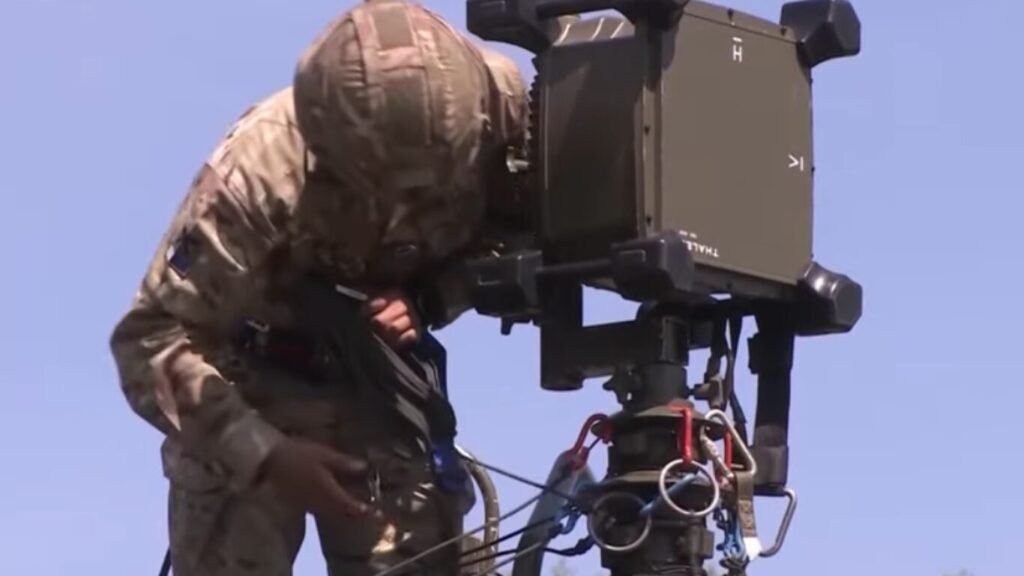
AI Electronic Warfare uses intelligent algorithms to detect, analyze, and disrupt enemy communications with greater precision. It enables faster decisions, adaptive defenses, and smarter battlefield control while reducing unnecessary signal interference.
Electronic warfare is the military practice of controlling and influencing the electromagnetic spectrum. Every communication system, radar installation, satellite connection, navigation signal, and wireless military network depends on this invisible environment.
Whoever controls the spectrum gains an enormous operational advantage.
Traditional systems generally relied on fixed rules and predefined responses. Operators selected frequencies, monitored enemy activity, and manually adjusted equipment whenever conditions changed. While experienced operators achieved remarkable results, human reaction speed naturally limited how quickly they could respond during fast-moving operations.
Artificial intelligence removes much of this limitation.
Modern AI continuously monitors thousands of signals simultaneously. It compares new information against previous observations, recognizes hidden patterns, predicts future behavior, and recommends or automatically performs defensive and offensive actions.
The battlefield is no longer responding minute by minute. It is responding second by second.
The Evolution From Traditional Systems
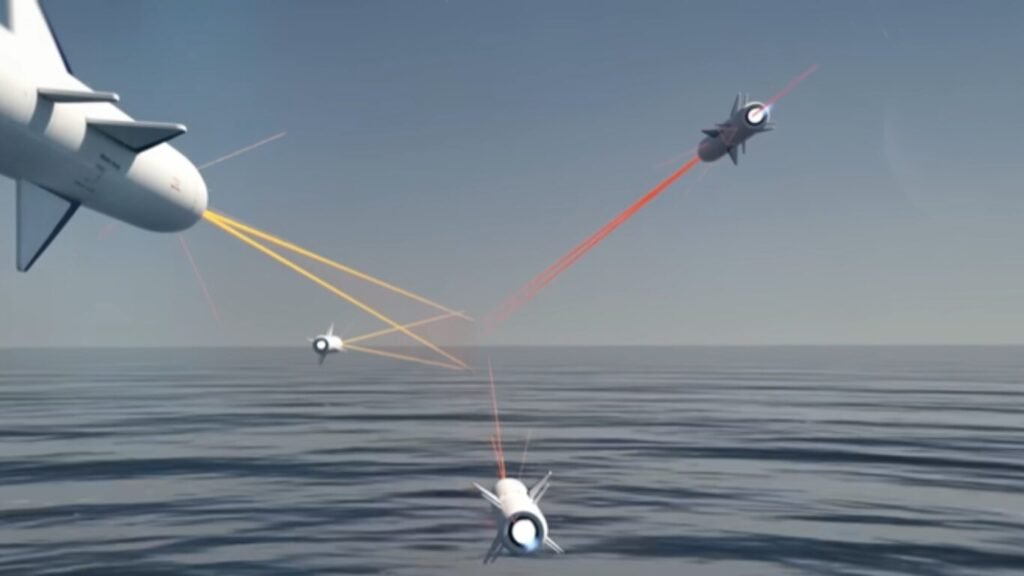
The journey from conventional electronic warfare to intelligent electronic warfare has taken decades of research and technological advancement.
| Year | Event | Description |
|---|---|---|
| 1939 | Early electronic warfare | Radio interference techniques began appearing during large-scale military operations. |
| 1960s | Radar countermeasures | Militaries introduced specialized radar jamming and deception technologies. |
| 1980s | Digital signal processing | Faster computers improved electronic detection and signal analysis. |
| 2000s | Network-centric warfare | Electronic warfare became closely connected with digital communications and cyber capabilities. |
| 2020s | AI Electronic Warfare | Machine learning enabled adaptive jamming, intelligent signal analysis, and automated spectrum management. |
Looking back at this progression, one trend becomes obvious. Every generation has moved toward greater precision, higher automation, and faster decision making.
Artificial intelligence is accelerating that evolution more rapidly than any previous innovation.
Why Precision Matters More Than Power
Older electronic warfare systems often followed a simple strategy.
Transmit more power than the enemy.
Although effective in many situations, this strategy created significant drawbacks. Strong jamming could unintentionally affect friendly forces operating nearby. Civilian infrastructure sometimes experienced interference, and military planners had limited flexibility once transmissions began.
Modern AI systems take an entirely different approach.
Instead of asking how much power should be transmitted, they ask where, when, and why a signal should be interrupted.
This small change in thinking produces enormous operational advantages.
Intelligent software analyzes thousands of communication pathways before selecting a target. It identifies priority signals, evaluates risks, estimates possible outcomes, and continuously adjusts its strategy as battlefield conditions change.
The result is greater effectiveness with fewer unwanted consequences.
From my perspective, precision has become more valuable than raw electronic power.
Cognitive Jamming
Traditional jamming resembles trying to silence everyone speaking inside a crowded conference hall.
The objective is simple.
Create enough noise so that nobody can communicate effectively.
Unfortunately, this method also affects friendly communications operating in the same environment.
Cognitive jamming introduces a much smarter process.
Instead of transmitting random interference, artificial intelligence first studies the surrounding spectrum. It learns communication patterns, identifies operating frequencies, observes timing behavior, and predicts future transmissions.
Only after understanding the environment does it decide how to interfere.
This makes the disruption highly selective.
Imagine listening carefully to a conversation before interrupting only the few important words that completely change its meaning.
That is essentially how cognitive jamming works.
Machine learning models continuously improve during operations. Every intercepted transmission becomes additional training data. Every frequency change provides new information. Every communication attempt teaches the system something new.
As a result, the electronic warfare platform becomes increasingly effective throughout the mission.
One of the most impressive characteristics of these systems is their ability to adapt almost instantly when an opponent changes tactics.
Human operators may require several minutes to analyze new signal behavior.
Artificial intelligence may require only fractions of a second.
That difference could determine the outcome of an entire military operation.
Intelligent Signal Recognition
Modern battlefields produce enormous amounts of electronic information.
Military radios.
Navigation systems.
Satellite links.
Drone communications.
Radar emissions.
Command networks.
Sensor platforms.
Every device contributes additional complexity to the electromagnetic environment.
Without intelligent automation, analyzing all this information would overwhelm even highly experienced specialists.
Artificial intelligence simplifies this challenge through advanced signal recognition.
Sophisticated algorithms classify transmissions based on multiple characteristics including frequency, waveform, duration, modulation, timing, and behavioral patterns.
Rather than treating every transmission equally, AI prioritizes signals that present immediate operational significance.
For example, a routine communication between logistics vehicles may require little attention.
However, sudden encrypted transmissions between command centers and missile units could indicate preparations for a major operation.
Artificial intelligence recognizes these differences almost immediately.
This allows commanders to focus on information that truly matters instead of wasting valuable time reviewing thousands of irrelevant signals.
Surgical Interference
Perhaps one of the most remarkable developments within AI Electronic Warfare is the concept of surgical interference.
Earlier electronic warfare platforms often disrupted entire communication channels.
The consequences were predictable.
Enemy communications stopped.
Friendly communications suffered.
Coordination became more difficult for everyone operating nearby.
Modern artificial intelligence makes a much more refined decision.
It isolates individual enemy transmissions and applies interference only where required.
This targeted approach protects friendly military networks while simultaneously degrading hostile communications.
Imagine an electrician repairing one damaged wire inside a large control system without disconnecting electricity from the entire building.
That illustrates the precision of surgical interference.
This capability becomes especially important during combined military operations where aircraft, drones, naval vessels, armored vehicles, and infantry units must communicate continuously.
Interrupting friendly coordination for even a short period can create confusion and increase operational risks.
Artificial intelligence minimizes that possibility by ensuring disruption remains carefully focused.
The practical benefits extend far beyond communication.
Energy consumption decreases.
Spectrum congestion becomes easier to manage.
Electronic signatures become smaller.
Operational efficiency improves across the entire battlefield.
Machine Learning Creates Continuous Improvement
One feature separates AI Electronic Warfare from traditional electronic warfare more than any other.
Continuous learning.
Older systems operated according to fixed programming created before deployment.
Artificial intelligence evolves during deployment itself.
Every intercepted transmission becomes another lesson.
Every successful identification improves future accuracy.
Every failed prediction helps refine future decisions.
This continuous improvement cycle allows AI systems to remain effective even when opponents introduce new communication methods or unexpected electronic tactics.
Let me explain this in the clearest, simplest terms.
Imagine two chess players.
One player studies every previous game after each match.
The other never changes strategy.
After enough games, the player who continues learning almost always develops the stronger approach.
Artificial intelligence behaves in a similar manner within electronic warfare.
Its greatest strength is not simply processing information faster.
Its greatest strength is becoming smarter through experience.
This continuous learning capability is one reason why many defense experts believe intelligent electronic warfare will remain a major priority for military modernization throughout the coming decades.
Low Probability of Intercept and Low Probability of Detection
One of the greatest strengths in military operations is remaining unnoticed.
Every radio transmission creates an opportunity for an opponent to discover a unit’s position. Every detectable signal increases operational risk. Traditional communication systems attempted to reduce this danger through predefined transmission methods, frequency hopping, and signal masking. While effective to a certain degree, these techniques were still based on relatively fixed rules that advanced monitoring systems could eventually recognize.
Artificial intelligence introduces a far more dynamic approach. Instead of repeating the same transmission behavior, AI constantly changes communication characteristics based on the surrounding environment. It can modify frequencies, transmission timing, waveform structures, signal strength, and routing decisions without requiring manual intervention.
The result is a communication network that becomes much harder to detect and even more difficult to analyze. Opposing forces may identify brief electronic activity, but by the time they attempt to track or classify it, the transmission has already changed.
This creates a constantly moving electronic target, making interception significantly more challenging while allowing friendly forces to communicate with greater confidence during sensitive operations.

The Rise of Intelligent Radar Systems
Radar has remained one of the most important technologies in military operations for nearly a century. It has guided aircraft, protected naval fleets, tracked missiles, and monitored vast sections of airspace. Although traditional radar continues to serve an important purpose, modern threats have become far more complex.
Stealth aircraft, autonomous drones, hypersonic weapons, and electronic deception techniques have forced defense organizations to rethink how radar should operate.
Artificial intelligence is helping create a new generation of radar systems that do much more than detect reflected signals.
Instead of simply measuring distance and speed, AI analyzes movement patterns, object behavior, flight characteristics, and environmental conditions at the same time. It compares thousands of previous observations to determine whether an object represents a genuine threat or harmless background activity.
This greatly reduces false alarms while improving detection accuracy.
For example, conventional radar may struggle to distinguish between multiple small drones flying close together. An AI-assisted radar can recognize their coordinated movement, identify abnormal flight paths, and classify them as a potential swarm attack within seconds.
This faster understanding allows military commanders to react before the threat grows.
From my perspective, intelligent radar is becoming less about seeing farther and more about understanding better.
AI Radar Spoofing
Artificial intelligence is not only improving radar systems. It is also creating more advanced methods of deceiving them.
Radar spoofing is the process of making a radar system believe something exists when it does not, or hiding something that actually does.
Traditional spoofing methods often relied on simple reflected signals or fixed electronic techniques. Modern AI introduces a much more convincing form of deception.
Instead of producing generic false targets, intelligent algorithms study how radar systems interpret information. They learn expected signal behavior and generate realistic electronic responses that closely match authentic aircraft, ships, or other military platforms.
A radar operator may see several aircraft approaching when only one is actually present.
Likewise, an important target could appear to change direction, disappear, or split into several false tracks.
The deception becomes increasingly believable because AI continuously adjusts its false signals based on how the radar reacts.
This creates confusion during critical moments.
Commanders may deploy valuable defensive resources toward nonexistent threats while genuine targets continue their mission unnoticed.
In modern warfare, creating uncertainty can sometimes be more valuable than causing physical destruction.
AI and Electromagnetic Spectrum Dominance
Modern military operations depend on uninterrupted access to the electromagnetic spectrum.
Every communication system, navigation network, unmanned aircraft, surveillance platform, missile guidance system, and command center relies on this invisible resource.
Military organizations are using AI to improve the way they handle complex operations with greater speed and efficiency.
Rather than treating every frequency equally, AI identifies the most valuable sections of the spectrum and allocates resources according to operational priorities.
If heavy electronic activity develops in one area, AI automatically shifts communication routes, adjusts transmission schedules, and recommends alternative operating frequencies.
These decisions happen much faster than manual control could achieve.
As battlefield conditions continue changing, the system continuously updates its strategy.
This flexibility allows military operations to continue even when electronic attacks become increasingly sophisticated.
Control of the spectrum is gradually becoming as important as control of land, sea, air, and space.
AI Integration With Modern Defense Systems
Artificial intelligence delivers its greatest value when connected with other military technologies.
Electronic warfare no longer operates as an isolated capability.
Instead, it works alongside cyber defense, satellite communications, intelligence gathering, autonomous vehicles, missile defense, and battlefield command systems.
Imagine an unmanned aerial vehicle detecting unusual enemy radio activity.
That information can immediately be shared with AI Electronic Warfare software, which analyzes the signals and recommends appropriate electronic countermeasures.
At the same time, satellite imagery confirms enemy movement while cyber intelligence evaluates digital communications.
Military commanders receive a complete operational picture rather than isolated pieces of information.
This level of integration improves decision making and reduces response times during rapidly changing situations.
The future belongs to connected defense ecosystems rather than independent technologies.
The Continuing Role of Human Operators
Although artificial intelligence continues becoming more capable, human expertise remains essential.
AI processes enormous amounts of information, recognizes patterns, and recommends actions with impressive speed.
People provide judgment.
Military professionals understand political consequences, legal responsibilities, operational priorities, and ethical considerations that extend beyond technical analysis.
Experienced operators also recognize situations where unexpected conditions require human decision making instead of automated responses.
The strongest defense organizations combine intelligent software with highly trained personnel.
Artificial intelligence should support military professionals rather than replace them.
Human oversight builds confidence, improves accountability, and reduces operational risk.
This partnership creates stronger and more reliable defense capabilities.
Challenges Facing AI Electronic Warfare
Every emerging technology introduces new opportunities along with important challenges.
AI Electronic Warfare is no exception.
One major challenge involves data quality.
Machine learning systems depend on accurate and diverse information during training. If data is incomplete or misleading, system performance may decline when operating in real battlefield conditions.
Another challenge involves cybersecurity.
Because AI systems rely on software, communication networks, and digital infrastructure, they become attractive targets for cyber attacks. Protecting algorithms, training data, and operational software is therefore just as important as protecting physical military equipment.
Rapid technological development also creates maintenance challenges.
Artificial intelligence requires regular software improvements, updated threat libraries, and continuous testing to remain effective against evolving electronic tactics.
Finally, military organizations must invest heavily in education.
Operators need to understand both electronic warfare principles and artificial intelligence capabilities.
Technology alone cannot guarantee success without knowledgeable people managing it effectively.
Practical Solutions For Future Military Readiness
Preparing for intelligent electronic warfare requires long term planning rather than short term purchases.
Several practical priorities stand out.
First, military organizations should develop flexible electronic warfare platforms that allow software updates throughout their operational life instead of depending entirely on hardware replacement.
Second, artificial intelligence should be integrated across communication systems, intelligence platforms, satellite networks, and cyber operations to create a unified operational environment.
Third, continuous operator training must remain a central priority.
Technology changes rapidly, and personnel must evolve alongside it.
Simulation environments powered by AI can provide realistic training scenarios where operators practice responding to complex electronic attacks without exposing real equipment to unnecessary risks.
Research partnerships between defense organizations, universities, and technology companies can also accelerate innovation while improving system reliability.
Building adaptable defense ecosystems today will provide stronger operational advantages tomorrow.
Why AI Electronic Warfare Matters More Than Ever
Modern conflicts extend far beyond traditional battlefields.
Military operations now involve cyberspace, satellites, unmanned systems, digital communications, and information networks operating together.
Electronic warfare sits at the center of this interconnected environment.
Disrupting communication can slow military coordination.
Protecting communication preserves operational effectiveness.
Artificial intelligence strengthens both objectives.
It helps detect threats earlier, respond faster, reduce unnecessary interference, and improve overall battlefield awareness.
Countries investing in intelligent electronic warfare are preparing for conflicts where information moves faster than physical forces.
Success will increasingly depend upon how effectively military organizations collect, understand, and act upon electronic information.
In many situations, decisive advantages may be achieved long before soldiers encounter one another on the battlefield.
The Future of AI Electronic Warfare
The pace of innovation shows no sign of slowing.
Future systems will likely become even more autonomous, predictive, and collaborative.
Artificial intelligence may eventually coordinate electronic warfare across aircraft, naval vessels, satellites, unmanned platforms, and ground forces simultaneously.
Instead of reacting after enemy activity begins, future systems may predict likely electronic behavior before transmissions even occur.
Quantum computing, advanced machine learning, edge computing, and next generation communication technologies may further expand these capabilities.
While these developments remain under active research, one trend appears increasingly clear.
Electronic warfare is evolving from reactive defense toward intelligent anticipation.
The organizations that continue investing in innovation, skilled personnel, secure infrastructure, and responsible AI development will be better prepared for tomorrow’s security environment.
CONCLUSION AND BRAND CREDIBILITY
AI Electronic Warfare represents far more than another advancement in military technology. It marks a fundamental change in how modern defense systems observe, communicate, protect, and respond. The transition from broad electronic disruption to intelligent precision allows military forces to make faster decisions, reduce unnecessary interference, and maintain greater awareness across the battlefield. As artificial intelligence continues to evolve, electronic warfare will become even more adaptive, accurate, and closely connected with every major defense capability.
From my perspective, the greatest strength of this transformation is not simply faster technology. It is the ability to learn, improve, and respond intelligently to changing situations. Nations that combine advanced AI with skilled professionals, secure infrastructure, and responsible planning will be better positioned to face future security challenges.
The future of military operations will be shaped by knowledge, precision, and intelligent decision making. AI Electronic Warfare stands at the center of that transformation, helping redefine how conflicts are prevented, managed, and understood.
This in-depth research and expert analysis has been created exclusively for worldstan.com, where our mission is to simplify advanced technologies, explore emerging defense innovations, and deliver trusted, original insights that help readers understand the future before it becomes the present.