

Autonomous Logistics in Military Future of Warfare
Modern warfare is no longer just about firepower; it is about how efficiently an army can sustain itself, and autonomous logistics in military operations is quietly becoming the backbone of that transformation.
How Autonomous Logistics Is Transforming Modern Warfare
Autonomous Logistics in Military Operations is transforming battlefield supply chains through AI, autonomous vehicles, and intelligent decision making for safer and more efficient military sustainment.
Modern warfare is changing in ways that many people never notice. While advanced weapons often dominate the headlines, the real strength of any military still depends on how effectively it can move fuel, food, ammunition, and medical supplies to the right place at the right time. This article explores how Autonomous Logistics in Military Operations is reshaping military support, why AI plays a vital role, and what this transformation means for the future of defense.
For generations, military planners have understood one simple reality. Even the most powerful army cannot continue fighting if its supply chain fails. Every successful mission depends on a constant flow of essential resources reaching frontline forces without delay.
Today, technology is changing how that mission is accomplished. Autonomous Logistics in Military Operations combines AI, intelligent navigation, advanced sensors, and unmanned vehicles to create faster, safer, and more reliable supply networks. These systems reduce the need for human drivers in dangerous environments while helping military commanders respond more quickly to changing battlefield conditions.
Unlike traditional logistics, autonomous systems can operate around the clock, analyze their surroundings, and adapt to unexpected obstacles with minimal human intervention. As defense technology continues to evolve, logistics is becoming more than a support function. It is becoming a strategic advantage that directly influences mission success.
From my perspective, this transformation deserves far more attention than it receives. Modern conflicts are increasingly shaped by information, speed, and endurance. The military force that maintains a dependable supply chain often gains an advantage long before the first shot is fired.
Whether transporting ammunition across difficult terrain, delivering medical supplies to isolated units, or supporting humanitarian missions after disasters, autonomous logistics represents a practical innovation with long-term military value.
Let me explain this in the clearest, simplest terms.
Autonomous logistics is not about replacing people. It is about allowing intelligent machines to handle repetitive, dangerous, and time-sensitive transportation tasks so that military personnel can focus on critical operational decisions. As AI becomes more capable, these systems will continue improving their ability to operate safely in complex and unpredictable environments.
Understanding Autonomous Logistics in Military Operations
Autonomous Logistics in Military Operations uses AI, autonomous vehicles, and smart navigation to deliver supplies safely, reduce risks for soldiers, and keep military forces operating efficiently in challenging environments.
Autonomous Logistics in Military Operations refers to the use of AI powered vehicles, robotic platforms, smart software, and connected communication systems that transport military supplies with limited or no direct human control.
Instead of relying entirely on human-operated supply convoys, modern military logistics increasingly depends on intelligent systems capable of making navigation decisions, avoiding obstacles, selecting efficient routes, and communicating continuously with command centers.
These technologies support many important logistics activities, including transporting fuel, ammunition, food, water, medical equipment, engineering materials, replacement parts, and emergency supplies.
The objective is straightforward. Deliver essential resources safely, accurately, and continuously while reducing operational risks and improving overall battlefield efficiency.
Why Military Logistics Has Always Been Critical
History repeatedly demonstrates that successful military campaigns rely heavily on effective logistics. Superior weapons alone rarely determine victory. Armies also require dependable transportation, maintenance, fuel distribution, medical evacuation, and equipment repair.
Throughout history, commanders who protected their supply networks often maintained stronger operational endurance than opponents with greater combat strength.
| Year | Event | Description |
|---|---|---|
| 1805 | Napoleonic Campaigns | Logistics became essential for sustaining large armies across Europe during extended military campaigns. |
| 1944 | Allied Normandy Campaign | Massive logistics planning enabled continuous delivery of soldiers, fuel, ammunition, and equipment following the D-Day landings. |
| 1991 | Gulf War | Advanced logistics coordination allowed coalition forces to deploy rapidly and sustain high operational tempo. |
| Early 2000s | Modern Military Digitalization | Military organizations introduced digital tracking systems, satellite communications, and automated logistics management. |
| 2020s | AI Driven Logistics Development | Autonomous vehicles, AI planning systems, and intelligent robotics began supporting military supply operations in multiple countries. |
These historical developments show that logistics has consistently evolved alongside military technology. Today’s AI powered logistics systems represent the next stage in that evolution.
The Shift Toward Intelligent Military Supply Chains
Traditional military supply convoys often face numerous challenges. Human drivers experience fatigue, weather conditions change unexpectedly, roads become damaged, and enemy forces may target transportation routes.
Autonomous logistics addresses many of these problems by combining intelligent navigation with continuous data analysis. Vehicles equipped with advanced sensors can detect hazards, identify alternative routes, and coordinate with nearby autonomous systems without waiting for constant human instructions.
This shift allows commanders to focus less on transportation management and more on broader operational planning.
In many situations, autonomous logistics can also improve delivery accuracy by selecting routes based on real time battlefield information instead of relying solely on preplanned schedules.
How AI Makes Autonomous Logistics Possible
Artificial intelligence serves as the decision making engine behind autonomous logistics systems.
Every second, AI processes information collected from multiple sources including cameras, radar, LiDAR, GPS receivers, inertial navigation systems, satellite communications, and environmental sensors.
The AI compares this information with digital terrain maps and operational objectives before determining the safest and most efficient path forward.
Unlike traditional software that follows fixed instructions, machine learning enables these systems to improve through continuous operational experience. As more missions are completed, AI models become better at recognizing obstacles, predicting risks, and selecting optimal transportation routes.
This adaptive capability makes autonomous logistics increasingly valuable in unpredictable military environments where conditions can change within minutes.
The combination of intelligent software and autonomous mobility allows military logistics to become faster, more flexible, and significantly more resilient than conventional supply methods.
How Autonomous Military Logistics Systems Work
Autonomous Logistics in Military Operations depends on several advanced technologies working together as one integrated system. Each technology performs a specific task, but their real strength comes from continuous cooperation. Instead of functioning like a single machine, an autonomous logistics platform behaves like an intelligent transportation network that constantly observes, analyzes, communicates, and reacts.
A typical autonomous supply vehicle begins its mission by receiving destination data and operational instructions from a military command center. Before moving, the onboard AI evaluates digital terrain maps, satellite information, weather conditions, traffic reports, and potential battlefield risks. Based on this information, it calculates the safest and most efficient route.
As the vehicle travels, it continuously scans its surroundings using multiple sensors. Cameras identify roads, bridges, vehicles, and people. LiDAR measures distances by creating detailed three dimensional maps of nearby objects. Radar performs reliably during rain, fog, smoke, and darkness where cameras may struggle. GPS provides location information, while inertial navigation systems continue guiding the vehicle even when satellite signals become weak or unavailable.
The AI combines all of this information through sensor fusion, creating a complete understanding of the environment. This allows the vehicle to recognize obstacles, avoid hazards, adjust speed, and safely navigate difficult terrain without relying entirely on human instructions.
Communication also plays a vital role. Autonomous logistics vehicles exchange information with nearby vehicles, command centers, surveillance systems, and reconnaissance drones. If one route suddenly becomes unsafe because of enemy activity or infrastructure damage, updated information can be shared instantly, allowing every connected vehicle to select an alternative path.
Unlike ordinary navigation software, military autonomous systems must make decisions under highly unpredictable conditions. Rough terrain, destroyed roads, electronic interference, and changing tactical situations require constant adaptation. AI enables these vehicles to respond within seconds while maintaining mission objectives.
Core Technologies Behind Autonomous Logistics
Several technologies work together to make Autonomous Logistics in Military Operations reliable and effective.
Artificial Intelligence
AI serves as the brain of the entire logistics platform. It processes enormous amounts of information in real time, identifies patterns, predicts potential hazards, and recommends the safest operational decisions. Machine learning allows the system to improve continuously after every mission by learning from previous experiences.
Computer Vision
Computer vision enables autonomous vehicles to recognize roads, obstacles, damaged infrastructure, military equipment, and moving objects using onboard cameras. Advanced image recognition allows these systems to operate even when environmental conditions become challenging.
Sensor Fusion
No individual sensor is perfect. Cameras may struggle in darkness, while GPS signals can be disrupted. Sensor fusion combines information from multiple technologies, allowing AI to build a more accurate understanding of the surrounding environment.
Advanced Navigation
Military autonomous vehicles rely on GPS, digital terrain mapping, inertial navigation, satellite positioning, and terrain recognition simultaneously. This layered navigation approach improves reliability when one navigation source becomes unavailable.
Secure Communications
Continuous communication allows autonomous vehicles to coordinate with military headquarters and nearby units. Secure military networks enable real time updates, convoy coordination, and rapid mission adjustments while reducing communication delays.
Predictive Analytics
AI also analyzes historical mission data and current operational information to predict future logistics requirements. Commanders can anticipate supply shortages before they occur, allowing resources to be repositioned proactively rather than reactively.
Different Types of Autonomous Military Logistics Vehicles
Modern military logistics includes a growing variety of autonomous platforms designed for different operational needs.
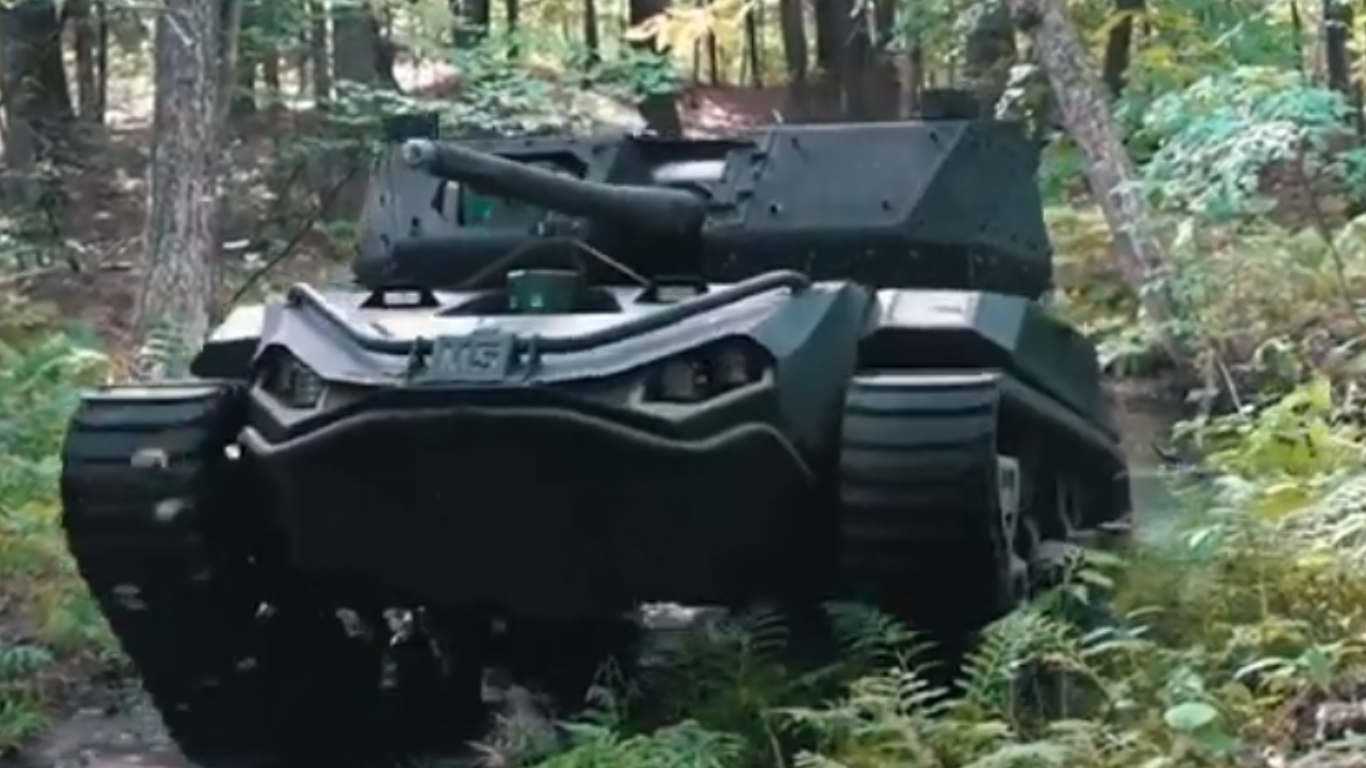
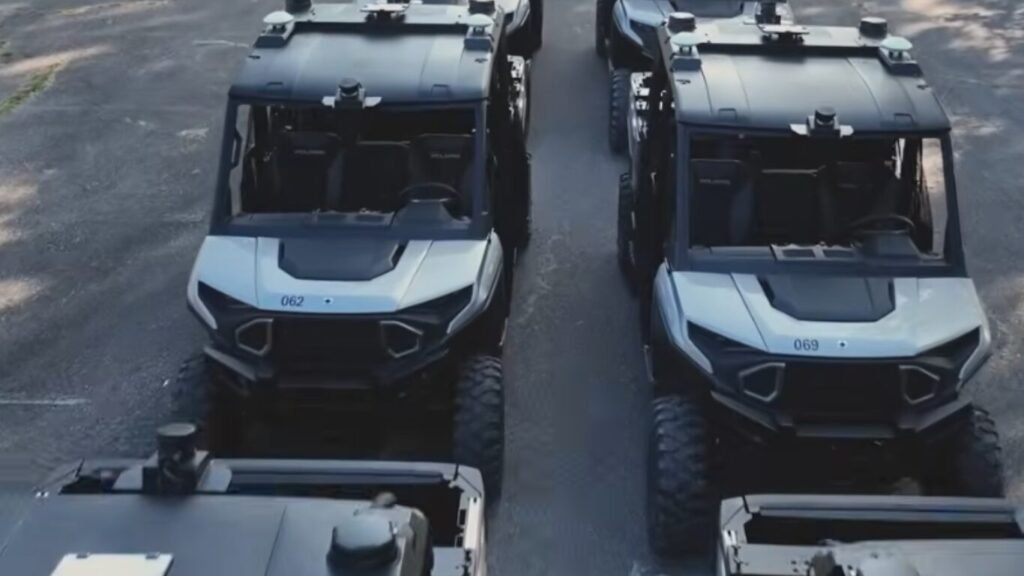
Ground vehicles transport ammunition, fuel, engineering equipment, food, and medical supplies across difficult terrain. These unmanned vehicles can accompany combat units while reducing risks to military drivers.
Cargo drones deliver lightweight supplies directly to isolated units operating in mountainous regions, disaster zones, or heavily contested environments where conventional vehicles cannot safely travel.
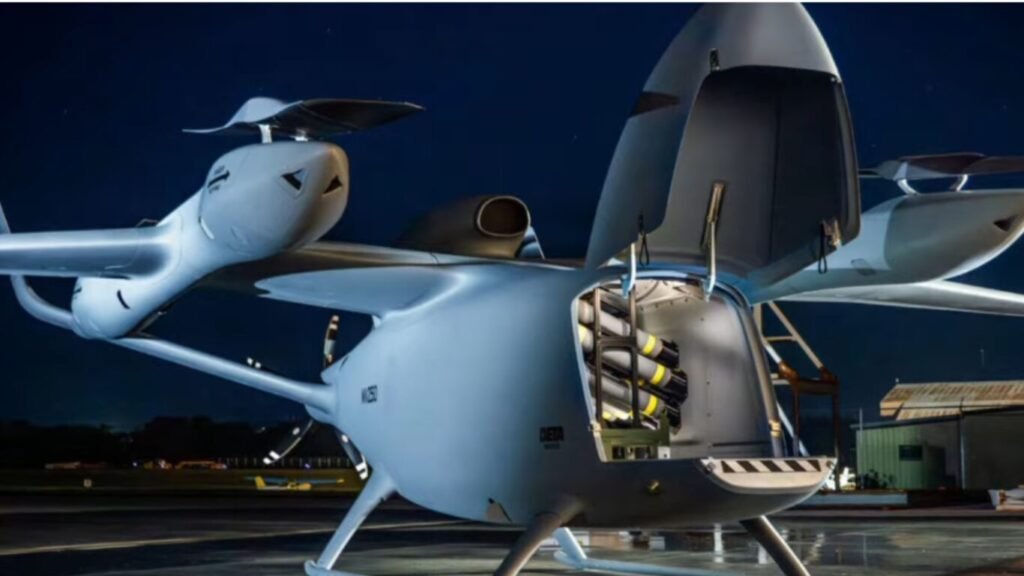
Autonomous helicopters are being developed to transport larger payloads over greater distances while avoiding dangerous road networks. These systems could significantly improve medical evacuation and emergency resupply missions.
Autonomous naval vessels can transport equipment between ports, support amphibious operations, conduct surveillance, and deliver supplies across coastal regions with minimal onboard personnel.
Future logistics networks may combine all of these platforms into one coordinated system where ground vehicles, aerial drones, and maritime transport share operational information continuously through AI powered command networks.
Real World Military Applications
Autonomous Logistics in Military Operations extends far beyond routine transportation. Military organizations are exploring numerous practical applications that improve both efficiency and operational safety.
One important application involves resupplying frontline forces. Instead of exposing human drivers to dangerous combat zones, autonomous vehicles can transport essential supplies directly to military units while minimizing personnel risk.
Medical logistics also benefits significantly. Autonomous systems can rapidly deliver emergency medical equipment, blood supplies, medicines, and field hospital resources following combat operations or humanitarian disasters.
Engineering units can use autonomous transport vehicles to move construction materials, bridge components, repair equipment, and heavy machinery into operational areas with reduced manpower requirements.
Humanitarian assistance represents another valuable application. Following earthquakes, floods, or other natural disasters, autonomous logistics systems can deliver food, water, medicine, and emergency shelter supplies to communities where damaged infrastructure limits traditional transportation.
Military maintenance operations also become more efficient. AI powered logistics systems help distribute replacement parts, maintenance tools, and repair equipment before operational failures occur, reducing equipment downtime and improving mission readiness.
These expanding applications demonstrate that autonomous logistics is becoming an essential component of both military operations and broader emergency response activities.
Strategic Benefits of Autonomous Logistics in Military Operations
One of the greatest strengths of Autonomous Logistics in Military Operations is its ability to strengthen an entire military campaign without directly participating in combat. A reliable logistics network keeps soldiers supplied, equipment operational, and commanders focused on their objectives instead of worrying about shortages.
Traditional military convoys often face serious risks. Drivers must travel through unfamiliar territory, operate under stressful conditions, and remain alert for long periods. Fatigue alone can increase the likelihood of accidents, while hostile forces may deliberately target supply routes. Autonomous vehicles reduce many of these risks by taking over repetitive transportation tasks and allowing personnel to operate from safer locations.
Continuous operation is another major advantage. Human crews require rest, food, and regular shift changes, but autonomous systems can continue operating day and night with only scheduled maintenance. This uninterrupted movement helps maintain a constant flow of supplies during prolonged military operations.
Operational flexibility also improves significantly. If one transportation route becomes unsafe because of enemy activity or damaged infrastructure, AI can immediately identify alternative paths. This rapid adaptation reduces delays and increases the resilience of military supply chains.
Another important benefit is improved resource management. By processing fuel needs, transport schedules, cargo priorities, and vehicle availability together, AI helps make supply operations faster and more efficient. Commanders receive accurate information about supply levels, allowing them to make better strategic decisions while minimizing unnecessary transportation.
From my perspective, one of the most valuable advantages is confidence. Soldiers perform better when they know supplies, ammunition, medical equipment, and food will arrive when needed. Reliable logistics strengthens morale and helps maintain operational momentum throughout an extended mission.
Supporting Multi Domain Military Operations
Modern military operations are no longer limited to land battles. Defense forces now operate across land, air, sea, space, and cyberspace at the same time. Autonomous logistics supports every one of these operational domains.
Ground forces depend on continuous transportation of ammunition, fuel, food, engineering equipment, and replacement parts. Autonomous vehicles help maintain these essential supply lines while reducing exposure to hostile environments.
Air operations require aviation fuel, spare components, weapons, maintenance equipment, and runway support systems. AI assisted logistics ensures these resources reach military air bases efficiently, helping aircraft remain mission ready.
Naval operations involve transporting supplies between ports, supporting warships at sea, and maintaining coastal defense facilities. Autonomous maritime transport systems have the potential to improve both efficiency and operational security.
Space operations also depend on logistics planning. Although satellites do not require traditional fuel deliveries like ground vehicles, space missions rely heavily on coordinated transportation, maintenance planning, communication infrastructure, and secure ground support facilities.
Cyber operations benefit indirectly from autonomous logistics because secure communication networks, computing equipment, backup power systems, and technical support resources must all remain available during military missions.
By supporting every operational domain, autonomous logistics becomes a force multiplier that improves overall military effectiveness rather than assisting only one branch of the armed forces.
AI Decision Making During Logistics Missions
Artificial intelligence allows autonomous logistics platforms to make thousands of decisions every minute. These decisions are based on continuously changing environmental information rather than fixed instructions.
For example, if a bridge becomes damaged after the mission begins, AI immediately compares alternative routes based on travel distance, terrain conditions, potential threats, fuel consumption, and estimated arrival times. Within seconds, it selects the safest available option.
Weather conditions also influence AI decision making. Heavy rain, snow, dust storms, or poor visibility may reduce sensor performance or make certain roads unsafe. AI compensates by combining information from multiple sensors while adjusting vehicle speed and navigation strategies accordingly.
Unexpected obstacles such as abandoned vehicles, fallen trees, damaged buildings, or civilian traffic require immediate response. AI evaluates these situations in real time and determines whether to stop, reroute, or continue safely.
Machine learning further improves these capabilities over time. Every completed mission provides additional operational data, allowing future navigation decisions to become increasingly accurate and efficient.
This ability to learn from experience distinguishes AI powered logistics from conventional automated transportation systems.
Human Oversight Remains Essential
Although autonomous logistics continues becoming more capable, human expertise remains indispensable.
Military commanders establish mission objectives, approve operational plans, prioritize cargo deliveries, and determine acceptable levels of operational risk. AI assists these decisions by providing detailed analysis, but final authority should remain with experienced personnel.
Human operators also supervise system performance, monitor communication networks, authorize emergency responses, and intervene whenever unexpected situations exceed the system’s programmed capabilities.
This collaborative approach combines the strengths of both humans and AI. Machines contribute speed, consistency, and continuous data processing, while people provide judgment, ethical reasoning, strategic thinking, and adaptability.
Rather than replacing military professionals, autonomous logistics enhances their ability to manage increasingly complex operations.
Building a More Resilient Military Supply Chain
Resilience has become one of the defining characteristics of modern military logistics. A resilient supply chain continues functioning despite disruption, uncertainty, or unexpected challenges.
Autonomous Logistics in Military Operations contributes to resilience in several ways. Multiple autonomous vehicles can coordinate their movements, allowing deliveries to continue even if individual vehicles experience technical problems.
AI also predicts maintenance requirements before serious mechanical failures occur. Instead of waiting for equipment to break down, predictive maintenance schedules repairs based on vehicle performance data, reducing downtime and extending operational availability.
Inventory management becomes more accurate as AI continuously monitors supply consumption rates and forecasts future demand. This reduces unnecessary stockpiling while ensuring critical resources remain available when required.
Communication redundancy further strengthens resilience. If one communication channel becomes unavailable because of interference or infrastructure damage, alternative secure networks can maintain operational coordination.
Together, these capabilities create a logistics system that remains dependable under conditions where conventional transportation networks might struggle.
The future of military logistics will likely depend not only on faster vehicles or stronger equipment, but on intelligent systems capable of learning, adapting, and supporting military operations with greater precision than ever before.
Challenges Facing Autonomous Logistics Systems
Despite its impressive capabilities, Autonomous Logistics in Military Operations still faces several practical and technical challenges. Building a dependable autonomous supply network is far more complex than developing a self driving vehicle for public roads. Military environments are constantly changing, making every mission unique.
One of the biggest challenges is operating in unpredictable terrain. Battlefields rarely have clear roads or reliable infrastructure. Vehicles may encounter deep mud, damaged bridges, steep hills, flooded areas, or debris left behind after combat. AI must make safe decisions within seconds while continuing toward its objective.
Electronic warfare presents another serious obstacle. Modern conflicts increasingly involve jamming GPS signals, disrupting radio communications, and interfering with navigation systems. Autonomous logistics platforms must continue operating even when satellite signals become unreliable or communication networks are partially unavailable.
Mechanical reliability is equally important. Military vehicles often travel hundreds of kilometers across difficult environments while carrying heavy loads. Every component, from the engine to the sensors, must withstand extreme temperatures, dust, vibration, rain, and continuous operation.
Interoperability also remains a challenge. Many armed forces use equipment from different manufacturers and across multiple generations of technology. Future autonomous logistics systems must communicate effectively with both modern AI platforms and existing military infrastructure.
Finally, training personnel requires considerable investment. Soldiers, engineers, software specialists, and logistics officers all need new technical skills to operate, supervise, maintain, and secure autonomous systems effectively.
Cybersecurity Risks
As logistics becomes increasingly digital, cybersecurity becomes one of the highest priorities.
Autonomous Logistics in Military Operations depends heavily on software, communication networks, satellite connectivity, and AI decision making. Any weakness in these systems could become a target for cyber attacks.
Hackers may attempt to interfere with navigation systems, manipulate sensor information, disrupt communications, or inject false operational data. Even temporary disruptions could delay critical deliveries during military operations.
To reduce these risks, military organizations implement multiple layers of cybersecurity protection. These include encrypted communications, secure authentication systems, network monitoring, intrusion detection, and continuous software updates.
Artificial intelligence also contributes to cybersecurity by monitoring network activity and identifying unusual behavior before it develops into a larger threat. AI can detect abnormal communication patterns, unauthorized access attempts, and suspicious system behavior much faster than traditional monitoring methods.
However, cybersecurity is not a one time solution. As cyber threats continue evolving, defense organizations must continuously improve both their software and security strategies.
Ethical and Legal Considerations
Although autonomous logistics systems primarily transport supplies rather than engage in combat, they still raise important ethical and legal questions.
One concern involves accountability. If an autonomous vehicle causes an accident or makes an incorrect navigation decision, determining responsibility may become more complicated than with a traditionally operated vehicle.
Another consideration involves the growing role of AI in military decision support. As autonomous systems become more advanced, governments and military leaders must carefully define which decisions should remain under direct human control.
International law also continues adapting to emerging autonomous technologies. Existing military regulations were largely developed before AI powered logistics systems became practical. Future legal frameworks will likely establish clearer standards regarding safety, operational responsibility, and autonomous military technologies.
Personally, I believe maintaining meaningful human supervision offers the most balanced approach. AI should strengthen military logistics by improving speed, accuracy, and efficiency while leaving strategic and ethical decisions in human hands.
The Future of Autonomous Logistics
The future of Autonomous Logistics in Military Operations extends far beyond today’s capabilities. Rapid advances in AI, robotics, communication networks, and intelligent automation are creating new possibilities every year.
Future logistics vehicles are expected to become increasingly collaborative. Rather than operating individually, multiple autonomous platforms may function as coordinated fleets that share information continuously. Ground vehicles, cargo drones, autonomous helicopters, and maritime transport systems could work together as one integrated logistics network.
Artificial intelligence will also become more predictive. Instead of simply responding to logistics requests, AI will forecast future supply requirements based on operational tempo, equipment usage, weather conditions, terrain, and historical mission data.
Energy efficiency will improve as autonomous systems optimize routes, reduce unnecessary travel, and intelligently manage fuel consumption. Hybrid propulsion systems and alternative energy technologies may further increase operational endurance.
Communication networks will continue evolving as well. Faster data transmission, more resilient satellite communications, and advanced battlefield networking will allow autonomous logistics platforms to coordinate more effectively across large operational areas.
Digital twins may also become an important planning tool. These virtual models allow commanders to simulate logistics missions before deployment, identify potential bottlenecks, evaluate different transportation strategies, and improve operational planning without exposing personnel or equipment to unnecessary risk.
Taken together, these innovations point toward a future where military logistics becomes increasingly intelligent, adaptive, and resilient.
Why Autonomous Logistics Matters More Than Ever
Modern military success depends on far more than advanced weapons. Every operation requires reliable transportation, accurate planning, continuous maintenance, and dependable supply chains.
Autonomous Logistics in Military Operations represents a major step toward achieving these objectives. By combining AI, robotics, intelligent navigation, and secure communications, military organizations can reduce operational risks while improving efficiency and responsiveness.
As geopolitical challenges continue evolving, the ability to sustain military forces quickly and safely will become even more valuable. Nations investing in intelligent logistics today are preparing for the operational demands of tomorrow.
In my opinion, autonomous logistics is one of the most practical applications of AI in defense because its benefits extend across nearly every aspect of military operations. It protects personnel, improves efficiency, strengthens readiness, and supports faster decision making without replacing the experience and judgment of military professionals.
The future battlefield will not be defined solely by the most advanced weapons. It will also be shaped by the intelligence, speed, and resilience of the systems that keep those weapons, and the people who operate them, continuously supplied.
Conclusion
Autonomous Logistics in Military Operations represents far more than another technological upgrade. It reflects a fundamental change in how military forces prepare, move, and sustain themselves during modern operations. While advanced weapons often receive the most attention, they cannot remain effective without a dependable supply network operating behind the scenes. Intelligent logistics systems are helping transform that support network into a faster, safer, and more adaptable capability.
Artificial intelligence, autonomous vehicles, advanced sensors, and secure communication technologies are working together to reduce risks for military personnel while improving the speed and accuracy of supply missions. These systems can travel through hazardous environments, optimize delivery routes, monitor vehicle health, and respond to changing battlefield conditions with remarkable efficiency. Although challenges such as cybersecurity, electronic warfare, reliability, and ethical oversight remain, continued innovation is steadily improving the performance and resilience of autonomous logistics platforms.
Looking ahead, autonomous logistics will likely become one of the defining elements of future defense strategies. As AI continues to evolve, military supply chains will become more connected, predictive, and capable of supporting operations across land, air, sea, space, and cyberspace. Human expertise will remain essential, ensuring that intelligent systems operate responsibly while supporting strategic military objectives.
The greatest strength of this technology is not simply automation. It is the ability to keep military forces supplied, prepared, and operational under conditions where traditional logistics would face significant limitations. In an era where speed, adaptability, and endurance often determine mission success, Autonomous Logistics in Military Operations will continue to play an increasingly important strategic role.
This comprehensive insight has been carefully researched and written exclusively for worldstan.com, where complex developments in AI, defense technology, military innovation, and future warfare are transformed into practical knowledge that helps readers understand the technologies shaping tomorrow’s world.