

AI Call for Fire Automation Future of Warfare
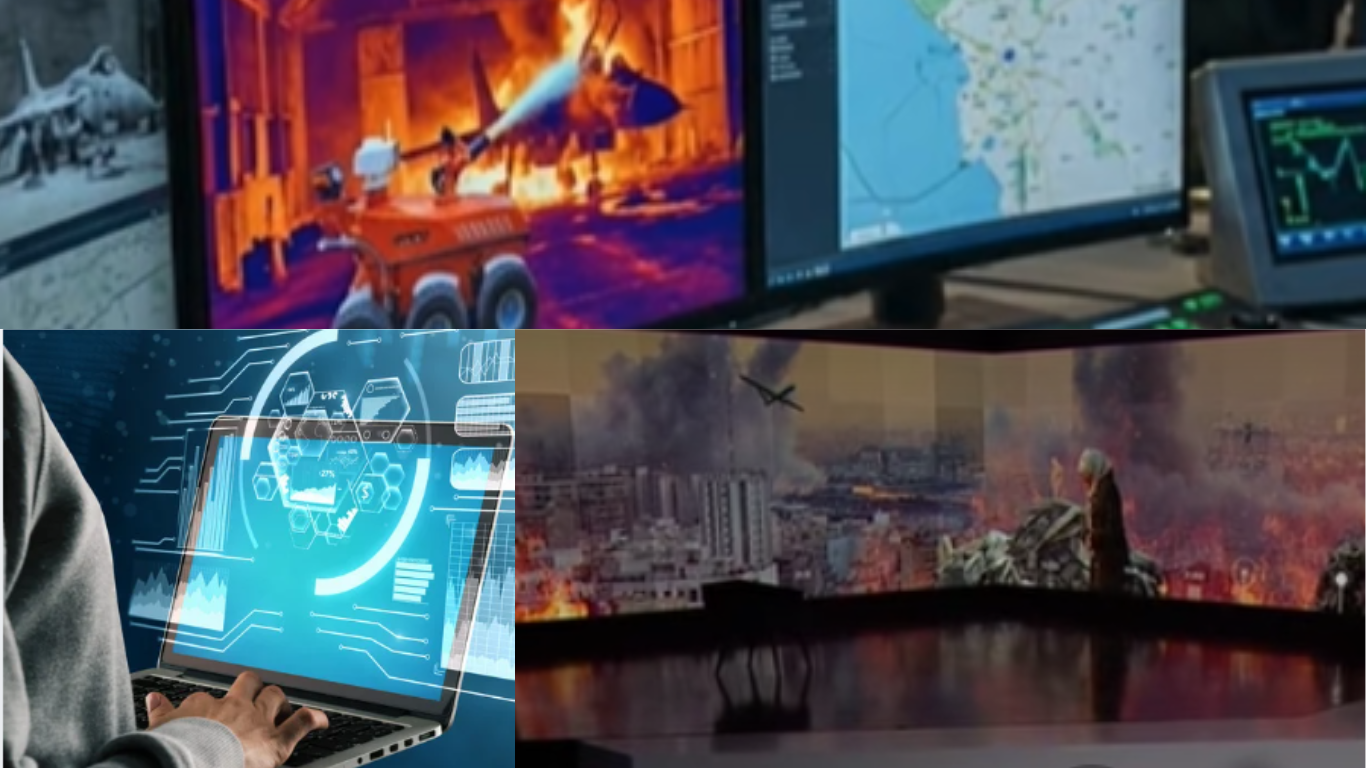
AI Call for Fire Automation is changing the way military forces respond on the battlefield. Instead of relying on slow communication and manual calculations, intelligent systems now help commanders make faster and more accurate decisions. This guide explains how the technology works, why it matters, and how it is shaping the future of modern defense.
AI Call for Fire Automation
AI Call for Fire Automation is transforming artillery by connecting sensors, AI, and precision weapons to deliver faster, smarter, and more accurate battlefield decisions.
Modern warfare is changing at a pace that would have seemed impossible only a few years ago. Digital technologies, advanced sensors, intelligent software, and connected defense platforms are reshaping military operations across land, air, sea, space, and cyberspace. Among these innovations, AI Call for Fire Automation stands out as one of the most important developments because it directly affects how quickly military forces can detect threats, make decisions, and respond with precision.
Traditional artillery operations depended on experienced personnel working together through multiple layers of communication. Every stage required careful coordination, beginning with identifying a target and ending with calculating firing data. Although this method proved reliable for decades, it also introduced delays. In modern combat, even a delay of a few minutes can give an opponent enough time to relocate, hide valuable equipment, or launch an attack.
AI is changing that reality by introducing intelligent automation into the complete decision making process. Instead of replacing military professionals, these systems support them by processing enormous amounts of information far more quickly than humans can manage alone. The result is a battlefield where faster and more informed decisions become possible without sacrificing accuracy.

AI Call for Fire Automation uses intelligent systems to analyze battlefield data, identify targets, and deliver accurate firing solutions within seconds, improving speed, precision, and battlefield coordination.
For many years, artillery support relied heavily on voice communication, written reports, paper maps, and manual calculations. Forward observers identified targets and reported their positions through radio networks. Fire direction centers received the information, calculated firing solutions, and transmitted instructions to artillery crews before rounds could finally be launched.
Every stage depended on human coordination. If communication was interrupted or calculations contained even a small mistake, the entire process slowed down or produced inaccurate results.
The growing use of AI has introduced a new way of working. Instead of waiting for information to travel through several people, intelligent systems combine battlefield observations, satellite imagery, drone surveillance, radar tracking, weather information, and digital mapping into one continuously updated operational picture.
From my perspective, this is one of the biggest improvements in military technology. The real advantage is not simply that computers work faster. The advantage comes from giving commanders a clearer understanding of the battlefield while events are still unfolding.
Historical Development of Fire Support Technology
| Year | Event | Description |
|---|---|---|
| Early 1900s | Manual artillery calculations | Fire support depended entirely on human calculations, paper maps, and field observations. |
| 1940s | Improved radio communication | Faster communication increased coordination between observers and artillery units. |
| 1970s | Digital fire control systems | Computers began assisting with ballistic calculations and firing accuracy. |
| 1990s | GPS integration | Satellite navigation significantly improved targeting precision and battlefield awareness. |
| 2000s | Network centric operations | Military units started sharing battlefield information through secure digital networks. |
| 2020s | AI Call for Fire Automation | AI systems began processing sensor data, prioritizing threats, and generating firing solutions within seconds. |

One of the most difficult responsibilities for any military commander is deciding which target should be engaged first. Modern battlefields contain hundreds of moving objects, including armored vehicles, artillery systems, air defense platforms, supply convoys, command centers, communication equipment, drones, and troop formations.
Not all targets are equally important, and every choice made during an operation has an impact on the mission’s outcome.
Traditionally, commanders relied on battlefield experience, intelligence reports, and discussions with their teams before deciding where to focus available firepower. This process worked well, but it required valuable time. During that delay, the battlefield could change completely.
AI Call for Fire Automation introduces a much faster approach. Intelligent software continuously evaluates every detected object by examining its location, movement, weapon capability, operational role, and possible threat to friendly forces. Instead of presenting an unorganized list of targets, the system ranks them according to priority.
This allows commanders to spend less time searching for information and more time making informed tactical decisions.
From my perspective, this is one of the most valuable contributions AI brings to modern defense operations. Human judgment remains essential, but AI provides a level of situational awareness that would be extremely difficult to achieve manually during fast moving combat.
How AI Evaluates Battlefield Threats
Every battlefield generates an enormous amount of information every second. Drones stream live video, satellites capture fresh imagery, radar systems track movement, electronic sensors detect radio transmissions, and reconnaissance teams continue reporting new observations.
The challenge is not collecting information.
The key difficulty lies in recognizing which information deserves the highest priority.
AI solves this problem by comparing incoming data against operational priorities. A moving missile launcher may receive a higher threat rating than a stationary truck because it has the ability to launch an attack within minutes. Likewise, an enemy command vehicle coordinating several combat units may become a higher priority than individual armored vehicles because disabling command capability can affect the entire battlefield.
The software also considers many practical factors before recommending action. These include the distance to the target, available ammunition, weapon range, weather conditions, expected civilian presence, terrain features, and the probability of mission success.
This creates recommendations based on measurable information instead of emotional reactions or assumptions.
AI Learns From Changing Battlefield Conditions
One important characteristic of intelligent military systems is their ability to update recommendations as situations evolve.
Imagine that an armored convoy suddenly changes direction while another enemy unit begins preparing an artillery attack. The original target list may no longer represent the greatest threat.
Instead of waiting for human operators to manually reorganize priorities, AI immediately updates its assessment.
The highest priority target may change several times within only a few minutes.
This continuous evaluation helps commanders remain focused on the most urgent threats rather than relying on outdated information.
From my experience studying defense technologies, this constant adaptation represents one of the strongest advantages of AI supported command systems. Modern warfare changes too quickly for static decision making.
Precision Replaces Volume
For decades, artillery doctrine often relied on overwhelming firepower. Large numbers of shells were fired across broad areas to increase the chance of destroying enemy positions.
Although effective in many situations, this approach consumed enormous quantities of ammunition and sometimes increased the risk of unintended damage.
Modern AI supported artillery follows a different philosophy.
Instead of relying on quantity, the objective is to achieve the desired result with the fewest possible rounds.
Accurate targeting begins with reliable intelligence. AI combines drone imagery, satellite observations, laser range measurements, radar tracking, terrain analysis, and weather information before calculating the most suitable firing solution.
Because these calculations are continuously updated, artillery units can engage targets with much greater confidence.
This approach offers several practical advantages.
Ammunition consumption decreases.
Logistics become more efficient.
Artillery units can continue operating for longer periods.
Friendly forces receive support more quickly.
The overall mission becomes more sustainable during extended operations.
From my perspective, precision has become just as important as firepower itself. Modern military success increasingly depends on intelligent resource management rather than simply using larger amounts of ammunition.
Reducing Collateral Damage
Another significant benefit of AI assisted targeting is the ability to reduce unnecessary destruction.
Modern conflicts often occur near towns, transportation routes, hospitals, schools, and civilian infrastructure. Military planners must carefully balance operational success with humanitarian responsibilities.
AI supports this process by evaluating safe firing angles, surrounding structures, civilian activity, and potential blast effects before recommending engagement.
Although no technology can eliminate every risk, intelligent analysis helps commanders make more informed decisions.
Responsible use of military technology requires both accuracy and accountability.
In my opinion, this represents one of the most important areas where AI can contribute positively to defense operations while supporting international humanitarian principles.
Counter Battery AI
Artillery units face a constant danger after every firing mission.
The moment a gun launches a projectile, advanced radar systems can often calculate its point of origin. Enemy forces then attempt to return fire before the artillery crew has enough time to relocate.
This tactical battle is known as counter battery warfare.
Traditionally, identifying the source of incoming artillery required trained personnel working with specialized radar equipment. Calculations had to be completed rapidly before valuable opportunities disappeared.
AI has dramatically accelerated this process.
Intelligent software receives radar information, predicts projectile trajectories, estimates launch positions, and recommends immediate responses within seconds.
Some systems also evaluate whether return fire is necessary or whether another tactical response would provide a better outcome.
The objective is not simply to fire back quickly.
The objective is to respond intelligently.
Faster Detection Creates Greater Survivability
Modern artillery crews rarely remain in one location for extended periods.
After completing a firing mission, they often relocate immediately to avoid enemy counter attacks.
AI assists this mobility by shortening the complete engagement cycle.
Targets are detected sooner.
Fire missions are calculated more quickly.
Weapons engage faster.
Units relocate earlier.
Every second saved improves the chances of avoiding enemy retaliation.
This concept has become increasingly important as battlefield surveillance technologies continue improving across the world.
AI Supports Human Commanders
Some people believe intelligent military systems completely replace human decision making.
That assumption is incorrect.
Current AI Call for Fire Automation systems are primarily designed to assist commanders rather than replace them.
The software rapidly processes information, evaluates possible actions, predicts likely outcomes, and recommends firing solutions.
Human commanders remain responsible for reviewing those recommendations before authorizing military action according to operational procedures and rules of engagement.
This balance combines computational speed with professional military judgment.
From my perspective, maintaining human oversight remains essential because warfare involves legal, ethical, and strategic considerations that extend beyond data analysis alone.
AI Improves Battlefield Coordination
Modern defense missions often involve several military units working together simultaneously.
Reconnaissance teams collect intelligence.
Surveillance drones observe enemy movement.
Artillery batteries prepare firing missions.
Electronic warfare units monitor communications.
Air defense systems protect friendly forces.
Ground commanders coordinate maneuver operations.
Without efficient coordination, valuable information may arrive too late to influence events.
AI helps synchronize these activities by distributing updated information across secure military networks almost instantly.
Every connected unit receives a clearer understanding of the battlefield.
This shared awareness improves cooperation between different branches of the military while reducing communication delays.
The result is a more connected and more responsive operational environment where every participant contributes to the overall mission.

The Sensor to Shooter Process
One of the most remarkable advances in modern defense technology is the sensor to shooter process. This concept focuses on reducing the time between detecting a threat and responding to it. In older military operations, information often moved through several layers of command before action could be taken. Every additional step increased the possibility of delay.
AI Call for Fire Automation changes this workflow by connecting sensors, communication systems, command software, and weapon platforms into one coordinated network. Every part of the system contributes to the final decision.
A reconnaissance drone may discover an armored vehicle moving across open terrain. Within moments, the drone sends its location through a secure digital network. AI immediately checks the coordinates, compares them with existing intelligence, verifies the target, and calculates the best firing solution. The recommended instructions are then delivered directly to the appropriate artillery unit.
The entire process happens much faster than traditional methods because information does not need to be manually transferred between multiple operators.
From my perspective, the greatest strength of this approach is not simply speed. It is the seamless cooperation between technologies that once operated independently.
Every Component Works Together
The success of AI Call for Fire Automation depends on integration rather than any single piece of equipment.
A modern battlefield contains many information sources working at the same time.
Surveillance drones provide continuous aerial observation.
Satellites monitor large operational areas.
Ground sensors detect vehicle movement.
Radar systems track incoming projectiles.
Electronic intelligence equipment identifies communication activity.
Weather stations measure atmospheric conditions that influence artillery accuracy.
Digital battlefield maps continuously update terrain information.
AI combines these independent sources into one unified operational picture.
Instead of forcing commanders to compare separate reports, the software organizes everything into a single decision support system.
This level of coordination allows military forces to react with greater confidence during rapidly changing situations.
Real Time Data Sharing
Information has become one of the most valuable military resources.
Having accurate information is important, but receiving it at the right moment is even more important.
AI powered battlefield networks allow military units to exchange intelligence almost immediately after it becomes available. If one reconnaissance drone identifies an important target, nearby artillery units, command centers, and supporting forces can receive that information without unnecessary delay.
This connected environment reduces duplicated work and improves cooperation between different military branches.
For example, one surveillance unit may identify a target while another artillery battery located several kilometers away performs the engagement. Neither unit needs to operate independently because both remain connected through intelligent digital systems.
From my perspective, this represents one of the biggest changes in military operations during the last decade. Success increasingly depends on cooperation supported by reliable information rather than isolated battlefield actions.
Decentralized Military Networks
Traditional command structures often depended on centralized headquarters where most decisions were made before instructions were distributed to frontline units.
Although centralized command provides clear leadership, it may also become vulnerable if communication networks are disrupted.
Modern military organizations increasingly use decentralized operational networks supported by AI.
Instead of relying on one command center, multiple units share information across secure digital connections.
Each unit contributes intelligence while receiving updated battlefield awareness from every other connected participant.
If one communication node becomes unavailable, the remaining network continues functioning.
This design improves resilience during electronic warfare, cyber attacks, or physical damage to communication infrastructure.
From a strategic standpoint, decentralized coordination makes military operations more flexible because individual units can continue supporting one another even when operating across large geographical areas.
AI Improves Operational Planning
Military planning begins long before the first shot is fired.
Commanders study terrain, estimate enemy capabilities, evaluate available resources, prepare logistics, and coordinate supporting forces.
AI assists planners by analyzing enormous amounts of operational information far more quickly than traditional planning methods.
Satellite imagery can reveal changes in defensive positions.
Historical intelligence identifies recurring movement patterns.
Weather forecasts estimate visibility and projectile performance.
Supply information predicts ammunition availability.
Transportation data evaluates possible movement routes.
Instead of reviewing every report individually, commanders receive organized recommendations supported by AI analysis.
This allows planning teams to examine multiple operational options before selecting the most effective course of action.
Although experienced military professionals always make the final decisions, intelligent analysis significantly improves preparation.
AI and Battlefield Prediction
One of the most interesting developments in military AI is predictive analysis.
Rather than only describing current battlefield conditions, intelligent systems estimate what may happen next.
This prediction is based on historical observations, current intelligence, movement patterns, terrain characteristics, weather conditions, and known military doctrine.
For example, if enemy armored vehicles repeatedly use the same transportation corridor, AI may identify that route as a likely location for future activity.
Likewise, if communication signals suddenly increase near an artillery position, the software may recognize preparations for an upcoming fire mission.
These predictions do not guarantee future events.
Instead, they help commanders prepare for situations that appear increasingly likely based on available information.
From my perspective, prediction represents the true evolution of battlefield intelligence. Military success has always depended upon anticipating an opponent’s next move before it actually happens.
Practical Example of Sensor to Shooter Coordination
Imagine a reconnaissance drone conducting surveillance over a large operational area.
During its patrol, it identifies several armored vehicles moving toward friendly positions.
The drone immediately transmits video, location coordinates, movement speed, and travel direction into the battlefield network.
AI compares this information with satellite imagery collected earlier that morning. It confirms the vehicles are following a known supply route and estimates where they will be within the next several minutes.
The software also checks available artillery batteries, their ammunition status, firing range, weather conditions, and terrain.
Within seconds, it recommends the most suitable artillery unit for the mission and prepares a firing solution.
Before any engagement is authorized, human commanders carefully review the recommendation and follow the required operational guidelines.
The artillery fires accurately while the reconnaissance drone continues monitoring target movement and providing updated corrections if necessary.
Every stage remains connected through continuous information exchange.
This example demonstrates how AI Call for Fire Automation supports military professionals by reducing delays without removing human supervision.
Faster Decisions Shape Modern Warfare
Throughout military history, technological progress has consistently reduced the time required to make battlefield decisions.
Horse messengers were replaced by telegraphs.
Telegraphs were replaced by radio communication.
Radio networks evolved into secure digital communication systems.
Today, AI is reducing decision cycles even further by transforming information into actionable recommendations almost instantly.
This shift changes the pace of military operations.
Opposing forces have less time to reposition.
Commanders gain greater operational awareness.
Friendly forces respond more quickly to emerging threats.
Resources are used more efficiently.
Opportunities can be exploited before they disappear.
From my perspective, the true value of AI Call for Fire Automation is not measured only by faster computers or advanced algorithms. Its greatest contribution is helping military organizations transform information into practical action while maintaining human responsibility throughout the decision making process.

Challenges Facing AI Call for Fire Automation
Every major technological advancement brings new opportunities along with new risks. AI Call for Fire Automation is no exception. While intelligent systems can improve battlefield speed, accuracy, and coordination, they also introduce technical, operational, legal, and ethical challenges that military organizations must address carefully.
No AI system is perfect. Its performance depends on the quality of the information it receives. If sensors provide incomplete, outdated, or misleading data, the system may recommend an incorrect course of action. For this reason, military planners continue emphasizing reliable intelligence collection alongside AI development.
From my perspective, AI should always be viewed as a powerful decision support tool rather than an infallible decision maker. Human expertise remains essential for interpreting complex situations that technology alone cannot fully understand.
Data Quality Determines Performance
People often focus on the intelligence of AI while overlooking the importance of data.
AI learns from information.
If that information is incomplete or inaccurate, the recommendations become less reliable.
Modern military systems receive information from satellites, drones, radar installations, electronic surveillance equipment, weather sensors, and reconnaissance teams. Every source contributes valuable observations, but each also carries a possibility of error.
Smoke may reduce drone visibility.
Weather may affect radar performance.
Electronic interference may disrupt communication.
Terrain can block sensor coverage.
AI continuously compares information from multiple sources to improve confidence, yet commanders must still verify important decisions before taking action.
This is one reason why professional military judgment remains indispensable.
Cybersecurity Risks
As battlefield systems become more connected, cybersecurity becomes increasingly important.
Digital military networks exchange enormous amounts of operational information every second. If an adversary succeeds in disrupting these networks, the consequences could be significant.
Potential cyber threats include attempts to interrupt communications, manipulate sensor data, interfere with navigation systems, or slow the flow of battlefield intelligence.
Modern defense organizations therefore invest heavily in secure communications, encryption technologies, authentication systems, and continuous cybersecurity monitoring.
AI itself also contributes to cyber defense by detecting unusual network activity, identifying suspicious behavior, and helping security teams respond more quickly to potential attacks.
From my perspective, future military success will depend not only on physical equipment but also on the ability to protect digital infrastructure from increasingly sophisticated cyber threats.
Electronic Warfare Challenges
Electronic warfare has become a central part of modern military operations.
Rather than attacking equipment directly, electronic warfare focuses on disrupting the information that equipment depends upon.
Communication signals may be jammed.
Navigation systems may experience interference.
Radar performance may be reduced.
Wireless data transmission may become unreliable.
AI Call for Fire Automation must continue functioning even in contested electromagnetic environments.
To achieve this, military engineers design systems with multiple communication methods, backup navigation capabilities, distributed processing, and alternative information sources.
Building resilient networks has become just as important as developing intelligent software.
Ethical Considerations
One of the most widely discussed topics surrounding military AI involves ethics.
As intelligent systems become more capable of analyzing battlefield information and recommending military actions, many experts ask how much authority should remain with machines.
Most current military doctrines continue placing final responsibility on human commanders.
AI provides recommendations.
People make decisions.
This principle supports accountability while ensuring that military operations continue following established legal and operational standards.
In my opinion, maintaining meaningful human oversight will remain essential regardless of how advanced AI becomes in the future.
Technology should strengthen responsible decision making rather than replace it.
Legal Responsibilities
International law continues to guide military operations regardless of technological advancement.
The introduction of AI does not remove the responsibility to distinguish legitimate military objectives from protected civilian areas or to conduct operations according to established legal principles.
Commanders remain responsible for ensuring that military actions comply with applicable laws, operational procedures, and rules of engagement.
AI serves as an analytical assistant rather than a substitute for legal judgment.
As technology evolves, governments, legal experts, military organizations, and international institutions continue discussing how existing legal frameworks should apply to increasingly intelligent defense systems.
Human Judgment Still Matters
Despite rapid advances in automation, successful military operations continue relying on experienced professionals.
Human commanders understand political objectives, cultural factors, humanitarian concerns, operational risks, and strategic consequences that extend beyond technical calculations.
AI processes information exceptionally well.
People understand context.
This partnership creates stronger decision making than either humans or machines could achieve independently.
From my perspective, the future belongs to organizations that successfully combine technological capability with professional expertise.
The Future of AI Call for Fire Automation
The next generation of battlefield technology will likely become even more connected.
Future systems may combine AI with autonomous reconnaissance platforms, advanced satellite constellations, intelligent logistics, predictive maintenance, secure cloud computing, quantum communication research, and next generation battlefield networks.
Instead of analyzing only current conditions, future AI platforms may continuously estimate future operational scenarios while recommending multiple response options based on changing battlefield developments.
Commanders will receive increasingly detailed operational awareness supported by faster analysis and broader information sharing.
Although technology will continue advancing, one principle is unlikely to change.
Military success will always depend upon informed leadership supported by reliable information.
Emerging Technologies Supporting Future Fire Control
Several technologies are expected to strengthen AI Call for Fire Automation during the coming years.
Advanced drone swarms may provide wider battlefield surveillance with continuous observation from multiple directions.
Improved satellite networks could deliver more frequent imagery updates across larger operational areas.
Edge computing may allow AI processing to occur directly on battlefield equipment without relying entirely on distant command centers.
More capable communication networks will improve data sharing between military branches operating across land, sea, air, space, and cyberspace.
Predictive analytics will continue improving as AI gains access to larger and more diverse operational datasets.
Together, these innovations could significantly reduce the time required to observe, analyze, decide, and respond.
Why This Technology Matters
AI Call for Fire Automation represents much more than another military software application.
It demonstrates how intelligent systems can connect information, improve coordination, reduce unnecessary delays, and support more accurate battlefield decisions.
The technology also illustrates a broader transformation occurring across defense organizations worldwide.
Modern military strength increasingly depends upon information superiority.
For decades, military advantage focused primarily on larger forces, greater firepower, and superior equipment.
Today, information has become an equally valuable strategic resource.
The ability to collect information quickly, understand it accurately, distribute it securely, and act upon it faster than an opponent may determine operational success.
From my perspective, AI Call for Fire Automation symbolizes this transition better than almost any other defense technology. It reflects the growing importance of intelligent decision support rather than simple mechanical automation.
As AI continues evolving, its influence will likely expand beyond artillery into logistics, intelligence analysis, mission planning, cybersecurity, air defense, maritime operations, and joint military coordination.
The future battlefield will reward organizations that combine advanced technology with disciplined leadership, responsible decision making, and continuous innovation.
CONCLUSION AND BRAND CREDIBILITY
The Future of AI Driven Battlefield Decisions
AI Call for Fire Automation represents a major shift in how modern defense operations approach speed, accuracy, and battlefield awareness. What once required long communication chains, manual calculations, and multiple stages of coordination can now be supported by intelligent systems that analyze information within seconds.
The true importance of this technology is not only about faster responses. It is about creating a better connection between information and decision making. Sensors, drones, satellites, radar systems, and command networks are becoming part of one intelligent environment where data can move quickly and support human operators more effectively.
At the same time, advanced technology must always be balanced with responsibility. AI can improve accuracy, reduce delays, and support commanders with valuable insights, but human judgment, ethical considerations, and accountability remain essential parts of every military decision.
The future of warfare will not be shaped only by the number of weapons available. It will be shaped by how effectively organizations can collect information, understand changing situations, and make responsible decisions under pressure.
AI Call for Fire Automation shows how artificial intelligence is becoming a central part of this transformation. It represents a new era where speed, intelligence, and precision work together to redefine modern defense operations.
Worldstan continues to explore these emerging technologies with a focus on explaining complex innovations in simple, meaningful, and human language. Through detailed research and technology insights, worldstan.com delivers unique perspectives on AI, defense operations, space technology, and the future systems shaping our world.
This exclusive analysis of AI Call for Fire Automation reflects the Worldstan mission of transforming advanced technology research into clear knowledge that helps readers understand the intelligence systems defining tomorrow.