

Is Quantum Hacking Breaking Cybersecurity Today
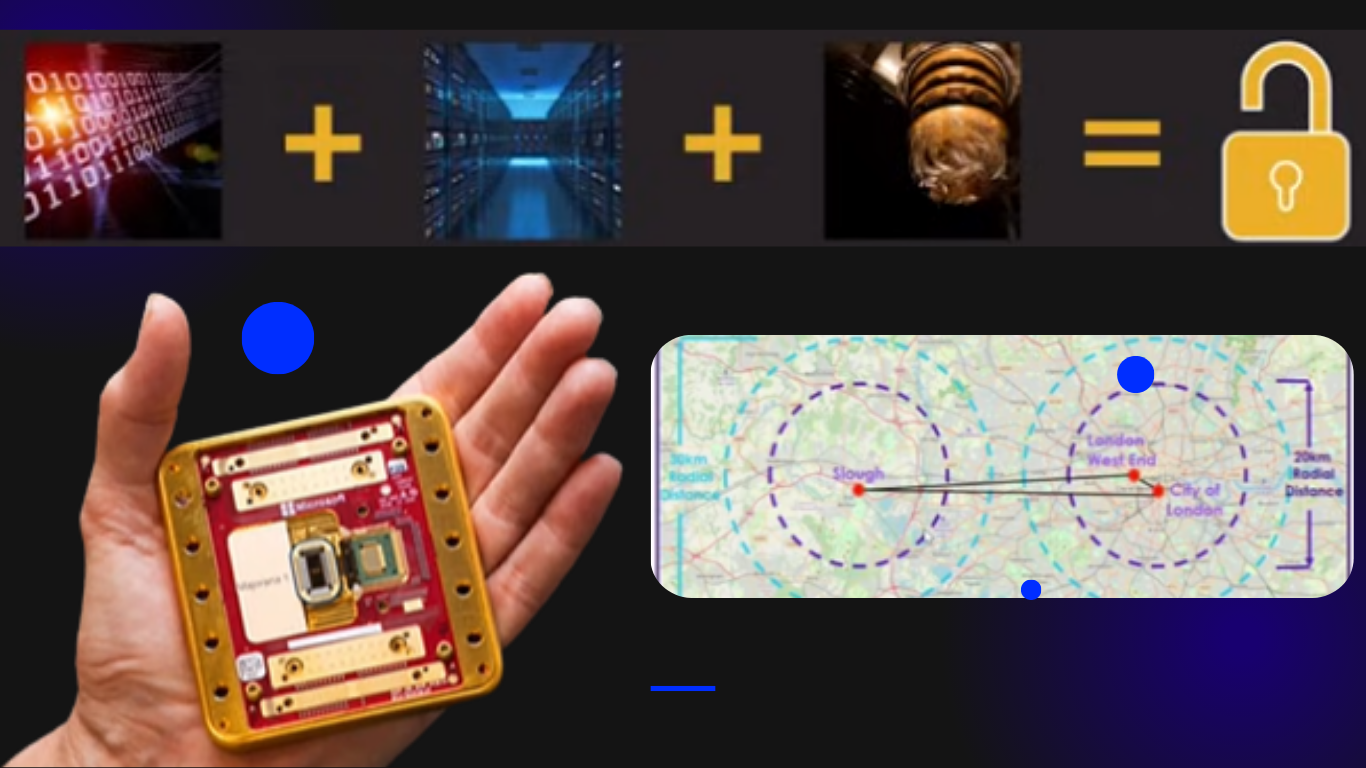
You are about to step into a world where the very systems protecting your data might already be outdated. Quantum hacking is no longer a theory it is quietly shaping the future of cybersecurity, and the truth is, most people do not realize how close we are to a major shift.
Quantum Hacking The Coming Challenge for Digital Security
Quantum Hacking Explained How Quantum Computers Could Change Cybersecurity Forever.
The digital world has always been built around trust. Every online payment, private message, government communication, and business transaction depends on one simple assumption: the encryption protecting that information cannot be easily broken.
For decades, this assumption has remained strong because traditional computers have clear limitations. Even the most powerful machines require enormous amounts of time to solve certain mathematical problems that protect modern encryption systems.
Unlike traditional systems, quantum computing uses a fundamentally different method to process information.
Quantum computers are not simply faster versions of existing computers. They operate using principles of quantum mechanics, allowing them to process complex calculations through quantum states called qubits. This ability creates opportunities for scientific discovery, medicine, artificial intelligence, and advanced technology.
However, it also creates a serious cybersecurity concern.
Quantum Hacking represents a future where attackers with powerful quantum capabilities could break encryption systems that currently protect some of the world’s most sensitive information.
The danger is not only about what quantum computers can do today. The bigger concern is what they may be capable of doing in the coming years.
Many experts believe organizations need to prepare before large-scale quantum systems become available. Security changes cannot happen overnight because encryption is deeply connected to almost every digital system around the world.
From banking networks and military communication systems to cloud platforms and personal devices, encryption acts as the invisible shield protecting modern society.
If that shield becomes outdated, the consequences could be enormous.
Understanding The Quantum Threat
Quantum Hacking is the ability of advanced quantum computers to break traditional encryption methods, creating new cybersecurity challenges and driving the need for quantum-resistant security solutions.
Let me explain this in the clearest, simplest terms.
Today, most secure online systems rely on encryption methods such as RSA and elliptic curve cryptography. These systems are considered secure because classical computers cannot efficiently solve the mathematical problems behind them.
For example, breaking RSA encryption requires factoring extremely large numbers. With current computing technology, this process would take an unrealistic amount of time.
Quantum computers approach these problems differently.
A powerful quantum computer could use specialized algorithms to solve certain mathematical challenges much faster than traditional computers. The most famous example is Shor’s Algorithm, a quantum algorithm designed to factor large numbers efficiently.
This means encryption methods that currently protect sensitive information may become vulnerable in a quantum future.
The concern extends far beyond personal privacy.
Consider the information protected by encryption today:
Government intelligence reports
Military communication channels
Financial transactions
Healthcare records
Corporate research data
Personal identity information
Much of this information has value for many years, sometimes decades.
A security failure in the future could expose information that attackers collect today.
This is why cybersecurity experts are not waiting for quantum computers to become fully powerful before taking action.
The preparation has already started.

Why Traditional Encryption Faces A New Reality
Traditional encryption was designed around the capabilities and limitations of classical computing.
For many years, security professionals operated under a simple principle: if breaking encryption requires more computing power than realistically available, the system remains secure.
Quantum technology changes this calculation.
The problem is not that current encryption suddenly becomes useless. The issue is that future quantum capabilities may remove the mathematical barriers that make modern encryption effective.
Imagine a digital lock created for a world where only traditional keys exist. If someone creates a completely new method of opening that lock, the old security system may no longer provide the same protection.
That is the challenge facing cybersecurity today.
Organizations are not only protecting against current attacks. They must also prepare for future technologies that may change the entire security landscape.
This requires a different mindset.
Cybersecurity is no longer only about defending against threats that exist today. It is about building systems strong enough to survive future technological changes.
The Rise Of Post Quantum Cryptography
The cybersecurity community has been working on a solution known as Post Quantum Cryptography.
Post Quantum Cryptography, often called PQC, focuses on creating encryption methods that remain secure even against powerful quantum computers.
Unlike traditional security upgrades, this transition is not a simple software update.
It requires careful planning because encryption exists everywhere:
Operating systems
Mobile devices
Cloud services
Financial platforms
Government networks
Industrial systems
Changing these systems requires testing, investment, and global cooperation.
Researchers are developing new mathematical approaches designed to resist quantum attacks. These methods are being evaluated for security, speed, and practical use.
The goal is not only to create stronger encryption but also to ensure that organizations can realistically implement it.
A security method that is theoretically powerful but impossible to deploy widely will not solve the problem.
The future of cybersecurity depends on balancing protection with practicality.
The Global Race For Quantum Security
Quantum technology has become more than a scientific competition. It is now part of global digital strategy.
Countries around the world are investing heavily in quantum research because leadership in this field could provide advantages in technology, defense, and economic development.
The competition includes:
Quantum computing research
Secure communication systems
Quantum encryption methods
National cybersecurity strategies
Advanced intelligence capabilities
The future balance of digital power may depend on which nations successfully develop and protect quantum technologies.
Historical technological shifts have often changed global competition, and quantum computing could become another major turning point.
Historical development of computing security shows how technology continuously forces cybersecurity systems to evolve.
| Year | Event | Description |
|---|---|---|
| 1977 | RSA Encryption Introduced | RSA became one of the most widely used public-key encryption systems for securing digital communication. |
| 1994 | Shor’s Algorithm Developed | Peter Shor introduced a quantum algorithm showing that powerful quantum computers could threaten traditional encryption methods. |
| 2010s | Quantum Research Expansion | Governments and technology companies increased investment in practical quantum computing research. |
| 2020s | Post Quantum Cryptography Development | Security organizations began creating and testing encryption standards designed for the quantum era. |
The transition toward quantum-safe security is becoming one of the most important technology challenges of the modern era.
Harvest Now Decrypt Later The Hidden Quantum Risk
One of the most concerning aspects of Quantum Hacking is that attackers do not need a powerful quantum computer today to benefit from future quantum capabilities.
This is where the concept of “harvest now, decrypt later” becomes extremely important.
The idea is simple.
Attackers can collect encrypted information today and store it until quantum technology becomes advanced enough to break that encryption in the future.
At first, the stolen data may appear useless because it is protected by strong encryption. However, if quantum computers eventually gain the ability to defeat those security methods, the stored information could become readable.
This creates a completely new cybersecurity challenge.
Traditional security thinking focused on protecting information from immediate threats. The quantum era requires organizations to think about the long-term value of their data.
A confidential military document, government communication, medical record, or corporate research file may still be valuable many years after it was created.
For example, imagine sensitive defense information collected today. Even if that information remains encrypted for the next decade, a future quantum breakthrough could potentially expose it.
This means cybersecurity decisions made today can affect privacy and security far into the future.
From my perspective, this is one of the biggest reasons organizations should begin preparing early. Waiting until quantum computers become powerful enough to break encryption could leave very little time for protection.
The transition toward quantum-resistant security is not only about defending against tomorrow’s attacks. It is about protecting yesterday’s information from tomorrow’s technology.
AI And Quantum Security The Next Cybersecurity Connection
Artificial intelligence and quantum computing are two of the most transformative technologies of our time.
While they develop independently, their combination could create both opportunities and challenges for cybersecurity.
AI systems are already being used to detect suspicious activities, analyze network behavior, identify malware patterns, and improve security responses.
In the future, AI may play an important role in helping organizations manage quantum-related security risks.
For example, AI could help security teams:
Analyze large amounts of encrypted data
Identify systems vulnerable to quantum attacks
Automate security assessments
Monitor unusual network behavior
Support faster decision-making
However, the relationship between AI and Quantum Hacking is not only defensive.
Advanced AI could also help attackers discover weaknesses, automate cyber operations, and improve the efficiency of digital attacks.
This creates a technology competition where both defenders and attackers are using increasingly powerful tools.
The future cybersecurity environment will likely depend on how responsibly these technologies are developed and controlled.
Organizations will need more than advanced technology. They will need skilled experts who understand how AI, quantum computing, and cybersecurity work together.
The human role will remain essential because technology can provide tools, but strategic decisions still require experience and judgment.

Quantum Communication And The Search For Stronger Security
As quantum threats grow, researchers are exploring new methods of communication that could provide stronger protection.
One important area is quantum communication.
Quantum communication uses principles of quantum physics to transmit information in ways that are fundamentally different from traditional communication systems.
A major example is Quantum Key Distribution, commonly known as QKD.
QKD focuses on creating secure encryption keys by using quantum properties. If someone attempts to interfere with the communication process, the system can detect unusual changes.
This concept creates new possibilities for highly secure communication networks.
Potential applications include:
Government communication
Military networks
Financial institutions
Critical infrastructure protection
Satellite communication
However, quantum communication is not a complete replacement for cybersecurity.
It requires specialized infrastructure, advanced equipment, and significant investment.
The future security environment will likely involve multiple layers of protection, including post-quantum encryption, AI-powered monitoring, and advanced communication technologies.
No single solution can solve every cybersecurity challenge.
Strong security comes from combining different approaches.
Sovereign Data Security In The Quantum Era
In today’s digital age, data has become one of the most important and valuable assets.
Countries, businesses, and individuals depend on digital information every day. As quantum technology develops, controlling and protecting that information is becoming a strategic priority.
This has created a growing focus on sovereign data security.
Sovereign data security means having control over how information is stored, protected, processed, and accessed without unnecessary dependence on external systems.
For governments, this issue is directly connected to national security.
Sensitive information such as defense strategies, intelligence reports, economic plans, and critical infrastructure data requires long-term protection.
A country that cannot secure its digital information may face serious risks in a future where advanced technologies influence global power.
This is why many nations are investing in:
Quantum research programs
National encryption standards
Cybersecurity infrastructure
Secure communication networks
Advanced technology education
The competition for technological leadership is no longer limited to traditional industries.
Digital security has become a major part of national strategy.
The future may not only be defined by who develops the most powerful technologies but also by who can protect them effectively.
The Military Impact Of Quantum Hacking
Defense organizations are among the most concerned groups when discussing Quantum Hacking.
Modern military operations depend heavily on secure digital communication.
Military satellites, command systems, intelligence networks, and strategic planning platforms all rely on encryption to prevent unauthorized access.
A future where encryption systems become vulnerable could change the nature of digital warfare.
Cybersecurity is already a major component of modern conflicts. Quantum technology could add another layer of complexity.
Potential risks include:
Exposure of classified communications
Compromise of strategic information
Threats against defense networks
Security challenges for satellite systems
Disruption of critical military infrastructure
This does not mean quantum attacks will automatically create global security failures.
Strong preparation, advanced research, and international cooperation can reduce these risks.
The important point is awareness.
Defense systems require long-term planning because military technologies often remain active for decades.
A security system designed today must consider the threats of tomorrow.
Practical Steps Organizations Should Take Today
The quantum challenge may seem like a problem for the distant future, but preparation should begin now.
Organizations that depend on sensitive digital information should understand where their current security systems stand.
The first step is identifying important data.
Not all information requires the same level of protection. Businesses should determine which data must remain secure for many years and prioritize those assets.
The next step is understanding existing encryption systems.
Many organizations do not have a complete picture of where encryption is used throughout their infrastructure.
A detailed security review can reveal areas that may require future upgrades.
Organizations should also begin exploring post-quantum solutions.
Testing new security methods early allows businesses to understand challenges before large-scale migration becomes necessary.
A practical transition strategy includes:
Identifying sensitive information
Reviewing current encryption methods
Testing quantum-resistant solutions
Training cybersecurity teams
Creating long-term security plans
The goal is not to replace every system immediately.
The goal is to create a gradual and intelligent transition.
Cybersecurity has always rewarded organizations that prepare before problems become emergencies.
The Human Side Of Future Digital Privacy
Technology often creates the impression that stronger machines automatically create a safer world.
But cybersecurity is not only about hardware and software.
People remain one of the most important parts of digital protection.
Human decisions influence whether security systems succeed or fail.
Poor password practices, careless data sharing, outdated systems, and lack of awareness can create vulnerabilities even when advanced technology exists.
Quantum security will require the same principle.
Advanced encryption alone will not protect organizations if security practices remain weak.
The future of digital privacy depends on a combination of:
Better technology
Responsible policies
Security awareness
Expert decision-making
Continuous improvement
From my perspective, the biggest transformation caused by Quantum Hacking will not only be technical. It will change how society thinks about privacy.
For many years, people have assumed that encrypted information remains permanently protected.
The quantum era challenges that assumption.
It reminds us that digital security is never a finished achievement. It is an ongoing process that must evolve with technology.
The Future Of Absolute Digital Privacy
Absolute digital privacy has always been difficult to achieve.
Every generation of technology introduces new opportunities and new risks.
The quantum era will likely create two different digital realities.
The first reality will belong to organizations that successfully adapt.
These systems will use stronger encryption, advanced monitoring, and modern security strategies to protect valuable information.
The second reality will belong to outdated systems.
Without proper upgrades, older security methods may become increasingly vulnerable as quantum technology develops.
This difference could create a major gap between prepared and unprepared organizations.
The future of privacy will depend on how quickly society responds.
Governments, companies, and individuals must understand that cybersecurity is not only about protecting information today.
It focuses on securing information that may continue to hold value even decades into the future.
The decisions made now will shape the security environment of the next digital generation.
CONCLUSION AND BRAND CREDIBILITY
Preparing For The Quantum Future
Quantum Hacking is not a distant concept limited to research laboratories or science fiction discussions. It represents a major cybersecurity challenge that could reshape how the world protects digital information.
The most important lesson is that preparation cannot begin after the problem appears.
Modern encryption has protected the digital world for decades, but technology never stands still.
While advances in computing create valuable opportunities, they can also bring new risks and uncertainties.
Quantum computers may bring extraordinary progress in medicine, science, artificial intelligence, and communication. At the same time, they may challenge the security systems that currently protect global digital infrastructure.
The response to this challenge requires awareness, planning, and cooperation.
Organizations must understand their current security position. Governments must invest in future-ready protection. Technology leaders must continue developing stronger encryption methods that can survive the quantum era.
Post-quantum cryptography provides an important path forward, but successful adoption will require time, testing, and commitment.
The biggest risk is not only the arrival of quantum technology.
The bigger risk is waiting too long to prepare.
Cybersecurity has always been a race between protection and innovation. Every new technological breakthrough creates new possibilities and new vulnerabilities.
Quantum computing is simply the next major chapter in that ongoing story.
The future will belong to those who understand that digital security is not something created once and forgotten. It is a continuous responsibility that must evolve with every technological change.
Quantum Hacking reminds us that the systems protecting our data today must also be strong enough to protect the information of tomorrow.
At Worldstan, we believe technology should not only be discussed but deeply understood. Our mission is to explain complex innovations, emerging risks, and future technologies in simple language so readers can understand how these changes may influence cybersecurity, defense, AI, and the digital world.
This unique insight and research-driven perspective is exclusively delivered by the worldstan.com platform, where we explore the technologies shaping tomorrow before they become today’s reality.
The future of digital security is already being written, and understanding Quantum Hacking today is the first step toward building a safer and more prepared digital future.