

AI Powered Exoskeletons Changing Modern Warfare

AI Powered Exoskeletons are changing the relationship between people and machines in ways that once seemed impossible. What started as an ambitious engineering concept is now helping soldiers, workers, and patients perform tasks with greater strength, safety, and confidence. This guide explores how wearable robotics are becoming one of the most practical innovations shaping the future.
AI Powered Exoskeletons Are Entering Everyday Reality
AI Powered Exoskeletons are transforming defence, healthcare, logistics, and industry by combining wearable robotics with intelligent movement assistance to improve human strength, endurance, and recovery.
For many years, wearable robotic suits belonged almost entirely to science fiction. Films, novels, and futuristic artwork imagined people wearing powerful mechanical frames capable of lifting enormous weights, running faster than normal, or surviving dangerous environments. What once seemed like a future possibility is now becoming a real part of today’s world. Engineers, researchers, healthcare professionals, and defence organisations are turning those ideas into practical technologies that solve genuine human challenges.
AI Powered Exoskeletons represent far more than impressive machines. They are intelligent wearable systems designed to work alongside the human body instead of replacing it. Rather than forcing movement, they understand how a person walks, lifts, bends, or reaches. Built with advanced sensors, onboard processors, lightweight materials, and intelligent software, these systems provide support exactly when it is needed while allowing the wearer to remain fully in control.
The rapid progress of artificial intelligence has accelerated this development. Modern exoskeletons no longer depend solely on mechanical engineering. AI continuously analyses body movement, predicts user intentions, adjusts assistance levels, and learns from repeated actions. This combination creates a much smoother and more natural experience than earlier robotic systems.
In my view, this is one of the strongest examples of technology enhancing human ability instead of replacing it. The goal is not to create machines that outperform people. The goal is to help people overcome physical limitations while preserving their own judgement, decision making, and skills.
Understanding Wearable Robotics
AI Powered Exoskeletons are wearable robotic systems that use intelligent sensors and mechanical support to improve strength, reduce fatigue, assist movement, and help people perform demanding physical tasks more safely and efficiently.
Wearable robotics refers to mechanical systems designed to be worn directly on the human body. These devices support muscles, joints, and limbs while working together with natural movement. Unlike conventional industrial robots that operate separately from people, wearable robots become an extension of the individual using them.
Some exoskeletons focus only on supporting the lower body, helping users walk, stand, or climb stairs more comfortably. Others assist the upper body by reducing the effort required to lift heavy equipment repeatedly throughout the day. More advanced full body systems combine both functions, offering comprehensive physical assistance across multiple movements.
The intelligence behind these systems comes from constant communication between hardware and software. Tiny sensors detect body position, joint angles, muscle activity, walking speed, and changes in balance. AI processes this information within fractions of a second before determining how much assistance should be delivered.
Instead of simply increasing strength, these systems make movement more efficient. Users often experience less muscle fatigue, reduced joint stress, improved posture, and greater endurance during physically demanding work.
This practical approach explains why wearable robotics is attracting attention far beyond military research. Manufacturing companies, hospitals, logistics centres, construction firms, rehabilitation clinics, and emergency response organisations are all discovering valuable applications.
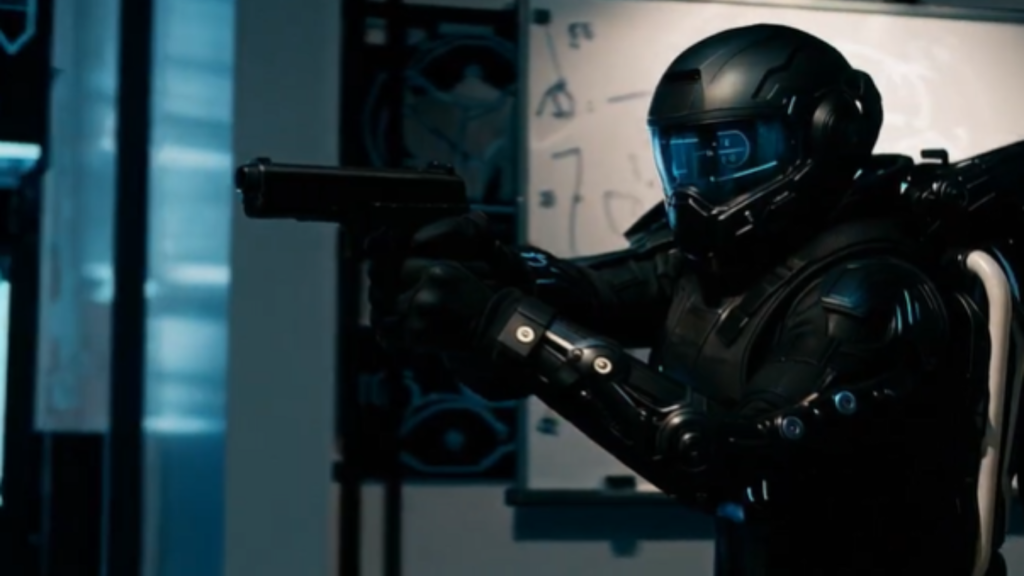
Why AI Makes Modern Exoskeletons Different
Traditional mechanical support systems relied almost entirely on fixed structures and simple movement assistance. They offered valuable physical support but lacked the intelligence needed to adapt to changing situations.
Artificial intelligence changes that completely.
Modern AI Powered Exoskeletons continuously gather information while the user moves. Rather than applying identical assistance every time, intelligent software evaluates multiple factors simultaneously. These include walking speed, terrain, body posture, weight distribution, fatigue levels, movement direction, and user intent.
As the wearer continues using the system, AI gradually learns personal movement patterns. This allows assistance to become smoother and increasingly personalised over time. The result feels less like operating a machine and more like receiving invisible physical support that naturally follows every movement.
Let me explain this in the clearest, simplest terms.
Imagine carrying a heavy backpack while walking across uneven ground. Without assistance, your muscles constantly work to maintain balance and reduce strain on your joints. An intelligent exoskeleton recognises these movements instantly, predicts where support will soon be required, and provides mechanical assistance before excessive fatigue develops. The wearer still performs the task independently, but the physical effort becomes significantly lower.
This predictive capability is one of the greatest advantages AI brings to wearable robotics. Rather than reacting after movement occurs, intelligent systems anticipate movement and respond almost immediately.
The Evolution of Human Augmentation
The concept of enhancing human physical performance has existed for decades. Early research focused mainly on assisting individuals with mobility challenges or helping industrial workers reduce repetitive strain injuries.
Advances in smaller electronics, longer-lasting batteries, and more capable AI helped wearable robotics transition from experimental research to real-world applications at a rapid pace.
The following timeline highlights several important milestones in the development of wearable robotic technology.
| Year | Event | Description |
|---|---|---|
| 1960s | Early powered suit concepts | Researchers proposed wearable mechanical systems to increase human strength for industrial and military tasks. |
| 1980s | Medical rehabilitation research | Hospitals and research institutions began developing robotic walking assistance for patients with mobility impairments. |
| 1990s | Lightweight robotics advances | Improved materials made wearable robotic frames safer, lighter, and more practical for testing. |
| 2000s | Military research expansion | Defence organisations increased investment in powered exoskeletons to improve soldier endurance and operational efficiency. |
| 2010s | Commercial industrial systems | Wearable robotic support entered factories, logistics centres, and construction environments. |
| 2020s | AI integration accelerates | Artificial intelligence, machine learning, and advanced sensors transformed exoskeletons into adaptive wearable systems capable of personalised assistance. |
Looking back at this progression, it becomes clear that innovation has not happened overnight. Each generation solved different engineering challenges while building the foundation for today’s intelligent wearable robotics.
How Humans and Intelligent Machines Are Shaping a Smarter Future
Many discussions about artificial intelligence focus on automation replacing human jobs. Wearable robotics tells a different story. Instead of removing people from demanding work, these systems enable people to perform difficult tasks more safely, comfortably, and efficiently.
That distinction is extremely important.
A skilled soldier still makes tactical decisions. A healthcare professional still provides patient care. A warehouse operator still manages logistics. The exoskeleton simply reduces unnecessary physical strain while allowing the individual to concentrate on judgement, precision, and problem solving.
From my perspective, this represents one of the healthiest directions for AI development. Technology should strengthen human capability wherever possible rather than reducing the importance of human expertise.
As research continues, wearable robotics will likely become smaller, lighter, more affordable, and increasingly intelligent. The result will not simply be stronger machines. It will be stronger partnerships between people and technology, opening opportunities that were previously impossible across defence, healthcare, manufacturing, emergency services, and many other industries.
Physical Augmentation Through Intelligent Strength
One of the greatest advantages of AI Powered Exoskeletons is their ability to increase physical performance without changing the person inside the suit. Instead of making someone stronger through physical training alone, these wearable robotic systems provide mechanical assistance that works alongside the body’s natural movement. The user remains fully responsible for every decision, while the exoskeleton reduces the effort required to perform demanding tasks.
Imagine a soldier carrying communications equipment, protective armour, food supplies, medical kits, and ammunition over rough terrain. The combined weight can easily exceed what the body can comfortably carry for extended periods. Fatigue gradually affects speed, concentration, balance, and decision making. An intelligent exoskeleton changes this situation by supporting the legs, hips, back, and shoulders so that much of the weight is transferred through the robotic frame instead of the wearer’s muscles.
The result is not superhuman strength in the way films often portray it. Instead, the improvement comes through sustained endurance, reduced fatigue, and greater efficiency. A soldier can travel farther, remain alert for longer, and arrive at the destination in better physical condition.
From my perspective, endurance is even more valuable than raw strength. Winning difficult missions often depends on maintaining physical performance over many hours rather than producing short bursts of extraordinary power.
How Intelligent Assistance Works
AI Powered Exoskeletons constantly observe body movement using a network of highly sensitive components. These include motion sensors, pressure sensors, force detectors, gyroscopes, accelerometers, and joint position monitors. Every second, thousands of small measurements are analysed to understand how the wearer is moving.
Artificial intelligence processes this information almost instantly. Instead of waiting until movement has already happened, the software predicts the next action and prepares the mechanical support system in advance.
For example, when a person begins climbing a steep hill, the exoskeleton recognises changes in posture, leg position, and body balance. Before the muscles become overloaded, the system increases assistance around the hips and knees. During downhill movement, support changes again to improve stability and reduce stress on joints.
This continuous adjustment makes movement feel remarkably natural.
Unlike earlier robotic systems that relied on fixed levels of assistance, modern AI adapts its behaviour throughout the entire activity. Whether the user is walking, running, kneeling, lifting equipment, or climbing obstacles, the system modifies its support accordingly.
AI Features That Make Exoskeletons Smarter
Artificial intelligence is the reason modern exoskeletons have become practical rather than experimental. Several advanced capabilities work together to create this intelligent support.
Movement Prediction
Machine learning studies the user’s movement patterns and predicts what action is likely to happen next. This allows assistance to begin before excessive strain develops.
Adaptive Force Control
Rather than applying maximum power continuously, AI calculates exactly how much assistance is required for each movement. This creates smoother motion while conserving battery life.
Balance Monitoring
Advanced sensors monitor body position hundreds of times each second. If balance begins to change unexpectedly, the exoskeleton immediately adjusts support to reduce the risk of falling.
Fatigue Reduction
Intelligent software recognises signs of increasing physical strain during extended activity. The assistance level gradually changes to reduce muscle exhaustion while maintaining natural movement.
Personal Learning
Every individual walks differently. AI gradually learns the wearer’s preferred movement style and customises assistance accordingly. After repeated use, the system becomes increasingly responsive to that individual.
These capabilities demonstrate that wearable robotics is becoming more intelligent rather than simply more powerful.
Military Applications Are Expanding
Military organisations around the world have shown growing interest in wearable robotics because modern operations place enormous physical demands on personnel. Soldiers often operate in challenging environments while carrying equipment that places continuous stress on the body.
AI Powered Exoskeletons offer practical solutions across multiple areas of military operations.
One important application involves long distance movement. Infantry units frequently travel across mountains, deserts, forests, or urban environments while carrying heavy loads. By reducing physical fatigue, exoskeletons help maintain mobility throughout lengthy missions.
Another valuable application involves casualty evacuation. Transporting injured personnel requires considerable physical effort, particularly under hostile conditions. Wearable robotic support allows rescue teams to move casualties more safely while reducing the risk of additional injuries among rescuers.
Engineering units may also benefit significantly. Building temporary bridges, clearing obstacles, repairing equipment, and moving construction materials all require repetitive lifting and sustained physical effort. Exoskeleton assistance increases productivity while lowering physical strain.
Special operations forces represent another potential area of adoption. Their missions often involve extended movement, heavy equipment, and demanding environmental conditions where maintaining endurance becomes critically important.
I believe wearable robotics will continue evolving alongside improvements in battlefield communications, autonomous vehicles, and intelligent decision support systems. Together, these technologies may create a more capable and resilient military force without removing human judgement from operational decisions.
Improving Operational Readiness
Modern military preparedness requires much more than sophisticated weapons to achieve mission success.
It also depends on keeping personnel healthy, capable, and physically prepared throughout demanding missions.
Fatigue influences reaction time, concentration, coordination, and awareness. Even highly trained individuals experience declining performance after prolonged physical effort.
By reducing unnecessary muscular strain, AI Powered Exoskeletons help preserve physical energy for situations where human performance matters most.
By the time soldiers arrive at their objectives, they are better rested, more alert, and fully prepared to react effectively to changing situations.
This improvement benefits not only individuals but entire teams. When fewer personnel become exhausted, overall mission coordination becomes more efficient.
Supporting Safer Training
Military training is intentionally demanding because it prepares personnel for difficult real world situations. However, repetitive heavy lifting and extended physical activity can increase the likelihood of injuries affecting joints, muscles, and the lower back.
Wearable robotics may reduce these risks by supporting the body during demanding exercises without reducing the quality of training itself.
For example, recruits learning to carry heavy equipment repeatedly over long distances could complete realistic training scenarios while placing less stress on their developing muscles and joints.
This approach allows instructors to maintain high standards while promoting long term physical wellbeing.
Real World Testing Continues
Several defence organisations, research laboratories, and technology companies continue evaluating AI Powered Exoskeletons under realistic operating conditions. Current testing focuses on improving reliability, reducing overall weight, extending battery performance, increasing comfort, and making movement feel even more natural.
Researchers are also exploring new materials that combine exceptional strength with low weight. Lightweight composite materials, improved electric motors, and more efficient batteries continue making wearable robotics increasingly practical.
Artificial intelligence itself is advancing rapidly. Future systems are expected to interpret human intention even more accurately, allowing assistance to become almost invisible to the wearer.
Although widespread deployment across entire armed forces will require additional development, steady progress suggests that intelligent wearable robotics will become increasingly common during the coming years.
Balancing Expectations With Reality
Despite remarkable progress, AI Powered Exoskeletons are not without limitations.
Battery powered systems still require reliable energy sources. Extended missions demand longer operating times and faster charging solutions. Engineers continue working to improve battery technology while reducing overall system weight.
Comfort also remains an important consideration. A wearable device must fit securely without restricting natural movement or causing discomfort during prolonged use.
Maintenance requirements present another challenge. Advanced robotic systems require regular inspection, software updates, calibration, and mechanical servicing to maintain peak performance.
Environmental conditions such as extreme heat, freezing temperatures, heavy rain, dust, and rough terrain also present engineering challenges that manufacturers continue addressing through improved design.
Even with these limitations, the direction of progress remains highly encouraging. Every new generation becomes lighter, smarter, more efficient, and increasingly practical for real world applications.
As I see it, success will not come from building the most powerful exoskeleton. It will come from creating systems that people trust, feel comfortable wearing, and can rely upon throughout demanding everyday operations.

Active and Passive Exoskeleton Systems
Not every exoskeleton is designed for the same purpose. Some are built to deliver powered assistance for demanding environments, while others provide mechanical support without using motors or batteries. Understanding the difference helps explain why wearable robotics is expanding across so many industries.
Although both systems share the same goal of reducing physical strain, they achieve it in different ways. Selecting the right type depends on the environment, the tasks involved, and the level of assistance required.
Active Exoskeletons
Active exoskeletons use electric motors, advanced sensors, onboard computers, and AI software to support movement. They continuously analyse how the wearer moves and provide mechanical power whenever additional assistance is needed.
When lifting heavy equipment, climbing stairs, walking across uneven terrain, or carrying large loads, the powered system supplies extra force to reduce the pressure placed on muscles and joints.
One of the greatest strengths of active systems is adaptability. AI constantly monitors the user’s movement and adjusts support in real time. If the wearer suddenly changes direction or speed, the exoskeleton immediately responds with a different level of assistance.
These systems are commonly being explored for defence, emergency response, advanced manufacturing, and medical rehabilitation where intelligent movement support can significantly improve performance.
The main challenges include battery life, system weight, purchase cost, and maintenance. Engineers continue improving each new generation by making powered exoskeletons lighter, quieter, and more energy efficient.
Passive Exoskeletons
Passive exoskeletons achieve similar goals without electric motors or complex electronic systems. Instead, they rely on carefully designed mechanical structures such as springs, flexible supports, lightweight frames, and energy storing components.
Rather than generating additional power, passive systems redistribute body weight more effectively. This reduces pressure on the back, shoulders, knees, and hips during repetitive work.
Construction workers, warehouse staff, factory employees, and assembly line operators often perform thousands of similar movements every day. Repeated lifting, bending, and overhead work gradually place enormous stress on muscles and joints.
Passive exoskeletons help minimise this strain by transferring part of the workload through the support frame instead of the body itself.
Because they contain fewer electronic components, passive systems are usually lighter, more affordable, easier to maintain, and suitable for all day use.
From my perspective, passive exoskeletons may become common in everyday workplaces long before highly powered military systems become widely available.
Comparing Both Technologies
Each approach offers valuable advantages.
| Feature | Active Exoskeleton | Passive Exoskeleton |
|---|---|---|
| Power Source | Electric motors and batteries | Mechanical support only |
| AI Integration | Advanced AI and sensors | Minimal or no AI |
| Assistance Level | Dynamic powered movement | Weight redistribution |
| Maintenance | Higher | Lower |
| Cost | Higher investment | More affordable |
| Typical Use | Defence, rehabilitation, specialised operations | Manufacturing, logistics, construction |
Neither system is universally better. The most effective choice depends entirely on the work being performed.
Industrial Applications Continue Growing
Outside military environments, industries are rapidly recognising the value of wearable robotics.
Factories increasingly face two important challenges. They must improve productivity while also protecting workers from injuries caused by repetitive physical tasks.
AI Powered Exoskeletons help address both concerns.
Workers who repeatedly lift heavy components throughout long shifts experience less physical fatigue when supported by wearable robotics. Better posture also reduces long term pressure on the spine and major joints.
Rather than replacing skilled employees, exoskeletons allow experienced workers to continue performing demanding tasks more comfortably and safely.
Manufacturers also benefit from fewer workplace injuries, lower absence rates, and improved operational efficiency.
This creates advantages for both employers and employees.
Transforming Warehouse Operations
Modern logistics centres process enormous numbers of products every day. Employees lift, carry, sort, and transport thousands of items during each shift.
Even with forklifts and conveyor systems, many manual handling tasks remain unavoidable.
Wearable robotics provides valuable assistance during these repetitive activities.
A warehouse employee using an exoskeleton can repeatedly lift heavier packages while placing less strain on the lower back and shoulders. AI continuously adjusts support depending on the movement being performed.
As a result, workers often complete physically demanding shifts with reduced fatigue and lower risk of injury.
This improvement becomes particularly valuable during periods of high demand when distribution centres operate around the clock.
Construction Becomes Safer
Construction work combines heavy lifting, awkward body positions, overhead tasks, and uneven ground.
These conditions create continuous physical stress.
Exoskeleton technology offers practical support for activities such as installing ceiling materials, carrying equipment, drilling overhead, lifting building supplies, and handling large construction tools.
Workers remain responsible for every task, but the mechanical support reduces unnecessary muscular effort.
In my opinion, this sector has enormous potential because many workplace injuries result from repetitive strain rather than sudden accidents.
Reducing long term physical stress benefits both productivity and worker wellbeing.
Logistics Support for Defence Operations
Military logistics often receives less public attention than combat operations, yet it forms the foundation of every successful mission.
Equipment, fuel, food, ammunition, medical supplies, communications systems, and spare parts must all be transported safely and efficiently.
AI Powered Exoskeletons can significantly improve these activities.
Personnel responsible for loading aircraft, moving ammunition, unloading transport vehicles, and organising supply depots frequently handle extremely heavy equipment.
Wearable robotics allows individual personnel to manage larger loads while reducing physical exhaustion.
This means faster loading times, improved operational efficiency, and reduced injury risk.
In many situations, improving logistics may produce even greater operational benefits than increasing battlefield performance.
Emergency Services and Disaster Response
The value of wearable robotics extends beyond military and industrial environments.
Emergency response teams frequently operate under dangerous conditions where speed and physical endurance directly affect survival.
While working in hazardous conditions, firefighters must transport oxygen equipment, protective clothing, rescue gear, and medical kits to respond effectively to emergencies.
Search and rescue teams move through collapsed buildings, mountainous terrain, flood zones, or earthquake affected communities while transporting specialised equipment.
Exoskeleton support can reduce physical strain during these demanding missions, allowing responders to remain effective for longer periods.
As technology becomes smaller and more portable, emergency organisations may increasingly adopt wearable robotic systems to improve public safety operations.
Real World Benefits
The advantages of AI Powered Exoskeletons become clearer when viewed from everyday practical experience rather than science fiction.
Some of the most important benefits include:
- Reduced physical fatigue during prolonged activity.
- Lower risk of repetitive strain injuries.
- Improved lifting capability.
- Better posture during demanding work.
- Increased endurance.
- Enhanced operational efficiency.
- Faster recovery after physically demanding tasks.
- Greater confidence when handling heavy equipment.
These improvements are valuable because they support human performance without replacing human skill or judgement.
Present Challenges and Future Improvements
Despite remarkable progress, several engineering challenges still require attention.
Battery technology continues improving, but longer operating times remain important for powered systems.
Manufacturers are also working to reduce total system weight while increasing durability.
Another challenge involves making exoskeletons comfortable for people of different body sizes and movement styles.
Artificial intelligence will play a major role in solving these issues.
Future systems are expected to learn individual movement patterns more quickly, improve energy efficiency, predict fatigue with greater accuracy, and provide even smoother assistance throughout daily activities.
As the technology continues to improve, wearable robotics will likely blend more naturally into daily activities, becoming almost unnoticeable.
This gradual evolution reflects the true purpose of AI Powered Exoskeletons. They are not designed to attract attention. They are designed to help ordinary people perform extraordinary work with greater safety, confidence, and endurance.
Medical Rehabilitation Is Transforming Lives
One of the most inspiring applications of AI Powered Exoskeletons is found far from factories and military training grounds. Rehabilitation centres around the world are using wearable robotics to help people regain movement, rebuild confidence, and recover a level of independence that once seemed out of reach.
After a serious injury or illness, even standing up can become a difficult challenge. Traditional physical therapy remains essential, but exoskeleton technology adds a new level of support. These intelligent systems guide natural movement while allowing patients to participate actively in every step of their recovery.
Rather than forcing the body to move, AI analyses each motion and provides only the assistance that is needed. As patients become stronger, the amount of support gradually decreases. This personalised approach encourages steady progress while reducing unnecessary strain.
I believe this is where wearable robotics demonstrates its greatest value. Technology becomes meaningful when it helps people reclaim everyday experiences such as walking with family, climbing stairs, or returning to work.
Supporting Recovery After Serious Injuries
Recovery often requires months of consistent rehabilitation. During this time, patients may experience muscle weakness, balance problems, or reduced coordination.
AI Powered Exoskeletons assist therapists by providing controlled, repeatable movement patterns that are difficult to achieve through manual support alone.
As the patient walks, intelligent sensors monitor joint movement, body alignment, walking speed, and weight distribution. AI immediately analyses this information and adjusts support to match the individual’s progress.
This continuous feedback helps therapists evaluate recovery while allowing patients to practise natural walking patterns in a safe environment.
The psychological benefits are equally important. Standing and walking independently, even with robotic assistance, often restores motivation and confidence during long rehabilitation programmes.
Helping People With Neurological Conditions
Wearable robotics is also being explored for people living with neurological conditions that affect movement.
Individuals recovering from spinal cord injuries, strokes, traumatic brain injuries, or certain neurological disorders may benefit from carefully supervised exoskeleton-assisted therapy.
These systems encourage repeated movement, which plays an important role in rebuilding coordination and improving muscle memory.
Although exoskeletons are not a cure, they provide valuable support that complements traditional rehabilitation methods.
As research continues, AI is expected to deliver even more personalised therapy by adapting exercise programmes to each patient’s individual progress.
AI Learns During Rehabilitation
One remarkable feature of modern rehabilitation systems is their ability to learn from every therapy session.
Each movement produces valuable data.
Artificial intelligence studies walking rhythm, balance, posture, joint flexibility, muscle activity, and recovery speed. Over time, the software identifies gradual improvements that may not be immediately obvious during routine observation.
Therapists can then adjust treatment plans based on objective information rather than relying only on visual assessment.
This partnership between healthcare professionals and intelligent technology creates more personalised rehabilitation programmes while keeping medical experts fully responsible for patient care.
Expanding Beyond Healthcare
The future of AI Powered Exoskeletons extends well beyond hospitals and military organisations.
Many occupations involve physically demanding work that contributes to long-term health problems. Agriculture, aviation maintenance, mining, shipbuilding, energy production, public utilities, and infrastructure maintenance all require repetitive lifting, climbing, and prolonged physical effort.
Wearable robotics has the potential to improve safety and reduce fatigue across these sectors.
As manufacturing costs decrease and designs become lighter, businesses of all sizes may begin adopting exoskeleton technology to protect their workforce while improving productivity.
Instead of treating workplace injuries after they occur, organisations can focus on preventing them from happening in the first place.
Future Innovations Will Make Exoskeletons More Intelligent
Research into wearable robotics is progressing rapidly.
Future generations are expected to include more advanced AI models capable of understanding movement with even greater precision. Improvements in battery technology, lightweight materials, and compact electronics will allow exoskeletons to become smaller, more comfortable, and suitable for longer periods of use.
Researchers are also investigating soft robotic materials that move naturally with the human body. These flexible systems may eventually replace rigid mechanical frames in many applications.
Cloud-based learning could also allow future exoskeletons to receive software improvements that enhance performance over time. As more movement data becomes available, AI systems may continue learning how to provide smoother, safer, and more efficient assistance.
Although these developments remain under active research, the overall direction is clear. Wearable robotics is becoming increasingly practical for everyday life.
Ethical Responsibility Must Grow With Innovation
Every powerful technology brings important responsibilities.
AI Powered Exoskeletons should always be developed with safety, transparency, and human wellbeing as the highest priorities.
Users must remain in control of every action. Artificial intelligence should provide support rather than replace human judgement.
Privacy also deserves careful attention. Wearable systems collect movement data that should be protected through responsible security practices and appropriate data management.
Access is another important consideration. As the technology becomes more affordable, efforts should be made to ensure that rehabilitation centres, workplaces, and emergency services can benefit regardless of their size or available resources.
Responsible innovation creates public trust, and public trust encourages wider adoption.
The Future Relationship Between Humans and Machines
For many years, discussions about robotics centred on replacing people with machines.
Wearable robotics presents a different vision.
Instead of removing human involvement, AI Powered Exoskeletons strengthen human capability while preserving creativity, judgement, and experience.
A skilled surgeon gains steadier physical support during lengthy procedures. A warehouse worker finishes demanding shifts with less fatigue. A rescue worker carries essential equipment more safely. A recovering patient takes meaningful steps towards independence.
These examples demonstrate that the future is not about competition between people and machines. It is about cooperation.
From my perspective, that partnership represents one of the most encouraging directions in modern technology.
Conclusion
AI Powered Exoskeletons are steadily changing how people work, recover, and overcome physical challenges. From defence operations and industrial workplaces to hospitals and rehabilitation centres, these intelligent wearable systems demonstrate that innovation can strengthen human ability without replacing the people who use it.
As artificial intelligence continues advancing, exoskeleton technology will become lighter, smarter, and more accessible across many industries. The greatest achievement will not be creating stronger machines. It will be helping ordinary people perform difficult tasks more safely, comfortably, and confidently while improving their quality of life.
The future of wearable robotics is no longer a distant prediction. It is already beginning to reshape the way we think about human potential.
Brand Credibility
At worldstan.com, we believe technology should always serve humanity with responsibility, knowledge, and practical value. Our mission is to deliver carefully researched, original, and trustworthy insights that help readers understand the innovations shaping tomorrow’s world. This comprehensive guide on AI Powered Exoskeletons has been created exclusively for worldstan.com, reflecting our commitment to high-quality research, factual accuracy, and meaningful analysis for readers who want to stay ahead in the rapidly evolving world of AI and advanced technology.