

Underwater Unmanned Vehicles Transform Ocean Security
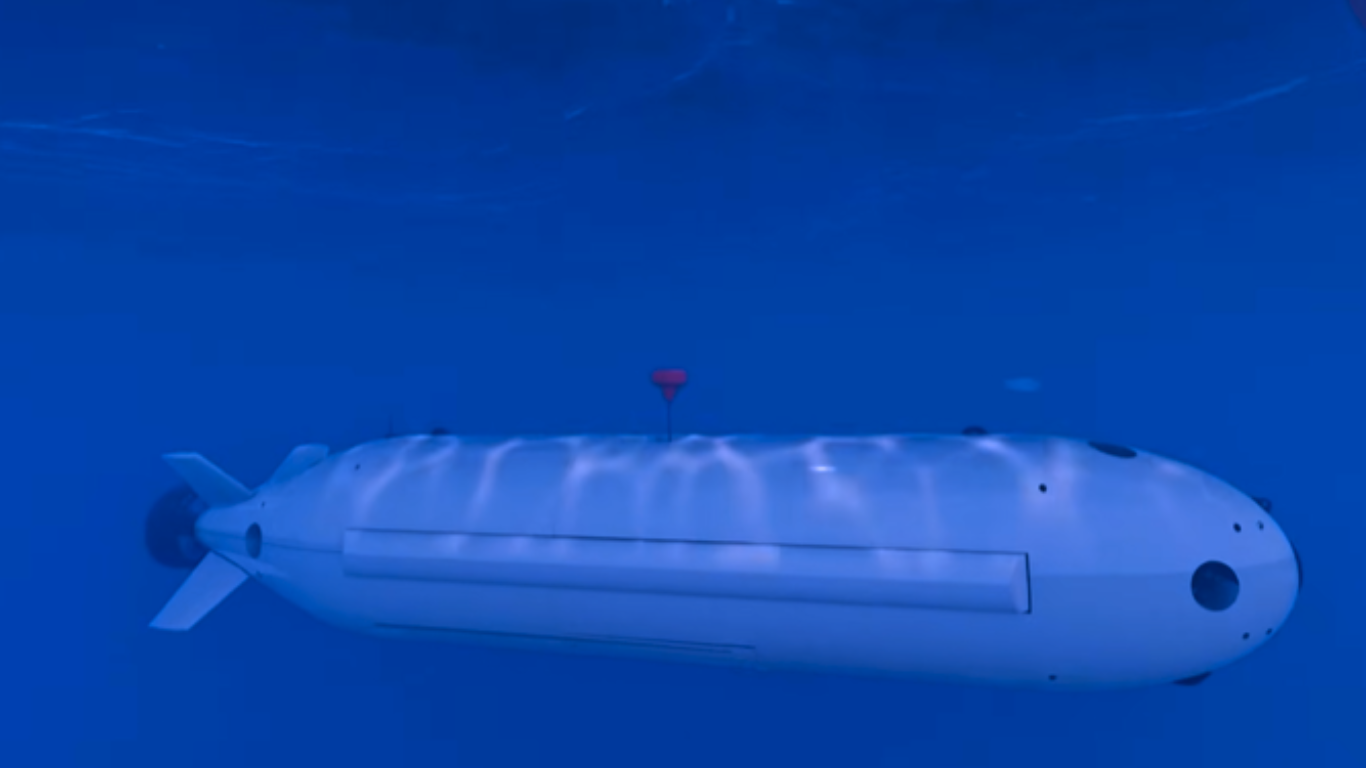
Underwater Unmanned Vehicles are quietly transforming the way nations protect the world’s oceans and the vital systems hidden beneath them. Every internet connection, energy network, and naval operation depends on underwater infrastructure more than most people realise. This guide explores how these intelligent machines are changing maritime security and why their importance continues to grow.
Underwater Unmanned Vehicles Are Reshaping Ocean Security
Underwater Unmanned Vehicles are transforming global maritime security through autonomous surveillance, AI navigation, subsea intelligence, and critical infrastructure protection.
When discussions turn to modern defence and national security, most conversations focus on satellites, fighter aircraft, cyber security, or advanced missile systems. While these technologies deserve attention, another revolution is taking place far below the ocean surface where very few people ever look. Thousands of kilometres of communication cables, energy pipelines, offshore facilities, scientific equipment, and military assets remain hidden beneath the sea. These underwater systems quietly support the world’s economy every hour of every day.
Protecting these valuable assets has become one of the biggest challenges facing governments and industries. Oceans cover more than seventy percent of the Earth’s surface, making continuous human monitoring almost impossible. Harsh weather, extreme pressure, darkness, and enormous distances make underwater operations expensive and dangerous.
This challenge has accelerated the development of Underwater Unmanned Vehicles. These intelligent systems can travel independently beneath the sea, collect information, inspect infrastructure, identify risks, and support military and civilian operations without placing human lives in danger. Their growing capabilities are changing how countries think about maritime security, environmental protection, and underwater exploration.
From my perspective, this technology represents one of the most practical examples of how artificial intelligence and robotics are solving real problems instead of simply demonstrating technical innovation. Rather than replacing people completely, these vehicles extend human capability into places that were once extremely difficult or impossible to reach.
Understanding Underwater Unmanned Vehicles
An Underwater Unmanned Vehicle is a robotic system designed to perform missions beneath the ocean surface without requiring a crew onboard. Depending on the mission, some vehicles operate through direct communication with operators, while others complete complex tasks with a high degree of autonomy using artificial intelligence, onboard sensors, and advanced navigation systems.
Modern UUVs carry specialised equipment that allows them to observe, inspect, map, detect, and analyse underwater environments. Their missions range from scientific exploration to military surveillance, offshore energy inspection, search and rescue, environmental monitoring, and protection of critical infrastructure.
Unlike traditional submarines, these systems are much smaller, require fewer operational resources, and can remain underwater for extended periods. Their lower operating costs make them attractive for governments, research institutions, and commercial organisations alike.
One reason I believe this technology has advanced so rapidly is that it solves multiple challenges simultaneously. A single vehicle can gather data, inspect structures, detect hazards, and transmit valuable information without exposing divers or expensive naval vessels to unnecessary risks.
The Evolution of Underwater Robotics
The idea of unmanned underwater exploration is not entirely new. Engineers and researchers have spent decades improving underwater robotic systems. Early models were relatively simple and relied heavily on human operators. Today’s systems combine artificial intelligence, machine learning, autonomous decision making, sophisticated sonar, and powerful onboard computing.
The evolution has been driven by increasing global dependence on underwater infrastructure, growing maritime competition, advances in battery technology, improvements in underwater communications, and rapid progress in artificial intelligence.
Whenever history helps explain technological progress, it becomes easier to understand why today’s innovations matter.
| Year | Event | Description |
|---|---|---|
| 1950s | Early Underwater Research | Scientists began experimenting with remotely operated underwater equipment for exploration. |
| 1960s | Military Development | Navies invested in underwater robotic technology for mine detection and surveillance. |
| 1980s | Commercial Expansion | Offshore energy companies adopted underwater robots for pipeline and platform inspections. |
| 2000s | Autonomous Navigation | Artificial intelligence significantly improved underwater navigation and mission planning. |
| 2010s | AI Integration | Advanced sensors and machine learning enabled smarter autonomous underwater operations. |
| 2020s | Swarm Technology | Multiple autonomous underwater vehicles began working together to improve coverage and operational efficiency. |
This progression shows that Underwater Unmanned Vehicles did not emerge overnight. They are the result of decades of engineering improvements combined with recent breakthroughs in artificial intelligence.
Why Oceans Have Become Strategic Assets
Underwater Unmanned Vehicles are autonomous underwater drones that protect internet cables, monitor pipelines, support naval operations, and improve ocean security using advanced AI, intelligent sensors, and real time navigation.
Many people think of oceans as transportation routes or places for fishing and tourism. In reality, they have become one of the world’s most valuable strategic environments. Global commerce, digital communication, offshore energy production, scientific research, and national defence all depend heavily on secure oceans.
Let me explain this in the clearest, simplest terms.
Imagine waking up one morning to discover that international internet traffic has slowed dramatically because several underwater communication cables have been damaged. Financial markets could experience disruption, businesses might lose access to cloud services, emergency communications could become unreliable, and millions of people could suddenly lose access to essential online services.
This is why underwater security has become a priority rather than an option.
Countries now recognise that protecting underwater infrastructure means protecting their economies, national security, and public services at the same time. Underwater Unmanned Vehicles have become one of the most efficient tools available for maintaining this protection because they can inspect large underwater areas continuously without requiring permanent human presence.
Another important factor is the increasing competition for underwater resources. Offshore oil fields, natural gas reserves, rare mineral deposits, renewable energy installations, and communication networks all require constant monitoring. As these assets continue expanding, so does the need for intelligent underwater security systems.
From my observation, the future of maritime security will depend less on having the largest fleets and more on building intelligent networks that combine autonomous systems, artificial intelligence, and real time information. Underwater Unmanned Vehicles are becoming one of the strongest foundations of that transformation.
Protecting Subsea Communication Cables
The modern digital economy depends on an enormous network that most people never see. Thousands of kilometres of fibre optic cables lie across the ocean floor, connecting continents and carrying the overwhelming majority of global internet traffic. Every online meeting, financial transaction, cloud service, streaming platform, and international business operation relies on these hidden connections.
Although these cables are built to withstand harsh underwater conditions, they remain vulnerable to natural disasters, accidental damage from ship anchors, fishing equipment, and deliberate interference. Repairing a damaged cable can take days or even weeks depending on its location, weather conditions, and the availability of specialised repair vessels.
This is where Underwater Unmanned Vehicles provide exceptional value. Equipped with high resolution cameras, sonar systems, laser scanners, and intelligent sensors, they regularly inspect cable routes to identify changes before they become major problems. Instead of waiting for failures to occur, operators can schedule maintenance based on actual conditions.
Artificial intelligence strengthens this process by analysing inspection data collected over time. The system compares current observations with previous inspections and identifies unusual patterns that may indicate erosion, structural stress, seabed movement, or external interference.
From my perspective, this shift from reactive maintenance to predictive maintenance is one of the greatest achievements in underwater engineering. Preventing damage before it interrupts communication saves enormous costs while protecting services that billions of people depend upon every day.
Safeguarding Offshore Energy Infrastructure
Energy security is another area where Underwater Unmanned Vehicles have become indispensable. Offshore oil platforms, natural gas facilities, underwater pipelines, and renewable energy installations operate continuously in demanding marine environments. These facilities generate enormous economic value, but they also require constant inspection to ensure safety and reliability.
Human divers can inspect only limited sections under favourable conditions, while deep water operations often involve considerable risk. Autonomous underwater systems remove many of these limitations.
Modern UUVs inspect pipeline coatings, monitor corrosion, detect small leaks, examine support structures, and identify changes in seabed conditions surrounding underwater infrastructure. Their sensors can detect abnormalities long before visible damage appears.
AI enhances inspection precision by identifying slight differences that may go unnoticed during a manual inspection. Small variations in structural shape, temperature, pressure, or vibration can signal developing issues that deserve immediate attention.
A practical example can be seen in offshore pipeline monitoring. Instead of sending expensive inspection ships several times each year, energy companies can deploy autonomous underwater vehicles to perform regular inspections with greater consistency and lower operational costs.
Beyond financial savings, this approach also helps protect marine ecosystems. Early leak detection reduces environmental damage and supports faster emergency response, benefiting both industry and ocean life.
Supporting Naval Surveillance
Modern naval operations require continuous awareness across vast areas of the ocean. Traditional surveillance methods depend heavily on ships, aircraft, satellites, and manned submarines. While these assets remain essential, they cannot monitor every underwater location continuously.
Underwater Unmanned Vehicles fill this important gap by operating quietly beneath the surface for extended periods. Their primary role is not always direct engagement. Instead, they gather information, monitor activity, and provide commanders with valuable intelligence that supports informed decision making.
Advanced sonar systems allow these vehicles to identify underwater movement, distinguish different objects, and detect unusual acoustic signatures. Information gathered during patrols is transmitted back to command centres where analysts combine it with data from satellites, aircraft, and other surveillance platforms.
This layered approach creates a far more complete understanding of underwater activity than any single system could provide alone.
In my opinion, intelligence has always been one of the strongest advantages in military planning. The ability to understand an environment before making decisions often determines operational success more effectively than simply deploying greater numbers of personnel or equipment.
Anti Submarine Operations
Submarines remain among the most difficult military assets to detect because they are specifically designed to operate quietly beneath the ocean surface. Their stealth allows them to patrol large areas while remaining hidden for extended periods.
Traditional anti submarine operations require significant resources, including specialised ships, maritime patrol aircraft, helicopters, sonar networks, and highly trained crews. These operations are effective but also expensive and difficult to sustain continuously.
Underwater Unmanned Vehicles introduce a different approach. Instead of relying on a small number of large platforms, navies can deploy numerous autonomous vehicles throughout strategic regions.
Each vehicle continuously listens for underwater sounds, measures environmental conditions, analyses movement patterns, and shares information with nearby systems. Artificial intelligence helps distinguish between marine wildlife, commercial shipping, natural underwater noise, and potential submarine activity.
Rather than replacing existing naval assets, UUVs strengthen them by providing persistent underwater observation.
One practical advantage is flexibility. Vehicles can be repositioned quickly as intelligence requirements change. Multiple systems can monitor narrow waterways, ports, shipping routes, or strategically important coastal regions without maintaining a constant human presence.
From my perspective, combining autonomous underwater surveillance with conventional naval forces creates a more balanced and efficient defence strategy than relying exclusively on traditional platforms.
Artificial Intelligence Beneath the Ocean
Artificial intelligence has transformed Underwater Unmanned Vehicles from simple robotic machines into intelligent autonomous systems capable of making informed decisions while operating independently.
Unlike land based robots, underwater vehicles cannot rely on continuous communication with operators because radio signals travel poorly through seawater. In simple terms, the vehicle can make decisions using local data and take action instantly without waiting for instructions from a human operator.
Artificial intelligence performs several essential tasks during every mission. It interprets sonar images, identifies underwater objects, evaluates environmental conditions, plans efficient routes, conserves battery power, and responds to unexpected obstacles.
For example, if shifting currents move the vehicle away from its planned route, onboard AI recalculates the most efficient path while maintaining mission objectives. If visibility decreases because of suspended sediment, the navigation system automatically places greater emphasis on sonar data rather than optical cameras.
These adjustments happen within seconds without interrupting the mission.
I find this particularly impressive because it demonstrates practical intelligence rather than simple automation. The vehicle continuously interprets changing conditions and adapts its behaviour accordingly.
As machine learning models continue improving, future underwater vehicles will likely become even more capable of recognising complex underwater environments, predicting hazards, and cooperating with other autonomous systems.
Navigating Without Global Positioning Systems
One of the greatest engineering challenges beneath the ocean is navigation. Satellite navigation systems work exceptionally well above the Earth’s surface but cannot penetrate deep seawater.
This means underwater vehicles must determine their position using entirely different methods.
Modern Underwater Unmanned Vehicles combine several technologies to solve this problem. Inertial navigation systems estimate movement based on acceleration and direction. Doppler velocity logs measure speed relative to the seabed. Sonar mapping compares underwater terrain with stored reference maps. Pressure sensors calculate depth, while acoustic positioning systems provide additional location information when available.
Artificial intelligence combines all these measurements to estimate the vehicle’s location with remarkable accuracy.
Instead of depending upon one source of information, the navigation computer continuously compares multiple data streams. If one sensor becomes unreliable, others compensate automatically.
This layered approach greatly improves reliability during long missions where communication with operators may remain limited for many hours.
From an engineering standpoint, this represents one of the most remarkable achievements in autonomous robotics. Building a vehicle that can safely navigate through complete darkness without satellite guidance requires extraordinary precision in both hardware and software design.
The ability to move confidently through one of the world’s least accessible environments demonstrates just how far autonomous marine technology has progressed in recent years.
Swarm Intelligence Beneath the Ocean
One of the most exciting developments in modern marine technology is the use of swarm intelligence. Instead of relying on a single Underwater Unmanned Vehicle, organisations can deploy dozens or even hundreds of autonomous vehicles that work together as one coordinated team. Each vehicle performs its own task while constantly contributing information that benefits the entire mission.
This collaborative approach allows underwater operations to become faster, smarter, and far more reliable. A single vehicle may inspect one section of the seabed, while another maps nearby terrain, and a third monitors water conditions. Together, they create a complete picture that would be impossible for one machine to produce alone.
Artificial intelligence is the foundation of swarm technology. Every vehicle processes local information while also responding to data received from neighbouring units. If one vehicle detects an unusual object or unexpected movement, nearby vehicles can automatically adjust their routes to investigate the area without waiting for direct human instructions.
From my perspective, this cooperative behaviour reflects one of the greatest strengths of intelligent robotics. Rather than increasing the size of individual machines, engineers are improving performance by allowing many smaller systems to work together efficiently.
Another major advantage is resilience. If one vehicle experiences a technical fault or loses power, the remaining vehicles continue the mission with minimal interruption. This flexibility makes swarm systems particularly valuable for long duration operations where continuous monitoring is essential.
Environmental Monitoring and Marine Conservation
Although Underwater Unmanned Vehicles often receive attention for defence and security applications, their contribution to environmental protection is equally important. Oceans are changing because of climate variation, pollution, overfishing, and habitat degradation. Scientists require accurate information from remote underwater environments to understand these changes and develop effective conservation strategies.
Autonomous underwater systems collect valuable scientific information without disturbing delicate marine ecosystems. They monitor water temperature, oxygen levels, salinity, underwater currents, marine biodiversity, and chemical composition over long periods.
Researchers can deploy these vehicles into areas that are difficult or dangerous for divers to reach. Deep ocean trenches, polar waters, underwater volcanoes, and remote coral reef systems all become more accessible through autonomous technology.
Artificial intelligence improves scientific research by identifying unusual environmental patterns automatically. Instead of manually reviewing enormous quantities of collected data, researchers receive intelligent summaries highlighting significant observations.
For example, AI may identify changes in coral health, detect harmful algae growth, or recognise unusual migration patterns among marine species.
In my opinion, this demonstrates that advanced technology should not be viewed only through the lens of defence. The same intelligent systems protecting critical infrastructure can also help preserve natural environments for future generations.
Search and Rescue Operations
Every year, accidents occur at sea involving commercial vessels, fishing boats, aircraft, and recreational watercraft. Search and rescue missions are often complicated by poor weather, strong currents, limited visibility, and enormous search areas.
Underwater Unmanned Vehicles provide valuable support during these emergencies. Equipped with sonar, underwater cameras, and specialised detection equipment, they can search beneath the surface far more safely than human divers in hazardous conditions.
Artificial intelligence assists by analysing sonar images, recognising objects of interest, and reducing the time required to locate wreckage or missing equipment.
One practical advantage is endurance. Human divers face strict safety limits regarding depth and operating time, while autonomous underwater vehicles can continue searching for extended periods with consistent performance.
Emergency teams benefit from receiving detailed underwater maps and live operational data before sending divers into potentially dangerous environments.
From my observation, combining human expertise with autonomous technology leads to faster responses and better decision making during time critical rescue operations.
Scientific Exploration of the Deep Ocean
Despite centuries of maritime exploration, much of the deep ocean remains largely unexplored. Extreme pressure, complete darkness, and vast distances continue to limit human access to many underwater regions.
Underwater Unmanned Vehicles have opened new opportunities for ocean science by allowing researchers to explore these environments with unprecedented precision.
These vehicles investigate underwater mountain ranges, hydrothermal vents, deep sea ecosystems, and geological formations while collecting high quality images, water samples, and environmental measurements.
Artificial intelligence supports these missions by recognising geological features, identifying biological organisms, and selecting areas that deserve closer investigation.
Scientists no longer depend solely on predetermined mission plans. Intelligent systems can adapt exploration routes when unexpected discoveries appear during the mission.
For example, if unusual mineral formations or previously unknown marine habitats are detected, the vehicle can automatically perform additional surveys before continuing its original route.
I believe this adaptive capability will become increasingly valuable as scientific exploration expands into even more remote regions of the world’s oceans.
Commercial Industries Embracing Underwater Automation
Private industry has become one of the strongest supporters of Underwater Unmanned Vehicles because the technology improves safety while reducing operational costs.
Offshore energy companies use autonomous systems to inspect pipelines, drilling platforms, subsea valves, and structural foundations. Telecommunications companies monitor fibre optic communication cables. Port authorities inspect harbour infrastructure and shipping channels. Marine construction firms survey underwater construction sites before beginning major projects.
These operations previously required expensive support vessels, large inspection crews, and significant operational downtime.
Autonomous underwater systems now complete many inspections more efficiently while providing higher quality digital records.
Artificial intelligence further improves business operations by analysing inspection history across multiple years. Maintenance teams receive recommendations based on long term performance trends rather than reacting only after failures occur.
This predictive approach allows organisations to schedule repairs during convenient maintenance periods, reducing unexpected disruptions and lowering overall operational expenses.
For businesses, investing in smart underwater inspection systems can lead to significant long-term cost savings, making the upfront investment worthwhile over time.
Challenges That Still Need Solutions
Despite remarkable progress, Underwater Unmanned Vehicles continue to face important technical challenges that engineers are actively working to overcome.
Communication remains one of the biggest limitations. Radio signals weaken rapidly underwater, making continuous communication with surface operators difficult. Acoustic communication systems provide an alternative, but they offer lower data speeds and may be affected by environmental conditions.
Battery technology also limits mission duration. Although energy efficiency continues improving, long range missions still require careful planning to maximise operational time.
Ocean environments themselves present constant challenges. Strong currents, changing water pressure, biological growth, underwater debris, and unpredictable weather conditions all influence vehicle performance.
Artificial intelligence helps overcome many of these obstacles by continuously adjusting navigation strategies and optimising power consumption. Nevertheless, engineers continue developing improved batteries, advanced underwater communication systems, and more efficient propulsion technologies.
In my opinion, these challenges should be viewed as opportunities for innovation rather than barriers to progress. Every improvement brings autonomous underwater systems closer to even greater reliability and capability.
The Future of Underwater Unmanned Vehicles
The next decade is expected to bring significant advances in underwater autonomy. Artificial intelligence will become more capable of interpreting complex underwater environments, making independent decisions, and coordinating large groups of autonomous vehicles.
Future systems may remain underwater for months while performing continuous inspections, environmental monitoring, and security patrols with minimal human intervention.
Improved energy systems, smarter navigation algorithms, enhanced underwater communication, and more powerful onboard processors will allow these vehicles to complete increasingly sophisticated missions.
Integration with satellites, surface vessels, aircraft, and space based observation systems will create fully connected maritime awareness networks capable of providing real time information across enormous ocean regions.
Another promising direction is human and machine collaboration. Rather than replacing skilled professionals, autonomous underwater systems will provide better information, allowing engineers, scientists, naval commanders, and emergency responders to make faster and more informed decisions.
From my perspective, the future belongs to intelligent cooperation where human experience and artificial intelligence complement each other to solve problems that neither could address alone.
As global dependence on secure communication networks, offshore energy production, environmental protection, and maritime security continues to increase, Underwater Unmanned Vehicles will become an even more important part of everyday operations beneath the world’s oceans.
Conclusion
The oceans have always played a vital role in global trade, communication, energy production, scientific discovery, and national defence. What has changed is the way these vast underwater environments are being monitored and protected. Underwater Unmanned Vehicles have evolved from specialised research tools into intelligent systems that can inspect critical infrastructure, support naval missions, assist scientific exploration, strengthen environmental protection, and respond to emerging threats with remarkable precision.
Their greatest strength is not simply that they can travel beneath the ocean. It is their ability to operate independently in one of the most demanding environments on Earth while continuously gathering valuable information. Combined with artificial intelligence, advanced sensors, and autonomous navigation, these systems provide governments, researchers, and industries with a level of awareness that was almost impossible to achieve only a few years ago.
Looking ahead, the importance of Underwater Unmanned Vehicles will continue to grow as nations invest more heavily in maritime security, offshore energy, digital communications, and ocean research. Future innovations will make these vehicles even more intelligent, more efficient, and capable of working together across larger areas for longer periods. Their contribution will extend beyond defence, helping protect marine ecosystems, improve disaster response, and support sustainable use of ocean resources.
Every major technological advancement begins quietly before becoming an essential part of everyday life. Underwater Unmanned Vehicles are following that path today. While they may remain hidden beneath the waves, their influence on global security, economic stability, and scientific progress is becoming increasingly visible.
This exclusive insight reflects the commitment of worldstan.com to delivering original, trustworthy, and expertly researched content that helps readers understand the technologies shaping our future. At Worldstan, our goal is to present complex innovations in clear, practical language that informs, educates, and inspires readers around the world.