
Military AI in 2026 Battlefield Decision Support, CyberWarfare and Combat Robotics
Artificial intelligence has moved from military research labs into daily operations. Software now
sorts battlefield data, algorithms help defend and attack networks, and increasingly autonomous
machines operate in active conflicts. Here is where military AI stands in 2026, who is driving it,
and why the debate over control is so heated.
Tactical AI Decision Support at Machine Speed
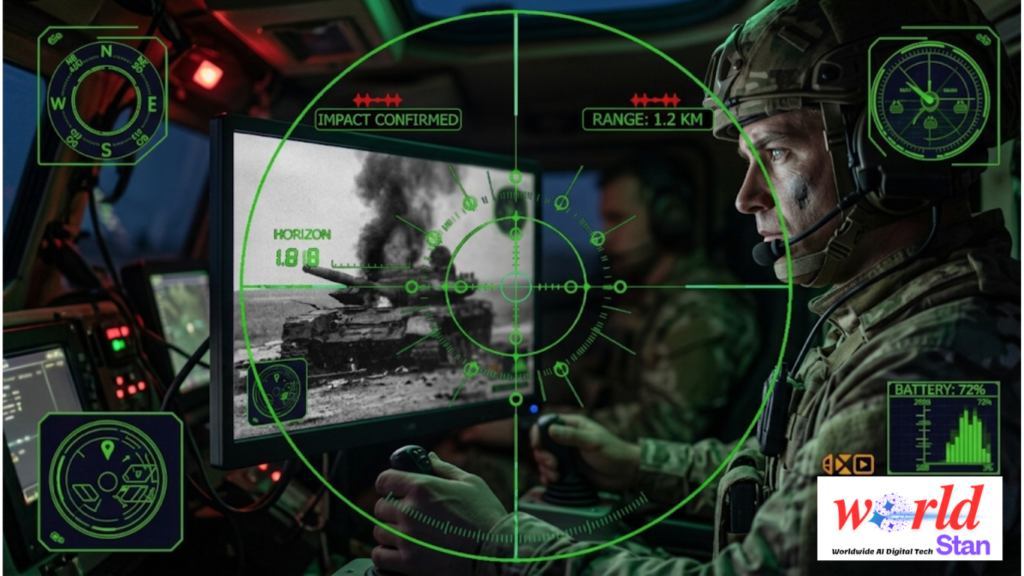
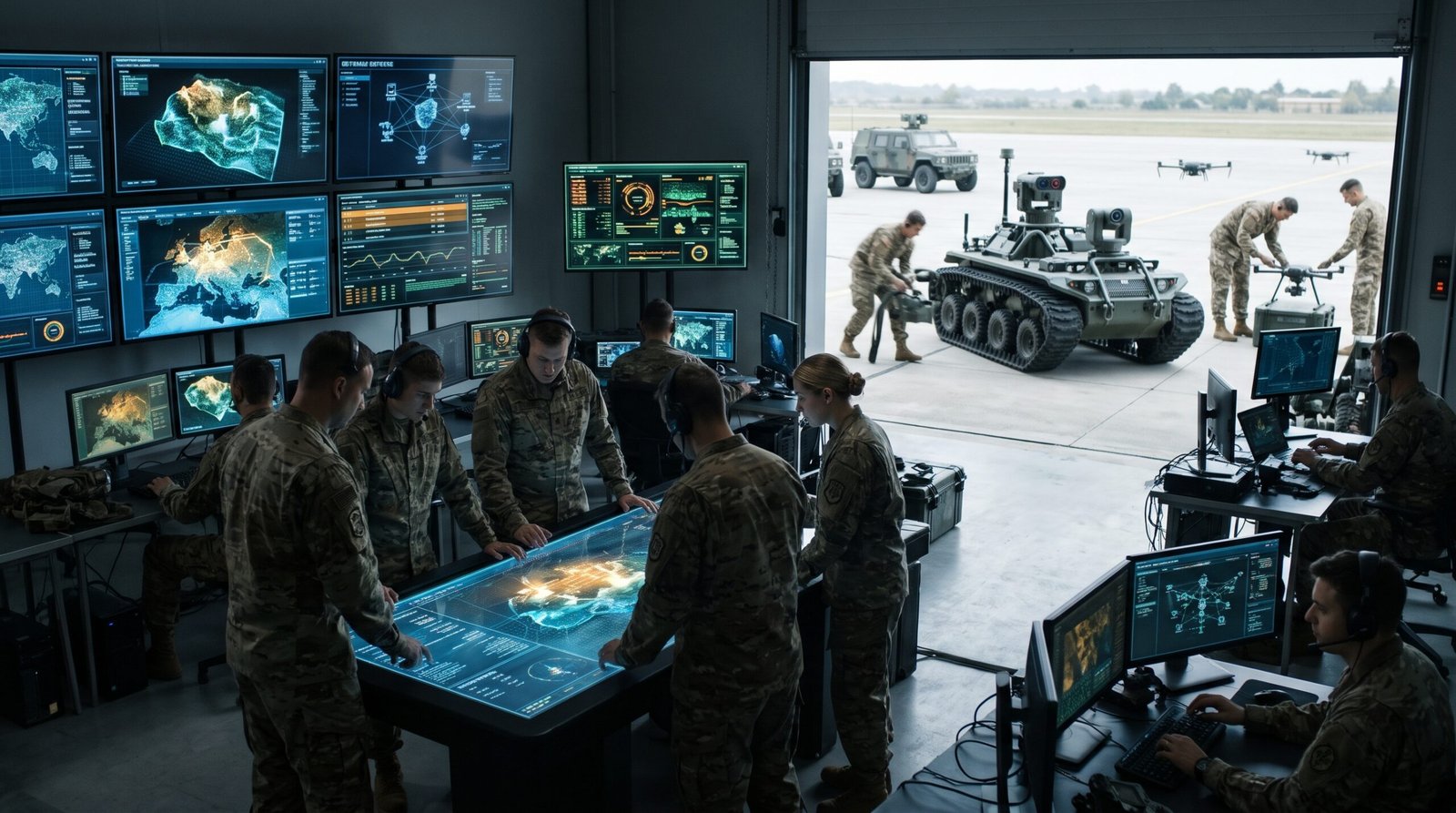
The clearest example is the Pentagon’s Maven Smart System, built by Palantir. In a March
memo, Deputy Defense Secretary Steve Feinberg directed that the system become a permanent
part of the military, not a temporary program. Palantir’s co-founder describes it as command-and
control software that takes in battlefield data, sorts through it, and helps identify targets.
Adoption is broad. Officials report that over 100,000 US defense personnel now use it, and
demand reportedly grew during Operation Epic Fury in Iran, where it supported targeting
decisions. The Pentagon’s AI chief says its main benefit is consolidation: it replaced “eight or
nine” separate systems with a single visualization tool.
Money is following. One report says the Pentagon is spending $13.4 billion on AI this year
alone, and a January strategy memo from Defense Secretary Pete Hegseth declared the military
would become an “AI-first warfighting force.”
The supporters’ case: Faster, unified information helps commanders decide sooner and with
fewer errors. Project Maven’s original leader framed it as human-in-the-loop decision support,
not an autonomous weapons platform.
The critics’ case: Speed can compress human judgment. Analysts warn of ethical risks tied to
automated targeting systems, and note that the tools can move AI from an analytical role into the
command-and-control loop. That raises hard accountability questions when something goes
wrong.
Cyber Warfare AI on Both Offense and Defense
Cyber is where AI’s speed advantage matters most. Cyber Command requested $138 million for
fiscal 2027, up from $5 million in 2026.
The stated goals cut both ways. On defense, the request would advance automated intelligence
exploitation and speed malware analysis for hunt-forward operations, enabling faster responses.
On offense, it would expand AI-enabled target development, automated planning and mission
dependency analysis. One Pentagon cyber-policy official has argued that a purely defensive
posture is a losing strategy, reflecting a shift toward offense. Networks & Digital Warfare
Officials insist humans stay in control. Cyber Command’s AI officer said fully autonomous
deployment is off the table, and the command would never release a tool with no human in the
loop. The same reporting notes a major outside concern: AI systems could misidentify or
improperly target civilian infrastructure, an area he said is governed by existing military rules
rather than new AI-specific policies.
Why it matters for civilians: Hospitals, utilities and manufacturers sit in the same networks that
attackers probe. As generative models get better at finding software flaws, officials say
companies need to invest in autonomous defenses.
Military Robotics Autonomy Already in the Field
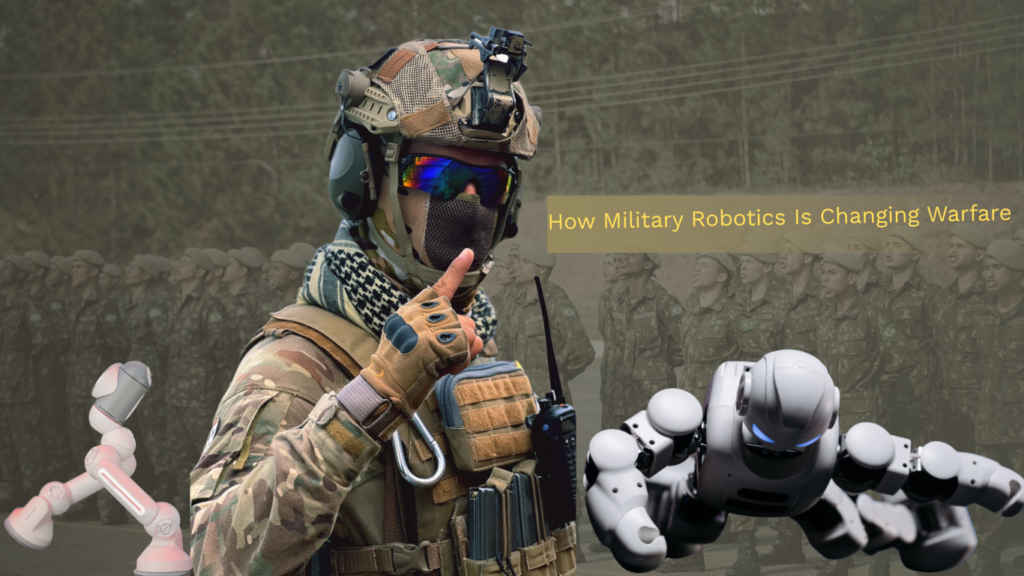
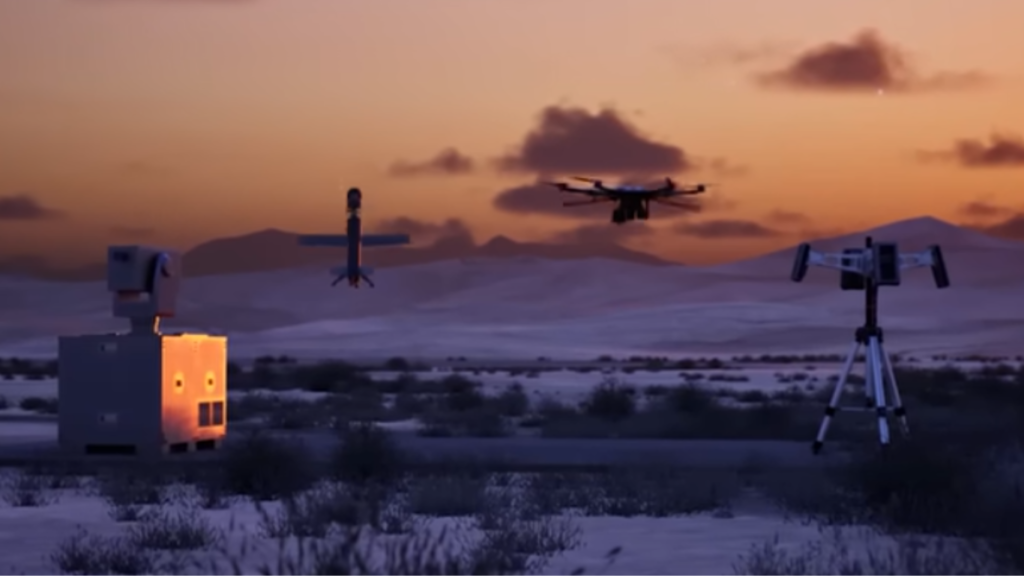
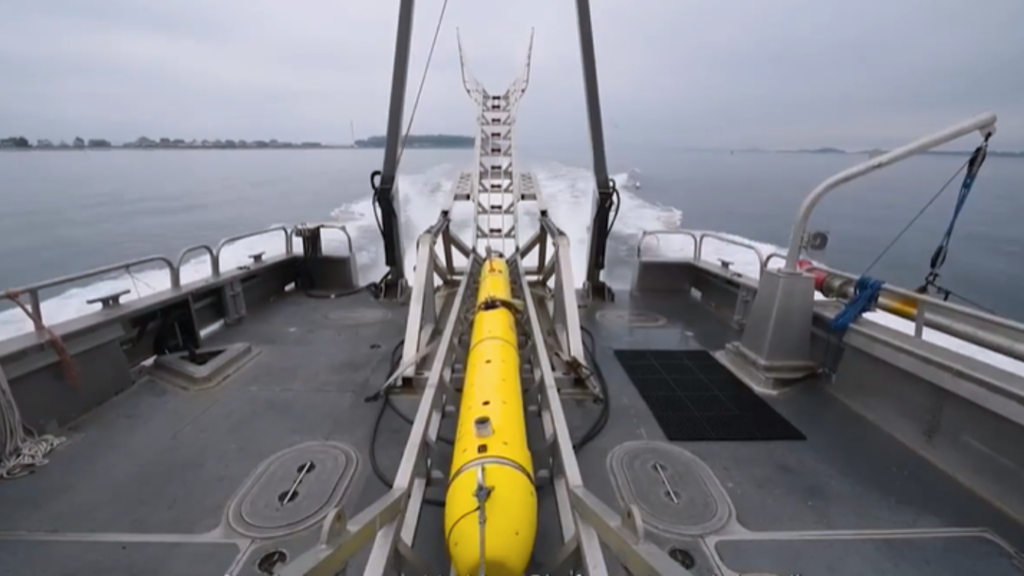
Unmanned systems are no longer experimental. The Future of Life Institute has tracked roughly
200 autonomous weapon systems deployed across Ukraine, the Middle East and Africa,
including some 3,000 Veter kamikaze drones Russia has sent to Ukraine that can autonomously
detect and engage targets. That figure was reported in 2025 and is likely higher now. Ukraine has
also used semi-autonomous drones in the conflict.
The business is growing too. One analysis estimates the autonomous-weapons market at $14.2
billion in 2024, rising to $33.5 billion by 2032. Industry newcomers like Anduril and Shield AI
have positioned themselves as next-generation defense suppliers with Pentagon contracts.
Rules Are Lagging the Technology
Diplomacy is moving much slower than deployment. UN Secretary-General António Guterres
set a 2026 deadline for states to establish clear rules on AI weapon use, building on a 2023
resolution supported by 164 states. But the major powers are split. Many countries want a
binding treaty, while the United States, Russia, China and India prefer national guidelines or
existing international law.
The US position has its own logic. A Pentagon spokesperson told Reuters that existing law is not
insufficient, and that autonomous weapons might pose less risk to civilians than conventional
ones. Human Rights Watch counters that crucial questions of accountability under international
law remain unresolved.
One area of rare agreement is nuclear command. Reports say the United States and China have
pledged to keep AI out of nuclear decision loops.
What to Watch Next
- Whether the UN’s 2026 deadline produces a binding agreement, or just another round of
talks - How Cyber Command’s FY27 AI request fares in Congress
- Whether “human in the loop” holds as AI tools get faster
- How allied and rival militaries, including Ukraine, Russia, China and Europe, adopt
autonomy
The Bottom Line
Military AI is not one technology but three
overlapping trends: faster decisions, faster cyber
operations and more capable machines.
Supporters see better information and
deterrence. Critics see accelerating risk and
weak accountability. Both sides agree on one
thing: the rules need to catch up with the
technology. For readers, the key question is not
whether AI is entering warfare, but who stays
accountable when it does.