How AI Shapes Global Security and Technological Supremacy
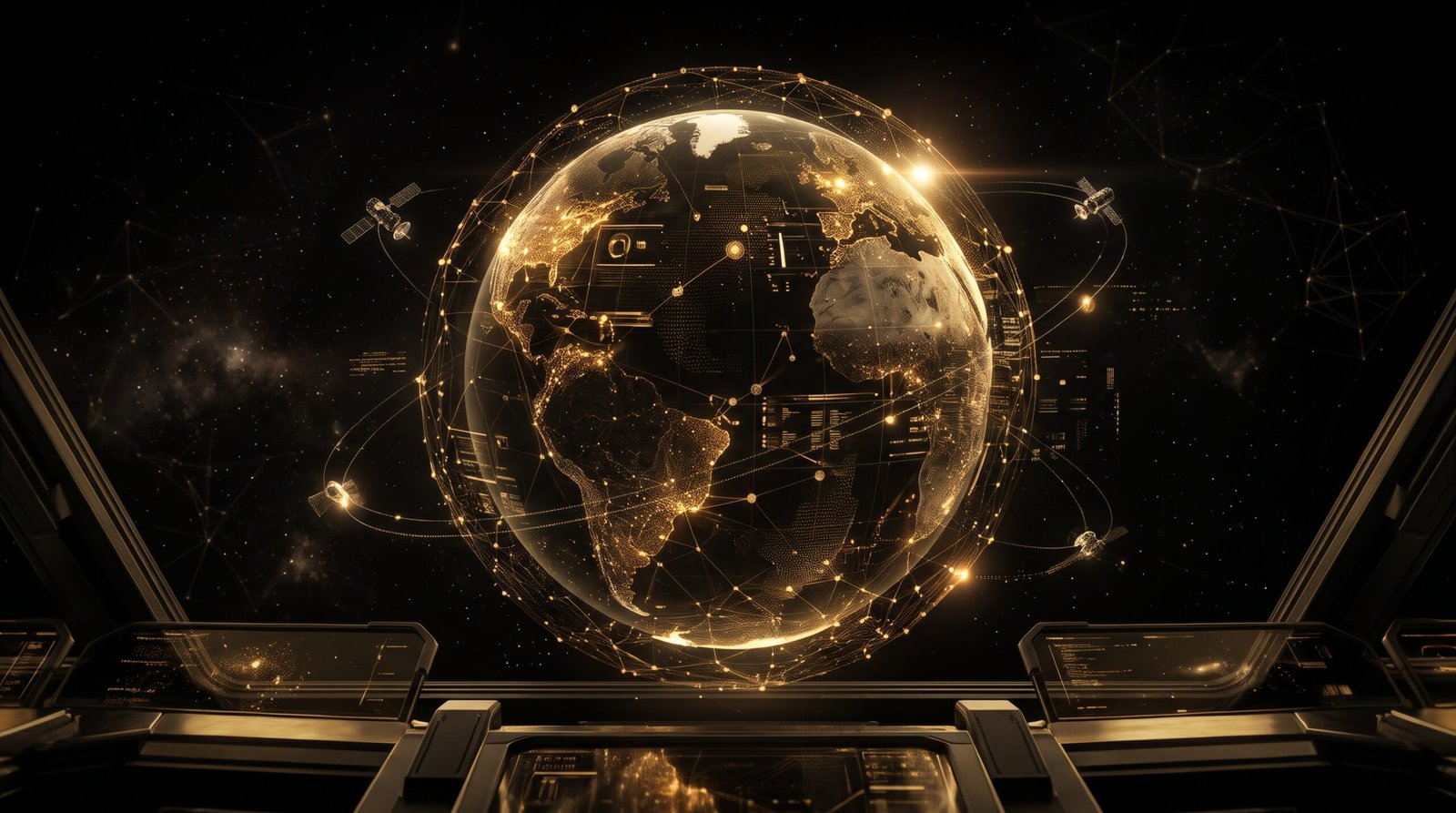
For most of the twentieth century, national power was counted in tanks, warships, and warheads.
Today, a growing share of it is counted in data, computing capacity, and the algorithms that turn raw
information into decisions. Artificial intelligence is no longer a laboratory curiosity or a consumer
gadget. Governments now treat it as a strategic asset, as seriously as energy, oil, or nuclear technology.
This article explains how AI is reshaping global security, why countries are racing for technological
supremacy, and what risks come with that race. It draws on current analysis from think tanks, academic
researchers, and policy writers who are tracking the shift.
Why AI Has Become a National Security Issue
Analysts increasingly describe AI as something far larger than an economic tool. Commentators writing
on the AI arms race argue that it is now a core part of national security, because the same capabilities
that drive commercial productivity also power intelligence analysis, cyber operations, and military
planning.
There are two reasons this matters. First, AI is a general-purpose technology. A paper published by
OpenAI on AI and international security makes the point that, historically, broad technological advances
and long-run shifts in economic strength have shaped the balance of power more than any single
weapon. Second, AI is not confined to one sector. Research from the Silesian University of Technology
notes that, unlike earlier technologies, AI reaches across finance, security management, and warfare at
once. A country that leads in AI therefore gains advantages in several fields at the same time.
AI and Military Power
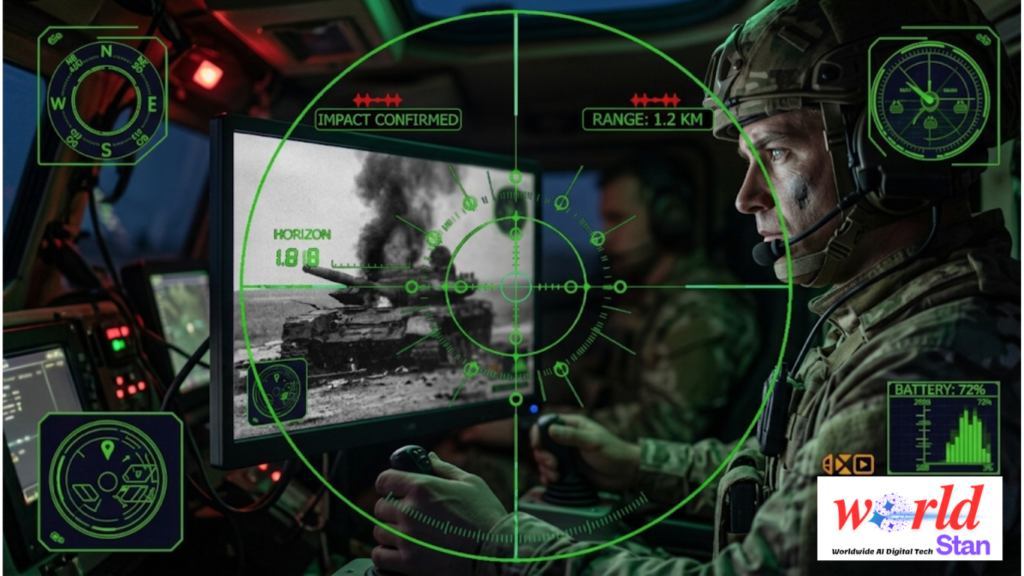
The most visible effect of AI is on how militaries operate. The main areas of change include the
following.
Intelligence, surveillance, and reconnaissance. Modern conflicts generate enormous volumes of
imagery, signals, and sensor data. Analysts at CSIS point to AI-enabled intelligence analysis as a major
shift, because machines can sift through data far faster than human teams and flag what matter
Faster decision cycles. The advantage in a crisis often goes to the side that can observe, decide, and act
first. AI compresses the time between detecting a threat and responding to it. That speed is attractive,
but it also leaves less room for human judgment
Autonomous systems. Drones, unmanned vehicles, and increasingly autonomous platforms are being
tested and fielded by major powers. Researchers and policy groups continue to debate accountability,
proportionality, and compliance with international humanitarian law when machines take part in
targeting decisions.
Deterrence and escalation. CSIS research also examines how military AI affects deterrence. If rivals
cannot be sure how each other’s AI systems will behave, the risk of misreading a situation and escalating
rises.
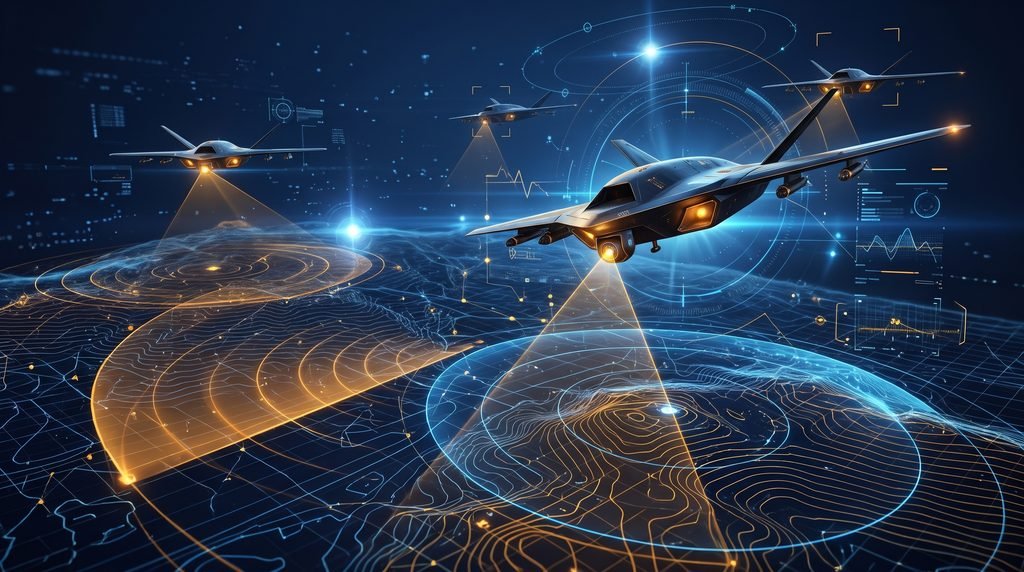
The Space Dimension Where Orbital Data Meets
Security today depends on what can be seen and communicated from orbit. Satellites provide imagery,
missile warning, navigation, and secure communications. Each of these generates vast amounts of data,
and AI is what makes that data usable at speed.
The pattern is simple to describe. Satellites collect, AI interprets, and defense systems act. Automated
analysis of satellite imagery can help detect troop movements, track ships, or monitor infrastructure.
Early-warning systems rely on rapid processing to separate real threats from false alarms. Because this
chain links space, software, and defense, it also creates shared vulnerabilities. A cyberattack on a ground
station, interference with a satellite, or corrupted data feeding an AI model can weaken the whole
system at once..

This orbital angle receives less attention than it deserves in much of the current public discussion, which
tends to focus on the US-China rivalry and on weapons. Yet the integration of AI with space-based assets
is one of the clearest examples of how modern security rests on connected technologies rather than
isolated weapons.
The Race for Technological Supremacy
Governments are investing heavily in AI because leadership in it brings economic, military, and
diplomatic benefits at once.
United States and China. Much of the analysis centers on the competition between these two powers.
Scholarly work on US-China AI rivalry argues that it has consequences across economic, military, and
geopolitical areas. A recent review of the past year suggests this competition is turning into something
like an alignment system, with countries drawn toward one technology ecosystem or the other. Trade
policy is increasingly treated as technology-security policy, with officials now considering not only
advanced chips but wider parts of the AI infrastructure stack as potential vulnerabilities.
Europe. Europe has positioned itself as a global regulator and is working toward technological
sovereignty. Dutch government statements have described dependence on non-European AI providers
as both an economic and a security weakness, which shows how directly governments now link
technology supply to national security.

The Global South. Commentators note that China’s Belt and Road Initiative is expanding AI-related
infrastructure in developing countries, which could shape who sets standards and holds influence in
those regions. At the same time, developing nations worry about an AI divide that could repeat the
inequalities of earlier technological eras.
Behind all of this is a shared idea: whoever sets the technical standards, controls the key infrastructure,
and attracts the best talent will have outsized influence over the international order.
New Threats Cyber and Information Warfare
AI does not only strengthen defenders. It also gives attackers new tools. Reports cited in recent analysis
describe state-linked hacking groups using AI-generated malware to target critical infrastructure. AI can
also be used to produce convincing disinformation at scale, which makes influence operations cheaper
and harder to detect. CSIS has flagged AI-enabled disinformation as a growing threat to information
environments during conflict.

These risks show that supremacy in AI is not only about building powerful systems. It is also about
securing them, since AI models, data, and the networks that support them are targets in their own right.
The Governance Gap
The pace of capability development is outrunning the rules that govern it. Policy analysts repeatedly
point out that international norms for military AI remain underdeveloped compared with how quickly
the technology is advancing. Countries tend to prioritize their own national AI strategies over collective
regulation, and a unified global standard remains out of reach.
Efforts are underway at several levels, including the European Union’s risk-based regulatory approach
and United Nations discussions on inclusive global governance. Still, think tanks such as Carnegie and
CNAS argue that without international cooperation, the risks of an unchecked race will grow. These
include heightened tensions, accidental escalation, and expanded cyber conflict.
Balanced View Opportunity and Risk
It would be a mistake to see AI in security only as a threat. Used well, it can improve early warning,
reduce analyst workloads, support disaster response, and help detect cyber intrusions faster. Some
experts also argue that mutual vulnerability could encourage restraint, as it did during the nuclear era.
However, the same experts caution that the comparison is imperfect. Nuclear weapons are discrete and
countable, while AI is a broad, fast-moving, dual-use technology developed largely by private
companies. That makes verification and arms control
What This Means Going Forward
Several conclusions follow from the evidence so far.
AI is now part of the foundation of national security. It supports intelligence, defense, cyber operations,
and diplomacy, not just individual weapons.
Integration matters more than any single technology. The strongest advantage comes from linking AI,
space-based data, and defense systems into one responsive chain.
Supremacy includes standards and infrastructure. Setting the rules and supplying the underlying
technology can be as powerful as military strength.
Governance must catch up. Without shared norms, speed and secrecy raise the odds of miscalculation.
Smaller and developing nations have a stake. Their access to AI, and their voice in setting standards, will
shape whether the technology widens or narrows global inequality.
Conclusion
AI is changing what it means to be secure and what it means to lead. The countries that pair strong
research and infrastructure with careful governance will be best placed to benefit, while those that treat
the race only as a contest of speed risk making the world less stable for everyone. The central question
is no longer whether AI will shape global security, but whether the world can agree on how.
Sources and Further Reading
- CSIS Wadhwani Center for AI and Advanced Technologies
- Carnegie Endowment for International Peace, Technology and International Affairs Program
- Center for a New American Security (CNAS), AI and Global Security Initiative
- OpenAI, “AI and International Security: Pathways of Impact and Key Uncertainties”
- The Friday Times, “The AI Arms Race: Redefining Global Power and Security”
- Milosavljević, “The Relationship Between Artificial Intelligence and National Security: Geopolitical
Dimensions” - Pliszka, “AI in Geostrategic Security Planning,” Management Papers, Silesian University of Technology
- Journal of Public Policy and International Studies, “The Geopolitical Impact of AI on Global Security and International Relations”