
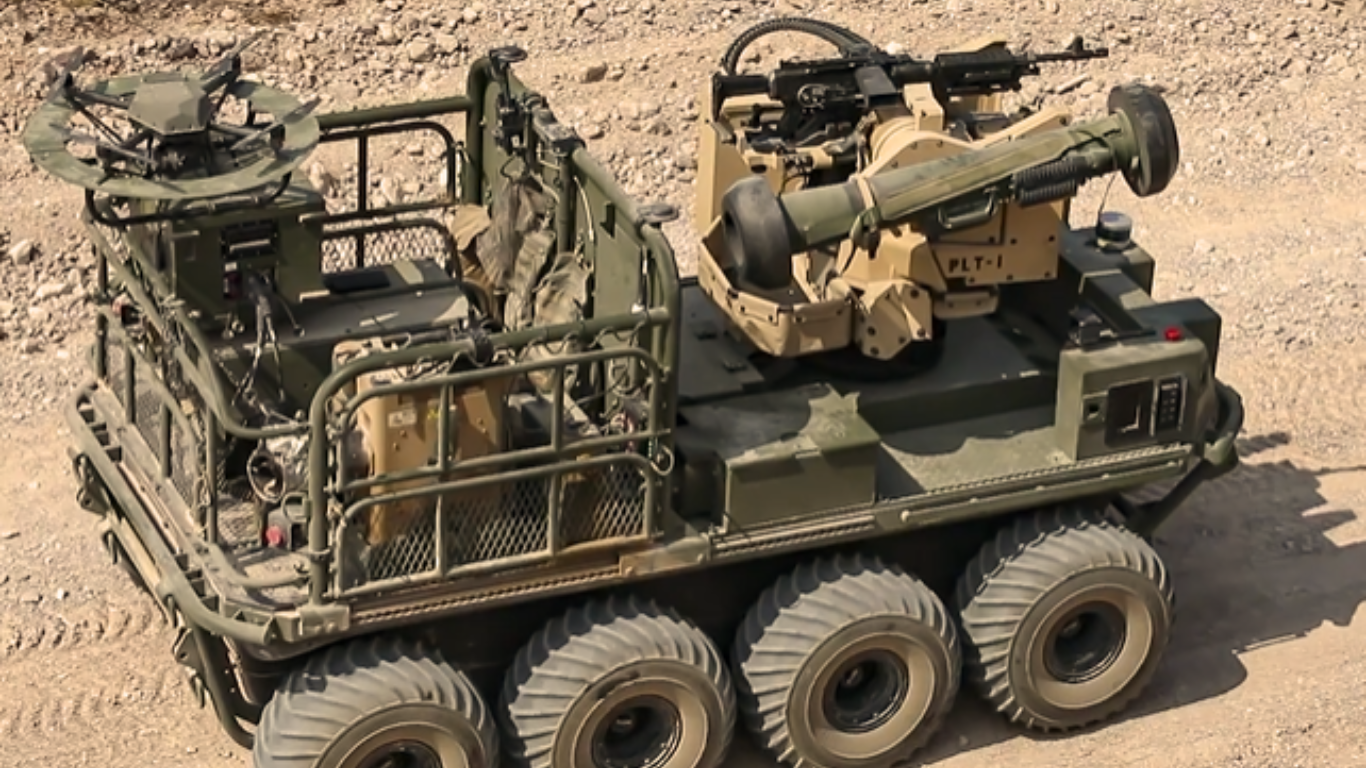
Autonomous tank platoons are no longer a concept of the future they are rapidly becoming a defining force in modern warfare, reshaping how battles are fought, decisions are made, and victories are secured.
Introduction:
Let me take you straight to the battlefield not the one we grew up imagining, filled with human commanders shouting orders and soldiers steering armored vehicles through chaos. Today, that picture is changing fast. Autonomous tank platoons are stepping into the spotlight, and they are not just supporting human forces they are beginning to redefine how wars are fought.
At its core, autonomous tank platoons refer to groups of unmanned ground vehicles (UGVs) that operate with minimal or no human intervention. These are not simple remote-controlled machines. They are intelligent systems capable of analyzing terrain, identifying threats, making decisions, and coordinating with other units in real time.
From my perspective, this shift is not just technological—it is strategic. Nations are investing heavily in AI-driven military systems because they understand one simple truth: speed, precision, and survivability win wars. Autonomous systems offer all three.
In high-intensity conflict scenarios—where seconds matter and human limitations become evident these systems can operate without fatigue, fear, or hesitation. That alone makes them incredibly valuable.
But as exciting as this evolution is, it also raises important questions. Are we ready to trust machines with lethal decisions? Can algorithms truly replace human judgment in unpredictable combat environments? We’ll dive into each of these aspects in depth.
Technical Mechanism:
To understand autonomous tank platoons, you need to look under the hood not just at the machinery, but at the intelligence driving it.
These systems rely heavily on artificial intelligence, sensor fusion, and advanced algorithms. Think of it as a layered brain.
First, there are sensors lots of them. Cameras, LiDAR, radar, infrared systems all working together to create a complete picture of the battlefield. Unlike humans, who rely mainly on sight and sound, these machines can “see” in multiple spectrums simultaneously.
Then comes data processing. The AI takes in massive amounts of information and processes it in real time. It identifies enemy vehicles, distinguishes between combatants and civilians, predicts movement patterns, and even suggests tactical responses.
Now here’s where it gets interesting. These vehicles are not operating alone. In a platoon setup, multiple autonomous tanks communicate with each other through secure networks. This creates a coordinated system where each unit knows what the others are doing.
In my opinion, this is the real breakthrough not just autonomy, but collective intelligence. A single tank is powerful, but a coordinated swarm of intelligent tanks is something entirely different.
The algorithms also allow for adaptive learning. Over time, these systems can improve their decision-making based on past experiences. This means the longer they operate, the smarter they become.
However, let’s keep it real this is not perfect technology. AI still struggles with ambiguity. Complex environments, unexpected civilian presence, or deceptive tactics can confuse even the most advanced systems.
Strategic Advantages:
Now let’s talk about why autonomous tank platoons are being called a game-changer.
The first and most obvious advantage is risk reduction. No human crew means no soldiers inside the tank. This alone changes military calculations. Commanders can deploy these systems in high-risk missions without worrying about casualties.
Second is operational efficiency. Machines do not get tired. They do not need rest, food, or emotional support. They can operate continuously, which is a massive advantage in prolonged conflicts.
Third is speed of decision-making. AI systems can analyze data and respond faster than any human. In high-intensity combat, even a one-second delay can be the difference between survival and destruction.
Another key advantage is precision. Autonomous systems can target threats with a level of accuracy that reduces collateral damage at least in theory. This is especially important in urban warfare scenarios.
From a strategic standpoint, these systems also enable new tactics. Swarm behavior, coordinated attacks, and decentralized operations become possible. Instead of relying on a central command, each unit can make independent decisions while still contributing to the overall mission.
Personally, I believe this decentralization is one of the most important shifts. Traditional warfare relies heavily on hierarchy. Autonomous systems challenge that model by distributing intelligence across the battlefield.
Challenges & Ethical Concerns:
Now, let’s slow down for a moment. This is exactly where the situation starts to get complex.
The biggest challenge is reliability. The capability of AI systems depends entirely on the data they learn from.
In unpredictable environments, errors can happen and in warfare, errors can be deadly.
Cybersecurity is another major concern. If these systems are hacked or manipulated, they could be turned against their own forces. Imagine an entire platoon of autonomous tanks suddenly switching sides. That is not science fiction that is a real risk.
Then there is the ethical debate. Is it right to let machines decide matters of life and death?
This question is not just philosophical it has real-world implications.
From my perspective, the issue is not whether AI will be used in warfare it already is. The real question is how much control we are willing to give it.
There is also the problem of accountability. If an autonomous system makes a mistake, who is responsible? The programmer? The commander? The manufacturer? At present, there are no definitive answers.
International laws are struggling to keep up with this technology. Regulations are either too vague or completely absent. This creates a dangerous gap where powerful systems are being developed without clear guidelines.
Conclusion:
Autonomous tank platoons represent more than just a technological upgrade they signal a fundamental shift in how wars will be fought in the coming decades.
From what I see, this is only the beginning. As AI continues to evolve, these systems will become more capable, more reliable, and more integrated into military operations. The boundary separating human judgment and machine decision-making will keep becoming less clear.
But progress always comes with responsibility. If we move forward without addressing the ethical, legal, and security challenges, we risk creating systems that are powerful but uncontrollable.
The future battlefield will not just be about firepower. It will be about intelligence, speed, and adaptability. Autonomous tank platoons sit right at the center of this transformation.
And here’s my honest take this technology is inevitable. The real challenge is not stopping it, but shaping it in a way that serves humanity, not just strategy.
That is where platforms like Worldstan stand apart bringing clarity, insight, and grounded analysis to a world that is changing faster than ever.
FAQs:
1. What are autonomous tank platoons?
They are groups of AI-powered unmanned tanks that operate together without direct human control in combat situations.
2. How do autonomous tanks make decisions?
They use artificial intelligence, sensors, and real-time data analysis to identify threats and choose actions.
3. Are autonomous tank platoons already in use?
Some militaries are testing and deploying early versions, but full-scale adoption is still evolving.
4. What is the biggest advantage of UGVs in warfare?
They reduce human casualties while increasing operational efficiency and speed.
5. Can autonomous tanks be hacked?
Yes, cybersecurity is a major concern, and systems must be protected against cyber threats.
6. Do autonomous systems replace human soldiers?
Not completely they are designed to support and enhance human decision-making.
7. What is the future of autonomous warfare?
It will likely involve a mix of human and AI collaboration, with increasing reliance on intelligent systems.