

Target Recognition Algorithms in Modern Warfare AI
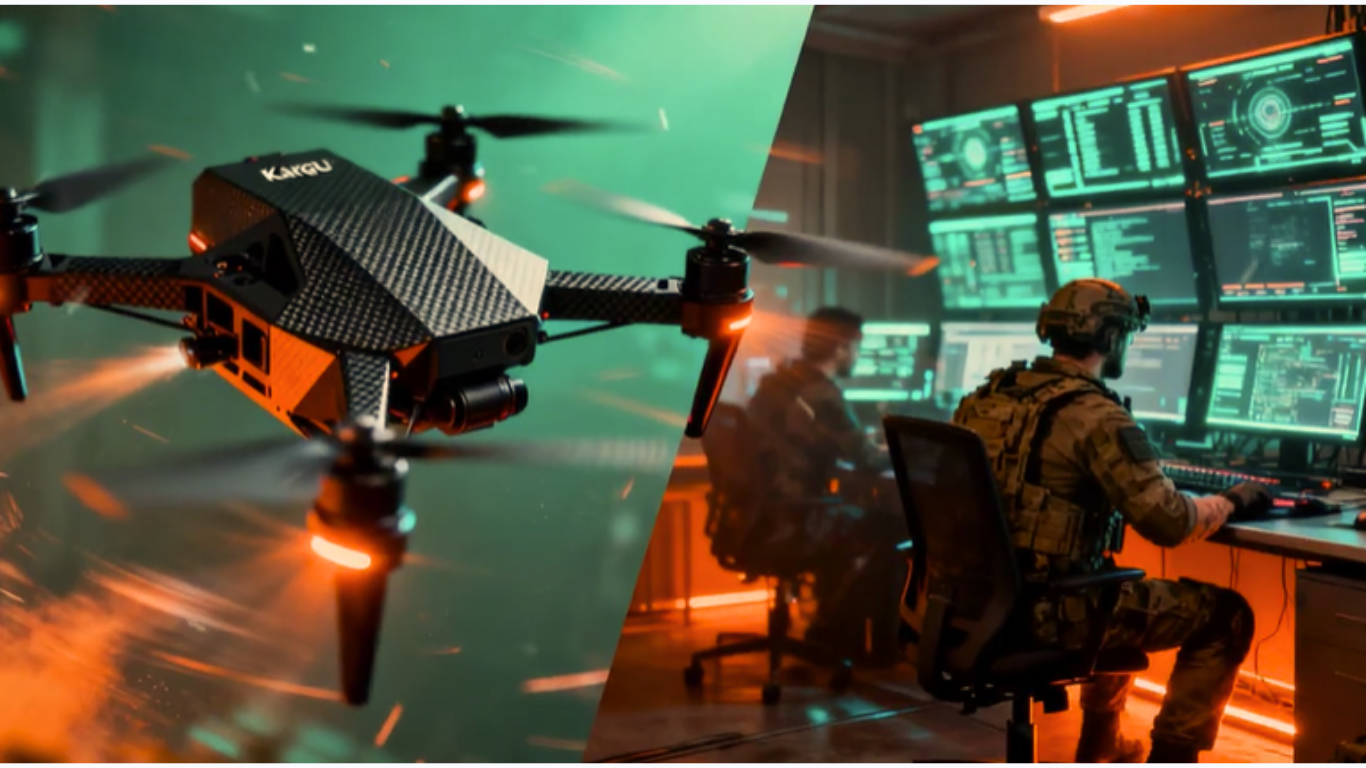
Modern defense systems rely on Target Recognition Algorithms to identify and understand battlefield conditions more effectively. Every second, these intelligent systems analyze enormous amounts of information to support faster decisions, improve operational accuracy, and help military teams respond to complex situations with greater confidence.
How Target Recognition Algorithms Shape AI Defense
Target Recognition Algorithms are transforming military intelligence by helping AI identify threats with greater speed, precision, and data driven decision making.
Target Recognition Algorithms
Modern warfare has entered a completely different era. Military success is no longer determined only by stronger equipment or larger forces. Information has become one of the most valuable strategic assets. Every movement, image, sound, and signal collected on the battlefield can influence critical decisions. Within this environment, Target Recognition Algorithms have become one of the most important technologies supporting military intelligence.
These algorithms allow AI systems to examine vast amounts of visual and sensor information much faster than any person could achieve. Instead of simply displaying data, they identify meaningful patterns that help determine whether an object, vehicle, or individual may represent a potential threat. Their role continues to expand across surveillance operations, autonomous vehicles, border security, intelligence gathering, and battlefield awareness.
Although the technology offers remarkable advantages, it also raises important questions about trust, responsibility, and ethical decision making. Understanding both sides of this technology is essential before appreciating its future impact.
The Rise of Intelligent Battlefield Technology
Target Recognition Algorithms help AI analyze images, sensor data, and movement patterns to identify potential threats. They improve military decision making while still requiring responsible human oversight.
Military operations have always depended on observation. In earlier decades, commanders relied on binoculars, aircraft reconnaissance, human intelligence, and satellite photographs that required extensive manual interpretation.
Today, AI performs much of this analysis automatically. Massive amounts of information arrive from drones, satellites, radar systems, infrared cameras, ground sensors, and communication networks every second. Human analysts alone cannot process such enormous data streams quickly enough.
Target Recognition Algorithms bridge this gap by continuously scanning incoming information, recognizing important patterns, and highlighting objects that deserve immediate attention. Rather than replacing people completely, they provide decision support that allows military personnel to react more quickly.
Historical Development
| Year | Event | Description |
|---|---|---|
| 1960s | Early computer vision research | Scientists began experimenting with automated image analysis for defense applications. |
| 1980s | Digital battlefield sensors | Military forces introduced improved radar and digital imaging systems for reconnaissance. |
| 1990s | Machine learning adoption | Pattern recognition techniques became increasingly capable of classifying military objects. |
| 2000s | Growth of unmanned systems | Drones expanded the demand for automated image interpretation. |
| 2010s | Deep learning revolution | Neural networks dramatically improved recognition accuracy across complex environments. |
| 2020s | AI integrated defense systems | Multiple sensor platforms began working together using intelligent recognition technologies. |
Why Modern Defense Depends on AI Recognition
Military operations have become significantly more complex than they were only a few decades ago. Combat environments now include cyber operations, electronic warfare, autonomous systems, and real time intelligence sharing across multiple locations.
Every second, surveillance platforms collect thousands of images and data points from different parts of the battlefield. Human teams alone cannot review this overwhelming amount of information fast enough to support immediate decision making.
AI recognition systems help bridge that gap by continuously analyzing incoming information while highlighting events that deserve attention. Instead of replacing military personnel, they reduce workload and allow experts to focus on the highest priority situations.
This approach improves situational awareness because commanders receive faster updates regarding troop movement, suspicious vehicles, changing terrain conditions, and potential threats. Better information allows better planning, and better planning often reduces unnecessary risks.
Another important benefit involves consistency. Human attention naturally decreases after long periods of observation. AI systems maintain the same level of analysis throughout extended surveillance missions, making them useful for operations that continue day and night.
AI Has Changed How Machines Observe the Battlefield
Traditional surveillance systems simply recorded information for later review. Modern AI systems actively analyze information while it is being collected.
For example, an autonomous reconnaissance drone flying over a mountainous region may simultaneously receive visual images, thermal information, radar signals, GPS positioning data, and environmental measurements.
Instead of sending every raw image to human analysts, Target Recognition Algorithms evaluate the information immediately. They identify unusual movement, classify vehicles, recognize equipment, estimate confidence levels, and alert military personnel only when something requires attention.
This approach dramatically reduces information overload while allowing commanders to receive more meaningful intelligence within seconds.
One of the key reasons AI plays such an important role in today’s military is its ability to process huge volumes of data instantly.
The Human Role Still Matters
Despite remarkable technological progress, AI remains a decision support tool rather than an independent replacement for experienced military professionals.
Human analysts understand cultural behavior, changing battlefield conditions, civilian activity, and subtle environmental factors that algorithms may struggle to interpret.
For example, AI may detect rapid movement and classify it as suspicious behavior. A trained human observer may recognize that local civilians are simply evacuating an area because of nearby fighting.
This combination of human judgment and AI analysis currently provides the safest and most reliable operational approach.
From my perspective, maintaining meaningful human oversight is not a weakness of AI technology. It is one of its greatest strengths because it combines computational speed with human experience and ethical responsibility.
How Target Recognition Algorithms Work
Understanding how Target Recognition Algorithms operate is much easier when we look at the entire process step by step. Although the technology behind these systems is highly advanced, the basic idea is simple. AI collects information, studies patterns, compares them with what it has already learned, and then estimates what it is seeing.
Unlike people, AI does not understand a battlefield by instinct or experience. It depends entirely on data, mathematical models, and continuous learning. Every decision starts with information gathered from different sensors. The richer and more accurate the information is, the better the recognition results become.
Modern defense organizations use these algorithms because they can process huge amounts of information much faster than any human team. However, speed alone is not enough. Accuracy, reliability, and confidence are equally important.
The Complete Recognition Process
Every recognition task follows a structured workflow. Although different military systems may use different software, the overall process remains very similar.
The first stage is data collection. Cameras, radar systems, infrared sensors, satellites, drones, and ground vehicles continuously gather information from the surrounding environment.
The second stage is preprocessing. Before AI begins its analysis, the collected information is cleaned and organized. Noise is removed, image quality is improved, and unnecessary information is filtered out. This step ensures that the AI works with the clearest possible data.
Next comes feature extraction. Instead of viewing an image as a complete picture, AI breaks it into thousands of measurable characteristics. These include edges, shapes, movement, colors, shadows, temperatures, object sizes, and many other visual details.
After extracting these features, machine learning models compare them with millions of examples learned during training. The system calculates probabilities before deciding whether an object is likely to be a civilian vehicle, military equipment, aircraft, weapon, or another recognized category.
Finally, the AI assigns a confidence score. Instead of saying an object is definitely a tank, it may indicate a ninety-eight percent probability based on all available evidence. Human operators can then review this recommendation before making operational decisions.
Computer Vision Forms the Eyes of AI
Computer vision is one of the most important technologies behind Target Recognition Algorithms.
Human vision is incredibly complex because the brain automatically interprets shapes, colors, depth, movement, and surrounding context. AI must learn each of these abilities separately.
Computer vision teaches machines to recognize visual information by analyzing every image mathematically. Rather than understanding a photograph the way people do, the AI examines numerical patterns representing brightness, contrast, texture, and object boundaries.
As the system receives more training, it becomes increasingly capable of recognizing objects under difficult conditions.
For example, a military vehicle viewed from the front may appear completely different from one viewed from above. Rain, dust, smoke, camouflage, or damaged equipment can further complicate recognition. Advanced computer vision models learn to recognize these variations while maintaining reliable performance.
Another major advantage is continuous observation. AI never becomes distracted or fatigued while monitoring surveillance feeds for extended periods. This consistency makes computer vision extremely valuable during long military operations.
Machine Learning Enables Continuous Improvement
Machine learning gives recognition systems the ability to improve through experience.
Instead of writing detailed programming instructions for every possible situation, engineers provide large collections of labeled training data.
These datasets contain millions of examples representing soldiers, civilians, military vehicles, aircraft, buildings, roads, bridges, vegetation, animals, weather conditions, and countless other battlefield elements.
During training, the AI repeatedly compares its predictions with the correct answers.
Whenever the system makes an incorrect prediction, internal mathematical adjustments improve future performance.
This learning process continues until recognition accuracy reaches acceptable operational standards.
One important lesson I have observed while studying AI development is that the quality of the training data often matters more than the complexity of the algorithm itself. Even the most advanced software cannot produce reliable results if it learns from incomplete or biased information.
Deep Learning Has Revolutionized Recognition
Deep learning represents one of the biggest breakthroughs in modern artificial intelligence.
Unlike earlier machine learning systems, deep learning uses artificial neural networks containing many processing layers. Each layer gradually learns more complex features.
The first layer may detect simple lines and edges.
The second layer identifies corners and curves.
Later layers recognize doors, windows, wheels, uniforms, weapons, or vehicle structures.
Eventually, the entire network combines these observations to classify complete objects with remarkable accuracy.
This layered learning process allows modern recognition systems to identify highly complex battlefield scenes that would have been impossible only a decade ago.
Deep learning also improves recognition when objects are partially hidden, viewed from unusual angles, or surrounded by visual clutter.
Neural Networks Learn Like the Human Brain
Artificial neural networks were inspired by the structure of biological brains, although they operate very differently.
These networks consist of interconnected processing units that exchange mathematical information.
Every connection receives numerical adjustments during training. Stronger connections improve recognition while weaker ones gradually lose importance.
After analyzing millions of examples, the network becomes highly skilled at recognizing relationships between different visual characteristics.
For example, the system may learn that tracked wheels, armored plating, weapon mounts, and heat signatures frequently appear together on armored vehicles.
This ability to discover relationships without explicit programming makes neural networks especially powerful for military recognition tasks.
Sensor Fusion Creates a Complete Picture
A single sensor alone cannot fully capture the complexity of every battlefield environment.
Visible cameras perform well during daylight but struggle in darkness.
Thermal imaging identifies heat sources but cannot always distinguish object details.
Radar performs well in poor weather but produces less detailed images.
Laser sensors measure distance with high precision but provide limited visual information.
Sensor fusion combines all these technologies into one intelligent recognition system.
Imagine an autonomous military vehicle operating during the night.
The visible camera may detect only faint outlines.
The infrared camera identifies body heat.
Radar measures distance and movement.
GPS provides location.
Environmental sensors measure weather conditions.
Instead of treating each source separately, Target Recognition Algorithms merge every piece of information into one detailed assessment.
This combined approach significantly improves recognition accuracy while reducing uncertainty.
AI Works Directly at the Battlefield Edge
Another major advancement is edge AI.
Traditionally, surveillance systems transmitted enormous amounts of data to distant command centers for processing.
This approach introduced communication delays and increased dependence on reliable network connections.
Today, many autonomous platforms perform AI processing locally.
For example, a reconnaissance drone can analyze captured images immediately while flying over an operational area.
Only important intelligence is transmitted back to commanders.
This reduces communication bandwidth, shortens response times, and allows operations to continue even if communication networks become temporarily unavailable.
Edge AI is becoming increasingly important because modern military missions require immediate decisions rather than delayed analysis.
Real Time Recognition During Operations
Speed is one of the defining strengths of AI recognition systems.
Consider a drone monitoring a busy transportation route.
Its cameras capture dozens of detailed, high-resolution images every second.
Without AI, analysts would need considerable time to examine every frame manually.
With Target Recognition Algorithms, the process happens almost instantly.
The AI detects moving objects.
It separates vehicles from pedestrians.
It identifies road conditions.
It estimates travel direction.
It compares vehicle shapes with previously learned military equipment.
It highlights unusual activity requiring further attention.
All of these tasks occur continuously while the drone remains in flight.
This capability allows military personnel to receive updated situational awareness without becoming overwhelmed by raw surveillance data.
Explainable AI Is Becoming Increasingly Important
As recognition systems become more capable, military organizations also want to understand how AI reaches its conclusions.
This is where explainable AI plays a critical role.
Rather than displaying only the final prediction, explainable AI attempts to show the reasoning behind each recommendation.
For instance, the system may indicate that a target was identified because several independent observations matched known characteristics.
These observations may include vehicle dimensions, thermal signatures, movement behavior, radar reflections, and object shape.
Providing this additional information helps operators evaluate AI recommendations with greater confidence.
From my perspective, explainable AI represents one of the most valuable developments in defense research. Fast decisions are important, but understandable decisions are even more valuable when human lives may depend on them.
Why Recognition Is Never Perfect
Although Target Recognition Algorithms continue improving every year, perfect recognition remains impossible.
Unexpected weather conditions, damaged equipment, poor visibility, camouflage, crowded environments, and unfamiliar objects all increase uncertainty.
Even highly advanced AI systems must occasionally deal with incomplete information.
For this reason, responsible military operations continue combining AI analysis with experienced human judgment.
The goal is not to replace military professionals but to provide them with faster, more accurate, and more organized intelligence that supports better decision making under pressure.
In the next part, we will explore how Target Recognition Algorithms provide strategic advantages on the battlefield, examine real-world military applications, discuss autonomous ground vehicles and drones, and look at the future direction of AI-powered defense technologies.
Strategic Advantages of Target Recognition Algorithms
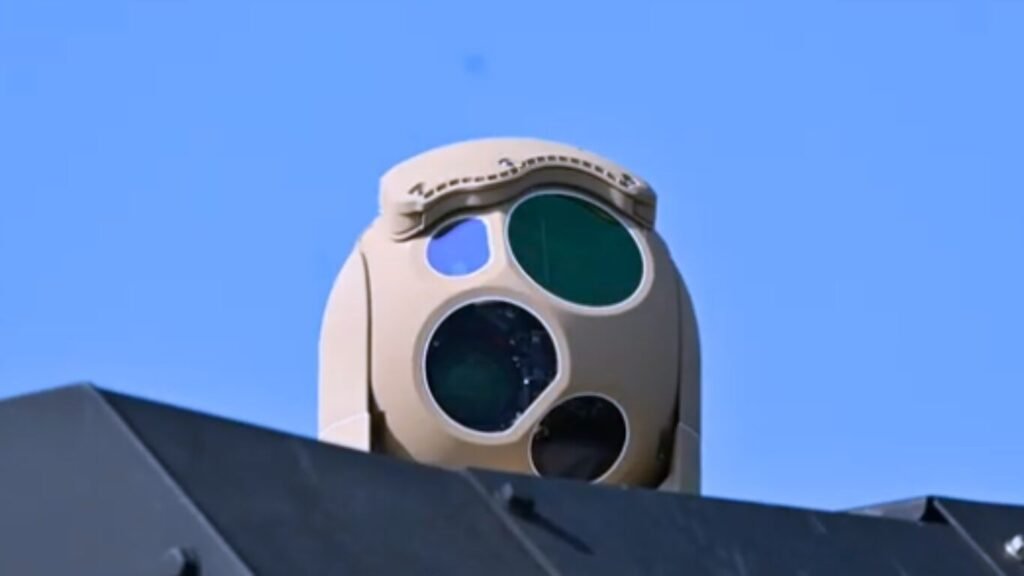
As military technology continues to advance, success on the battlefield increasingly depends on the ability to process information faster than an opponent. This is one of the biggest reasons why Target Recognition Algorithms have become a strategic asset for modern armed forces. They do much more than identify objects in an image. They improve awareness, support faster decisions, and help military commanders respond more effectively in rapidly changing situations.
The true value of these systems is not measured only by their technical capabilities. Their greatest strength lies in how they improve the entire decision making process. By reducing the time required to analyze large amounts of data, they allow commanders to focus on planning and executing operations instead of spending valuable time reviewing thousands of surveillance images.
Faster Decision Making Under Pressure
Military operations often develop within seconds. A delayed response can result in missed opportunities or increased risks for personnel.
Target Recognition Algorithms continuously analyze incoming information and immediately highlight unusual activity. Instead of waiting for analysts to manually examine every image, AI automatically identifies potential threats and sends alerts to command centers.
This rapid processing gives military leaders more time to evaluate options and make informed decisions. Rather than replacing human judgment, AI provides decision makers with organized intelligence that supports faster and more confident actions.
During emergency situations, every second saved may contribute to improved operational outcomes.
Improving Battlefield Awareness
Situational awareness is one of the most important factors in military success.
Commanders need a clear understanding of friendly positions, enemy movements, terrain conditions, civilian activity, weather, and infrastructure before making tactical decisions.
By continuously collecting and evaluating information from multiple sources, Target Recognition Algorithms help produce a clear and comprehensive view of the situation.
For example, a reconnaissance drone may observe a convoy moving through a remote area while ground sensors detect unusual vibrations nearby. At the same time, satellite imagery confirms recent vehicle tracks, and radar identifies additional movement beyond visual range.
AI combines all of these observations into one integrated intelligence report that gives commanders a far better understanding of the situation than any single sensor could provide.
Greater Precision During Military Operations
Precision has become increasingly important in modern defense operations.
Today’s missions often take place in populated urban environments where military targets and civilian infrastructure exist close together.
Target Recognition Algorithms improve precision by helping distinguish between different types of vehicles, equipment, buildings, and human activity.
Instead of relying on broad assumptions, AI evaluates detailed characteristics before estimating whether an object matches known military patterns.
Although no technology guarantees perfect accuracy, improved recognition can help reduce unnecessary damage while supporting more carefully planned operations.
From my perspective, this is one of the most valuable contributions AI can make to modern defense. Better information generally leads to better decisions.
Protecting Military Personnel
One of the primary goals of autonomous technology is reducing unnecessary danger for soldiers.
Reconnaissance missions often require personnel to enter unfamiliar or potentially hostile environments. Autonomous vehicles equipped with Target Recognition Algorithms can perform many of these surveillance tasks without exposing human teams to immediate risk.
Ground robots may inspect suspicious routes.
Unmanned aerial vehicles can monitor enemy positions.
Autonomous surveillance platforms may observe dangerous locations continuously for long periods.
Human operators remain safely positioned at command centers while receiving real time intelligence from these systems.
Although autonomous technology cannot eliminate battlefield risks, it can significantly reduce direct exposure during certain missions.
Supporting Autonomous Military Vehicles
Autonomous ground vehicles have become an important part of modern defense research.
These unmanned platforms are designed to travel across difficult terrain while carrying cameras, sensors, communication equipment, logistics supplies, or reconnaissance systems.
Target Recognition Algorithms act as the vehicle’s primary observation capability.
As the platform moves through an operational area, AI continuously examines roads, obstacles, bridges, buildings, vegetation, vehicles, and nearby human activity.
The system also evaluates whether detected objects require closer inspection or immediate reporting.
Instead of blindly following a predetermined route, intelligent vehicles adapt their movement based on changing environmental conditions.
This flexibility makes autonomous ground systems valuable for reconnaissance, logistics support, engineering tasks, and hazardous area inspection.
AI Powered Military Drones
Few technologies demonstrate the value of Target Recognition Algorithms better than unmanned aerial systems.
Modern military drones can remain airborne for extended periods while collecting enormous amounts of surveillance information.
Without AI assistance, reviewing this continuous stream of images would require large teams of analysts.
Instead, intelligent recognition software automatically detects significant changes, identifies unusual movement, tracks selected objects, and highlights situations requiring human attention.
A surveillance mission that once demanded hours of manual analysis can now produce meaningful intelligence almost immediately.
This capability greatly improves operational efficiency while allowing analysts to concentrate on complex assessments instead of repetitive observation.
Intelligence Gathering and Reconnaissance
Military intelligence depends on accurate information collected before, during, and after operations.
Target Recognition Algorithms strengthen reconnaissance by rapidly identifying changes within monitored areas.
For example, AI may recognize:
- Newly constructed defensive positions.
- Increased vehicle movement.
- Equipment relocation.
- Temporary bridges.
- Supply convoys.
- Damaged infrastructure.
- Suspicious activity patterns.
By comparing current observations with previous intelligence, the system quickly identifies developments that deserve further investigation.
This continuous monitoring provides military planners with a clearer understanding of evolving battlefield conditions.
Border Security Applications
Although frequently associated with combat operations, Target Recognition Algorithms also support border security and national surveillance missions.
Large international borders often include mountains, deserts, forests, rivers, and isolated regions that are difficult for security personnel to monitor continuously.
Autonomous surveillance towers, aerial drones, radar systems, and thermal cameras equipped with AI recognition software help identify unusual movement while reducing the workload placed on border security teams.
Instead of monitoring every sensor continuously, officers receive alerts only when the system detects activity that matches predefined security criteria.
This approach improves operational efficiency while allowing limited personnel to supervise much larger geographic areas.
Maritime Defense Operations
Naval forces also benefit from intelligent recognition systems.
Modern oceans contain commercial vessels, fishing boats, research ships, naval fleets, and countless other moving objects.
Target Recognition Algorithms help classify these vessels by examining characteristics such as size, movement patterns, thermal signatures, radar reflections, and navigation behavior.
Combined with satellite monitoring and maritime surveillance aircraft, AI improves awareness across vast ocean regions where manual observation would be extremely difficult.
As autonomous naval systems continue developing, intelligent recognition will become an increasingly important component of maritime security.
Air Defense and Early Warning
Air defense systems operate under extremely demanding conditions.
Aircraft, helicopters, unmanned aerial vehicles, cruise missiles, and other airborne objects move rapidly through large areas of airspace.
Target Recognition Algorithms assist air defense operators by continuously analyzing radar returns, flight characteristics, altitude, speed, direction, and electronic signatures.
Rather than displaying every detected object equally, AI prioritizes contacts requiring immediate evaluation.
This organized presentation helps operators maintain awareness while reducing information overload during complex air defense operations.
AI Supports Human Decision Makers
One common misunderstanding is that AI independently controls military operations.
In reality, most modern defense organizations continue using a human in the loop approach.
Under this model, Target Recognition Algorithms perform rapid analysis while experienced military personnel review the results before critical operational decisions are made.
This partnership combines the strengths of both sides.
AI contributes speed, consistency, and large scale data processing.
Humans contribute judgment, ethics, operational experience, and contextual understanding.
Together, they produce more reliable decision making than either could achieve independently.
Real World Operational Perspective
Consider an autonomous reconnaissance vehicle operating near a disaster affected conflict zone.
Its sensors detect several moving vehicles approaching an abandoned industrial facility.
The AI immediately begins analyzing the situation.
It identifies vehicle size.
It estimates travel speed.
It compares movement patterns with previous intelligence.
It evaluates thermal signatures.
It checks satellite information collected earlier in the day.
After combining all available observations, the system concludes that additional human review is necessary rather than making an automatic operational recommendation.
Military analysts examine the evidence before deciding the appropriate response.
This example illustrates how Target Recognition Algorithms function as powerful intelligence assistants instead of independent decision makers.
The Future of Target Recognition Algorithms
Research in AI continues advancing at an extraordinary pace.
Future recognition systems are expected to become more adaptable, transparent, and resilient under difficult battlefield conditions.
Several important developments are already shaping the next generation of defense technology.
Improved edge AI will allow autonomous systems to process more information locally without depending on distant data centers.
More advanced computer vision models will recognize objects even during heavy rain, smoke, darkness, or partial camouflage.
Better sensor fusion will combine information from satellites, drones, ground vehicles, naval platforms, and airborne systems into one continuously updated operational picture.
Explainable AI will provide clearer reasoning behind recognition decisions, helping military personnel understand why the system reached a particular conclusion.
Cybersecurity protections will become increasingly important to defend recognition systems against electronic attacks, data manipulation, and unauthorized interference.
Adaptive machine learning will allow algorithms to improve continuously while responding to changing operational environments.
From my perspective, the future of Target Recognition Algorithms will not depend solely on faster software or more powerful hardware. Their long term success will be determined by how responsibly governments, researchers, and defense organizations balance technological innovation with ethical responsibility, international law, and meaningful human oversight.
The next and final part will examine the challenges, ethical concerns, legal questions, accountability issues, responsible AI development, and conclude with the future outlook and exclusive Worldstan conclusion.
Challenges Facing Target Recognition Algorithms
Although Target Recognition Algorithms have become one of the most important technologies in modern defense, they are not without limitations. Every AI system performs only as well as the information it receives and the way it has been trained. Even the most advanced models can produce incorrect results if they encounter situations they have never seen before.
As military organizations continue investing in autonomous systems, understanding these limitations is just as important as recognizing the technology’s strengths. Responsible innovation requires continuous testing, human supervision, and clear operational standards.
Accuracy Depends on Training Data
The performance of any AI recognition system begins with its training data.
Machine learning models study millions of images, sensor readings, radar signals, and other forms of information before learning how to identify different objects. If this information is incomplete, outdated, or poorly balanced, the algorithm may develop inaccurate recognition patterns.
For example, a system trained mainly with images collected in desert environments may struggle when operating in forests, snowy landscapes, or crowded cities. Likewise, differences in weather, lighting, camouflage, or damaged equipment may reduce recognition accuracy.
This is why defense researchers continuously update training datasets with information collected from a wide variety of operational environments.
Environmental Conditions Remain Challenging
Real battlefields are unpredictable.
Smoke from explosions, heavy rain, thick fog, blowing sand, dense vegetation, and damaged infrastructure all reduce visibility. These changing conditions make object recognition significantly more difficult.
Even when multiple sensors are combined, environmental factors can introduce uncertainty.
A thermal camera may identify body heat but fail to distinguish between a soldier and a rescue worker wearing protective equipment.
Radar may detect movement without providing enough detail for accurate classification.
Visible cameras may struggle during darkness or when objects are partially hidden.
Modern AI attempts to overcome these limitations through sensor fusion, but no system can eliminate every challenge completely.
Understanding Human Behavior
One of the greatest differences between people and machines is contextual understanding.
Humans naturally interpret emotions, social behavior, cultural practices, and unexpected actions based on experience.
AI analyzes measurable patterns.
This difference becomes important during complex military operations.
A civilian running through a damaged neighborhood may simply be searching for family members.
An AI system could mistakenly interpret rapid movement as suspicious behavior if sufficient contextual information is unavailable.
Likewise, someone carrying construction equipment may appear similar to an individual carrying military equipment when viewed from long distances.
Human judgment remains essential for interpreting these complex situations.
The Risk of False Positives and False Negatives
Every recognition system faces two important challenges.
A false positive occurs when AI incorrectly identifies a harmless object as a threat.
A false negative occurs when AI fails to recognize an actual threat.
Both situations create operational risks.
False positives may lead to unnecessary responses or wasted resources.
False negatives may allow genuine threats to remain undetected.
Reducing these errors remains one of the primary goals of ongoing AI research.
Researchers continuously improve datasets, algorithms, and evaluation methods to increase reliability across different operational environments.
Cybersecurity Risks
Modern military AI systems rely heavily on digital information.
Like any connected technology, they may become targets for cyber attacks.
An attacker who successfully manipulates incoming data could potentially confuse recognition systems or reduce their accuracy.
Examples include:
- Altering surveillance images.
- Introducing misleading sensor data.
- Disrupting communication networks.
- Attempting to interfere with machine learning models.
- Launching electronic attacks against autonomous platforms.
For this reason, cybersecurity has become an essential component of every modern AI defense system.
Protecting recognition software is just as important as improving its intelligence.
Accountability in AI Decision Making
One of the most discussed issues surrounding autonomous military technology is accountability.
When a human makes an operational decision, responsibility is generally clear.
When AI contributes to that decision, responsibility becomes more complex.
Questions continue to be debated by governments, legal experts, military organizations, and technology researchers.
Who is responsible if an AI recommendation proves incorrect?
Is responsibility shared between software developers, military commanders, equipment manufacturers, and system operators?
Can autonomous systems ever be trusted to make completely independent decisions?
At present, most defense organizations maintain that humans must remain responsible for final operational decisions involving the use of force.
It maintains clear human responsibility while enabling AI to assist with faster and more informed decision-making.
Ethical Considerations
Ethics has become one of the defining discussions surrounding military AI.
Target Recognition Algorithms can improve operational precision, but they also introduce difficult moral questions.
Many experts believe AI should never be allowed to make life and death decisions without meaningful human involvement.
I personally support this position.
Technology should strengthen human decision making rather than replace human responsibility.
AI performs exceptionally well when analyzing enormous amounts of information, identifying patterns, and highlighting possible threats.
However, moral judgment, compassion, legal responsibility, and ethical reasoning remain uniquely human qualities.
Maintaining this balance will be essential as autonomous systems become more capable.
International Laws and Global Standards
As AI becomes more common in defense operations, many countries are working to establish legal frameworks governing its responsible use.
International humanitarian law already provides important principles regarding military operations, including proportionality, distinction, necessity, and protection of civilians.
Future AI systems will likely need to demonstrate compliance with these principles through transparent operational procedures and meaningful human oversight.
International cooperation may also encourage common technical standards that improve safety, accountability, and interoperability between allied nations.
Although regulations continue evolving, responsible governance will remain an essential part of military AI development.
Responsible Development for the Future
The future of Target Recognition Algorithms should not focus only on increasing processing speed or improving recognition accuracy.
Responsible innovation requires equal attention to transparency, fairness, cybersecurity, explainability, testing, and continuous evaluation.
Researchers are already exploring several promising improvements.
More diverse training datasets will reduce recognition bias.
Explainable AI will help operators understand why recommendations were generated.
As battlefield environments evolve, adaptive machine learning will help recognition systems remain accurate and effective.
Advanced cybersecurity protections will defend recognition systems against digital threats.
Improved human machine collaboration will ensure experienced personnel remain actively involved in important operational decisions.
These developments will help create AI systems that are not only more intelligent but also more trustworthy.
Final Thoughts
Target Recognition Algorithms have become one of the defining technologies of twenty first century defense innovation. They combine artificial intelligence, computer vision, machine learning, and advanced sensor technologies to help military organizations understand complex environments with remarkable speed and efficiency.
Their contribution extends far beyond simple object detection. They improve reconnaissance, strengthen situational awareness, support autonomous vehicles, assist intelligence analysis, and help commanders process enormous amounts of battlefield information in real time.
At the same time, these systems remind us that technological progress always carries responsibility. Accuracy, transparency, cybersecurity, ethics, and meaningful human oversight must remain central to every stage of development and deployment.
From my perspective, the future of military AI should never be measured solely by how intelligent machines become. Its true success will depend on how wisely people choose to design, regulate, and supervise these technologies. Innovation should always serve humanity by improving safety, reducing unnecessary risks, and supporting informed decision making rather than replacing human judgment.
Conclusion
Target Recognition Algorithms are reshaping the future of defense by enabling AI to recognize potential threats faster, analyze vast amounts of battlefield data, and support more informed military decisions. As research continues, these systems will become more capable, more transparent, and better integrated with modern defense operations. However, their greatest value will always depend on responsible human oversight, reliable data, strong cybersecurity, and clear ethical standards.
The future battlefield will not be defined only by advanced weapons or autonomous machines. It will be defined by intelligent systems that help people make better decisions under the most challenging conditions. When innovation and responsibility move forward together, AI can become a powerful force for improving security while protecting human values.
This comprehensive research and expert analysis has been created exclusively for worldstan.com, where AI, defense technology, and future innovation are explored with depth, accuracy, and a commitment to delivering original, trustworthy, and reader focused content.