

AI Last Mile Resupply Changing Battlefield Logistics
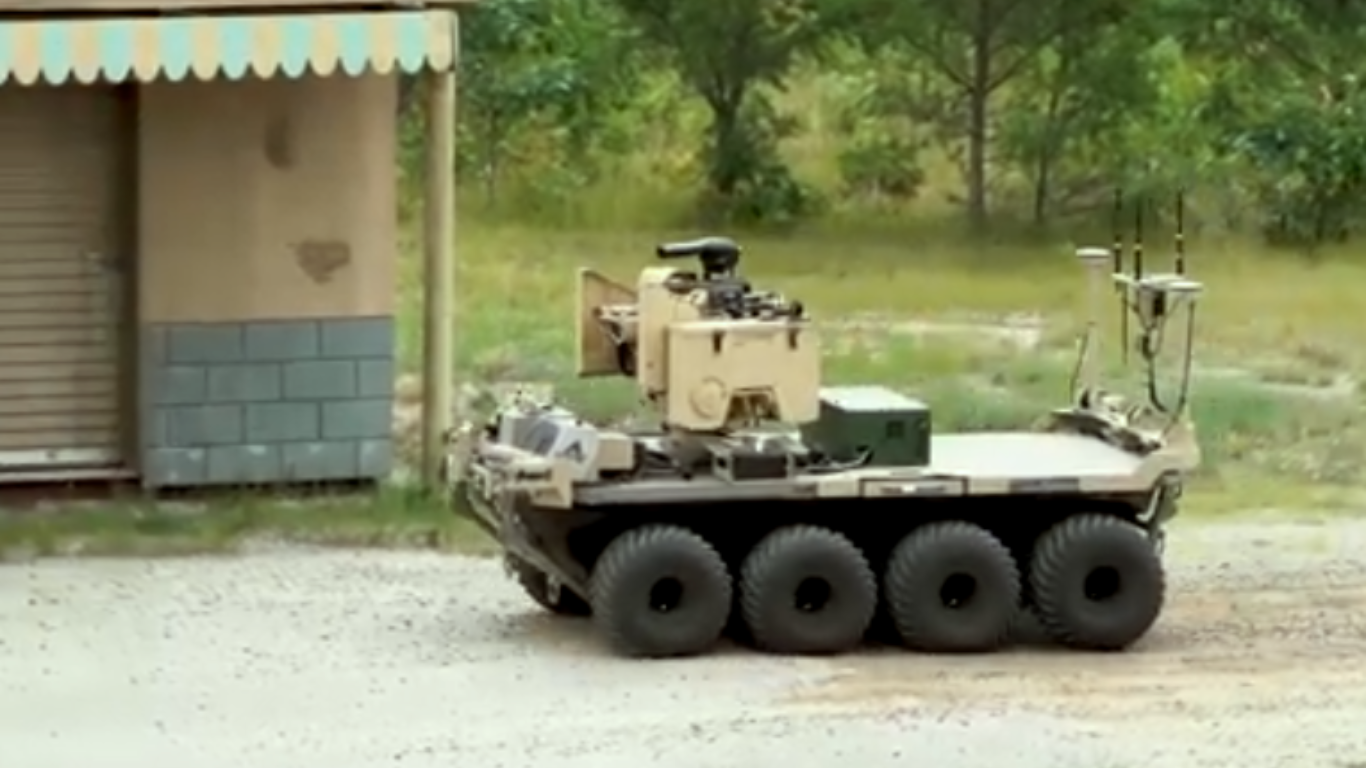
AI Last Mile Resupply is changing how essential supplies reach people when every second matters. This guide explores how intelligent logistics systems improve battlefield survival, reduce risks, and shape the future of military and civilian supply networks with practical, easy-to-understand insights.
AI Last Mile Resupply
AI Last Mile Resupply is transforming military logistics with autonomous systems that deliver supplies faster, safer, and more efficiently in high risk environments.
Modern warfare depends on much more than advanced weapons and surveillance systems. Behind every successful mission is a reliable logistics network that keeps soldiers supplied with food, fuel, medical equipment, ammunition, and communication tools. No matter how capable a military force may be, it cannot operate for long without a steady flow of essential resources.
AI Last Mile Resupply introduces a smarter way to solve one of the biggest challenges in military logistics. Instead of relying only on traditional supply convoys, intelligent autonomous systems can transport critical supplies to frontline positions while reducing the danger faced by human personnel. These systems make logistics faster, more flexible, and better prepared for unpredictable battlefield conditions.
From my perspective, this technology deserves far more attention because logistics has always been one of the deciding factors in military success. Powerful equipment becomes ineffective if it cannot be supported by continuous supplies.
Understanding the Last Mile Challenge
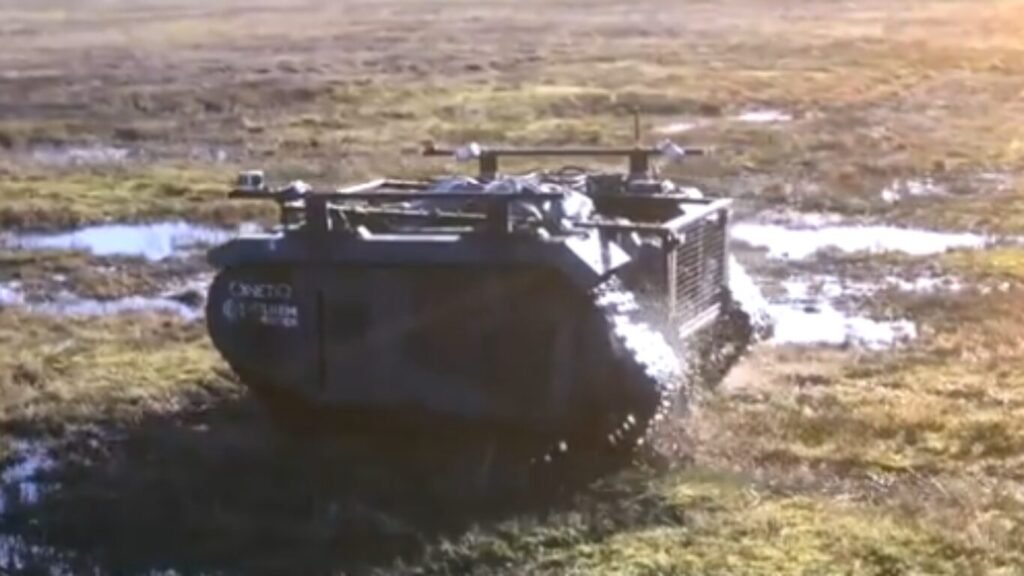
AI Last Mile Resupply uses autonomous vehicles and intelligent routing to deliver essential supplies safely to frontline forces. It improves battlefield logistics by reducing delays, lowering risks, and maintaining continuous operational support.
The phrase last mile refers to the final stage of delivering supplies from a secure logistics hub to soldiers operating in active combat zones. Although it sounds like a short journey, it is often the most dangerous part of the entire supply chain.
Traditional supply vehicles usually follow roads and predictable routes. These routes can easily become targets for enemy surveillance, artillery, drones, or ambushes. Every journey places drivers and escort teams at significant risk while also increasing the chance that supplies never reach their destination.
AI Last Mile Resupply changes this process by allowing autonomous vehicles to complete these missions without exposing large numbers of personnel to danger. Intelligent systems continuously monitor their surroundings and make decisions while moving through complex environments.

How AI Makes Logistics Smarter
Artificial intelligence allows autonomous logistics platforms to process information much faster than traditional navigation systems. Multiple sensors collect data about terrain, weather conditions, obstacles, and possible threats. Machine learning models analyze this information almost instantly to determine the safest and most efficient route.
Rather than following a fixed map, AI adapts throughout the mission. Every movement is based on current conditions instead of assumptions made before deployment.
Let me explain this in the clearest, simplest terms.
Imagine sending a delivery vehicle through a city where roads suddenly close every few minutes. A normal navigation system might struggle to keep up. An AI powered logistics system continuously studies every available path and quickly selects a better option without stopping the mission.
That ability to adapt makes autonomous logistics significantly more dependable.
Evolution of Military Logistics
Military logistics has continuously evolved alongside technological progress. Each major innovation has improved the speed, efficiency, and reliability of supplying armed forces.
| Year | Event | Description |
|---|---|---|
| Ancient Era | Organized military supply lines | Armies depended on animal transport and local resources to sustain operations. |
| 1800s | Railway logistics | Rail networks allowed faster transportation of troops and military equipment. |
| Early 1900s | Motorized transport | Trucks increased supply speed and operational flexibility. |
| Mid 1900s | Airlift logistics | Aircraft enabled rapid delivery of supplies across long distances. |
| Early 2000s | Digital logistics systems | GPS and digital tracking improved supply chain visibility. |
| 2020s | AI Last Mile Resupply | Autonomous systems began supporting frontline logistics with intelligent navigation and real time decision making. |
Stealth Pathfinding
One of the most remarkable capabilities of AI logistics is stealth pathfinding.
Instead of selecting the shortest road, intelligent systems evaluate the safest route based on terrain, visibility, enemy activity, and environmental conditions. Hills, forests, damaged buildings, and natural cover become valuable navigation resources.
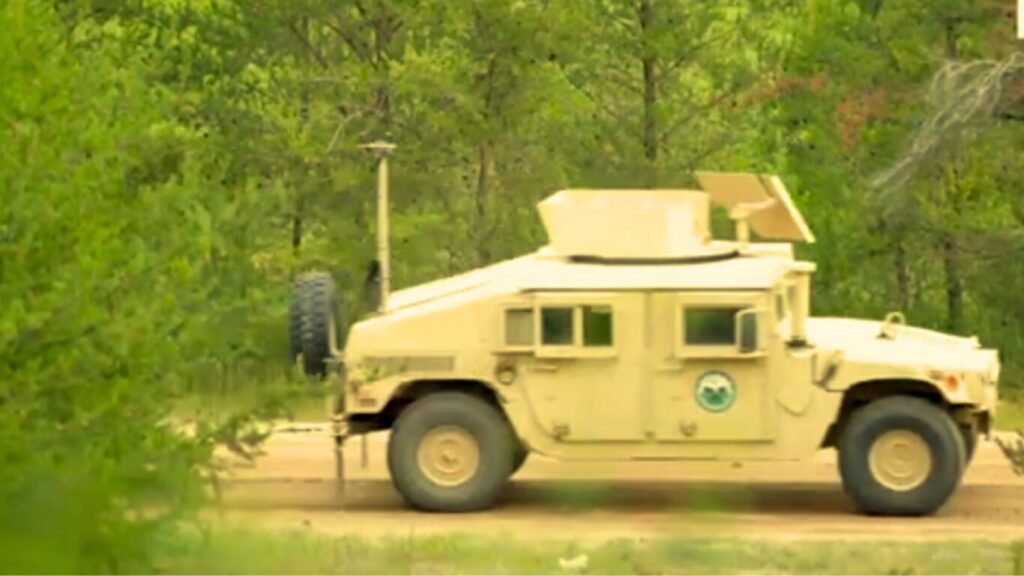
An autonomous ground vehicle can travel through areas that reduce its visibility while avoiding locations where enemy drones or surveillance equipment are most active.
In my opinion, this represents one of the greatest strengths of AI because the system does not simply obey instructions. It continually evaluates changing conditions and adjusts accordingly.
Dynamic Rerouting
Battlefields rarely remain predictable for long.
Roads become blocked, bridges collapse, weather changes suddenly, and new threats appear without warning. Traditional logistics often slows dramatically under these circumstances because operators must manually create alternative plans.
AI Last Mile Resupply solves this problem through dynamic rerouting.
As new information becomes available, the system automatically calculates safer routes while continuing toward its destination. This reduces delays and helps maintain continuous support for frontline forces.
The practical value extends well beyond military operations. Similar technologies are already improving commercial transportation, warehouse management, and emergency response services.
Swarm Logistics
Rather than depending on one large transport vehicle, AI logistics increasingly relies on coordinated groups of smaller autonomous platforms.
This concept is known as swarm logistics.
Each vehicle carries part of the required supplies while communicating with the others. If one unit encounters difficulties, the remaining vehicles continue delivering their cargo.
This decentralized approach offers several important advantages.
- Reduced operational risk
- Greater delivery flexibility
- Faster supply distribution
- Higher mission success rates
- Improved adaptability during unexpected situations
Nature offers an excellent comparison. Ant colonies successfully transport food because many individuals cooperate instead of relying on one large carrier. AI swarm logistics follows a similar principle while using advanced communication and decision making technologies.
Tactical Sustainment
Military operations require continuous support rather than occasional deliveries.
Tactical sustainment focuses on ensuring that soldiers always have access to essential resources throughout extended missions. Every supply delivered at the right moment improves operational effectiveness and can directly influence mission success.
AI Last Mile Resupply contributes to tactical sustainment by shortening delivery times, reducing transportation risks, and maintaining supply continuity even under difficult battlefield conditions.
Medical equipment, replacement batteries, communication devices, engineering tools, food, clean water, and ammunition can all be delivered through autonomous systems.
From my perspective, one of the greatest benefits is the reduced exposure of logistics personnel to dangerous environments. Protecting lives while maintaining operational readiness represents a significant achievement.
Real World Applications Beyond Defense
Although developed for military purposes, autonomous logistics has enormous civilian potential.
Emergency management agencies can use similar systems after earthquakes, floods, hurricanes, or wildfires when roads become inaccessible.
Healthcare organizations could deliver medicine to isolated communities.
Humanitarian agencies may transport food and emergency supplies into disaster affected regions.
Mining operations, offshore facilities, and remote scientific research stations could also benefit from autonomous supply systems where conventional transportation remains difficult.
This demonstrates that AI Last Mile Resupply is not limited to defense. It represents a broader transformation in global logistics.
Cybersecurity and Operational Safety
Every intelligent logistics platform depends on secure digital communication.
Autonomous systems must resist hacking attempts, signal interference, GPS disruption, and unauthorized access. Developers are strengthening these systems through encrypted communication, secure authentication, redundant navigation technologies, and continuous software monitoring.
Cybersecurity will remain one of the most important areas of development because reliable logistics depends not only on physical movement but also on trustworthy digital infrastructure.
Human oversight continues to play an essential role by monitoring operations, reviewing unusual situations, and making critical strategic decisions.
Environmental and Technical Challenges
Despite impressive progress, several challenges remain before autonomous logistics reaches its full potential.
Battery capacity limits mission duration.
Extreme weather may reduce sensor performance.
Complex terrain can present unexpected obstacles.
Communication interruptions may affect coordination between autonomous units.
Fortunately, researchers continue improving batteries, artificial intelligence models, sensor accuracy, satellite communications, and autonomous navigation systems. Each improvement makes future logistics more reliable and practical.
The Role of Human Decision Making
Some people worry that autonomous systems will replace logistics professionals.
I see the future differently.
AI performs repetitive calculations, analyzes large amounts of information, and responds rapidly to changing conditions. Human experts contribute strategic planning, ethical judgment, creativity, and experience.
The strongest logistics systems combine intelligent automation with skilled human supervision. This partnership allows technology to improve efficiency while people remain responsible for mission planning and oversight.
Why AI Last Mile Resupply Matters Today
Global security environments continue to evolve rapidly. Military organizations increasingly require logistics systems that can operate under constant pressure while responding immediately to changing conditions.
AI Last Mile Resupply provides exactly that capability.
It improves operational resilience, protects personnel, accelerates deliveries, and supports missions that would otherwise involve significant risks.
Beyond defense, the same technological principles have the potential to reshape commercial transportation, humanitarian assistance, emergency response, and remote infrastructure support.
From everything I have studied, this is one of the most practical and meaningful applications of artificial intelligence because it focuses on solving real operational problems while protecting human lives.
AI Last Mile Resupply
Modern warfare is often associated with advanced fighter aircraft, precision missiles, cyber operations, and satellite intelligence. While these technologies play an important role, there is another capability that quietly determines whether military operations succeed or fail. That capability is logistics. Every soldier, vehicle, aircraft, and command center depends on a continuous flow of food, fuel, medical supplies, ammunition, spare parts, and communication equipment. Without reliable logistics, even the strongest military force quickly loses its effectiveness.
AI Last Mile Resupply is transforming this critical part of military operations. Instead of relying entirely on traditional supply convoys that expose personnel to danger, intelligent autonomous systems are making it possible to deliver essential resources more safely, efficiently, and accurately. These technologies are changing how supplies move through conflict zones while reducing risks for military personnel.
From my perspective, logistics has always been one of the least understood aspects of modern warfare. People often focus on weapons because they are highly visible, but history repeatedly shows that supply chains decide the outcome of many conflicts. An army with superior equipment cannot continue fighting if it runs out of ammunition, fuel, or medical support. This is exactly why AI powered logistics has become one of the most important innovations in defense technology.
Understanding AI Last Mile Resupply
AI Last Mile Resupply refers to the use of artificial intelligence, autonomous vehicles, advanced sensors, and intelligent navigation systems to transport supplies during the final stage of military logistics. The final stage, commonly called the last mile, involves moving essential resources from a secure logistics base directly to frontline troops operating in high risk environments.
This final journey may only cover a few kilometers, but it is often the most dangerous part of the entire supply chain. Enemy surveillance systems, drones, artillery strikes, roadside threats, damaged infrastructure, and unpredictable battlefield conditions make traditional deliveries extremely risky.
Artificial intelligence changes this process completely. Instead of sending human drivers through hazardous routes, autonomous vehicles can perform many of these missions independently while continuously analyzing their surroundings and adjusting their movement according to changing conditions.
Unlike conventional navigation systems that simply follow preplanned routes, AI powered logistics platforms evaluate thousands of data points every second. They assess terrain, weather, obstacles, communication signals, satellite positioning, and possible enemy activity before selecting the safest path.
The result is a logistics system that becomes smarter throughout the mission rather than remaining fixed to an outdated plan.
Why Logistics Wins Wars
Military history consistently demonstrates that successful operations depend on supply chains just as much as combat capability. Every military campaign requires enormous amounts of fuel, ammunition, medical equipment, food, replacement parts, batteries, communication systems, and engineering materials.
Even the most advanced combat vehicle becomes useless when it cannot be refueled. Soldiers cannot continue operating effectively without reliable access to food, water, protective equipment, and medical assistance.
This is why military planners often describe logistics as the foundation of operational readiness.
Throughout history, commanders who maintained stronger supply networks usually achieved greater success than those relying solely on superior firepower.
The importance of logistics has remained constant even as warfare has evolved.
| Year | Event | Description |
|---|---|---|
| Ancient Era | Organized military supply routes | Armies relied on animal transport and local resources to sustain campaigns over long distances. |
| 1800s | Expansion of railway logistics | Rail systems dramatically increased the speed of moving troops and military supplies. |
| Early 1900s | Motorized military transport | Trucks replaced many animal drawn supply systems and improved operational mobility. |
| Mid 1900s | Strategic airlift operations | Military aircraft enabled rapid transportation of equipment across continents. |
| Early 2000s | Digital logistics management | GPS tracking and computerized logistics improved visibility throughout military supply chains. |
| 2020s | AI Last Mile Resupply | Artificial intelligence began supporting autonomous frontline logistics through intelligent navigation and adaptive decision making. |
Each stage of this evolution reduced delays and improved operational efficiency. Artificial intelligence represents the next major advancement because it enables logistics systems to make intelligent decisions while missions are still underway.
The Last Mile Challenge
The phrase last mile might sound simple, but military professionals understand that this short distance presents enormous challenges.
Supplies typically travel safely through secure transportation networks until they reach forward operating bases or temporary logistics centers. From there, they must move directly toward active combat positions.
This final journey often involves damaged roads, destroyed bridges, hostile surveillance, electronic interference, hidden explosives, sniper threats, and rapidly changing battlefield conditions.
Traditional supply convoys usually travel in predictable formations using established routes. Although these methods have served militaries for decades, they create opportunities for enemy forces to observe movement patterns and prepare attacks.
A single successful ambush can interrupt deliveries for an entire unit.
Fuel shortages may immobilize armored vehicles.
Delayed medical supplies can reduce survival rates for injured personnel.
Limited ammunition directly affects combat effectiveness.
AI Last Mile Resupply addresses these problems by reducing dependence on predictable human operated transport while increasing flexibility through intelligent automation.
How Artificial Intelligence Changes Battlefield Logistics
Artificial intelligence gives logistics systems the ability to observe, analyze, learn, and respond while supplies are moving.
Instead of following instructions created before departure, autonomous logistics platforms continuously monitor their surroundings using advanced sensors.
These systems collect information from multiple sources including onboard cameras, radar systems, satellite positioning, terrain mapping, weather sensors, obstacle detection equipment, and secure communication networks.
Machine learning algorithms process this information almost instantly.
Every few moments, the vehicle evaluates whether the current route remains safe or whether another path offers greater protection.
If new obstacles appear, artificial intelligence immediately calculates alternatives.
If enemy activity increases nearby, the system automatically searches for safer terrain.
If weather conditions reduce visibility, navigation adjusts accordingly.
This constant adaptation creates logistics operations that remain effective despite rapidly changing battlefield conditions.
From my experience studying defense technologies, this adaptive decision making is one of the greatest strengths of artificial intelligence because it allows logistics to become proactive rather than reactive.
Stealth Pathfinding
One of the most impressive capabilities within AI Last Mile Resupply is stealth pathfinding.
Traditional navigation systems often prioritize the shortest or fastest route. Artificial intelligence considers many more variables before selecting a path.
The system evaluates terrain elevation, vegetation, natural cover, damaged structures, visibility from enemy observation points, known surveillance locations, weather conditions, and available concealment.
Instead of driving directly across open ground, an autonomous vehicle may choose to travel behind hills, through wooded areas, or along terrain that naturally blocks observation.
This intelligent route selection significantly lowers the chance of detection.
Imagine an autonomous ground vehicle transporting emergency medical equipment during nighttime operations.
Rather than using the fastest road, the AI identifies several possible routes and calculates which one provides the highest level of concealment while still meeting delivery deadlines.
The vehicle adjusts continuously as conditions change throughout the journey.
This capability greatly improves mission success while protecting valuable supplies.
Dynamic Rerouting During Active Missions
Battlefields change constantly.
Roads become blocked by debris.
Bridges collapse.
Weather suddenly reduces visibility.
Enemy forces establish new positions.
Traditional logistics often struggles when unexpected situations occur because operators must stop, assess the problem, communicate with command centers, and develop an entirely new transportation plan.
These delays can have serious operational consequences.
AI Last Mile Resupply handles these situations differently.
Intelligent routing systems monitor conditions throughout the mission and instantly calculate safer alternatives whenever circumstances change.
Deliveries continue without waiting for lengthy manual planning.
The system remains focused on the mission objective while continuously minimizing operational risk.
In my opinion, this ability to adapt in real time represents one of the defining characteristics of next generation logistics.
It improves resilience by ensuring that temporary obstacles do not automatically become mission failures.
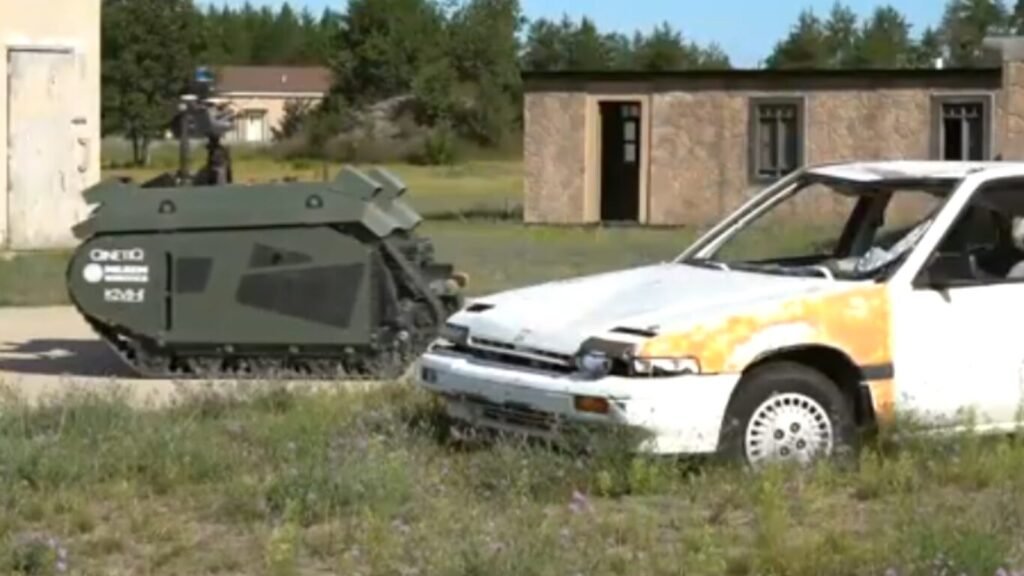
Swarm Logistics
Another remarkable development within AI Last Mile Resupply is swarm logistics. Instead of depending on one large supply vehicle carrying everything needed for a mission, multiple smaller autonomous vehicles work together as a coordinated team.
Each vehicle carries part of the total cargo while remaining connected through secure communication systems. Artificial intelligence coordinates the movement of every unit so they can travel efficiently without following identical routes.
This approach provides several important advantages. If one vehicle encounters an obstacle or mechanical problem, the remaining units continue their deliveries. If one route becomes unsafe, only part of the shipment is affected instead of the entire mission.
From my perspective, swarm logistics reflects one of nature’s most effective survival strategies. Ant colonies, honeybees, and many other living systems succeed because they distribute responsibility across many individuals instead of relying on a single point of failure. Artificial intelligence applies a similar principle to modern logistics.
As communication technologies continue improving, future autonomous logistics fleets may include dozens or even hundreds of coordinated vehicles working together across large operational areas.
Tactical Sustainment
Military operations are rarely completed in a single day. Many missions continue for weeks or even months, requiring uninterrupted access to critical supplies.
This continuous support is known as tactical sustainment.
Tactical sustainment ensures that frontline forces receive everything required to maintain combat readiness. Food, drinking water, medical supplies, fuel, ammunition, batteries, replacement equipment, engineering materials, and communication devices must all arrive at the correct location and at the right time.
Artificial intelligence improves tactical sustainment by reducing transportation delays while increasing delivery accuracy.
Autonomous systems can continue operating in environments where traditional supply convoys face significant risks.
Instead of waiting for large scheduled deliveries, smaller autonomous platforms can transport supplies whenever operational conditions allow.
This creates a more flexible logistics network capable of responding quickly to changing battlefield demands.
In my opinion, tactical sustainment represents one of the most practical applications of artificial intelligence because it directly supports human safety while improving overall mission effectiveness.
Autonomous Ground Vehicles
Most AI Last Mile Resupply missions rely on autonomous ground vehicles, often called UGVs.
These robotic platforms are specifically designed to transport equipment across difficult terrain while requiring little or no direct human control.
Modern autonomous ground vehicles combine several advanced technologies into one integrated system.
High resolution cameras continuously monitor surrounding terrain.
Radar systems detect obstacles in poor visibility.
Lidar sensors create detailed three dimensional maps of the environment.
Artificial intelligence processes this information in real time to make navigation decisions.
Satellite positioning provides location awareness while backup navigation methods maintain movement if GPS signals become unreliable.
Some military UGVs are designed to carry hundreds of kilograms of supplies over rough terrain for many hours before requiring maintenance or battery replacement.
Future models are expected to become lighter, quieter, faster, and capable of operating for much longer periods.
The Role of AI Decision Making
Artificial intelligence performs much more than navigation.
Every autonomous logistics mission requires thousands of small decisions.
The system determines which route offers the lowest risk.
It estimates travel time.
It identifies possible obstacles.
It predicts energy consumption.
It prioritizes urgent deliveries.
It coordinates with other autonomous vehicles.
It communicates progress to command centers.
Machine learning allows these systems to improve over time by learning from previous missions.
The more operational data available, the better future decisions become.
This continuous improvement distinguishes artificial intelligence from traditional automated systems that simply repeat predefined instructions.
Human Oversight Remains Essential
Despite impressive technological progress, autonomous logistics should not be viewed as a complete replacement for experienced military personnel.
Human decision makers remain responsible for mission planning, operational priorities, ethical considerations, and strategic objectives.
Artificial intelligence excels at processing large amounts of information quickly.
Humans excel at understanding complex situations that involve judgment, diplomacy, and broader operational goals.
The most effective logistics systems combine these strengths.
Artificial intelligence manages repetitive calculations and rapid environmental analysis while military professionals supervise overall operations and intervene whenever necessary.
This balanced partnership creates greater efficiency without removing human responsibility.
Cybersecurity Challenges
Cybersecurity risks exist in every connected digital system, and autonomous logistics is no different.
Military logistics networks must remain protected against cyber attacks, electronic warfare, communication interference, and attempts to manipulate navigation systems.
Potential threats include unauthorized system access, GPS spoofing, communication jamming, malware infections, and false sensor data.
Developers are addressing these challenges through multiple layers of protection.
Encrypted communications secure data transmissions.
Multi factor authentication limits unauthorized access.
Artificial intelligence monitors network behavior for unusual activity.
Alternative navigation systems provide backup positioning if satellite signals become unavailable.
Continuous software updates strengthen defenses against newly discovered vulnerabilities.
Cybersecurity will remain one of the highest priorities as autonomous logistics becomes more widely deployed.
Technical Limitations
Although AI Last Mile Resupply continues advancing rapidly, several practical limitations still require attention.
Battery technology affects mission duration.
Extreme temperatures may reduce equipment performance.
Heavy rain, snow, dust, or dense fog can influence sensor accuracy.
Communication disruptions occasionally reduce coordination between autonomous platforms.
Complex terrain sometimes requires additional human supervision.
Hardware maintenance remains an ongoing requirement.
Fortunately, research organizations and defense manufacturers continue investing in improved batteries, more durable sensors, better communication systems, and increasingly capable artificial intelligence models.
Each advancement increases reliability while expanding the range of environments where autonomous logistics can operate successfully.
Civilian Benefits Beyond Military Operations
Perhaps the most exciting aspect of AI Last Mile Resupply is that many of its innovations extend far beyond military applications.
Disaster response organizations can deploy autonomous vehicles after earthquakes, floods, hurricanes, or wildfires when damaged infrastructure prevents traditional deliveries.
Medical organizations may use autonomous logistics to transport emergency medicines, vaccines, blood supplies, or life saving equipment into isolated communities.
Humanitarian agencies can deliver food and clean drinking water to populations affected by natural disasters or armed conflicts.
Mining operations, offshore energy facilities, remote research stations, and rural communities may also benefit from intelligent autonomous transportation.
From my perspective, technologies originally developed for defense often create valuable civilian applications, and AI logistics appears likely to follow the same pattern.
Future Innovations
The next decade will likely bring significant improvements to autonomous logistics.
Artificial intelligence models will become faster and more accurate.
Battery technology will increase operational range.
Vehicle designs will become quieter and more energy efficient.
Swarm coordination will support much larger autonomous fleets.
Satellite communications will improve reliability across remote regions.
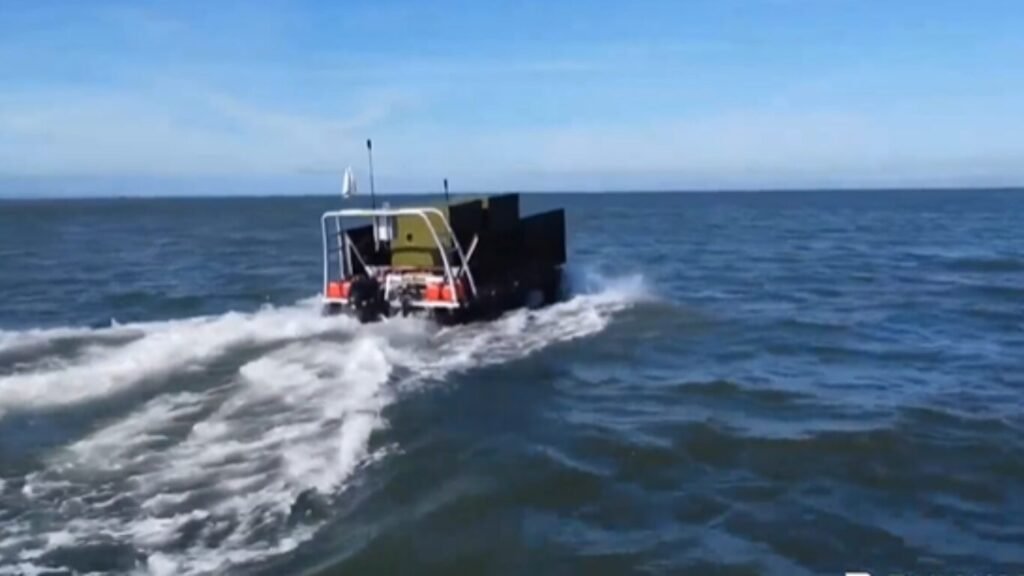
Integration with aerial drones and maritime autonomous systems may create fully connected logistics networks capable of operating across land, sea, and air simultaneously.
Researchers are also exploring predictive logistics, where artificial intelligence anticipates future supply requirements before requests are even submitted.
Instead of simply responding to shortages, intelligent systems could position supplies in advance based on mission planning, weather forecasts, equipment usage, and operational trends.
This shift from reactive logistics to predictive logistics could significantly improve military readiness while reducing unnecessary transportation.
Why AI Last Mile Resupply Matters Today
The global security environment continues changing rapidly.
Military forces face increasingly complex operational challenges that require flexible, resilient, and intelligent logistics systems.
AI Last Mile Resupply addresses many of these challenges by improving delivery speed, increasing operational safety, reducing human exposure to danger, and maintaining reliable support for frontline personnel.
Beyond defense, the same technologies have the potential to reshape emergency response, humanitarian assistance, healthcare logistics, commercial transportation, and infrastructure support.
From everything I have studied, this is one of the most meaningful applications of artificial intelligence because it focuses on solving practical problems that directly protect lives while improving operational efficiency.
As autonomous technologies continue evolving, intelligent logistics will likely become one of the defining capabilities of future military and civilian supply networks alike.
AI and Predictive Logistics
The future of logistics is moving beyond simply delivering supplies. Artificial intelligence is beginning to predict what will be needed before a request is even made. This concept is known as predictive logistics.
Traditional logistics often works by responding to demand. A frontline unit reports that fuel is running low, medical supplies are nearly exhausted, or additional ammunition is required. Only then does the supply chain begin moving resources toward the requested location.
AI changes this approach by continuously analyzing operational data.
It studies vehicle fuel consumption, equipment maintenance records, weather forecasts, terrain conditions, troop movement, mission objectives, and historical supply patterns. Using this information, AI estimates future requirements and recommends resupply missions before shortages occur.
Imagine an autonomous logistics system recognizing that a reconnaissance unit will likely require replacement batteries within the next twelve hours based on previous operational patterns. Instead of waiting for a request, the system prepares the delivery automatically.
This proactive approach saves valuable time and helps maintain uninterrupted operations.
From my perspective, predictive logistics represents one of the smartest uses of AI because preventing shortages is always more effective than responding to emergencies after they occur.
AI Coordination Between Air and Ground Systems
Modern logistics is becoming increasingly connected.
Future AI Last Mile Resupply missions are expected to involve multiple autonomous platforms working together instead of operating independently.
Ground vehicles may transport heavy equipment over long distances.
Autonomous drones can carry lightweight emergency supplies to locations that ground vehicles cannot easily reach.
Unmanned aircraft may provide aerial surveillance while autonomous trucks continue moving below.
Artificial intelligence coordinates every platform simultaneously.
If one delivery method becomes unavailable, another system can immediately support the mission.
For example, if severe flooding blocks ground transportation, AI may redirect urgent medical supplies to autonomous aerial drones while assigning heavier equipment to alternative land routes once conditions improve.
This level of coordination creates a logistics network that remains flexible even during highly unpredictable situations.
Supporting Humanitarian Operations
Although AI Last Mile Resupply was originally developed to strengthen military logistics, its humanitarian value may become equally significant.
Natural disasters frequently damage roads, bridges, communication infrastructure, and transportation networks.
Communities affected by earthquakes, floods, hurricanes, or wildfires often struggle to receive emergency assistance because traditional vehicles cannot safely access damaged areas.
Autonomous logistics platforms provide a practical solution.
AI powered vehicles can transport food, drinking water, medicine, emergency shelters, generators, communication equipment, and medical supplies into locations where human drivers would face unacceptable risks.
During disaster recovery, every hour matters.
Delivering emergency resources quickly can significantly improve survival while reducing pressure on rescue teams.
This is one reason I believe autonomous logistics will eventually become an essential component of international disaster response operations.
Environmental Benefits of Intelligent Logistics
Artificial intelligence does more than improve efficiency.
It can also reduce unnecessary fuel consumption and environmental impact.
Traditional transportation sometimes follows inefficient routes because planners have limited access to changing traffic conditions, weather patterns, or road availability.
AI continuously calculates more efficient routes that reduce travel distance, idle time, and unnecessary vehicle movement.
Smarter routing lowers fuel consumption while reducing maintenance requirements and operating costs.
Electric autonomous logistics platforms may further decrease environmental impact as battery technology continues improving.
Although military operations will always prioritize mission success over fuel efficiency, reducing unnecessary energy consumption remains an important long term advantage.
Commercial transportation companies are already applying similar AI technologies to improve sustainability throughout their supply chains.
Building Trust in Autonomous Logistics
Introducing artificial intelligence into critical logistics operations requires confidence from military leaders, logistics professionals, and field personnel.
Trust develops through consistent performance.
Every successful autonomous mission increases confidence in intelligent logistics systems.
Extensive testing, realistic military exercises, continuous software improvement, and careful operational evaluation all contribute to building reliability.
Transparency also plays an important role.
Operators must understand why AI selected a particular route or recommended a specific decision.
Explainable artificial intelligence is becoming increasingly important because it allows human supervisors to review and verify automated recommendations.
In my opinion, trust will become one of the most valuable assets for future autonomous logistics systems.
Technology succeeds not only because it works, but because people understand and confidently use it.
Ethical Responsibility
Artificial intelligence should always support responsible decision making.
While AI Last Mile Resupply focuses on transportation rather than combat, ethical considerations remain important.
Developers must ensure that autonomous logistics systems operate safely, protect sensitive information, respect operational rules, and remain under appropriate human supervision.
Responsible development includes regular testing, secure software updates, cybersecurity protection, transparent operational procedures, and continuous human oversight.
Technology should strengthen human capability instead of replacing human accountability.
Maintaining this balance will help ensure that autonomous logistics continues serving practical and humanitarian purposes while reducing unnecessary risks.
The Expanding Global Market
Governments and defense organizations around the world are investing heavily in autonomous logistics technologies.
Research institutions, defense manufacturers, robotics companies, software developers, and artificial intelligence specialists continue introducing new innovations every year.
Several trends are driving this rapid growth.
Increasing demand for operational efficiency.
Greater emphasis on protecting military personnel.
Advances in robotics and machine learning.
Improved autonomous navigation systems.
Higher expectations for faster logistics support.
Growing interest in civilian autonomous transportation.
As investment continues expanding, many technologies initially designed for military use are expected to become available across commercial industries.
This pattern has occurred many times throughout history as innovations originally developed for defense later improved everyday transportation, communications, healthcare, and manufacturing.
Preparing the Workforce
The rise of AI powered logistics also creates new opportunities for education and professional development.
Future logistics specialists will require knowledge that combines traditional supply chain management with digital technologies.
Skills likely to become increasingly valuable include artificial intelligence, robotics, cybersecurity, autonomous vehicle operations, sensor technologies, data analytics, and systems engineering.
Military organizations, universities, technical institutes, and private companies are already expanding educational programs that prepare professionals for these evolving careers.
Rather than eliminating jobs, artificial intelligence is changing the skills required for future logistics operations.
People who understand both logistics and intelligent automation will be well positioned for emerging opportunities.
Common Misconceptions
Several misconceptions continue surrounding AI Last Mile Resupply.
One common misunderstanding is that autonomous systems operate completely without human involvement.
In reality, experienced personnel continue supervising missions, approving operational objectives, monitoring performance, and responding to unusual situations.
Another misconception suggests that autonomous logistics only benefits military organizations.
As discussed throughout this guide, healthcare providers, emergency management agencies, humanitarian organizations, scientific research teams, mining companies, and commercial transportation businesses can all benefit from intelligent logistics technologies.
Some also believe autonomous systems are intended to replace every traditional logistics method.
The more realistic future involves cooperation.
Conventional transportation and intelligent autonomous systems will work together, each supporting missions where they perform best.
Looking Ahead
Artificial intelligence continues advancing at an impressive pace.
Every year brings improvements in machine learning, robotics, autonomous navigation, communication technologies, battery performance, and cybersecurity.
These innovations are steadily transforming logistics from a largely reactive process into an intelligent network capable of learning, adapting, and improving over time.
AI Last Mile Resupply represents one of the strongest examples of this transformation.
It demonstrates how artificial intelligence can solve practical operational challenges while improving efficiency, reducing risks, and supporting people in demanding environments.
Whether delivering emergency medicine after a natural disaster or supplying military personnel during complex operations, intelligent logistics has the potential to improve safety and reliability across countless real world situations.
Conclusion
AI Last Mile Resupply is much more than another technological advancement. It represents a smarter approach to solving one of the most difficult challenges in modern logistics. By combining artificial intelligence, autonomous vehicles, intelligent navigation, predictive planning, and secure communications, these systems help ensure that essential supplies reach the right place at the right time with greater speed, accuracy, and safety.
The impact extends well beyond military operations. The same innovations can strengthen disaster relief, healthcare delivery, humanitarian assistance, remote infrastructure support, and commercial supply chains. As artificial intelligence continues evolving, autonomous logistics will become an increasingly important part of how the world moves critical resources during both emergencies and everyday operations.
At worldstan.com, we believe understanding emerging technologies requires more than simply reporting new developments. It requires careful research, practical explanations, and balanced analysis that readers can trust. That is why every article is created to help you understand not only what these technologies are, but also why they matter and how they will shape the future. AI Last Mile Resupply is one of the clearest examples of intelligent innovation transforming logistics, and worldstan.com is proud to bring you this original insight with clarity, accuracy, and purpose.