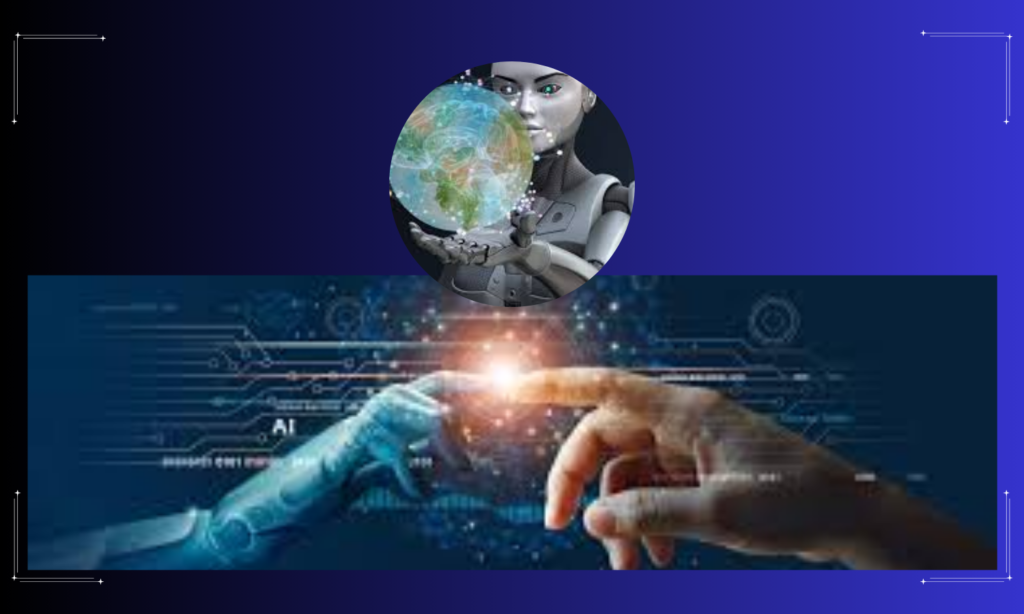

The artificial intelligence spectrum is reshaping how we understand machines, human thinking, and the future of intelligence itself. From simple task-based systems to advanced theories like AGI and ASI, this topic helps us see where AI stands today and where it may lead tomorrow in a deeply connected human and technological world.
Artificial Intelligence Spectrum and the Rise of Heart-Centered AI
Introduction:
Artificial intelligence has become a powerful force that is quietly shaping how people work, think, and interact with technology. The artificial intelligence spectrum helps us understand this transformation in a structured way, from simple automation tools to highly advanced systems that may one day exceed human intelligence. Today, AI is not just about machines doing tasks faster; it is about understanding how intelligence itself is evolving.
Understanding Artificial Intelligence
Artificial intelligence describes systems designed to perform activities that usually depend on human thinking and decision-making.
These tasks include recognizing images, understanding language, making decisions, and solving problems. AI works through data, algorithms, and learning patterns that allow machines to improve over time.
Most modern AI systems are built on machine learning, where systems learn from examples instead of being directly programmed for every action. This shift has made AI more flexible and powerful, but still limited in understanding true meaning or consciousness.
Artificial Intelligence Spectrum Explained:
The artificial intelligence spectrum is a way to categorize intelligence into different levels. It shows how AI evolves from simple systems to more advanced theoretical models. This spectrum includes artificial narrow intelligence, artificial general intelligence, and artificial super intelligence.
Each level represents a different stage of capability, adaptability, and awareness. While current systems mostly exist at the narrow AI stage, research is moving toward broader and more flexible intelligence models.
Artificial Narrow Intelligence in Today’s World:
Artificial narrow intelligence is the most common form of AI today. These systems are designed for specific tasks and cannot operate outside their programmed boundaries.
Examples include voice assistants, recommendation systems, fraud detection tools, and translation apps. These systems are highly efficient and accurate within their domain, but they do not understand context like humans do.
Here’s a straightforward explanation in the easiest terms.
ANI is like a specialist who is extremely good at one job but cannot switch to another without training.
Artificial General Intelligence as the Next Step:
Artificial general intelligence is a theoretical form of AI that would be able to think, learn, and adapt like a human. Unlike narrow AI, AGI would not be limited to one task. It could transfer knowledge across different areas and solve unfamiliar problems.
Researchers are still debating whether AGI is achievable. If it becomes reality, it could transform industries, education, science, and even human society itself. However, it also raises serious concerns about safety and control.
Artificial Super Intelligence and Its Future Impact:
Artificial super intelligence is a concept where machines would surpass human intelligence in every possible way. This includes creativity, emotional understanding, decision-making, and scientific reasoning.
ASI could bring massive breakthroughs in medicine, space exploration, and global problem-solving. However, it also introduces risks that humanity has never faced before. Questions about control, ethics, and responsibility become extremely important at this stage.
Human Intelligence and Its Unique Nature:
Human intelligence is not only based on logic or data. It includes emotion, creativity, intuition, and moral judgment. Humans can understand meaning, context, and emotional depth in ways machines still cannot.
This combination of reasoning and feeling allows humans to make complex decisions that go beyond numbers and calculations. It is this balance that makes human intelligence unique in the AI spectrum.
Heart-Centered Intelligence and Emotional Depth:
Recent studies in neuroscience suggest that the heart plays a role in emotional processing and decision-making. This idea is often called heart cognition.
The heart communicates with the brain through complex biological signals, influencing intuition and emotional awareness. This connection shows that intelligence is not purely mental but also deeply emotional and biological.
Artificial Intelligence and Emotional Understanding:
Emotional AI is a growing field that tries to help machines understand human emotions. These systems analyze facial expressions, tone of voice, and behavioral patterns to interpret feelings.
However, these systems do not actually feel emotions. They only recognize patterns. This difference is important when considering trust and ethical use of AI in sensitive areas like healthcare and education.
Bridging AI and Heart-Centered Thinking:
The future of AI may depend on combining intelligence with ethical and emotional awareness. Heart-centered AI focuses on building systems that align with human values such as empathy, fairness, and responsibility.
This does not mean machines become emotional beings. Instead, it means they are designed to make decisions that respect human well-being and moral principles.
Ethical Challenges in AI Development:
As AI becomes more advanced, ethical challenges also increase. Issues like bias, privacy, accountability, and transparency are already major concerns in today’s systems.
If AI reaches higher levels like AGI or ASI, these challenges will become even more critical. Governments, researchers, and organizations must work together to create strong ethical guidelines.
Role of AI in Human Evolution:
Artificial intelligence is becoming a major part of human evolution. It is changing how people learn, communicate, and solve problems.
AI can enhance human abilities, but it should not replace human values. The goal should be collaboration between humans and machines, not competition.
Future of Intelligence with Purpose:
The future of the artificial intelligence spectrum depends on balance. Technology must grow alongside ethical responsibility and emotional understanding.
AI should not only focus on efficiency but also on purpose, meaning, and human well-being. This creates a future where machines support human life instead of dominating it.
Conclusion:
The artificial intelligence spectrum helps us understand how intelligence evolves from simple task-based systems to highly advanced theoretical models. While technology continues to grow rapidly, human intelligence remains deeply rooted in emotion, morality, and creativity.
The future of AI should not be about replacing humans but enhancing human life through responsible innovation. When artificial intelligence is guided by ethical principles and heart-centered thinking, it becomes a powerful tool for positive global transformation.
FAQs:
1. What is the artificial intelligence spectrum?
It is a framework that explains different levels of AI from narrow systems to advanced theoretical intelligence like AGI and ASI.
2. What is artificial narrow intelligence?
It is AI designed for specific tasks such as translation, recommendation, or recognition systems.
3. How is AGI different from ANI?
AGI is capable of learning and handling many different tasks like a person, while ANI is restricted to performing only one task.
4. What is artificial super intelligence?
It is a theoretical AI that surpasses human intelligence in all areas including creativity and reasoning.
5. Is AGI real today?
No, AGI is still a theoretical concept under research.
6. What is heart-centered AI?
It is an approach to AI development focused on ethics, empathy, and human values.
7. Can AI feel emotions?
No, AI can recognize emotions but does not actually feel them.
8. Why is AI ethics important?
Because AI decisions can impact privacy, fairness, and human lives.
9. What is emotional AI?
It is AI that detects and responds to human emotions using data signals.
10. How does AI affect human intelligence?
It enhances human abilities but also raises concerns about dependency and control.
11. What are examples of narrow AI?
Voice assistants, chatbots, and recommendation systems.
12. Can AI become dangerous?
Advanced AI systems may create risks if not properly controlled.
13. What is the future of AI?
It is expected to combine intelligence, ethics, and human values.
14. What is the intelligence spectrum?
It is the progression of intelligence from simple AI to advanced theoretical systems.
15. How can AI benefit humanity?
By improving healthcare, education, research, and daily life efficiency.