

Generative AI and Socioeconomic Inequality Explained
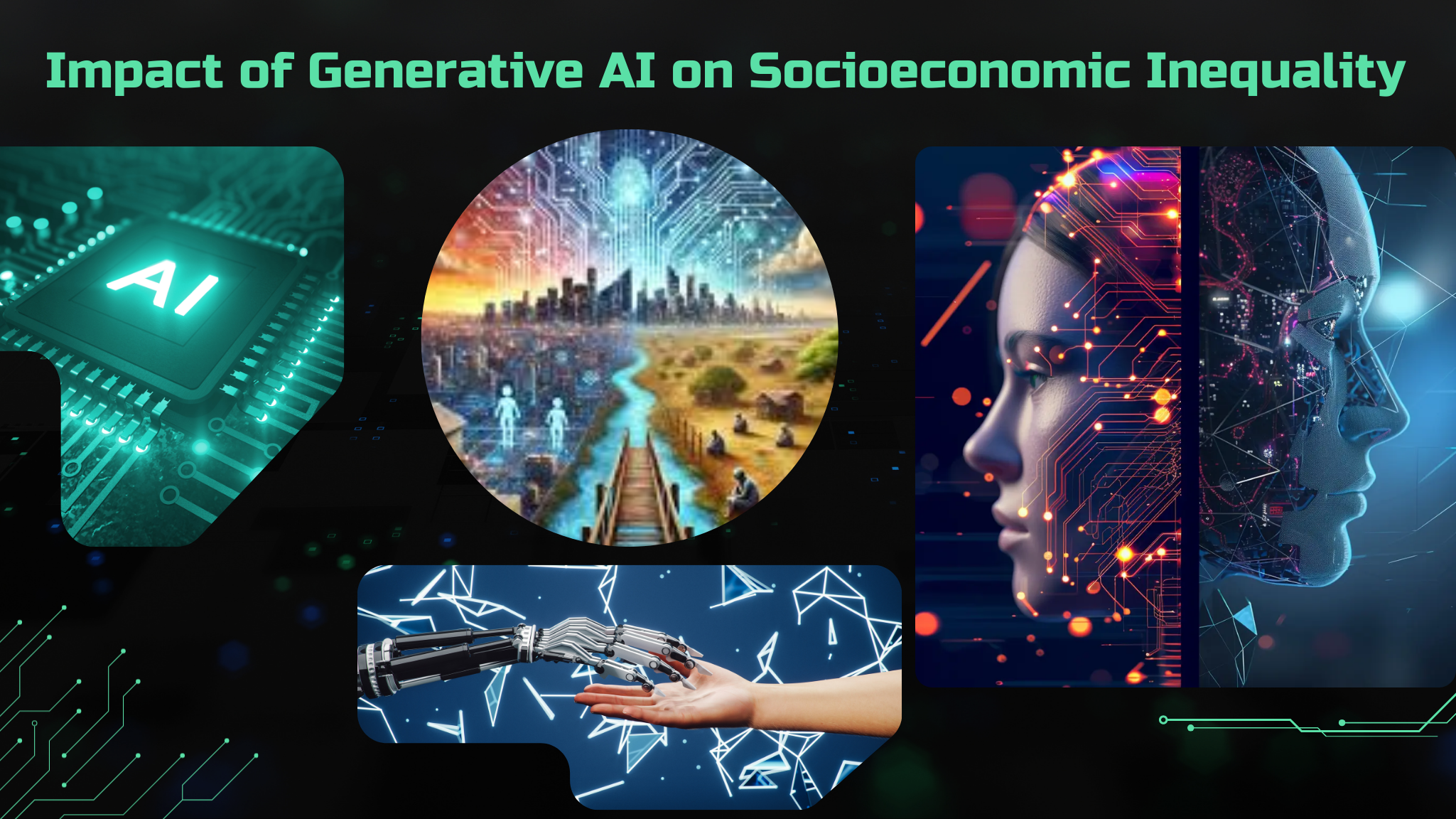
Generative AI and socioeconomic inequality are becoming closely connected as artificial intelligence rapidly changes how people work, learn, access opportunities, and participate in society. This article explores the growing influence of generative AI on economic and social systems while examining the policies and governance approaches needed to create a more inclusive future.
Generative AI and Socioeconomic Inequality Challenges, Opportunities, and Policy Solutions
Technology has always influenced society, but few innovations have moved as quickly as generative artificial intelligence. In only a few years, AI tools have gone from experimental systems used by researchers to everyday technologies helping people write content, analyze information, create images, solve problems, and support decision-making. This rapid transformation has sparked excitement about productivity and innovation, yet it has also raised important questions about fairness and equal opportunity.
Generative AI and socioeconomic inequality are now deeply connected topics. While AI can create opportunities for millions of people, it can also widen existing social and economic gaps if access, education, and governance fail to keep pace. The choices made by governments, businesses, educators, and communities today will determine whether AI becomes a tool for inclusion or a force that increases inequality.
Here is an easy-to-understand explanation presented in clear and simple language.
Generative AI is not simply another digital tool. It is a technology capable of influencing how people work, learn, communicate, and participate in society. Because its impact reaches nearly every sector, understanding its relationship with socioeconomic inequality has become one of the most important challenges of our time.
Understanding Generative AI and Its Growing Influence
Generative AI refers to artificial intelligence systems that can create original content based on patterns learned from large datasets. These systems can generate text, images, software code, reports, business insights, and creative works.
Unlike earlier forms of automation that focused on repetitive physical tasks, generative AI operates in areas traditionally associated with human thinking. It assists with research, planning, communication, and decision-making.
The reason this technology is receiving so much attention is simple. It can scale rapidly. A single AI system can support millions of users simultaneously across different industries and countries. This level of reach gives generative AI the power to influence economic structures, social systems, and public institutions on a global scale.
Why Does Socioeconomic Inequality Matter in the AI Era
Socioeconomic inequality refers to differences in income, education, healthcare access, employment opportunities, and social mobility among individuals and groups.
Even before the rise of AI, many societies struggled with unequal access to resources and opportunities. Some communities benefited from advanced education systems, modern infrastructure, and strong economic networks, while others faced barriers that limited their growth.
The arrival of generative AI introduces a new dimension to this challenge. Those who can access AI technologies may improve productivity, increase earnings, and gain competitive advantages. Those who cannot access these resources face a greater risk of being left behind as progress continues.
Success requires a broad range of perspectives in development, clear evaluation standards, and consistent supervision over time.
The answer depends largely on how societies choose to implement and regulate these technologies.
The Digital Divide and AI Accessibility
One of the biggest concerns surrounding generative AI and socioeconomic inequality is accessibility.
Many people assume AI is available to everyone because free tools exist online. However, meaningful access involves much more than internet connectivity.
Effective AI usage often requires:
- Reliable internet access
- Modern devices
- Technical literacy
- Educational support
- Language accessibility
- Institutional resources
People living in wealthy urban regions often possess these advantages. Communities in underserved areas frequently do not.
Consider two students. One attends a school equipped with AI-powered learning platforms, trained educators, and advanced digital resources. The other studies in a school struggling with basic technology infrastructure.
Even if both students are equally talented, their opportunities to benefit from AI will differ significantly.
Over time, these differences can create larger educational and economic gaps.
Generative AI and Workforce Transformation
The workplace represents one of the most visible areas where generative AI is creating change.
Previous waves of automation primarily affected routine manufacturing jobs. Generative AI reaches into professions traditionally considered safe from automation.
Writers, marketers, legal researchers, financial analysts, software developers, customer support specialists, and many other professionals now interact with AI tools as part of their daily work.
This transformation creates both opportunities and challenges.
Workers who learn how to collaborate with AI often become more productive. They can complete tasks faster, analyze larger amounts of information, and focus on higher-value activities.
At the same time, some job functions may become less valuable as AI systems handle repetitive cognitive tasks.
The result is not necessarily mass unemployment but significant workforce restructuring.
Organizations increasingly seek employees who can effectively use AI rather than those who perform tasks AI can easily replicate.
Will Generative AI Replace Human Jobs
This question appears frequently in public discussions, and the answer is more nuanced than many headlines suggest.
Generative AI is unlikely to replace all human workers. However, it will transform how many jobs are performed.
History shows that technological advances often eliminate certain tasks while creating entirely new categories of work.
For example, the internet reduced demand for some traditional occupations but created opportunities in digital marketing, software development, e-commerce, and cybersecurity.
A similar pattern is likely with AI.
Workers who continuously develop new skills, adapt to changing technologies, and embrace lifelong learning will generally remain competitive.
The greater risk lies not in AI replacing humanity but in unequal access to the training required to work effectively alongside AI systems.
Education in the Age of Generative AI
Education may become one of the most important factors determining whether AI reduces or increases inequality.
AI-powered educational tools can offer personalized learning experiences that adapt to individual needs. Students can receive instant feedback, customized explanations, and additional learning support.
For many learners, this creates exciting opportunities.
Students struggling with specific subjects can access assistance at any time. Teachers can use AI to streamline administrative work and focus more attention on student engagement.
However, educational benefits are not automatically distributed equally.
Schools with stronger funding can integrate advanced AI technologies more effectively than underfunded institutions.
Without thoughtful policy intervention, educational inequality may grow rather than shrink.
In my view, one of the smartest investments governments can make is expanding AI literacy programs in public education systems. Equal access to AI education will likely become as important as access to basic literacy and numeracy.
The Rise of AI-Powered Economic Concentration
Generative AI development requires enormous computational resources, vast datasets, and highly specialized expertise.
As a result, a relatively small number of organizations dominate AI development.
This concentration raises important questions about economic power.
When a handful of companies control critical technologies, they gain significant influence over markets, innovation pathways, and digital infrastructure.
Smaller businesses may become dependent on platforms they do not control.
Developing countries may rely heavily on technologies created elsewhere.
This dynamic can reinforce existing economic hierarchies and limit opportunities for broader participation in technological growth.
Encouraging competition, supporting open innovation, and investing in public AI infrastructure can help create a healthier ecosystem.
How Does AI Bias Affect Social Equality
AI systems learn from historical data.
If that data reflects societal biases, AI outputs may reproduce those same patterns.
Bias can appear in various forms:
- Hiring recommendations
- Loan approval systems
- Healthcare assessments
- Educational evaluations
- Public service delivery
When these systems operate at scale, small biases can affect large populations.
Addressing bias requires more than technical fixes. It requires diverse development teams, transparent evaluation processes, and continuous oversight.
Fairness should not be treated as an optional feature. It must remain a central goal throughout AI development and deployment.
Generative AI and Public Policy
Governments worldwide are increasingly exploring AI applications for public administration.
Potential benefits include:
- Faster document processing
- Improved policy analysis
- Enhanced resource allocation
- Better public service delivery
- More efficient data management
These improvements can help governments operate more effectively.
However, public institutions must maintain accountability and transparency.
Citizens deserve to understand how decisions affecting their lives are made.
Human oversight remains essential when AI supports public decision-making processes.
Technology should assist governance, not replace democratic responsibility.
The Relationship Between AI and Democracy
Generative AI influences how information is created, distributed, and consumed.
This creates opportunities for greater civic engagement but also introduces risks.
AI-generated content can educate citizens, expand access to information, and support public participation.
Unfortunately, it can also contribute to misinformation, manipulation, and confusion.
Maintaining trust in democratic institutions requires transparency regarding AI-generated content and responsible digital communication practices.
Media literacy will become increasingly important as AI-generated information becomes more widespread.
Citizens who can critically evaluate digital content will be better equipped to navigate the evolving information landscape.
Global Inequality and the International AI Race
The impact of generative AI extends beyond national borders.
Advanced economies currently lead many aspects of AI development, including research, infrastructure, and investment.
Developing nations often face challenges related to funding, technical expertise, and digital infrastructure.
Without international cooperation, AI could create a new form of technological dependency.
Countries lacking local AI capabilities may become dependent on foreign technologies for critical economic and governmental functions.
This could limit economic independence and long-term development opportunities.
International collaboration, knowledge sharing, and global capacity-building initiatives can help create more balanced outcomes.
Regulatory Frameworks for Responsible AI
Effective regulation plays a crucial role in shaping the future impact of AI.
The goal is not to restrict innovation unnecessarily. Instead, regulation should encourage responsible development while protecting public interests.
Strong AI governance frameworks typically focus on:
- Transparency
- Accountability
- Data privacy
- Fairness
- Security
- Human oversight
Flexible regulatory approaches are particularly important because AI technologies continue evolving rapidly.
Policymakers must create systems capable of adapting to future developments without stifling innovation.
Can Generative AI Reduce Inequality
Despite the concerns discussed throughout this article, generative AI also offers significant opportunities to reduce inequality.
AI can improve access to:
- Education
- Healthcare information
- Legal resources
- Government services
- Financial guidance
- Professional development
Individuals who previously lacked access to specialized expertise can now receive support through AI-powered tools.
Small businesses can compete more effectively by leveraging technologies that were once available only to large corporations.
Students can access learning resources regardless of geographic location.
Entrepreneurs can build businesses with fewer barriers to entry.
These possibilities demonstrate why the future of generative AI is not predetermined.
Its impact depends on how societies choose to develop, regulate, and distribute these technologies.
Practical Solutions for Building an Inclusive AI Future
Several practical strategies can help reduce the risk of AI-driven inequality.
First, governments should invest in universal digital infrastructure.
Second, educational systems should prioritize AI literacy and digital skills training.
Third, policymakers should encourage responsible innovation through balanced regulatory frameworks.
Fourth, organizations should adopt transparent and ethical AI practices.
Fifth, international cooperation should support equitable access to AI technologies and expertise.
Most importantly, marginalized communities should have a voice in shaping AI policies and development priorities.
Inclusive participation creates stronger and more equitable outcomes.
The Future Outlook for Generative AI and Socioeconomic Inequality
The relationship between generative AI and socioeconomic inequality will continue evolving over the coming decades.
Technological progress alone cannot determine social outcomes.
History repeatedly demonstrates that innovation produces different results depending on the policies, institutions, and values guiding its implementation.
Generative AI offers extraordinary potential to improve productivity, expand knowledge, and solve complex challenges.
At the same time, it introduces significant risks related to inequality, concentration of power, and unequal access.
The decisions made today will shape how these opportunities and challenges unfold in the future.
Exclusive Insights from Worldstan.com
At worldstan.com, we believe discussions about artificial intelligence should extend beyond technology itself. The real question is how technology affects people, communities, opportunities, and long-term social progress.
Generative AI and socioeconomic inequality represent one of the defining conversations of the modern era because they touch every aspect of society.
By recognizing these issues, people, organizations, and governments can take smarter steps and make stronger decisions for the future.
The future of AI should not be measured solely by technical achievements. It should also be evaluated by its ability to create fairness, opportunity, inclusion, and shared prosperity.
That vision requires thoughtful leadership, responsible governance, and active public participation.
Conclusion
With AI steadily transforming how economies, organizations, and daily life function, generative AI and socioeconomic inequality will remain strongly interconnected.
When access to AI tools, education, and opportunities is distributed fairly, generative AI can become a powerful force for economic growth, social mobility, and innovation. When access remains limited to a small segment of society, existing inequalities may become even more pronounced.
At worldstan.com, we believe the most successful AI future will be one that combines technological advancement with human-centered values. Policymakers, educators, businesses, and communities all have important roles to play in ensuring that AI serves society as a whole. By focusing on inclusion, fairness, accountability, and responsible governance, we can build a future where generative AI contributes not only to efficiency and growth but also to opportunity, dignity, and shared progress for everyone.