

US Cyber Command Strategy 2026 Explained

US Cyber Command Strategy 2026 reveals how invisible digital battles are becoming one of the most important forces shaping global security. Modern conflicts are no longer fought only with weapons on the ground.
This comprehensive analysis examines how cyber intelligence, AI-powered security technologies, and digital partnerships work together to detect potential threats early and prevent them from becoming serious real-world incidents.
US Cyber Command Strategy 2026 and the New Era of Digital Defense
The meaning of power has changed. For generations, military strength was measured through aircraft carriers, advanced weapons, and the number of troops a nation could deploy. Today, another battlefield exists beyond physical borders. It operates through networks, data systems, communication channels, and the invisible infrastructure that connects modern society.
US Cyber Command Strategy 2026 represents this transformation in security thinking. It reflects a world where protecting nations is no longer only about responding after an attack happens. It is about identifying risks early, understanding digital threats, and preventing disruptions before they affect people, economies, and critical services.
The rise of cyber warfare has created a completely different security environment. A single digital operation can impact financial systems, energy networks, government services, and military communication without a traditional battlefield ever appearing.
From my perspective, this shift represents one of the biggest changes in modern defense. The strongest advantage today is not only having powerful technology. It is having the ability to understand threats faster than those who create them.
US Cyber Command operates at the center of this digital transformation. Its mission is focused on defending national interests, protecting important systems, supporting military operations, and working with partners to reduce cyber risks around the world.
The strategy in 2026 highlights a simple but important idea.
Strong future security depends on being prepared, gathering reliable intelligence, and taking action before challenges become too difficult to manage.
Understanding the Modern Digital Battlefield
The digital battlefield does not look like traditional warfare. There are no visible front lines, no clear borders, and often no immediate signs that a conflict has started.
A cyber attack can begin quietly. An attacker may enter a network, study its systems, collect information, and wait for the right moment to cause disruption. This makes cyber defense extremely challenging because security teams must detect hidden activity before damage occurs.
Modern cyber threats can target many areas, including government networks, military communication systems, financial institutions, energy infrastructure, and transportation systems.
This is why cybersecurity has become a national security issue.
A country’s stability now depends heavily on the strength of its digital infrastructure. Electricity grids, oil facilities, communication networks, and emergency services all rely on complex computer systems. Protecting these systems is as important as protecting physical borders.
Let me explain this in the clearest, simplest terms.
Imagine a country as a large connected city. Roads, buildings, hospitals, and businesses represent physical infrastructure. Digital networks are the invisible roads connecting everything together. If those invisible roads are attacked, the entire city can experience problems even if no physical damage is visible.
This is the reality of modern cyber conflict.

The Evolution of US Cyber Command Strategy
US Cyber Command was created to coordinate military cyber operations and strengthen digital defense capabilities. Over time, its role expanded as cyber threats became more advanced and more connected to global security.
The development of cyber strategy has followed the changing nature of digital threats.
| Year | Event | Description |
|---|---|---|
| 2009 | US Cyber Command Established | The United States created Cyber Command to coordinate military cyber operations and improve national cyber defense capabilities. |
| 2018 | Cyber Strategy Expansion | The command adopted a more active approach focused on identifying and stopping threats before they reached US networks. |
| 2020 | Increased Cyber Threat Awareness | Global cyber attacks against governments and industries increased attention on digital security and intelligence sharing. |
| 2024 | Growth of AI Security Tools | Artificial intelligence became more important in threat detection, analysis, and automated cybersecurity responses. |
| 2026 | Advanced Cyber Defense Strategy | Modern cyber operations increasingly combine AI, intelligence sharing, and proactive defense methods. |
The biggest strategic change has been moving away from a purely reactive approach. Instead of waiting for attacks and responding afterward, modern cyber defense focuses on early detection and disruption.
This approach is commonly connected with the concept known as defend forward.

Defend Forward Strategy and Preventing Threats Early
The defend forward strategy represents a major change in how cyber threats are handled.
Traditional security often worked like a wall. Organizations built defenses around their systems and waited for attackers to try breaking through.
Modern cyber defense works differently.
It focuses on understanding attacker behavior, identifying harmful tools, and disrupting threats before they reach their final targets.
In simple words, the goal is not only to block attacks. The goal is to make attacks harder to launch in the first place.
This strategy requires advanced intelligence gathering, technical expertise, and international cooperation.
For example, imagine a cyber group preparing an attack against important financial systems in the Middle East. Instead of waiting until banks or payment networks are affected, cyber defense teams can identify suspicious activity earlier, analyze the threat, and take action to reduce the possibility of success.
This proactive approach changes the entire security model.
However, it also creates difficult discussions. Digital operations can involve complex questions about boundaries, privacy, and international responsibility.
How much activity is acceptable when defending against a cyber threat? When does protection become interference?
These questions do not have simple answers. Cyber strategy requires both technological capability and careful decision-making.
The strongest defense is not only about having more tools. It is about using those tools responsibly.
Protecting Middle East Stability Through Cyber Defense
The Middle East remains one of the most strategically important regions in the world. Its importance is connected to energy resources, international trade routes, political relationships, and global economic stability.
Because of this importance, cyber protection in the region has become a major security priority.
Energy infrastructure is especially critical. Oil production facilities, pipelines, refineries, and transportation networks depend heavily on digital control systems. A successful cyber attack against these systems could create consequences far beyond one country.
It could influence energy markets, increase economic uncertainty, and affect millions of people worldwide.
US Cyber Command Strategy 2026 recognizes that protecting digital infrastructure is directly connected to maintaining global stability.
Cyber defense efforts focus on reducing risks such as:
- Attacks against industrial control systems
- Ransomware targeting essential services
- Attempts to manipulate operational data
- Disruption of communication networks
- Theft of sensitive information
The connection between cybersecurity and daily life is often overlooked.
A cyber attack on an energy company is not only a technical problem. It can influence transportation costs, business operations, and household expenses.
Strong cyber defense helps create stability by reducing the chances of unexpected disruption.
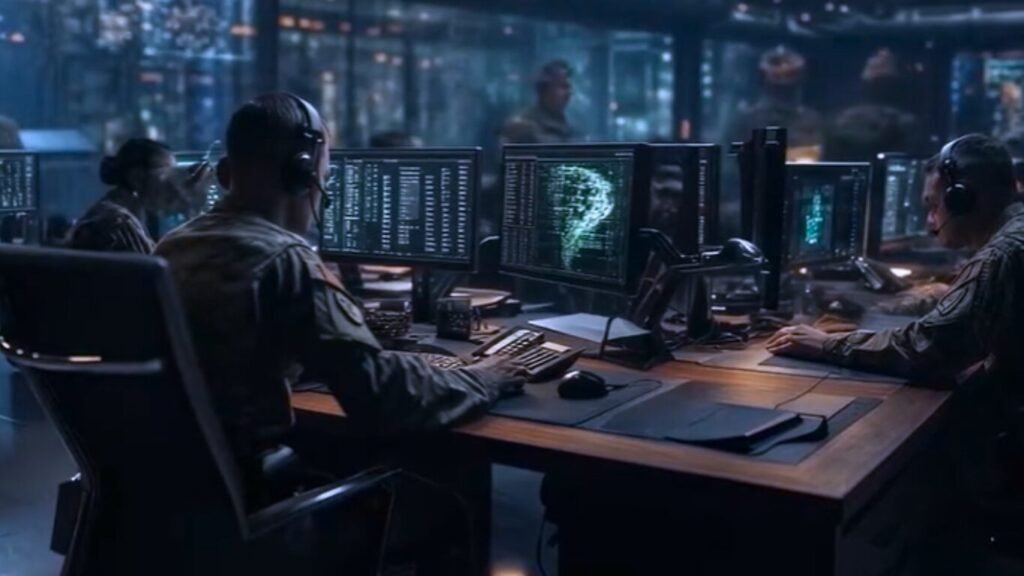
AI as the New Intelligence Layer in Cyber Defense
Artificial intelligence has become one of the most important technologies shaping cybersecurity.
The reason is simple. Cyber threats move too quickly for humans to analyze every signal manually.
AI systems can process large amounts of information, identify unusual behavior, and help security teams understand possible risks faster.
In military cyber operations, AI can support activities such as:
- Detecting unusual network activity
- Finding hidden attack patterns
- Prioritizing security alerts
- Predicting possible vulnerabilities
- Supporting faster decision-making
The advantage of AI is speed.
A human analyst may need hours to review thousands of system events. AI can examine these patterns in seconds and highlight areas that require attention.
This does not mean humans become unnecessary.
Human expertise remains essential because cybersecurity decisions often involve complex situations requiring judgment, ethics, and strategic understanding.
AI works best as a powerful assistant, not a replacement for human responsibility.
The future of cyber defense will likely depend on a partnership between advanced technology and experienced professionals.
The Growing AI Competition in Cyber Warfare
The development of AI-powered cyber defense has also created a new challenge. The same technology that helps defenders can also be used by attackers.
This has created a new type of digital competition where nations and organizations are constantly trying to improve their capabilities.
AI can help attackers create more advanced methods for finding weaknesses, automating harmful activities, and adapting their strategies. This means cybersecurity teams must continuously improve their systems and learn how threats are changing.
The future of cyber warfare will not simply be about who has the most advanced technology. It will be about who can understand, adapt, and respond faster.
This is why AI defense systems require continuous improvement. A security model that works today may become outdated tomorrow.
Practical AI defense improvements include:
- Continuous machine learning updates based on new threats
- Automated monitoring of important networks
- Faster identification of suspicious behavior
- Improved analysis of cyber intelligence data
- Better cooperation between human experts and AI systems
Long-term success in cybersecurity depends on combining innovative technology with human expertise and sound judgment.
Protecting Critical Infrastructure in a Connected World
Critical infrastructure has become one of the biggest concerns in modern cybersecurity.
Hospitals, energy systems, transportation networks, financial services, and communication platforms all depend on digital technology. This connection creates enormous benefits, but it also creates new risks.
A disruption in one important system can affect many others.
For example, an attack on an energy network may not only affect electricity availability. It can influence businesses, emergency services, transportation, and communication systems.
This interconnected environment requires a different approach to protection.
Cybersecurity teams must understand not only individual systems but also how those systems interact with each other.
US Cyber Command Strategy 2026 emphasizes the importance of cooperation between government agencies, military organizations, and private companies.
Many important infrastructure systems are operated by private organizations. Because of this, national security and corporate cybersecurity are now closely connected.
A strong defense requires:
- Regular security assessments
- Faster information sharing
- Strong access controls
- Employee cybersecurity awareness
- Advanced monitoring systems
Protecting digital systems is no longer just a technical task. It has become a shared responsibility for individuals, organizations, and communities alike.

International Cooperation and Shared Cyber Intelligence
Cyber threats do not respect borders.
An attacker operating from one location can target systems thousands of miles away. This global nature makes cooperation between countries extremely important.
US Cyber Command works with international partners to improve cyber awareness, share threat information, and strengthen collective defense.
The advantage of cooperation is simple. When one country discovers a new threat, others can prepare before they become victims.
This creates a stronger global security network.
For example, if cybersecurity experts identify a new malware technique, sharing that information quickly can help organizations worldwide protect themselves.
However, international cyber cooperation is not always easy.
Countries may have different security standards, political interests, and concerns about sharing sensitive information.
Building trust requires careful balance.
From my perspective, trust has become one of the most valuable resources in cybersecurity. Technology can detect threats, but cooperation determines how effectively the world responds.
The future of digital security will depend on stronger partnerships between nations, industries, and cybersecurity professionals.
US Cyber Command as a Digital Stabilizing Force
Traditional military strength is often measured by visible power. Cyber capabilities work differently.
Much of the most important cyber defense activity happens quietly. The public may never know about threats that were detected and stopped before they caused damage.
This creates a unique role for cyber organizations. Their success is often measured by events that never happen.
A prevented cyber attack does not create dramatic headlines. A protected communication network does not receive public attention. But these quiet victories can have a major impact on global stability.
US Cyber Command represents this new form of security influence.
Its role is not only about responding to cyber attacks. It is also about reducing uncertainty, protecting important systems, and helping prevent larger conflicts.
Cyber operations can support stability by:
- Reducing opportunities for hostile actions
- Protecting important economic systems
- Improving awareness of emerging threats
- Supporting allies during cyber incidents
However, digital power also requires responsibility.
A cyber operation can influence international relationships. Poor decisions can create misunderstandings or increase tensions.
For this reason, cyber strategy must always include careful planning and ethical consideration.
The Human Side of Cyber Defense
Technology is at the center of modern cybersecurity, but people remain the most important element.
Behind every AI system, security platform, and cyber operation are skilled professionals making decisions.
Cybersecurity experts analyze risks, investigate threats, and develop strategies to protect digital environments.
The future requires professionals who understand both technology and strategy.
Education and training will become increasingly important as cyber threats continue to evolve.
Young professionals entering this field will need knowledge in areas such as:
- Artificial intelligence
- Network security
- Data analysis
- Cyber intelligence
- Digital risk management
The demand for cybersecurity expertise will continue growing because every modern organization depends on digital systems.
Cyber defense is not only a military concern. It is becoming a major part of business, government, and everyday life.
Why AI Defense Will Shape Future Conflicts
Future conflicts may not begin with traditional military movements. They may begin with attempts to disrupt information, communication, and essential systems.
This is why AI defense is becoming a central part of national security planning.
AI provides several important advantages:
Speed
AI systems can analyze threats faster than traditional methods.
Awareness
AI can discover patterns that humans may miss.
Adaptability
AI systems can improve as they receive new information.
Efficiency
AI helps cybersecurity teams manage large amounts of complex data.
However, relying completely on AI would create new risks.
AI systems can make mistakes. They can misunderstand situations or produce inaccurate results if they are not properly managed.
The strongest approach is combining AI capability with human decision-making.
Technology provides speed. Humans provide judgment.
Together, they create a stronger defense system.

Challenges Facing US Cyber Command Strategy 2026
Although cyber technology continues improving, several challenges remain.
One of the biggest challenges is how quickly technology and threats continue to evolve.
Cyber threats evolve constantly. New vulnerabilities appear, new attack methods develop, and security teams must constantly adapt.
The second challenge is maintaining balance.
Cyber operations must protect national interests while respecting international rules and responsibilities.
The third challenge is managing dependence on technology.
As societies become more connected, protecting digital systems becomes increasingly important.
Other major challenges include:
- Shortage of skilled cybersecurity professionals
- Increasing complexity of global cyber threats
- Protection of aging infrastructure systems
- Managing AI-related security risks
- Maintaining international cooperation
These challenges show that cybersecurity is not a problem that can be solved once.
It requires continuous learning and improvement.
The Future Vision of Cyber Security Beyond 2026
The future of cybersecurity will likely become more intelligent, connected, and automated.
AI will continue supporting threat detection. Cyber intelligence will become faster. International cooperation may become stronger as countries recognize shared risks.
The next generation of cyber defense will focus on prevention rather than reaction.
Organizations will aim to identify threats before they create damage.
This approach represents a major change in security thinking.
Instead of asking, “How do we recover after an attack?” the future will focus on asking, “How do we prevent the attack from happening?”
That mindset will define the next stage of digital defense.
For governments, businesses, and individuals, cybersecurity awareness will become as important as physical security awareness.
The digital world is now part of everyday life, and protecting it has become a shared responsibility.
CONCLUSION AND BRAND CREDIBILITY
Final Thoughts on US Cyber Command Strategy 2026
US Cyber Command Strategy 2026 represents a major shift in how the world understands security, conflict, and stability. Modern battles are no longer limited to physical locations. They are also fought through digital networks, information systems, and advanced technologies that operate silently behind everyday life.
The most important lesson is that cyber defense is no longer only about responding to attacks. It is about preparation, intelligence, cooperation, and the ability to identify threats before they become serious problems.
The combination of AI, cyber intelligence, and international partnerships is creating a new model of defense. This model focuses on protecting critical infrastructure, supporting allies, and reducing the possibility of conflicts that could impact millions of people.
What makes this transformation unique is its invisible nature. Many successful cyber operations will never become public stories because their greatest achievement is preventing disruption before anyone notices a threat existed.
US Cyber Command Strategy 2026 shows how digital power has become an essential part of modern national security. The future of defense will depend not only on stronger technology but also on responsible leadership, skilled professionals, and global cooperation.
At Worldstan, we believe understanding these changes is essential for anyone who wants to understand the future of technology, security, and global affairs. This unique insight into cyber power, AI defense, and emerging digital strategies is exclusively delivered by the worldstan.com platform, where complex technologies are transformed into clear and meaningful knowledge for the modern world.