
How AI Combat Cloud Is Changing Modern Warfare
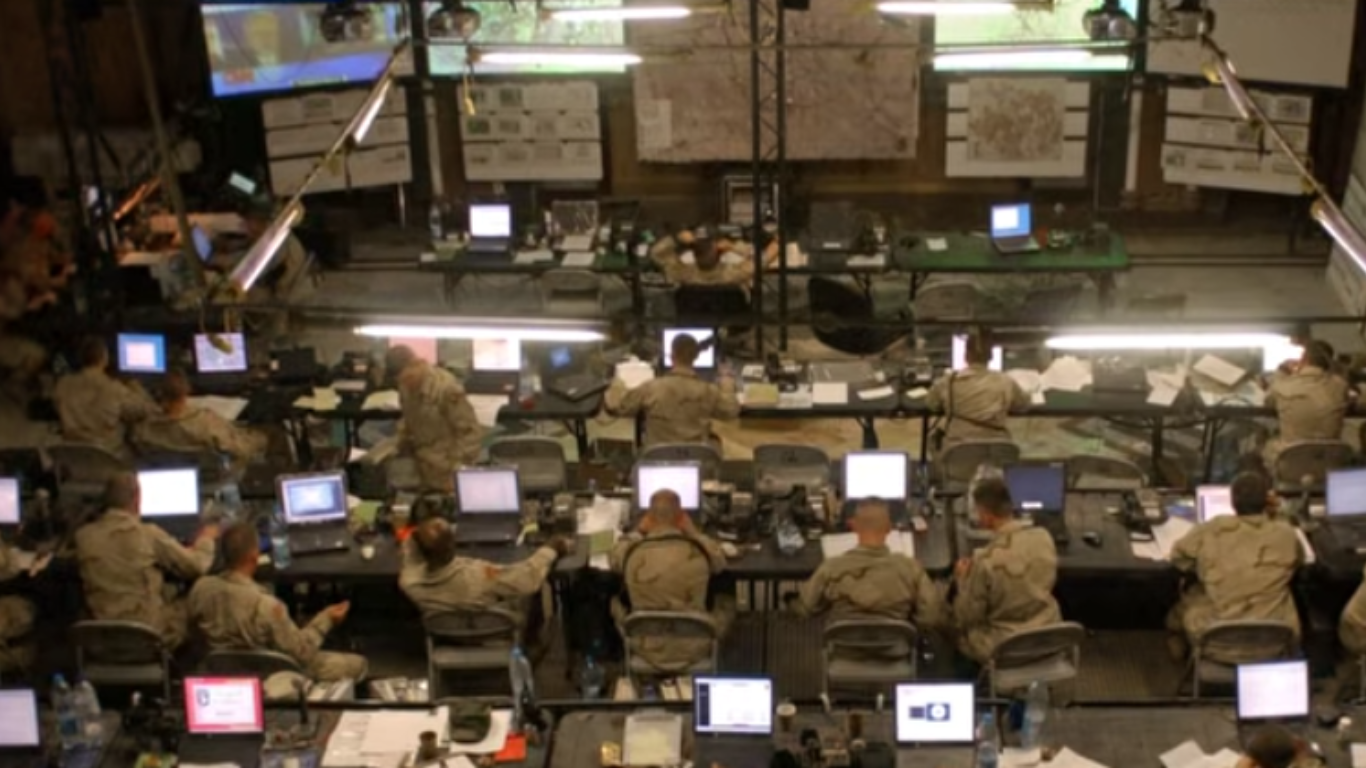
AI Combat Cloud is changing the way modern military forces understand and manage the battlefield. Instead of relying on delayed reports and disconnected systems, it creates one intelligent network where information moves quickly, decisions become smarter, and every second counts. In this guide, you will discover how this technology is shaping the future of defense in a practical and easy-to-understand way.
AI Combat Cloud Explained
AI Combat Cloud is transforming modern warfare through intelligent battlefield networking, edge computing, real time data sharing, and AI powered military decision making.
Modern warfare has entered a completely different era. Victory is no longer determined only by the size of an army or the power of advanced weapons. Today, the speed of information, the quality of intelligence, and the ability to make accurate decisions are becoming the defining factors. Every second matters on the battlefield, and every delay can change the outcome of an operation. This is exactly where the AI Combat Cloud is creating a major transformation.
The idea behind the AI Combat Cloud is surprisingly simple. Instead of allowing every military platform to operate independently, it connects soldiers, drones, aircraft, satellites, ground vehicles, naval assets, sensors, and command centers into one intelligent digital ecosystem. Information collected from thousands of different sources is shared almost instantly, allowing commanders and frontline personnel to see the same operational picture.
Unlike traditional military communication systems that often depend on separate networks, the AI Combat Cloud creates a unified environment where artificial intelligence continuously analyzes incoming information. The system automatically highlights important events, removes unnecessary data, predicts possible threats, and delivers useful intelligence to the people who need it most.
From my perspective, this is one of the biggest technological shifts in military history. Previous military revolutions introduced stronger weapons or faster vehicles. The AI Combat Cloud introduces something different. It improves how knowledge itself moves across the battlefield.
Military organizations around the world are investing heavily in this approach because future conflicts will involve massive amounts of digital information. Without intelligent systems to organize this information, even the most advanced military force can become overwhelmed.

The Evolution of Battlefield Networks
AI Combat Cloud connects military sensors, drones, vehicles, and command systems into one intelligent network, allowing faster decisions, real time coordination, and improved battlefield awareness through AI.
Military communication has changed dramatically over the past century. Earlier generations depended almost entirely on radio communication, handwritten maps, field reports, and visual observation. Information often arrived late, making quick decision making extremely difficult.
As technology improved, digital communications, satellite systems, surveillance aircraft, and unmanned aerial vehicles expanded military awareness. However, these systems were usually developed independently. Each platform generated valuable information, but sharing it efficiently remained a challenge.
The AI Combat Cloud represents the next stage of this evolution. Rather than treating each platform as a separate source of intelligence, every connected asset becomes part of one larger information network.
Historical progress can be understood through the following timeline.
| Year | Event | Description |
|---|---|---|
| Early 1900s | Military radio communication | Radio improved battlefield coordination over long distances. |
| 1960s | Satellite communications | Military satellites expanded global communication capabilities. |
| 1990s | Digital battlefield systems | Computerized command systems improved operational planning. |
| Early 2000s | Network centric warfare | Military forces focused on connecting sensors and command systems. |
| 2020s | AI Combat Cloud development | Artificial intelligence, cloud computing, edge processing, and advanced networking became integrated into military operations. |
Each stage solved an important problem, but each also introduced new challenges. Today’s battlefield produces an enormous volume of digital information that cannot be managed effectively without intelligent automation.
Understanding Edge Cloud Architecture
Many people hear the phrase edge cloud architecture and assume it is extremely technical. In reality, the concept can be understood through a simple example.
Imagine emergency responders arriving at the scene of a natural disaster. Every team needs accurate information immediately. Waiting for reports from a distant headquarters would waste valuable time. Instead, information is processed directly where the event is happening.
Military operations follow the same principle.
Let me explain this in the clearest, simplest terms.
Edge computing means information is processed close to where it is collected instead of sending everything to a distant data center. AI Combat Cloud combines this approach with intelligent networking, allowing military devices to react almost instantly.
This creates several practical advantages.
A reconnaissance drone can identify suspicious movement and analyze it immediately instead of waiting for remote servers.
A combat vehicle can detect incoming threats and notify nearby units within moments.
A soldier wearing advanced equipment can receive updated tactical information directly through connected devices.
Every connected platform becomes both a source of information and an intelligent decision support system.
The battlefield becomes faster because intelligence no longer has to travel across long communication paths before reaching those who need it.
Why Artificial Intelligence Is the Core of the Combat Cloud
Without artificial intelligence, the Combat Cloud would simply become an enormous collection of disconnected information. Every minute, thousands of sensors generate images, videos, radar signals, electronic signatures, weather updates, satellite observations, communication records, and operational reports.
No human team could realistically analyze this amount of information quickly enough.
Artificial intelligence performs several important tasks simultaneously.
First, it organizes incoming information into meaningful categories.
Second, it removes duplicate or unnecessary data that could distract operators.
Third, it identifies unusual patterns that deserve immediate attention.
Finally, it recommends priorities based on the operational situation.
For example, an AI system may receive thermal images from drones, radar data from surveillance aircraft, satellite imagery, and reports from soldiers. Individually, each source tells only part of the story. Together, AI combines them into one complete operational picture.
This process is known as data fusion.
Instead of asking commanders to compare dozens of separate information sources, AI presents one clear understanding of the battlefield.
I believe this is among the most practical ways AI is strengthening modern military capabilities. The technology does not replace experienced commanders. It helps them focus on the information that matters most while reducing unnecessary workload.
How Real Time Data Sharing Improves Military Operations
Military success often depends on coordination rather than individual strength. Even highly capable units can struggle if communication breaks down.
The AI Combat Cloud improves coordination by allowing every authorized participant to access the same operational picture.
Consider a reconnaissance drone detecting enemy movement several kilometers ahead of friendly forces. Instead of sending separate reports through multiple communication channels, the information immediately becomes available across the connected network.
Nearby armored vehicles receive updated positions.
Infantry commanders see the movement on digital battlefield displays.
Air support units prepare potential response options.
Command centers monitor the developing situation in real time.
Because everyone is working from the same information, confusion is significantly reduced.
This synchronized awareness allows military leaders to react more confidently and allocate resources more efficiently.
In many situations, faster understanding becomes just as valuable as superior firepower.
The Growing Role of Five Generation Networks in Military Communication
High speed communication has become one of the foundations of modern defense technology. Large amounts of battlefield information must travel securely between connected systems without significant delay.
Advanced wireless communication technologies provide the bandwidth needed to support high resolution imagery, sensor information, autonomous systems, and continuous operational updates.
However, communication speed alone is not enough.
Information must also be processed intelligently.
This is why AI Combat Cloud combines advanced networking with edge computing and artificial intelligence. Instead of relying entirely on distant computing centers, important decisions can begin where the information originates.
A surveillance drone identifying suspicious activity can immediately process video streams using onboard AI before sharing only the most valuable intelligence with nearby forces.
This approach reduces unnecessary network traffic while improving response time.
As military operations continue becoming more connected, this combination of intelligent processing and high speed communication will become increasingly important for future battlefield effectiveness.
The Merits and the Reality
Every major military innovation has promised to improve battlefield performance, but only a few have truly changed the way wars are fought. The AI Combat Cloud belongs in that category because it focuses on improving awareness, coordination, and decision making instead of simply introducing another weapon. Its greatest strength lies in helping military personnel understand complex situations more quickly and respond with greater confidence.
One of the biggest advantages is faster coordination between different branches of the armed forces. Ground troops, naval forces, air units, cyber teams, and space assets no longer need to operate as isolated organizations. Instead, they become connected parts of one intelligent operational network. This level of cooperation reduces communication delays and allows commanders to assign resources where they are needed most.
Another important benefit is improved decision support. Modern battlefields generate enormous amounts of information every second. AI helps organize this information, identify priorities, and present useful recommendations without replacing human judgment. Experienced commanders remain responsible for critical decisions, while AI works as an intelligent assistant that provides faster situational awareness.
Operational efficiency also improves significantly. Instead of several units collecting identical information independently, connected systems share intelligence across the network. This reduces duplicated effort, saves valuable time, and allows military assets to focus on their assigned missions.
However, reality requires balance.
The AI Combat Cloud is not a perfect solution for every challenge. Complex technologies require constant maintenance, reliable communication infrastructure, strong cybersecurity, and highly trained personnel. If one of these elements is neglected, overall effectiveness can decline.
Military organizations must also avoid becoming overly dependent on automation. Technology should strengthen human capability rather than replace professional military experience. Human judgment, ethical responsibility, and leadership remain essential in every military operation.
From my perspective, the real value of the AI Combat Cloud comes from cooperation between people and intelligent systems. The strongest military forces of the future will likely be those that successfully combine advanced technology with skilled human leadership.
Practical Applications Beyond Traditional Warfare
Although the AI Combat Cloud is designed primarily for military operations, many of its technologies have practical applications outside the battlefield.
Emergency response organizations can use similar systems during natural disasters. Rescue teams, helicopters, drones, medical personnel, and local authorities can share real time information through connected networks, improving coordination during earthquakes, floods, hurricanes, or wildfires.
Border security agencies can benefit from intelligent sensor networks that combine surveillance cameras, drones, radar systems, and satellite imagery into one operational picture. This improves monitoring while reducing response times.
Maritime security operations can also use AI powered cloud networks to monitor shipping routes, detect suspicious vessel activity, and coordinate coast guard responses.
Critical infrastructure protection represents another important application. Energy facilities, transportation networks, communication systems, and public utilities increasingly depend on intelligent monitoring systems capable of identifying unusual behavior before it develops into a larger problem.
These examples demonstrate that many technologies developed for military purposes eventually contribute to civilian safety and national resilience.
Future Developments
The AI Combat Cloud is still evolving. Research organizations, defense companies, and military institutions continue improving every layer of the technology.
Future developments will likely focus on increasing system resilience. Networks must continue operating even if communication links are disrupted or individual components become unavailable. Distributed architectures and decentralized processing will play an increasingly important role in achieving this goal.
Artificial intelligence itself will also become more capable. Future systems may better understand changing battlefield conditions, recognize emerging patterns, and provide more accurate decision support while reducing false alarms.
Autonomous platforms are expected to become more closely integrated with combat cloud networks. Unmanned aircraft, robotic ground vehicles, maritime drones, and autonomous surveillance systems will likely exchange information continuously while supporting human operators.
Space based communication will also become increasingly important. Satellite constellations can improve global connectivity and provide reliable communication pathways even in challenging operational environments.
Cybersecurity research will remain a top priority. As military networks become more intelligent, they must also become more resistant to cyber attacks, electronic warfare, and information manipulation.
Energy efficiency represents another important area of development. Smaller, more powerful processors will allow advanced AI capabilities to operate on portable military equipment without excessive power consumption.
In my opinion, future progress will depend not only on faster computers or stronger networks but also on designing systems that remain reliable under the most demanding operational conditions.
Challenges That Cannot Be Ignored
Despite remarkable progress, several obstacles still require attention before AI Combat Cloud technology reaches its full potential.
Interoperability remains one of the largest challenges. Military equipment is often produced by different manufacturers using different communication standards. Connecting every platform into one seamless environment requires extensive collaboration and common technical frameworks.
Data quality is another concern. Artificial intelligence can only provide reliable recommendations when incoming information is accurate. Poor quality data, incomplete sensor coverage, or incorrect reporting can reduce system effectiveness.
Training also plays a significant role. Personnel must understand both the capabilities and limitations of intelligent decision support systems. Technology alone cannot guarantee success without skilled operators who know how to interpret and verify AI generated recommendations.
Ethical responsibility deserves equal attention. Military organizations must establish clear policies regarding human oversight, accountability, and responsible use of AI supported operations. Maintaining meaningful human control over critical decisions remains an essential principle.
Finally, financial investment cannot be overlooked. Developing secure cloud infrastructure, advanced communication networks, AI software, and specialized hardware requires substantial long term funding.
Addressing these challenges will determine how successfully future combat cloud systems can support national defense objectives.
Conclusion
The AI Combat Cloud represents far more than another military technology. It reflects a new way of understanding modern warfare where information, intelligence, and coordination become as important as traditional military strength. By combining artificial intelligence, edge computing, secure communications, and real time data sharing, this technology creates a battlefield that is faster, smarter, and better connected.
Its greatest contribution is not replacing human decision makers but giving them clearer information at the right moment. Commanders gain broader awareness, soldiers receive more useful intelligence, and military operations become more coordinated across land, sea, air, space, and cyber domains.
Like every major technological advancement, success depends on responsible implementation. Strong cybersecurity, reliable infrastructure, continuous training, ethical oversight, and international technical standards will all play important roles in shaping the future of this technology.
From my perspective, the AI Combat Cloud will continue to influence military planning for many years because it addresses one of the most important challenges in modern defense, turning overwhelming amounts of information into practical knowledge that supports faster and better decisions.
As technology continues to evolve, the battlefield will become increasingly digital, connected, and intelligent. Nations that invest wisely in secure, resilient, and human centered AI systems will be better prepared for the challenges of tomorrow while maintaining responsible control over advanced military capabilities.