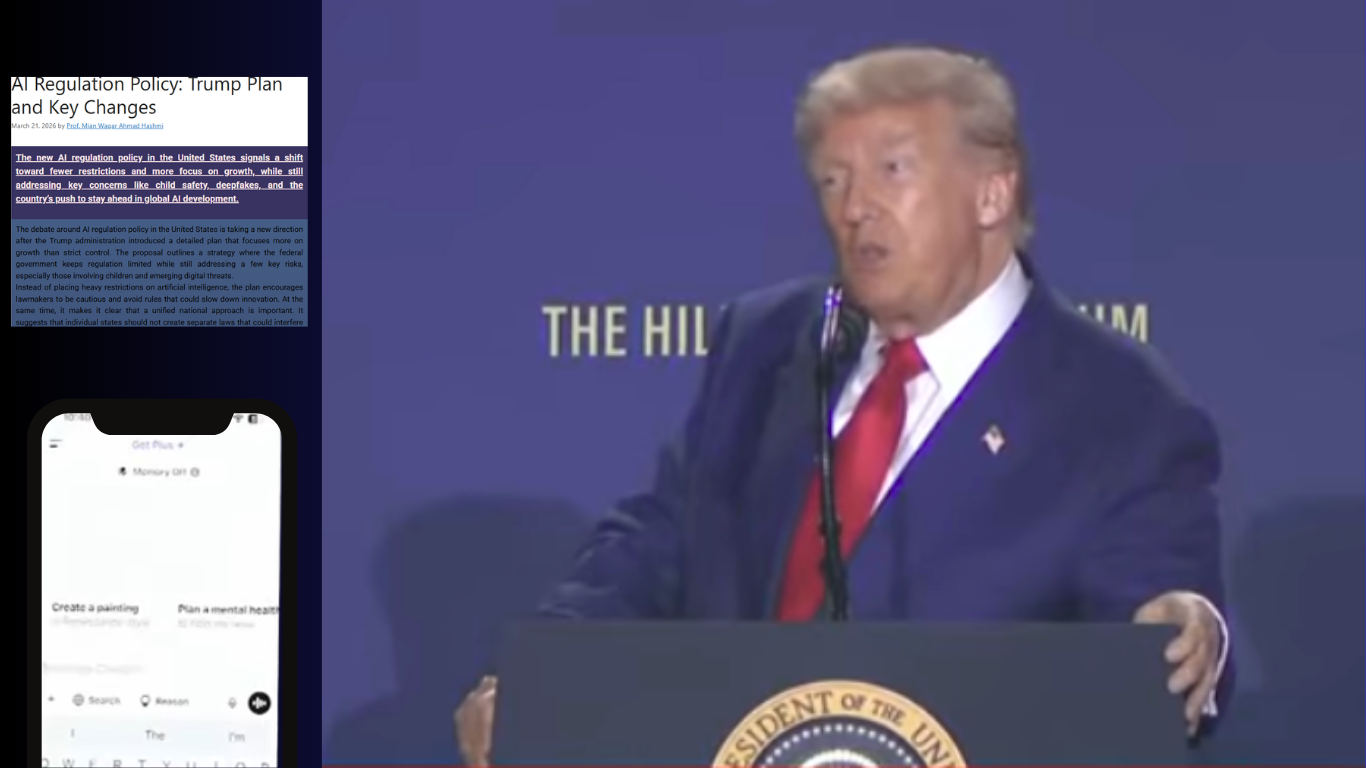
The new AI regulation policy in the United States signals a shift toward fewer restrictions and more focus on growth, while still addressing key concerns like child safety, deepfakes, and the country’s push to stay ahead in global AI development.
The debate around AI regulation policy in the United States is taking a new direction after the Trump administration introduced a detailed plan that focuses more on growth than strict control. The proposal outlines a strategy where the federal government keeps regulation limited while still addressing a few key risks, especially those involving children and emerging digital threats.
Instead of placing heavy restrictions on artificial intelligence, the plan encourages lawmakers to be cautious and avoid rules that could slow down innovation. At the same time, it makes it clear that a unified national approach is important. It suggests that individual states should not create separate laws that could interfere with a broader US AI strategy aimed at maintaining global leadership.
One of the central ideas in this AI regulation policy is protecting younger users. The proposal supports stronger safety steps for minors using AI platforms. This includes better age verification methods and limits on how companies use children’s data, especially for targeted advertising or training AI systems. However, it stops short of banning these practices completely, choosing instead to introduce controlled limits.
The plan also touches on the growing pressure that AI infrastructure can put on energy systems. With large-scale AI models requiring significant computing power, there is concern about rising electricity costs. Lawmakers are encouraged to consider solutions that can prevent sudden increases in energy demand while still supporting the expansion of AI technologies.
Another important area is education and workforce development. The proposal highlights the need for better training and skill-building programs so that people can become more familiar with AI tools. While the idea is mentioned clearly, the document does not go into deep detail about how these programs would be implemented.
When it comes to legal questions, especially around using copyrighted material to train AI models, the approach remains cautious. Rather than making immediate decisions, the plan suggests waiting to see how the legal landscape develops before introducing firm rules.
The issue of deepfakes and digital identity is also addressed. As AI-generated videos and voice clones become more realistic, the policy points toward creating a federal legal framework to protect individuals from unauthorized use of their likeness, voice, or identity. At the same time, it stresses that such laws should not limit free speech, allowing space for satire, parody, and news reporting.
The proposal also reflects ongoing concerns about overregulation. It advises against creating unclear rules or broad liabilities that could lead to unnecessary legal battles. The goal is to keep the environment stable for companies while still addressing major risks linked to AI use.
Importantly, this AI regulation policy is still just a proposal. It will only become effective if Congress reviews, approves, and passes it into law. Until then, it remains a blueprint that signals how the US may balance innovation, safety, and global competition in the fast-moving world of artificial intelligence.