
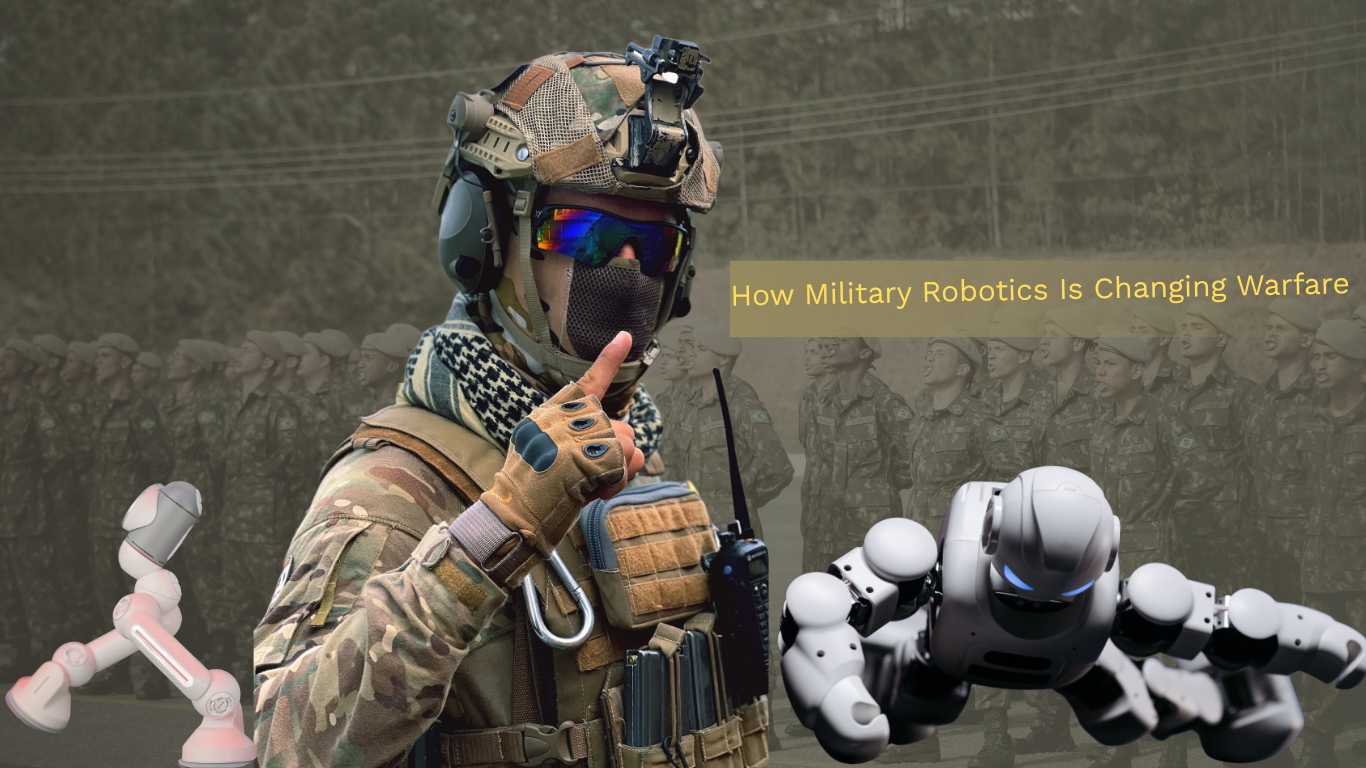
The world of defense is changing faster than most people realize, and military robotics is quietly becoming the backbone of that transformation. From drones flying across conflict zones to ground robots saving soldiers’ lives, this technology is no longer a concept of the future—it is already shaping how wars are fought today. In this article, you will explore how military robotics works, where it is being used, and why it matters more now than ever before.
Understanding Military Robotics:
Let me break this down in the easiest way to understand.
Military robotics is not just about machines replacing humans. It is about enhancing human capability in situations where risk, speed, and precision matter the most.
When you think about a battlefield, you imagine chaos, uncertainty, and danger. Now imagine sending a robot instead of a human into that danger. That is where military robotics becomes powerful. It reduces risk while increasing efficiency.
From my perspective, this is one of the most practical uses of technology. It is not about removing humans completely; it is about protecting them.
The Evolution of Military Robotics:
If you go back just a couple of decades, robots in the military were mostly used for bomb disposal. They were simple machines, controlled remotely, and designed for very specific tasks.
Today, things are completely different.
We now have:
- Autonomous drones that can identify targets
- Robotic vehicles that can navigate rough terrain
- AI systems that assist in decision-making
What changed everything is the combination of robotics with artificial intelligence. This shift turned machines from tools into decision-support systems.
Types of Military Robots in Use Today:
Aerial Robots (Drones):
Drones are probably the most visible example of military robotics. They are used for surveillance, reconnaissance, and even combat missions.
What makes them important is their ability to operate without risking human pilots. Countries around the world are investing heavily in drone technology because it gives them a strategic advantage.
Ground Robots:
These robots operate on land and are often used for dangerous missions like bomb disposal or reconnaissance in hostile areas.
In real-world scenarios, ground robots have saved countless lives by handling explosives that would otherwise require human intervention.
Naval Robots:
These include underwater drones and unmanned ships. They are used for mine detection, surveillance, and protecting maritime borders.
This area is growing fast because oceans are becoming a key strategic zone.
Why Military Robotics Matters Today:
Let me be honest—this is not just about technology. It is about strategy.
Military robotics allows:
- Faster decision-making
- Reduced human casualties
- Better intelligence gathering
- More precise operations
From a practical standpoint, countries that adopt this technology early gain a major advantage.
Real-World Applications You Should Know:
This is where things get interesting.
Military robotics is already being used in:
- Border surveillance
- Counter-terrorism operations
- Disaster response
- Urban warfare
For example, drones are used to monitor difficult terrains where human access is limited. Ground robots are deployed in cities to detect threats before soldiers move in.
These are not experiments anymore. These are real deployments.
The Role of AI in Military Robotics:
AI is the brain behind modern military robotics.
Without AI, robots would still require constant human control. With AI, they can:
- Analyze situations in real time
- Recognize patterns
- Make recommendations
In my opinion, this is where the real power lies. It is not just about machines doing tasks; it is about machines thinking faster than humans in critical moments.
Ethical Concerns Around Military Robotics:
Now let us address the difficult part.
There is a serious debate about autonomous weapons. Is it acceptable for machines to decide matters of life and death?
Some experts argue that it reduces human error. Others believe it removes accountability.
Personally, I think there must always be human oversight. Technology should assist decisions, not replace human judgment entirely.
Challenges Facing Military Robotics:
Despite all the advancements, there are still challenges:
- High development costs
- Cybersecurity risks
- Reliability in extreme conditions
- Ethical and legal concerns
These are not small issues. In fact, they will shape how military robotics evolves in the future.
Future of Military Robotics:
Looking ahead, the future is clear military robotics will become even more advanced.
We can expect:
- Fully autonomous systems
- Swarm robotics (multiple robots working together)
- AI-driven battlefield management
- Human-robot collaboration
From what I see, the focus will not just be on building better robots but on integrating them seamlessly with human forces.
Personal Insight: Why This Matters More Than You Think:
Let me share something important.
Many people think military robotics is only relevant to defense experts. That is not true.
This technology influences:
The same robotics technology used in the military often finds its way into civilian life later. So understanding it today gives you insight into tomorrow.
How Worldstan Brings This Perspective:
At Worldstan, the goal is not just to inform but to simplify complex ideas so that anyone can understand them.
This article is crafted to give you not just information, but clarity. Because in a world driven by technology, understanding is power.
Conclusion:
Military robotics is not just a technological trend it is a shift in how the world approaches security and conflict. What started as simple machines has now evolved into intelligent systems capable of transforming entire battle strategies. The real question is not whether this technology will grow, but how responsibly it will be used. From my perspective, the future depends on balance—using innovation to protect lives while maintaining human control. And if there is one thing to take away from this, it is that understanding military robotics today means understanding the future of global power tomorrow.
FAQs:
- What is military robotics in simple terms?
Military robotics refers to machines designed to perform defense-related tasks, often reducing human risk in dangerous environments. - Are military robots fully autonomous?
Some are partially autonomous, but most still operate with human oversight to ensure control and accountability. - How are drones used in military robotics?
Drones are used for surveillance, intelligence gathering, and sometimes combat missions without risking human lives. - What are the risks of military robotics?
Key risks include cybersecurity threats, system failures, and ethical concerns about autonomous decision-making. - Can military robotics replace soldiers?
No, they are designed to support and enhance human capabilities, not completely replace them. - Which countries are leading in military robotics?
Several advanced nations are heavily investing in robotics and AI for defense, making it a global competition. - What is the future of military robotics?
The future includes smarter AI systems, autonomous operations, and closer human-machine collaboration.