

Agentic AI Is Reshaping Robotics and AI Governance
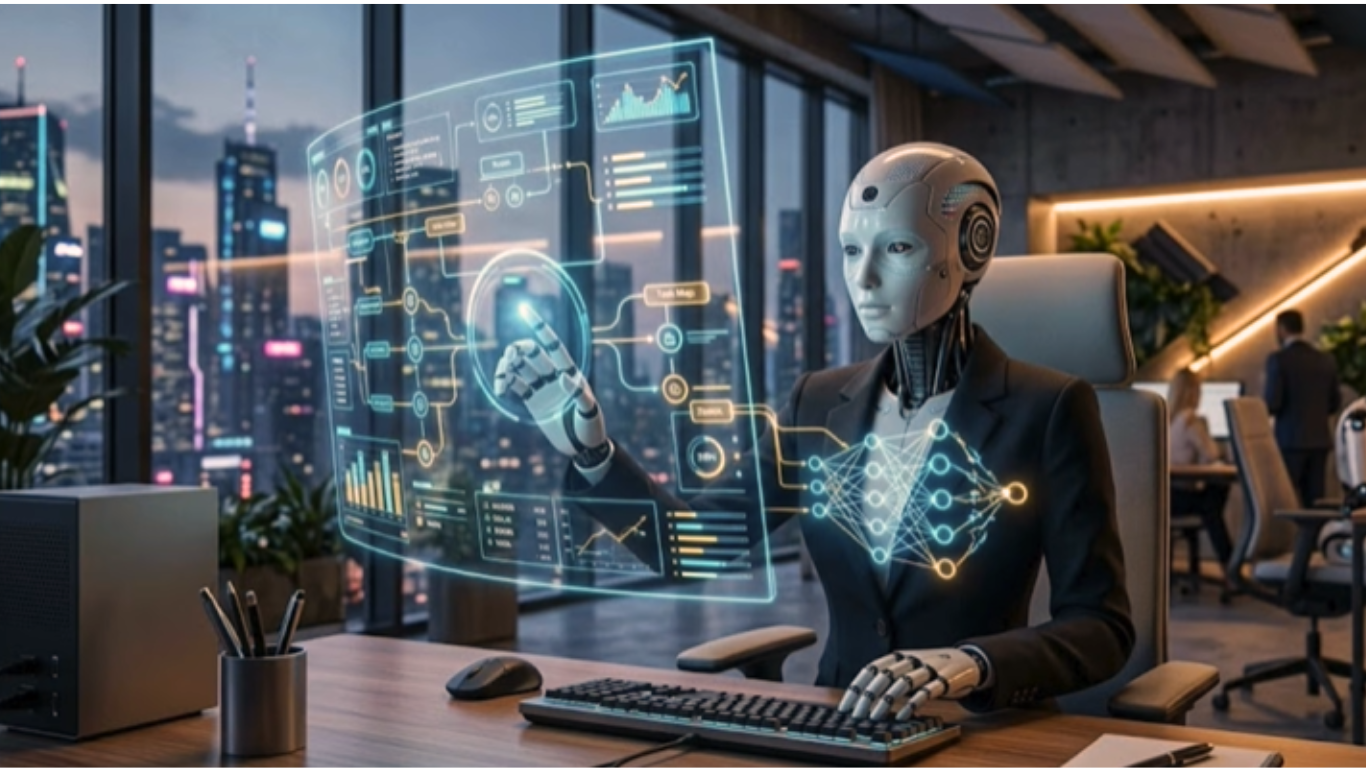
Agentic AI is no longer limited to software and online tools. It is now entering warehouses, logistics networks, retail stores, and public spaces, creating new questions about safety, monitoring, and AI governance in the physical world.
Agentic AI Expands Beyond Software as Global Robotics Industry Grows
Artificial intelligence is quickly expanding into the physical world.
What once operated mainly through chatbots, automation software, and digital platforms is now becoming part of warehouses, transport systems, delivery networks, industrial factories, and even public spaces. This shift is placing agentic AI at the center of global conversations about robotics safety, operational control, and AI governance.
Technology companies and regulators are increasingly paying attention to embodied AI systems because these machines can interact directly with physical environments. Unlike traditional AI software that mainly processes information online, embodied AI can control robots, devices, drones, and industrial systems. That means failures may no longer remain digital problems. They could affect public safety, infrastructure, and business operations in real time.
Singapore recently introduced an updated AI governance framework focused on agentic AI systems. The guidance explains how AI agents can perform multi-step tasks, connect with external tools, access databases, control devices, and complete actions with limited human involvement. The framework also emphasizes the need for monitoring, human oversight, security measures, and ongoing testing after deployment.
The growing focus on agentic AI reflects how quickly businesses are adopting robotics and automation technologies. Companies operating in logistics and transportation are already testing autonomous delivery robots and AI-powered operational systems. These technologies are designed to improve efficiency, reduce costs, and support businesses facing labor shortages and increasing operational complexity.
Industry experts believe the risks connected to AI become more serious when systems operate in physical environments. Autonomous machines can influence transportation systems, industrial infrastructure, energy networks, and supply chains. As a result, regulators are now treating robotics governance more like aviation safety or industrial risk management instead of ordinary software compliance.
One of the biggest concerns involves operational monitoring. AI developers understand that even advanced systems cannot predict every real-world situation before launch. Because of this, businesses are relying heavily on simulations, testing environments, and live monitoring systems to identify unexpected behavior after deployment.
Several robotics companies are now using gradual deployment strategies. Instead of launching thousands of autonomous robots at once, firms are testing small groups in controlled environments before expanding operations. This allows engineers to monitor performance, collect data, and improve safety measures over time.
The discussion around embodied AI is also creating new questions about accountability. Modern AI ecosystems involve many different players, including software developers, robotics manufacturers, semiconductor companies, infrastructure operators, and deployment partners. Determining responsibility becomes difficult when AI systems continue learning and adapting through updates and operational data.#
Governments across Asia are actively developing policies for robotics safety and AI governance. Singapore is focusing on deployment oversight and operational controls. China is accelerating robotics commercialisation through government-backed industrial projects and funding programs. Japan is investing in robotics datasets, safety standards, and AI research partnerships to strengthen its position in industrial robotics.
The robotics industry itself is evolving quickly. Companies are building AI-powered machines for warehouses, retail stores, pharmaceutical operations, and manufacturing plants. Semi-structured environments such as factories and logistics centers are becoming early testing grounds because they provide more controlled operating conditions than public spaces.
Large technology and financial companies are also adopting agentic AI tools within regulated workflows. Banks are using AI systems to process documents, summarize information, and support internal operations. However, human oversight remains a critical requirement for important financial decisions and compliance-related activities.
Retail businesses are also expanding their AI strategies. Some companies are developing AI agents designed for shopping assistance, employee support, supplier management, and software development. These tools are expected to become major entry points for customer interaction and operational management in the coming years.
At the same time, industrial robotics demand continues to rise globally. Many businesses see AI-powered robots as a solution for labor shortages, manufacturing efficiency, and workplace safety. Transportation manufacturers and industrial firms are among the most active adopters of robotics technologies today.
Despite the excitement surrounding automation, experts believe strong AI governance will remain essential. Monitoring systems, human supervision, emergency shutdown controls, and transparent accountability structures are becoming necessary parts of responsible AI deployment.
The future of agentic AI will likely depend on how effectively businesses and governments balance innovation with safety. As embodied AI systems become more integrated into everyday infrastructure and operations, the demand for reliable governance frameworks, operational transparency, and long-term oversight will continue to grow across the global technology industry.