

Artificial Intelligence in Daily Life Examples
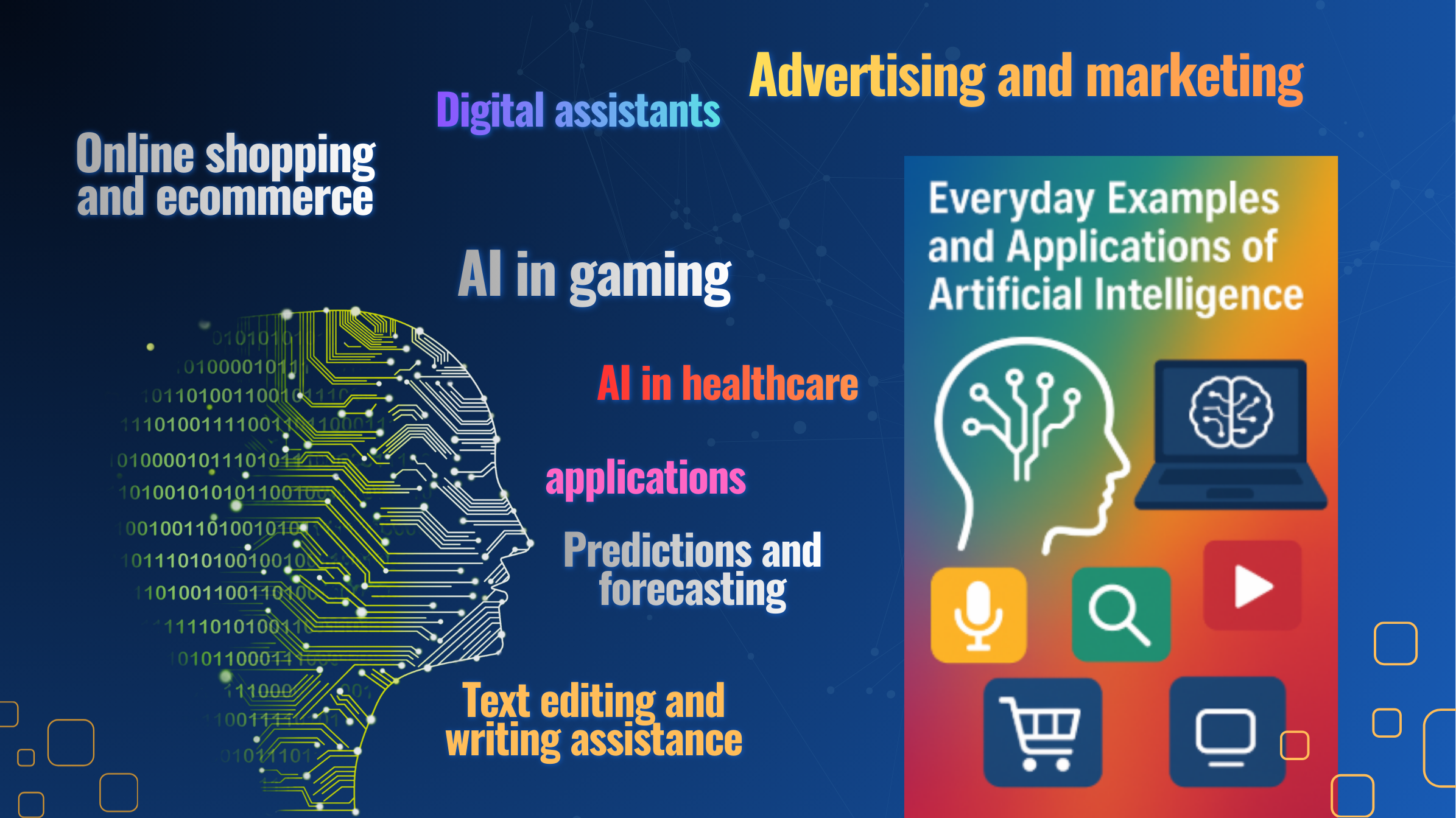
Artificial Intelligence in Daily Life is no longer something reserved for scientists or technology companies. It has become a practical part of modern living, helping people shop online, navigate roads, communicate with others, manage finances, access healthcare, and make better decisions. This article explores how AI quietly works behind the scenes to make everyday activities faster, smarter, and more convenient.
Everyday Examples and Applications of Artificial Intelligence in Daily Life
Artificial Intelligence in Daily Life has transformed from an exciting innovation into a technology that influences nearly every aspect of modern living. Whether you are checking your smartphone, watching videos online, receiving product recommendations, or using navigation apps, AI is working in the background to improve your experience.
What makes AI remarkable is its ability to process huge amounts of information, identify patterns, learn from data, and provide useful outcomes within seconds. Businesses, governments, healthcare providers, educators, and consumers are increasingly relying on AI-driven solutions because they improve efficiency and reduce manual effort.
Today, AI is not simply changing industries. It is changing daily routines. Most people interact with AI multiple times every day without even realizing it.
What Is Artificial Intelligence and Why Does It Matter
Artificial intelligence refers to computer systems designed to perform tasks that usually require human intelligence. These tasks include learning, understanding language, solving problems, recognizing images, making predictions, and analyzing information.
Unlike traditional software that follows fixed instructions, AI systems can learn from experience. As AI systems process more data, their accuracy and efficiency typically improve over time.
The importance of AI lies in its ability to save time, reduce errors, improve decision-making, and create personalized experiences. Businesses use AI to increase productivity, while consumers benefit from smarter and more convenient services.
Let me explain this in the clearest, simplest terms.
AI acts like a highly skilled assistant that can process information much faster than humans and help deliver better outcomes in everyday situations.
Digital Assistants Have Become Everyday Companions
Many people begin their day by interacting with digital assistants such as Siri, Alexa, Google Assistant, or Bixby.
These AI-powered assistants help users perform numerous tasks, including:
- Setting reminders
- Creating shopping lists
- Sending messages
- Playing music
- Checking weather forecasts
- Managing smart home devices
- Searching for information
What makes these assistants impressive is their ability to understand spoken language and respond naturally. Through Natural Language Processing and Machine Learning, they continue improving with every interaction.
For busy professionals and families, digital assistants provide a practical way to save time and stay organized.
How Does AI Improve Search Engines
Search engines have become one of the most powerful examples of Artificial Intelligence in Daily Life.
Whenever someone searches for information online, AI algorithms work instantly to determine the most relevant results. These systems evaluate search intent, previous behavior, location, content quality, and popularity before displaying answers.
AI powers features such as:
- Voice search
- Autocomplete suggestions
- Personalized search results
- Image recognition
- Search recommendations
- Related questions sections
This technology allows users to find accurate information quickly without sorting through millions of webpages manually.
AI Is Changing Social Media Experiences
Social media platforms rely heavily on artificial intelligence to personalize content.
Every time users like a post, watch a video, leave a comment, or follow an account, AI gathers insights about preferences and interests. These insights help platforms deliver content that users are more likely to engage with.
AI contributes to social media through:
- Personalized news feeds
- Video recommendations
- Content moderation
- Spam detection
- User safety monitoring
- Targeted advertising
For businesses, AI enables more effective marketing campaigns. For users, it creates a more engaging and relevant experience.
Online Shopping Has Become Smarter Through AI
Online shopping would look very different without artificial intelligence.
Ecommerce platforms use AI to analyze customer behavior and deliver personalized recommendations. If you have ever purchased a product online and later received suggestions for similar items, AI was responsible for that experience.
AI improves ecommerce by:
- Recommending products
- Optimizing prices
- Managing inventory
- Predicting demand
- Automating customer support
- Improving delivery logistics
Large online retailers use predictive algorithms to anticipate customer needs and reduce shipping times. This creates a smoother shopping experience while helping businesses increase sales.
AI-Powered Navigation Makes Travel Easier
Navigation applications have become essential tools for daily travel.
Applications such as Google Maps and Waze use artificial intelligence to analyze traffic conditions, road closures, accidents, and travel patterns in real time.
Benefits include:
- Faster route planning
- Accurate arrival estimates
- Traffic avoidance
- Fuel efficiency
- Improved road safety
AI processes millions of data points every minute to help drivers make better travel decisions.
For commuters, this technology reduces stress and saves valuable time.
Robotics and Automation Are Expanding Rapidly
Robotics represents one of the most visible applications of artificial intelligence.
Modern AI-powered robots perform tasks that range from manufacturing products to assisting healthcare professionals.
Examples include:
- Factory automation
- Warehouse management
- Medical assistance
- Hotel services
- Food preparation
- Space exploration
Industrial robots can work continuously with high precision, reducing production errors and improving efficiency.
In healthcare, robotic systems assist surgeons during complex procedures, helping improve patient outcomes.
How Does AI Help Improve Writing and Communication
Writing tools have become increasingly intelligent thanks to artificial intelligence.
Applications such as Grammarly and similar platforms analyze grammar, spelling, sentence structure, readability, and writing style.
These tools help users:
- Correct mistakes
- Improve clarity
- Enhance readability
- Detect plagiarism
- Strengthen communication
AI-powered predictive text and autocorrect systems on smartphones also make writing faster and more accurate.
Students, professionals, content creators, and businesses all benefit from these intelligent writing assistants.
AI Is Strengthening Financial Security
Financial institutions process millions of transactions every day. Monitoring such massive volumes manually would be nearly impossible.
Artificial intelligence helps banks and payment providers detect suspicious activity instantly.
AI fraud detection systems can:
- Identify unusual transactions
- Detect spending anomalies
- Prevent unauthorized access
- Flag suspicious behavior
- Reduce financial risks
For consumers, this creates stronger security and greater confidence in digital banking services.
Predictive Analytics Is Helping Businesses Plan Better
Predictive analytics is one of the most valuable business applications of AI.
By analyzing historical and real-time data, AI can forecast future outcomes with remarkable accuracy.
Organizations use predictive analytics to:
- Forecast sales
- Predict customer behavior
- Plan inventory
- Schedule maintenance
- Improve operations
- Reduce costs
For example, manufacturers can predict when machinery requires maintenance before breakdowns occur. As a result, operational interruptions are minimized, and expensive repairs can often be prevented.
AI Is Making Video Games More Realistic
The gaming industry has benefited from artificial intelligence for many years.
AI allows game characters to react intelligently, adapt to player actions, and create more immersive experiences.
Modern games use AI for:
- Character behavior
- Dynamic environments
- Difficulty adjustment
- Personalized gameplay
- Strategic decision-making
As gaming technology advances, AI continues making virtual worlds feel increasingly realistic.
AI Is Revolutionizing Healthcare Services
Healthcare is among the sectors experiencing the greatest impact from artificial intelligence.
AI systems help medical professionals analyze large volumes of patient data quickly and accurately.
Applications include:
- Early disease detection
- Medical imaging analysis
- Drug discovery
- Treatment recommendations
- Robotic surgery
- Health risk prediction
In many cases, AI helps identify diseases earlier than traditional methods, improving treatment success rates.
Healthcare providers can also use predictive analytics to monitor disease outbreaks and improve public health planning.
How Is AI Transforming Marketing and Advertising
Marketing has changed dramatically because of artificial intelligence.
Businesses now use AI to better understand customer preferences, behaviors, and purchasing habits.
AI marketing tools assist with:
- Audience targeting
- Content recommendations
- Campaign optimization
- Customer segmentation
- Automated advertising
- Performance tracking
Companies can deliver more relevant advertisements to the right people at the right time, increasing engagement and improving return on investment.
AI Analytics Is Driving Smarter Business Decisions
Data has become one of the world’s most valuable resources. However, raw data alone provides little value without proper analysis.
AI-powered analytics systems transform complex datasets into actionable insights.
Organizations use AI analytics for:
- Business forecasting
- Customer analysis
- Operational monitoring
- Risk management
- Strategic planning
- Performance measurement
By providing evidence-based information, these insights help decision-makers choose more effective strategies.
AI in Education Is Creating Personalized Learning Experiences
Education is another field experiencing major AI-driven transformation.
Many modern education systems leverage AI to tailor lessons and resources according to a student’s learning progress and needs.
Benefits include:
- Personalized lessons
- Automated assessments
- Learning recommendations
- Virtual tutoring
- Progress tracking
- Real-time feedback
Students receive customized support while educators gain valuable insights into performance and learning outcomes.
Business Growth Through Artificial Intelligence
Organizations across every industry are investing heavily in AI technology.
The reasons are straightforward:
- Increased productivity
- Better customer experiences
- Lower operating costs
- Improved decision-making
- Faster innovation
- Competitive advantages
Companies that strategically implement AI often gain significant efficiency improvements while creating better products and services.
As technology evolves, AI adoption will continue accelerating worldwide.
What Does the Future of Artificial Intelligence in Daily Life Look Like
The future of Artificial Intelligence in Daily Life appears increasingly promising.
Emerging innovations are expected to bring:
- Smarter virtual assistants
- Advanced healthcare solutions
- Autonomous transportation
- Intelligent workplaces
- Enhanced cybersecurity
- Personalized education
- Sustainable resource management
While challenges such as privacy, ethics, and regulation require careful attention, the potential benefits remain substantial.
The organizations and individuals who understand and embrace AI responsibly will be best positioned to thrive in the years ahead.
Conclusion
Artificial Intelligence in Daily Life is no longer an emerging trend. It has become a practical reality that influences how people communicate, travel, learn, shop, work, and manage their finances. From digital assistants and predictive analytics to healthcare innovations and intelligent business systems, AI continues to deliver measurable benefits across countless areas of life.
What makes AI especially valuable is its ability to simplify complex tasks while improving speed, accuracy, and convenience. As new technologies continue to emerge, AI will become even more integrated into everyday experiences. The future belongs to individuals and organizations that understand how to use artificial intelligence responsibly and effectively.
This exclusive guide has been carefully crafted for readers of worldstan.com to provide practical insights, real-world examples, and a deeper understanding of how AI is transforming modern life.