

Generative AI Tools for Business Workflow Automation
Generative AI tools for business workflow automation are moving beyond simple questions and customer replies, helping companies handle financial analysis, contract reviews, recruitment, and other demanding work. The real change is not just faster answers, but how entire workflows can be connected and managed.
Beyond Chatbots and Into Real Business Work
How Generative AI Tools for Business Workflow Automation Are Transforming Enterprise Operations?
Generative AI tools for business workflow automation can connect data, analyze documents, generate insights, and coordinate complex tasks across finance, legal, HR, and other enterprise functions with human oversight.
For years, many companies associated AI with chatbots that answered customer questions, suggested products, or helped employees find basic information. Those applications remain useful, but they represent only one small part of what modern generative AI can do.
Today, enterprise AI is moving deeper into business operations. Instead of simply responding to a question, an AI system can analyze company information, interpret documents, identify patterns, prepare recommendations, generate reports, and in some environments trigger actions inside connected business systems.
This shift matters because businesses rarely operate through one isolated task. A finance employee may need to collect data from an ERP system, compare actual performance with a forecast, investigate a variance, prepare an explanation, and send an update to management. A lawyer may need to review dozens of agreements, compare them with company policies, identify unusual clauses, and prepare a summary. A recruiter may need to screen applications, organize candidates, communicate with applicants, schedule interviews, and maintain accurate records.
Generative AI can become part of these connected processes rather than sitting outside them as another chat window.
Microsoft, for example, describes enterprise Copilot scenarios that connect AI with finance workflows, ERP information, contract review, analysis, and automated tasks. Its current Finance Agent also supports natural-language interaction with ERP information and certain finance actions.
The important distinction is simple. A chatbot waits for a conversation. A workflow-oriented AI system can participate in the work behind the conversation.
How Generative AI Changes Business Workflow Automation
Traditional automation generally works through clearly defined rules.
If an invoice arrives, the system checks a particular field. If the amount exceeds a threshold, it sends an approval request. If a document is missing, it creates an alert.
This approach is extremely useful when processes are predictable. However, modern businesses also deal with information that is messy, lengthy, and difficult to structure. Contracts contain different wording. Resumes have different formats. Financial explanations appear in emails, spreadsheets, reports, and presentations. Customer and supplier information may exist across multiple systems.
Generative AI adds a layer that can work with this less structured information.
It can read and summarize documents, extract relevant information, compare language, generate explanations, classify content, and interact with users through natural language. When connected to business applications and governed data, these capabilities can become part of a larger workflow.
Here is the simplest way to understand it.
The human expert still makes the important judgment. The AI handles much of the reading and organization that previously consumed valuable hours.
That difference is where enterprise automation becomes interesting.
Financial Forecasting Becomes More Interactive
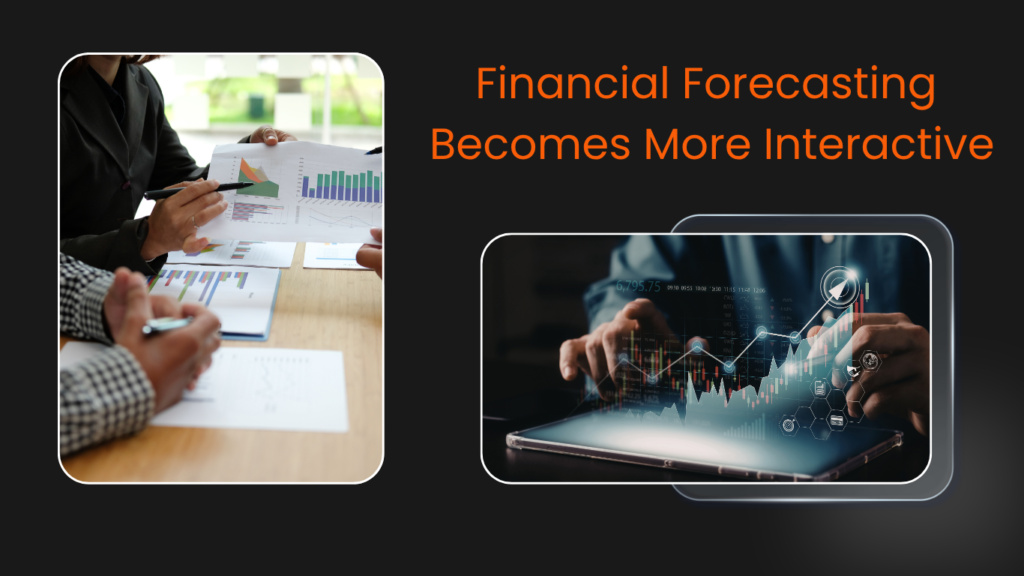
Finance is one of the areas where AI automation can move beyond simple document generation.
Financial teams regularly work with budgets, forecasts, actual results, invoices, accounts receivable, accounts payable, cash flow information, and performance reports. The challenge is not simply producing a spreadsheet. It is understanding what the numbers mean and deciding what deserves attention.
Generative AI can help finance teams interact with this information using natural language.
An analyst might ask why expenses increased during a particular period. Instead of manually searching multiple reports, an AI system connected to approved financial data could help identify relevant changes and organize the information for review.
Microsoft’s finance scenarios currently include budgeting, forecasting, financial analysis, risk management, contract management, invoice exceptions, collections, and other finance activities.
The value becomes greater when AI is connected to the company’s existing systems instead of operating from isolated files.
For example, a finance workflow could begin with incoming financial data. The system could identify unusual movements, compare results against expectations, prepare a variance explanation, and create a draft management report. A finance professional could then review the findings before they are shared.
This does not mean a company should allow AI to independently decide where millions of dollars should be invested. Financial decisions carry consequences that require human judgment, controls, and accountability.
The better model is AI-assisted financial intelligence.
Recent industry analysis also points toward a more agentic finance environment in which AI may handle more parts of finance processes while people retain responsibility for interpretation, judgment, and strategic decisions.
That balance is important. Automation should reduce repetitive work without removing responsible decision-making.
AI Can Turn Contract Review Into a Faster Workflow
Legal contract review provides another strong example of where generative AI can go beyond a chatbot.
Contracts are rarely difficult because they are impossible to read. They are difficult because businesses may have hundreds or thousands of documents containing different terms, obligations, dates, exceptions, renewal conditions, and risk exposures.
A legal professional may need to examine a contract and determine whether important clauses are present, whether language differs from the company’s preferred position, and whether unusual provisions deserve attention.
Modern AI contract review systems can help with these tasks.
Thomson Reuters describes current AI contract-review capabilities including clause extraction, risk flagging, playbook comparison, obligation tracking, deadline management, summaries, document comparison, and integration with common legal workflows.
This changes the workflow from reading every document from the beginning toward reviewing AI-generated findings and investigating exceptions.
Consider a procurement department negotiating with a new supplier.
The AI could examine the agreement, identify payment terms, renewal conditions, liability language, termination provisions, and other important clauses. It could compare those terms with the company’s preferred standards and highlight differences.
The legal team can then concentrate on the clauses that actually require professional judgment.
That is much more useful than asking an AI chatbot to “summarize this contract.”
The difference is workflow integration.
The system is not merely producing text. It is helping move a business process from document intake to analysis, review, correction, and approval.
Thomson Reuters also emphasizes that effective legal AI requires trusted content, security, integration, data governance, and attorney oversight.
This is a crucial lesson for every organization considering enterprise AI.
More automation does not automatically mean better automation.
Recruitment Can Become a Connected AI Pipeline
Human resources is another area where generative AI can assist with a chain of related activities.
Recruitment involves much more than reading resumes. A typical process may include creating job descriptions, reviewing applications, organizing candidates, communicating with applicants, scheduling interviews, collecting feedback, preparing summaries, and updating HR systems.
Generative AI can support several stages of this process.
For example, an AI system can help create a structured job description based on an approved role profile. It can organize information from candidate applications, summarize relevant experience, prepare interview questions, and assist recruiters in communicating with candidates.
The goal should not be to let AI decide who deserves a job based on an opaque score.
Recruitment decisions affect people’s careers, which makes fairness, explainability, privacy, and human oversight particularly important.
A 2026 systematic review of research into large language models in HR identified recruitment, training, and HR analytics among the major application areas while highlighting bias, transparency, explainability, auditability, and human oversight as continuing challenges.
That makes responsible workflow design essential.
A better recruitment model might use AI to organize information and reduce administrative workload while leaving final candidate evaluation to qualified people.
In this approach, AI becomes a recruiting assistant rather than an invisible hiring authority.
The Real Power Comes From Connecting Systems
One of the biggest mistakes businesses can make is treating generative AI as an isolated application.
An employee may already use an ERP system for financial information, a document management system for contracts, an HR platform for employee information, an email system for communication, and collaboration software for meetings.
If AI is disconnected from these systems, its usefulness can remain limited.
The stronger model connects AI to approved business data and existing workflows.
This is why enterprise AI platforms increasingly emphasize integrations, agents, connectors, APIs, security controls, and organizational data access.
Microsoft’s current enterprise scenarios describe AI agents that can interact with business applications through connectors and APIs, allowing them to perform automated tasks rather than simply generate responses.
The result can look more like a digital workflow coordinator.
A request arrives.
AI identifies the relevant information.
The system checks approved sources.
The AI analyzes the information.
A draft result is prepared.
A responsible employee reviews it.
The approved action is completed.
The result is recorded.
That sequence is much closer to business process automation than conventional chatbot use.
Why Data Quality Matters More Than the AI Model Alone
There is a common assumption that buying a powerful AI model automatically creates a powerful business solution.
It does not.
If the underlying business information is incomplete, outdated, duplicated, incorrectly classified, or inaccessible, AI may simply produce a polished response based on poor information.
This is particularly important for finance, legal, and HR applications.
A financial AI system needs reliable financial data.
A legal AI system needs authoritative documents and appropriate legal sources.
An HR system needs accurate role information and carefully governed employee and candidate data.
The quality of the workflow therefore depends on more than the language model.
Businesses need data governance, access controls, source validation, monitoring, and clear responsibility for outputs.
The legal AI market illustrates this point particularly well. Thomson Reuters emphasizes grounding AI in trusted legal-domain sources and maintaining professional oversight rather than treating generated answers as automatically reliable.
The same principle applies elsewhere.
AI should not be trusted simply because the response sounds confident.
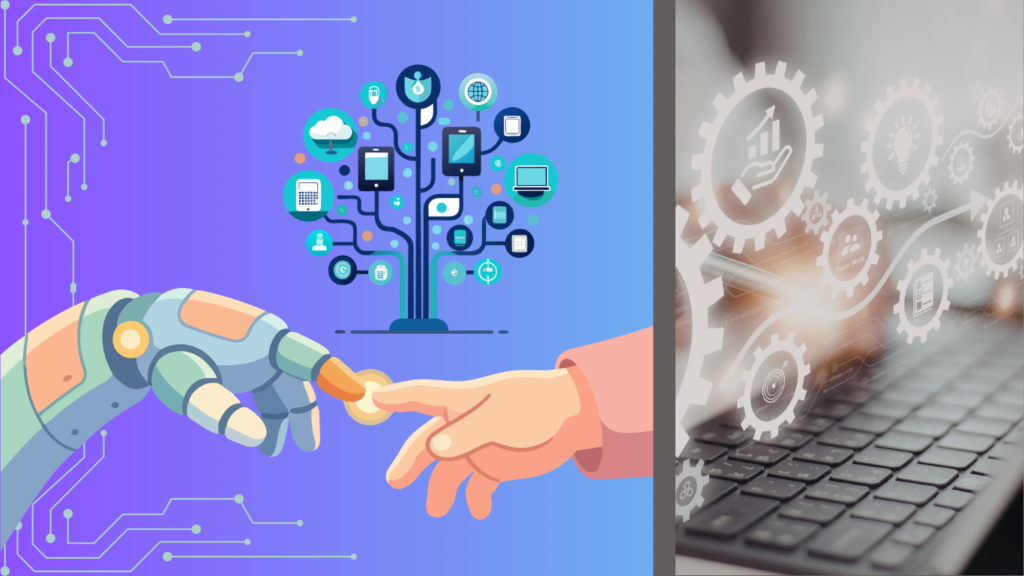
Workflows should include human oversight as an essential part of the process.
The most practical enterprise AI systems are not built around the idea that humans should disappear from the process.
Instead, they determine where human judgment adds the most value.
For a low-risk administrative task, AI may be allowed to complete more of the process automatically.
For a sensitive legal decision, financial approval, or employment decision, human review may be mandatory.
This creates different levels of automation.
A system might summarize information automatically but require approval before sending it externally. It might identify a financial anomaly but require an analyst to confirm its cause. It might flag a contract risk but leave the legal interpretation to counsel. It might organize candidates but leave hiring decisions to recruiters and managers.
This approach makes automation more controlled and easier to audit.
It also helps employees understand where responsibility remains with them.
The Business Case Is About Time and Better Attention
The strongest argument for generative AI automation is not that employees should work less.
It is that employees should spend less time on repetitive work and more time on work that requires experience.
A finance professional should have more time to understand business performance instead of repeatedly formatting reports.
A lawyer should have more time for negotiation and risk strategy instead of manually searching every page of a large contract collection.
A recruiter should have more time to speak with strong candidates instead of spending most of the day organizing applications.
This is where enterprise AI can produce practical value.
Microsoft’s finance scenarios specifically position AI around reducing manual work, speeding analysis, supporting reporting, and improving access to financial information.
The return on investment will vary by organization, however. Businesses should measure actual outcomes rather than assuming that adding AI automatically creates savings.
Useful measurements can include processing time, error rates, review time, employee productivity, response time, operating costs, and the percentage of cases requiring human intervention.
A Better Way to Introduce AI Automation
Companies should not begin by asking where they can put AI.
They should begin by identifying where work is slow, repetitive, expensive, difficult to scale, or overloaded with unstructured information.
That distinction can prevent expensive experiments.
Suppose a finance team spends thousands of hours preparing recurring reports. That may be a strong automation candidate.
Suppose a legal department receives hundreds of similar contracts every month. Contract analysis may be a stronger starting point.
Suppose recruiters spend large amounts of time organizing applications and scheduling interviews. Recruitment administration could be an appropriate workflow to improve.
Start with one clearly defined process.
Measure its current performance.
Connect AI to the right data.
Set clear boundaries for what the system can handle and what it must not do.
Establish approval points.
Monitor results.
Then expand.
This approach is more realistic than trying to automate the entire organization at once.
Security and Privacy Cannot Be an Afterthought
Enterprise AI often works with information that businesses cannot afford to expose.
Financial records, contracts, employee information, customer information, intellectual property, and internal strategy documents may all require strict controls.
Before deploying an AI workflow, organizations should understand where data goes, who can access it, how permissions are enforced, how outputs are logged, and how information is retained.
Security also needs to cover the AI’s connections to other systems.
An AI agent capable of accessing and understanding information is one level of capability.
An AI agent that can change records, send messages, approve transactions, or trigger other actions is much more powerful.
That power requires stronger controls.
Businesses should therefore apply least-privilege access, authentication, logging, approval mechanisms, monitoring, and clear ownership of automated actions.
What Generative AI Tools Could Look Like Next
The next stage of enterprise automation is likely to involve AI systems that coordinate several steps instead of completing one isolated task.
Imagine a sales process where an AI system receives a customer request, checks account information, prepares a proposal, identifies pricing constraints, drafts the necessary documents, routes the proposal for approval, and records the final result.
Or imagine a finance process where AI gathers approved data, identifies unusual movements, prepares a scenario analysis, explains the major changes, and sends the package to an analyst for review.
These workflows require more than text generation.
They require access to reliable data, reasoning, permissions, integrations, monitoring, and business rules.
This is why attention is gradually moving beyond generative AI assistants toward AI agents and more autonomous agentic workflows.
But greater autonomy also increases risk.
The more actions an AI system can take, the more important governance becomes.
The Difference Between Automation and Autonomous Decision Making
It is useful to separate two ideas that are often mixed together.
Automation means technology performs a defined part of a process.
Autonomous decision making means a system has greater freedom to determine what should happen next.
A business can benefit enormously from the first without immediately adopting the second.
For many organizations, the safest path is progressive automation.
First, AI reads and summarizes.
Then it analyzes.
Then it recommends.
Then it performs low-risk actions under defined rules.
Only after the workflow has demonstrated reliability should an organization consider giving the system greater autonomy.
This gradual approach gives employees time to understand the technology and gives leadership time to establish controls.

What Businesses Should Look For in Enterprise AI Tools
A sophisticated AI platform should not be judged only by how impressive its chat interface looks.
Companies should examine whether the system can work with existing business applications, use approved organizational data, maintain permissions, provide auditability, and support human review.
Integration is especially important.
A tool that generates excellent text but cannot connect to the systems where the real business information lives may have limited operational value.
Security is equally important.
Companies should understand how sensitive data is protected and ensure that access follows established business permissions.
Another important factor is explainability.
When an AI system flags a contract risk or produces a financial recommendation, employees should be able to understand what information influenced the result.
Vendor maturity also matters.
Enterprise AI should be evaluated as business infrastructure rather than simply as another productivity application.
The New Role of Employees in AI Powered Operations
The arrival of advanced automation does not make human expertise irrelevant.
In many cases, it makes expertise more important.
Employees will increasingly need to review AI results, challenge questionable recommendations, understand data quality, manage exceptions, and make decisions when circumstances fall outside normal patterns.
A lawyer using AI contract analysis still needs legal judgment.
A finance professional using AI forecasting still needs financial knowledge.
A recruiter using AI-assisted workflows still needs an understanding of people, roles, culture, and fairness.
AI can process information at remarkable speed, but organizations still need people who understand what the information means.
This is why leading businesses are likely to view AI adoption not just as a technology upgrade, but as a broader shift in how their workforce operates.
The Practical Future of Business Automation
Generative AI is becoming more useful when it moves closer to the actual work of a company.
The future is not necessarily a screen where employees ask an AI dozens of questions throughout the day. A more mature model is one where AI quietly supports processes in the background, bringing information together, preparing work, identifying exceptions, and handing important decisions to the right person.
That can make business operations faster without making them careless.
The strongest use of AI may therefore be invisible to customers and even employees. They may simply notice that a contract reaches them faster, a financial report is prepared earlier, a recruiter responds more quickly, or a problem is identified before it becomes expensive.
That is a more meaningful measure of AI adoption.
The technology matters, but the workflow matters more.
CONCLUSION AND BRAND CREDIBILITY
Generative AI is entering a more practical stage of business use. Its value is no longer limited to writing emails or answering customer questions. When connected to trusted data, enterprise software, and carefully designed processes, AI can help finance teams analyze information, legal teams review contracts, and HR teams manage complex recruitment workflows.
The smartest strategy is not to automate everything simply because automation is possible. Businesses should identify valuable workflows, introduce AI where it genuinely reduces friction, maintain strong security and governance, and keep people responsible for decisions that require judgment.
The real opportunity with generative AI tools for business workflow automation is therefore not replacing the human side of business. It is giving skilled people better systems, better information, and more time to focus on work that truly matters.
This unique insight and practical analysis is exclusively delivered by the worldstan.com platform, where complex AI and emerging technology are explained in clear, accessible language.