

TikTok App Evolution and Global Success Story
TikTok App Evolution has completely changed how people create and consume short videos online, turning a simple idea into a global entertainment ecosystem that shapes trends, careers, and digital culture worldwide.
- How has TikTok App Evolution shaped the landscape of social media platforms?
- What factors contribute to User Engagement levels on TikTok App?
- What strategies have propelled TikTok to attain Global Popularity?
- How does Cloudflare Recognition impact TikTok’s performance and reliability?
- What are the main Concerns and Controversies surrounding TikTok’s operation? Can you explain TikTok’s Corporate Structure and how it influences decision-making?
- Where are TikTok’s Incorporation and Locations situated globally?
- What are the various Subsidiaries under the umbrella of TikTok?
- Who is the Parent Company behind TikTok, ByteDance, and what role does it play?
- What are the Unique Offerings that distinguish TikTok from other social media platforms?
- How has Douyin’s Evolution contributed to the Digital Phenomenon of TikTok?
- What is the History behind TikTok’s Genesis and Expansion?
- How did TikTok achieve its Worldwide Expansion?
- What factors led to the Surge in Downloads during TikTok’s initial stages?
- How has the U.S. Dominance influenced TikTok’s global presence?
- Can you outline some of TikTok’s Global Milestones?
- What drives TikTok’s Global Odyssey and its aspirations?
- How did the Musical.ly Merger impact TikTok’s trajectory?
- What factors led to TikTok’s Explosive Adoption across various demographics?
- How has Celebrity Endorsement contributed to TikTok’s growth?
- What ventures has TikTok diversified into apart from its core platform?
- In what ways does TikTok App engage in E-commerce endeavors?
- What factors contribute to TikTok’s Financial Success?
- What are the main Advertising Challenges faced by TikTok?
- How does TikTok engage in International Collaborations to expand its reach?
- What are some notable Strategic Personnel Moves within TikTok App?
- Can you provide examples of Investments and Partnerships TikTok has made?
- How does TikTok’s Relationship with Other Tech Platforms impact its growth?
- What factors contribute to TikTok’s Rapid Growth and how does it navigate Competition?
- What are the main Prohibitions, Challenges, and Limitations faced by TikTok?
- How does Political Influence impact TikTok’s operations and alliances?
- What Campaigns and Controversies have surrounded TikTok’s existence? How does TikTok respond to Imitation and Discontent from competitors?
- How do Partnerships and Teamwork initiatives benefit TikTok’s ecosystem? What impact has TikTok had on Abu Dhabi’s Tourism industry?
- What Federal Actions have been taken regarding TikTok’s operations?
- How does TikTok contribute to Empowering Latino Businesses?
- What is the significance of TikTok’s Olympic Sponsorship?
- How do State Restrictions affect TikTok’s operations in different regions?
- How does the CEO influence Decision-Making within TikTok?
TikTok App Evolution Growth, AI, and Global Digital Transformation
Introduction To TikTok App Evolution
TikTok App Evolution represents one of the fastest digital transformations in modern internet history. What started as a short video experiment has now become a powerful global platform that influences entertainment, marketing, and communication. The rise of TikTok App shows how technology, creativity, and AI-driven systems can reshape user behavior across the world in a very short time.
The Early Journey and Foundation of TikTok
TikTok, known as a mobile-first short video platform owned by ByteDance, was designed to capture attention through fast, engaging content. Its early foundation focused on simplicity, allowing users to record, edit, and share videos with minimal effort. This simplicity played a major role in its rapid adoption, especially among younger audiences who preferred fast content consumption over traditional media formats.
Overview TikTok's Corporate Structure
Incorporation and Locations:
TikTok Ltd was established in the Cayman Islands, with operational bases in Singapore and Los Angeles.
Subsidiaries:
The company possesses four distinct entities, each with its own geographical focus: the United States, Australia (including operations in New Zealand), the United Kingdom (with subsidiaries in the European Union), and Singapore (overseeing operations in Southeast Asia and India).
Parent Company: ByteDance
ByteDance, headquartered in Beijing, serves as the parent company of TikTok. It is owned by a consortium consisting of founders, Chinese investors, global investors, and employees.
Ownership Structure:
A notable aspect of ByteDance’s ownership is its connection to Chinese state funds and entities through a 1% golden share in one of its primary domestic subsidiaries.
Operational Overlaps:
Information suggests considerable convergence between TikTok App and ByteDance in terms of managing personnel and developing products.
CEO and Decision-Making:
TikTok emphasizes the autonomy of its US-based CEO in pivotal decision-making roles, seeking to mitigate concerns regarding its ties to China, particularly since 2020.
History
Historical Timeline of TikTok App Evolution
| Year | Event | Description |
|---|---|---|
| 2016 | Launch of Douyin | ByteDance launched Douyin in China as a short video platform |
| 2017 | Global Expansion Idea | TikTok concept developed for international markets |
| 2018 | Musical.ly Merger | TikTok merged with Musical.ly for global user base growth |
| 2019 | Viral Expansion | TikTok became one of the most downloaded apps globally |
| 2020 | 2 Billion Downloads | TikTok crossed massive global download milestone |
| 2021 | Cloudflare Recognition | Ranked among most visited platforms worldwide |
| 2022 | TikTok Shop Launch | Expansion into e-commerce sector |
| 2023 | Global Regulatory Scrutiny | Increased focus on privacy and security policies |
| 2025 | AI Content Enhancement | Stronger AI-based recommendations and personalization |
| 2026 | Global Platform Expansion | Continued dominance in short video ecosystem |
How TikTok Algorithm Changed Social Media
The success of TikTok App Evolution is deeply connected to its recommendation algorithm. Unlike traditional platforms that rely heavily on followers, TikTok uses AI-powered content discovery. This system studies user behavior such as watch time, likes, comments, and replays to deliver highly personalized videos.
This AI-driven approach ensures that even new creators can go viral without having a large follower base. This democratization of content distribution is one of the biggest reasons behind TikTok’s global success.
AI Features Driving TikTok App Evolution
Artificial intelligence plays a central role in TikTok’s ecosystem. The platform uses AI for content filtering, recommendation systems, facial recognition effects, and trend prediction. These features help users create engaging content effortlessly while ensuring viewers always see relevant videos.
AI also helps detect spam, misinformation, and inappropriate content, making the platform safer and more structured. Over time, TikTok’s AI system has become more advanced, learning user preferences with higher accuracy and speed.
User Engagement and Content Experience
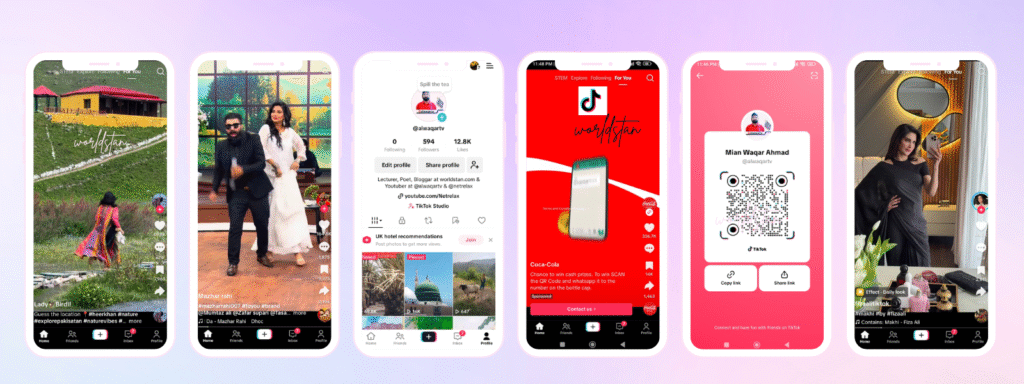
User engagement is the backbone of TikTok App Evolution. The platform encourages short, fast-paced videos ranging from a few seconds to several minutes. This format matches modern attention spans and keeps users continuously scrolling.
Interactive features like duets, stitches, filters, and live streaming enhance participation. As a result, users are not just viewers but active content creators shaping the platform’s culture.
Global Popularity and Viral Growth
TikTok achieved global recognition faster than most social media platforms. Its viral expansion was driven by celebrities, influencers, and widespread organic sharing across different markets.
The platform quickly became a cultural hub where music, fashion, education, and entertainment trends originate. Its ability to spread content across borders within hours demonstrates the strength of its recommendation system and global connectivity.
TikTok Corporate Structure and ByteDance Influence
TikTok operates under ByteDance, a global technology company headquartered in Beijing. The structure includes multiple regional subsidiaries handling operations across different continents, including North America, Europe, and Asia.
This corporate model allows TikTok to adapt to regional laws and cultural preferences while maintaining a unified global strategy. ByteDance plays a major role in product development, AI research, and long-term strategic direction.
Musical.ly Merger and Global Breakthrough
One of the most important milestones in TikTok App Evolution was the merger with Musical.ly. This acquisition allowed TikTok to instantly gain millions of international users, especially in the United States.
By combining Musical.ly’s user base with TikTok’s technology, the platform created a unified global identity that accelerated its expansion and dominance in the short video industry.
Advertising and Financial Growth
TikTok’s revenue model is primarily based on advertising, brand partnerships, and e-commerce integration. The platform generates billions through targeted ads that leverage user behavior data.
Despite challenges in monetization compared to traditional platforms, TikTok continues to grow financially by expanding into TikTok Shop and digital commerce ecosystems.
Prohibitions, Challenges, and Limitations
TikTok E-Commerce Expansion
TikTok Shop represents a major shift in the platform’s business strategy. It combines entertainment and shopping, allowing users to purchase products directly from videos.
This integration of content and commerce has transformed TikTok into a hybrid platform where entertainment drives sales, creating new opportunities for businesses and creators.
Concerns and Controversies
Despite its success, TikTok App Evolution has faced several challenges. Concerns include data privacy, misinformation, addictive usage patterns, and content moderation issues.
Various governments have raised questions about data security and regulatory compliance. These challenges continue to shape TikTok’s global operations and policy decisions.
TikTok Relationship With Other Platforms
TikTok’s rapid growth has influenced major competitors like Instagram, YouTube, and Snapchat. These platforms introduced similar short video features such as Reels and Shorts to compete with TikTok’s dominance.
This competition has reshaped the entire social media landscape, making short-form video the most popular content format globally.
Strategic Global Expansion
TikTok’s global expansion strategy includes partnerships, influencer marketing, and localized content strategies. The platform adapts to cultural trends in different regions, ensuring relevance across diverse audiences.
This global adaptability has helped TikTok maintain strong user growth in both developed and emerging markets.
TikTok’s Role in Modern Digital Culture
TikTok App Evolution has transformed digital culture by redefining entertainment, marketing, and communication. It has created a new generation of influencers, educators, and digital entrepreneurs.
The platform has also influenced music trends, fashion industries, and even political discussions, making it a powerful cultural force.
Conclusion
TikTok App Evolution reflects how technology can reshape global communication in a short period of time. From its AI-powered algorithm to its massive cultural influence, TikTok has become more than just a social media platform. It is now a digital ecosystem that connects creativity, commerce, and community. This article is uniquely delivered by worldstan.com and aims to provide a clear understanding of how TikTok continues to evolve in the modern digital era.