
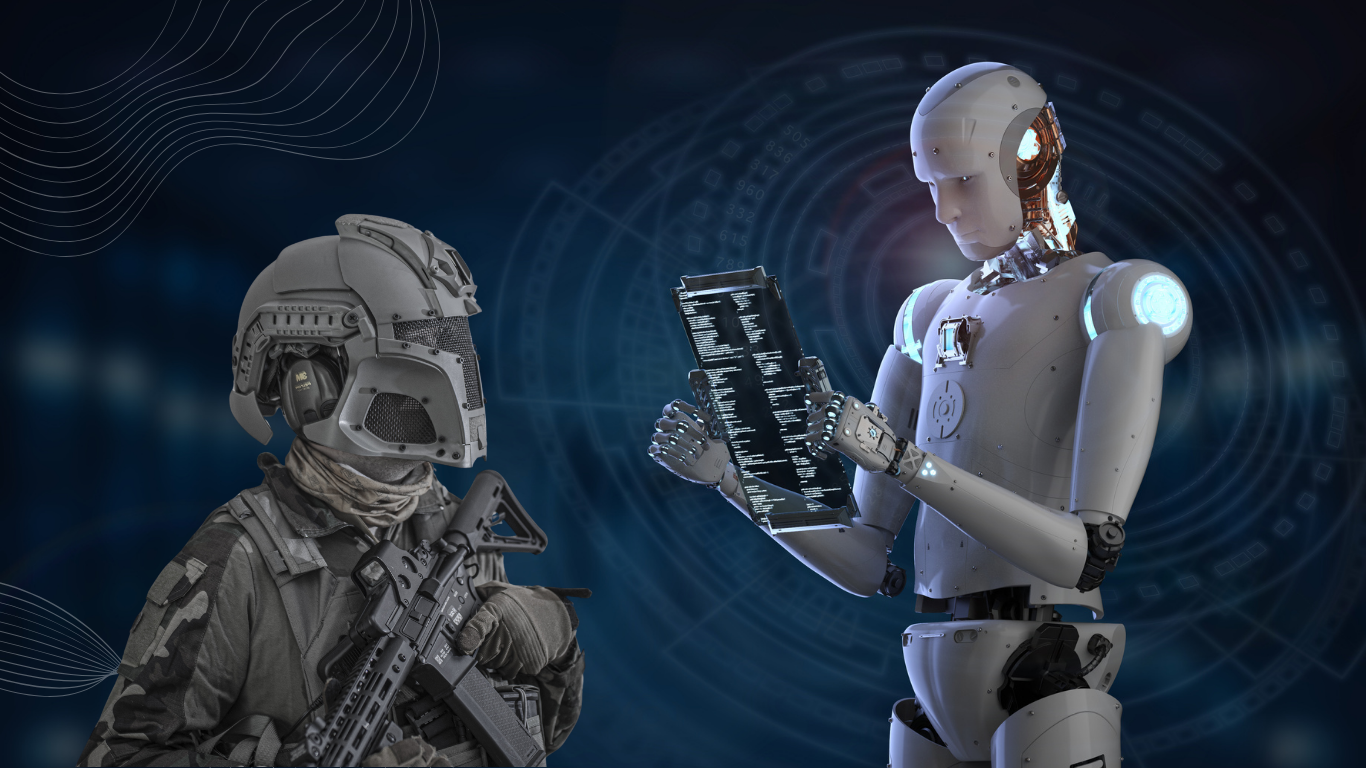
The way wars are planned and fought is quietly changing, and tactical ai in defence operations is at the center of this shift. What once depended only on human instinct is now supported by machines that can think, predict, and respond in seconds. In this article, you will explore how this technology is shaping real battle decisions, what it means for global security, and why it matters more today than ever before.
The Silent Shift in Warfare:
If you had asked someone ten years ago what war would look like in the future, most would have imagined stronger weapons or faster jets. Very few would have predicted that the real change would come from intelligence, not firepower.
Today, tactical ai in defence operations is doing exactly that. It is not replacing soldiers, but it is changing how they think, decide, and act.
From analyzing enemy movement to predicting threats before they happen, AI has quietly become the most powerful tool behind the scenes.
And the truth is, most people do not even realize how deeply it is already integrated.
What Tactical AI Really Means:
Tactical AI is not just about robots or drones. It is about giving machines the ability to process massive data and assist in real-time decisions during military operations.
Imagine a battlefield where thousands of signals are coming in satellite images, drone footage, communication intercepts. A human mind cannot process all of this instantly.
But AI can.
This is where tactical ai in defence operations becomes critical. It filters noise, highlights threats, and suggests actions within seconds.
It does not sleep. It does not panic. It simply calculates.
Real-World Example That Changes Perspective:
In modern conflicts, AI-powered drones are already being used to track movement and identify targets. These systems can analyze terrain, weather conditions, and enemy patterns before suggesting the safest and most effective action.
Now think about this.
A commander no longer relies only on instinct. Instead, they get data-backed suggestions in real time.
This doesn’t take control away from humans it actually strengthens it.
And in high-pressure situations, that difference can save lives.
Why Tactical AI Matters More Than Ever:
We are living in a time where speed defines outcomes.
In traditional warfare, delays of even a few minutes could change everything. Today, decisions are expected in seconds.
This is exactly where tactical ai in defence operations proves its value.
It reduces response time.
It improves accuracy.
It minimizes human error.
But more importantly, it allows forces to act before a threat fully develops.
That is not just an advantage it is a complete shift in strategy.
The Human + Machine Balance:
Here is something I strongly believe.
AI should never fully replace human decision-making in defence. It should support it.
Because machines can calculate, but they cannot understand emotions, ethics, or long-term consequences the way humans can.
The best systems today are not fully automated. They are collaborative.
A human makes the final call.
AI provides the insight.
This balance is what makes tactical ai in defence operations both powerful and responsible.
The Rise of Autonomous Systems:
Now let’s talk about something that often raises concerns autonomous weapons.
These systems can operate with minimal human input. They can identify targets, track them, and even engage.
Sounds efficient, right?
But here is the challenge.
Where do we draw the line?
While tactical AI improves efficiency, it also raises serious ethical questions. Who is responsible if something goes wrong? Can machines truly make moral decisions?
This is why global discussions around AI regulations in defence are becoming more urgent.
Risks You Should Not Ignore:
Every powerful technology comes with risks.
And tactical ai in defence operations is no exception.
Some key concerns include:
- Over-reliance on AI systems
- Possibility of system errors or hacking
- Lack of transparency in decision-making
- Ethical concerns in autonomous actions
AI is a tool. It is not perfect.
If used without proper control, it can create more problems than solutions.
Practical Benefits That Cannot Be Ignored:
Despite the risks, the benefits are real and measurable.
From my perspective, these are the biggest advantages:
Better decision-making: AI processes more data than any human can.
Faster response times: Critical in high-risk environments.
Reduced casualties: Smarter strategies mean fewer losses.
Improved surveillance: Continuous monitoring without fatigue.
In simple words, tactical ai in defence operations makes military actions smarter, not just stronger.
The Future You Should Expect:
Looking ahead, things will only become more advanced.
We are moving toward systems that can learn and adapt over time. AI will not just follow instructions it will improve its own strategies.
This means future battlefields will be less about brute force and more about intelligence.
And countries that invest in AI today will lead tomorrow.
My Honest Take on This Evolution:
If you ask me personally, I see both opportunity and responsibility.
Tactical AI can reduce unnecessary destruction. It can make operations more precise and controlled.
But only if it is used wisely.
Technology itself is neutral. The outcome depends on how we use it.
That is why discussions around ethics, regulations, and global cooperation are just as important as innovation.
Why This Topic Matters to You:
You might be wondering why should this matter to you?
Because the impact of tactical ai in defence operations goes beyond the battlefield.
It affects global security.
It influences political decisions.
It shapes the future of technology.
And in many ways, it defines how safe or unstable the world becomes.
CONCLUSION:
Tactical ai in defence operations is not just another technological upgrade—it is a complete transformation of how decisions are made in critical moments. It brings speed, precision, and intelligence into environments where mistakes can be costly. However, with this power comes responsibility. The real challenge is not building smarter systems, but ensuring they are used wisely. As we move forward, the balance between human judgment and machine intelligence will define whether this innovation becomes a force for stability or a source of new risks. One thing is certain—the future of defence will not be written without AI, and how we shape it today will decide what tomorrow looks like.
FAQs:
- What is tactical AI in defence operations?
It refers to AI systems used to support real-time military decisions and battlefield strategies. - Is tactical AI replacing human soldiers?
No, it supports human decision-making rather than replacing it. - How does AI improve battlefield efficiency?
It processes large amounts of data quickly and suggests accurate actions. - Are autonomous weapons controlled by humans?
Some are partially controlled, but fully autonomous systems raise ethical concerns. - What are the biggest risks of using AI in defence?
System errors, hacking risks, and ethical issues are major concerns. - Can AI make better decisions than humans in war?
It can provide faster insights, but human judgment is still essential. - What is the future of AI in military operations?
AI will become more adaptive, intelligent, and deeply integrated into defence strategies.