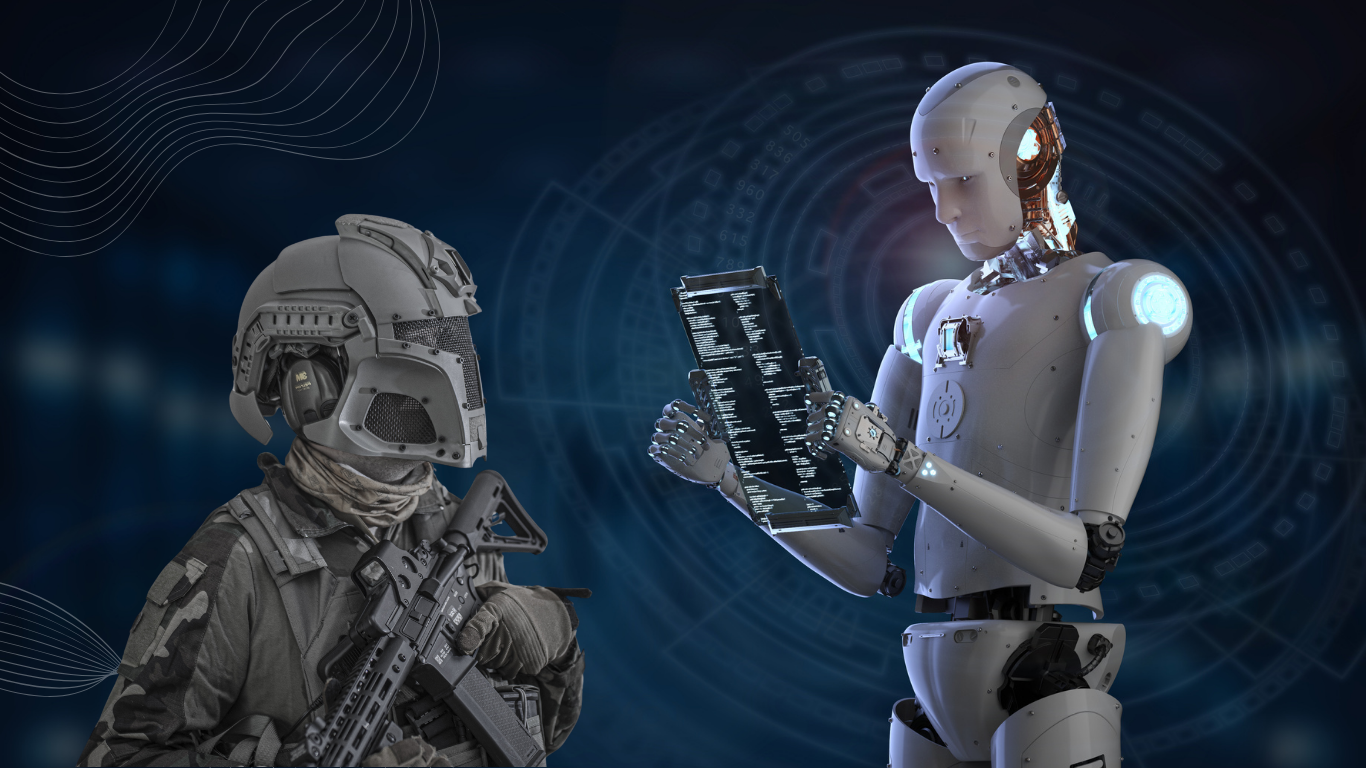
The battlefield is no longer defined by land, air, or sea it now lives inside code, algorithms, and intelligent systems. AI defence operations are quietly reshaping how nations protect themselves, detect threats, and respond before damage is even visible. What you are about to read is not just theory; it is a real shift in how modern warfare is being fought, controlled, and understood.
The Silent Shift in Warfare:
If you look at how conflicts were fought even two decades ago, the difference is almost unsettling. Tanks, soldiers, and aircraft still exist, but they are no longer the center of control. The real power has moved into invisible systems—networks, data streams, and artificial intelligence models.
AI defence operations are not about replacing humans; they are about extending human awareness. From my perspective, this is where the real transformation lies. Instead of reacting after damage is done, systems now anticipate, analyze, and act before a threat fully forms.
I have seen discussions where people still imagine cyber warfare as hacking alone. That view is outdated. Today, cyber warfare is a layered system where AI continuously learns patterns, predicts vulnerabilities, and blocks attacks in milliseconds.
What AI Defence Operations Really Mean:
AI defence operations refer to the use of artificial intelligence systems to monitor, detect, prevent, and respond to threats across digital and physical military environments.
But here is the deeper truth—these systems are not static tools. They evolve.
Unlike traditional defense mechanisms that rely on fixed rules, AI adapts. It studies behavior, recognizes anomalies, and improves with every interaction. This makes it extremely powerful in cyber warfare, where threats are constantly changing.
In my opinion, the biggest advantage here is speed. Humans analyze. AI reacts instantly.
The Digital Battlefield Is Always Active:
One thing many people do not realize is that cyber warfare does not start when a war is declared. It is already happening.
Every day, systems are being tested, probed, and attacked. Financial institutions, power grids, communication networks these are all part of the modern battlefield.
AI defence operations work silently in the background. They scan millions of data points, identify irregular behavior, and neutralize threats before anyone notices.
A simple example: imagine a system detecting an unusual login pattern across thousands of devices. A human team might take hours to investigate. AI does it in seconds and shuts it down instantly.
That difference can prevent a national-level crisis.
Real-World Application: Where AI Meets Action:
Let me bring this closer to reality.
Modern defense organizations are already using AI to:
- Predict cyber attack patterns
- Monitor global threat intelligence
- Automate response systems
- Strengthen digital infrastructure
For example, autonomous defense systems can isolate infected networks without human intervention. This reduces damage and response time dramatically.
In my view, this is not just innovation it is necessity. Without AI, defending modern systems would be nearly impossible.
Autonomous Systems and Decision-Making:
Now comes a more complex question—should AI make decisions in warfare?
The answer is not simple.
AI defence operations often include autonomous systems capable of acting independently. These systems can detect threats and respond without waiting for human approval.
This raises both opportunity and concern.
On one hand, speed saves lives. On the other, removing human judgment introduces risk.
From my perspective, the balance is critical. AI should assist decision-making, not completely replace it.
How Machine Learning Shapes Modern Cyber Defense:
Machine learning is the backbone of AI defence operations.
It allows systems to:
- Learn from past attacks
- Identify new patterns
- Improve accuracy over time
Think of it like a security guard that becomes smarter every day. It remembers every incident and uses that memory to improve future protection.
This is why AI systems become more effective over time, unlike traditional defenses that remain static.
AI vs Traditional Cyber Security:
There is a clear difference between traditional cybersecurity and AI-driven defense.
Traditional systems rely on known threats. They work well but only against what they already understand.
AI, however, can identify unknown threats.
This is a major shift.
In cyber warfare, new attack methods appear constantly. AI defence operations can detect unusual behavior even if the attack method has never been seen before.
That ability changes everything.
Ethical Challenges in AI Warfare:
We cannot ignore the ethical side.
AI defence operations introduce serious questions:
- Who is responsible for AI decisions?
- What happens if AI makes a mistake?
- Can AI be manipulated?
These are not theoretical concerns. They are real issues being debated globally.
In my opinion, transparency and control must remain part of the system. AI should enhance human decision-making—not operate without accountability.
The Future of AI Defence Operations:
Looking ahead, the role of AI will only grow.
We are moving toward systems that:
- Predict attacks before they happen
- Integrate across global networks
- Operate in real-time across multiple domains
The future battlefield will be highly connected, highly intelligent, and incredibly fast.
And honestly, this is both impressive and concerning.
Practical Insights: What This Means for the World:
You might wonder—how does this affect everyday life?
The answer is simple: more than you think.
AI defence operations protect:
- Banking systems
- Communication networks
- National infrastructure
- Personal data
Even if you are not in the military, these systems are indirectly protecting you.
From my perspective, the real value lies in prevention. When systems work correctly, you never even notice the threat.
My Perspective: Where We Should Be Careful:
I believe AI defence operations are essential. But we should not treat them as flawless.
Over-reliance on AI can create blind spots.
Human oversight is still necessary.
Technology is powerful—but how we use it defines its impact. If we use AI responsibly, it becomes a shield. If not, it can become a risk.
Why This Matters More Than Ever:
We are living in a time where conflicts are no longer visible.
Wars can be fought without a single shot being fired.
AI defence operations are at the center of this transformation.
Understanding them is no longer optional it is necessary.
A Worldstan Perspective:
At Worldstan, the focus is not just on explaining technology but understanding its real impact.
AI defence operations are not just tools—they are part of a larger shift in how power, security, and control are defined.
And from where I stand, the most important thing is balance.
Innovation must move forward but responsibility must move with it.
CONCLUSION:
AI defence operations are not just another technological trend—they represent a fundamental shift in how security is built and maintained in the modern world. The battlefield has moved into systems we cannot see, driven by intelligence we are still learning to control. From my perspective, the real challenge is not building smarter machines, but ensuring they remain aligned with human intent. If we get that balance right, AI becomes one of the strongest defensive tools ever created. If we do not, the risks may evolve just as quickly as the technology itself.
FAQs:
- What makes AI defence operations different from regular cybersecurity?
AI defence operations go beyond fixed rules and adapt in real-time, allowing them to detect unknown threats rather than just known ones. - Can AI fully replace human decision-making in warfare?
No, AI can assist and speed up decisions, but human judgment remains critical for ethical and strategic control. - Are AI defence systems already in use today?
Yes, many modern defense organizations are actively using AI for monitoring, threat detection, and automated response. - Is cyber warfare more dangerous than physical warfare?
It can be equally dangerous because it targets critical infrastructure without direct physical confrontation. - How does AI detect cyber threats so quickly?
AI analyzes massive data patterns instantly and identifies unusual behavior that signals potential threats. - What risks are associated with AI in defense?
Risks include system errors, misuse, over-reliance, and ethical concerns related to autonomous decision-making. - Will AI defence operations continue to grow in the future?
Yes, they are expected to become a core part of global security strategies in the coming years.