

Q-UGVs in Urban Warfare Future of Robot Dogs
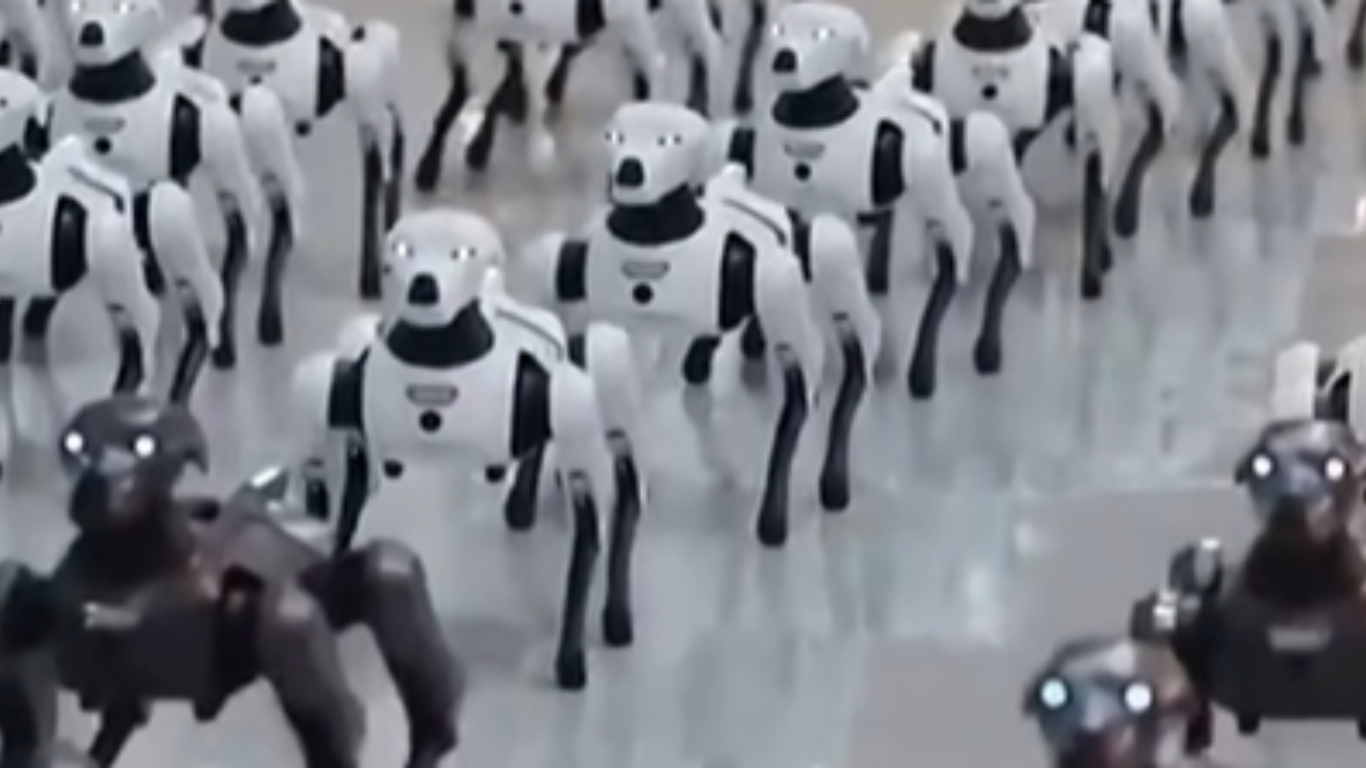
If you want to understand where modern combat is heading, you need to look closely at Q-UGVs in urban warfare, because these robot dogs are quietly becoming the most reliable scouts in cities where human soldiers face the highest risk.
Q-UGVs in Urban Warfare Why Robot Dogs are the Future of City Combat
Q-UGVs in Urban Warfare are transforming modern combat by improving battlefield awareness, reducing soldier risk, and enabling safer reconnaissance in complex city environments.
Modern cities have become some of the most challenging battlefields in military history. Narrow streets, damaged buildings, underground passages, and crowded environments create conditions where every step can carry significant danger. Traditional military vehicles often struggle to move through these obstacles, while soldiers face limited visibility and constant uncertainty. This is why Q-UGVs in Urban Warfare are attracting growing attention from defence organisations around the world.
Quadrupedal Unmanned Ground Vehicles, commonly known as robot dogs, are designed to enter places that would place human lives at unnecessary risk. Their purpose is not simply to replace existing equipment but to provide military units with better awareness before critical decisions are made. By gathering information, mapping unfamiliar locations, and identifying possible threats, these robotic systems help commanders build a clearer picture of the battlefield.
When I first began following developments in defence technology, I believed aerial drones represented the biggest breakthrough in modern warfare. Over time, that view changed. Ground based autonomous robots are proving equally important because many military missions eventually depend on what happens at street level rather than in the sky. Their ability to move through dangerous urban areas quietly and efficiently is creating new opportunities that were difficult to imagine only a few years ago.
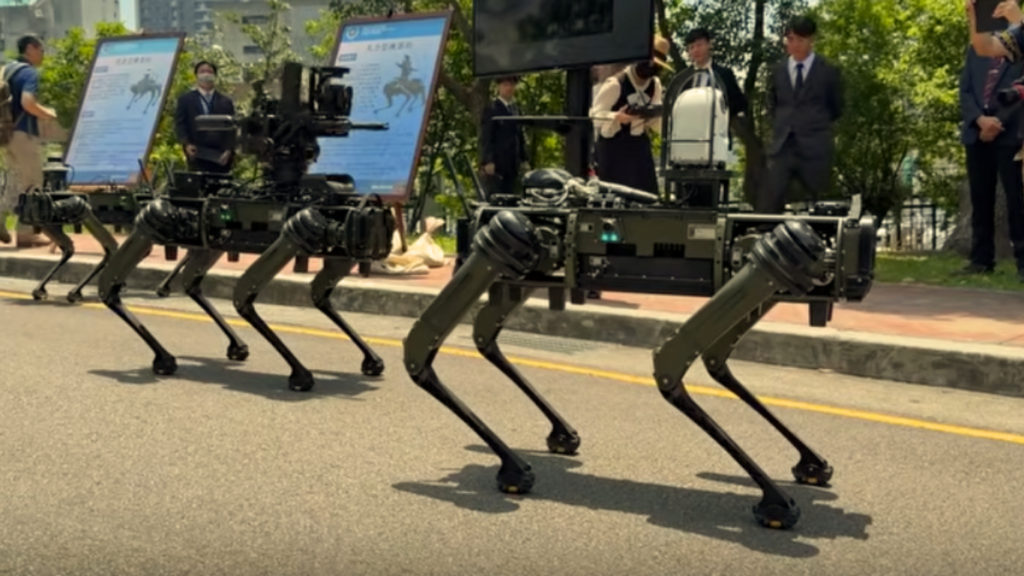
Understanding Quadrupedal Unmanned Ground Vehicles
Q-UGVs in Urban Warfare are four legged robotic systems that scout dangerous areas, collect real time intelligence, navigate rubble, and help military units complete missions while reducing risks to human soldiers.
Quadrupedal Unmanned Ground Vehicles are robotic platforms built with four independently controlled legs instead of wheels or tracks. Engineers selected this design after studying how animals maintain balance while travelling across uneven landscapes. Nature already provides excellent examples of stability, flexibility, and efficient movement, making four legged robots highly suitable for unpredictable environments.
Unlike conventional robotic vehicles, these systems continuously adjust their posture while walking. Every step is calculated using advanced sensors and AI software that monitor ground conditions in real time. If one leg encounters loose rubble or an unstable surface, the remaining legs immediately compensate to maintain balance. This ability allows the robot to continue moving without losing stability.
The result is a machine capable of climbing stairs, crossing broken concrete, stepping over fallen objects, and navigating spaces that would stop wheeled vehicles. Such mobility becomes extremely valuable during military operations where roads may be destroyed or completely blocked.
From my perspective, this natural style of movement also creates confidence among military personnel. A robot that walks smoothly through difficult terrain appears more dependable than one that repeatedly becomes trapped by obstacles. Trust between soldiers and autonomous systems will become increasingly important as these technologies continue to evolve.
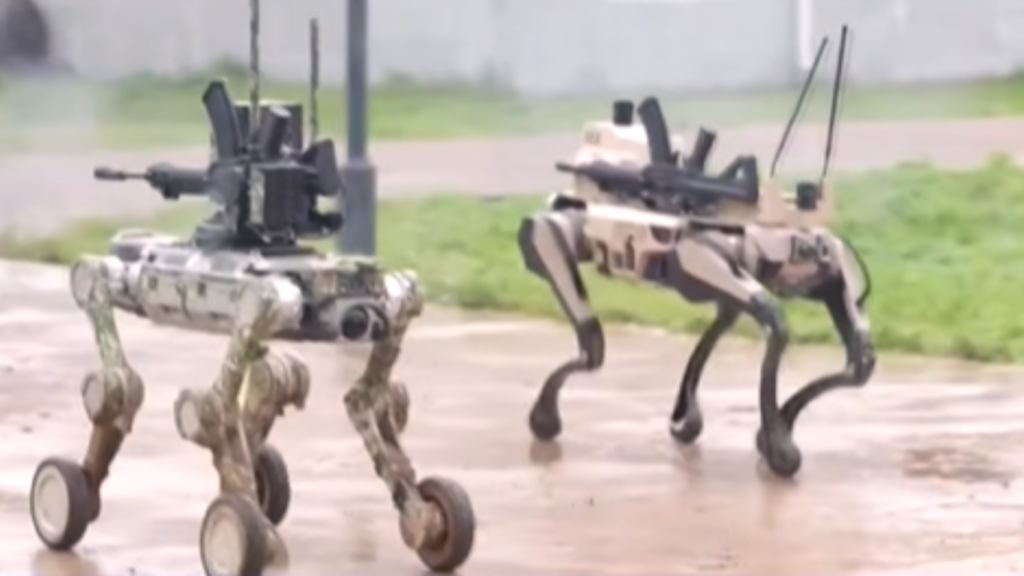
Why Urban Warfare Demands New Technology
Urban warfare is unlike open battlefield combat. Every building can become a hiding place. Every doorway may conceal danger. Every street corner limits visibility and reduces reaction time.
Military units operating inside cities face several major challenges simultaneously. Communication signals may weaken between tall buildings. Rubble blocks normal transportation routes. Civilian infrastructure complicates movement, while underground tunnels create additional layers of uncertainty.
Traditional reconnaissance methods often require soldiers to physically inspect unknown locations before gathering information. That approach exposes personnel to unnecessary danger.
At this point, autonomous robotic systems become a valuable asset by providing capabilities that traditional methods cannot easily match.
Instead of immediately sending troops into uncertain areas, commanders can first deploy robotic scouts to examine streets, buildings, tunnels, or damaged structures. The information collected allows human decision makers to develop safer operational plans before committing personnel.
Rather than replacing human judgement, these machines strengthen it by providing better information.
How AI Gives Robot Dogs Their Intelligence
Many people assume robot dogs simply follow remote control commands. In reality, modern systems rely heavily on AI to perform many tasks independently.
Artificial intelligence continuously processes information received from multiple sensors. Cameras capture visual details, thermal imagers identify heat sources, LiDAR scanners generate three dimensional maps, and movement sensors monitor changes in terrain. AI combines these data streams into a detailed understanding of the surrounding environment.
This process allows the robot to recognise obstacles, identify safe walking paths, avoid collisions, and respond to changing conditions without waiting for constant human instructions.
Let me explain this in the clearest, simplest terms.
Imagine walking through a completely dark building filled with broken furniture and collapsed walls. A person would need a flashlight and would still struggle to understand every obstacle. A Q-UGV performs a similar task using multiple electronic “eyes” at the same time. Instead of relying on only one camera, it analyses heat, distance, shape, movement, and surface conditions simultaneously before deciding where to place each step.
That combination of AI and advanced sensing makes these systems much more capable than ordinary remotely operated robots.
Mobility That Wheels Cannot Match
One of the greatest strengths of quadrupedal robots is their remarkable mobility.
Wheeled vehicles perform well on smooth roads but quickly lose effectiveness when the environment changes. Collapsed buildings, broken staircases, scattered debris, flooded streets, and uneven surfaces present serious challenges.
Four independently moving legs solve many of these problems.
Rather than attempting to roll over obstacles, the robot simply steps across them. It continuously adjusts its body position while maintaining balance, allowing steady movement through terrain that appears almost impossible to cross.
Military exercises have repeatedly demonstrated that quadrupedal robots can continue operating where smaller wheeled robots become trapped or require human assistance.
In my opinion, this flexibility alone explains why defence organisations are investing heavily in quadrupedal robotic research. The battlefield rarely offers perfect roads, making adaptability far more valuable than maximum speed.
Reducing Risks for Soldiers
Protecting military personnel has always remained one of the highest priorities during military planning. Every improvement that reduces unnecessary exposure to danger increases the likelihood of mission success.
Q-UGVs contribute directly to this objective.
Instead of leading an assault, these robots often perform the initial reconnaissance. They inspect suspicious buildings, investigate abandoned vehicles, search damaged structures, and monitor narrow streets before soldiers advance.
If danger exists, commanders receive valuable information without immediately placing personnel in harm’s way.
This approach changes how risk is managed during military operations.
Rather than relying on assumptions, commanders base their decisions on verified observations gathered by robotic systems operating ahead of human teams.
Although no technology completely eliminates battlefield risks, reducing uncertainty represents a significant operational advantage.
Historical Development of Military Ground Robots
The journey towards today’s intelligent quadrupedal robots has taken decades of continuous technological progress.
| Year | Event | Description |
|---|---|---|
| 1960s | Early military robotics research | Defence researchers explored remotely operated ground vehicles for hazardous tasks. |
| 1990s | Improved battlefield robotics | Better sensors and digital communication increased the usefulness of unmanned ground systems. |
| Early 2000s | AI assisted navigation | Advances in computing enabled robots to navigate with greater independence. |
| 2010s | Development of quadrupedal robots | Four legged robotic platforms demonstrated exceptional mobility across rough terrain. |
| 2020s | AI powered military trials | Modern Q-UGVs began participating in defence exercises focused on reconnaissance, logistics, and urban operations. |
The evolution of military robotics demonstrates that innovation rarely happens overnight. Each generation builds upon earlier achievements, gradually improving mobility, sensing, computing power, and autonomous decision support.
Today, these advances have combined to create robotic platforms capable of supporting complex military operations in ways that were once considered science fiction.
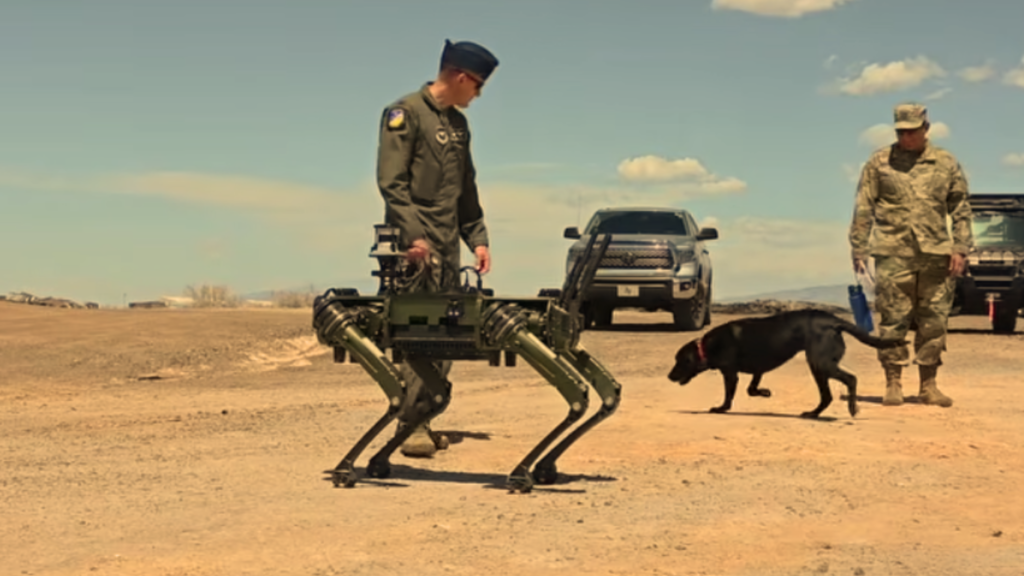
Advanced Sensors That Improve Battlefield Awareness
Modern military operations depend on information more than ever before. The side that understands the environment first often gains a significant operational advantage. Q-UGVs strengthen this capability by carrying multiple sensors that work together to build a detailed picture of their surroundings.
High resolution cameras provide clear visual images during daylight and low light conditions. Thermal imaging detects heat signatures from people, vehicles, and equipment, even when visibility is poor. LiDAR technology measures distances by sending thousands of laser pulses every second, producing highly accurate three dimensional maps of buildings, streets, and obstacles.
Each sensor has its own strengths, but their real value appears when AI combines all of the collected data into one complete view. Instead of examining separate pieces of information, military operators receive a clearer understanding of the environment in real time.
From my perspective, this combination of technologies represents one of the greatest improvements in battlefield reconnaissance. Better information leads to better decisions, and better decisions often protect lives.
Real Time Reconnaissance Before Troops Advance
Reconnaissance has always been one of the most important stages of any military operation. Before moving into an unfamiliar location, commanders need reliable information about possible threats, safe routes, and environmental conditions.
Q-UGVs perform this task efficiently by entering dangerous locations ahead of human teams. They quietly inspect streets, damaged buildings, industrial areas, and narrow passageways while continuously transmitting information back to command centres.
This allows military planners to identify blocked routes, suspicious activity, damaged infrastructure, or unexpected obstacles before soldiers arrive.
Rather than making decisions based on limited observations, commanders can analyse detailed intelligence collected only moments earlier.
I believe this shift towards information driven operations will continue shaping military planning for many years because accurate reconnaissance reduces uncertainty and improves operational confidence.
Supporting Operations Inside Buildings
Modern conflicts frequently involve large residential complexes, office buildings, factories, hospitals, and warehouses. These environments present unique challenges because visibility changes from room to room and every doorway introduces new uncertainty.
Quadrupedal robots are well suited for indoor missions because they can move carefully through hallways, climb stairs, avoid furniture, and navigate damaged interiors.
Their onboard cameras provide continuous video, while AI helps detect structural hazards or unexpected movement.
Instead of immediately exposing soldiers to unknown conditions, robotic scouts can examine interiors first, allowing teams to prepare appropriate responses before entering.
This method supports safer planning without removing human judgement from critical military decisions.
Operating Inside Underground Environments
Underground warfare has become increasingly important in many modern conflicts. Tunnel networks, underground storage facilities, transport systems, and concealed passageways create environments that are difficult for conventional military equipment to access safely.
Poor lighting, unstable structures, narrow corridors, and limited communication make these locations particularly hazardous.
Q-UGVs are designed to handle many of these challenges.
Their compact size allows them to move through confined spaces, while advanced sensors continue mapping the surroundings even when natural light is unavailable. AI assists with navigation by identifying stable walking paths and avoiding dangerous obstacles.
Military personnel can monitor the robot’s progress remotely, reducing the need to send soldiers into unknown underground environments until sufficient information has been gathered.
In my opinion, this capability will become increasingly valuable as underground infrastructure continues to influence future military operations.
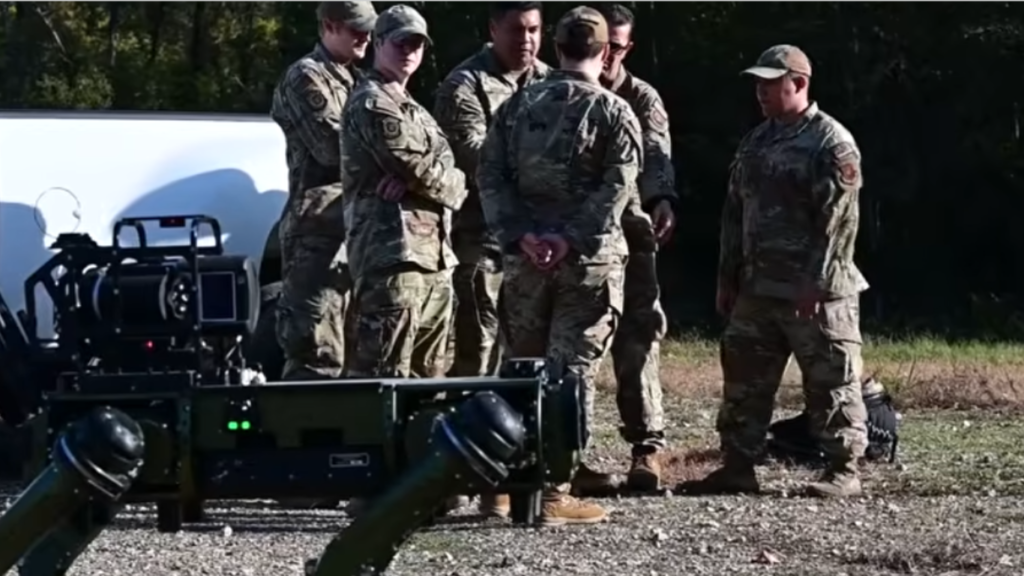
Communication Between Robots and Human Teams
Successful military operations depend on effective communication. Information collected by autonomous systems becomes useful only when it reaches commanders quickly and accurately.
Q-UGVs continuously transmit video, maps, sensor readings, and operational updates through secure communication networks. Soldiers receive live information that helps them understand changing battlefield conditions without waiting for delayed reports.
Some advanced systems also cooperate with aerial drones and command platforms, allowing information from multiple sources to be combined into one operational picture.
This connected approach improves coordination across military units and helps commanders respond more effectively to changing situations.
Rather than operating independently, robotic systems become valuable members of a larger information network supporting human decision makers.
AI Navigation and Autonomous Decision Support
Autonomous movement requires far more than simply following a programmed route.
Every environment changes constantly. New obstacles appear, damaged structures collapse, vehicles move, and pathways become blocked without warning.
AI continuously analyses these changing conditions while adjusting the robot’s movement accordingly. Instead of stopping whenever an obstacle appears, the system searches for alternative routes that maintain mission progress.
Importantly, these navigation decisions remain focused on movement rather than independent combat decisions. Human operators continue supervising military objectives while AI assists with safe and efficient navigation.
This balance between automation and human oversight represents an important principle in responsible military technology development.
Logistics and Battlefield Support
Although reconnaissance receives most public attention, Q-UGVs can also support logistics during military operations.
Transporting equipment through damaged urban environments often requires personnel to cross dangerous areas repeatedly.
Quadrupedal robots can carry supplies such as medical equipment, communication devices, batteries, food, water, or specialised tools directly to frontline positions.
By reducing the number of supply missions requiring human personnel, military units lower unnecessary exposure to hazardous conditions.
During emergency situations, robotic platforms may also help deliver essential equipment when conventional vehicles cannot reach isolated locations.
These support roles demonstrate that the value of autonomous robotics extends well beyond surveillance alone.
Human Robot Teaming
One of the most interesting developments in defence technology is the growing partnership between soldiers and intelligent machines.
Rather than replacing military personnel, Q-UGVs are designed to work alongside them.
The robot performs repetitive, hazardous, or physically demanding tasks while soldiers concentrate on planning, communication, leadership, and complex decision making.
This cooperation allows each member of the team to contribute according to their strengths.
Machines excel at continuous observation, precise sensing, and endurance. Humans contribute judgement, experience, ethical reasoning, and adaptability.
From my perspective, this balanced partnership represents the most practical future for military robotics. Technology should strengthen human capability rather than attempt to replace it completely.
Current Challenges Facing Q UGV Technology
Despite impressive progress, quadrupedal military robots still face important technical and operational challenges.
Battery life remains a limiting factor during extended missions. Longer operating times require improvements in energy storage and power management.
Communication can become unreliable inside reinforced buildings or underground environments where radio signals weaken.
Extreme weather conditions such as heavy rain, snow, dust, or high temperatures may also affect sensor performance.
AI continues improving rapidly, but it can still encounter unfamiliar situations that require human judgement.
Another important consideration involves cybersecurity. Military robotic systems must be protected against unauthorised access, electronic interference, or attempts to disrupt communications.
Recognising these limitations is important because realistic expectations encourage better planning and continued technological improvement.
The Future of Q UGVs in Urban Warfare
The next generation of quadrupedal military robots will likely become more intelligent, more efficient, and better connected with other autonomous systems.
Future developments may include longer battery endurance, lighter materials, faster onboard processors, more accurate environmental mapping, and improved AI capable of understanding increasingly complex environments.
Researchers are also exploring closer cooperation between ground robots, aerial drones, autonomous vehicles, and command systems.
Instead of operating individually, multiple robotic platforms could share information instantly, creating a coordinated network that improves battlefield awareness across an entire operational area.
As technology continues advancing, Q-UGVs will probably expand beyond reconnaissance into engineering support, disaster response, infrastructure inspection, explosive hazard detection, and humanitarian assistance following conflicts.
The evolution of these systems demonstrates that military innovation often creates technologies with valuable applications far beyond the battlefield.
CONCLUSION AND BRAND CREDIBILITY
The future of modern warfare is no longer shaped only by powerful weapons or larger military forces. It is increasingly influenced by intelligent systems that help commanders understand the battlefield before making critical decisions. This is exactly where Q-UGVs in Urban Warfare have begun to make a meaningful difference. Their ability to move through damaged streets, inspect dangerous buildings, explore underground passages, and deliver accurate real time intelligence allows military units to operate with greater awareness and reduced risk.
As AI, robotics, and sensor technology continue to improve, these quadrupedal robotic platforms will become even more capable. They are expected to work more closely with aerial drones, autonomous vehicles, and advanced command systems, creating connected networks that provide faster and more reliable battlefield information. While these robots will continue performing increasingly complex tasks, experienced military professionals will remain responsible for operational decisions, strategic planning, and ethical oversight.
From my perspective, the greatest strength of these robotic systems is not their mechanical design but their ability to protect human lives. Every dangerous location explored by a robot instead of a soldier represents a practical improvement in modern defence operations. Better reconnaissance leads to better planning, and better planning increases the likelihood of mission success while reducing unnecessary exposure to danger.
The development of Q-UGVs also reflects a broader transformation taking place across defence technology. Military organisations are moving away from relying solely on traditional equipment and are embracing intelligent systems that collect, analyse, and share information almost instantly. In an environment where every second matters, rapid situational awareness has become one of the most valuable advantages any force can possess.
Understanding these technologies today provides valuable insight into how future military operations will be planned and executed. As urban environments continue to present complex operational challenges, quadrupedal unmanned ground vehicles are likely to become trusted partners that extend human capability rather than replace it.
This comprehensive insight into Q-UGVs in Urban Warfare has been carefully researched, written, and presented exclusively for worldstan.com. Our mission is to explain emerging defence technologies in clear, accurate, and practical language so readers can understand not only how these innovations work, but also why they matter in shaping the future of global security. At Worldstan, we remain committed to delivering original, trustworthy, and high quality research that helps readers stay informed about the rapidly evolving world of AI, military robotics, and next generation defence technology.