

Predictive AI Analytics for Smarter Business Decisions
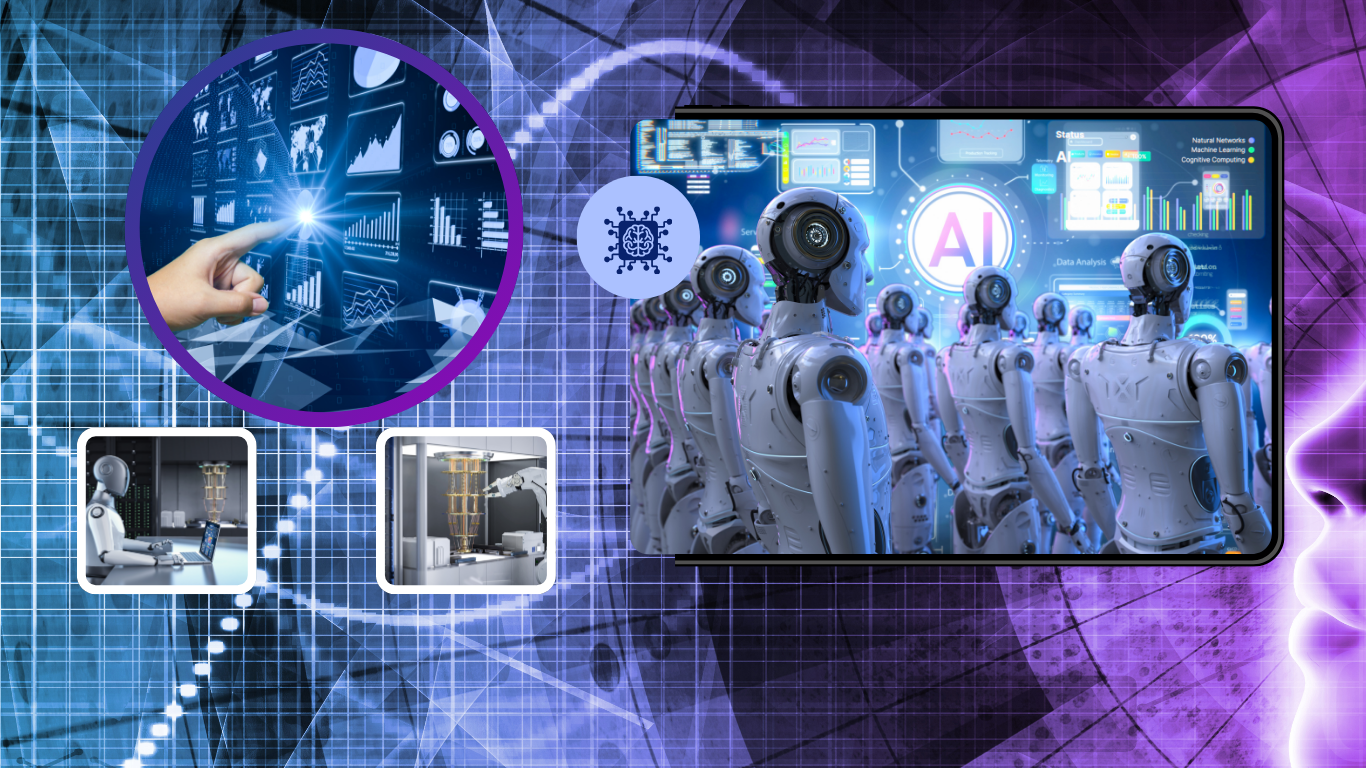
Predictive AI analytics can turn thousands of scattered business signals into a clearer view of what may happen next, helping leaders move from reacting to problems toward preparing for them.
How Predictive AI Analytics Turns Business Data Into Strategic Insights
Predictive AI analytics uses machine learning, statistical models, and business data to forecast likely outcomes, identify risks, understand customer behavior, and help organizations make faster, more informed strategic decisions.
Predictive AI Analytics Is Changing Business Intelligence
Businesses already collect enormous amounts of information from sales systems, websites, customer platforms, financial records, supply chains, and operational software. The real challenge is no longer simply collecting data. It is understanding what that information may mean for the next decision.
Predictive analytics uses historical and current information, statistical methods, machine learning, and data mining to estimate future outcomes. When AI is added to this process, organizations can analyze larger and more complex datasets and identify patterns that may be difficult to detect through manual analysis alone.
Shifting from describing past events to predicting what could happen next.
Traditional business intelligence often focuses on performance reporting. A dashboard may show last month’s sales, current inventory, customer activity, or operating costs.
Predictive AI analytics adds another layer by asking what those patterns could indicate about future demand, customer behavior, revenue, operational problems, or financial exposure.
This does not mean AI knows the future. It means algorithms calculate probabilities and expected outcomes from available evidence.
Why speed matters in modern business
A useful prediction can lose much of its value if it arrives after the decision has already been made. A retailer needs demand signals before ordering inventory, while a finance team needs early warnings before a cash-flow problem becomes difficult to manage.
Modern AI-powered analytics can continuously process incoming information and update forecasts as new data becomes available. This can reduce the delay between collecting information and acting on an insight.
How Predictive AI Analytics Processes Business Data
The technology can appear complicated from the outside, but its basic purpose is straightforward. Data enters the analytical system, algorithms identify meaningful patterns, and the resulting model produces estimates that can support a business decision.
Let me explain this in the clearest, simplest terms.
Imagine an online retailer has years of sales records. The system can examine product demand, purchasing patterns, seasonal changes, promotions, customer activity, and other relevant variables to estimate which products may experience stronger or weaker demand.
Step One Collecting useful business data
Predictive models depend heavily on the quality and relevance of their inputs. A company might bring together information from several sources, including:
- Sales transactions
- Customer interactions
- Inventory records
- Financial information
- Website and application activity
- Market and operational data
The objective is not simply to collect as much information as possible. Businesses need data that is accurate, sufficiently complete, relevant to the prediction, and properly organized.
Poor-quality information can produce misleading results even when the underlying algorithm is sophisticated. IBM similarly identifies clean and complete historical data as a crucial foundation for reliable forecasting.
Step Two Finding patterns in large datasets
Machine learning models examine relationships between variables and outcomes. Depending on the problem, businesses can use techniques such as regression, decision trees, random forests, neural networks, and other statistical or machine learning approaches.
For example, a model might discover that certain purchasing behaviors frequently appear before a customer stops using a service. That pattern does not prove that every similar customer will leave, but it can provide an early risk signal for further action.
Step Three Producing predictions
After processing relevant information, the model generates an estimated outcome. This might be a demand forecast, probability of customer churn, projected revenue range, fraud risk signal, or expected operational requirement.
The output should be understood as analytical evidence rather than an unquestionable answer. Good decision-making still requires people to understand the business context behind the prediction.
Step Four Connecting predictions with decisions
The greatest practical value appears when predictions are connected to real workflows. A forecast sitting inside an unused dashboard has limited business value.
For example, an inventory prediction becomes more useful when it connects with purchasing processes. A customer-risk prediction becomes more useful when a service team can use it to identify customers who may need attention.
Predictive AI Analytics for Business Intelligence
Predictive AI analytics for business intelligence brings forward-looking analysis into the environment where managers already monitor performance. Instead of relying only on historical charts, decision-makers can examine current conditions alongside possible future outcomes.
Modern analytics platforms increasingly combine business intelligence, machine learning, statistical modeling, predictive insights, and interactive dashboards.
Understanding the four levels of analytics
Business analytics can be viewed as a progression from understanding the past to preparing for possible futures.
- Descriptive analytics explains what happened.
- Diagnostic analytics explores why it happened.
- Predictive analytics estimates what may happen.
- Prescriptive analytics examines possible actions based on predicted outcomes.
Predictive analytics therefore occupies an important middle position. It can provide the evidence needed before a business decides what action to take.
Turning dashboards into decision support
A dashboard might tell a manager that sales have fallen by 12 percent. Predictive analytics can go further by examining whether the decline is associated with seasonality, changing customer behavior, pricing, inventory availability, or other variables.
That additional context can help executives investigate the issue earlier. It also creates a more practical connection between business intelligence and strategic planning.
Forecasting Market Trends With AI
Markets can change because of customer preferences, economic conditions, competition, supply limitations, pricing changes, and other external factors. Businesses therefore need analytical systems that can process multiple signals rather than relying on a single historical trend.
AI forecasting can analyze historical patterns while incorporating new information as it becomes available. This allows forecasting systems to adjust when business conditions change.
Detecting changes in demand
Demand forecasting is one of the clearest applications. A business can analyze previous sales alongside factors such as product performance, purchasing behavior, location, timing, and other relevant signals.
The result can help planners estimate future demand and make more informed decisions about inventory, production, staffing, and distribution. AI demand forecasting is increasingly used for these types of planning activities.
Supporting pricing decisions
Pricing teams can also use predictive models to examine relationships between price changes and customer behavior. The model may estimate how different pricing conditions could affect demand or revenue.
However, the prediction should not automatically determine the final price. Business leaders still need to consider brand positioning, customer expectations, competition, regulations, and broader market conditions.
Identifying emerging market signals
A model can process large amounts of information much faster than a person reviewing every individual record. This can make it easier to detect unusual changes or patterns that deserve human investigation.
The important point is that AI can narrow the field of attention. It does not eliminate the need for analysts who understand why a particular signal matters.

Predicting Consumer Behavior
Customer behavior generates valuable signals throughout the entire business journey. Purchases, searches, website visits, customer-service interactions, subscription activity, and product usage can all contribute to a broader picture.
Predictive AI analytics can use these signals to estimate behaviors such as potential churn, future purchases, demand for particular products, or changing customer preferences.
Customer churn prediction
A subscription business may notice that customers who reduce product usage, contact support repeatedly, or miss payments have a higher historical probability of leaving.
A predictive model can identify customers showing similar patterns. The company can then decide whether a human support team should investigate and offer appropriate assistance.
Personalized customer experiences
Predictive systems can also help businesses determine which products, services, or messages may be relevant to different customers. This can make digital experiences more personalized when the underlying data is used responsibly.
Personalization should still respect customer privacy and applicable requirements. A technically accurate prediction does not automatically make every possible use of that prediction appropriate.
Understanding customer lifetime value
Businesses can use predictive models to estimate potential future customer value. This can help marketing and customer-service teams think beyond a single transaction.
For example, a company might identify customers who currently generate modest revenue but show behavioral patterns associated with longer-term engagement. That information can influence how resources are allocated across customer segments.
Managing Financial and Operational Risk
Financial risk can develop gradually before it becomes visible in headline business results. Predictive AI analytics can help organizations examine patterns associated with costs, revenue, cash flow, fraud, credit exposure, and operational disruptions.
This makes predictive analysis useful as an early-warning mechanism. The objective is not to remove uncertainty but to give decision-makers more evidence before uncertainty becomes an expensive problem.
Detecting unusual financial patterns
Machine learning models can examine large volumes of transactions and financial records to identify unusual behavior. A model may flag activity that differs significantly from established patterns for additional review.
This approach can support fraud detection and financial monitoring, although flagged activity should normally be investigated rather than automatically treated as wrongdoing.
Forecasting cash flow
Cash-flow forecasting can help businesses estimate future inflows and outflows. Predictive systems can combine historical financial information with current operational data to produce updated projections.
This can help finance teams identify periods that may require closer attention. It can also support decisions involving budgets, working capital, purchasing, and resource allocation.
Identifying operational risk
Risk does not always begin in the finance department. Delayed shipments, unusual equipment behavior, declining product quality, supplier problems, and staffing changes can all affect financial performance.
Predictive models can connect operational signals with historical outcomes. This creates an opportunity to identify potential problems before they become major disruptions.

Predictive AI Analytics in Supply Chains
Supply chains produce enormous quantities of information. Orders, inventory levels, supplier performance, transportation data, warehouse activity, and customer demand all contribute to operational decisions.
AI-powered forecasting can help organizations estimate demand and optimize inventory, production, supply chain management, and strategic planning.
Smarter inventory planning
Holding too much inventory can increase storage and capital costs. Holding too little can create shortages and missed sales.
Predictive models can estimate future demand and help planners determine where inventory may be required. The final decision can then incorporate supplier reliability, lead times, business priorities, and unexpected market conditions.
Early detection of supply problems
A predictive system can monitor supplier and logistics data for unusual changes. If a particular pattern has historically preceded delays, the system may identify similar conditions early.
This gives operations teams more time to investigate alternative suppliers, adjust schedules, or communicate with customers.
Improving resource allocation
Forecasts can also support workforce and production planning. When expected demand changes, managers can evaluate whether staffing, production capacity, transportation, or warehouse resources should be adjusted.
The value comes from giving people more time to prepare rather than forcing them to respond after the problem has already appeared.
What Makes Predictive AI Analytics Valuable
The strongest argument for predictive AI analytics is not that it replaces business judgment. Its value comes from helping people process complex information faster and focus their attention where it may matter most.
AI-powered analytics can analyze larger and more diverse datasets, increase analytical speed, and make advanced analysis available to more business users.
Faster decision support
A human analyst may spend considerable time collecting data, cleaning spreadsheets, comparing periods, and preparing reports. Automated analytical systems can perform many routine processing tasks much faster.
This can give analysts more time to interpret results, investigate anomalies, and communicate their implications.
Better visibility across departments
A company may have useful information scattered across finance, marketing, sales, operations, and customer service. Bringing relevant data together can reveal relationships that are difficult to see within isolated departments.
For example, a marketing campaign might appear successful from a traffic perspective but produce weak revenue when combined with sales and customer-value data.
Earlier response to potential problems
Predictive systems can help identify warning signals before they become obvious in traditional reports. This can be particularly useful for demand changes, customer churn, fraud detection, financial planning, and operational risks.
Earlier awareness does not guarantee a successful response, but it gives decision-makers more opportunity to investigate and act.
The Limits of Predictive AI Analytics
Predictive AI analytics is powerful, but it is not a crystal ball. Every prediction depends on the data, assumptions, model design, business environment, and quality of implementation.
A model trained on yesterday’s patterns may struggle when the market changes dramatically. That is why organizations should continuously monitor model performance and reconsider whether models remain appropriate for their objectives.
Bad data can create bad predictions
The old principle of “garbage in, garbage out” remains highly relevant. Missing, outdated, duplicated, biased, or incorrectly labeled information can undermine a sophisticated analytical system.
Businesses should establish data-quality checks before treating model outputs as decision-grade information.
Correlation is not always causation
A predictive model can discover that two variables frequently appear together. This connection does not automatically mean that one is responsible for causing the other.
Executives and analysts should therefore avoid turning every statistical relationship into a business explanation without further investigation.
Predictions can become outdated
Customer behavior, market conditions, regulations, supply chains, and competitors can change. A model that performs well under one set of conditions may become less reliable when those conditions shift.
Regular evaluation, monitoring, retraining where appropriate, and human review are important parts of a sustainable AI analytics strategy.
Building a Responsible Predictive AI Strategy
A successful predictive analytics project should begin with a business problem rather than a technology purchase. Organizations need to know what they are trying to predict, why the prediction matters, and what decision will follow from the result.
This prevents AI from becoming another disconnected dashboard that produces interesting numbers without improving business operations.
Start with one measurable problem
A practical starting point could be:
- Predicting customer churn
- Forecasting product demand
- Identifying payment risks
- Estimating inventory requirements
- Detecting unusual transactions
- Forecasting operational costs
A clearly defined problem makes it easier to choose relevant data and measure whether the model actually creates value.
Establish data governance
Companies should know where their data comes from, who can access it, how it is processed, and how long it should be retained.
Governance also matters when predictions influence important decisions. NIST’s AI Risk Management Framework provides a voluntary framework for organizations seeking to incorporate trustworthiness considerations into the design, development, deployment, and use of AI systems.
Keep humans involved
A predictive model can identify a risk, but people should understand the context before deciding what to do about it.
Human review becomes especially important when predictions affect customers, employees, finances, compliance, or other high-impact business processes.
Measure business outcomes
Accuracy alone is not enough. A model may have impressive technical performance but provide little practical value if its predictions do not improve a real business process.
Companies should therefore measure outcomes such as reduced waste, improved forecasting accuracy, faster response times, lower losses, better customer retention, or more efficient resource allocation where appropriate.

A Practical Example for a Growing Business
Consider an online fashion retailer with several years of transaction data. The company wants to understand which products may experience stronger demand during an upcoming sales period.
A predictive model could examine previous sales, product categories, customer purchasing behavior, seasonal patterns, inventory levels, and relevant current signals. The output could help the retailer identify products that deserve closer inventory and marketing attention.
The system does not need to make every decision automatically. A manager can review the prediction, compare it with current market conditions, and decide whether to increase stock, adjust promotions, or monitor the product more closely.
This is where predictive AI analytics becomes genuinely useful. It connects data with human judgment instead of treating AI as a replacement for management.
The Future of AI Driven Business Intelligence
Business intelligence is moving toward systems that do more than display information. Increasingly, organizations are combining analytics, machine learning, AI, forecasting, and interactive tools to produce insights that can support faster decisions.
The next stage is likely to involve more continuous analysis. Instead of waiting for a monthly report, businesses can monitor changing conditions and receive updated signals as new information enters their systems.
From dashboards to intelligent decision support
A future analytics environment may combine historical performance, current activity, predictive forecasts, and possible scenarios in one workflow.
This can help executives move through a more complete decision process: understand what happened, identify what is changing, estimate what may happen next, and evaluate possible responses.
More accessible analytics for business teams
AI can also reduce some of the technical barriers surrounding data analysis. Business professionals increasingly expect analytics systems to help them explore information without requiring advanced data-science skills for every question.
Specialists still play an essential role despite these advancements. Data engineers, analysts, data scientists, security professionals, and business experts remain important for building trustworthy systems and interpreting complex results.
Strategic judgment will remain important
The most useful AI system is not necessarily the one producing the most predictions. It is the one that helps people make better-informed decisions within a clear business process.
In my view, this is the most important distinction for companies exploring predictive analytics. The goal should be better decisions, not simply more AI.
CONCLUSION AND BRAND CREDIBILITY
Business data has become too large and too dynamic for many organizations to depend entirely on manual analysis. Predictive AI analytics offers a practical way to examine complex information, identify meaningful patterns, estimate possible outcomes, and give decision-makers earlier signals about opportunities and risks.
But the technology works best when it is treated as decision support rather than an unquestionable authority. Strong data quality, careful model evaluation, responsible governance, continuous monitoring, and human judgment all remain essential.
The real opportunity is not simply predicting tomorrow. It is giving people enough useful information today to prepare more thoughtfully for what may come next.
That is the lasting value of predictive AI analytics: turning raw business information into practical insight while keeping human judgment at the center of important decisions.
Worldstan.com exclusively brings you this unique insight and original content.