
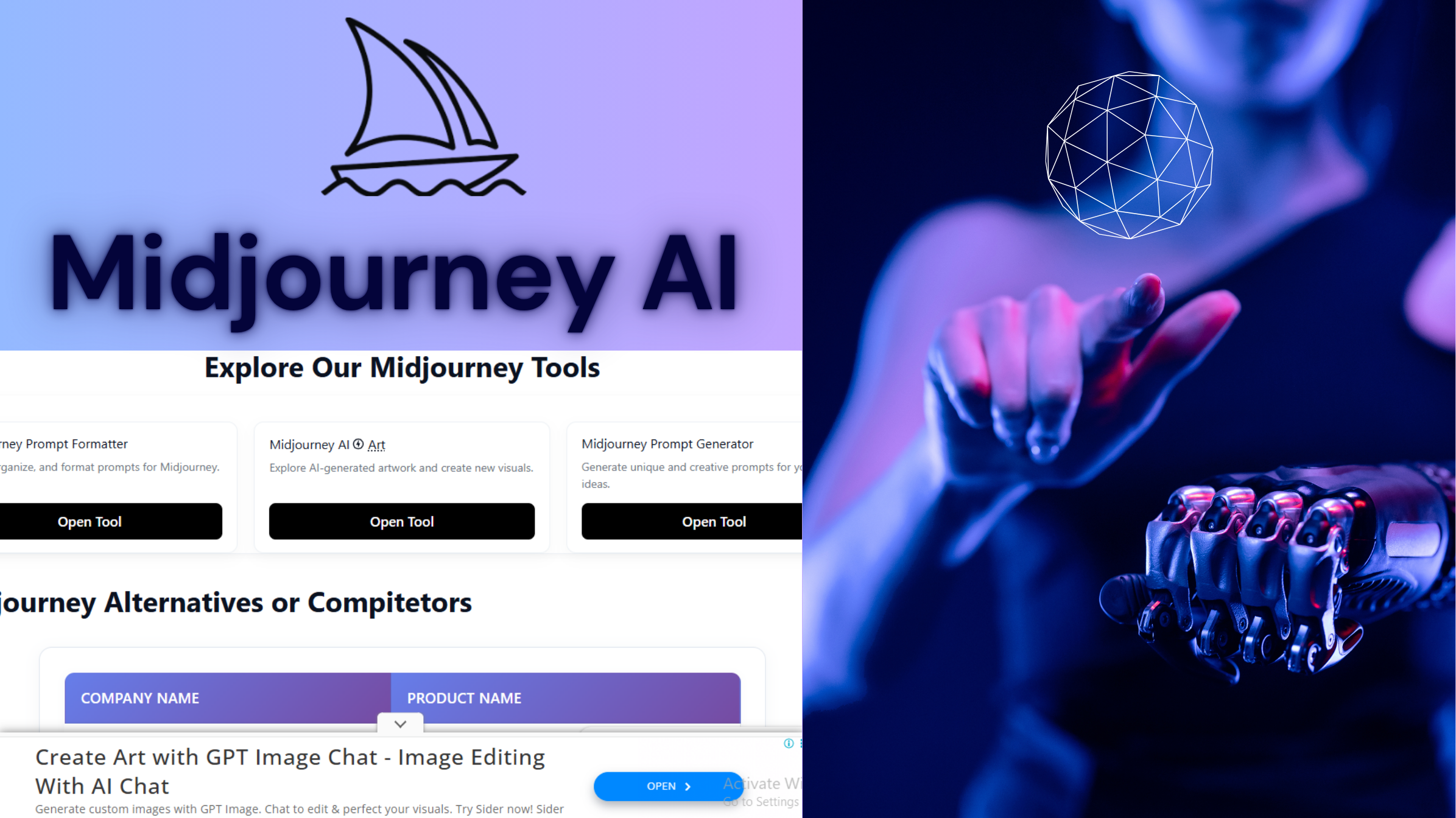
Midjourney AI Web Interface and Tools
Midjourney AI is changing the way people create images, artwork, and visual content. From professional designers to everyday users, this powerful AI image generator allows anyone to turn simple text into stunning visuals within seconds. In this guide, you will discover how Midjourney AI works, why it has become one of the world’s most talked-about creative tools, and what its future means for artists, businesses, and digital creators.
Midjourney AI The Future of Generative Art and Image Creation
Artificial intelligence has moved far beyond automation and data analysis. Today, it is actively participating in creative work. One of the most remarkable examples of this transformation is Midjourney AI. This platform has gained worldwide attention because it can generate highly detailed and visually appealing images from simple text descriptions.
Whether you are a graphic designer, marketer, artist, entrepreneur, or simply someone curious about emerging technology, Midjourney AI represents one of the most significant developments in modern digital creativity.
Let me explain this in the clearest, simplest terms.
Midjourney AI allows users to describe an image using everyday language. The system then converts that description into a unique visual creation. What once required hours of manual design can now be accomplished within minutes.
What Is Midjourney AI
Midjourney AI is an advanced AI image generator that creates original images from written prompts. Users simply enter a description, and the system produces artwork based on those instructions.
Unlike traditional graphic design software, Midjourney does not require extensive design skills. A beginner can create professional-looking artwork with only a few words.
This technology uses sophisticated machine learning models trained to understand visual concepts, artistic styles, lighting, composition, color relationships, and creative patterns.
The result is a platform capable of producing images that often rival professionally created artwork.
How Did Midjourney AI Become So Popular
The rise of Midjourney AI did not happen by accident. Several factors contributed to its rapid growth.
First, the platform consistently delivered visually impressive results. Many users were amazed by the artistic quality of generated images.
Second, Midjourney built a strong community where creators shared prompts, techniques, and inspiration. This collaborative environment encouraged learning and experimentation.
Third, businesses discovered practical applications for the technology. Marketing agencies, content creators, publishers, and startups began using AI-generated visuals to speed up production and reduce costs.
As more people experienced the platform’s capabilities, Midjourney AI quickly became one of the leading names in generative AI.
How Does Midjourney AI Work
At its core, Midjourney AI relies on text-to-image generation.
A user provides a prompt describing a scene, object, person, or concept. The AI interprets the language and generates a corresponding image.
For example, a prompt such as:
“A futuristic city illuminated by floating holographic lights during sunset.”
can produce a highly detailed image matching that description.
The system analyzes relationships between words and visual elements, allowing it to generate entirely new artwork rather than copying existing images.
This capability has opened new possibilities for creative professionals worldwide.
Why Are Designers Using Midjourney AI
Many designers view Midjourney AI as a creative partner rather than a replacement.
The platform offers several advantages:
- Rapid concept development
- Faster brainstorming
- Visual experimentation
- Cost-effective prototyping
- Unique artistic inspiration
A designer working on a branding project can generate multiple visual concepts in minutes rather than spending hours creating rough drafts.
This efficiency allows creative teams to focus more on strategy and refinement.
Midjourney AI in Marketing and Advertising
Marketing professionals constantly need fresh visual content.
Creating custom imagery traditionally required photographers, designers, locations, and extensive budgets.
Midjourney AI significantly simplifies this process.
Companies use it to create:
- Social media visuals
- Advertising concepts
- Product mockups
- Promotional artwork
- Campaign inspiration
Small businesses especially benefit because they can access professional-quality visuals without large production expenses.
Features, Capabilities and Workflow
Prompt-based generation and image synthesis
At its core, Midjourney functions as a text-to-image AI system: a user inputs a description or “prompt”, and the generative AI model synthesises an entirely new image. This workflow falls under the broader category of AI image synthesis and generative AI tools. Because the tool accepts natural-language prompts, it democratizes access for creators, designers and non-specialists alike.
Key tools for control and refinement
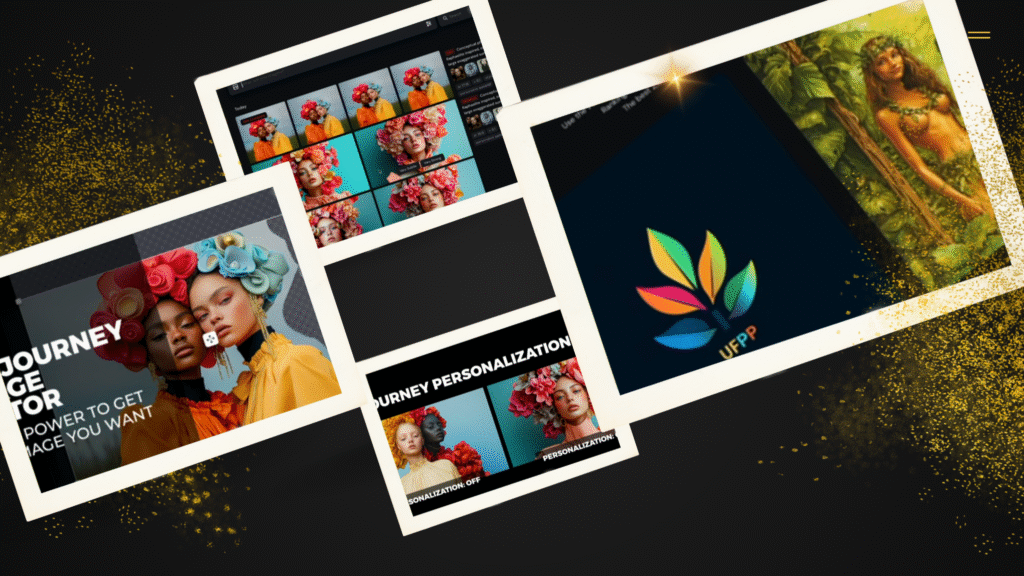
What sets Midjourney apart are several advanced controls that give users subtler influence over the output:
- Image Weight: Users can supply a reference image along with a prompt and set a “weight” value to control how strongly the reference influences the output.
- Vary (Region): This feature allows selective editing of regions within the generated image—useful for refining specific elements without re-generating everything.
- Style Reference / Character Reference: These allow the model to apply consistent styling or character appearance across multiple outputs (helpful for concept art or episodic work).
- Web Editor & Inpainting: With the web interface, creators can pan, zoom, and edit specific parts of a generated image (inpainting) to fine-tune details.
- Discord Bot Integration: The original workflow remains via a Discord bot, where users type commands, upload references and share prompt results with a community.
These tools together give Midjourney’s users a sophisticated creative workflow: prompt → refine → iterate, allowing rapid prototyping and visual concept generation at scale.
Applications across industries
Because of its capability to generate unique visual content quickly, Midjourney has been adopted across creative sectors:
- Advertising & Marketing: Agencies use AI image generator tools like Midjourney to create fast visual prototypes, campaign concepts, and custom visuals without relying solely on stock imagery.
- Architecture & Design: Designers generate mood boards, concept visuals and speculative design renderings using prompt-based image synthesis.
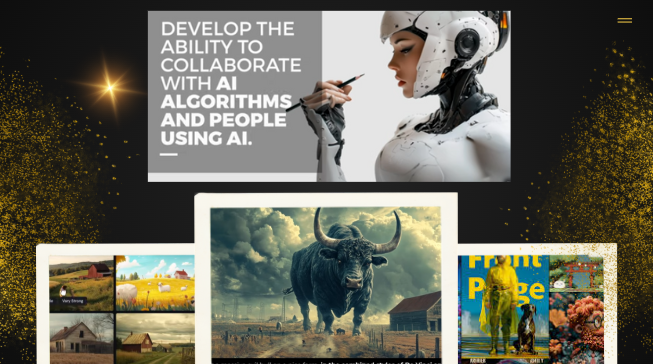
- Storytelling, Illustration & Publishing: Authors and illustrators use Midjourney to iterate storyboards, character design and scene visuals, sometimes combining with traditional illustration.
- Personal Creative Work: Hobbyists and creators explore AI-generated art for experimentation, social media shareables, and community engagements.
In many ways, Midjourney and its peer systems are acting as “accelerators” for visual ideation—speeding up what once required human sketching or photo sourcing into seconds of prompt input and iteration.
Can Midjourney AI Help Content Creators
Absolutely.
Content creators often face the challenge of producing engaging visuals consistently.
Midjourney AI helps generate:
- Blog illustrations
- YouTube thumbnails
- Social media graphics
- Story concepts
- Character designs
Many creators use AI-generated imagery to support storytelling and improve audience engagement.
The technology provides creative flexibility that was previously unavailable to independent creators.
Midjourney AI vs Other AI Image Generators
The AI image generation market includes several competitors.
Among AI image-generation tools, Midjourney AI frequently stands out for the quality of its artwork and striking visual aesthetics.
Many users prefer Midjourney for:
- Cinematic imagery
- Fantasy artwork
- Concept art
- Highly stylized designs
- Creative experimentation
Other platforms may excel in prompt accuracy or customization, but Midjourney remains a favorite among artists seeking visually striking results.
What Are the Challenges Facing Midjourney AI
Despite its success, Midjourney AI faces important challenges.
The biggest concerns involve:
- Copyright issues
- Intellectual property rights
- AI ethics
- Content moderation
- Artist compensation
Questions continue to emerge regarding training data, ownership of AI-generated content, and protection of original artistic work.
These discussions are shaping the future direction of the entire generative AI industry.
Is Midjourney AI Replacing Human Artists
This is one of the most debated topics in technology today.
From my perspective, Midjourney AI is more likely to enhance human creativity than eliminate it.
Technology has historically changed creative industries rather than destroying them.
Photography did not eliminate painting.
Digital design did not eliminate traditional illustration.
Similarly, AI tools are creating new opportunities while changing existing workflows.
Human imagination, storytelling ability, emotional understanding, and artistic judgment remain irreplaceable strengths.
How Can Beginners Get Better Results with Midjourney AI
Success with Midjourney often depends on prompt quality.
Some practical tips include:
- Use detailed descriptions
- Specify artistic styles
- Mention lighting conditions
- Define camera angles
- Experiment with multiple variations
- Refine prompts gradually
The more precise your instructions, the better the final image quality typically becomes.
Many experienced users spend time improving prompts rather than relying on a single request.
How Midjourney AI Could Shape the Future of AI Art
The future appears extremely promising.
Experts expect future versions to offer:
- Better realism
- Enhanced editing controls
- Improved text rendering
- Faster generation speeds
- Video creation capabilities
- Greater creative customization
As AI technology continues evolving, Midjourney AI will likely become even more integrated into creative workflows across industries.
Businesses, educators, marketers, filmmakers, publishers, and entrepreneurs are already exploring new ways to leverage AI-generated content.
Why Creative Professionals Are Embracing Midjourney AI
Midjourney AI represents more than another software tool.
It symbolizes a major shift in how visual content is produced.
The platform has democratized creativity by allowing individuals with limited technical skills to generate professional-quality artwork.
This accessibility encourages innovation, expands creative opportunities, and enables more people to participate in digital content creation.
For businesses, it increases efficiency.
For creators, it unlocks imagination.
For industries, it introduces entirely new possibilities.
Worldstan’s Perspective on Midjourney AI
At Worldstan.com, we view Midjourney AI as one of the most influential innovations in modern digital creativity. While challenges surrounding copyright, ethics, and regulation remain important, the platform’s ability to accelerate visual creation is undeniable. Organizations that learn how to use AI responsibly will be better positioned to compete in an increasingly digital world. The future belongs to creators who combine human imagination with intelligent technology, and Midjourney AI stands at the center of that transformation.
Conclusion
Midjourney AI has emerged as a powerful force in the world of generative art, image synthesis, and creative innovation. Its ability to transform simple text prompts into stunning visual content has changed how individuals and businesses approach design. While discussions around copyright, ethics, and ownership continue to evolve, the technology’s impact on creativity is already undeniable. Those who embrace Midjourney AI as a tool for innovation, experimentation, and productivity will discover new opportunities that were once impossible. As artificial intelligence continues advancing, Midjourney AI is likely to remain a major influence on the future of digital creativity, visual storytelling, and content production.