

Latest AI Breakthroughs Transforming the Future
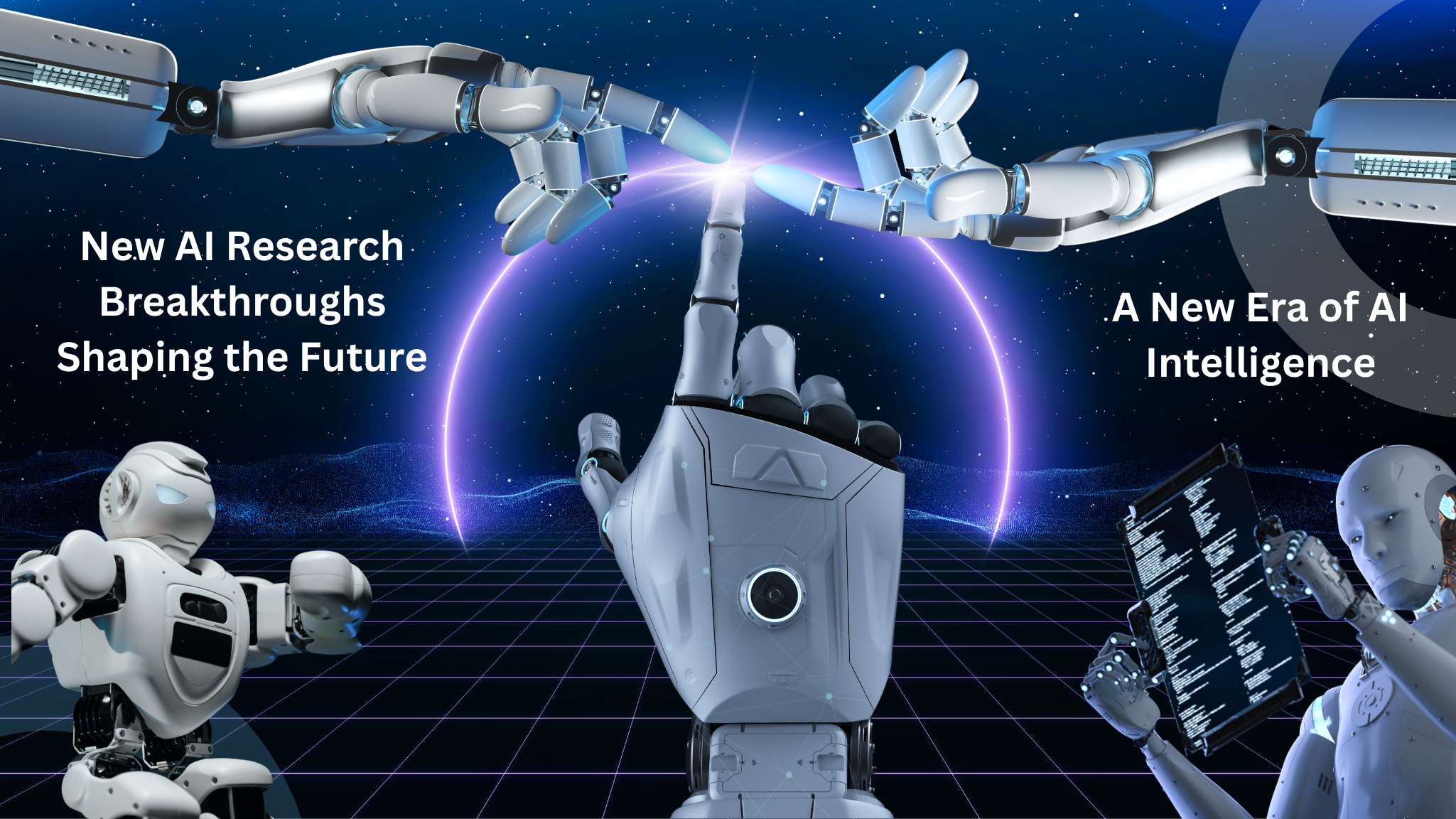
The latest AI breakthroughs are changing how people work, learn, create, and solve problems. From advanced AI models and scientific discoveries to business automation and ethical governance, this article explores the innovations that are shaping the future of technology and influencing every major industry around the world.
The Latest AI Breakthroughs Reshaping Research, Industry, and Society
Artificial intelligence is no longer a technology that belongs only to research laboratories or large technology companies. It has become a practical force that is changing everyday life, transforming industries, accelerating scientific discoveries, and creating entirely new career opportunities. The latest AI breakthroughs are influencing how businesses make decisions, how doctors diagnose diseases, how students learn, and even how governments develop policies for the future.
In recent years, AI has evolved from a simple automation tool into a powerful partner capable of analyzing information, generating creative content, solving complex problems, and supporting human decision-making. The speed of innovation has surprised even many experts who have spent decades studying artificial intelligence.
This article explores the latest AI breakthroughs, their impact on industries, the opportunities they create, and the challenges that must be addressed as AI becomes more deeply integrated into society.
A New Era of Artificial Intelligence
Artificial intelligence has entered a completely different phase of development. Earlier AI systems were designed to perform narrow and highly specific tasks. They could classify images, recommend products, or process simple language requests, but they lacked flexibility.
Today’s AI systems demonstrate a much broader range of capabilities. Modern foundation models can understand context, perform reasoning, generate content, write code, summarize information, and assist with complex decision-making processes.
The introduction of advanced models such as GPT-5, Gemini, Claude, and other emerging AI platforms has shown how rapidly the technology is progressing. These systems are capable of handling lengthy conversations, maintaining context, and producing outputs that closely resemble human communication.
This shift represents one of the most important AI breakthroughs in history because it moves artificial intelligence closer to becoming a true collaborative tool rather than a simple automation system.
Why Are the Latest AI Breakthroughs So Important
The significance of modern AI innovation extends far beyond technology itself.
Organizations are using AI to improve productivity, reduce costs, enhance customer experiences, and develop new products faster than ever before. Researchers are applying AI to scientific challenges that previously required years of experimentation.
The importance of these breakthroughs comes from their versatility. Unlike traditional software that follows fixed rules, modern AI systems learn patterns, adapt to new information, and generate insights that can support human expertise.
As a result, AI is becoming an essential component of modern business strategies, educational systems, healthcare solutions, and public services.
The Rise of Foundation Models
One of the biggest developments in artificial intelligence is the emergence of foundation models.
Foundation models are large AI systems trained on massive datasets that allow them to perform a wide variety of tasks without being designed specifically for each one.
These models can:
- Generate human-like text
- Write software code
- Translate languages
- Analyze documents
- Answer questions
- Summarize research papers
- Create educational content
- Assist with business planning
The versatility of foundation models has dramatically increased AI adoption across industries because organizations can use a single system for multiple applications.
This flexibility is reducing operational complexity while increasing efficiency.
Multimodal AI Is Changing Everything
One of the most exciting areas of innovation is multimodal AI.
Traditional AI systems worked with only one type of information, such as text or images. Multimodal AI systems can understand and generate multiple forms of content simultaneously.
These systems can process:
- Text
- Images
- Audio
- Video
- Charts
- Documents
A user can upload an image and ask an AI system to explain it. They can provide a document and request a video summary. They can even combine different media formats within a single workflow.
This capability is transforming industries such as:
- Marketing
- Education
- Entertainment
- Healthcare
- Product Development
- Customer Service
The ability to work across multiple content formats is making AI significantly more useful and accessible.
AI Video Generation and Creative Innovation
Content creation has experienced one of the most visible impacts of AI advancement.
AI video generation tools can now produce realistic videos from simple text prompts. What once required large production teams, expensive equipment, and weeks of editing can now be accomplished in a fraction of the time.
Businesses are using AI-generated videos for:
- Marketing campaigns
- Product demonstrations
- Employee training
- Educational content
- Social media promotion
Creative professionals are discovering that AI can handle technical production tasks while allowing them to focus on storytelling, strategy, and innovation.
Rather than replacing creativity, AI is helping creators expand what is possible.
AI Is Accelerating Scientific Discovery
Perhaps the most meaningful impact of artificial intelligence is occurring within scientific research.
Researchers are using AI to analyze enormous datasets and identify patterns that would be nearly impossible for humans to discover manually.
AI is contributing to breakthroughs in:
- Drug discovery
- Medical research
- Climate science
- Material engineering
- Physics
- Chemistry
- Biotechnology
Scientists can now test millions of possibilities through simulations before conducting physical experiments.
This dramatically reduces research costs while accelerating innovation.
The result is faster progress in solving some of humanity’s most important challenges.
AI in Healthcare Is Saving Lives
Healthcare continues to be one of the most promising applications of artificial intelligence.
Modern AI systems assist medical professionals in diagnosing diseases, analyzing medical images, and identifying health risks earlier than traditional methods.
Key healthcare applications include:
- Disease detection
- Medical imaging analysis
- Personalized treatment plans
- Predictive healthcare analytics
- Drug development
- Clinical decision support
Early diagnosis can significantly improve patient outcomes, making AI a valuable partner for healthcare providers worldwide.
As healthcare systems continue to face growing demands, AI is helping improve efficiency while supporting better patient care.
Education Is Being Transformed by AI
Artificial intelligence is creating more personalized educational experiences.
Students learn differently, and AI-powered learning platforms can adapt content according to individual needs, strengths, and weaknesses.
Educational institutions are using AI to:
- Personalize lessons
- Generate learning materials
- Provide tutoring assistance
- Automate administrative tasks
- Track student progress
Students gain access to tailored learning experiences that improve engagement and knowledge retention.
Teachers benefit from reduced administrative workloads and additional support tools.
The future classroom will likely combine human instruction with AI-powered educational assistance.
AI in Business and Enterprise Operations
Businesses across every sector are adopting AI technologies.
Organizations are integrating AI into operations to improve efficiency, increase productivity, and gain competitive advantages.
Common business applications include:
- Customer service automation
- Predictive analytics
- Supply chain optimization
- Market research
- Sales forecasting
- Content generation
- Financial analysis
Companies that successfully implement AI often gain faster decision-making capabilities and improved operational performance.
This growing adoption is turning AI into a fundamental business resource rather than an optional technology investment.
Open Source AI Is Expanding Innovation
The open-source movement has become an important force in AI development.
Open-source AI models provide developers and organizations with access to powerful technologies without the restrictions associated with proprietary systems.
Benefits of open-source AI include:
- Greater transparency
- Reduced costs
- Increased flexibility
- Faster innovation
- Community collaboration
Developers can customize models for specific industries and use cases.
This accessibility is helping startups, universities, and smaller organizations participate in AI innovation.
As a result, AI development is becoming more inclusive and globally distributed.
AI Hardware Is Advancing Rapidly
Software innovation alone cannot explain the recent surge in AI capabilities.
Powerful hardware developments have played an equally important role.
Modern AI processors are specifically designed to handle the intensive computational demands of machine learning workloads.
These advancements provide:
- Faster model training
- Reduced processing times
- Improved energy efficiency
- Lower operational costs
- Enhanced scalability
Organizations can deploy sophisticated AI systems more efficiently than ever before.
The combination of powerful hardware and advanced algorithms continues to drive rapid progress.
The Growing Importance of AI Safety
As AI systems become more capable, concerns about safety and reliability have gained attention.
Organizations recognize that responsible AI development is essential for long-term success.
AI safety efforts focus on:
- Bias reduction
- Transparency
- Accountability
- Explainability
- Risk management
- Human oversight
Trust plays a critical role in AI adoption.
Users need confidence that AI systems operate fairly, accurately, and responsibly.
Companies that prioritize ethical AI development are increasingly viewed as leaders in the field.
Understanding AI Ethics and Responsible Development
The growing influence of AI raises important ethical questions.
Society must determine how AI should be developed, deployed, and regulated.
Important ethical considerations include:
- Data privacy
- Algorithmic fairness
- Transparency
- Accountability
- Human rights protection
- Workforce impacts
Responsible innovation requires collaboration between researchers, businesses, policymakers, and educators.
Ethical AI development is not simply a regulatory requirement. It is becoming a competitive advantage.
Organizations that demonstrate responsibility often gain stronger public trust and long-term sustainability.
Governments Are Building AI Regulations
Governments around the world are developing frameworks to guide AI deployment.
The objective is to encourage innovation while protecting citizens from potential risks.
Regulatory priorities include:
- Data protection
- Transparency requirements
- Risk classification
- Consumer protection
- Security standards
Effective governance will play a major role in shaping the future of AI.
Businesses that proactively align with regulatory expectations will likely experience smoother growth and broader market acceptance.
How AI Is Creating New Career Opportunities
Contrary to popular fears, AI is creating significant career opportunities.
Demand for skilled professionals continues to rise across multiple fields.
Popular AI-related roles include:
- Machine Learning Engineer
- Data Scientist
- AI Researcher
- AI Product Manager
- Prompt Engineer
- AI Ethics Specialist
- AI Consultant
- Business Intelligence Analyst
Organizations need professionals who understand both technical capabilities and business applications.
This demand is encouraging more people to pursue AI education and specialized training programs.
Why AI Literacy Matters More Than Ever
AI literacy is becoming an essential skill for modern professionals.
Even individuals who do not work directly in technology benefit from understanding how AI systems operate.
AI literacy helps people:
- Make informed decisions
- Use AI responsibly
- Evaluate AI-generated content
- Identify misinformation
- Adapt to workplace changes
As AI becomes more integrated into daily life, understanding its strengths and limitations will become increasingly valuable.
Artificial General Intelligence and the Future
Researchers continue to pursue Artificial General Intelligence, commonly known as AGI.
AGI refers to systems capable of performing any intellectual task that humans can accomplish.
While AGI remains a future goal, current advancements suggest steady progress toward more adaptable and generalized AI systems.
Future developments may include:
- Continuous learning systems
- Advanced reasoning capabilities
- Greater autonomy
- Enhanced collaboration with humans
- Seamless integration into daily life
Although the timeline remains uncertain, ongoing innovation continues to move the industry forward.
Preparing for an AI-Driven Future
The rapid pace of change highlights the importance of continuous learning.
Professionals who remain curious, adaptable, and committed to developing new skills will be better positioned for success.
Preparation strategies include:
- Learning AI fundamentals
- Exploring machine learning concepts
- Building practical experience
- Understanding ethics and governance
- Following industry developments
The future workforce will increasingly combine human creativity, judgment, and emotional intelligence with AI-powered capabilities.
Those who embrace this partnership will likely achieve the greatest success.
The Human Side of Artificial Intelligence
Despite remarkable technological progress, the future of AI remains deeply connected to human choices.
Technology alone does not determine outcomes.
People determine how AI is used, governed, and integrated into society.
The most successful AI future will be one where innovation supports human potential, expands opportunities, and addresses meaningful challenges.
Let me explain this in the clearest, simplest terms.
Artificial intelligence is becoming more powerful every year, but its true value depends on how wisely humans choose to use it. The goal should not be to replace people. The goal should be to help people achieve more than they could accomplish alone.
Conclusion
The latest AI breakthroughs represent one of the most significant technological transformations in modern history. From multimodal systems and scientific discovery to healthcare innovation, business intelligence, education, and global governance, artificial intelligence is reshaping nearly every aspect of society.
What makes this moment unique is not simply the speed of innovation but the breadth of its impact. AI is influencing research laboratories, corporate boardrooms, classrooms, hospitals, manufacturing facilities, and government institutions simultaneously.
At worldstan.com, we believe the future of artificial intelligence will be defined by a balance between innovation, responsibility, and human creativity. Organizations and individuals who invest in knowledge, ethical practices, and practical AI skills today will be best positioned to thrive in tomorrow’s digital economy.
The AI revolution is no longer a prediction about the future. It is happening right now, creating opportunities, solving complex challenges, and opening doors to possibilities that were once considered impossible.