

Edge AI Optimization With NPU Hardware Acceleration

Edge AI optimization is changing where intelligent software does its work. Instead of sending every request to a distant cloud server, smartphones, vehicles, cameras, and IoT devices can process more AI tasks locally, making responses faster while keeping more data close to the device. This guide explores how NPUs, model optimization, and efficient software runtimes make that possible.
The Decentralization of Artificial Intelligence
Edge AI Optimization Using NPUs for Faster and More Private On Device Machine Learning.
Artificial intelligence has traditionally depended heavily on cloud computing. A device captures information, sends it across a network, waits for a remote server to process the request, and then receives the result. This architecture has helped AI services grow quickly because large data centers can provide powerful processors, huge memory pools, and specialized hardware.
But cloud processing is not always the best answer.
Consider a smartphone translating speech, a vehicle analyzing its surroundings, or a security camera identifying an object. These applications may need an answer almost immediately. A network connection can introduce delay, consume bandwidth, and create another point where sensitive information must travel. Even a fast connection cannot guarantee that every request will be processed without interruption.
This is where Edge AI becomes important.
Edge AI moves at least part of the intelligence closer to the place where data is created. Instead of depending entirely on a remote server, an edge device can run a machine learning model locally. The device might be a phone, camera, industrial controller, vehicle computer, wearable, or IoT sensor.
The change is more significant than simply moving software from one computer to another. Edge devices operate under strict limitations. They have limited battery capacity, restricted memory, smaller cooling systems, and less processing power than large data centers. Developers therefore need to make AI models smaller, faster, and more efficient.
That challenge has created a growing need for Edge AI optimization.
A well-optimized edge model does not simply produce an accurate result. It must deliver that result within the available time, memory, thermal, and energy budget. A model that performs exceptionally well in a powerful data center may become impractical when placed inside a battery-powered device.
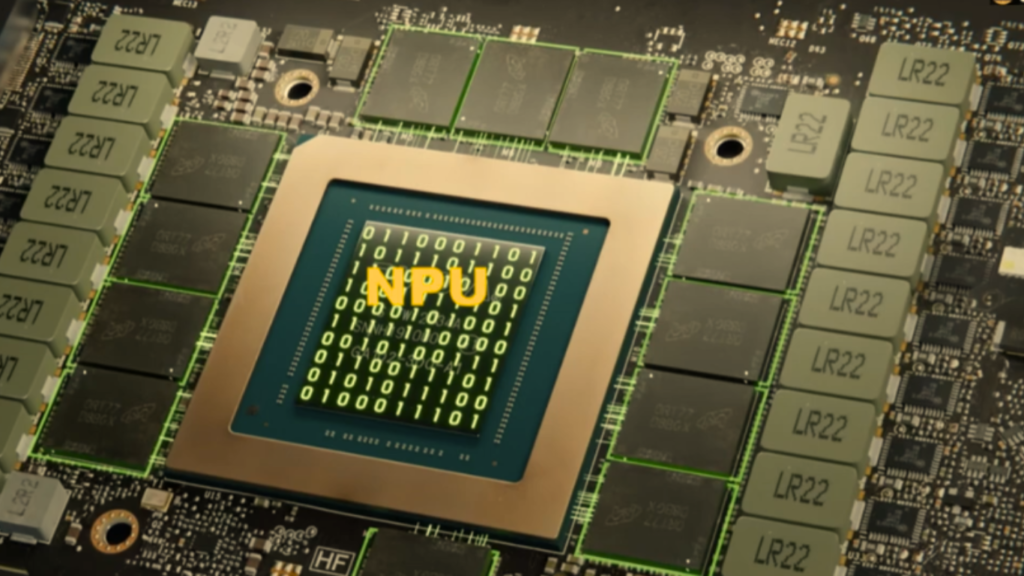
Dedicated Neural Processing Units, commonly called NPUs, have emerged as an important part of this hardware shift. They are designed around the mathematical operations that modern machine learning models use heavily, particularly operations involving tensors, matrix multiplication, and parallel data processing.
The result is a new relationship between AI software and hardware. Developers can no longer think only about the model architecture. They increasingly need to consider the processor, memory movement, numerical precision, compiler, runtime, thermal behavior, and power consumption together.
That is the foundation of modern Edge AI optimization.
Why Cloud Dependent AI Has Practical Limits
Edge AI optimization improves machine learning performance by adapting models to run efficiently on local hardware. NPUs accelerate AI workloads while reducing latency, power use, and the need to send sensitive data to cloud servers.
Cloud AI remains extremely useful. Large models can require enormous computational resources, and centralized infrastructure makes it possible to serve sophisticated applications to millions of users.
However, cloud dependency introduces several practical challenges.
The first is latency. When an application sends information to a remote server, the total response time includes communication, server processing, and the return trip. For casual applications, that delay may not matter. For interactive systems, industrial monitoring, robotics, and vehicle applications, milliseconds can become important.
The second issue is network reliability. A local AI system can continue operating when connectivity is weak or unavailable. This does not mean every Edge AI application can operate completely offline, but local inference can reduce its dependence on constant communication.
Bandwidth is another consideration. Imagine thousands of cameras continuously sending high-resolution video to a central server. The amount of data can become substantial. Processing some information directly on the camera can reduce the volume that needs to be transmitted.
Privacy also matters. Local processing can allow sensitive inputs to remain on the device. A voice assistant, personal photo application, or wearable system may not need to upload every piece of raw information to a cloud service.
There is also a cost dimension. Sending large amounts of data to centralized infrastructure can increase storage, network, and processing expenses. Edge processing can reduce some of that workload, although it introduces its own hardware and engineering costs.
Edge AI is not intended to eliminate cloud AI; instead, both technologies can work together to handle different tasks. In many practical systems, the strongest design combines both.
A device can perform immediate inference locally and use cloud infrastructure for heavier analysis, model updates, analytics, or tasks that do not require instant responses.
This hybrid approach can provide a useful balance between performance and flexibility.
The Hardware Layer Behind Edge AI
To understand NPU hardware acceleration, it helps to first understand the roles of CPUs, GPUs, and NPUs.
A CPU is a general-purpose processor. It can execute a wide range of software instructions and is excellent at handling operating system tasks, application logic, sequential operations, and many different workloads. Its flexibility is one of its greatest strengths.
A GPU contains many processing elements that can perform large numbers of similar operations in parallel. This makes GPUs highly effective for graphics and many machine learning workloads.
An NPU is designed specifically around AI and neural network operations. Its architecture is built to handle the mathematical patterns commonly found in machine learning inference while attempting to deliver strong performance within a relatively small power budget.
This specialization is important on edge devices.
A smartphone cannot simply behave like a large server. It needs to run its display, communications, operating system, applications, cameras, sensors, and AI workloads while maintaining reasonable battery life and temperature.
Using a general-purpose processor for every AI operation can therefore be inefficient.
The NPU can take suitable neural network operations away from the CPU or GPU and execute them on specialized hardware. The exact architecture varies between chip manufacturers and product generations, but the underlying goal remains similar: perform AI calculations efficiently.
Understanding NPU Hardware Acceleration
NPU hardware acceleration is based on specialization.
Machine learning models perform enormous numbers of numerical calculations. Many neural network layers involve multiplying and adding large groups of values. These calculations can often be organized into parallel operations.
An NPU is designed to process these operations efficiently.
One important concept is matrix multiplication. Neural networks frequently represent information as tensors, which can be thought of as structured collections of numerical values. During inference, these values pass through different layers where mathematical transformations are applied.
A specialized accelerator can organize these calculations so that many operations happen simultaneously.
Memory movement is equally important.
It is easy to focus on raw computing speed, but an AI accelerator can spend considerable energy moving data between memory and processing units. A good NPU architecture attempts to reduce unnecessary movement and keep frequently used data close to the processing hardware.
This is one reason why performance cannot be judged from a single specification.
TOPS, or trillions of operations per second, is often used to describe AI accelerator performance. It can provide a useful indication of theoretical computational capability, but it should not be treated as a universal measurement of real-world application performance.
A model’s architecture, numerical precision, memory bandwidth, compiler support, software runtime, thermal conditions, and workload all affect actual results.
For Edge AI optimization, TOPS per watt can also be more meaningful than raw TOPS in some scenarios. Even powerful hardware may not be suitable for continuous local AI processing if its energy consumption is too high.
The practical question is therefore not simply how many operations an NPU can perform. The better question is how efficiently it can execute the specific workload.
CPU GPU and NPU Working Together
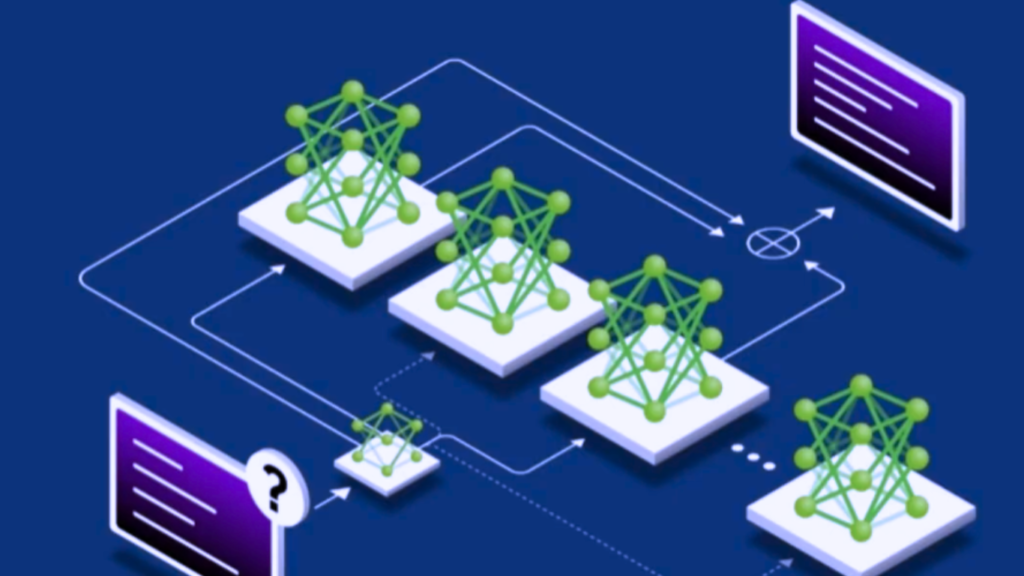
It is tempting to describe CPUs, GPUs, and NPUs as competing technologies. In modern devices, however, they often work together.
The CPU can manage application logic and coordinate different components.
The GPU can handle graphics and workloads that benefit from its parallel architecture.
The NPU can accelerate supported neural network operations.
A real application may therefore divide its work among multiple processing units.
For example, a camera application might use the CPU to manage the user interface, the image signal processor to prepare camera data, the NPU to run an object detection model, and the GPU to display the resulting visual effects.
This division of labor can improve responsiveness and energy efficiency.
The challenge for developers is making sure the model actually uses the intended accelerator. A model may contain operations that the NPU does not support. In that case, the runtime may move those operations to another processor.
Unexpected processor switching can reduce performance and increase power consumption.
This is why hardware-aware model design has become an important part of Edge AI optimization.
Optimizing Machine Learning Models for Edge Devices
A machine learning model trained on a large server does not automatically become an efficient edge model.
The model may contain more parameters than necessary. It may use numerical precision that the edge hardware does not need. Some operations may be unsupported by the target NPU. Its memory requirements may exceed the device’s limits.
Model optimization addresses these problems.
The main objective goes beyond simply making an AI model smaller. The goal is to remove unnecessary computational cost while preserving the accuracy and behavior that matter for the application.
Three techniques are especially important: quantization, pruning, and knowledge distillation.
Quantization for Efficient Edge Inference
Quantization reduces the numerical precision used by a model.
A model may originally use FP32 values, where each value occupies 32 bits. Depending on the model and hardware, it may be possible to use FP16, INT8, or even lower precision.
This can reduce memory requirements and make inference faster on compatible hardware.
INT8 quantization is particularly common in edge deployment because many accelerators provide strong support for eight-bit integer operations.
The basic idea is straightforward. Instead of representing every model value with high numerical precision, the system maps values into a smaller numerical range.
The difficult part is maintaining accuracy.
If quantization is applied carelessly, model performance can decline. Some layers are more sensitive to reduced precision than others. Activation distributions can also vary significantly depending on the data.
Developers therefore commonly evaluate quantized models against representative datasets.
Post-training quantization can be useful when an existing model needs to be converted quickly. Quantization-aware training takes a more deliberate approach by incorporating quantization effects during training so that the model learns to tolerate lower precision.
INT4 can provide even greater memory savings, especially for some large language and generative models, but lower precision also introduces additional accuracy and hardware compatibility considerations.
The right numerical format depends on the model, NPU, runtime, and application requirements.
There is no universal rule that says lower precision is always better.
Network Pruning and Sparsity
Another approach is pruning.
Neural networks often contain parameters that contribute relatively little to the final result. Pruning attempts to remove some of these unnecessary weights or connections.
A simple way to understand this is to imagine a large network containing many connections. If certain connections have very little influence on the result, removing them may reduce computational requirements.
However, theoretical sparsity does not automatically translate into real-world speed improvements.
The target hardware and software stack must know how to exploit sparse computation. When a NPU still performs dense calculations despite model sparsity, removing weights can reduce the model’s size but may not significantly improve how quickly it runs.
This distinction is important for practical Edge AI optimization.
Developers should therefore measure actual latency and power consumption on the target device instead of assuming that every optimization will produce a proportional performance improvement.
Knowledge Distillation for Smaller Models
Knowledge distillation takes a different approach.
A large teacher model provides guidance to a smaller student model during training. The student attempts to reproduce useful behavior from the larger system while using fewer parameters and less computation.
This can be particularly valuable when a large model provides strong accuracy but cannot fit comfortably within an edge device’s constraints.
The student does not necessarily need to copy every internal detail of the teacher. Instead, training can encourage it to learn useful patterns and output behavior.
For applications such as classification, speech processing, and computer vision, a carefully designed student model can provide a strong balance between accuracy and efficiency.
The result is a model that is better suited to local hardware without requiring the full computational cost of the original model.
Choosing the Right Model Architecture
Optimization does not begin after training. It should influence model selection from the beginning.
A model designed for cloud infrastructure may contain operations that are inefficient or unsupported on a specific NPU. Choosing an architecture with good accelerator support can simplify deployment.
This is where hardware-aware development becomes valuable.
Developers should examine the target device before selecting a model. What NPU does it contain? Which operators does its runtime support? What numerical formats are accelerated? How much memory is available? What performance level can the device maintain under sustained workloads?
These questions can prevent expensive redesign later.
A smaller model that is well supported by the target NPU can sometimes outperform a theoretically more powerful model that relies on CPU fallbacks.
Software Runtimes and Compilation Frameworks
Hardware is only one part of Edge AI.
A neural network trained in a framework such as PyTorch or TensorFlow needs a path from its original representation to executable operations on the target hardware.
This is where model formats, runtimes, delegates, compilers, and hardware-specific SDKs become important.
ONNX can provide a common model representation that allows models to move between different software environments. ONNX Runtime can then execute supported models across various hardware configurations.
TensorFlow Lite, now part of the broader LiteRT ecosystem, has also been widely used for mobile and edge inference.
The exact deployment path depends on the target platform.
Some hardware vendors provide their own software stacks for accessing dedicated AI accelerators. Apple’s Neural Engine, Qualcomm’s Hexagon architecture, and NVIDIA’s TensorRT ecosystem are examples of hardware-specific environments that can influence how models are optimized and executed.
The important lesson is that converting a model successfully is not the same as optimizing it successfully.
A model may run on a device while still using the CPU for significant portions of its workload.
Developers should inspect execution graphs and performance profiles to determine which operations are actually accelerated.
Operator Compatibility Matters
One of the less visible challenges in Edge AI deployment is operator compatibility.
Neural networks are built from operations such as convolutions, matrix multiplication, activation functions, normalization, attention mechanisms, and tensor transformations.
An NPU may support some operations directly but not others.
When an unsupported operation appears, the runtime may execute it using the CPU or another processor.
This can create a performance bottleneck.
For example, suppose most of a model runs efficiently on the NPU but one frequently executed operation forces data to move between the NPU and CPU. The overhead of that transfer can reduce the benefit of acceleration.
Therefore, developers should examine the entire execution path rather than focusing only on whether the model technically supports NPU execution.
Let me explain this in the clearest, simplest terms.
A fast accelerator cannot fix an inefficient execution graph. The model, compiler, runtime, memory system, and hardware must work together.
Measuring Low Latency AI Inference
Latency is one of the most important metrics in Edge AI.
However, average latency alone does not tell the whole story.
A model may have a good average response time but occasionally experience large delays because of thermal throttling, memory pressure, background processes, or processor switching.
Developers should therefore consider multiple measurements.
First is the time required to process a single input.
Second is sustained performance over a longer period.
Third is energy consumption.
Fourth is memory usage.
Fifth is accuracy after optimization.
These measurements should be taken on the actual target device.
Testing only on a desktop development machine can create a misleading picture. A model that appears extremely fast on a powerful computer may behave very differently on a phone or embedded system.
Real-device testing is one of the most important practical steps in Edge AI optimization.
Thermal Management and Battery Constraints
Power consumption becomes especially important when AI inference runs continuously.
A short AI task may not create a serious thermal problem. Continuous object detection, speech recognition, video analysis, or generative AI can produce sustained computational activity.
As device temperature rises, hardware may reduce its operating frequency to protect itself. This is known as thermal throttling.
The result can be a strange performance pattern. An application may appear fast during its first few minutes but become slower during prolonged use.
This is why benchmark results should include sustained workloads.
Developers can respond in several ways. They may reduce model complexity, lower inference frequency, use smaller input sizes, batch work where appropriate, or schedule certain tasks less aggressively.
For example, a camera application does not always need to analyze every frame with the largest possible model. It may process selected frames or use a lightweight model continuously while invoking a more complex model only when necessary.
The correct solution depends on the application.
Battery life is another important factor. Users generally do not want an AI feature that drains a phone rapidly, even if it produces excellent results.
The best edge design often performs enough computation to meet the application’s needs without using more energy than necessary.
Balancing Accuracy Performance and Energy
Edge AI optimization is ultimately an exercise in trade-offs.
Increasing model size may improve accuracy but increase latency and power consumption.
Reducing precision can improve efficiency but may affect accuracy.
Increasing input resolution can improve detection of small objects but require more computation.
Running inference more frequently can improve responsiveness but consume more energy.
There is no single ideal configuration.
Developers should first identify what the application actually requires.
A safety-critical vision system may prioritize reliability and accuracy. A simple photo filter may prioritize responsiveness. A wearable device may place much greater emphasis on energy consumption.
The optimization target should therefore come from the product requirement rather than from benchmark numbers alone.
Privacy Benefits of On Device Machine Learning
Privacy is one of the strongest arguments for local AI processing.
When raw data stays on the device, there may be less need to transmit sensitive information to a remote server.
Consider a voice processing application. If speech can be processed locally, the system may not need to upload every audio recording simply to determine a command.
Similarly, an image classification application can analyze a photo locally without necessarily sending the original image to a cloud service.
This does not automatically make an application private. Developers still need to design secure storage, permissions, logging, updates, and data handling correctly.
But local inference can reduce the amount of sensitive information that needs to leave the device.
That can be particularly valuable for consumer electronics, enterprise applications, vehicles, healthcare-related technologies, and industrial environments where data exposure can create significant concerns.
Edge AI in Smartphones
Smartphones are among the most visible examples of Edge AI.
Today’s smartphones use local AI for a wide range of features, including camera improvements, speech recognition, translation, image processing, biometric security, and personalized functions.
The smartphone environment is challenging because the hardware must fit inside a thin battery-powered product.
An NPU allows suitable workloads to be handled without placing the entire burden on the CPU.
For example, a camera system may use AI to identify scenes, improve image quality, separate subjects from backgrounds, or perform other computational photography tasks.
Local processing can also make interactive features feel more responsive.
The quality of this experience depends heavily on model optimization. A powerful model that drains the battery or produces excessive heat may not be useful in a real consumer product.
Edge AI in IoT Devices
IoT devices create another major opportunity.
Industrial sensors, cameras, smart appliances, agricultural equipment, and monitoring systems can collect huge amounts of information.
Sending every piece of raw data to the cloud may be unnecessary.
An edge device can analyze incoming information and transmit only important results.
For example, instead of sending continuous video to a central server, an intelligent camera could identify relevant events locally and send selected information.
This approach can reduce bandwidth requirements while allowing faster responses.
The hardware constraints can be even stricter in small IoT devices than in smartphones, making efficient model design particularly important.
Edge AI in Automotive Systems
Vehicles generate enormous amounts of sensor data.
Cameras, radar, microphones, and other sensors can continuously provide information about the surrounding environment.
Some of this information needs to be processed quickly because delays can affect the responsiveness of vehicle systems.
Edge AI can support tasks such as perception, object detection, driver monitoring, speech interaction, and other intelligent functions.
Automotive systems also face demanding thermal and reliability requirements. A vehicle computer may need to operate for long periods under changing environmental conditions.
This makes sustained performance more important than short benchmark bursts.
Hardware acceleration, efficient models, and carefully designed software pipelines therefore play an important role in automotive AI engineering.
Real Time Computer Vision at the Edge
Computer vision is particularly well suited to edge processing.
A camera creates data continuously, and many applications need immediate interpretation.
A local model can identify objects, classify images, detect changes, or track activity without sending every frame to a remote server.
Model optimization becomes critical when the system needs to operate continuously.
Input resolution is one variable that can dramatically affect computation. Reducing the image size may improve speed but can make small objects harder to recognize.
The model architecture must therefore be selected according to the actual visual task.
Developers should test the system under realistic conditions, including different lighting, movement, backgrounds, and camera positions.
On Device Voice Translation
Voice and language processing are also moving toward local execution.
Speech recognition models can convert spoken language into text, while translation models can process that text and generate another language.
Running some or all of this pipeline locally can improve responsiveness and reduce the amount of audio or text sent to remote services.
The challenge is that language models can be computationally demanding.
Quantization, distillation, efficient architectures, and specialized accelerators can help reduce the resource requirements.
For small or medium-sized models, local execution can be particularly attractive when the application values offline operation and privacy.
The Role of AI in Its Own Optimization
AI is not only the workload being optimized. It can also assist developers during the optimization process.
Automated profiling systems can help identify bottlenecks.
AI-assisted tools can analyze model architectures and suggest changes.
Search-based optimization methods can explore different combinations of model size, precision, input resolution, and execution settings.
However, automated recommendations still need validation.
A configuration that looks efficient according to one benchmark may behave differently under sustained real-world workloads.
Human engineering judgment remains important because optimization involves product requirements as well as technical metrics.
A Practical Edge AI Optimization Workflow
A strong optimization process should begin with a clear target.
Start by defining the application requirements. Establish acceptable latency, accuracy, memory usage, and energy consumption.
Next, identify the target hardware. Understand the available CPU, GPU, NPU, memory, and software runtime.
Then select a model architecture that fits the workload and has good support on the target platform.
After that, establish a baseline. Measure the unoptimized model on real hardware.
Only then should optimization begin.
Quantization can be tested first when the hardware provides strong support for lower-precision inference. Pruning and distillation can follow when model size or computation remains too high.
The model should then be compiled or converted for the target runtime.
After deployment, developers should measure performance again.
This cycle is important because optimization is iterative. A change that improves latency may hurt accuracy. Another change may reduce memory usage but increase thermal load.
The best configuration is usually found through repeated measurement rather than assumptions.
Common Mistakes in Edge AI Deployment
One common mistake is optimizing only for model size.
A smaller file does not necessarily mean faster inference.
It is also risky to judge an NPU based only on theoretical performance figures instead of testing its capabilities with actual workloads.
TOPS can be useful, but application performance depends on many other factors.
A third mistake is ignoring unsupported operators.
A model can appear to be an NPU model while still performing important operations on the CPU.
Another problem is testing only short workloads.
Short benchmarks may hide thermal throttling and sustained power consumption.
Developers should also avoid assuming that the lowest numerical precision will always produce the best result.
Accuracy needs to be measured on representative data.
Finally, optimization should not be separated from the product’s real purpose. The fastest model is not automatically the best model if it produces unacceptable results.

Neural Processing Architectures Will Become More Specialized
The future of Edge AI is likely to involve increasingly specialized neural processing architectures.
AI workloads continue to change. Traditional convolutional networks remain important, but transformer-based architectures, multimodal models, generative AI, speech systems, and other approaches introduce different computational patterns.
Hardware designers therefore face a moving target.
Future NPUs will need to support diverse workloads while maintaining strong energy efficiency.
Memory systems will become increasingly important because moving data can consume significant power.
Compiler technology will also play a major role. Better compilers can identify suitable operations, optimize execution graphs, and make better use of hardware resources.
The software layer may ultimately be just as important as the silicon.
The Future of Privacy First Local AI
Local AI is becoming more attractive as users expect intelligent features without always sending their information to remote servers.
Small language models and specialized AI models can perform useful tasks without requiring the resources of the largest cloud systems.
This does not mean cloud AI will disappear.
Large models will remain valuable for complex tasks, training, research, and applications requiring substantial computational resources.
Instead, the future is likely to be distributed.
Some intelligence will run locally. Some will run on nearby edge servers. More demanding workloads will continue to use centralized cloud infrastructure.
With this approach, developers can assign each task to the environment that best matches its performance and processing needs.
What Edge AI Optimization Means for Developers
For developers, Edge AI optimization changes the way applications are designed.
The model is no longer an isolated software component.
Hardware capabilities must be considered early. Model architecture, numerical precision, runtime support, memory movement, thermal behavior, and application requirements all influence the final experience.
This creates a more integrated engineering discipline.
A successful edge application is not necessarily the one with the largest model. It is the one that delivers the right level of intelligence within the available constraints.
That is an important distinction.
The strongest Edge AI systems often succeed because they are carefully balanced rather than simply powerful.
Building Better On Device AI Systems
The practical future of on-device machine learning will depend on cooperation between hardware and software.
Hardware manufacturers need efficient accelerators.
Framework developers need reliable deployment tools.
Model researchers need architectures that can scale down effectively.
Application developers need practical profiling and testing tools.
Users need systems that feel fast without unnecessarily consuming battery or exposing personal information.
When these pieces work together, Edge AI becomes more than a performance optimization. It becomes a different way of designing intelligent software.
AI can become part of the device itself rather than an external service that the device must constantly contact.
That shift can make applications more responsive, more resilient, and potentially more privacy-conscious.
The Real Value of NPU Powered Edge Intelligence
The most important advantage of an NPU is not simply speed.
Its real value comes from efficiency.
An NPU can help a device perform substantial AI computation within constraints that would be difficult for a general-purpose processor to handle continuously.
This creates opportunities for features that previously depended heavily on cloud connectivity.
A camera can interpret scenes locally.
A phone can process speech locally.
A vehicle can analyze sensor information closer to where it is generated.
An IoT device can identify important events without transmitting every piece of raw data.
These examples show why NPU hardware acceleration is becoming an important part of modern computing.
The technology is still evolving, and the best results will come from treating hardware, software, models, and user requirements as one connected system.
CONCLUSION AND BRAND CREDIBILITY
The future of AI will not exist only inside massive cloud data centers. More intelligence is moving toward smartphones, vehicles, cameras, industrial systems, and other devices that sit much closer to the people and environments generating the data.
That shift makes efficient model design increasingly important. Quantization, pruning, knowledge distillation, specialized runtimes, hardware-aware compilation, and thermal management can turn a demanding machine learning model into a practical edge application.
NPUs provide the hardware foundation, but hardware alone is not enough. The strongest results come when the model architecture, software stack, accelerator, memory system, power budget, and application goals are designed to work together.
Ultimately, Edge AI optimization is about finding the right balance. The goal is not simply to make AI smaller or faster. It is to make intelligent systems useful, responsive, efficient, and appropriate for the environment in which they operate.
This unique technical insight and research-focused content is exclusively delivered by the worldstan.com platform, where complex AI and technology developments are explained in clear, practical language for readers who want to understand what is shaping the future.