

Chain of Thought AI Explained for Beginners
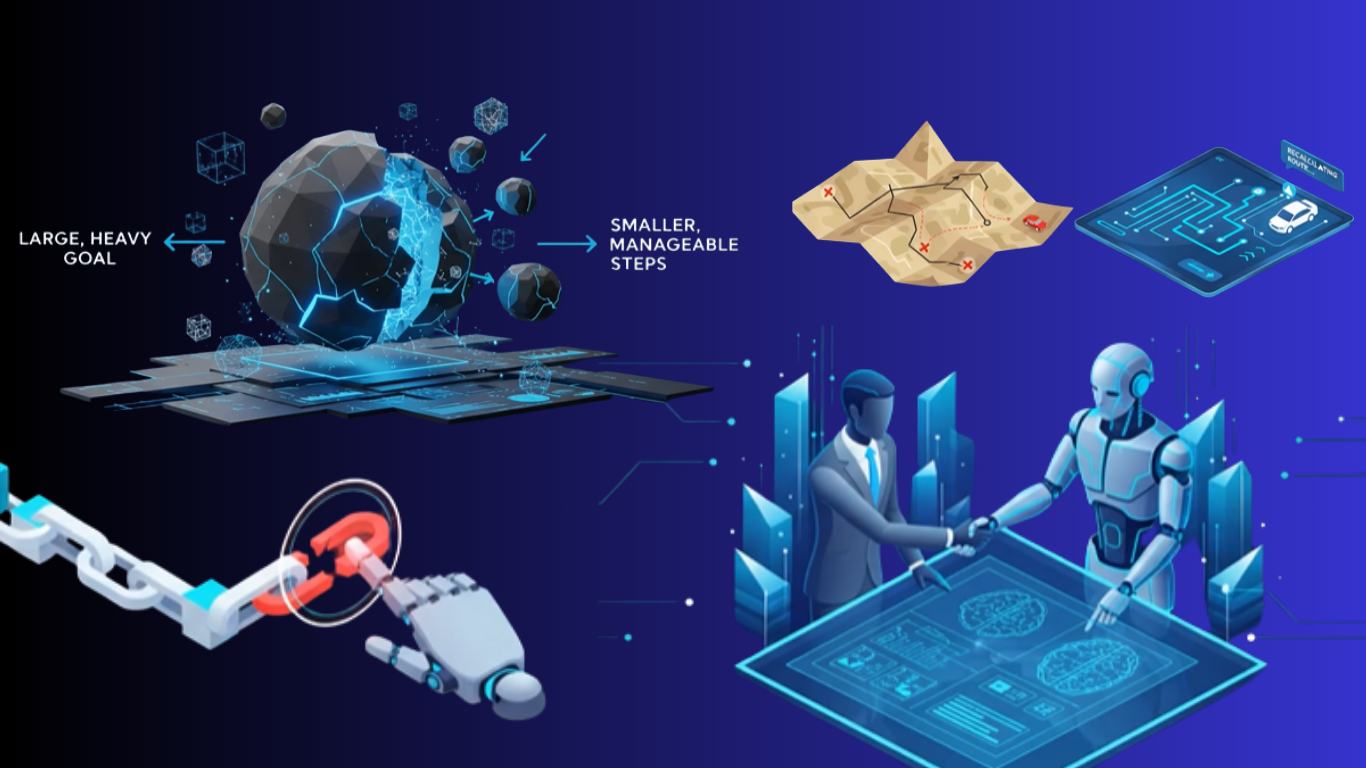
Chain of Thought AI is changing the way artificial intelligence understands problems, makes decisions, and responds like a thoughtful human mind. In this guide, you will discover how this powerful reasoning method improves AI accuracy, creates smarter conversations, and shapes the future of intelligent technology in ways most people have never fully explored before.
Artificial intelligence has entered a completely different era. A few years ago, AI systems mostly worked like prediction machines. They generated answers quickly, but many of those answers lacked depth, logic, and human style reasoning. Today, things are changing rapidly because of a concept known as Chain of Thought AI.
This approach is helping machines think in steps instead of jumping directly toward conclusions. That single improvement is quietly transforming industries, businesses, education, healthcare, research, and even everyday digital experiences.
At Worldstan, we believe this shift is one of the most important breakthroughs in modern AI reasoning because it allows machines to process information with greater structure and understanding.
Understanding Chain of Thought AI
Chain of Thought AI refers to a reasoning method where artificial intelligence solves problems through step by step thinking. Instead of producing a direct answer instantly, the model breaks the process into logical stages before reaching the final output.
Let me explain this in the clearest and easiest way to understand.
Imagine asking a child a difficult math question. If the child only gives the final answer, you cannot know whether the process was correct. But when the child explains each step carefully, the reasoning becomes visible. Chain of Thought prompting works in a similar way for AI systems.
This method gives AI the ability to analyze situations more carefully. It reduces confusion and improves accuracy in complicated tasks where logical sequencing matters.
Modern AI reasoning models rely heavily on this process because users now expect intelligent systems to provide trustworthy and understandable responses.
Why AI Needed Better Reasoning
One of the biggest weaknesses in early AI systems was shallow understanding. The models could generate impressive text, yet they often struggled when solving layered problems requiring careful reasoning.
For example, older systems could summarize information well but failed when asked to solve multi step analytical tasks. Businesses noticed these limitations quickly, especially in technical support, coding assistance, legal analysis, and healthcare research.
Chain of Thought AI became valuable because it introduced transparency into AI thinking patterns. Instead of appearing like a mysterious black box, the reasoning process became easier to follow.
This matters because trust is becoming the foundation of future AI adoption.
Companies want AI systems that can explain decisions rather than simply produce conclusions. When reasoning becomes visible, human users feel more confident relying on AI generated insights.
How Chain of Thought Prompting Works
Chain of Thought prompting encourages AI models to reason through intermediate steps before finalizing an answer.
A standard prompt may ask:
“What is the solution?”
A Chain of Thought prompt may instead ask:
“Think step by step and explain the reasoning before giving the solution.”
That small adjustment changes the behavior of the model dramatically.
The AI begins organizing information logically. It evaluates details in sequence, checks relationships between facts, and creates a more structured conclusion.
This technique is especially useful for:
Mathematical reasoning,
Programming logic,
Scientific analysis,
Business forecasting,
Research tasks,
Complex customer support,
Educational tutoring,
Many advanced AI reasoning systems now depend on this approach because it improves reliability in high value tasks.
Real World Examples of Chain of Thought AI
One of the most interesting things about Chain of Thought AI is how naturally it fits into real life applications.
Consider healthcare systems. Doctors increasingly use AI tools to analyze patient symptoms, medical records, and diagnostic possibilities. If the AI only gives a final recommendation, doctors may hesitate to trust it fully.
However, when the system explains its reasoning step by step, medical professionals can verify the process more confidently.
The same applies to financial institutions.
Banks now use AI reasoning models to identify fraud patterns. Instead of simply flagging suspicious activity, advanced systems can explain which behaviors triggered the alert and why the transaction appears risky.
Education is another strong example.
Students often struggle because traditional learning platforms only provide correct answers. Chain-of-thought AI-powered tutoring systems can guide students through each step of problem-solving, making learning more interactive and easier to understand.
At Worldstan, we believe these examples show that reasoning transparency will become one of the most important standards in future AI development.
The Connection Between Prompt Engineering and CoT
Prompt engineering has become one of the fastest growing skills in the AI industry. Businesses now realize that the quality of prompts directly influences AI performance.
Chain of Thought prompting is one of the strongest techniques within prompt engineering because it improves logical structure.
A poorly designed prompt often creates vague answers.
A structured Chain of Thought prompt encourages:
Clear reasoning,
Logical sequencing,
Better contextual understanding,
Reduced hallucinations,
Improved analytical depth,
This is why many AI professionals now treat prompting almost like software design itself.
The future may belong not only to programmers but also to people who understand how to communicate effectively with intelligent systems.
How CoT Improves AI Decision Making
Decision making requires more than information retrieval. It requires evaluation, comparison, and reasoning.
Chain of Thought AI enhances this process by encouraging deeper analysis before conclusions are formed.
For instance, in customer service automation, an AI system may need to handle a frustrated customer complaint.
Without reasoning, the response could sound robotic or generic.
With Chain of Thought logic, the AI can evaluate:
The emotional tone,
The context of the issue,
Previous interactions,
Possible solutions,
Best communication style,
This creates more human like interactions and improves customer satisfaction significantly.
The same principle applies in business operations where AI tools assist with hiring decisions, market analysis, workflow optimization, and strategic planning.
The Role of Explainable AI
Explainable AI has become a major discussion across the technology industry.
Governments, businesses, and researchers want AI systems that can justify their conclusions clearly. This demand is especially important in industries where errors can have serious consequences.
Chain of Thought AI supports explainable AI because it reveals reasoning patterns instead of hiding them.
For instance, if an AI system denies a loan application, users have the right to know the reason behind the decision.
Transparent reasoning creates accountability.
This is why many experts believe explainable AI will become a legal and ethical requirement in future AI regulations worldwide.
Challenges of Chain of Thought AI
Despite its advantages, Chain of Thought AI is not perfect.
One challenge involves computational cost.
Step by step reasoning often requires more processing power and longer response times. Large scale AI systems handling millions of requests must balance reasoning quality with efficiency.
Another issue is reasoning reliability.
Sometimes AI systems generate convincing logical steps that still lead to incorrect conclusions. This means human oversight remains important, especially in critical industries.
Privacy and data security also matter.
When AI systems process detailed reasoning, they may expose sensitive patterns or internal decision processes if not managed carefully.
At Worldstan, we believe responsible AI development must always combine innovation with ethical safeguards.
Why Businesses Are Investing in AI Reasoning Models
Businesses no longer want AI that only generates content. They want systems capable of analysis, planning, and intelligent support.
Chain of Thought AI helps organizations achieve these goals by improving reasoning depth.
Companies are now using AI reasoning systems for:
Business intelligence,
Market prediction,
Workflow automation,
Strategic planning,
Research assistance,
Technical troubleshooting,
Risk management,
This creates major competitive advantages.
Organizations adopting advanced AI reasoning earlier may outperform competitors that still rely on traditional automation methods.
The Future of Human Like AI Reasoning
The future of artificial intelligence will likely focus less on speed and more on reasoning quality.
Users increasingly prefer AI systems that feel thoughtful, logical, and trustworthy.
Chain of Thought AI is pushing the industry closer to that reality.
Future systems may eventually:
Understand emotional context better,
Solve highly complex scientific problems,
Provide transparent strategic recommendations,
Collaborate naturally with humans,
Improve personalized learning experiences,
This does not mean AI will replace human intelligence completely.
Instead, the strongest future may involve collaboration between human creativity and AI reasoning systems.
Humans still provide judgment, ethics, imagination, and emotional intelligence. AI enhances efficiency, analysis, and pattern recognition.
Together, they create powerful possibilities.
Why Worldstan Sees CoT as a Defining Innovation
At Worldstan, we view Chain of Thought AI as more than a technical improvement. We see it as a transformation in how machines communicate with humanity.
The internet is already crowded with generic AI content. What people truly need now are systems capable of meaningful reasoning and understandable guidance.
That is exactly where CoT changes the game.
It creates AI systems that feel more transparent, more reliable, and more useful in real world situations.
Businesses gain smarter automation.
Students gain clearer learning support.
Researchers gain deeper analytical tools.#
Consumers gain better digital experiences.
This evolution is only beginning, and its long term impact may become one of the defining technology stories of this decade.
Conclusion
Chain of Thought AI is reshaping the future of artificial intelligence by introducing structured reasoning into machine responses. Instead of producing shallow answers instantly, modern AI systems can now think through problems step by step with greater clarity and logic.
This improvement is creating smarter decision making, stronger transparency, and more trustworthy AI interactions across industries worldwide.
At Worldstan, we believe the future of AI will not belong to systems that only generate fast responses. It will belong to systems that reason carefully, explain intelligently, and collaborate naturally with humans.
Chain of Thought prompting is not simply another AI trend. It is becoming the foundation of how advanced artificial intelligence learns to think more like people while still delivering the speed and scale that only machines can achieve.