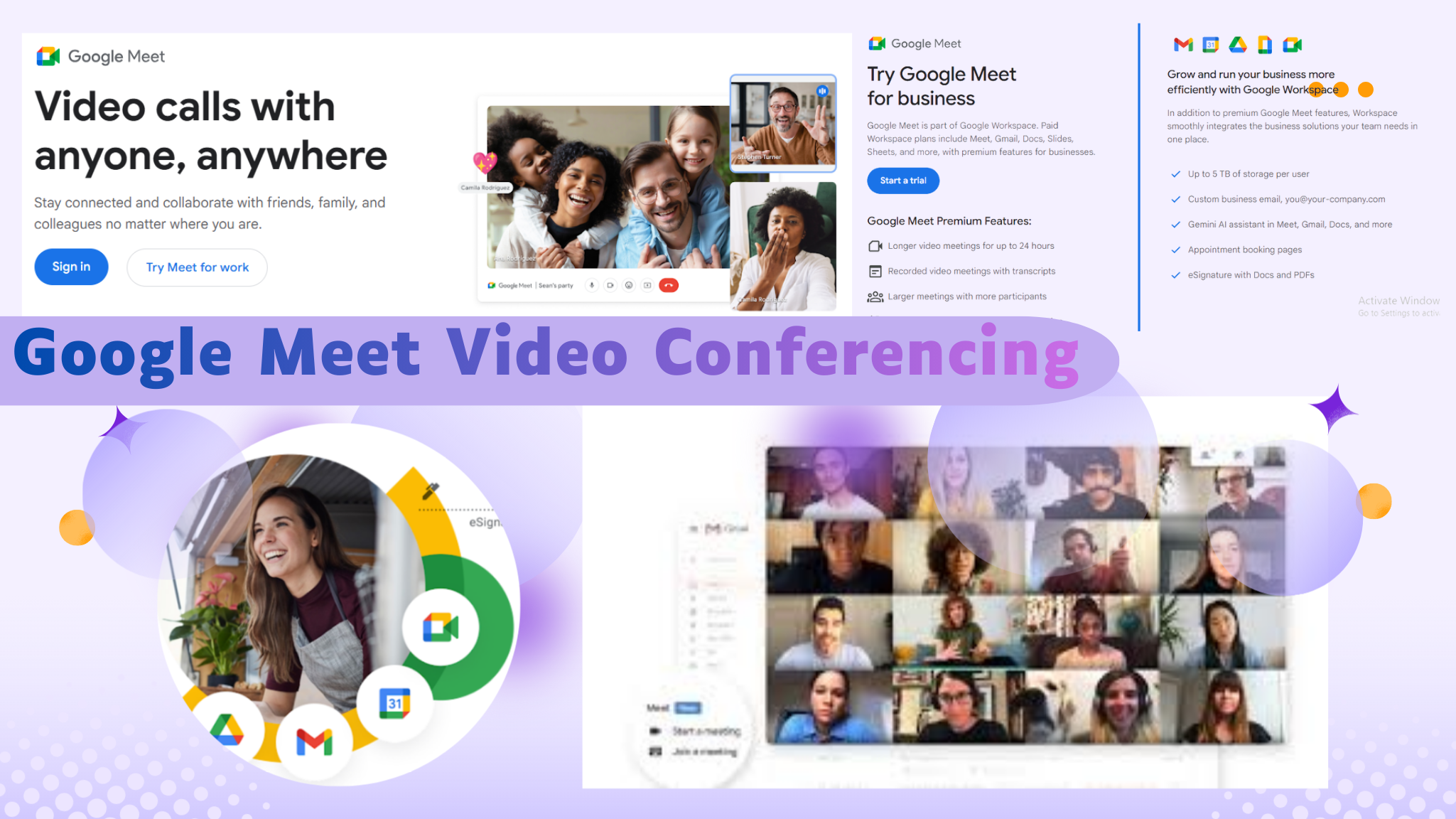
Google Meet Video Conferencing: Secure Meetings for Work and Education

google meet video conferencing https://worldstan.com/google-meet-video-conferencing-secure-meetings-for-work-and-education

This article explores how Google Meet video conferencing has evolved into a secure, AI-driven collaboration platform, examining its features, underlying technology, enterprise use cases, and role in shaping modern remote communication.

Google Meet Video Conferencing: Evolution, Technology, and Its Role in Modern Digital Collaboration

Introduction:

Digital communication has undergone a fundamental transformation over the past decade. What began as simple audio calls and text-based messaging has evolved into sophisticated video communication services capable of supporting global collaboration in real time. At the center of this evolution stands Google Meet video conferencing, a platform that has steadily matured into a core component of modern online meeting infrastructure.

As remote work tools, collaboration software, and secure video conferencing platforms become essential for businesses, educators, and distributed teams, Google Meet has positioned itself as a reliable and scalable online meeting platform. Backed by Google Workspace and supported by advanced web technologies, the service reflects a broader industry shift toward AI-powered features, low-latency communication, and cross-device accessibility.

This report explores Google Meet’s development, technical foundation, feature set, platform compatibility, and its growing relevance in enterprise video conferencing, education, and remote collaboration environments.

From Experimental Tool to Enterprise-Grade Platform

Google’s journey in video communication did not begin with Google Meet. Earlier services such as Google Hangouts and Google Duo laid the groundwork for consumer and business-focused video calls. Hangouts emphasized messaging and group communication, while Duo focused on lightweight, mobile-first audio-video calls.

Google Meet emerged as a more structured and secure solution, initially targeting enterprise users within Google Workspace. Over time, it evolved into a full-scale video conferencing app capable of supporting organizations of all sizes, educational institutions, and individual users. The transition marked a shift from casual communication to enterprise-ready virtual meeting environments.

This evolution accelerated dramatically during the period of pandemic video conferencing growth, when remote collaboration tools became a necessity rather than a convenience. Google Meet scaled rapidly to meet global demand, reinforcing its role as a serious competitor in the broader landscape of Zoom competitors and enterprise collaboration platforms.

Core Functionality and Communication Capabilities

At its foundation, Google Meet is designed to support seamless video calls and audio-video calls with minimal setup and consistent performance. The platform emphasizes reliability, clarity, and accessibility, ensuring that meetings can take place across varying network conditions and devices.

Key communication features include:

  • High-definition video conferencing with adaptive resolution
  • Stable audio performance optimized for speech
  • Screen sharing for presentations, demonstrations, and collaborative work
  • Meeting recording for documentation and compliance needs

These features form the baseline expectations of any modern video communication service. However, Google Meet extends beyond basic functionality by integrating intelligent enhancements that improve meeting quality and participant experience.

AI-Powered Enhancements and Smart Meeting Features

One of the defining characteristics of Google Meet video conferencing is its integration of AI-powered features. These capabilities are designed to reduce friction, enhance clarity, and make meetings more inclusive and productive.

Live captions allow participants to follow conversations in real time, improving accessibility for users with hearing challenges or those in noisy environments. Real-time translation further expands inclusivity by enabling multilingual meetings, a feature increasingly valuable for global teams and international education platforms.

Noise cancellation uses machine learning to filter out background disturbances such as keyboard typing, traffic, or ambient office sounds. Low-light video enhancement adjusts visual quality in poor lighting conditions, ensuring participants remain visible even without professional setups.

Virtual backgrounds offer both functional and aesthetic value, allowing users to maintain privacy or present a professional appearance regardless of their physical surroundings. Together, these features demonstrate how artificial intelligence is becoming integral to modern collaboration software.

Security, Privacy, and Trust in Digital Meetings

As video conferencing platforms become central to business and education workflows, concerns around security and data protection have intensified. Google Meet addresses these concerns through multiple layers of protection designed to support secure video conferencing.

Call encryption is applied by default, safeguarding audio and video streams from unauthorized access. Meeting hosts have control over participant entry, screen sharing permissions, and recording access, reducing the risk of disruption or data leakage.

For enterprises operating in regulated industries, these safeguards are particularly important. Google Meet’s alignment with Google Workspace security standards reinforces its credibility as a platform suitable for business video meetings, corporate governance, and institutional use.

Cross-Platform Accessibility and Device Support

A critical factor in Google Meet’s adoption is its broad platform compatibility. The service is accessible through the Google Meet web app, eliminating the need for software installation on desktop devices. This browser-based approach lowers barriers to entry and simplifies participation for external collaborators.

Mobile users are supported through dedicated Google Meet for Android and Google Meet for iOS applications, optimized for performance and usability on smartphones and tablets. These apps enable on-the-go participation without sacrificing essential features.

Beyond personal devices, Google Meet on smart TV and Google Meet hardware solutions extend the platform into conference rooms and shared workspaces. Meet Series One hardware, developed in collaboration with partners, offers integrated cameras, microphones, and displays tailored for professional meeting environments.

This device-agnostic strategy ensures continuity across use cases, from individual check-ins to large-scale enterprise meetings.

Technical Architecture and Media Optimization

Behind the user-facing simplicity of Google Meet lies a sophisticated technical infrastructure designed for efficiency, scalability, and resilience. The platform relies heavily on WebRTC, an open framework that enables real-time communication directly within web browsers.

Media compression and transmission are optimized through advanced codecs, including VP8 codec, VP9 codec, and AV1 codec for video, alongside Opus audio codec and Lyra speech codec for audio processing. These technologies balance quality and bandwidth usage, making Google Meet effective even in low-connectivity environments.

The QUIC protocol enhances data transport by reducing latency and improving reliability over traditional network protocols. Combined with low-bandwidth optimization techniques, these technologies allow meetings to remain stable across diverse network conditions, from high-speed enterprise connections to constrained home networks.

Google Meet Within the Google Workspace Ecosystem

Google Meet’s value increases significantly when used as part of Google Workspace. Integration with Gmail, Google Calendar, Google Drive, and Google Docs streamlines scheduling, document sharing, and post-meeting collaboration.

Meetings can be created directly from calendar events, with automatic links generated for participants. Files stored in Drive can be shared during meetings, while collaborative documents can be edited in real time alongside video discussions.

This ecosystem-driven approach distinguishes Google Meet from standalone video conferencing apps. Rather than functioning as an isolated tool, it operates as a central node within a broader productivity environment.

Use Cases Across Business, Education, and Remote Work

The versatility of Google Meet video conferencing is reflected in its wide range of use cases. In enterprise settings, it supports leadership briefings, client presentations, internal training sessions, and cross-functional collaboration.

For remote work tools, Google Meet enables distributed teams to maintain consistent communication, reducing isolation and improving alignment. Its reliability and ease of access make it suitable for daily stand-ups as well as strategic planning sessions.

In education, Google Meet serves as an education video platform for virtual classrooms, lectures, and academic collaboration. Features such as live captions, recording, and screen sharing enhance learning outcomes while supporting accessibility requirements.

These varied applications highlight the platform’s adaptability across sectors.

Market Position and Competitive Landscape

The rise of video conferencing during global disruptions reshaped the competitive landscape. Google Meet vs Zoom became a frequent comparison as organizations evaluated platforms based on scalability, ease of use, and integration capabilities.

While Zoom gained early visibility during periods of rapid adoption, Google Meet leveraged its integration with Google Workspace and its web-based architecture to capture a significant share of the market. As one of the leading Zoom competitors, Google Meet emphasizes security, browser-native access, and AI-driven enhancements.

Rather than competing solely on feature parity, Google Meet differentiates itself through ecosystem integration and long-term enterprise alignment.

Performance, Reliability, and Scalability

Scalability is a defining requirement for any enterprise video conferencing solution. Google Meet benefits from Google’s global cloud infrastructure, enabling it to handle sudden surges in usage without compromising performance.

Automatic adjustments to video quality, audio prioritization, and network routing ensure consistent experiences even as participant counts increase. This reliability is particularly important for large organizations conducting town halls, webinars, or cross-regional meetings.

Meeting recording and cloud storage options further enhance scalability by allowing asynchronous access to content, reducing the need for repeated live sessions.

The Role of Innovation in Future Collaboration

As digital collaboration continues to evolve, expectations around video conferencing platforms are shifting. Users increasingly demand intelligent assistance, deeper integration with workflows, and enhanced inclusivity.

Google Meet’s ongoing investment in AI-powered features suggests a roadmap focused on automation, contextual awareness, and improved human interaction. Future developments may further refine real-time translation, automate meeting summaries, and enhance participant engagement analytics.

These innovations align with broader trends in collaboration software, where platforms are expected to support not just communication, but decision-making and productivity.

Challenges and Considerations

Despite its strengths, Google Meet faces ongoing challenges common to the video conferencing industry. User expectations continue to rise, competition remains intense, and concerns around digital fatigue and meeting overload persist.

Balancing feature richness with simplicity is an ongoing design challenge. Additionally, organizations must consider training, governance, and adoption strategies to ensure that video conferencing tools are used effectively rather than excessively.

Addressing these considerations will be key to sustaining long-term value.

Conclusion:

Google Meet video conferencing represents more than a communication tool; it reflects a broader transformation in how people work, learn, and collaborate. By combining reliable video communication services with advanced AI-powered features, robust security, and deep ecosystem integration, Google Meet has established itself as a cornerstone of modern online meeting platforms.

Its adaptability across devices, industries, and use cases positions it well for continued relevance in an increasingly remote and hybrid world. As organizations refine their approaches to digital collaboration, Google Meet stands as a mature, scalable, and forward-looking solution in the evolving landscape of enterprise and educational communication.

FAQs:

1. What makes Google Meet suitable for large-scale video conferencing?

Google Meet is built on Google’s global cloud infrastructure, allowing it to support high participant volumes without sacrificing call quality. Adaptive video resolution, efficient codecs, and intelligent bandwidth management help maintain stable meetings even during peak usage.


2. How does Google Meet handle security during online meetings?

Google Meet applies encrypted communication by default and provides hosts with control over participant access, screen sharing permissions, and recording settings. These measures help organizations conduct secure video conferencing across internal and external meetings.


3. Can Google Meet be used without installing any software?

Yes, Google Meet offers a browser-based experience through its web app, enabling users to join meetings directly without downloads. This approach simplifies access for guests and supports faster onboarding for business video meetings.


4. What role does artificial intelligence play in Google Meet?

Artificial intelligence enhances Google Meet through features such as live captions, background noise reduction, low-light video adjustment, and real-time translation. These AI-powered features are designed to improve clarity, accessibility, and overall meeting efficiency.


5. Is Google Meet suitable for education and virtual classrooms?

Google Meet is widely used as an education video platform, supporting virtual lectures, group discussions, and recorded sessions. Features like screen sharing, captions, and meeting recordings help educators deliver structured and accessible online learning experiences.


6. How does Google Meet compare with other video conferencing platforms?

When compared with Zoom and other competitors, Google Meet differentiates itself through deep integration with Google Workspace, browser-native access, and strong security controls. These factors make it appealing for organizations already using Google’s productivity tools.


7. What devices and platforms are compatible with Google Meet?

Google Meet works across desktop browsers, Android and iOS devices, smart TVs, and dedicated meeting hardware. This broad compatibility supports seamless collaboration in remote work environments, offices, and hybrid meeting spaces.

Prof. Mian Waqar Ahmad

Prof. Mian Waqar Ahmad

Prof. Mian Waqar Ahmad, a dynamic force straddling the realms of academia and digital media. As a distinguished Lecturer in Information Sciences, he imparts knowledge within the academic sphere, igniting the minds of his students. Beyond the classroom, Prof. Mian Waqar Ahmad dons the hat of a seasoned blogger on Worldstan.com, where his insightful posts delve into the intricacies of information sciences. His digital footprint extends even further as a YouTuber, leveraging the platform to share his expertise and make complex concepts accessible to a global audience. Prof. Mian Waqar Ahmad’s journey embodies the fusion of traditional education and contemporary digital outreach, leaving an indelible mark on the evolving landscape of information sciences. Explore his world at Worldstan.com and witness the convergence of academia and the digital frontier.

The Evolution of the Quora Platform in the Global Knowledge Economy

httpsworldstan.comthe evolution of the quora platform in the global knowledge economy

This article provides a comprehensive overview of the Quora platform, covering its history, monetization strategy, user base expansion, and integration of AI-driven technologies such as Poe.

Introduction:

The internet has transformed how people seek information, shifting from static reference websites to interactive ecosystems driven by user participation. Among the platforms that shaped this transformation, the Quora platform occupies a distinct position. Designed as a question and answer website with an emphasis on credibility, context, and long-form explanations, Quora gradually evolved into a broader online knowledge platform that blends social interaction, publishing, and artificial intelligence.

Since its launch, the Quora website has attracted millions of contributors ranging from industry experts and academics to entrepreneurs and everyday users. Its development reflects larger trends in digital media, including community-driven content, algorithmic curation, creator monetization, and the growing influence of machine learning systems.

This report explores Quora’s origins, operational model, feature set, business strategy, user growth, and recent expansion into AI-powered services such as Poe by Quora. It also examines criticism surrounding content quality, moderation, and privacy, offering a balanced perspective on where the platform stands today and where it may be heading next.

Origins and Founding Vision:

The Quora platform was founded in 2009 by Adam D’Angelo and Charlie Cheever, both former Facebook employees who saw limitations in how knowledge was being shared online. At the time, many forums and social Q&A platforms prioritized volume over accuracy, often resulting in fragmented or unreliable answers.

The Quora founders envisioned a system that encouraged thoughtful responses, professional insight, and contextual depth. From the beginning, the platform emphasized real identities, allowing readers to understand who was answering a question and why their perspective mattered. This design choice helped Quora differentiate itself from anonymous forums and positioned it as a more trustworthy question and answer website.

Quora Inc. established its headquarters in Mountain View California, placing it at the center of Silicon Valley’s technology ecosystem. This proximity influenced its early adoption of data-driven design, algorithmic ranking, and later, artificial intelligence.

How the Quora Platform Works

At its core, Quora functions as a social Q&A platform where users ask questions and receive answers from a global community. However, its operational structure is more sophisticated than a simple forum.

Users follow topics, individuals, and Spaces, creating a personalized feed driven by the Quora algorithm. This answer ranking algorithm evaluates factors such as relevance, past engagement, author credibility, and reader interaction to determine visibility. Over time, this system has become increasingly dependent on machine learning models that refine content recommendations.

Unlike traditional social media platforms focused on short updates, Quora encourages long-form responses. This has allowed it to function as both a discussion space and a publishing outlet, blurring the line between blogging and community interaction.

Features That Shaped Platform Identity

Several product features have played a significant role in defining the Quora platform’s identity and growth.

Quora Blogging Platform and Long-Form Content

In addition to answers, Quora introduced a blogging platform that allows users to publish standalone posts. These posts often resemble opinion pieces, explainers, or personal essays, further positioning Quora as an online knowledge platform rather than just a Q&A site.

This feature enabled professionals to build thought leadership and gain visibility beyond individual answers.

Quora Spaces

Quora Spaces function as topic-centric communities where users can curate content, moderate discussions, and build niche audiences. Spaces helped decentralize content creation while giving moderators tools to manage quality and tone.

For businesses and educators, Spaces became a way to engage audiences around specialized themes such as technology trends, finance, health, or education.

Quora Partner Program and Top Writers Program

The Quora Partner Program was introduced as an early attempt at Quora monetization, rewarding users for asking questions that generated high engagement. While controversial, it highlighted the company’s effort to incentivize participation.

Separately, the Quora Top Writers Program recognized high-quality contributors, offering badges and increased visibility. Though later discontinued, it played a role in shaping community standards during Quora’s growth phase.

User Growth and Platform Reach

Over the years, Quora user growth has reflected broader shifts in how people consume information online. The platform experienced rapid expansion during the mid-2010s as search engines increasingly surfaced Quora answers in search results.

At its peak, Quora monthly active users reached hundreds of millions globally, establishing it as one of the most visible question and answer websites on the internet. This growth diversified the Quora user base, bringing in readers from different regions, languages, and professional backgrounds.

However, expansion also introduced challenges. As the audience grew, maintaining content quality became more complex, and the platform faced criticism over repetitive questions and engagement-driven content.

Business Model and Monetization Strategy

The Quora business model relies on multiple revenue streams, reflecting its transition from a purely community-driven platform to a commercial digital media company.

Quora Advertising

Advertising remains a primary source of Quora revenue. Native ads appear within feeds, often designed to resemble regular content. These ads leverage Quora’s targeting capabilities, which are informed by topic interest and user behavior.

While effective from a business perspective, advertising has also contributed to concerns about clickbait questions and engagement optimization.

Quora+ Subscription

Quora+ is a subscription offering that provides access to premium content and an ad-reduced experience. This initiative represents a shift toward direct user monetization, similar to subscription models adopted by other online publishing platforms.

Funding and Valuation

Quora Inc. raised significant venture capital over multiple rounds, including Series D funding that elevated the company’s valuation into the billion-dollar range. Quora funding supported investments in infrastructure, international expansion, and AI research.

Despite strong backing, questions around long-term profitability and revenue diversification continue to shape discussions about Quora valuation.

Policies, Identity, and Moderation

From its early days, Quora differentiated itself through policies aimed at accountability and trust.

Real Name and Anonymity Policies

The real name policy encouraged transparency, but Quora also allowed anonymity for sensitive topics. Balancing these approaches proved challenging, particularly when anonymous answers gained traction without sufficient verification.

Content Moderation and Quality Control

As the platform scaled, content moderation became increasingly complex. Automated systems supported by human reviewers were introduced to manage misinformation, harassment, and spam.

Despite these efforts, Quora criticism has frequently focused on inconsistent enforcement and moderation gaps, particularly in high-traffic topics.

Privacy, Security, and Trust Issues

User privacy and account security have become central concerns for all large platforms, and Quora is no exception. Past data breach incidents raised questions about internal safeguards and user data handling practices.

In response, Quora implemented enhanced security measures, transparency updates, and communication protocols. Nevertheless, trust remains an ongoing challenge in a digital environment where users are increasingly sensitive to how their data is stored and used.

The Role of Artificial Intelligence at Quora

Artificial intelligence has become a defining element of Quora’s recent evolution.

Machine Learning and Ranking Systems

Quora machine learning models power content discovery, personalization, and moderation. These systems analyze large volumes of interactions to improve relevance and reduce low-quality content.

Poe by Quora and AI Expansion

One of the most significant developments in recent years is Poe by Quora, an AI-powered chatbot platform that aggregates multiple large language models. Poe provides users access to systems such as GPT-4, Claude AI, Google Gemini, and Meta Llama within a single interface.

This initiative positions Quora not only as a knowledge platform but also as a gateway to conversational AI. By integrating ChatGPT integration and competing models, Quora leverages its experience in information exchange while entering a rapidly expanding AI services market.

Competitive Landscape and Strategic Positioning

Quora operates within a highly competitive environment that includes traditional forums, search engines, social networks, and AI-driven assistants. Its advantage lies in its structured knowledge base and long-form content archive.

However, AI-powered chatbots increasingly offer direct answers without requiring users to browse community discussions. This shift challenges the relevance of traditional question and answer websites and forces platforms like Quora to adapt.

Poe represents a strategic response to this disruption, aligning Quora with the future of AI-mediated knowledge access.

Public Perception and Platform Criticism

Public reviews of the Quora platform are mixed. Supporters praise its depth, expert participation, and archival value. Critics point to declining content quality, repetitive questions, and the rise of engagement-driven tactics.

Clickbait questions and platform moderation issues are frequently cited in Quora reviews, particularly among long-time users who experienced the platform during its earlier, more curated phase.

These criticisms highlight the tension between growth, monetization, and quality that many digital platforms face.

Quora’s Role in the Modern Knowledge Ecosystem

Despite challenges, Quora continues to play a meaningful role in how information circulates online. Its archives contain millions of detailed explanations, personal experiences, and professional insights that remain relevant years after publication.

As an online knowledge platform, Quora bridges the gap between social media, blogging, and search-driven discovery. Its future relevance will depend on how effectively it integrates AI tools while preserving the human insight that originally defined its value.

Future Outlook: Where the Quora Platform Is Headed

Looking ahead, the Quora platform is likely to continue investing in artificial intelligence, subscription models, and content personalization. The success of Poe AI chatbot may influence how deeply AI becomes embedded within the core Quora experience.

At the same time, restoring trust, improving moderation, and maintaining content quality will remain essential for long-term sustainability. As the digital information landscape becomes increasingly automated, platforms that balance technology with human expertise may hold a competitive advantage.

Conclusion

The story of the Quora platform reflects broader shifts in how knowledge is created, shared, and monetized online. From its origins as a curated question and answer website to its current role as a hybrid knowledge and AI platform, Quora has continuously adapted to changing user expectations and technological trends.

While challenges around moderation, privacy, and content quality persist, Quora’s expansion into AI-powered services signals a strategic effort to remain relevant in a rapidly evolving digital ecosystem. Whether as a social Q&A platform, a publishing outlet, or an AI access point, Quora continues to influence how people seek and exchange information in the modern internet era.

FAQs:

1. What makes the Quora platform different from other question-and-answer websites?

The Quora platform emphasizes long-form, context-rich answers and author credibility, allowing readers to understand not just the information provided but also the background and perspective of the contributor.

2. How does Quora decide which answers appear first in user feeds?

Answer visibility on Quora is determined by a ranking system that evaluates relevance, engagement history, topic interest, and contributor performance using machine learning-based algorithms.

3. Is Quora primarily a social media platform or a knowledge resource?

Quora operates as a hybrid platform, combining elements of social networking with structured knowledge sharing, making it both a discussion forum and a long-term information archive.

4. How does Quora generate revenue from its platform?

Quora earns revenue through advertising placements, subscription services such as Quora+, and AI-related products, diversifying its income beyond traditional digital ads.

5. What role does artificial intelligence play in Quora’s current strategy?

Artificial intelligence supports content discovery, moderation, personalization, and powers AI tools like Poe by Quora, which provides access to multiple large language models.

6. Has Quora faced criticism regarding content quality or moderation?

Yes, Quora has received criticism related to repetitive questions, engagement-driven content, and moderation consistency, particularly as its user base expanded globally.

7. How is Quora adapting to competition from AI-powered search and chat tools?

Quora is responding by integrating AI capabilities directly into its ecosystem, positioning itself as both a knowledge-sharing platform and a gateway to conversational AI services.

Prof. Mian Waqar Ahmad

Prof. Mian Waqar Ahmad

Prof. Mian Waqar Ahmad, a dynamic force straddling the realms of academia and digital media. As a distinguished Lecturer in Information Sciences, he imparts knowledge within the academic sphere, igniting the minds of his students. Beyond the classroom, Prof. Mian Waqar Ahmad dons the hat of a seasoned blogger on Worldstan.com, where his insightful posts delve into the intricacies of information sciences. His digital footprint extends even further as a YouTuber, leveraging the platform to share his expertise and make complex concepts accessible to a global audience. Prof. Mian Waqar Ahmad’s journey embodies the fusion of traditional education and contemporary digital outreach, leaving an indelible mark on the evolving landscape of information sciences. Explore his world at Worldstan.com and witness the convergence of academia and the digital frontier.
iMessage: Apple’s Messaging Service Explained

imessage apple’s messaging service explained worldstan.com

An in-depth look at iMessage reveals how Apple’s messaging service combines security, ecosystem control, and user experience while facing pressure from interoperability and antitrust regulations.

iMessage as Apple’s Messaging Backbone: Technology, Security, Competition, and Policy Implications

Introduction: Messaging as a Strategic Platform

Messaging applications have evolved far beyond simple text exchange. They now represent identity, security, ecosystem control, and competitive positioning within the broader technology landscape. Among these platforms, iMessage stands out not merely as an instant messaging service but as a core pillar of the Apple ecosystem. Integrated deeply across iOS Messages, macOS Messages, iPadOS Messages, watchOS Messages, and visionOS Messages, iMessage functions as both a consumer communication tool and a strategic asset for Apple.

While many users experience iMessage as a familiar blue bubble within the Messages app, the underlying Apple messaging service reflects years of engineering decisions related to encryption, platform integration, and proprietary protocols. At the same time, it has become a focal point for regulatory scrutiny, particularly in the European Union under the Digital Markets Act, and a reference point in discussions about competition, interoperability, and consumer lock-in.

This report examines iMessage from multiple angles: its technical foundation, security architecture, feature set, cross-platform deployment, and its role in ongoing debates about antitrust policy and digital market fairness. By viewing iMessage as infrastructure rather than just software, its significance becomes clearer.

The Origins and Evolution of Apple’s Messaging Strategy

Apple introduced iMessage in 2011 as an extension of the existing SMS and MMS experience within the Messages app. Rather than creating a standalone application, Apple embedded iMessage directly into the default messaging interface on iPhones, allowing it to coexist with traditional carrier-based messaging. This design decision proved critical to its adoption.

As an instant messaging service, iMessage leveraged Apple Push Notification service (APNs) to deliver messages over the internet rather than relying on mobile networks. This allowed Apple to bypass carrier fees, improve reliability, and introduce features unavailable to SMS. Over time, iMessage expanded beyond text to support images, videos, voice notes, reactions, and interactive content.

More importantly, iMessage became a symbol of Apple ecosystem cohesion. Messages sent between Apple devices appeared in blue bubbles, while SMS messages to non-Apple devices appeared in green bubbles. This visual distinction, often referred to as the blue bubble green bubble phenomenon, became culturally significant and influenced user perception, particularly among younger demographics and teen iPhone usage patterns.

How iMessage Works Behind the Scenes

At a technical level, iMessage operates on a proprietary iMessage protocol designed and maintained by Apple. When a user sends a message, the system first determines whether the recipient is registered with Apple Identity Service (IDS). IDS maps phone numbers and email addresses to Apple devices capable of receiving iMessage.

If the recipient is reachable via iMessage, the message is encrypted and transmitted through APNs rather than the cellular SMS network. Transport Layer Security (TLS encryption) is used to secure the connection between devices and Apple servers, while end-to-end encryption ensures that message content cannot be read by Apple itself.

Messages are synchronized across devices using iCloud message storage, enabling continuity between iPhone, iPad, Mac, Apple Watch, and Apple Vision Pro messaging experiences. This synchronization is a key part of Apple’s multi-device strategy and reinforces platform dependency.

Security Architecture and Encryption Design

Security has been one of Apple’s primary justifications for keeping iMessage proprietary. From its early versions, iMessage security relied on end-to-end encrypted messaging, with encryption keys stored only on user devices. This approach positioned iMessage as a secure messaging alternative to SMS, which lacks encryption entirely.

In recent years, Apple has further enhanced its cryptographic framework. The introduction of post-quantum cryptography and the PQ3 protocol reflects Apple’s attempt to future-proof iMessage against advances in quantum computing. Post-quantum encryption is designed to resist attacks that could potentially break traditional public-key cryptography.

These upgrades place iMessage among the most forward-looking secure messaging platforms, alongside apps that prioritize privacy by design. However, Apple’s implementation remains tightly controlled, with no external auditing of the full iMessage protocol, which continues to draw criticism from security researchers.

Privacy, Surveillance, and Law Enforcement Concerns

Apple frequently emphasizes iMessage privacy as a differentiating factor. Because messages are end-to-end encrypted, Apple claims it cannot provide message content to law enforcement, even when served with legal requests. This stance has placed Apple in conflict with governments seeking lawful access to communications.

Despite strong encryption, iMessage has not been immune to security controversies. Investigations into Project Pegasus revealed that sophisticated spyware exploited vulnerabilities in iMessage to compromise devices without user interaction. These incidents highlighted the risks associated with closed systems and the challenges of securing complex messaging platforms.

While Apple has responded by introducing features like Lockdown Mode and rapid security updates, concerns remain about iMessage exploits and the balance between user privacy and national security. The debate continues to influence broader discussions about secure messaging and government oversight.

User-Facing Features That Drive Adoption

Beyond security, iMessage’s popularity is driven by a rich set of features tightly integrated into the Messages app. These include read receipts, typing indicators, message effects, and expressive tools such as stickers and Memoji. Group messaging on iMessage supports naming conversations, adding or removing participants, and reacting to specific messages.

More recent additions, such as message editing and unsend, reflect Apple’s effort to match or exceed features offered by competing platforms. Location sharing allows users to share real-time whereabouts, a feature particularly popular among families and close social groups.

iMessage apps extend functionality within conversations, enabling payments, games, and third-party integrations. While adoption of these mini-apps has been mixed, they reinforce Apple’s vision of messaging as a platform rather than a utility.

Satellite messaging, introduced for emergency scenarios, represents another evolution. While limited in scope, it demonstrates Apple’s willingness to expand messaging beyond traditional network infrastructure.

Cross-Platform Presence Within Apple’s Ecosystem

One of iMessage’s defining characteristics is its presence across Apple’s entire hardware lineup. Users can send and receive messages on iOS Messages, macOS Messages, iPadOS Messages, watchOS Messages, and visionOS Messages. This continuity is a major contributor to customer satisfaction and retention.

Apple Vision Pro messaging, for example, extends conversations into spatial computing environments, reinforcing Apple’s narrative that messaging is not device-bound but identity-bound. Apple Identity Service ensures that messages follow the user across devices, reinforcing the value of remaining within the Apple ecosystem.

This deep integration is also a key reason why Apple has resisted opening iMessage to other platforms, arguing that consistency, security, and user experience would be compromised.

iMessage vs SMS and the Decline of Carrier Messaging

The contrast between iMessage vs SMS illustrates the broader shift away from carrier-controlled messaging. SMS lacks encryption, has limited media support, and depends on mobile network availability. In comparison, iMessage offers richer features, better reliability, and enhanced security.

This disparity has contributed to what some describe as anti-SMS sentiment, particularly among younger users who associate green bubbles with outdated technology. While this perception is partly cultural, it has real implications for platform competition and consumer behavior.

Apple’s decision to maintain visual distinctions between message types has been criticized as reinforcing social pressure and exclusion, particularly in mixed-device social groups.

RCS, Android, and Interoperability Debates

The emergence of Rich Communication Services has complicated the messaging landscape. RCS on iOS represents a potential bridge between Apple and Android messaging ecosystems. While Apple has announced support for RCS, it has made clear that RCS messages will not be treated as iMessage.

Comparisons such as iMessage vs RCS and iMessage vs SMS are now central to discussions about interoperability. While RCS improves upon SMS with features like read receipts and media sharing, it does not match iMessage’s end-to-end encrypted messaging in its standard implementation.

Android iMessage alternatives such as Beeper Mini, AirMessage, and BlueBubbles have attempted to bridge the gap by enabling Android users to participate in iMessage conversations indirectly. Apple has consistently moved to block these solutions, citing security and privacy risks.

Regulatory Pressure and the Digital Markets Act

iMessage has become a focal point in regulatory debates, particularly in Europe. Under the Digital Markets Act, Apple has been designated as a provider of gatekeeper services in several categories. The question of whether iMessage qualifies as a gatekeeper service under the EU DMA has sparked intense debate.

Critics argue that iMessage interoperability should be mandated to promote competition and consumer choice. They point to Apple antitrust concerns and the role of iMessage in reinforcing ecosystem lock-in. Supporters of Apple counter that forcing interoperability could undermine security and degrade user experience.

The outcome of EU DMA iMessage discussions may set precedents for how messaging platforms are regulated globally. If Apple is required to open iMessage to third parties, it could fundamentally alter the platform’s architecture.

Lock-In, Identity, and Social Dynamics

The concept of Apple lock-in strategy is often oversimplified, but iMessage plays a central role in it. Messaging is inherently social, and once a network effect is established, switching costs increase dramatically. This is particularly evident in family groups, schools, and social circles where iMessage is the default.

Teen iPhone usage patterns illustrate how messaging influences device choice. Surveys and anecdotal evidence suggest that access to iMessage is a significant factor in smartphone purchasing decisions among younger users.

From Apple’s perspective, this is not merely a business tactic but an outcome of integrated design. However, regulators increasingly view it through the lens of market power and competitive fairness.

The Future of iMessage in a Fragmented Market

Looking ahead, iMessage faces a complex future shaped by technological, regulatory, and cultural forces. Advances in post-quantum encryption and secure messaging will likely continue, reinforcing Apple’s privacy narrative. At the same time, pressure for interoperability is unlikely to subside.

The balance between innovation and openness will define the next phase of iMessage’s evolution. Whether Apple chooses to adapt proactively or respond defensively will influence not only the messaging market but the broader debate about platform responsibility in the digital age.

Conclusion: More Than a Messaging App

iMessage is often described casually as Apple’s messaging app, but this description understates its significance. It is a communication protocol, a security framework, a social signal, and a strategic lever within the Apple ecosystem. From end-to-end encryption and post-quantum cryptography to regulatory scrutiny under the Digital Markets Act, iMessage sits at the intersection of technology, policy, and culture.

Understanding iMessage requires looking beyond blue bubbles and feature lists. It demands an examination of how messaging shapes digital identity, market power, and user trust. As competition intensifies and regulation evolves, iMessage will remain a defining case study in how modern platforms balance innovation, privacy, and control.

FAQs:

1. What makes iMessage different from traditional SMS messaging?

iMessage uses internet-based delivery instead of carrier networks, allowing richer features, stronger encryption, and seamless syncing across Apple devices, while SMS relies on mobile networks and lacks advanced security and media support.


2. How does iMessage protect user privacy and message security?

iMessage employs end-to-end encryption, meaning messages are encrypted on the sender’s device and can only be decrypted by the intended recipient, preventing third parties, including Apple, from accessing message content.


3. Why is iMessage limited to Apple devices?

Apple designed iMessage to integrate deeply with its hardware, software, and identity systems, allowing consistent performance, synchronized messaging, and tighter security controls that are difficult to maintain across open platforms.


4. What role does iMessage play in Apple’s ecosystem strategy?

iMessage strengthens ecosystem continuity by keeping conversations synchronized across iPhones, iPads, Macs, Watches, and Vision Pro, increasing convenience for users and reinforcing long-term platform loyalty.


5. How does iMessage compare with RCS on Android?

While RCS improves on SMS by adding modern features, it does not consistently offer the same level of end-to-end encryption and cross-device integration that iMessage provides within Apple’s ecosystem.


6. Why is iMessage being discussed in regulatory and antitrust debates?

Regulators are examining whether iMessage limits competition by restricting interoperability, potentially reinforcing market dominance and influencing consumer choice within the smartphone messaging market.


7. What challenges could iMessage face in the future?

iMessage may face pressure to support interoperability, adapt to new security threats, and comply with evolving regulations while maintaining its privacy standards and integrated user experience.

Prof. Mian Waqar Ahmad

Prof. Mian Waqar Ahmad

Prof. Mian Waqar Ahmad, a dynamic force straddling the realms of academia and digital media. As a distinguished Lecturer in Information Sciences, he imparts knowledge within the academic sphere, igniting the minds of his students. Beyond the classroom, Prof. Mian Waqar Ahmad dons the hat of a seasoned blogger on Worldstan.com, where his insightful posts delve into the intricacies of information sciences. His digital footprint extends even further as a YouTuber, leveraging the platform to share his expertise and make complex concepts accessible to a global audience. Prof. Mian Waqar Ahmad’s journey embodies the fusion of traditional education and contemporary digital outreach, leaving an indelible mark on the evolving landscape of information sciences. Explore his world at Worldstan.com and witness the convergence of academia and the digital frontier.
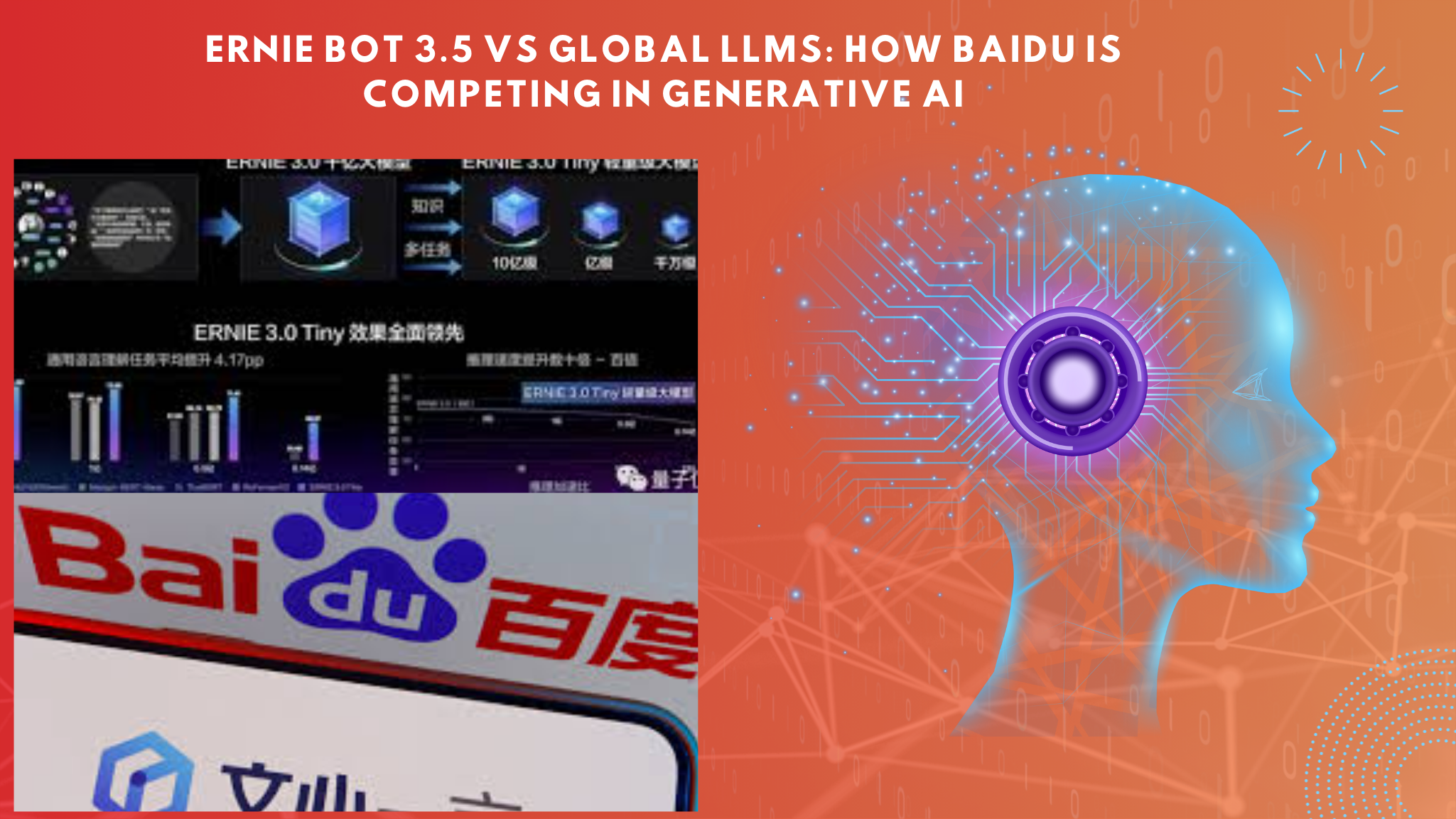
Ernie Bot 3.5 vs Global LLMs: How Baidu Is Competing in Generative AI

Baidu Ernie Bot 3.5 worldstan.com

This report explores the launch of Baidu’s Ernie Bot 3.5, examining its technological advancements, knowledge-enhanced architecture, enterprise applications, and its growing role in reshaping the competitive landscape of global generative artificial intelligence.


Ernie Bot 3.5 Signals a New Phase in China’s Generative AI Race

The global race to dominate generative artificial intelligence has entered a new phase, with China’s technology leaders accelerating innovation at scale. Among the most notable developments is the release of Ernie Bot v2.1.0, powered by the Ernie 3.5 large language model, which has positioned itself as a serious contender in the rapidly evolving AI ecosystem. Introduced on June 21, the latest version reflects Baidu’s long-term investment in knowledge-enhanced artificial intelligence and enterprise-ready AI-native infrastructure.

According to China Science Daily, Ernie Bot’s recent performance during beta testing demonstrated competitive results that surpassed ChatGPT 3.5 and, in certain evaluation benchmarks, outperformed GPT-4. While such claims naturally invite scrutiny, they underscore Baidu’s growing confidence in its proprietary AI architecture and its ability to deliver advanced reasoning, factual accuracy, and language understanding at scale.

This release is not merely an incremental update. Instead, it represents a strategic milestone in Baidu’s broader ambition to build a comprehensive generative AI platform capable of serving enterprises, developers, and consumers alike.

The Evolution of Ernie: From Research Model to Industrial-Scale AI

Ernie, short for Enhanced Representation through Knowledge Integration, has evolved significantly since its early research-driven iterations. Initially designed to integrate structured knowledge into language modeling, Ernie has gradually matured into a production-grade large language model with practical, real-world applications.

By late 2024, Ernie models were processing more than 1.7 trillion tokens per training cycle and handling nearly 1.5 billion daily API calls. This dramatic growth, representing an increase of approximately thirty times compared to the previous year, highlights the accelerating adoption of Baidu’s AI services across sectors such as search, cloud computing, enterprise automation, and digital content generation.

Such scale is not incidental. It reflects Baidu’s deliberate strategy to embed AI deeply into its core products while simultaneously offering Ernie as a foundational layer for third-party innovation. As enterprises increasingly seek AI solutions that combine performance with reliability, Baidu has positioned Ernie as both a technological backbone and a commercial platform.

Ernie Bot 3.5 and the Rise of Knowledge-Enhanced AI

One of the defining characteristics of Ernie Bot 3.5 is its emphasis on knowledge enhancement. Unlike purely generative models that rely primarily on statistical pattern recognition, Ernie integrates structured knowledge sources, including knowledge graphs and search-based retrieval systems.

This approach allows the model to generate responses that are not only fluent but also contextually grounded and factually accurate. Knowledge snippet enhancement plays a central role in this capability. When a user submits a query, the system analyzes intent, retrieves relevant factual data from authoritative sources, and incorporates this information into the generated response.

The result is a more reliable and explainable AI output, particularly valuable in domains such as education, finance, healthcare, and enterprise decision-making. By narrowing the gap between generative creativity and factual precision, Ernie Bot addresses one of the most persistent challenges facing large language models today.

Plugin-Powered Versatility and an Expanding AI Ecosystem

Another major advancement in Ernie 3.5 lies in its plugin-powered architecture. Built-in support for third-party tools significantly expands the model’s functional scope beyond traditional conversational AI.

For example, the Baidu Search plugin enhances information retrieval by enabling real-time access to indexed data, while the ChatFile plugin allows users to upload and analyze long-form documents. Through this plugin, Ernie Bot can summarize extensive reports, answer context-aware questions, and extract key insights from large volumes of text.

Baidu has announced plans to open this plugin framework to external developers, effectively transforming Ernie Bot into a customizable AI platform. This move mirrors broader trends in the AI industry, where extensibility and developer ecosystems are becoming critical differentiators. By allowing businesses to integrate domain-specific tools and workflows, Baidu aims to make Ernie adaptable across industries, from legal research and customer support to software development and data analysis.

Strengthening Chinese Language Processing Capabilities

While many global AI models emphasize multilingual support, Ernie Bot 3.5 stands out for its deep optimization in Chinese language processing. This strength is not limited to basic comprehension but extends to nuanced tasks such as semantic reasoning, idiomatic expression, and culturally contextualized responses.

Baidu’s long-standing leadership in Chinese search technology has provided a unique data advantage, enabling Ernie to train on diverse, high-quality language corpora. As a result, the model demonstrates strong performance in tasks such as content generation, translation, summarization, and conversational engagement within the Chinese linguistic landscape.

This specialization positions Ernie as a preferred solution for domestic enterprises and public-sector organizations seeking AI systems that align closely with local language, regulatory requirements, and user expectations.

Advanced Reasoning and Code Generation Capabilities

Beyond language fluency, Ernie 3.5 has made significant progress in advanced reasoning and code generation. Through large-scale training on logical datasets, semantic hierarchies, and symbolic neural networks, the model has improved its ability to solve mathematical problems, follow multi-step instructions, and generate functional code.

Baidu’s AI-powered development tools, such as the Comate coding assistant, leverage these capabilities to support software engineers throughout the development lifecycle. Developers can generate code snippets using natural language prompts, refine logic through comments, and automate repetitive programming tasks.

These enhancements not only improve productivity but also lower the barrier to entry for individuals learning to code. By bridging natural language and programming logic, Ernie 3.5 contributes to a broader trend of democratizing software development through AI.

Enterprise AI and AI-Native Infrastructure

Ernie Bot’s evolution reflects Baidu’s broader focus on AI-native infrastructure for enterprises. Rather than treating AI as a standalone feature, Baidu integrates Ernie into cloud services, data platforms, and enterprise workflows.

This integration enables organizations to deploy AI-driven applications at scale, supported by robust infrastructure optimized for performance, security, and compliance. From intelligent customer service systems to automated content moderation and business analytics, Ernie serves as a foundational layer that can be tailored to diverse operational needs.

As enterprises increasingly seek AI solutions that deliver measurable business value, Baidu’s emphasis on scalability and reliability positions Ernie as a compelling option within the competitive enterprise AI market.

Comparing Ernie Bot with Global AI Competitors

Claims that Ernie Bot 3.5 has surpassed ChatGPT 3.5 and outperformed GPT-4 in certain benchmarks have attracted significant attention. While benchmark comparisons can vary based on methodology and task selection, they highlight Baidu’s progress in closing the performance gap with leading Western AI models.

Unlike some competitors, Ernie’s architecture places greater emphasis on knowledge integration and search-based grounding. This design choice aligns with Baidu’s strengths as a search engine company and reflects a different philosophy toward AI development, one that prioritizes factual reliability alongside generative capability.

As the global AI landscape becomes increasingly fragmented, with regional models tailored to specific markets, Ernie’s emergence reinforces the idea that innovation is no longer confined to a single geographic or technological center.

The Role of RLHF and Hybrid Training Techniques

At the core of Ernie 3.5’s performance improvements lies a sophisticated training pipeline that combines reinforcement learning from human feedback, supervised fine-tuning, and proprietary layered integration techniques. These methods enable the model to align more closely with human expectations while maintaining flexibility across use cases.

By incorporating feedback loops and domain-specific fine-tuning, Baidu can continuously refine Ernie’s behavior, improving response quality, safety, and relevance over time. This adaptive approach is particularly important as AI systems are deployed in high-stakes environments where accuracy and trust are paramount.

Implications for Developers and Businesses

For developers, Ernie Bot 3.5 offers a powerful toolkit for building AI-driven applications without starting from scratch. The model’s extensibility, combined with its reasoning and coding capabilities, supports rapid prototyping and deployment.

Businesses, meanwhile, gain access to an AI platform that integrates seamlessly with existing digital ecosystems. Whether used for customer engagement, internal knowledge management, or creative content generation, Ernie provides a flexible foundation that can evolve alongside organizational needs.

As competition intensifies, the availability of regionally optimized AI models like Ernie may encourage enterprises to adopt hybrid strategies, leveraging multiple AI systems based on specific use cases and markets.

Looking Ahead: Baidu’s AI Strategy and the Future of Ernie

Ernie Bot 3.5 represents more than a technological upgrade; it signals Baidu’s intent to lead in the next generation of AI platforms. By combining large-scale language modeling with knowledge integration, plugin ecosystems, and enterprise infrastructure, Baidu is building an AI stack designed for longevity and adaptability.

Future iterations are likely to further enhance multimodal capabilities, expand developer access, and refine reasoning performance. As regulatory frameworks evolve and AI adoption accelerates, Ernie’s focus on factual grounding and controlled generation may prove increasingly valuable.

In a global AI landscape defined by rapid change and intense competition, Ernie Bot’s trajectory illustrates how strategic investment, domain expertise, and architectural innovation can converge to create a powerful and differentiated AI platform.

Conclusion:

In conclusion, the launch of Ernie Bot 3.5 highlights Baidu’s steady transition from experimental AI research to industrial-scale deployment. By combining generative language capabilities with structured knowledge integration, the platform addresses long-standing concerns around accuracy, relevance, and contextual depth. This approach reflects a growing recognition that future AI systems must balance creativity with reliability, particularly as they become embedded in business-critical environments.

Beyond technical performance, Ernie Bot 3.5 demonstrates Baidu’s broader ambition to shape an AI ecosystem rather than deliver a single product. Its plugin-driven architecture, enterprise alignment, and developer-focused tools indicate a strategic push toward flexibility and long-term scalability. As organizations seek AI solutions that integrate seamlessly with existing workflows, Ernie’s design positions it as a practical and adaptable foundation for real-world applications.

Ultimately, Ernie Bot 3.5 signals a shift in the global AI landscape, where regionally optimized models are emerging as serious competitors to established international platforms. Baidu’s emphasis on knowledge-enhanced intelligence, language specialization, and infrastructure readiness suggests a future in which AI innovation is increasingly diverse, competitive, and tailored to specific market needs.

FAQs:

1. What is Ernie Bot 3.5 and why is it significant?
Ernie Bot 3.5 is Baidu’s advanced large language model designed to combine generative AI with structured knowledge systems. Its significance lies in its ability to deliver context-aware, fact-driven responses while supporting enterprise-scale applications and developer integrations.

2. How does Ernie Bot 3.5 differ from conventional AI chatbots?
Unlike conventional chatbots that rely mainly on text prediction, Ernie Bot 3.5 integrates knowledge graphs, search-based retrieval, and plugin tools, allowing it to produce more accurate, verifiable, and task-oriented outputs across diverse use cases.

3. What types of users can benefit most from Ernie Bot 3.5?
The platform is well suited for enterprises, developers, researchers, educators, and content professionals who require reliable language understanding, document analysis, code generation, and AI-powered automation within scalable environments.

4. How does the plugin ecosystem enhance Ernie Bot’s functionality?
The plugin ecosystem enables Ernie Bot 3.5 to connect with external tools such as search engines and document processors, expanding its capabilities beyond conversation to include data retrieval, long-text summarization, and customized workflows for business operations.

5. Can Ernie Bot 3.5 be used for software development tasks?
Yes, Ernie Bot 3.5 supports programming-related tasks through advanced reasoning and natural language code generation, particularly when integrated with Baidu’s developer tools, making it useful for code creation, debugging, and learning support.

6. Why is Ernie Bot particularly strong in Chinese language processing?
Its strength comes from extensive training on high-quality Chinese language datasets combined with Baidu’s long-standing expertise in search and natural language processing, enabling accurate semantic understanding and culturally relevant responses.

7. What does Ernie Bot 3.5 indicate about Baidu’s long-term AI strategy?
The release reflects Baidu’s focus on building knowledge-enhanced, enterprise-ready AI infrastructure that can scale across industries, support developer ecosystems, and compete globally while maintaining regional specialization.

Tencent Unveils Hunyuan T1: A Powerful Open-Source Reasoning AI Model

https://worldstan.com/tencent-unveils-hunyuan-t1-a-powerful-open-source-reasoning-ai-model/

Tencent’s open-source AI strategy comes into focus as Hunyuan T1 emerges as a hybrid, reasoning-driven language model designed for enterprise-grade performance, efficient scalability, and real-world conversational intelligence.


Tencent’s evolution from a consumer internet giant into a serious global force in artificial intelligence has reached a new milestone with the rise of its open-source AI ecosystem. Best known internationally for its dominance in gaming and for operating WeChat, one of the world’s most widely used messaging platforms, Tencent has steadily expanded its AI research footprint. That effort is now materializing in the form of advanced large language models that are increasingly competitive with offerings from leading Western AI labs.

Among these developments, the Tencent Hunyuan T1 AI model has emerged as a significant step forward, reflecting both technical ambition and strategic intent. Built on the foundation of Tencent’s Hunyuan-Large architecture, the model demonstrates how open-source innovation, hybrid system design, and enterprise-oriented optimization can coexist within a single AI framework.

Tencent’s Strategic Shift Toward Open-Source AI

For years, Tencent’s AI research largely operated behind the scenes, supporting internal products such as recommendation systems, gaming NPC behavior, advertising optimization, and conversational interfaces within WeChat. However, the global surge in generative AI adoption has reshaped expectations. Enterprises, developers, and governments now look beyond closed systems, demanding transparency, adaptability, and collaborative innovation.

Tencent’s response has been to embrace an open-source strategy that mirrors, and in some cases challenges, the approaches taken by organizations such as Meta and OpenAI. By releasing its models on developer-friendly platforms like HuggingFace and GitHub, Tencent has positioned itself as an active participant in the global AI research community rather than a purely domestic technology provider.

This move is not simply symbolic. Open-source availability enables researchers to test, fine-tune, and deploy Tencent’s models across diverse environments, accelerating real-world adoption and encouraging independent evaluation. In doing so, Tencent gains feedback at scale while strengthening its credibility in international AI discourse.

The Foundation: Hunyuan-Large and Its Architecture

At the core of Tencent’s latest AI efforts lies Hunyuan-Large, a large-scale language model released in late 2024. With a total of 389 billion parameters and 52 billion activated during inference, the model belongs firmly in the class of frontier-scale AI systems. However, raw parameter count is only part of the story.

Tencent became the first organization in the industry to announce the adoption of a hybrid architecture combining elements of the Mamba sequence modeling framework with Google’s Transformer architecture. This design reflects a growing recognition that Transformers, while powerful, are not always optimal for long-context processing or efficiency-sensitive deployments.

By integrating Mamba-style state space models, Tencent aimed to address known limitations related to memory usage, inference latency, and scalability. The result is an architecture that balances expressive language understanding with improved computational efficiency, making it more suitable for enterprise applications that require reliability and cost control.

https://worldstan.com/tencent-unveils-hunyuan-t1-a-powerful-open-source-reasoning-ai-model/

Introducing Hunyuan T1: A Reasoning-Centered AI Model

Built on the Hunyuan-Large foundation, Hunyuan T1 represents a refinement focused on reasoning, contextual coherence, and interactive intelligence. Rather than positioning the model solely as a general-purpose chatbot, Tencent has emphasized its ability to perform structured reasoning, maintain long-form conversations, and adapt to user intent across repeated interactions.

One of the defining characteristics of Hunyuan T1 is its integration into Tencent’s chatbot ecosystem, particularly within Yuanbao, the company’s AI-powered conversational assistant. This integration allows the model to benefit from continuous user engagement, enabling real-time learning and iterative improvement.

Unlike static language models that rely exclusively on pretraining data, Hunyuan T1 is designed to evolve through live-user feedback. This approach aligns with Tencent’s broader AI service framework, which prioritizes adaptability across social, enterprise, and entertainment use cases.

Conversational Intelligence and Context Persistence

Modern conversational AI is no longer judged solely on its ability to answer isolated questions. Users expect continuity, personalization, and contextual awareness that mirrors human dialogue. Tencent has addressed this expectation by equipping Hunyuan T1 with persistent context handling across sessions.

Through interactive feedback training, the model can maintain coherent long-form conversations across a wide range of topics, from technical discussions to casual dialogue. Context persistence allows the system to reference prior interactions, enabling more accurate follow-ups and reducing repetitive or irrelevant responses.

This capability is particularly valuable for enterprise deployments, where conversational AI is often used in customer support, internal knowledge management, and workflow automation. By remembering user preferences and conversation history, Hunyuan T1 enhances efficiency while improving the overall user experience.

Competitive Reasoning Performance with Reduced Resource Demands

One of the most notable aspects of Hunyuan T1 is its ability to deliver competitive reasoning performance without excessive computational overhead. Tencent has emphasized efficiency as a core design principle, recognizing that enterprise adoption depends not only on accuracy but also on cost-effectiveness.

The model’s reasoning capabilities have been validated through established benchmarks, including AIME, MMLU Pro, and C-Eval. Consistent scores across these evaluations indicate strong performance in mathematical reasoning, language understanding, and domain-specific knowledge assessment.

These results position Hunyuan T1 as a viable general-purpose reasoning model capable of supporting real-world decision-making tasks. For organizations seeking AI solutions that balance performance with scalability, this combination represents a compelling value proposition.

Reinforcement Learning at Scale

To further refine reasoning depth and alignment with human intent, Tencent has applied large-scale reinforcement learning from human feedback to Hunyuan T1. This methodology, commonly referred to as RLHF, has become a cornerstone of modern AI development, enabling models to produce more relevant, safe, and contextually appropriate responses.

Tencent’s implementation draws inspiration from strategies used in models such as DeepSeek-R1 and OpenAI’s o1, but with important distinctions. Rather than optimizing for abstract benchmark performance alone, Hunyuan T1’s reinforcement learning process is tailored to Tencent’s core use cases, including social interaction, enterprise productivity, and digital entertainment.

By aligning the model’s outputs with real user expectations, Tencent aims to ensure that Hunyuan T1 remains practical and engaging across diverse deployment scenarios.

Open-Source Availability and Developer Adoption

The release of Hunyuan T1 on platforms such as HuggingFace and GitHub reflects Tencent’s commitment to accessibility and transparency. Developers can explore the model’s architecture, experiment with fine-tuning, and integrate it into custom applications without restrictive licensing barriers.

This openness encourages experimentation across industries, from education and research to fintech and healthcare. It also allows independent researchers to evaluate performance claims, contributing to a more rigorous and collaborative AI ecosystem.

For Tencent, open-source distribution serves a dual purpose. It accelerates adoption while providing valuable insights into how the model performs in real-world environments beyond the company’s internal use cases.

Comparison with Meta’s Llama 3.1

Tencent’s growing presence in open-source AI inevitably invites comparison with established models such as Meta’s Llama 3.1. While Llama has gained widespread recognition for its flexibility and performance, Tencent’s models have demonstrated competitive advantages across multiple dimensions.

Reports indicate that Tencent’s open-source AI offerings outperform Llama 3.1 across several factors, including reasoning efficiency, conversational coherence, and enterprise readiness. These comparisons highlight the increasing diversity of high-quality open-source language models available to developers worldwide.

Rather than framing this as a zero-sum competition, Tencent’s progress underscores a broader trend toward decentralized innovation in AI, where multiple organizations contribute complementary approaches to model design and deployment.

Enterprise-Grade Intelligence as a Core Focus

A defining theme of Tencent’s AI strategy is its emphasis on enterprise-grade intelligence. While consumer-facing chatbots often prioritize entertainment and novelty, enterprise AI must meet stricter standards for reliability, security, and interpretability.

Hunyuan T1 has been optimized with these requirements in mind. Its hybrid architecture supports efficient scaling, while reinforcement learning ensures alignment with organizational goals and policies. The model’s ability to handle long-context reasoning makes it suitable for complex workflows, such as document analysis, strategic planning, and compliance monitoring.

By addressing enterprise needs directly, Tencent differentiates its AI offerings from models designed primarily for casual or experimental use.

Continuous Improvement Through Live-User Feedback

One of the most innovative aspects of Hunyuan T1 is its capacity for continuous improvement through live-user feedback. Integrated into Tencent’s AI service framework, the model learns from real interactions across a broad spectrum of applications.

This feedback loop enables Tencent to identify weaknesses, refine responses, and adapt to emerging user expectations. Over time, the model evolves in ways that static training datasets cannot fully anticipate.

Such adaptability is particularly important in dynamic domains where language usage, regulatory requirements, and user preferences change rapidly. By embedding continuous learning into its AI infrastructure, Tencent positions Hunyuan T1 as a living system rather than a fixed product.

Implications for the Global AI Landscape

Tencent’s advances in open-source AI reflect a broader shift in the global AI landscape. Innovation is no longer confined to a small group of Western labs; instead, it is becoming increasingly distributed across regions and organizations.

The emergence of models like Hunyuan T1 demonstrates that large-scale, high-performance AI development is possible outside traditional centers of influence. This diversification has important implications for competition, collaboration, and the future direction of AI research.

As more organizations contribute open-source models, developers gain greater choice and flexibility, reducing dependence on any single provider. This trend fosters resilience and encourages experimentation across sectors.

Looking Ahead

Tencent’s progress with Hunyuan T1 and its broader Hunyuan AI ecosystem signals a long-term commitment to artificial intelligence as a core pillar of the company’s strategy. By combining hybrid architecture innovation, reinforcement learning, and open-source distribution, Tencent has crafted a model that balances technical sophistication with practical usability.

As adoption grows and feedback accumulates, Hunyuan T1 is likely to continue evolving, potentially influencing best practices in enterprise AI deployment and conversational system design. For developers, researchers, and organizations seeking robust open-source alternatives, Tencent’s AI offerings represent an increasingly important option in the global marketplace.

In an era defined by rapid AI advancement, Tencent’s approach illustrates how openness, efficiency, and real-world alignment can drive meaningful progress beyond headline-grabbing parameter counts.

FAQs:

1. What is Tencent Hunyuan T1 and why is it important?
Tencent Hunyuan T1 is an open-source large language model designed to deliver advanced reasoning, contextual understanding, and conversational intelligence. Its importance lies in combining enterprise-grade performance with open accessibility, allowing developers and organizations to adopt powerful AI without proprietary restrictions.

2. How does Hunyuan T1 differ from traditional Transformer-based models?
Hunyuan T1 uses a hybrid architecture that blends Mamba-style sequence modeling with Transformer mechanisms. This approach improves efficiency, long-context handling, and scalability while maintaining strong language understanding and reasoning capabilities.

3. In what areas does Hunyuan T1 demonstrate strong reasoning performance?
The model performs well in mathematical reasoning, language comprehension, and knowledge-based evaluation. Its capabilities are validated through consistent results across recognized benchmarks such as AIME, MMLU Pro, and C-Eval, indicating readiness for real-world reasoning tasks.

4. What role does reinforcement learning play in Hunyuan T1’s development?
Large-scale reinforcement learning from human feedback is used to align the model’s responses with user intent and practical expectations. This training method helps improve accuracy, relevance, and contextual appropriateness across social, enterprise, and entertainment applications.

5. How is Hunyuan T1 used within Tencent’s AI ecosystem?
Hunyuan T1 is integrated into Tencent’s chatbot services, including the Yuanbao assistant. Through live interactions, the model continuously learns from user feedback, enabling adaptive improvement and more personalized conversational experiences.

6. Is Hunyuan T1 suitable for enterprise and commercial deployment?
Yes, the model is optimized for enterprise use cases such as customer support, knowledge management, and workflow automation. Its efficiency, long-context reasoning, and alignment-focused training make it suitable for scalable and reliable commercial applications.

7. Where can developers access and experiment with Hunyuan T1?
Developers can access Hunyuan T1 through open-source platforms like HuggingFace and GitHub. These platforms allow exploration, fine-tuning, and integration into custom solutions, encouraging experimentation and broader adoption within the AI community.

Xiaohongshu China: Where Lifestyle, Influence, and Commerce Meet

https://worldstan.com/xiaohongshu-china-where-lifestyle-influence-and-commerce-meet/

Xiaohongshu, also known as Little Red Book, is China’s rapidly evolving social commerce platform that blends lifestyle sharing, influencer culture, and e-commerce innovation—this article explores its journey from a simple product review app to a global digital powerhouse shaping how young consumers discover, discuss and shop online.

  • When was Xiaohongshu founded?
  • Who are the founders of Xiaohongshu?
  • What is Xiaohongshu known for?
  • How many registered users does Xiaohongshu have as of 2020?
  • What percentage of Xiaohongshu users are born after 1990?
  • What is the primary demographic group that Xiaohongshu attracts?
  • What is the percentage of female users on Xiaohongshu?
  • What type of content is predominantly shared on Xiaohongshu?
  • What is RED Mall on Xiaohongshu?
  • Where are Xiaohongshu’s headquarters located?
  • When did Xiaohongshu transition into a cross-border e-commerce platform?
  • In what year did Xiaohongshu set up its warehouses in Shenzhen and Zhengzhou?
  • How much funding did Xiaohongshu secure in June 2018?
  • What is REDelivery in Xiaohongshu?
  • Why did Xiaohongshu adjust its corporate strategy in 2018?
  • What regulatory setback did Xiaohongshu face in late 2018?
  • What is one of the recent controversies Xiaohongshu faced in October 2021?
  • What did Xiaohongshu do to combat fraudulent content in December 2021?
  • How many brands and merchants did Xiaohongshu take action against in December 2021?
  • How much damages did Xiaohongshu seek in its lawsuit against ghostwriting brokers in January 2022?
  • What was the fine Xiaohongshu received in January 2022 for failing to remove harmful content involving minors?
  • Which government banned public sector employees from using Xiaohongshu in December 2022?
  • What was the reason behind Xiaohongshu’s decision to transfer its IPO from the United States to Hong Kong in October 2021?
  • How much did Sequoia China acquire Xiaohongshu shares for in 2023?
  • What is the primary focus of content shared by users on Xiaohongshu?
  • How does Xiaohongshu facilitate social discovery for its users?
  • Which major Chinese cities have Xiaohongshu warehouses?
  • What is the main function of RED Mall on Xiaohongshu?
  • How many daily active users did Xiaohongshu have in 2021?
  • In what year did Xiaohongshu surpass 50 million users?
  • How did Xiaohongshu evolve from its founding in 2013 to becoming a cross-border e-commerce platform?
  • What significance did the introduction of REDelivery hold for Xiaohongshu’s international operations?
  • Who were the major investors in Xiaohongshu during its rapid growth phase?
  • How did Xiaohongshu respond to regulatory setbacks in late 2018?
  • What changes did Xiaohongshu make in its corporate strategy to adapt to evolving user demographics?
  • What were the primary reasons behind Xiaohongshu’s decision to transfer its IPO to Hong Kong in October 2021?
  • How did Xiaohongshu address concerns regarding content authenticity in October 2021?
  • How did Xiaohongshu respond to regulatory penalties and cybersecurity concerns in January 2022?
  • What impact did Taiwan’s government ban have on Xiaohongshu in December 2022?
  • How did Xiaohongshu attract significant investment despite facing regulatory challenges?
  • What role did Sequoia China play in Xiaohongshu’s investment landscape?
  • How does Xiaohongshu differentiate itself from other social commerce platforms in China?
  • What features contribute to Xiaohongshu’s appeal among its user base?
  • What role do influencers play in shaping content on Xiaohongshu?
  • How does Xiaohongshu foster community engagement among its users?
  • What strategies has Xiaohongshu employed to maintain its growth trajectory?
  • What role does user-generated content play in Xiaohongshu’s ecosystem?
  • How does Xiaohongshu monetize its platform?
  • What opportunities and challenges does Xiaohongshu face in international markets?
  • How does Xiaohongshu handle cross-border transactions?
  • What measures does Xiaohongshu take to ensure the authenticity of product reviews?
  • How does Xiaohongshu leverage data analytics to enhance user experience?
  • What initiatives has Xiaohongshu undertaken to address concerns regarding data privacy and security?
  • How does Xiaohongshu integrate social media and e-commerce functionalities?
  • What partnerships has Xiaohongshu formed with international brands and retailers?
  • How does Xiaohongshu tailor its content to appeal to different demographic groups?
  • What role does artificial intelligence play in Xiaohongshu’s platform?
  • How does Xiaohongshu stay updated with the latest consumer trends?
  • What strategies does Xiaohongshu employ for user acquisition and retention?
  • How does Xiaohongshu balance user-generated content with sponsored content?
  • What are some key metrics Xiaohongshu uses to measure its success?
  • How does Xiaohongshu engage with its user community to gather feedback and suggestions?
  • What measures has Xiaohongshu implemented to ensure a positive user experience?
  • How does Xiaohongshu handle customer complaints and inquiries?
  • What steps does Xiaohongshu take to prevent fraudulent activities on its platform?
  • How does Xiaohongshu comply with regulatory requirements in different markets?
  • What role do customer reviews play in influencing purchasing decisions on Xiaohongshu?
  • How does Xiaohongshu adapt to changing market dynamics and consumer preferences?
  • What measures did Xiaohongshu take to combat fraudulent content in December 2021?
  • What was the outcome of Xiaohongshu’s legal action against ghostwriting brokers in January 2022?
Placeholder

Introduction To Xiaohongshu:

Originating from China in 2013, Xiaohongshu has swiftly become a prominent player in the realm of social commerce and lifestyle content, accumulating a substantial user base of 200 million individuals. Renowned for its unique blend of product discovery, user-generated recommendations, and engaging content, Xiaohongshu has redefined the e-commerce landscape in China. The platform’s success in amassing 200 million users speaks to its influence in shaping consumer trends and preferences, making it a go-to destination for users seeking personalized recommendations and a vibrant community centered around lifestyle and shopping.

Overview of Xiaohongshu

Xiaohongshu, or “Little Red Book,” is a prominent social media and e-commerce platform in China, often likened to Instagram for its combination of social sharing and shopping features.

User Demographics and Usage

As of 2020, Xiaohongshu boasted over 450 million registered users, with more than 121 million monthly active users. The platform primarily attracts younger demographics, with 70% of users born after 1990, and nearly 70% of them being female

Content and Features

Xiaohongshu serves as a hub for users and influencers to post, discover, and share product reviews, particularly focusing on beauty and health products. Additionally, travel bloggers contribute content related to tourism and leisure destinations. The platform hosts the RED Mall, catering to Chinese users by selling international products.

Community Engagement

Users on Xiaohongshu engage through various mediums such as vlogs, shopping experiences, and creative content including photos, text, videos, and live streaming.

Blogging and Social Features

Xiaohongshu allows users to become bloggers covering a wide array of topics including beauty, fashion, food, travel, entertainment, fitness, and parenting. The platform facilitates social discovery of new brands, products, and ideas. It integrates an in-app shopping interface for seamless product browsing, searching, and purchasing.

Growth and Headquarters

Xiaohongshu’s headquarters are situated in Huangpu District, Shanghai. The platform experienced significant growth in 2021, with daily active users (DAU) surging from 20 million to 40 million, while monthly active users (MAU) doubled to exceed 150 million during the same period.

History:

Founding and Early Development (2013-2015)

Xiaohongshu Emergence and Cross-Border Focus Xiaohongshu was established in 2013 by Miranda Qu and Charlwin Mao initially serving as an online tour guide for Chinese shoppers. It evolved into a platform where users could review products and share shopping experiences. By October 2014, it transitioned to a cross-border e-commerce platform, facilitating direct purchases of overseas products by Chinese consumers.

Expansion and Logistics Development In 2015, Xiaohongshu expanded its operations by setting up warehouses in Shenzhen and Zhengzhou, enhancing its logistical capabilities to better serve its growing user base.

Rapid Growth and Investment (2016-2018)

Community Growth and Sales Milestones By May 2017, Xiaohongshu had amassed over 50 million users and achieved significant sales volume, nearing CN¥10 billion, solidifying its position as a major community e-commerce platform. During this period, Xiaohongshu introduced its international logistics system, REDelivery, further streamlining cross-border transactions.

Strategic Investment and Internationalization In June 2018, Xiaohongshu secured a substantial US$300 million funding round led by Alibaba and Tencent, propelling its valuation to US$3 billion. This marked a significant milestone in its internationalization efforts, attracting a diverse user base beyond China’s borders.

Regulatory Challenges and Strategic Adaptation (2018-2021)

Regulatory Setbacks and User Demographics Despite its rapid expansion, Xiaohongshu faced regulatory hurdles toward the end of 2018, leading to the suspension of its app store presence. Initially catering predominantly to female users, the platform sought to diversify its user base, particularly attracting male users.

Corporate Strategy Shift and Advertising Initiatives To address its evolving user demographics, Xiaohongshu adjusted its corporate strategy to appeal to a broader audience, actively promoting male user-generated content. Advertising efforts targeted male-centric online spaces, signaling a shift in its marketing approach.

Recent Developments and Challenges (2021-2023)

IPO Transfer and Regulatory Compliance In October 2021, Xiaohongshu decided to transfer its IPO from the United States to Hong Kong, partly due to regulatory requirements, including cybersecurity reviews for companies holding significant user data. This decision was influenced by the suspension of its US listing.

Government Bans and Investment In December 2022, Taiwan’s government banned public sector employees from using Xiaohongshu over national security concerns. Despite regulatory challenges, Xiaohongshu attracted significant investment interest, with Sequoia China acquiring shares at a valuation of $14 billion in multiple transactions in 2023.

Timeline

Action

Founding and Early Development


(2013-2015)


Xiaohongshu Emergence and Cross-Border Focus: Established in 2013 as a tour guide, transitioned to a cross-border e-commerce platform by October 2014.


Expansion and Logistics Development: Set up warehouses in Shenzhen and Zhengzhou in 2015.

Rapid Growth and Investment


(2016-2018)


Community Growth and Sales Milestones: Surpassed 50 million users by May 2017, with significant sales. Introduced REDelivery for international logistics.


Strategic Investment and Internationalization: Secured US$300 million funding in June 2018, expanding globally and attracting diverse users.

Regulatory Challenges and Strategic


Adaptation (2018-2021)


Regulatory Setbacks and User Demographics: Faced regulatory hurdles in late 2018, sought to diversify user base.


Corporate Strategy Shift and Advertising Initiatives: Adjusted strategy to attract male users and shifted advertising focus accordingly.

Recent Developments and Challenges


(2021-2023)


IPO Transfer and Regulatory Compliance: Moved IPO to Hong Kong in October 2021, responding to regulatory requirements.


Government Bans and Investment: Taiwan banned public sector use in December 2022, while attracting significant investment in 2023.


Controversies:

Content Authenticity Concerns (October 2021)

Xiaohongshu’s Acknowledgment and Response In October 2021, Xiaohongshu faced criticism for the prevalence of heavily filtered and stylized photographs on its platform. This led to an acknowledgment by Xiaohongshu, via a statement on WeChat, regarding the issue of travel influencers posting overly beautified photos of scenic spots. The platform issued an apology, recognizing that users were misled as these images were not clearly labeled as creative photography, leading to discrepancies between expectations and reality.

Combatting Fraudulent Content (December 2021)

Formation of Anti-Fraud Team and Implementation of Systems In response to the erosion of public trust, Xiaohongshu established a dedicated team in December 2021 to identify and remove fraudulent content. They implemented a system combining algorithms and human checks to detect and block falsified content. Subsequently, Xiaohongshu took action against 81 brands and merchants, deleting 172,600 fake reviews, and disabling 53,600 accounts, according to official statements.

Legal Action Against Fraudulent Practices (January 2022)

Lawsuit Against Ghostwriting Brokers In January 2022, Xiaohongshu filed a lawsuit against four companies operating ghostwriting broker sites, aiming to restore consumer trust. These companies were accused of facilitating fraudulent practices like producing fake reviews and click farming. Xiaohongshu sought US$1.57 million in damages for reputational harm and infringement of consumer rights caused by these activities.

Regulatory Penalties and Cybersecurity Concerns (January 2022)

Fine for Content Harmful to Minors In January 2022, Xiaohongshu faced regulatory repercussions, receiving a ¥300,000 fine from local authorities in Shanghai. This penalty stemmed from Xiaohongshu’s failure to remove content deemed harmful to minors, violating cybersecurity laws. The issue came to light after a media report by China Central Television (CCTV) revealed videos on Xiaohongshu featuring underage girls in various states of undress, used in advertisements for underwear brands.

Timeline

Action

October 2021

Xiaohongshu acknowledges criticism for filtered photos and issues an apology via WeChat, addressing the issue of overly beautified images by travel influencers.

December 2021

Xiaohongshu establishes an Anti-Fraud Team and implements systems to identify and remove fraudulent content, resulting in the removal of fake reviews, disabling of accounts, and action against 81 brands and merchants.

January 2022

Xiaohongshu files a lawsuit against four ghostwriting broker companies for facilitating fraudulent practices like fake reviews and click farming, seeking damages for reputational harm and consumer rights infringement.

January 2022

Xiaohongshu receives a ¥300,000 fine from local authorities in Shanghai for failing to remove harmful content involving minors, following a media report by China Central Television (CCTV) revealing such content.

Conclusion:

Xiaohongshu, originating from China in 2013, has rapidly ascended to the forefront of social commerce and lifestyle content, amassing a significant user base of 200 million individuals. Renowned for its innovative blend of product discovery, user-generated recommendations, and engaging content, Xiaohongshu has fundamentally reshaped the e-commerce landscape in China. Its achievement of reaching 200 million users underscores its profound influence in shaping consumer trends and preferences, establishing itself as the premier destination for personalized recommendations and fostering a vibrant community centered around lifestyle and shopping.

Since its inception, Xiaohongshu has evolved into a multifaceted platform that transcends conventional boundaries, offering users a seamless integration of social sharing and shopping experiences. Boasting over 450 million registered users and 121 million monthly active users as of 2020, Xiaohongshu’s appeal spans across diverse demographics, with a notable emphasis on younger generations and female users. Its extensive array of features enables users to explore and engage with a wide spectrum of content, ranging from beauty and fashion to travel and parenting, fostering a dynamic and interactive community.

One of Xiaohongshu’s distinguishing features is its commitment to fostering genuine engagement and authenticity within its ecosystem. In response to content authenticity concerns in October 2021, Xiaohongshu promptly acknowledged the issue of heavily filtered photographs and issued a public apology via WeChat. Subsequently, in December 2021, Xiaohongshu took decisive action by establishing an Anti-Fraud Team and implementing robust systems to combat fraudulent content, resulting in the removal of fake reviews and accounts, and action against brands and merchants engaging in deceptive practices.

Furthermore, Xiaohongshu has demonstrated resilience and adaptability in navigating regulatory challenges and evolving market dynamics. From strategic investments to international expansion efforts, Xiaohongshu has continuously sought to broaden its reach and enhance its offerings. Despite regulatory setbacks and cybersecurity concerns, Xiaohongshu remains steadfast in its mission to provide a safe, authentic, and immersive user experience.

Looking ahead, Xiaohongshu is poised to continue its trajectory of growth and innovation, leveraging its extensive user base, diverse content ecosystem, and unwavering commitment to authenticity. As it continues to expand its presence both domestically and internationally, Xiaohongshu stands as a testament to the transformative power of social commerce, reshaping the way users discover, engage with, and shop for products in an increasingly interconnected world.

FAQs:

When was Xiaohongshu founded?

Xiaohongshu was founded in 2013.

Who are the founders of Xiaohongshu?

The founders of Xiaohongshu are Miranda Qu and Charlwin Mao.

What is Xiaohongshu known for?

Xiaohongshu stands out for its distinctive fusion of social media and e-commerce functionalities, setting it apart from other platforms.

How many registered users does Xiaohongshu have as of 2020?

Xiaohongshu has over 450 million registered users as of 2020.

What percentage of Xiaohongshu users are born after 1990?

70% of Xiaohongshu users are born after 1990.

What is the primary demographic group that Xiaohongshu attracts?

Xiaohongshu primarily attracts younger demographics.

What is the percentage of female users on Xiaohongshu?

Nearly 70% of Xiaohongshu users are female.

What type of content is predominantly shared on Xiaohongshu?

Predominantly beauty and health product reviews are shared on Xiaohongshu.

What is RED Mall on Xiaohongshu?

RED Mall is a section of Xiaohongshu that sells international products to Chinese users.

Where are Xiaohongshu’s headquarters located?

Xiaohongshu’s headquarters are located in Huangpu District, Shanghai.

When did Xiaohongshu transition into a cross-border e-commerce platform?

Xiaohongshu transitioned into a cross-border e-commerce platform in October 2014.

In what year did Xiaohongshu set up its warehouses in Shenzhen and Zhengzhou?

Xiaohongshu set up its warehouses in Shenzhen and Zhengzhou in 2015.

How much funding did Xiaohongshu secure in June 2018?

Xiaohongshu secured US$300 million in funding in June 2018.

What is REDelivery in Xiaohongshu?

REDelivery is Xiaohongshu’s international logistics system.

Why did Xiaohongshu adjust its corporate strategy in 2018?

Xiaohongshu adjusted its corporate strategy to attract a broader audience, including male users.

What regulatory setback did Xiaohongshu face in late 2018?

Xiaohongshu faced regulatory hurdles leading to the suspension of its app store presence in late 2018.

What is one of the recent controversies Xiaohongshu faced in October 2021?

Xiaohongshu faced criticism for the prevalence of heavily filtered photographs on its platform in October 2021.

What did Xiaohongshu do to combat fraudulent content in December 2021?

Xiaohongshu established an Anti-Fraud Team and implemented systems to identify and remove fraudulent content.

How many brands and merchants did Xiaohongshu take action against in December 2021?

Xiaohongshu took action against 81 brands and merchants in December 2021.

How much damages did Xiaohongshu seek in its lawsuit against ghostwriting brokers in January 2022?

Xiaohongshu sought US$1.57 million in damages.

What was the fine Xiaohongshu received in January 2022 for failing to remove harmful content involving minors?

Xiaohongshu received a ¥300,000 fine.

Which government banned public sector employees from using Xiaohongshu in December 2022?

Taiwan’s government banned public sector employees from using Xiaohongshu.

What was the reason behind Xiaohongshu’s decision to transfer its IPO from the United States to Hong Kong in October 2021?

Regulatory requirements, including cybersecurity reviews for companies holding significant user data, influenced Xiaohongshu’s decision.

How much did Sequoia China acquire Xiaohongshu shares for in 2023?

Sequoia China acquired Xiaohongshu shares at a valuation of $14 billion in 2023.

What is the primary focus of content shared by users on Xiaohongshu?

Users on Xiaohongshu share content related to lifestyle, including beauty, fashion, travel, and more.

How does Xiaohongshu facilitate social discovery for its users?

Xiaohongshu facilitates social discovery by allowing users to explore new brands, products, and ideas within its platform.

Which major Chinese cities have Xiaohongshu warehouses?

Xiaohongshu has warehouses in Shenzhen and Zhengzhou.

What is the main function of RED Mall on Xiaohongshu?

RED Mall sells international products to Chinese users.

How many daily active users did Xiaohongshu have in 2021?

Xiaohongshu had 40 million daily active users in 2021.

In what year did Xiaohongshu surpass 50 million users?

Xiaohongshu surpassed 50 million users by May 2017.

Prof. Mian Waqar Ahmad

Prof. Mian Waqar Ahmad

Prof. Mian Waqar Ahmad, a dynamic force straddling the realms of academia and digital media. As a distinguished Lecturer in Information Sciences, he imparts knowledge within the academic sphere, igniting the minds of his students. Beyond the classroom, Prof. Mian Waqar Ahmad dons the hat of a seasoned blogger on Worldstan.com, where his insightful posts delve into the intricacies of information sciences. His digital footprint extends even further as a YouTuber, leveraging the platform to share his expertise and make complex concepts accessible to a global audience. Prof. Mian Waqar Ahmad’s journey embodies the fusion of traditional education and contemporary digital outreach, leaving an indelible mark on the evolving landscape of information sciences. Explore his world at Worldstan.com and witness the convergence of academia and the digital frontier.

Tencent QQ App – Connecting China and the World

QQ image worldstan.com

Originating in China and operated by Tencent, QQ stands as one of the world’s most enduring and influential messaging platforms—this article explores its history, features, global reach, international versions, and the controversies that have shaped its evolution in the digital communication landscape.

Introduction to QQ:

Originating from China in 1999 and operated by Tencent, QQ has evolved into a prominent and enduring instant messaging platform. With an expansive user base of 572 million individuals, QQ stands as a cornerstone in the digital communication landscape. Impressively, the platform sees active daily engagement from 267 million users, underscoring its sustained popularity and integral role in fostering real-time connections and interactions among a vast audience. QQ’s enduring presence reflects its significance in shaping the digital communication habits of users in China and beyond.
Under the guidance of Ma Huateng, Tencent experienced significant expansion, diversifying its offerings to encompass a wide array of “online lifestyle services, as outlined by the company.

Importance in China and Southeast Asia

For individuals engaged in business, residing in, or socializing within China and Southeast Asia, QQ emerges as an indispensable tool. Despite its language barrier, its intuitive interface facilitates seamless communication on the go.

Features and Functionalities

QQ offers a range of features, including native support for group video calls, real-time translation for text conversations, and the ability to share videos, photos, and files. Additionally, users can enhance their messaging experience with exclusive emojis and robust voice calling capabilities.

Pros

  • Voice and Video Chat, Group Calling, and More: QQ boasts a plethora of features such as voice and video calling, group voice and video chat, file sharing, and a built-in translator supporting multiple languages.
  • Over 1,000,000,000 Registered Users: With a staggering user base exceeding one billion, QQ stands out as one of the most utilized chat applications globally, particularly dominating the Asian market.
  • The Best Way to Chat in China: Whether for educational, business, or travel purposes, QQ serves as the optimal platform for staying connected within China’s dynamic environment.


    Language Considerations

    QQ primarily operates in Chinese, requiring users seeking an English version to download QQi (QQInternational). However, it’s essential to note that not all features from the original app are available in the International version.

    Language Barrier

    One notable drawback of QQ is its primary language of operation, which is Chinese. For users who are not proficient in Chinese, navigating the app interface can pose a significant challenge. However, a workaround exists in the form of the QQInternational app, specifically designed to cater to non-Chinese speakers.

Introduction to QQ International

QQ International, an extension of the popular Chinese messaging platform QQ, was introduced to cater to non-Mandarin speakers worldwide. This article delves into the unique features and functionalities of QQ International across various operating systems.

Windows Client

QQ International debuted its Windows client in 2009, marking its venture into the international market. This version offers English-speaking users access to most features available in the Chinese counterpart, facilitating communication through chat, VoIP, and video calls. Additionally, it provides a non-Mandarin interface for accessing Qzone, Tencent’s social network. The client supports multiple languages, including English, French, Spanish, German, Korean, Japanese, and Traditional Chinese, with a standout feature being the optional automatic machine translation in all chats.

Android Application

In September 2013, QQ International expanded its reach with the release of its Android application. The interface of this version is available in several languages, mirroring its Windows counterpart. Users can exchange text messages, images, videos, and audio media messages. Furthermore, the integration of Qzone allows seamless sharing of multimedia content with contacts. Notably, the Android version features a live translation function for incoming messages, supporting up to 18 languages.

iOS Compatibility

By the end of 2013, QQ International made its debut on iOS devices, including the iPhone. The iOS version offers identical functionality to its Android counterpart, ensuring a consistent user experience across platforms.

History:

Origin and Name Change

Tencent QQ made its debut in China in February 1999 under the moniker OICQ, standing for “Open ICQ,” a nod to the popular instant messaging service ICQ. However, due to the threat of a trademark infringement lawsuit from ICQ’s owner, AOL, the name was swiftly altered to QQ. The choice of “Q” and “QQ” was intended to evoke a sense of cuteness.

Evolution and Features

Initially modeled after ICQ, QQ quickly evolved, incorporating not only existing functions but also introducing novel features like software skins, user images, and emoticons. Initially launched as a “network paging” real-time communication service, QQ progressively integrated additional functionalities, including chatrooms, gaming, personal avatars akin to MSN’s “Meego,” online storage, and even internet dating services.

Platform Support

The official client of QQ primarily operates on Microsoft Windows, with a beta version made available for Mac OS X (version 10.4.9 or newer). Previously, two web versions, WebQQ (full version) and WebQQ Mini (Lite version), leveraged Ajax technology, catering to diverse user preferences. However, the support and availability of WebQQ Mini have been discontinued. While Tencent did release an official Linux client in July 2008, it lacks compatibility with the Windows version and lacks voice chat capabilities.

Response to Competition

To counter the rising competition from other instant messengers, such as Windows Live Messenger, Tencent launched Tencent Messenger, specifically targeting business users with tailored features and functionalities.

Exploration of Open Source Clients

Driven by reverse engineering efforts, open-source communities have delved into deciphering the QQ protocol, aiming to develop client core libraries compatible with more user-friendly, advertisement-free clients. These endeavors have resulted in the creation of cross-platform solutions, expanding accessibility to users on operating systems not supported by the official QQ client. However, these alternative implementations have historically offered only a subset of functions compared to the official client, thus limiting their feature set.

Challenges with QQ Protocol Evolution

Despite the strides made by third-party implementations, Tencent, QQ’s parent company, has continually modified the QQ protocol across successive versions. These modifications have rendered many third-party implementations obsolete, unable to support the evolving protocol. Consequently, as of 2009, developers of third-party clients have not disclosed any plans to restore QQ support.

Notable Open Source Clients

Several notable open-source clients have emerged in the pursuit of providing alternative QQ experiences:

Pidgin

Pidgin stands out as an open-source cross-platform multiprotocol client. While it supports QQ through third-party plugins, its compatibility with the protocol has faced challenges over time.

Adium

Adium, an open-source client exclusive to macOS, also offers QQ support through third-party plugins built upon libqq-pidgin. However, similar to Pidgin, its QQ functionality has been affected by protocol modifications.

Kopete

Designed for KDE environments, Kopete is an open-source multiprotocol client. Although it previously supported QQ through libpurple, changes to the protocol have led to the discontinuation of QQ support in older versions.

Miranda NG

Miranda NG is an open-source multiprotocol client tailored for Microsoft Windows. It offers QQ support through the MirandaQQ2 plugin, providing an alternative QQ experience on the Windows platform.

Eva

Eva is another open-source client aiming to provide QQ functionality. However, its development status and compatibility with recent QQ protocol iterations may vary.


Evolution of Membership Policies

In 2002, Tencent made a pivotal decision to halt free membership registrations, mandating all new members to pay a fee. However, this strategy was short-lived as it faced backlash from competitors like Windows Live Messenger and Sina UC. Consequently, in 2003, Tencent reversed its membership policy, reinstating free registration.

Premium Membership Scheme

Presently, Tencent offers a premium membership scheme wherein subscribers unlock exclusive features and benefits. Premium members gain access to QQ mobile services, ringtone downloads, and the ability to send and receive SMS messages through the platform. Moreover, Tencent introduces “Diamond” level memberships, comprising seven distinct schemes tailored to diverse user preferences:

Red Diamond Scheme

  • This scheme is dedicated to the QQ Show service, offering superficial abilities such as colored account names.

Yellow Diamond Scheme

  • Subscribers to this scheme enjoy additional storage and decorations within Qzone, a popular blog service.

Blue Diamond Scheme

  • Designed for avid gamers, this scheme grants special abilities within various QQ games.

Purple Diamond Scheme

  • Tailored for gaming enthusiasts, this scheme provides special abilities in specific games like QQ Speed, QQ Nana, and QQ Tang.

Pink Diamond Scheme

  • Geared towards players of the QQ Pet game, subscribers receive different boosts to enhance their pet-raising experience.

Green Diamond Scheme

  • Enthusiasts of QQ music benefit from this scheme, allowing users to stream music online seamlessly.

VIP Diamond Scheme

  • Subscribers to this scheme enjoy enhanced features within the chat client, including the removal of advertisements for an uninterrupted messaging experience.

Black Diamond Scheme

  • This scheme caters to players of Dungeon & Fighter (DNF), a multiplayer PC beat ’em up video game, offering various benefits related to the game.


Tencent has forged a strategic partnership with ibibo in India, introducing a range of services including chat, email, and gaming to the burgeoning Indian internet landscape. This collaboration aims to cater to the evolving needs of Indian internet users and enhance their online experience.

Expansion into Vietnam

In Vietnam, Tencent has entered into a partnership with VinaGame, a prominent player in the Vietnamese gaming industry. Through this collaboration, Tencent introduces the QQ Casual Gaming portal and QQ Messenger, enriching the vibrant Vietnamese gaming communities with innovative gaming and communication solutions.

Venture into the US Market

Tencent has joined forces with AOL in the United States to introduce QQ Games, positioning itself in the competitive US social gaming market. Launched in 2007, QQ Games was bundled with the AIM installer, providing a platform for users to engage in social gaming experiences. This partnership aimed to rival AOL’s own games.com and offer a diverse gaming ecosystem to the AIM user base.

Coral QQ Copyright Lawsuit

Coral QQ, a modification of Tencent QQ developed by Chen Shoufu, aimed to provide free access to certain services while blocking Tencent’s advertisements. However, in 2006, Tencent filed a copyright lawsuit against Chen Shoufu, asserting that his distribution of the modified Tencent QQ was illegal. Subsequently, Chen released his modification as a separate add-on. The legal dispute escalated, leading to Chen’s detainment in 2007 on allegations of profiting from his ad-blocking add-on, ultimately resulting in a three-year prison sentence.

Dispute with Qihoo 360

In 2010, Qihoo 360, a Chinese anti-virus company, accused QQ of unauthorized scanning of users’ computers and uploading their personal information to QQ’s servers. Tencent retaliated by labeling 360 as malware and restricting access to QQ’s services for users who installed 360. The Chinese Ministry of Industry and Information intervened, criticizing both companies for “improper competition” and urging them to resolve the dispute.

Government Surveillance Concerns

Critics have raised concerns regarding QQ’s cooperation with Chinese government surveillance and censorship efforts. Reports suggest that QQ allows authorities to monitor online conversations for specific keywords or phrases, facilitating user tracking by their unique identifiers. This collaboration with government surveillance practices has drawn scrutiny from privacy advocates.

Adware Allegations

The Chinese version of QQ has faced criticism for its embedded advertisements. Some antivirus and anti-spyware vendors have labeled older versions of the client as malicious adware. Tests conducted in 2013 identified QQ as malware by several antivirus programs, with detections primarily categorizing it as a trojan, raising questions about its security and integrity.

Conclusion:


QQ, originating from China in 1999 and operated by Tencent, has established itself as a cornerstone in the realm of digital communication. With a staggering user base exceeding 572 million individuals, QQ remains an integral part of the online interaction landscape. Its active daily engagement from 267 million users underscores its enduring popularity and significance in facilitating real-time connections and interactions on a massive scale.

The platform’s importance extends beyond China, playing a vital role in Southeast Asia and beyond, particularly in business, social, and educational contexts. Despite its initial language barrier, QQ International bridges linguistic gaps, ensuring seamless communication for non-Mandarin speakers worldwide.

QQ’s feature-rich environment, including group video calls, real-time translation, and multimedia sharing capabilities, caters to diverse communication needs. Furthermore, its premium membership scheme, offering exclusive benefits and features, reflects Tencent’s commitment to enhancing user experience and satisfaction.

However, QQ has not been immune to controversies and criticisms. Legal disputes, such as the Coral QQ copyright lawsuit, and allegations of unauthorized data scanning and government surveillance have marred its reputation. Additionally, concerns regarding adware and malware allegations raise questions about its security and integrity.

Despite these challenges, QQ remains resilient, continuously evolving to meet the evolving demands of its vast user base. Its enduring presence speaks volumes about its enduring relevance and impact in shaping digital communication habits, not only in China but globally. As technology advances and user preferences evolve, QQ’s ability to adapt and innovate will be crucial in maintaining its position as a leader in the digital communication landscape.

FAQs:

  1. What is the origin of QQ and who operates it?
  • QQ originated in China in 1999 and is operated by Tencent.
  1. How many users does QQ have, and what is its daily engagement rate?
  • QQ boasts a user base of 572 million individuals, with 267 million users engaging daily.
  1. What are some notable features of QQ?
  • QQ offers native support for group video calls, real-time translation for text conversations, multimedia sharing, and exclusive emojis.
  1. What is the primary language of operation for QQ, and how can non-Chinese speakers access it?
  • QQ primarily operates in Chinese, but non-Chinese speakers can use the QQ International (QQi) app, available for download.
  1. When was the QQ International Windows client introduced, and what languages does it support?
  • The Windows client of QQ International debuted in 2009, supporting languages such as English, French, Spanish, German, Korean, Japanese, and Traditional Chinese.
  1. What functionalities does the QQ International Android application offer?
  • The Android application allows users to exchange text messages, images, videos, and audio messages, with support for live translation of incoming messages in up to 18 languages.
  1. What is the significance of QQ’s partnership with ibibo in India?
  • Tencent’s partnership with ibibo introduces QQ services such as chat, email, and gaming to the Indian internet landscape.
  1. How did QQ respond to the dispute with Qihoo 360 in 2010?
  • QQ labeled Qihoo 360 as malware and restricted access to QQ’s services for users who installed 360.
  1. What concerns have been raised regarding QQ’s cooperation with Chinese government surveillance efforts?
  • Critics have raised concerns that QQ allows authorities to monitor online conversations for specific keywords or phrases, facilitating user tracking.
  1. How has the Chinese version of QQ been criticized regarding advertisements?
  • Some antivirus programs have labeled older versions of the Chinese QQ client as malicious adware due to embedded advertisements.


Prof. Mian Waqar Ahmad

Prof. Mian Waqar Ahmad

Prof. Mian Waqar Ahmad, a dynamic force straddling the realms of academia and digital media. As a distinguished Lecturer in Information Sciences, he imparts knowledge within the academic sphere, igniting the minds of his students. Beyond the classroom, Prof. Mian Waqar Ahmad dons the hat of a seasoned blogger on Worldstan.com, where his insightful posts delve into the intricacies of information sciences. His digital footprint extends even further as a YouTuber, leveraging the platform to share his expertise and make complex concepts accessible to a global audience. Prof. Mian Waqar Ahmad’s journey embodies the fusion of traditional education and contemporary digital outreach, leaving an indelible mark on the evolving landscape of information sciences. Explore his world at Worldstan.com and witness the convergence of academia and the digital frontier.