Why AI Ethics in Business Matters for Trust and Growth

why ai ethics in business matters for trust and growth https://worldstan.com/why-ai-ethics-in-business-matters-for-trust-and-growth/

This article explores how AI ethics has become a strategic business imperative, shaping trust, governance, compliance, and sustainable innovation in modern enterprises.

AI Ethics in Business: Building Trust, Accountability, and Sustainable Innovation

Introduction: Why Ethics Has Become a Business Imperative in AI

Artificial intelligence has moved beyond experimentation and into the core of modern business operations. From predictive analytics and automated hiring to customer engagement and financial forecasting, AI-driven systems now influence strategic decisions at scale. As this influence grows, so does the responsibility attached to it. AI ethics in business is no longer a theoretical concern or a regulatory afterthought. It has become a defining factor in organizational credibility, resilience, and long-term competitiveness.

Enterprises today operate in an environment where trust is a strategic asset. Customers, employees, investors, and regulators increasingly expect organizations to demonstrate that their use of artificial intelligence is fair, transparent, and accountable. Failures in ethical AI adoption can result in reputational damage, legal exposure, and loss of public confidence. Conversely, organizations that prioritize responsible AI gain stronger stakeholder trust and clearer alignment between innovation and corporate values.

This article examines the ethical foundations of artificial intelligence in enterprise settings, explores governance and compliance considerations, and outlines practical frameworks for business leaders navigating the evolving AI regulatory landscape.

Understanding AI Ethics in a Business Context

AI ethics refers to the principles and practices that guide the responsible design, deployment, and management of artificial intelligence systems. In business environments, artificial intelligence ethics focuses on ensuring that AI-driven decisions align with societal values, legal requirements, and organizational standards of integrity.

Unlike traditional software systems, AI technologies learn from data and adapt over time. This creates unique ethical challenges in AI, including unintended bias, opaque decision-making, and difficulties in assigning accountability. When AI systems influence hiring decisions, credit approvals, healthcare recommendations, or workforce optimization, ethical failures can directly affect individuals and communities.

AI ethics in business addresses questions such as how decisions are made, whose interests are prioritized, and how risks are identified and mitigated. It also requires leaders to consider broader consequences, including the impact of AI on employment, workforce disruption, and economic equity.

The Strategic Importance of AI Ethics for Business Leaders

For executives and board members, ethical AI is no longer limited to compliance functions. It is a strategic leadership issue. The importance of AI ethics for business leaders lies in its direct connection to risk management, brand trust, and sustainable growth.

Organizations that ignore ethical considerations in AI decision-making face increased exposure to regulatory penalties and litigation. Emerging AI regulation, including the EU AI Act and sector-specific compliance requirements, makes ethical governance a necessity rather than a choice. At the same time, ethical lapses can undermine employee morale and customer loyalty.

Leadership commitment to AI ethics signals organizational maturity. It demonstrates that innovation is being pursued responsibly and that technological progress is aligned with long-term business ethics. Many enterprises now recognize that ethical AI adoption enhances resilience by reducing unforeseen risks and improving decision quality.

Responsible AI as a Foundation for Enterprise Trust

Responsible AI represents an operational approach to embedding ethical principles into the AI lifecycle. It encompasses fairness, reliability, transparency, accountability, and human oversight. For businesses, responsible AI is not an abstract concept but a practical framework for aligning technology with organizational values.

Trustworthy AI systems are designed to perform consistently, respect user rights, and provide mechanisms for review and correction. This includes addressing bias in AI models, ensuring AI data privacy, and maintaining transparency around automated decisions.

Responsible AI adoption also requires clarity around ownership. Organizations must define who is accountable for AI outcomes and how issues are escalated and resolved. Without accountability, even technically advanced systems can erode trust.

Bias in AI and the Challenge of Fair Decision-Making

Bias in AI remains one of the most significant ethical challenges in AI deployment. AI systems reflect the data on which they are trained, and historical data often contains embedded social and institutional biases. When these biases go unaddressed, AI can amplify discrimination rather than eliminate it.

In business contexts, biased AI systems can affect recruitment, performance evaluations, lending decisions, pricing strategies, and customer segmentation. Managing bias in AI systems requires a combination of technical safeguards and organizational oversight.

Effective bias mitigation strategies include diverse and representative training datasets, regular model audits, and cross-functional review teams. Ethical AI frameworks emphasize the importance of monitoring outcomes rather than assuming neutrality. Fairness must be continuously evaluated as models evolve and business conditions change.

Transparency, Explainability, and the Role of XAI

AI transparency is essential for ethical decision-making, particularly when AI systems influence high-stakes outcomes. Stakeholders increasingly demand to understand how automated decisions are made and on what basis.

Explainable AI, often referred to as XAI, addresses this need by making AI models more interpretable to humans. In business environments, explainability supports regulatory compliance, improves internal governance, and enhances trust among users.

Transparency in AI decision-making allows organizations to identify errors, challenge assumptions, and justify outcomes to regulators and affected individuals. It also enables better collaboration between technical teams and business leaders, ensuring that AI systems align with strategic objectives.

While not all AI models can be fully interpretable, businesses are expected to balance performance with accountability. The absence of explainability increases risk, particularly in regulated industries.

AI Data Privacy and Security Risks

AI data privacy is a central pillar of ethical AI in business. AI systems often rely on vast amounts of personal and sensitive data, making them vulnerable to misuse, breaches, and regulatory violations.

Data privacy in AI extends beyond compliance with data protection laws. It involves ethical considerations about consent, data minimization, and purpose limitation. Organizations must ensure that data used for AI training and deployment is collected and processed responsibly.

AI data privacy and security risks are heightened by the complexity of AI supply chains, including third-party data sources and external model providers. Strong governance frameworks are necessary to manage these risks and maintain control over data flows.

Businesses that prioritize AI data privacy are better positioned to earn customer trust and avoid costly disruptions. Ethical handling of data reinforces the credibility of AI-driven initiatives.

AI Accountability and Governance Structures

AI accountability refers to the ability to assign responsibility for AI-driven outcomes. In traditional systems, accountability is relatively straightforward. In AI systems, it is often diffused across data scientists, engineers, business leaders, and vendors.

AI governance frameworks address this complexity by establishing clear roles, policies, and oversight mechanisms. Effective AI governance integrates ethical considerations into existing corporate governance structures rather than treating them as standalone initiatives.

Key elements of AI governance include ethical review boards, risk assessment processes, documentation standards, and incident response protocols. These mechanisms support AI risk management and ensure that ethical concerns are addressed proactively.

AI governance also enables consistency across business units, reducing fragmentation and aligning AI use with organizational values.

Ethical AI Frameworks and Global Standards

To navigate the complexity of AI ethics, many organizations rely on established ethical AI frameworks and international principles. These frameworks provide guidance on fairness, transparency, accountability, and human-centric design.

The OECD AI principles, for example, emphasize inclusive growth, human rights, and democratic values. They encourage responsible stewardship of AI throughout its lifecycle and have influenced policy development worldwide.

The EU AI Act represents a more prescriptive approach, introducing risk-based classifications and compliance requirements for AI systems used within the European Union. For global enterprises, understanding the AI regulatory landscape is essential for effective compliance and strategic planning.

Ethical AI frameworks help organizations translate abstract values into operational practices. They also support alignment across jurisdictions, reducing regulatory uncertainty.

AI Regulation and Compliance in a Changing Landscape

AI regulation is evolving rapidly, reflecting growing awareness of AI’s societal impact. Businesses must adapt to a dynamic regulatory environment that includes data protection laws, sector-specific regulations, and emerging AI-specific legislation.

AI compliance is not solely a legal function. It requires collaboration between legal teams, technical experts, and business leaders. Proactive compliance strategies reduce risk and demonstrate commitment to ethical practices.

Understanding regional differences in AI regulation is particularly important for multinational organizations. The EU AI Act, national AI strategies, and industry standards collectively shape expectations around responsible AI use.

Organizations that invest early in compliance infrastructure are better prepared to respond to regulatory changes without disrupting innovation.

Ethical Implications of AI in Enterprises

The ethical implications of AI in enterprises extend beyond technical considerations. AI influences workplace dynamics, customer relationships, and societal norms. Decisions about automation, surveillance, and personalization raise important questions about autonomy and fairness.

AI and business ethics intersect most visibly in areas such as workforce management and customer profiling. The impact of AI on employment, including AI workforce disruption, requires thoughtful leadership and transparent communication.

Businesses must consider how AI adoption affects job roles, skill requirements, and employee trust. Ethical AI strategies often include reskilling initiatives and inclusive workforce planning to mitigate negative impacts.

Addressing these implications strengthens organizational legitimacy and supports sustainable transformation.

AI Leadership and Organizational Culture

Ethical AI adoption depends heavily on leadership commitment and organizational culture. AI leadership involves setting expectations, allocating resources, and modeling responsible behavior.

Leaders play a critical role in integrating AI ethics into decision-making processes and performance metrics. Without visible leadership support, ethical guidelines risk becoming symbolic rather than operational.

AI ethics training for executives and senior managers enhances awareness of risks and responsibilities. It also enables informed oversight of AI initiatives and more effective engagement with technical teams.

Organizations with strong ethical cultures are better equipped to navigate uncertainty and make principled choices in the face of technological change.

Implementing AI Risk Management Practices

AI risk management is a practical extension of ethical governance. It involves identifying, assessing, and mitigating risks associated with AI systems throughout their lifecycle.

Risks may include bias, data breaches, model drift, regulatory non-compliance, and reputational harm. Effective risk management requires continuous monitoring and adaptation as systems evolve.

Businesses increasingly integrate AI risk assessments into enterprise risk management frameworks. This alignment ensures that AI risks are considered alongside financial, operational, and strategic risks.

Proactive AI risk management supports innovation by reducing uncertainty and building confidence among stakeholders.

Building Trustworthy AI Through Continuous Oversight

Trustworthy AI is not achieved through one-time policies or audits. It requires ongoing oversight, feedback, and improvement. As AI systems learn and adapt, ethical considerations must evolve accordingly.

Continuous oversight includes regular performance reviews, stakeholder engagement, and transparency reporting. Organizations benefit from mechanisms that allow users to challenge or appeal AI-driven decisions.

Trustworthy AI also depends on collaboration across disciplines. Ethical, legal, technical, and business perspectives must converge to ensure balanced decision-making.

By embedding ethics into everyday operations, organizations create AI systems that are resilient, adaptive, and aligned with societal expectations.

The Future of AI Ethics in Business

The future of AI ethics in business will be shaped by technological advances, regulatory developments, and shifting societal norms. As AI systems become more autonomous and integrated, ethical considerations will grow in complexity and importance.

Businesses that treat AI ethics as a strategic priority will be better positioned to lead in this evolving landscape. Ethical AI is not a constraint on innovation but an enabler of sustainable growth and long-term trust.

AI ethics in business will increasingly influence investment decisions, partnerships, and market positioning. Organizations that demonstrate ethical leadership will differentiate themselves in competitive markets.

Conclusion: Ethics as the Cornerstone of Responsible AI

AI ethics in business is no longer optional. It is a foundational element of responsible AI adoption and a critical driver of trust, accountability, and resilience. By addressing bias, transparency, data privacy, and governance, organizations can harness the benefits of AI while managing its risks.

Ethical AI frameworks, robust governance structures, and engaged leadership provide the tools needed to navigate ethical challenges in AI. As regulation evolves and expectations rise, businesses that act proactively will be best prepared for the future.

Responsible AI is ultimately about aligning technological innovation with human values. For enterprises, this alignment is not only ethically sound but strategically essential.

FAQs:

1. What does AI ethics mean in a business environment?

AI ethics in business refers to the principles and practices that ensure artificial intelligence systems are designed and used responsibly, fairly, and in alignment with legal, social, and organizational values.

2. Why is AI ethics becoming a priority for enterprises?

AI ethics has become a priority because AI-driven decisions directly affect customers, employees, and markets, making trust, transparency, and accountability essential for long-term business sustainability.

3. How can companies reduce bias in AI systems?

Businesses can reduce AI bias by using diverse training data, conducting regular model audits, involving cross-functional review teams, and continuously monitoring outcomes rather than relying on one-time checks.

4. What role does leadership play in ethical AI adoption?

Leadership sets the tone for ethical AI by defining governance structures, allocating resources, and ensuring that AI initiatives align with business ethics, risk management, and corporate values.

5. How does AI ethics support regulatory compliance?

Ethical AI practices help organizations anticipate regulatory requirements, document decision-making processes, and demonstrate responsible AI use, reducing legal and compliance risks.

6. What is the difference between responsible AI and compliant AI?

Compliant AI focuses on meeting legal requirements, while responsible AI goes further by embedding fairness, transparency, accountability, and human oversight into the entire AI lifecycle.

7. Can ethical AI practices improve business performance?

Yes, ethical AI can improve decision quality, strengthen stakeholder trust, reduce operational risk, and enhance brand reputation, all of which contribute to sustainable business growth.

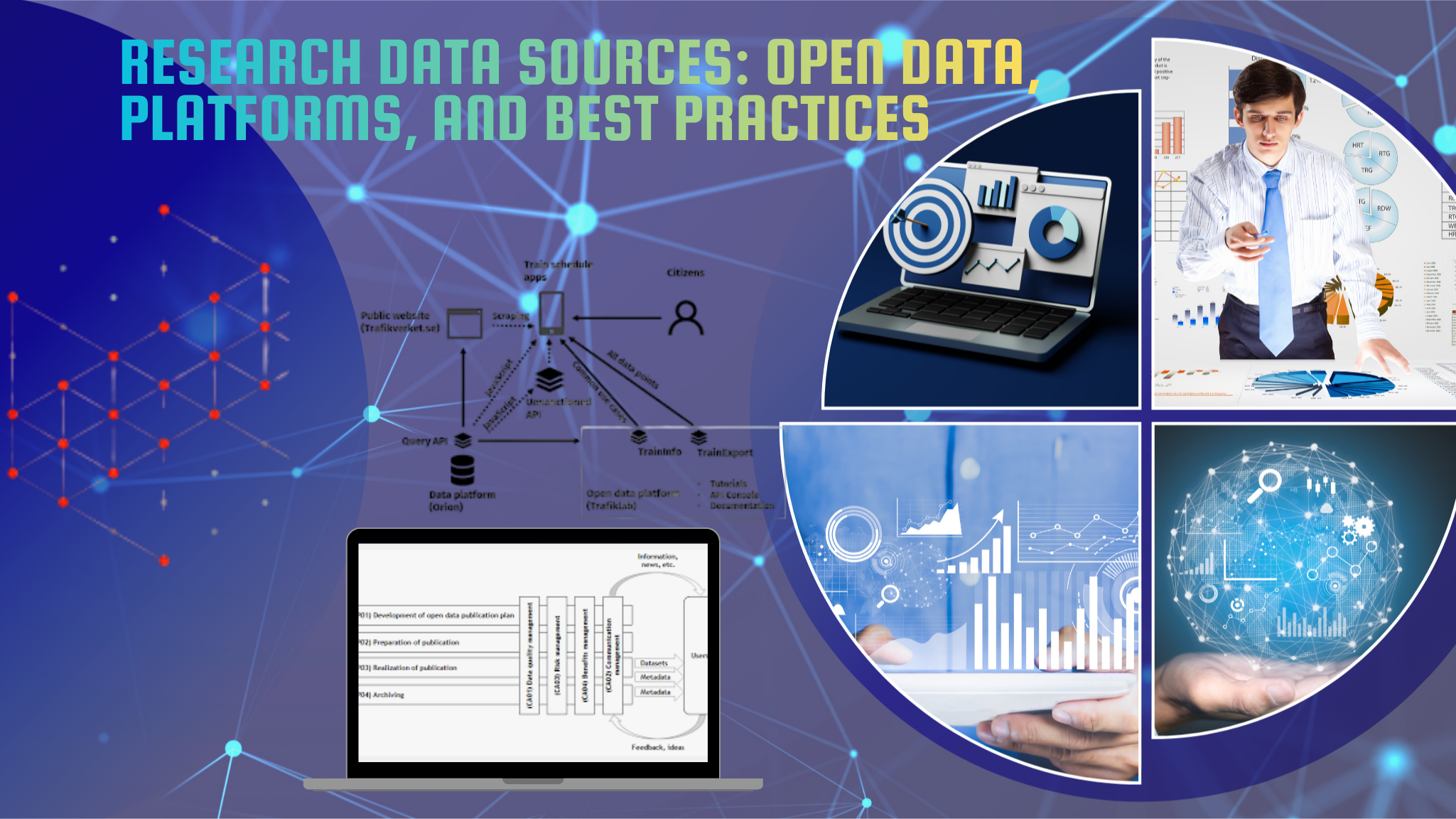
Research Data Sources: Open Data, Platforms, and Best Practices

research data sources open data, platforms, and best practices https://worldstan.com/research-data-sources-open-data-platforms-and-best-practices/

This article explores the evolving landscape of research data sources, examining how open, licensed, and academic datasets—along with modern data platforms—are transforming research, decision-making, and data literacy across disciplines.

The Expanding Role of Data in Modern Research and Decision-Making

Data has become one of the most valuable assets in the contemporary world, shaping how knowledge is produced, decisions are made, and policies are evaluated. Across academia, government, and industry, the reliance on structured and unstructured data has intensified as organizations seek evidence-based insights. This growing dependence has elevated the importance of understanding where data comes from, how it is accessed, and which platforms are best suited for different analytical needs. As a result, data sources, research datasets, and discovery platforms now form a complex but essential ecosystem.

Understanding Data Sources in a Research-Driven Economy

At a foundational level, data sources refer to the origins from which information is obtained for analysis. These sources may include observational records, transactional logs, experimental results, survey responses, or digitized archival materials. In research environments, data sources are carefully evaluated for accuracy, relevance, and reliability. The credibility of a study often hinges on whether its underlying data can be traced to reputable and transparent origins.

Research data sources are particularly significant because they support scholarly inquiry and innovation. These sources may be generated through original research or acquired from external repositories. As research becomes increasingly interdisciplinary, scholars often combine multiple data sources to gain broader perspectives and validate findings across contexts.

The Structure and Value of Datasets

Datasets represent organized collections of data points designed for analysis and interpretation. They may range from small, curated tables to massive, multi-dimensional collections containing millions of records. Advances in digital infrastructure have enabled datasets to grow in scale and complexity, making them suitable for advanced statistical modeling and machine learning applications.

Public datasets for research play a crucial role in democratizing access to information. By lowering barriers to entry, these datasets allow students, independent researchers, and institutions with limited resources to participate in data-driven inquiry. Public datasets are commonly used in education, policy analysis, and exploratory research, offering a shared foundation for reproducibility and collaboration.

Open Data as a Catalyst for Transparency and Innovation

Open data has emerged as a cornerstone of modern information ecosystems. Defined by its accessibility and permissive licensing, open data allows users to freely access, use, and redistribute information. Governments, international organizations, and research institutions increasingly publish open data to promote accountability, stimulate innovation, and encourage civic engagement.

Open data repositories serve as centralized access points where datasets are cataloged and preserved. These repositories often include detailed metadata, licensing information, and standardized formats, making it easier for researchers to discover and reuse data. Open-access research data initiatives further strengthen this model by advocating for data sharing as a standard research practice.

Licensed Data and Controlled Access Environments

While open data continues to expand, licensed data remains a critical component of research and professional analysis. Licensed data is typically governed by agreements that define how data may be accessed, shared, and used. These datasets often offer higher granularity, proprietary insights, or real-time updates that are not available through open channels.

Academic institutions frequently act as intermediaries, negotiating licenses that grant students and faculty access to premium data resources. Licensed data is especially prevalent in fields such as finance, business intelligence, and market research, where data collection requires significant investment and expertise.

Academic Data Resources and the Evolving Role of Libraries

Academic data resources are integral to higher education and scholarly research. University libraries have transformed into data-centric hubs, offering access to datasets, research data platforms, and analytical tools. Beyond access, libraries provide support services such as data management planning, metadata creation, and guidance on ethical data use.

NYU Libraries datasets exemplify how academic institutions curate and provide access to both open and licensed data across disciplines. By integrating datasets into teaching and research workflows, academic libraries help bridge the gap between theory and empirical analysis.

Research Data Platforms and Data Discovery

Research data platforms simplify the process of finding, accessing, and managing datasets. These platforms aggregate data from multiple sources and provide advanced search and filtering capabilities. For researchers navigating an increasingly crowded data landscape, such platforms reduce time spent on discovery and allow greater focus on analysis.

Data discovery for students is a growing priority, as educational institutions recognize the importance of data literacy. Research data platforms often include tutorials, documentation, and sample analyses, enabling students to develop practical skills while working with real-world data.

Data Collection for Analysis and Research Integrity

Despite the abundance of secondary data, original data collection remains essential in many research contexts. Data collection for analysis involves designing methodologies that align with research objectives while adhering to ethical and legal standards. Whether collecting survey responses, conducting field observations, or generating experimental data, researchers must ensure accuracy, consistency, and transparency.

Proper documentation of data collection processes enhances research integrity and enables future reuse. Well-documented datasets contribute to cumulative knowledge and support replication, a cornerstone of scientific credibility.

Organizing Data Sources by Subject Area

As the volume of available data continues to grow, organizing data sources by subject has become an effective strategy for managing complexity. Data sources by subject allow researchers to focus on repositories and platforms that align with their disciplinary needs.

In economics and business, for example, specialized platforms provide access to macroeconomic indicators, corporate financials, and industry benchmarks. These resources support a wide range of applications, from academic research to strategic decision-making in the private sector.

Financial and Economic Data Platforms

Financial data platforms are among the most sophisticated and widely used research tools. Bloomberg Terminal data offers real-time and historical financial information, news, and analytics used by professionals and scholars worldwide. Capital IQ data provides detailed company-level financials and valuation metrics, supporting corporate finance and investment research.

CEIC economic data focuses on macroeconomic indicators, offering insights into global and regional economic trends. Datastream financial data and WRDS financial datasets are widely used in academic research, providing extensive historical coverage for empirical finance and economics studies.

Business Intelligence and Market Research Datasets

Beyond traditional financial metrics, business and economic datasets increasingly incorporate alternative data sources. These may include supply chain information, consumer behavior metrics, and private market transactions. Such datasets enable more nuanced analyses of business performance and market dynamics.

PitchBook private market data has become a key resource for studying venture capital, private equity, and startup ecosystems. By capturing data on funding rounds, acquisitions, and investor activity, it supports research into innovation, entrepreneurship, and economic growth.

Geospatial Data and Spatial Analysis

Geospatial data sources add a critical spatial dimension to research. These datasets include geographic coordinates, maps, satellite imagery, and spatial boundaries that enable location-based analysis. Geospatial data is widely used in urban planning, environmental studies, logistics, and public health.

When combined with demographic and economic datasets, geospatial data allows researchers to examine regional disparities, infrastructure development, and environmental impacts. Advances in geographic information systems have further expanded the analytical potential of these data sources.

Health, Demographic, and Social Data

Health and demographic data are central to public policy, social science, and medical research. These datasets often include information on population characteristics, health outcomes, and social conditions. Census data sources provide foundational demographic insights that inform resource allocation, policy design, and academic research.

Election and voting data offer another layer of social insight, capturing patterns of political participation and electoral behavior. These datasets are valuable for political science research and for understanding democratic processes over time.

Computer Science Data Sources and Computational Research

In computer science and related fields, data sources are often designed for algorithmic processing. These may include text corpora, image datasets, network graphs, and system logs. High-quality computer science data sources are essential for training and evaluating machine learning models and for advancing artificial intelligence research.

Data for research projects in computational fields often comes from open data repositories, academic collaborations, and industry partnerships. The availability of standardized benchmarks has been particularly important for comparing algorithmic performance and advancing methodological rigor.

Tool-Driven Access to Research Data

Modern research increasingly relies on tools that integrate data access with analytical capabilities. IEEE Xplore research data complements scholarly publications by providing datasets and supplementary materials in engineering and technology domains. This integration supports transparency and reproducibility in technical research.

ProQuest TDM Studio enables large-scale text and data mining across academic and news content, facilitating research in digital humanities and computational social science. Nexis Uni news database provides extensive archives of news and legal information, supporting longitudinal analysis of media and policy trends.

Trade, Development, and Global Data Resources

International trade and development research relies heavily on standardized global datasets. UN Comtrade trade statistics offer detailed records of cross-border trade flows, supporting analyses of globalization, supply chains, and economic development. These datasets are widely used by researchers, policymakers, and international organizations.

Sage Data combines datasets with methodological guidance, helping researchers not only access data but also apply appropriate analytical techniques. This integration enhances the quality and impact of empirical research.

Open Data Repositories and Community Platforms

Open data repositories continue to play a central role in expanding access to research data. Kaggle datasets provide a unique combination of open data and community engagement, allowing users to share code, collaborate, and learn from one another. This model has been particularly influential in data science education.

NYC Open Data demonstrates how local governments can use open data to promote transparency and innovation. By publishing administrative and operational data, cities enable researchers and citizens to explore urban challenges and solutions.

Zenodo open repository and Dryad data repository support long-term preservation and citation of research outputs. By assigning persistent identifiers, these platforms ensure that datasets remain discoverable and citable over time.

Licensing, Ethics, and Responsible Data Use

Creative Commons datasets play a vital role in clarifying usage rights and promoting ethical data sharing. Clear licensing helps users understand how data may be reused and modified, reducing legal uncertainty and encouraging collaboration.

Open-access research data initiatives emphasize the importance of responsible data stewardship. Issues such as privacy, consent, and bias must be addressed throughout the data lifecycle. Ethical considerations are especially critical when working with sensitive health, demographic, or behavioral data.

Building Data Literacy for the Future

As data becomes central to nearly every field, data literacy has emerged as a core competency. Data literacy encompasses the ability to find, evaluate, analyze, and communicate data effectively. Educational institutions increasingly integrate data skills into curricula, recognizing their relevance across disciplines.

Research data platforms, open data repositories, and academic libraries all contribute to this educational mission. By providing access to real-world datasets and analytical tools, they prepare students and researchers for data-intensive careers.

Conclusion:

The modern data landscape is vast, interconnected, and continually evolving. From open data repositories and academic data resources to licensed financial platforms and specialized research tools, data sources now underpin research and decision-making at every level. Navigating this environment requires not only technical expertise but also critical judgment, ethical awareness, and a clear understanding of data provenance.

As the volume and diversity of data continue to grow, the ability to identify appropriate data sources and platforms will remain a defining skill for researchers, students, and professionals alike. By engaging thoughtfully with the data ecosystem, users can transform raw information into meaningful insights that drive knowledge, innovation, and informed action.

FAQs:

1. What are research data sources and why are they essential?

Research data sources are the origins from which information is gathered for analysis, and they are essential because they provide the factual foundation needed for credible research, informed decision-making, and policy evaluation.

2. How do open data sources differ from licensed research data?

Open data sources are freely accessible and reusable, while licensed research data is restricted by usage agreements and often offers proprietary, real-time, or highly detailed information.

3. What role do research data platforms play in modern research?

Research data platforms simplify data discovery by aggregating datasets from multiple sources and offering tools that help researchers efficiently search, access, and manage data.

4. Why are public datasets important for academic and student research?

Public datasets lower access barriers, enabling students and researchers with limited resources to conduct meaningful analysis, replicate studies, and build data literacy skills.

5. How do academic libraries support access to research data?

Academic libraries provide curated access to datasets, negotiate licensed resources, and offer guidance on data management, ethical use, and proper documentation.

6. What factors should researchers consider when selecting data sources?

Researchers should evaluate data quality, relevance, licensing terms, transparency, and ethical considerations to ensure the data aligns with research goals and standards.

7. How is data literacy connected to the use of research data sources?

Data literacy empowers individuals to locate, evaluate, analyze, and communicate data effectively, making it a critical skill for navigating today’s data-driven research environment.

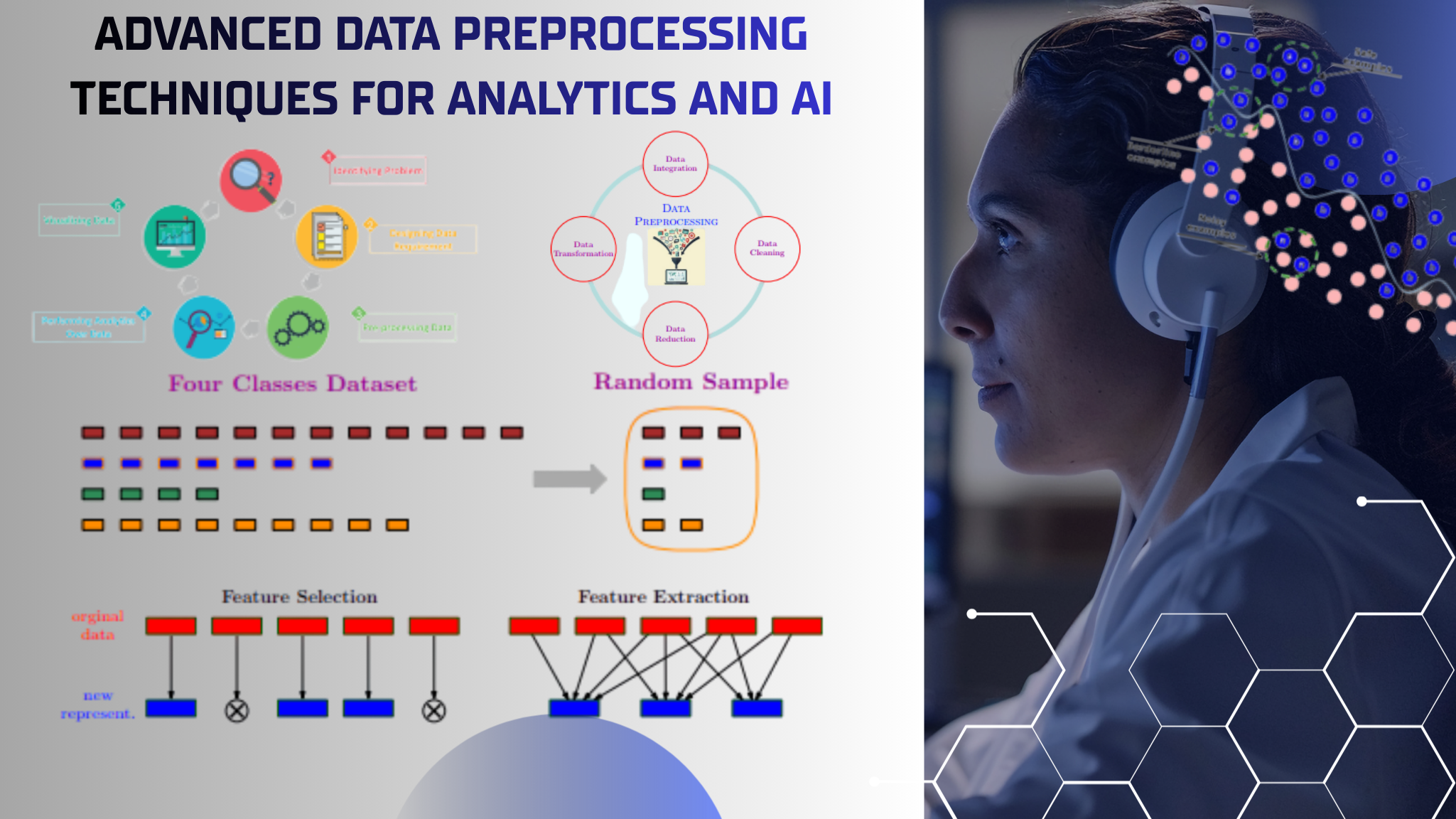
Advanced Data Preprocessing Techniques for Analytics and AI

advanced data preprocessing techniques for analytics and ai https://worldstan.com/advanced-data-preprocessing-techniques-for-analytics-and-ai/

This in-depth guide explores how data preprocessing in big data analytics transforms raw, complex data into reliable, high-quality inputs through cleaning, integration, transformation, and feature engineering to enable accurate analytics and machine learning outcomes.


Data Preprocessing in Big Data Analytics: Foundations, Techniques, and Strategic Importance

Introduction:

In the modern data-driven economy, organizations rely on massive volumes of structured and unstructured data to fuel analytics, artificial intelligence, and machine learning initiatives. However, raw data in its original form is rarely suitable for analysis or modeling. Before meaningful insights can be derived, data must undergo a systematic and carefully engineered preparation process. This process is known as data preprocessing in big data analytics.

Data preprocessing serves as the bridge between raw data collection and advanced analytical modeling. It ensures accuracy, consistency, relevance, and usability of data across large-scale systems. Without it, even the most sophisticated algorithms produce unreliable results. As data sources become increasingly complex and diverse, preprocessing has evolved into a critical discipline within big data analytics and machine learning workflows.

This comprehensive guide explores the conceptual foundations, methods, challenges, and best practices of data preprocessing, offering a detailed understanding of why it is indispensable for modern analytics.

Understanding Data Preprocessing in Big Data Analytics

What is data preprocessing in big data analytics? At its core, data preprocessing refers to a collection of processes applied to raw data to convert it into a clean, structured, and analysis-ready format. In big data environments, this process must scale across high volume, velocity, and variety while maintaining data integrity.

Unlike traditional data preparation, big data preprocessing often deals with distributed systems, streaming data, heterogeneous formats, and incomplete information. It encompasses activities such as data collection, cleaning, transformation, integration, reduction, and validation, all performed prior to analytics or machine learning model training.

Effective preprocessing directly impacts model accuracy, computational efficiency, and decision-making reliability.

Data Collection and Data Provenance

The preprocessing lifecycle begins with data collection. Data may originate from transactional systems, sensors, social platforms, enterprise databases, or third-party APIs. Each source introduces its own structure, format, and quality constraints.

An often-overlooked aspect of data collection is data provenance. Data provenance tracks the origin, movement, and transformation history of data across systems. Maintaining provenance information ensures transparency, auditability, and regulatory compliance, especially in enterprise analytics and regulated industries.

Closely related is metadata in data processing. Metadata describes the characteristics of data, including schema, timestamps, ownership, and processing rules. Proper metadata management supports automation, governance, and quality control throughout preprocessing pipelines.

Data Quality Issues in Large-Scale Analytics

Data quality issues represent one of the most significant obstacles in big data analytics. These issues arise due to inconsistent formats, human error, system failures, and incomplete data generation.

Common data quality challenges include:

  • Missing or incomplete values
  • Duplicate records
  • Inconsistent units or categories
  • Noise and outliers
  • Data drift over time

Addressing these issues early in the preprocessing phase is essential to prevent bias, inaccurate predictions, and model instability.

Handling Missing Data Effectively

Missing data handling is a foundational component of data cleaning. In big data contexts, missing values can occur at scale and for multiple reasons, such as sensor malfunctions, user non-response, or system integration errors.

Statistically, missing data is categorized into MCAR, MAR, and MNAR. Data missing completely at random has no dependency on observed or unobserved variables. Missing at random depends on observed variables, while missing not at random depends on unobserved factors.

Choosing the appropriate data cleaning techniques for missing values depends on the nature and volume of missingness. Common approaches include deletion, statistical imputation, and model-based imputation.

Data imputation techniques range from simple mean or median replacement to advanced predictive methods that leverage correlations among variables. The goal is to preserve data distribution and minimize information loss.

Noise, Outliers, and Anomaly Management

Noise and outliers can distort statistical analysis and machine learning models if left unaddressed. Noise refers to random errors or irrelevant data, while outliers are extreme values that deviate significantly from the norm.

How to handle outliers in data analytics depends on context. Some outliers represent errors, while others may carry valuable insights, such as fraud detection or rare events.

Outlier detection methods include statistical techniques, distance-based methods, and model-driven approaches. Z-score normalization is frequently used to identify outliers based on standard deviation thresholds. Visualization techniques, such as box plots, are also widely applied during exploratory data analysis.

Exploratory Data Analysis as a Preprocessing Pillar

Exploratory Data Analysis, commonly known as EDA, plays a strategic role in data preprocessing. It enables analysts to understand data distributions, relationships, and anomalies before applying transformations or models.

EDA techniques include summary statistics, correlation analysis, distribution plots, and dimensionality inspection. These methods inform decisions related to feature selection, transformation strategies, and scaling techniques.

In big data environments, EDA often relies on sampling techniques to make analysis computationally feasible without compromising representativeness.

Data Cleaning Techniques for Consistency and Accuracy

Data cleaning techniques extend beyond missing values and outliers. They also address formatting inconsistencies, invalid entries, and logical errors.

Standard cleaning tasks include:

  • Data deduplication to remove redundant records
  • Validation of categorical values
  • Standardization of units and formats
  • Correction of erroneous data entries

Data deduplication is especially important when integrating multiple data sources. Duplicate records inflate dataset size, skew analytics, and increase processing costs.

Data Integration Across Distributed Sources

Data integration combines data from multiple heterogeneous sources into a unified view. In big data analytics, this process is complicated by differences in schemas, formats, and semantics.

Successful integration requires schema alignment, entity resolution, and conflict resolution. Metadata and data provenance play critical roles in tracking integrated data flows and maintaining consistency.

Integrated datasets enable holistic analysis, allowing organizations to derive insights that would not be possible from isolated data sources.

Data Transformation Methods and Their Role

Data transformation converts data into suitable formats or structures for analysis. Data transformation techniques with examples include aggregation, encoding, normalization, and mathematical transformations.

Logarithmic transformation and Box-Cox transformation are frequently used to stabilize variance and normalize skewed distributions. These transformations improve model performance, particularly in regression and statistical learning contexts.

Transformation decisions should be guided by analytical objectives, domain knowledge, and exploratory analysis results.

Encoding Categorical Data for Machine Learning

Machine learning algorithms typically require numerical input, making data encoding techniques essential during preprocessing.

One-hot encoding converts categorical variables into binary indicator variables, preserving category independence. Label encoding assigns numerical labels to categories, which is suitable for ordinal data but may introduce unintended relationships for nominal variables. Target encoding replaces categories with statistical summaries derived from the target variable, offering efficiency in high-cardinality scenarios.

Selecting the appropriate encoding method depends on data size, model type, and feature characteristics.

Feature Selection and Feature Extraction

Feature engineering lies at the heart of data preprocessing. Feature selection focuses on identifying the most relevant variables, while feature extraction creates new variables by transforming existing ones.

Feature selection vs feature extraction represents a strategic choice. Selection reduces noise and improves interpretability, whereas extraction captures complex patterns and relationships.

In big data analytics, feature selection helps mitigate class imbalance in data and reduces computational overhead, while feature extraction supports advanced modeling capabilities.

Dimensionality Reduction and the Curse of Dimensionality

As datasets grow in size and complexity, dimensionality becomes a major challenge. The curse of dimensionality refers to the exponential increase in data sparsity and computational cost as feature counts rise.

Dimensionality reduction techniques address this issue by projecting data into lower-dimensional spaces while preserving essential information. Principal Component Analysis (PCA) is one of the most widely used methods, transforming correlated variables into orthogonal components ranked by variance.

Dimensionality reduction improves model efficiency, reduces overfitting, and enhances visualization.

Data Reduction Strategies in Big Data

Data reduction complements dimensionality reduction by decreasing dataset size without sacrificing analytical value. Techniques include aggregation, sampling, and compression.

Data sampling techniques are particularly valuable for exploratory analysis and rapid prototyping. They allow analysts to work with manageable subsets while retaining representative characteristics of the full dataset.

Effective data reduction reduces storage costs and accelerates processing in large-scale analytics platforms.

Scaling and Standardization in Machine Learning

Scaling and normalization in machine learning are essential when algorithms are sensitive to feature magnitudes. Data scaling ensures that variables contribute proportionally to distance-based or gradient-based models.

Min-max scaling transforms values into a fixed range, typically between zero and one. Z-score normalization standardizes data based on mean and standard deviation, centering features around zero.

Data normalization enhances model convergence, stability, and performance across diverse algorithms.

Addressing Class Imbalance in Preprocessing

Class imbalance in data occurs when certain outcome categories are significantly underrepresented. This imbalance can bias predictive models and degrade performance.

Preprocessing strategies include resampling techniques, synthetic data generation, and algorithmic adjustments. Addressing imbalance during preprocessing ensures fair and reliable model outcomes.

Importance of Data Preprocessing in Machine Learning

The importance of data preprocessing in machine learning cannot be overstated. Preprocessing directly influences model accuracy, generalization, and interpretability.

Well-preprocessed data reduces noise, highlights meaningful patterns, and enables algorithms to learn effectively. Conversely, poorly prepared data undermines even the most advanced models.

In enterprise environments, preprocessing also supports compliance, scalability, and operational efficiency.

Governance, Metadata, and Enterprise Readiness

As organizations scale analytics initiatives, governance becomes integral to preprocessing. Metadata in data processing enables lineage tracking, version control, and policy enforcement.

Data provenance supports trust, accountability, and reproducibility in analytical workflows. Together, these elements ensure that preprocessing pipelines meet enterprise-grade standards.

Conclusion:

Data preprocessing in big data analytics is far more than a preliminary technical step. It is a strategic discipline that determines the success or failure of analytics, machine learning, and AI initiatives. From data collection and quality assurance to transformation, reduction, and feature engineering, preprocessing shapes the analytical foundation upon which insights are built.

By addressing data quality issues, handling missing data intelligently, managing outliers, and applying appropriate scaling and transformation techniques, organizations unlock the full potential of their data assets. As big data continues to grow in scale and complexity, robust preprocessing frameworks will remain essential for sustainable, trustworthy, and high-impact analytics.

In an era where data-driven decisions define competitive advantage, mastering data preprocessing is not optional—it is imperative.

FAQs:

  • Why is data preprocessing critical in big data analytics?
    Data preprocessing ensures that large and complex datasets are accurate, consistent, and suitable for analysis, directly influencing the reliability of insights and machine learning model performance.
  • How does data preprocessing differ in big data environments compared to traditional analytics?
    Big data preprocessing must handle high volume, velocity, and variety, often using distributed systems and automated pipelines to manage diverse formats and real-time data streams.
  • What are the most common data quality issues addressed during preprocessing?
    Typical issues include missing values, duplicate records, inconsistent formats, noisy data, and extreme outliers that can distort analytical outcomes.
  • When should feature selection be preferred over feature extraction?
    Feature selection is ideal when interpretability and computational efficiency are priorities, while feature extraction is better suited for capturing complex patterns in high-dimensional data.
  • How do scaling and normalization affect machine learning models?
    Scaling and normalization ensure that features contribute proportionally during model training, improving convergence speed and accuracy, especially for distance-based algorithms.
  • What role does metadata play in data preprocessing?
    Metadata provides context about data structure, origin, and transformations, supporting governance, traceability, and consistent preprocessing across analytical workflows.
  • Can improper preprocessing negatively impact business decisions?
    Yes, inadequate preprocessing can introduce bias, reduce model accuracy, and lead to misleading insights, ultimately affecting strategic and operational decision-making.


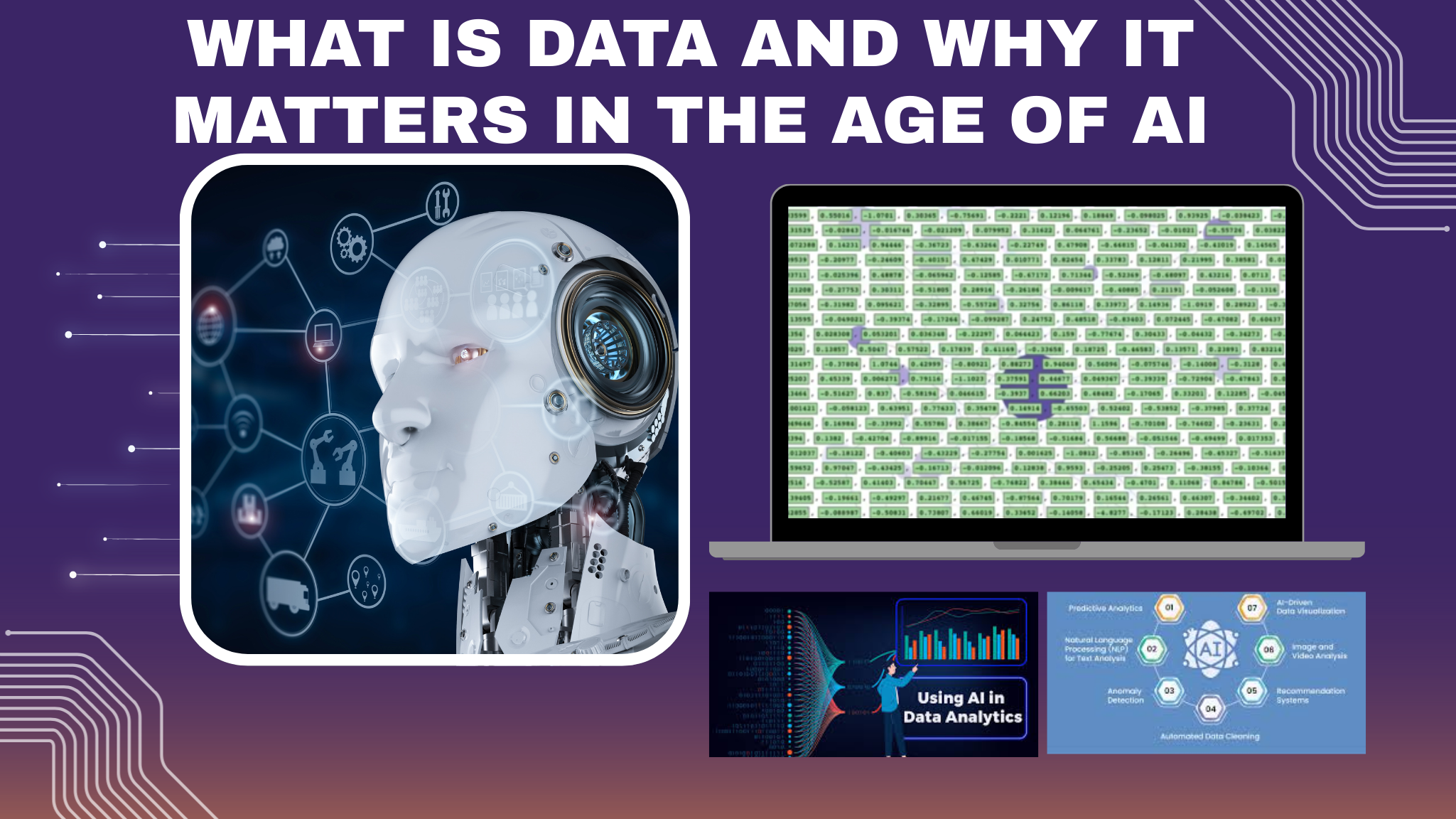
What Is Data and How AI Uses It

ai and big data as catalysts of innovation in smart cities powering sustainable infrastructure, mobility, and governance. https://worldstan.com/what-is-data-and-how-ai-uses-it/

This article explains what data is, why it matters in today’s digital economy, and how it powers decision-making, innovation, and artificial intelligence across industries.

Introduction: Understanding the Foundation of the Digital World

In today’s hyperconnected world, nearly every digital interaction generates information. From browsing a website and making online purchases to training artificial intelligence systems, the modern economy depends on a single foundational element: data. Yet despite its widespread use, many people still ask a fundamental question: what is data, and why is it so important?

Data forms the backbone of innovation, business strategy, scientific research, and emerging technologies. Organizations rely on data-driven decision making to remain competitive, governments use it to shape public policy, and intelligent systems depend on it to learn and adapt. As digital transformation accelerates, understanding data is no longer optional—it is essential.

This comprehensive guide explores the concept of data from the ground up. It explains what data is, examines different types of data with examples, discusses big data and its defining characteristics, and highlights how data is collected, managed, protected, and applied across industries, including artificial intelligence and machine learning.

What Is Data?

At its core, data refers to raw facts, figures, observations, or measurements collected from various sources. By itself, data may not carry meaning, but when processed, analyzed, and interpreted, it becomes information that supports understanding and decision making.

Data can exist in many forms, such as numbers, text, images, audio recordings, videos, or sensor readings. A temperature reading, a customer’s feedback comment, a transaction record, or a satellite image all qualify as data. When these elements are organized and contextualized, they reveal patterns, trends, and insights.

The question of what is data and why is it important becomes clearer when we consider how data underpins nearly every digital service and intelligent system in use today.

The Importance of Data in the Modern World

The importance of data extends far beyond storage and reporting. Data enables organizations to understand behavior, predict outcomes, and design better products and services. It plays a critical role in improving efficiency, reducing risk, and fostering innovation.

In business, data helps companies understand customers, optimize supply chains, and personalize experiences. In healthcare, data supports diagnosis, treatment planning, and medical research. In education, data improves learning outcomes by identifying gaps and tracking progress.

Perhaps most importantly, data empowers evidence-based thinking. Rather than relying solely on intuition, individuals and organizations can make informed choices supported by facts. This shift toward data-driven decision making has transformed how industries operate and how societies function.

Types of Data: A Structured Overview

To fully understand data, it is essential to examine its different forms. The types of data can be classified in several ways, depending on structure, nature, and purpose.

Quantitative Data

Quantitative data consists of numerical values that can be measured and analyzed statistically. Examples include sales revenue, temperature readings, website traffic counts, and exam scores. This type of data is especially useful for identifying trends, performing calculations, and generating forecasts.

Quantitative data often forms the foundation of analytics and reporting systems because it allows for precise comparison and objective evaluation.

Qualitative Data

Quantitative data is numerical in nature and is used for statistical calculations, comparisons, and trend analysis.Examples include customer reviews, interview transcripts, survey responses, and social media comments.

Although qualitative data is more subjective, it provides rich context and deeper insights into human behavior, motivations, and perceptions. When combined with quantitative data, it enables a more holistic understanding of complex issues.

Types of Data Based on Structure

Another widely used classification focuses on how data is organized and stored.

Structured Data

Structured data follows a predefined format and is typically stored in relational databases. It is organized into rows and columns, making it easy to search, query, and analyze. Examples include employee records, financial transactions, and inventory lists.

Because of its consistency, structured data is highly compatible with traditional data analytics tools and business intelligence systems.

Unstructured Data

Unstructured data does not follow a fixed format or schema. Examples include emails, videos, images, audio files, and free-text documents. This type of data accounts for a large portion of the information generated today.

Analyzing unstructured data requires advanced techniques such as natural language processing, computer vision, and machine learning, making it a key driver of innovation in artificial intelligence.

Semi-Structured Data

Semi-structured data falls between structured and unstructured formats. It does not fit neatly into tables but still contains tags or markers that provide organization. Common examples are data formats such as JSON and XML, along with system-generated log records.

Semi-structured data is common in web applications and data exchange systems, offering flexibility while retaining some level of structure.

Big Data: Expanding the Scale of Information

As digital systems generate information at unprecedented speeds, traditional data processing methods often fall short. This challenge gave rise to the concept of big data, which refers to extremely large and complex datasets that require specialized tools and architectures.

Big data is not defined solely by size. Instead, it is commonly described using five key characteristics.

Big Data Characteristics

Volume refers to the massive quantities of data generated from sources such as social media, sensors, and online transactions.

Velocity describes the speed at which data is produced, transmitted, and processed, often in real time.

Variety highlights the diverse formats of data, including structured data, unstructured data, and semi-structured data.

Veracity addresses data quality, accuracy, and reliability, which are critical for meaningful analysis.

Value represents the actionable insights and benefits derived from analyzing large datasets.

Understanding big data versus traditional data management approaches is essential for organizations seeking to unlock insights at scale.

Data Collection Methods

Before data can be analyzed or applied, it must first be gathered. Data collection methods vary depending on the source, purpose, and industry.

Common methods include surveys and questionnaires, which capture quantitative data and qualitative data directly from users. Sensors and Internet of Things devices continuously collect environmental and operational data. Transactional systems record business activities such as purchases and payments.

Other data collection methods include web scraping, application logs, interviews, focus groups, and third-party data providers. Selecting appropriate data collection techniques is crucial to ensuring relevance, accuracy, and ethical compliance.

The Data Lifecycle: From Creation to Utilization

Data does not exist in isolation; it moves through a continuous process known as the data lifecycle. This lifecycle typically includes creation or collection, storage, processing, analysis, sharing, and eventual archiving or deletion.

Effective data management requires careful oversight at each stage of this lifecycle. Poor handling at any point can lead to inaccuracies, security risks, or missed opportunities.

Understanding the data lifecycle helps organizations design systems that support scalability, compliance, and long-term value creation.

Data Management Best Practices

As data volumes grow, managing information effectively becomes increasingly complex. Data management involves organizing, storing, maintaining, and governing data assets to ensure usability and reliability.

Best practices include establishing clear data governance policies, maintaining consistent data standards, and ensuring data quality through validation and cleansing processes. Metadata management and documentation improve discoverability and usability across teams.

Modern data management platforms often integrate cloud technologies, automation, and analytics tools to support agility and scalability in a digital environment.

Data Security and Privacy Considerations

Data security focuses on protecting data from unauthorized access, breaches, and cyber threats through measures such as encryption, access controls, and monitoring systems. Privacy addresses how personal data is collected, stored, and used, ensuring compliance with regulations and ethical standards.

As regulations evolve and public awareness grows, integrating security and privacy into every stage of the data lifecycle is no longer optional—it is a fundamental requirement.

Data Analytics: Turning Information into Insight

Raw data becomes valuable only when it is analyzed and interpreted. Data analytics involves examining datasets to identify patterns, trends, and relationships that support decision making.

Descriptive analytics explains what has happened, diagnostic analytics explores why it happened, predictive analytics forecasts future outcomes, and prescriptive analytics recommends actions.

These analytical approaches empower organizations to move beyond hindsight and toward proactive, strategic planning.

Data-Driven Decision Making

Data-driven decision making represents a shift from intuition-based choices to evidence-based strategies. By leveraging analytics and insights, organizations can reduce uncertainty and improve outcomes.

In business, data-driven decision making supports pricing strategies, marketing campaigns, and operational optimization. In public sectors, it informs policy development and resource allocation.

This approach fosters transparency, accountability, and continuous improvement across industries.

Data in Artificial Intelligence and Machine Learning

The relationship between data and intelligent systems is inseparable. Data in AI and data in machine learning serve as the foundation for training algorithms and enabling adaptive behavior.

Machine learning models learn patterns from historical data, while artificial intelligence systems use these patterns to perform tasks such as image recognition, language translation, and recommendation generation.

The role of data in AI extends beyond training. Data quality, diversity, and relevance directly influence model accuracy, fairness, and reliability.

How Data Is Used in AI and ML

Understanding how data is used in AI and ML helps clarify why data preparation is as important as algorithm design. Training datasets teach models how to recognize patterns, validation datasets refine performance, and testing datasets assess real-world effectiveness.

Labeled data supports supervised learning, while unlabeled data enables unsupervised learning. Reinforcement learning relies on feedback-driven data generated through interaction.

Without robust and well-managed data, even the most advanced AI systems cannot deliver meaningful results.

Data for Innovation and Digital Transformation

Data is a catalyst for innovation. Organizations that leverage data effectively can identify new opportunities, develop intelligent products, and transform traditional processes.

Digital transformation initiatives often begin with data integration and analytics. By connecting disparate systems and analyzing information holistically, businesses gain insights that drive automation, personalization, and efficiency.

From predictive maintenance in manufacturing to personalized healthcare and smart cities, data for innovation reshapes how value is created and delivered.

Applications of Data in Business and Beyond

The applications of data in business span every function, including marketing, finance, operations, and human resources. Customer analytics improves engagement, financial analytics supports forecasting, and operational analytics enhances efficiency.

Beyond business, data applications extend to science, education, healthcare, transportation, and environmental sustainability. Researchers use data to model climate change, educators track learning outcomes, and urban planners design smarter infrastructure.

These applications demonstrate that data is not merely a technical asset—it is a strategic resource with broad societal impact.

Conclusion: Why Data Literacy Matters

Data has become the defining asset of the digital era, shaping how technologies evolve, how organizations compete, and how societies make informed choices. From simple data points to vast, complex datasets, information fuels insight, automation, and intelligent systems. Understanding the nature of data—its types, lifecycle, and management—is essential for turning raw inputs into meaningful outcomes.

As artificial intelligence, analytics, and digital transformation continue to advance, the value of data extends beyond storage and reporting. High-quality, well-governed data enables accuracy, fairness, and innovation, while poor data practices can limit progress and increase risk. The effectiveness of modern systems increasingly depends on how responsibly and strategically data is collected, protected, and applied.

Ultimately, data literacy is no longer a specialized skill but a core competency. Those who grasp how data works and how it drives decisions will be better equipped to navigate an information-driven world. In an age defined by AI and rapid technological change, data remains the foundation upon which sustainable growth and future innovation are built.


FAQs:

1. What does data actually represent in digital systems?

Data represents raw inputs—such as numbers, text, images, or signals—that digital systems collect and process to generate information, insights, and automated responses.

2. How is data different from information?

Data consists of unprocessed facts, while information is the result of organizing and analyzing data to make it meaningful and useful for understanding or decision-making.

3. Why is data considered critical for artificial intelligence?

Artificial intelligence relies on data to learn patterns, improve accuracy, and adapt to new situations; without sufficient and relevant data, AI systems cannot function effectively.

4. What are the most common ways organizations collect data today?

Organizations gather data through digital interactions, sensors, transactions, surveys, online platforms, connected devices, and third-party data sources.

5. How does data quality affect decision-making?

High-quality data leads to reliable insights and confident decisions, while inaccurate or incomplete data can result in flawed conclusions and increased risk.

6. What role does data play in digital transformation?

Data enables digital transformation by connecting systems, supporting analytics, driving automation, and allowing organizations to redesign processes around real-time insights.

7. Why is data security important beyond regulatory compliance?

Protecting data builds trust, safeguards intellectual assets, and prevents financial and reputational damage, making security a strategic priority—not just a legal requirement.

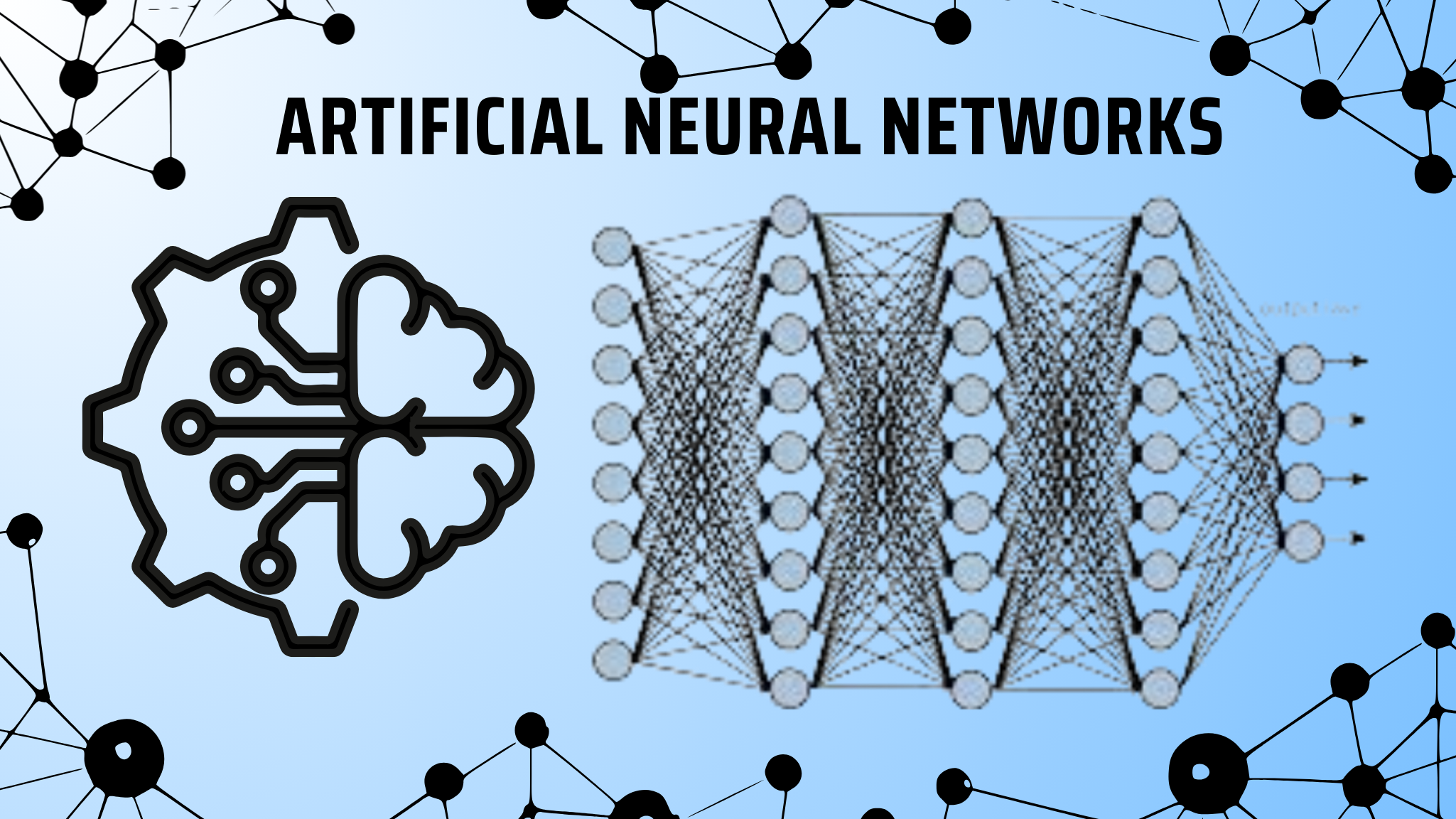
Artificial Neural Networks (ANN): A Complete Professional Guide

artificial neural networks https://worldstan.com/artificial-neural-networks-ann-a-complete-professional-guide/

“This article explains artificial neural networks in a clear, technical context, examining their structure, optimization, and evolution within machine learning and artificial intelligence.”

Artificial Neural Networks Explained: Architecture, Training, and Historical Evolution

Artificial neural networks have become one of the most influential computational models in modern artificial intelligence. From image classification systems to adaptive control mechanisms, these models are now deeply embedded in contemporary machine learning solutions. Often abbreviated as ANN, an artificial neural network is inspired by biological neural networks and designed to process information through interconnected artificial neurons. This article presents a comprehensive professional overview of artificial neural networks, covering their origins, theoretical foundations, architecture, training methodology, optimization techniques, and real-world applications.

Foundations of Artificial Neural Networks

An artificial neural network is a computational framework designed to approximate complex functions through layered transformations of data. The fundamental concept behind ANN is drawn from the structure and behavior of biological neural networks found in the human brain. Neurons in biological systems transmit signals through synapses, adapting over time based on experience. Similarly, artificial neurons process numerical inputs, apply transformations, and pass results forward through a neural net.

Early research into neural networks was heavily influenced by neuroscience and mathematics. The idea of modeling cognition using computational units dates back to the 1940s when Warren McCulloch and Walter Pitts introduced a simplified mathematical model of neurons. Their work demonstrated that logical reasoning could be simulated using networks of threshold-based units, laying the groundwork for future neural network architectures.

The perceptron, introduced by Frank Rosenblatt in the late 1950s, represented a major milestone in the history of neural networks. As one of the earliest machine learning algorithms, the perceptron could learn linear decision boundaries from labeled training data. Although limited in representational power, it established the feasibility of neural network training through data-driven learning processes.

Artificial Neural Network as a Computational Model

At its core, an artificial neural network functions as a layered computational model. It maps inputs to outputs by passing data through multiple transformations governed by weights and biases. Each artificial neuron receives signals, computes a weighted sum, applies an activation function, and forwards the result to the next layer.

The basic ANN architecture consists of three primary components: the input layer, hidden layers, and output layer. The input layer serves as the interface between raw data and the network. The output layer produces the final predictions, whether they represent classifications, probabilities, or continuous values.

Between these layers lie one or more hidden layers. Hidden layers are responsible for feature extraction and pattern recognition. By stacking multiple hidden layers, neural networks can learn increasingly abstract representations of data, a property that underpins deep learning and deep neural networks.

Activation Functions and Signal Transformation

Activation functions play a critical role in the behavior of artificial neural networks. Without them, a neural network would collapse into a linear model regardless of depth. By introducing non-linearity, activation functions enable neural nets to approximate complex, non-linear relationships.

Common activation functions include sigmoid, hyperbolic tangent, and the ReLU activation function. ReLU, or Rectified Linear Unit, has become particularly popular in deep learning due to its computational efficiency and reduced risk of vanishing gradients. The choice of activation function significantly impacts learning speed, stability, and overall performance.

Weights, Biases, and Learning Dynamics

Weights and biases define the internal parameters of an artificial neural network. Weights determine the strength of connections between neurons, while biases allow flexibility in shifting activation thresholds. During the learning process, these parameters are adjusted to minimize errors between predicted and actual outputs.

Learning in ANN is fundamentally an optimization problem. The objective is to find a set of weights and biases that minimize a predefined loss function. This loss function quantifies prediction errors and guides the direction of parameter updates.

Neural Network Training and Optimization

Neural network training involves iteratively improving model parameters using labeled training data. The most common training paradigm relies on supervised learning, where each input is paired with a known target output. The network generates predictions, computes errors using a loss function, and updates parameters accordingly.

Empirical risk minimization is the guiding principle behind neural network training. It seeks to minimize the average loss over the training dataset. Gradient-based methods are used to compute how small changes in parameters affect the loss. These gradients provide the information needed to adjust weights in a direction that improves model performance.

Backpropagation is the algorithm that enables efficient computation of gradients in multilayer neural networks. By propagating errors backward from the output layer to earlier layers, backpropagation calculates gradients for all parameters in the network. This method made training deep neural networks feasible and remains central to modern deep learning systems.

Stochastic gradient descent and its variants are widely used for parameter optimization. Rather than computing gradients over the entire dataset, stochastic gradient descent updates parameters using small subsets of data. This approach improves computational efficiency and helps models escape local minima.

Neural Networks in Machine Learning Context

Neural networks in machine learning differ from traditional rule-based systems by learning directly from data. Instead of explicitly programming behavior, engineers define a model structure and allow the learning process to infer relationships from examples. This data-driven approach has proven particularly effective for tasks involving high-dimensional inputs and ambiguous patterns.

Artificial neural networks excel at predictive modeling, where the goal is to estimate future outcomes based on historical data. Applications range from financial forecasting to medical diagnosis and demand prediction. Their adaptability also makes them suitable for adaptive control systems, where models continuously adjust behavior in response to changing environments.

Feedforward Neural Networks and Multilayer Perceptrons

The feedforward neural network is the simplest and most widely studied ANN architecture. In this structure, information flows in one direction from input to output without feedback loops. The multilayer perceptron is a classic example of a feedforward neural network with one or more hidden layers.

Multilayer perceptrons can approximate arbitrary continuous functions given sufficient depth and width. This theoretical property, often referred to as the universal approximation theorem, underscores the expressive power of artificial neural networks.

Despite their simplicity, feedforward networks remain highly relevant. They are commonly used for regression, classification, and pattern recognition tasks where temporal dependencies are minimal.

Deep Neural Networks and Deep Learning

Deep learning refers to the use of deep neural networks containing multiple hidden layers. The depth of these models allows them to learn hierarchical representations of data. Lower layers capture simple features, while higher layers represent complex abstractions.

Deep neural networks have revolutionized fields such as computer vision and natural language processing. Their success is closely tied to advances in computational hardware, large-scale labeled training data, and improved training algorithms.

Convolutional Neural Networks and Feature Extraction

Convolutional neural networks, often abbreviated as CNN, are a specialized class of deep neural networks designed for grid-like data such as images. CNNs incorporate convolutional layers that automatically perform feature extraction by scanning filters across input data.

This architecture significantly reduces the number of parameters compared to fully connected networks while preserving spatial structure. CNNs have become the dominant approach for image classification, object detection, and visual pattern recognition.

Transfer learning is commonly applied with convolutional neural networks. In this approach, a model trained on a large dataset is adapted to a new task with limited data. Transfer learning reduces training time and improves performance in many artificial intelligence applications.

Loss Functions and Model Evaluation

The loss function defines what the neural network is trying to optimize. Different tasks require different loss functions. For classification problems, cross-entropy loss is frequently used, while mean squared error is common in regression tasks.

Choosing an appropriate loss function is critical for stable neural network training. The loss must align with the problem’s objectives and provide meaningful gradients for optimization. Evaluation metrics such as accuracy, precision, recall, and error rates complement loss values by offering task-specific performance insights.

Artificial Neural Networks and Artificial Intelligence

Artificial neural networks form a foundational pillar of artificial intelligence. They enable machines to perform tasks that traditionally required human cognition, such as visual perception, speech recognition, and decision-making. As part of a broader artificial intelligence ecosystem, ANN models often integrate with symbolic reasoning systems, reinforcement learning agents, and probabilistic models.

The relationship between ANN and artificial intelligence is not merely technical but philosophical. Neural networks challenge traditional views of intelligence by demonstrating that complex behavior can emerge from simple computational units interacting at scale.

Historical Evolution and Scientific Authority

Understanding the history of neural networks provides valuable context for their current prominence. Early enthusiasm for neural nets waned during periods known as AI winters, largely due to computational limitations and theoretical critiques. The von Neumann model of computing, which emphasized symbolic manipulation, dominated early artificial intelligence research.

Renewed interest emerged in the 1980s with the rediscovery of backpropagation and advances in hardware. Subsequent breakthroughs in deep learning during the 2010s cemented neural networks as a central paradigm in machine learning.

The contributions of pioneers such as Warren McCulloch, Walter Pitts, Frank Rosenblatt, and proponents of Hebbian learning continue to influence contemporary research. Their foundational ideas underpin modern neural network architectures and training methodologies.

Ethical and Practical Considerations

While artificial neural networks offer remarkable capabilities, they also present challenges. Issues related to interpretability, bias, and robustness remain active areas of research. Because neural networks operate as complex parameterized systems, understanding their internal decision-making processes can be difficult.

Efforts to improve transparency include explainable artificial intelligence techniques that aim to clarify how models arrive at specific predictions. Addressing these concerns is essential for responsible deployment in high-stakes domains such as healthcare, finance, and autonomous systems.

Future Directions of Artificial Neural Networks

The future of artificial neural networks is closely tied to ongoing research in architecture design, optimization, and integration with other learning paradigms. Hybrid models combining neural networks with symbolic reasoning and probabilistic inference are gaining attention.

Advancements in unsupervised and self-supervised learning aim to reduce reliance on labeled training data. Meanwhile, neuromorphic computing seeks to replicate the efficiency of biological neural networks at the hardware level.

As neural networks in machine learning continue to evolve, their role in artificial intelligence applications is expected to expand further, shaping how machines perceive, learn, and interact with the world.

Conclusion:

Artificial neural networks represent one of the most powerful and versatile tools in modern machine learning. Rooted in biological inspiration and refined through decades of research, ANN models provide a robust framework for solving complex computational problems. By understanding their architecture, learning process, historical development, and applications, professionals can better leverage neural networks for innovative and responsible artificial intelligence solutions.

From the early perceptron to today’s deep neural networks, the evolution of ANN reflects a broader shift toward data-driven intelligence. As research advances and applications diversify, artificial neural networks will remain central to the future of intelligent systems.

FAQs:

1. What problem do artificial neural networks solve in machine learning?

Artificial neural networks are designed to model complex, non-linear relationships in data, making them effective for tasks where traditional algorithms struggle, such as pattern recognition, prediction, and feature learning.


2. How does an artificial neural network differ from conventional algorithms?

Unlike rule-based algorithms, artificial neural networks learn directly from data by adjusting internal parameters, allowing them to adapt to new patterns without explicit reprogramming.


3. Why are hidden layers important in neural network architecture?

Hidden layers enable a neural network to extract and transform features at multiple levels of abstraction, which is essential for learning complex representations in high-dimensional data.


4. What role does backpropagation play in neural network learning?

Backpropagation provides an efficient way to compute parameter updates by distributing prediction errors backward through the network, allowing all layers to learn simultaneously.


5. How do activation functions influence neural network performance?

Activation functions introduce non-linearity into neural networks, directly affecting their learning capacity, convergence behavior, and ability to model complex data relationships.


6. In which industries are artificial neural networks most widely applied?

Artificial neural networks are widely used in industries such as healthcare, finance, manufacturing, transportation, and technology, supporting applications like diagnostics, forecasting, automation, and decision support.


7. What are the main limitations of artificial neural networks?

Key limitations include high data requirements, computational cost, limited interpretability, and sensitivity to biased or low-quality training data.

What Is an Algorithm? Meaning, Types, Examples, and Uses

what is an algorithm meaning, types, examples, and uses https://worldstan.com/what-is-an-algorithm-meaning-types-examples-and-uses/

This article offers a clear, end-to-end exploration of algorithms, explaining what they are, how they work, why they matter, and how they are used across everyday life, data analysis, machine learning, and artificial intelligence to solve real-world problems systematically.

Introduction

In today’s digital world, algorithms quietly shape almost every aspect of our lives. From the moment you unlock your smartphone to the instant a navigation app suggests the fastest route, algorithms are at work behind the scenes. Despite their widespread influence, many people still find the concept abstract or intimidating. In reality, algorithms are simple ideas with powerful implications.

This comprehensive guide explains algorithms in clear and practical terms. It explores what an algorithm is, how algorithms work, why they matter, and how they are applied in areas such as machine learning, artificial intelligence, data analysis, and everyday decision-making. Whether you are a beginner, student, professional, or simply curious, this article provides a complete foundation for understanding algorithms.

Understanding the Meaning of an Algorithm

At its core, an algorithm is a structured method for solving a problem or completing a task. It consists of a series of logical steps that transform input into output. The steps must be precise, unambiguous, and finite, meaning the process eventually ends.

In simple terms, an algorithm is a recipe for solving a problem. Just as a cooking recipe outlines ingredients and steps to produce a dish, an algorithm defines the actions needed to reach a desired result.

The concept of algorithms predates modern computers. Long before software existed, people used algorithms for arithmetic calculations, navigation, and decision-making. Computers simply execute algorithms faster and at a much larger scale.

Why Algorithms Are Important?

Algorithms are the foundation of computing and digital systems. Without them, computers would have no instructions to follow and no way to process data meaningfully.

Algorithms are important because they:

Enable problem-solving in a systematic way
Improve efficiency by reducing time and resource usage
Allow automation of complex tasks
Support data-driven decision-making
Form the backbone of artificial intelligence and machine learning

Every software application, from banking systems to social media platforms, relies on carefully designed algorithms to function correctly and securely.

Algorithm vs Program

An algorithm and a program are closely related but not the same. An algorithm is a conceptual solution expressed as steps or logic. A program is the implementation of that algorithm using a specific programming language.

One algorithm can be implemented as multiple programs in different languages. The algorithm focuses on what needs to be done, while the program focuses on how it is executed by a machine.

How Algorithms Work?

Algorithms operate through a clear process that begins with input and ends with output. The input is the data provided to the algorithm, while the output is the result produced after processing.

The general working mechanism includes:

Receiving input data
Applying logical rules or calculations
Following a defined sequence of steps
Producing an output

For example, a search algorithm takes a query as input, scans a database or index, applies ranking rules, and returns relevant results as output.

Algorithm Steps and Stages

Most algorithms follow a structured lifecycle, regardless of complexity. The typical stages include:

Problem definition
Input specification
Algorithm design
Processing and logic execution
Output generation
Termination

These stages ensure that the algorithm is not only functional but also efficient and understandable.

Do Algorithms Always Produce Output?

Not all algorithms produce visible output. Some algorithms perform actions such as updating a database, triggering an alert, or controlling a system. In such cases, the output may be a change in state rather than a displayed result.

Algorithm Examples in Simple Terms

One of the best ways to understand algorithms is through everyday examples.

Consider the process of brushing your teeth:

Pick up the toothbrush
Apply toothpaste
Brush all sides of teeth
Rinse mouth
Turn off the tap

This sequence is an algorithm. It has a clear start, defined steps, and a completion point.

Another example is deciding what to wear based on weather conditions. The decision-making process follows logical rules, making it an informal algorithm.

Algorithms in Daily Life

Algorithms are not limited to computers. They are embedded in daily routines and social systems.

Examples include:

Traffic light systems controlling vehicle flow
ATM machines verifying identity and dispensing cash
Online shopping recommendations
Email spam filtering
Calendar scheduling

Each of these relies on predefined logic to process inputs and generate outcomes.

Algorithms in Banking and Finance

In banking, algorithms handle tasks that demand accuracy, speed, and security. They manage transactions, detect unusual activity, and calculate interest rates.

Fraud detection algorithms analyze transaction patterns to identify suspicious behavior. These systems learn from historical data and continuously improve their accuracy.

Algorithms also play a role in credit scoring, risk assessment, and automated trading systems.

Algorithms in Social Media Platforms

Social media platforms rely heavily on algorithms to personalize user experiences. These algorithms determine which posts appear in a user’s feed, which videos are recommended, and which advertisements are displayed.

They analyze user behavior such as likes, shares, comments, and watch time to predict preferences. This personalization helps platforms maintain engagement while also raising ethical discussions around transparency and bias.

Algorithms in Search Engines

Search engines use complex algorithms to index billions of web pages and deliver relevant results in milliseconds. These algorithms evaluate factors such as keyword relevance, page quality, user intent, and credibility.

Search algorithms are constantly updated to improve accuracy, combat misinformation, and enhance user satisfaction.

Algorithms in Navigation Systems

Navigation systems calculate optimal routes using algorithms that analyze distance, traffic conditions, road closures, and historical data.

Graph algorithms are commonly used in these systems to determine the shortest or fastest path between two locations.

Characteristics of a Good Algorithm

Not all algorithms are equally effective. A good algorithm has several key qualities:

Correctness
Efficiency
Clarity
Scalability
Robustness
Security

Correctness ensures the algorithm produces accurate results. Efficiency minimizes time and resource usage. Robustness allows the algorithm to handle unexpected inputs gracefully.

Algorithm Efficiency and Performance

Efficiency is a critical factor in algorithm design. It determines how well an algorithm performs as input size grows.

Performance is often measured in terms of time complexity and space complexity. These metrics help developers compare algorithms and choose the most suitable one for a specific task.

Optimizing an algorithm may involve reducing redundant operations, improving data structures, or adopting a more suitable design strategy.

Algorithm Design Process

Designing an algorithm involves more than writing steps. It requires analysis, creativity, and testing.

The typical design process includes:

Understanding the problem
Identifying constraints
Choosing an appropriate strategy
Defining inputs and outputs
Developing step-by-step logic
Testing with sample data

Good design ensures the algorithm is efficient, maintainable, and adaptable.

Types of Algorithms

Algorithms can be classified based on their design approach and application.

Sorting Algorithms

Sorting algorithms arrange data in a specific order. Common examples include bubble sort, merge sort, and quick sort. These algorithms are essential in data organization and retrieval.

Search Algorithms

Search algorithms locate specific data within a dataset. Linear search and binary search are basic examples. Advanced search algorithms are used in databases and search engines.

Graph Algorithms

Graph algorithms analyze networks of connected nodes. They are used in navigation systems, social networks, and communication systems.

Dynamic Programming Algorithms

Dynamic programming algorithms solve complex problems by breaking them into smaller overlapping subproblems. This approach improves efficiency by storing intermediate results.

Greedy Algorithms

Greedy algorithms make decisions based on immediate benefits. They are often used in scheduling, optimization, and resource allocation problems.

Divide and Conquer Algorithms

Divide and conquer algorithms split a problem into smaller parts, solve each independently, and combine the results. Merge sort is a classic example.

Recursive Algorithms

Recursive algorithms call themselves to solve smaller instances of the same problem. They are commonly used in tree traversal and mathematical computations.

Brute Force Algorithms

Brute force algorithms try all possible solutions to find the correct one. While simple, they can be inefficient for large datasets.

Randomized Algorithms

Randomized algorithms incorporate randomness to improve performance or simplicity. They are useful in situations where deterministic approaches are impractical.

Data Structures and Algorithms

Data structures and algorithms are closely linked. Data structures organize data, while algorithms manipulate it.

Choosing the right data structure can significantly improve algorithm performance. Examples include arrays, stacks, queues, trees, and hash tables.

Algorithms in Data Analysis

In data analysis, algorithms extract patterns, trends, and insights from large datasets. They are used for clustering, classification, regression, and anomaly detection.

Efficient algorithms enable organizations to make informed decisions based on data-driven evidence.

Algorithms in Machine Learning

Machine learning algorithms allow systems to learn from data rather than relying solely on predefined rules.

These algorithms include:

Supervised learning algorithms for prediction
Unsupervised learning algorithms for pattern discovery
Reinforcement learning algorithms for decision-making

Training algorithms involves feeding data into a model and adjusting parameters to improve accuracy over time.

AI Algorithms and Learning Systems

Artificial intelligence relies on advanced algorithms that simulate aspects of human intelligence. These algorithms support tasks such as image recognition, natural language processing, and autonomous decision-making.

AI algorithms often combine multiple techniques, including neural networks, optimization algorithms, and probabilistic models.

Role of Algorithms in AI

Algorithms are the driving force behind AI systems. They enable machines to perceive, reason, learn, and act.

Without algorithms, artificial intelligence would remain a theoretical concept rather than a practical technology.

Algorithm Testing and Optimization

Testing ensures that an algorithm works correctly under different conditions. Optimization improves speed, memory usage, and reliability.

This process involves debugging, performance analysis, and refinement.

Algorithm Documentation

Clear documentation explains how an algorithm works, its purpose, and its limitations. Good documentation supports collaboration, maintenance, and future development.

How Algorithms Solve Problems

Algorithms solve problems by transforming inputs into outputs through logical reasoning. They reduce complexity, eliminate guesswork, and ensure consistency.

By breaking problems into manageable steps, algorithms provide reliable and repeatable solutions.

Conclusion:

Algorithms are the invisible engines powering modern technology and everyday decision-making. From simple routines to advanced artificial intelligence systems, algorithms define how problems are solved efficiently and accurately.

Understanding algorithms is no longer limited to computer scientists. As digital systems continue to shape society, algorithmic literacy becomes an essential skill. By grasping their meaning, structure, and applications, individuals and organizations can better navigate the increasingly automated world.

Algorithms are not just technical tools; they are fundamental frameworks for thinking, problem-solving, and innovation in the digital age.

FAQs:

  1. Can an algorithm exist without a computer?
    Yes. Algorithms are logical procedures and can be followed by humans, machines, or even natural systems. Computers simply execute algorithms faster and at scale, but the concept itself is independent of technology.

  2. How do algorithms make decisions with incomplete data?
    Algorithms use predefined rules, probabilities, or learned patterns to make the best possible decision when data is missing or uncertain. In advanced systems, this often involves statistical models or machine learning techniques.

  3. What happens when an algorithm fails or gives incorrect results?
    When an algorithm fails, it may be due to flawed logic, poor data quality, or unexpected conditions. Detecting such issues requires testing, monitoring, and refinement to ensure reliability and accuracy over time.

  4. Are faster algorithms always better?
    Not necessarily. While speed is important, an algorithm must also be accurate, secure, and resource-efficient. In some cases, a slower algorithm may produce more reliable or interpretable results.

  5. How do algorithms adapt to changing environments?
    Adaptive algorithms adjust their behavior based on new inputs or feedback. Machine learning algorithms, for example, update their internal parameters as they encounter new data.

  6. Can the same problem have multiple valid algorithms?
    Yes. Many problems can be solved using different algorithms, each with its own trade-offs in terms of speed, memory usage, and implementation complexity.

  7. Why is algorithm transparency becoming important?
    As algorithms increasingly influence critical decisions, transparency helps users understand how outcomes are produced, reduces bias, and supports ethical and regulatory compliance.


Generative Artificial Intelligence Is Reshaping Modern AI Systems

Generative Artificial Intelligence Is Reshaping Modern AI Systems https://worldstan.com/generative-artificial-intelligence-is-reshaping-modern-ai-systems/

Generative Artificial Intelligence and the Redefinition of Modern Computing

Generative Artificial Intelligence has emerged as one of the most transformative forces in the contemporary technology landscape. Unlike earlier forms of automation that focused primarily on rule-based execution or predictive analytics, generative systems are capable of producing new content, synthesizing knowledge, and interacting with humans in increasingly sophisticated ways. This shift represents not just an incremental improvement in artificial intelligence evolution, but a structural change in how digital systems are designed, deployed, and trusted across industries.

The rise of generative Artificial Intelligence is inseparable from broader developments in modern AI systems, including advances in large language models, multimodal AI, and scalable infrastructure. Together, these elements are reshaping software engineering, enterprise decision-making, creative workflows, and even the long-term discussion around artificial general intelligence. As organizations move from experimentation to large-scale adoption, understanding the architectural, computational, and conceptual foundations of generative AI models has become a strategic necessity rather than an academic exercise.

From Statistical Learning to Generative Intelligence

To understand the significance of generative Artificial Intelligence, it is essential to place it within the broader arc of artificial intelligence evolution. Early AI systems relied on symbolic reasoning and handcrafted logic, requiring explicit rules for every possible outcome. These approaches proved brittle and difficult to scale. The next phase introduced machine learning, enabling systems to identify patterns from data rather than relying solely on pre-programmed instructions.

The introduction of deep learning marked a major inflection point. Neural networks with many layers demonstrated unprecedented performance in tasks such as image recognition, speech processing, and language translation. However, most of these systems were still designed to classify or predict rather than create. Generative Artificial Intelligence changed that paradigm by enabling models to generate text, images, audio, code, and even synthetic data that closely resembles human-created outputs.

At the heart of this transition are generative AI models trained on massive datasets using self-supervised learning techniques. These models learn statistical representations of language, visuals, and other modalities, allowing them to produce coherent and contextually relevant outputs. Large language models explained through this lens are not simply databases of memorized content, but probabilistic systems capable of reasoning across vast conceptual spaces.

Large Language Models and the Foundation of Generative Systems

Large language models have become the most visible expression of generative Artificial Intelligence. Trained on trillions of tokens, these models encode linguistic structure, semantic relationships, and contextual cues into dense numerical representations. Through this process, they acquire the ability to answer questions, summarize documents, generate narratives, and assist with complex analytical tasks.

The architecture of modern large language models relies heavily on transformer-based designs, which allow efficient parallel processing and long-range dependency modeling. These capabilities are essential for maintaining coherence across extended interactions and for supporting advanced use cases such as technical documentation, legal analysis, and scientific research.

Despite their impressive capabilities, large language models are not standalone solutions. Their effectiveness depends on complementary systems that manage data retrieval, contextual grounding, and real-time information access. This has led to the rapid adoption of retrieval-augmented generation techniques, commonly referred to as RAG systems.

Retrieval-Augmented Generation and Knowledge Grounding

Retrieval-augmented generation represents a critical evolution in the deployment of generative Artificial Intelligence. Instead of relying solely on internal model parameters, RAG systems dynamically retrieve relevant information from external knowledge sources at inference time. This approach significantly improves accuracy, transparency, and adaptability.

At the core of RAG systems is vector search, a method that enables efficient similarity matching across large collections of documents. Text, images, and other data types are converted into AI embeddings, which capture semantic meaning in numerical form. When a query is issued, the system identifies the most relevant embeddings and feeds the associated content into the generative model as contextual input.

This architecture addresses several limitations of standalone generative AI models. It reduces hallucinations by grounding responses in verified sources, enables rapid updates without retraining the model, and supports domain-specific customization. As a result, retrieval-augmented generation has become a cornerstone of enterprise-grade generative AI deployments, particularly in regulated industries such as healthcare, finance, and law.

Multimodal AI and the Expansion of Generative Capabilities

While text-based systems have dominated early discussions, the future of generative Artificial Intelligence is inherently multimodal. Multimodal AI systems are designed to process and generate content across multiple data types, including text, images, audio, video, and structured data. This convergence enables richer interactions and more comprehensive problem-solving.

Multimodal generative AI models can interpret visual information, describe images in natural language, generate design assets from textual prompts, and integrate sensory inputs into unified outputs. These capabilities are already influencing fields such as digital media, education, product design, and accessibility.

The technical foundation of multimodal AI relies on shared representation spaces, where different modalities are mapped into compatible embedding structures. This allows models to reason across formats and maintain contextual consistency. As multimodal systems mature, they are expected to become the default interface for human-computer interaction, reducing friction and expanding the range of tasks that AI can support.

Infrastructure, Accelerated Computing, and Performance Scaling

The rapid progress of generative Artificial Intelligence would not be possible without parallel advances in computing infrastructure. Training and deploying large-scale generative AI models require immense computational resources, driving innovation in accelerated computing and AI hardware.

GPU computing for AI has become the industry standard due to its ability to handle highly parallel workloads efficiently. Modern AI hardware architectures are optimized for matrix operations, enabling faster training times and lower inference latency. In addition to GPUs, specialized accelerators and custom chips are increasingly being developed to address specific AI workloads.

Infrastructure considerations extend beyond raw compute power. High-bandwidth memory, distributed training frameworks, and energy-efficient data centers all play critical roles in scaling generative AI systems responsibly. As demand grows, organizations must balance performance with sustainability, cost management, and operational resilience.

AI Engineering and System-Level Design

The deployment of generative Artificial Intelligence at scale requires a disciplined approach to AI engineering. This includes not only model development, but also system integration, monitoring, security, and lifecycle management. Unlike traditional software, generative AI systems exhibit probabilistic behavior, requiring new methodologies for testing and validation.

AI engineering practices emphasize modular architectures, observability, and human-in-the-loop workflows. By combining generative models with retrieval systems, business logic, and user feedback mechanisms, organizations can build robust solutions that align with operational and ethical standards.

System-level AI keywords such as retrieval-augmented generation, vector search, and AI embeddings are not merely technical concepts, but foundational components of modern AI systems. Their effective integration determines whether generative Artificial Intelligence delivers reliable value or remains confined to experimental use cases.

Economic and Organizational Impact

The adoption of generative Artificial Intelligence is reshaping organizational structures and economic models. By automating knowledge-intensive tasks, generative systems are augmenting human capabilities rather than simply replacing labor. This shift is particularly evident in areas such as software development, customer support, marketing, and research.

Generative AI models enable faster prototyping, improved decision support, and personalized user experiences. However, they also introduce new challenges related to workforce adaptation, intellectual property, and governance. Organizations must invest in training, policy development, and cross-functional collaboration to fully realize the benefits of these technologies.

From a macroeconomic perspective, generative Artificial Intelligence is expected to contribute significantly to productivity growth. Its impact will vary across sectors, depending on data availability, regulatory environments, and cultural readiness. As adoption accelerates, competitive differentiation will increasingly depend on how effectively organizations integrate generative capabilities into their core processes.

Ethical Considerations and Responsible Deployment

The power of generative Artificial Intelligence raises important ethical questions. Issues such as bias, misinformation, data privacy, and accountability require careful attention. While technical solutions such as retrieval grounding and transparency tools can mitigate some risks, governance frameworks are equally important.

Responsible deployment involves clear documentation of model capabilities and limitations, ongoing performance evaluation, and mechanisms for user feedback. Regulatory bodies and industry consortia are beginning to establish guidelines, but practical implementation remains a shared responsibility among developers, organizations, and policymakers.

As generative AI systems become more autonomous and integrated into critical workflows, ethical considerations must be treated as design constraints rather than afterthoughts. This approach will be essential for maintaining public trust and ensuring long-term sustainability.

Artificial General Intelligence and Long-Term Outlook

Discussions about artificial general intelligence often accompany conversations about generative Artificial Intelligence. While current systems demonstrate impressive versatility, they remain specialized tools rather than truly general intelligences. AGI is typically defined as an AI system capable of performing any intellectual task that a human can, across domains and contexts.

The path toward AGI remains uncertain and subject to debate. Some researchers view generative AI models as incremental steps toward broader intelligence, while others emphasize the qualitative differences between pattern-based systems and human cognition. Regardless of perspective, the ongoing AI innovation timeline suggests continued convergence between generative models, multimodal reasoning, and adaptive learning.

The future of generative AI will likely involve tighter integration with real-world feedback, improved reasoning capabilities, and more efficient use of computational resources. These developments may not result in immediate AGI, but they will continue to expand the scope and impact of artificial intelligence across society.

The Future of Generative Artificial Intelligence

Looking ahead, generative Artificial Intelligence is poised to become a foundational layer of digital infrastructure. Its applications will extend beyond isolated tools into embedded systems that support continuous learning and collaboration. As generative capabilities become more accessible, innovation will increasingly be driven by how creatively and responsibly they are applied.

The convergence of multimodal AI, retrieval-augmented generation, and accelerated computing will enable new forms of interaction that blur the boundaries between humans and machines. Education, healthcare, science, and creative industries are likely to experience profound transformations as generative systems mature.

At the same time, the evolution of AI engineering practices and governance frameworks will determine whether these technologies deliver equitable and sustainable outcomes. By aligning technical innovation with ethical principles and organizational readiness, generative Artificial Intelligence can serve as a catalyst for positive change rather than disruption alone.

Conclusion:

Generative Artificial Intelligence represents a defining chapter in the ongoing story of artificial intelligence evolution. By combining advanced generative AI models with retrieval systems, multimodal capabilities, and powerful infrastructure, modern AI systems are redefining what machines can create and understand.

From large language models explained through their architectural foundations to forward-looking discussions of AGI and the future of generative AI, the field continues to evolve at a remarkable pace. Organizations that invest in AI engineering, responsible deployment, and strategic integration will be best positioned to navigate this transformation.

As the AI innovation timeline unfolds, generative Artificial Intelligence will not simply be a technological trend, but a core component of how knowledge is produced, shared, and applied in the digital age.

FAQs:

1. What distinguishes generative artificial intelligence from traditional AI systems?

Generative artificial intelligence is designed to create new content rather than simply analyze or classify existing data. Unlike traditional AI systems that focus on prediction or rule-based automation, generative models can produce text, images, audio, and other outputs by learning underlying patterns and relationships from large datasets.


2. Why are large language models central to generative artificial intelligence?

Large language models provide the foundational capability for understanding and generating human language at scale. They learn contextual and semantic relationships across vast amounts of text, enabling generative artificial intelligence to perform tasks such as summarization, reasoning, and conversational interaction with a high degree of coherence.


3. How do retrieval-augmented generation systems improve AI accuracy?

Retrieval-augmented generation systems enhance generative outputs by incorporating real-time access to external knowledge sources. By retrieving relevant information through vector search and integrating it into the generation process, these systems reduce errors and ensure responses are grounded in verifiable data.


4. What role does multimodal AI play in the future of generative systems?

Multimodal AI allows generative systems to work across multiple data types, such as text, images, and audio, within a unified framework. This capability enables more natural interactions and broader applications, including visual understanding, content creation, and complex decision support.


5. Why is accelerated computing essential for generative artificial intelligence?

Generative artificial intelligence requires substantial computational power to train and deploy large-scale models. Accelerated computing, including GPU-based infrastructure and specialized AI hardware, enables faster processing, efficient scaling, and real-time performance for complex AI workloads.


6. How does AI engineering support enterprise deployment of generative AI?

AI engineering focuses on integrating generative models into reliable, secure, and scalable systems. This includes managing data pipelines, monitoring model behavior, implementing governance frameworks, and ensuring that generative AI aligns with organizational objectives and regulatory requirements.


7. Is generative artificial intelligence a step toward artificial general intelligence?

While generative artificial intelligence demonstrates advanced capabilities across many tasks, it remains specialized rather than fully general. However, its ability to adapt, reason across contexts, and integrate multiple modalities positions it as an important milestone in the broader journey toward artificial general intelligence.