Midjourney AI Web Interface and Tools

Midjourney AI for Artists and Designers Worldstan.com

This report explores the rise of Midjourney AI, a leading generative art platform that blends technology and creativity, tracing its development, features, controversies, and its growing influence in the world of digital image generation.

Midjourney AI: Evolving the Future of Generative Art and Image Synthesis

Introduction:

In recent years, the rise of generative artificial intelligence has transformed how we create visual content. Among the most visible platforms in this shift is Midjourney — an AI-driven image synthesizer developed by Midjourney, Inc.. Far more than a novelty, Midjourney has become a focal point in discussions around creativity, design, ethics and intellectual property. Through a combination of powerful model versions, prompt-based generation and an accessible web/Discord interface, it offers new pathways for artists, designers and communicators. At the same time, it stands at the heart of controversies around copyright infringement, moderation and the limits of AI art.

In this report we will examine the origins and evolution of Midjourney, explore its features and design capabilities, compare it to competing tools (such as DALL‑E and Stable Diffusion), delve into the legal and ethical debates surrounding generative AI, and reflect on how the technology is reshaping creative industries and what lies ahead.

Origins and Evolution of Midjourney

Founding and early history

Midjourney, Inc. was founded in San Francisco by David Holz (previously co-founder of Leap Motion) with the mission of expanding “the imaginative powers of the human species.” According to sources, the lab began development around 2021–2022, and launched its Discord community in early 2022 before opening an open-beta for the image generation system on July 12, 2022.
Unlike many AI ventures backed by large venture capital rounds, Midjourney reportedly operated as a lean, self-funded setup, focusing on community feedback and iterative model improvements.

Model versions and feature progression

Since its public debut, Midjourney has released successive versions of its generative model, each improving on accuracy, realism, stylization and user controls. Early versions excelled at imaginative and stylised renderings, whereas later versions focused more on photorealistic imagery and better prompt fidelity. For example, version 5.2 introduced the “Vary (Region)” feature (allowing selective editing of image parts), and other tools such as Style Reference, Character Reference and Image Weight give users more precision and control over the generated pictures.
Additionally, Midjourney expanded its interface: originally available only via a Discord bot, the company launched a full web interface in August 2024, enabling users to use panning, zooming, inpainting and other editing tools directly in browser. (As reported by multiple coverage).

Positioning in the AI image generator space

Midjourney is one of the leading platforms in the broader generative AI tools ecosystem. Competing with DALL-E (by OpenAI) and Stable Diffusion (by Stability AI), it is recognised for its unique aesthetic, community-driven prompt sharing, and high-quality output. Its platform enables users to create detailed images from natural-language prompts—a paradigm that has reshaped digital art and design workflows.

Midjourney AI image synthesis and generative AI tools Worldstan.com

Features, Capabilities and Workflow

Prompt-based generation and image synthesis

At its core, Midjourney functions as a text-to-image AI system: a user inputs a description or “prompt”, and the generative AI model synthesises an entirely new image. This workflow falls under the broader category of AI image synthesis and generative AI tools. Because the tool accepts natural-language prompts, it democratizes access for creators, designers and non-specialists alike.

Key tools for control and refinement

What sets Midjourney apart are several advanced controls that give users subtler influence over the output:

  • Image Weight: Users can supply a reference image along with a prompt and set a “weight” value to control how strongly the reference influences the output.
  • Vary (Region): This feature allows selective editing of regions within the generated image—useful for refining specific elements without re-generating everything.
  • Style Reference / Character Reference: These allow the model to apply consistent styling or character appearance across multiple outputs (helpful for concept art or episodic work).
  • Web Editor & Inpainting: With the web interface, creators can pan, zoom, and edit specific parts of a generated image (inpainting) to fine-tune details.
  • Discord Bot Integration: The original workflow remains via a Discord bot, where users type commands, upload references and share prompt results with a community.

These tools together give Midjourney’s users a sophisticated creative workflow: prompt → refine → iterate, allowing rapid prototyping and visual concept generation at scale.

Applications across industries

Because of its capability to generate unique visual content quickly, Midjourney has been adopted across creative sectors:

  • Advertising & Marketing: Agencies use AI image generator tools like Midjourney to create fast visual prototypes, campaign concepts, and custom visuals without relying solely on stock imagery.
  • Architecture & Design: Designers generate mood boards, concept visuals and speculative design renderings using prompt-based image synthesis.
  • Storytelling, Illustration & Publishing: Authors and illustrators use Midjourney to iterate storyboards, character design and scene visuals, sometimes combining with traditional illustration.
  • Personal Creative Work: Hobbyists and creators explore AI-generated art for experimentation, social media shareables, and community engagements.

In many ways, Midjourney and its peer systems are acting as “accelerators” for visual ideation—speeding up what once required human sketching or photo sourcing into seconds of prompt input and iteration.

Midjourney vs Competitors: DALL-E, Stable Diffusion and Others

Midjourney vs DALL-E

Comparing Midjourney with DALL-E (OpenAI):

  • DALL-E has been known for strong adherence to prompts and structured output, especially in earlier versions.
  • Midjourney, meanwhile, often yields more expressive, stylised, and artistically rich imagery—favoured by creative professionals for mood-centric work.
  • In community discussions, users sometimes prefer Midjourney when they want artistic flair or concept art, and DALL-E when they need more literal and controlled imagery.

Midjourney vs Stable Diffusion

On the other front, Stable Diffusion (developed by Stability AI) offers a more open-source flavour, allowing developers to fine-tune models and deploy locally, whereas Midjourney is a managed, subscription-based service.
Stable Diffusion may be chosen for more technical or custom-model use cases (fine-tuning for a brand style, for example). Midjourney appeals when the user wants high-quality output without managing infrastructure or modelling.

Position in the generative AI landscape

Midjourney occupies a unique niche: high-fidelity, visually rich output combined with ease of use and community prompt sharing. In the context of generative AI tools, it stands as a bridge between purely experimental code-first image models and enterprise-level visual platforms.

Consequently, prompts such as “Midjourney vs DALL-E” and “Midjourney vs Stable Diffusion” remain common in forums and creative professional discourse, as practitioners evaluate what system fits their workflow, aesthetic requirements and budget.

Legal, Ethical and Industry Challenges

The copyright-infringement and lawsuit landscape

One of the most serious issues facing Midjourney relates to copyright and intellectual property. A landmark case was brought by artists and major studios, alleging that Midjourney (and its peers) trained models on copyrighted works without permission and produced derivative images infringing on existing work. A U.S. federal judge declined to dismiss core copyright-infringement claims against Midjourney, allowing them to advance.

Notably, on June 11, 2025, media giants The Walt Disney Company and NBCUniversal filed a federal lawsuit against Midjourney, Inc., accusing the company of enabling “endless unauthorized copies” of characters such as those from Star Wars and the Minions. These legal challenges underscore that the generative AI industry is rapidly becoming a battleground for intellectual property rights and creative-economy protection.

Content moderation, bias and ethical concerns

In addition to copyright, other ethical dimensions emerge:

  • AI-powered content moderation: As image generators become more capable (and sometimes more realistic), misuse (e.g., deepfakes, mis-information, sensitive content) is a concern. Platforms like Midjourney must balance openness with responsibility.
  • Bias and representation: Generative AI models reflect the data on which they are trained. If training datasets lack diversity or over-represent certain styles or culture, they may perpetuate biases or limit creative representation.
  • Originality and authorship: When a human sets a prompt and an AI renders the image, questions arise: who is the author? Can such images be copyrighted? The U.S. Copyright Office has rejected some artists’ applications where AI was a significant contributor.
  • Impact on creative labour: Some illustrators and artists worry that widespread access to AI art generators will commoditise concept art and visual design labour, or push prices down. At the same time, others see them as tools that augment rather than replace human creativity.

Industry implications and business-model shifts

For the creative industries (advertising, publishing, entertainment) the rise of platforms such as Midjourney represents a shift in workflow, budget allocation and visual asset creation. Visual content that once required time, photo-shoots or licensing may now be produced via generative prompts—with implications for how agencies budget, how stock-image platforms perform, and how artists position themselves in the market.

At the same time, legal uncertainty—especially around copyright, licensing of training data, and derivative output—introduces risk. Companies using these tools must monitor legal developments and potentially prepare for licensing or attribution obligations.

Technical and Workflow Considerations for Creators

Prompt engineering and best practices

To achieve high-quality results with Midjourney (and comparable systems), users need more than just a text prompt—they need prompt-based generation skill, an understanding of style, composition, image weight, aspect ratios, and iteration. Some key considerations:

  • Use descriptive language: specify subject, composition, style (e.g., “cinematic lighting”, “4k”, “oil painting”).
  • Leverage Midjourney Style Reference and Character Reference to maintain consistency across images when doing series work.
  • Adjust Image Weight when using a reference image to guide the model towards a visual target while still allowing creative flexibility.
  • Use Vary (Region) when you want to refine or redo a portion of the image rather than the whole.
  • Iterate prompts: generate multiple variants, choose the one you like, then upscale, mix or refine.
  • Explore community-shared prompts for inspiration—Midjourney has a large Discord community.

Integration into creative pipelines

Designers and studios adopting Midjourney will typically integrate it into their workflow as follows:

  1. Rapid concept generation: Use Midjourney for mood boards, visual exploration.
  2. Selected iteration: Choose a concept from AI output and refine it via Midjourney tools or traditional image-editing software (Photoshop, Illustrator).
  3. Finalisation: Use the refined image for presentation, assets, storyboard, or as reference for human-driven work.
  4. Licensing/rights considerations: If the output will be used commercially, ensure that the AI-creator’s terms and any copyright implications are understood.

Versioning and quality improvements

As each version of Midjourney model improves, creators should be aware of version differences: e.g., Midjourney V5 produced more photorealistic output than earlier versions; later versions focus on text fidelity and fewer artefacts. Choosing the correct version for your use case (stylised art vs photorealism vs concept art) can influence final results.

Midjourney in Design & Advertising: Real-World Impact worldstan.com

Midjourney in Design & Advertising: Real-World Impact

Visual prototyping and creative acceleration

In advertising, the ability to generate unique visual concepts quickly allows agencies to test more ideas with less time and budget. Where once a mood board would take days, tools like Midjourney reduce it to hours. This accelerates ideation and helps creative teams move faster to client-review phases.

Branding and custom asset creation

Brands are increasingly exploring AI-generated imagery for bespoke visuals (campaigns, social media, packaging) rather than relying solely on stock image libraries. Midjourney gives brands flexibility—prompts can be calibrated to match brand colour schemes, visual tone, and campaign narrative.

Democratization of visual production

Independent creators, freelancers and small studios gain access to powerful image-generation that previously required high budgets or specialist artists. This democratises access to visual production and potentially levels the playing field for smaller players.

Strategic challenges for agencies

However, with these opportunities come strategic challenges:

  • Ensuring output quality and uniqueness (to avoid saturating visuals across brands).
  • Managing copyright risk: reuse of generated images might still raise IP questions.
  • Balancing AI-generated visuals with human craftsmanship to maintain authenticity and brand identity.

Outlook: The Future of Midjourney and Generative AI

Continued model innovation and feature growth

Midjourney will likely continue evolving: version updates will yield higher fidelity, better control (for example improved text rendering inside images, fewer artefacts, more reliable styling), deeper integration into workflows, and perhaps real-time or video generation. Indeed, the company has announced features extending into video generation.

Expansion in creative tooling ecosystem

We can expect Midjourney (and generative AI broadly) to integrate more deeply with creative tools—design software, illustration apps, 3D modelling, and video editing. This convergence suggests that image generation won’t remain isolated; it will become part of a broader creative pipeline.

Regulation, licensing and ecosystem maturity

As the legal and ethical frameworks catch up, licensing models may emerge: rights-cleared training datasets, paid licenses for commercial usage, or platforms that enable creators to monetise prompts and styles. The outcome of major lawsuits (such as those involving Midjourney) will shape the commercial viability of AI-generated art and image synthesis.

Changing creative roles and skill sets

For creatives, the role of the “prompter” or “AI-tool operator” is becoming increasingly important. Understanding how to craft prompts, tweak weights, define style references and iterate becomes a new design literacy. Traditional skills—composition, artistic sensibility, visual storytelling—will remain relevant, but will be complemented by new workflows around generative AI.

Broader cultural and economic implications

Generative AI platforms like Midjourney are part of a larger AI boom, influencing not only design and advertising but how society visualises ideas, interacts with media and thinks about creativity. They open up possibilities for new visual genres—rapid concept art, personalised imagery, immersive storytelling—and invite questions about what it means to create, to be an artist, and to own an image in a world where AI can generate visually compelling results on demand.

Reflecting on Controversy, Responsibility and Opportunity

Midjourney’s story is not just about technical progress; it is also a case study in the complex interplay between creativity, business, law and ethics. On one hand, the platform empowers creators, lowers barriers, accelerates workflows and expands the realm of visual possibility. On the other hand, it raises legitimate concerns about copyright infringement, the displacement of creative labour, AI bias, misuse and the erosion of visual originality.

The lawsuits brought by Disney and Universal signal that generative AI is no longer a novelty—it is a substantive challenge to existing business models, copyright regimes and creative practices. How Midjourney, Inc. responds (in terms of dataset licensing, moderation policies, user controls and transparency) will influence not only its fate but that of generative AI as a whole.

For users and organisations adopting Midjourney or similar systems, the opportunity is enormous—but so is the responsibility. Ethical prompt usage, awareness of derivative risks, transparency regarding output provenance, and sensitivity to creators and rights-holders will be key.

Conclusion:

Midjourney AI stands at the frontier of generative art and image synthesis. Its emergence marks a shift in how we conceive of visual creation: from manual sketching and photo sourcing to prompt-driven, iterative AI generation. As one of the premier tools in this space, Midjourney’s evolution—from its Discord roots to a powerful web-based interface, through multiple model versions—is a blueprint for how creative technology can rapidly transform.

At the same time, this transformation is accompanied by important questions: Who owns the output? How far does “AI-generated art” challenge traditional authorship? What impact will this have on artists, designers and visual industries? And how will business models and legal frameworks adapt?

As we move forward, one thing is clear: generative AI tools like Midjourney will continue to reshape design, advertising, storytelling and digital culture. For creators, the task is not simply to adopt the technology, but to integrate it wisely—balancing innovation, ethics and aesthetic vision.

Midjourney isn’t just a tool—it is a conversation starter about the future of art, imagination and machine-augmented creativity.

Discover the Best AI Apps : From ChatGPT and Claude to Gemini and Grok
Discover the best AI Apps worldstan.com

 Explore how artificial intelligence is reshaping the mobile landscape through powerful apps that simplify daily life, enhance creativity, and redefine productivity across every category — from chatbots and image generators to education, health, and finance tools.

Top AI Apps Transforming the Mobile Experience

The global mobile app industry has evolved into a multi-billion-dollar ecosystem driven by artificial intelligence. As users increasingly seek faster, smarter, and more personalized experiences, developers are integrating AI into every corner of the app landscape. From chatbots that write code to tools that design images, AI is redefining convenience, creativity, and productivity across mobile devices.

Discover the best Mobile AI Apps worldstan.com

The Rise of AI-Powered Mobile Applications

Artificial intelligence has become a defining element of mobile innovation. Today, almost every user need—whether photo editing, language learning, financial planning, or mental wellness—has an AI solution. These applications are powered by machine learning, natural language processing, and generative technologies that continuously adapt to user behavior.

Leading Categories of AI Apps

AI Chatbots and Assistants

ChatGPT — Developed by OpenAI, ChatGPT remains one of the most advanced conversational AI models, capable of generating content, solving problems, and assisting users with research or communication tasks.

Copilot — Microsoft’s Copilot, integrated into its Edge browser and mobile platforms, handles a wide range of activities from creating travel itineraries to generating code or exercise plans.

Gemini — Google’s Gemini offers seamless integration with Android and Google services, enabling real-time information search, brainstorming, and writing support in multiple languages.

DeepSeek — A Chinese open-source chatbot known for its reasoning capabilities and cost efficiency, DeepSeek has rapidly gained popularity for providing reliable, affordable AI interactions.

Claude — Created by Anthropic, Claude supports in-depth discussions, coding, and image analysis while maintaining strong safety and data compliance standards.

Grok — Built by Elon Musk’s xAI, Grok uses real-time data to deliver unfiltered, information-rich answers through X and web applications.

Doubao — Developed by ByteDance, Doubao has become one of China’s most widely used AI chatbots, offering content generation, research tools, and coding assistance.

Discover the best AI Apps Education image worldstan.com

AI Search and Browsing Tools

Perplexity AI provides verified, well-sourced answers and has introduced a specialized browser called Comet for automated search and task execution.

Google Search Generative Experience enhances conventional search by blending AI-generated summaries with traditional results.

Bing with Copilot Search allows users to query images, receive summaries, and generate visuals directly within the search experience.

You.com leverages its proprietary large language model to deliver multiple result formats, including text, visuals, and video summaries.

Fellou introduces agentic browsing, running multiple tabs and summarizing or generating content across tasks simultaneously.

AI Image and Creative Tools

Dall-E 3 by OpenAI transforms text prompts into detailed visuals, now fully integrated into ChatGPT.

Adobe Firefly empowers creators with image generation and editing tools inside Photoshop and Premiere Pro.

FaceApp and Facetune remain favorites for AI-based selfie and video enhancements, while Lensa and StarryAI expand possibilities in digital art, avatars, and NFT creation.

AI in Education

Khanmigo from Khan Academy acts as an AI tutor and teaching assistant, supporting students and educators through interactive learning.

Duolingo customizes language lessons through adaptive AI and gamified experiences.

ELSA Speak offers pronunciation correction and personalized English learning paths using voice recognition.

Socratic by Google helps students with homework through image recognition and visual explanations.

Health and Wellness AI Apps

Calm uses machine learning to recommend personalized meditation and relaxation content.

FitnessAI designs tailored workout routines using data-driven optimization.

Woebot Health and Youper deliver emotional support through AI-guided conversations based on psychological research.

AI Finance and Productivity

Ally Financial applies AI for customer service and fraud prevention.

Cleo connects with user accounts to provide budgeting advice and spending insights in a conversational tone.

Fyle simplifies corporate expense reporting through automated data extraction and integration with financial platforms.

AI Audio and Transcription Tools

Google Recorder provides instant transcription for Pixel users.

Otter.ai and Trint offer detailed meeting transcriptions with speaker recognition and summaries.

Read AI enhances meeting productivity by automatically identifying topics, questions, and engagement peaks.

AI Navigation and Daily Use

Google Maps and Waze both apply machine learning to analyze real-time traffic and predict the fastest routes.

Grammarly, Jasper, Writer, and Quarkle lead the writing assistant category, helping individuals and organizations craft clear, polished, and brand-consistent content.

The Broader Impact of AI Apps

The integration of artificial intelligence into mobile applications has made technology more human-centered than ever. Whether enhancing creativity, improving communication, or simplifying everyday routines, AI apps continue to push the boundaries of digital convenience. As 2025 unfolds, the competition among AI-driven mobile platforms is set to intensify, giving users access to tools that are smarter, faster, and more personalized than ever before.

Character AI Chatbot: The Rise of a Generative AI Pioneer

Character AI worldstan.com

This report explores the evolution of Character AI — from its Google-engineered origins and billion-dollar rise to its innovative features, safety challenges, and growing impact on the future of generative AI chatbots.

Character AI Chatbot: From Google Roots to a Billion-Dollar AI Platform

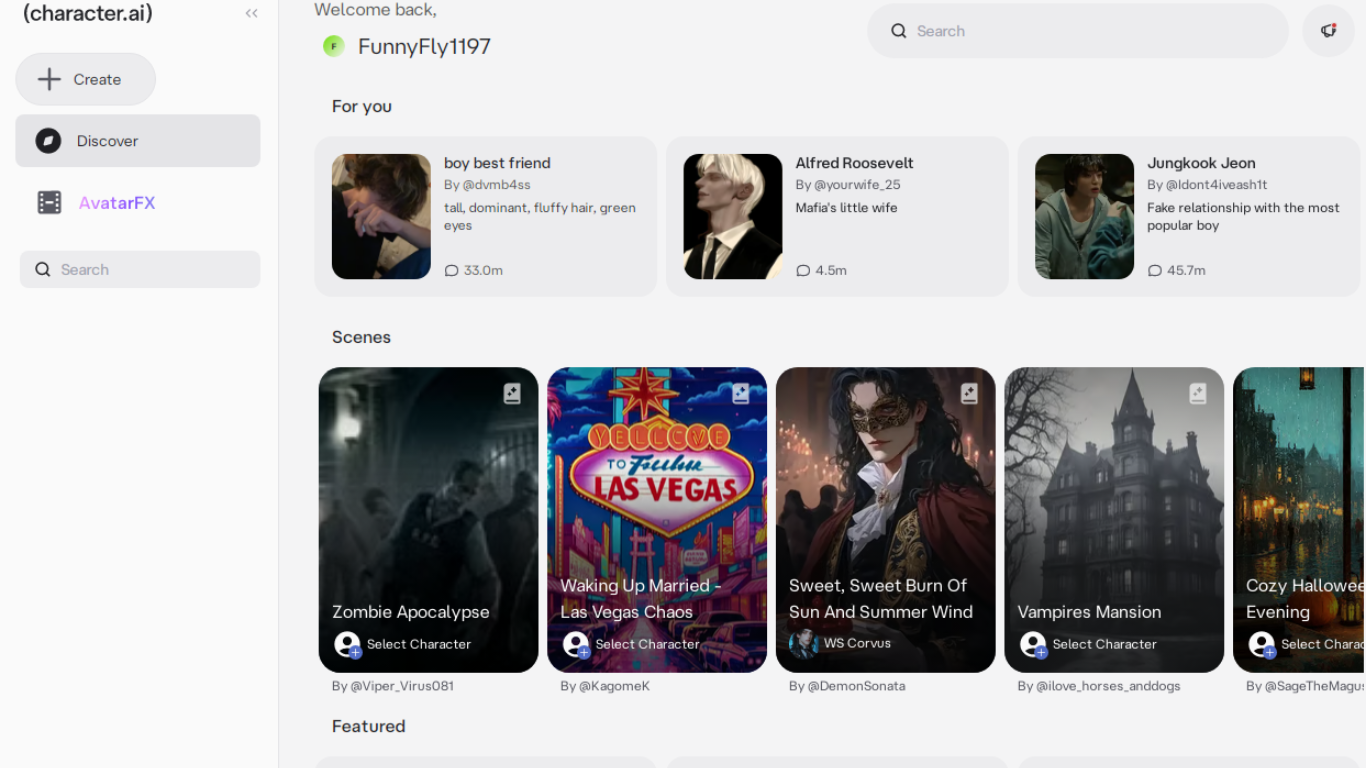
Character AI, also known as c.ai or char.ai, has become one of the most notable names in the world of generative AI chatbots. The platform allows users to create and interact with virtual personalities that simulate conversations with both fictional and real-life figures. Founded by former Google engineers Noam Shazeer and Daniel De Freitas, the company quickly gained recognition for its innovative approach to customizable AI interactions.

Origins and Development

Character AI was established in November 2021 by Shazeer and De Freitas, both of whom previously worked on Google’s AI language models. Shazeer played a key role in developing technologies that paved the way for modern conversational AI, while De Freitas led Google’s experimental Meena AI project, later known as LaMDA. Together, they aimed to create a more open, creative, and user-driven chatbot experience.

The first beta version of Character AI launched publicly in September 2022. Within weeks, the platform logged hundreds of thousands of conversations, with users creating unique characters that could engage in storytelling, debates, or even text-based adventure games. The concept resonated strongly with a younger audience, contributing to its rapid adoption.

Growth, Funding, and Expansion

Character AI raised $43 million in seed funding shortly after its launch. In March 2023, it secured an additional $150 million in a funding round that boosted the company’s valuation to approximately $1 billion, marking its status as one of the fastest-growing AI startups of the decade.

By early 2024, Character AI was attracting over 3.5 million daily visitors, most between the ages of 16 and 30. The release of its mobile app for iOS and Android in 2023 accelerated growth further, recording more than 1.7 million downloads in its first week.

In the same year, Google hired Noam Shazeer and entered a non-exclusive agreement to use Character AI technology, reflecting the platform’s significant role in the broader AI ecosystem.


Character AI Features worldstan.com

Key Features and User Experience

At its core, Character AI is a conversational AI platform that enables users to create their own chatbots, define their personalities, and share them publicly. These AI characters can be modeled after famous figures, historical icons, or entirely fictional personas. The platform supports multi-character chatrooms, allowing group conversations among users and AI-generated characters.

Customization lies at the heart of the service. Each character’s personality can be shaped through detailed prompts, sample dialogues, and user feedback. A rating system allows users to refine responses, helping each chatbot learn tone, context, and preferred communication style.

In May 2023, Character AI introduced a premium subscription, Character AI Plus, offering faster response times, priority access, and enhanced support. In early 2025, the company expanded its entertainment features with two interactive games—Speakeasy and War of Words—where users engage in creative challenges with AI-driven opponents.

Safety, Moderation, and Legal Challenges

 Character AI’s rise has not been without controversy. Concerns around content moderation and user safety have led to public scrutiny and legal challenges. Reports of inappropriate chatbot behavior prompted the company to strengthen its moderation systems and introduce stricter content filters.

In December 2024, new safety protocols were launched, including a dedicated AI model for users under 18. This version filters sensitive topics and limits exposure to harmful or suggestive content. Additionally, the platform now includes reminders for users engaged in prolonged sessions and clearer disclaimers emphasizing that AI-generated personalities are not real individuals.

However, several lawsuits have emerged over the platform’s influence on young users. Families in the United States have filed legal complaints, citing emotional and psychological harm linked to interactions with certain chatbots. These cases have intensified calls for stricter AI regulation and transparency in chatbot design.

The Future of Character AI


As of 2025, Character AI continues to evolve as both a creative tool and a social platform. Its community-driven model has inspired millions of users to explore new ways of storytelling, role-playing, and digital companionship through generative AI. Despite ongoing debates about safety and ethics, Character AI remains a central player in shaping the conversation around how humans interact with artificial intelligence.

With continued innovation, investment, and regulatory attention, Character AI represents both the promise and complexity of the next generation of AI-powered communication.

Gubby AI vs ChatGPT: The truth about AI Humanizer

This review explores the effectiveness of AI humanization tools like Grubby AI and ChatGPT, revealing their strengths and limitations in creating natural-sounding, AI-generated content capable of bypassing detection tools.

Comprehensive Review of Grubby AI: Does It Live Up to Its Promises as an AI Humanizer?

In the rapidly evolving AI landscape, tools that claim to humanize AI-generated content are gaining popularity. One such tool is Grubby AI, marketed as an AI humanizer designed to make machine-written text sound more natural and human-like. But does it deliver on its promises? Our in-depth review explores its effectiveness, comparing it with ChatGPT and current AI detection tools.

What is Grubby AI?

Grubby AI is an AI humanizer that promises to transform AI-generated content into more natural, human-like writing with just a few clicks. Users simply sign up, input their AI-written text, and click “Humanize” — the tool then returns an adapted version that aims to bypass AI detectors and appear more authentic.

Effectiveness and Limitations of Grubby AI as an AI Humanizer

To evaluate Grubby AI, I conducted a series of tests:

  • Generated four AI-written samples.
  • Applied the Grubby AI humanizer on each.
  • Fed the humanized results into popular AI detection toolssuch as Winston AI, Originality AI, QuillBot, and Undetectable.ai.

The detection results revealed the following:

DetectorHumanized ContentAI-Detection Score (0-100%)Interpretation
Winston AIHumanized Text55%Still AI-Detected
Originality AIHumanized Text99%Fully Fooled
QuillBotHumanized Text97%Fully Fooled
Undetectable.aiHumanized Text45%Slight suspicion, partially fooled

Average human score across tests: 61.56%

Conclusion:

These results highlight significant shortcomings. An effective AI humanizer should achieve detection scores nearing 99%, indicating near-perfect human-like quality. Currently, Grubby AI hovers around 60%, which is insufficient for reliable humanization, especially if the goal is to bypass AI content detectors.

Additionally, the free version limits users to only one short text sample, prompting payment thereafter—a questionable value proposition.

Comparing Grubby AI with ChatGPT as a Humanizer

To explore alternative options, I repeated the test using ChatGPT to humanize the same AI-generated texts.

AI DetectorChatGPT-Humanized TextDetection Score (0-100%)Effectiveness
Winston AIHumanized Text65%Still Detects AI
Originality AIHumanized Text99%Fully Fooled
QuillBotHumanized Text98%Fully Fooled
Undetectable.aiHumanized Text52%Partially fooled

Average human score with ChatGPT: 72.06%

This indicates that ChatGPT outperforms Grubby AI significantly in generating more human-like content capable of fooling advanced AI detection tools.

Final Verdict & Recommendations

Based on our assessments:

  • Grubby AIcurrently fails to reliably produce humanized content that passes AI detection.
  • ChatGPToffers a more effective, free alternative that consistently produces more natural-sounding text.

In summary:

As a trusted AI Humanizer and content creator, relying on current automation tools for humanization is unreliable. Instead, investing time in creating original, authentic content remains the best strategy for authentic engagement and avoiding AI detection pitfalls.

What Is Grok AI? A Deep Dive into Its Origins, Features, and Rapid Growth

What Is Grok AI? A Deep Dive into Its Origins, Features, and Rapid Growth worldstan.com

Introduction to Grok AI

Grok AI is a generative artificial intelligence chatbot created by xAI, the AI company founded by Elon Musk in March 2023. Officially launched in November 2023, it was built to deliver responses that are not only accurate but also infused with humor and a rebellious edge.

Unlike most AI systems that rely primarily on pre-trained datasets, Grok connects directly to X in real time, allowing it to retrieve live updates on news, trends, and conversations. This level of immediacy makes it one of the most responsive and context-aware chatbots available today.

Its name is inspired by Robert Heinlein’s science fiction novel Stranger in a Strange Land, where “Grok” means to understand something so deeply that it becomes intuitive. The AI embraces that philosophy by attempting to move beyond surface-level answers toward deeper contextual understanding.

The Origins of Grok AI and xAI

To understand Grok AI, one must understand xAI and its founder, Elon Musk. Having co-founded OpenAI in 2015, Musk later departed due to differences in long-term vision. He believed AI was becoming too sanitized and risk-averse. With xAI, his goal was to create a more transparent, truth-focused AI system that promotes open dialogue without excessive filtering.

Funded with over $12.4 billion across four investment rounds, xAI rapidly developed Grok as its flagship product. Drawing inspiration from science fiction and Musk’s own appetite for bold innovation, Grok was engineered to be both highly capable and unapologetically direct.

The Evolution of Grok AI

Since its initial release, Grok has advanced rapidly through several major iterations:

  • Grok-1 (2023): 33-billion-parameter model with strong coding and mathematics performance.

  • Grok-1.5 (2024): Improved reasoning capabilities and an expanded 128,000-token context window.

  • Grok-2 (2024): Added image generation powered by xAI’s Aurora system.

  • Grok-3 (February 2025): Significant performance boost via xAI’s Colossus supercomputer, featuring 200,000 NVIDIA GPUs, along with the introduction of DeepSearch mode.

  • Grok-4 (July 2025): Transition to full multimodal AI, capable of processing and generating text, images, and soon audio.

This rapid iteration cycle has positioned Grok as a strong challenger to GPT-4 and Claude, particularly in real-time search and reasoning capabilities.

Grok AI Features Explained

Grok AI Features Explained image worldstan.com

Real-Time Data Access and Search

Grok connects directly to X, allowing it to provide live knowledge rather than relying solely on static training data. This distinguishes it from most AI assistants, which often require external plugins or browsing extensions to retrieve current information.

Conversational Personality

Unlike neutral assistants, Grok was intentionally designed with a bolder voice. Its humorous and slightly defiant tone creates a more human-like interaction compared to more formal AI systems.

Multimodal Capabilities

With Grok 4, the model can handle multiple input formats, including text and images, with audio capabilities soon to be added. This enables sophisticated multimodal reasoning, such as analyzing visuals while generating contextual replies.

DeepSearch Mode

Introduced with Grok-3, DeepSearch enables layered query exploration through iterative web analysis, resulting in more robust and comprehensive responses.

Multilingual Support

Grok supports multiple languages, improving accessibility across international markets and expanding its adoption potential.

Grok API

Launched in 2024, the Grok API allows developers to embed its capabilities into applications, platforms, and analytics tools.

Advanced Reasoning Performance

Grok performs competitively against leading models in logic, coding, mathematics, and structured problem-solving.

Grok vs ChatGPT: Key Comparisons

FeatureGrok AIChatGPT
Real-Time Data AccessDirect integration with XLimited to browser mode or plugins
Response StyleWitty, bold, often sarcasticNeutral and controlled
Multimodal SupportAvailable in Grok 4Available in GPT-4o
API EcosystemEmergingEstablished
Ethical FilteringLess restrictive, sometimes controversialHeavily moderated

Overall, Grok excels in real-time awareness and personality, while ChatGPT remains superior in reliability and tool integration.

Grok AI Use Cases

Grok’s versatility allows it to be deployed across multiple fields, including:

  • Real-time news and sentiment tracking

  • Software development and debugging

  • Market analysis and trend forecasting

  • Education and tutoring

  • Creative writing and content generation

  • Medical and scientific research assistance

Its ability to synthesize live data gives it an advantage in dynamic tasks that require up-to-the-minute input.


Grok AI Growth Statistics 2025

Grok AI is expected to reach over 40 million active users by mid-2025. Industry projections estimate that it will capture between 18 and 22 percent of the chatbot market by 2026. Considering that the AI chatbot market was valued at $11.14 billion in 2025 and is forecasted to reach $29 to $31 billion by 2030, Grok is on track to secure a significant share of future growth.


Strengths and Limitations of Grok AI

Strengths

  • Real-time data integration

  • Strong multimodal capabilities

  • Engaging and human-like conversational tone

  • Competitive reasoning performance

  • Fast-paced development cycle

Limitations

  • Controversial outputs have raised ethical concerns

  • API ecosystem is still maturing

  • Reliance on X data may skew perspectives in some cases


Grok AI vs Other Chatbots

Beyond ChatGPT, Grok competes with Claude by Anthropic, Google Gemini, and Perplexity AI. While those models excel in safety, knowledge retrieval, and enterprise deployment, Grok’s edge lies in real-time relevance and personality-driven responses.

Controversies and Ethical Concerns

Because Grok is designed with fewer content restrictions than its competitors, it has occasionally generated responses that sparked public criticism. Supporters argue that allowing less-filtered dialogue promotes transparency, while detractors believe this approach risks misinformation. xAI continues to refine moderation techniques while preserving Grok’s defining voice.


The Grok AI Roadmap

Future developments planned by xAI include:

  • Voice and audio-based interaction modes

  • Persistent user memory for personalized long-term engagement

  • Multi-agent collaboration features

  • Dedicated enterprise tools and analytics dashboards

These enhancements suggest that Grok is not merely a chatbot, but a foundation for an expanding AI ecosystem.


Why Grok AI Matters

Grok represents a shift toward AI systems that are not only intelligent but also contextually aware and personality-driven. Its combination of real-time data access, multimodal capabilities, and unrestricted dialogue style sets it apart from competitors that prioritize caution over expression.

Final Thoughts:

What is Grok AI in 2025? It is no longer just a chatbot. It is an evolving AI platform built around real-time intelligence, multimodal reasoning, and a bold conversational identity.

With adoption rising rapidly, a growing developer ecosystem through the Grok API, and ambitious updates on the horizon, Grok is well-positioned to become one of the defining AI tools of the decade.

For those curious to explore its capabilities firsthand, Grok is available on X and at grok.com. Whether used for research, automation, or simply conversation, it offers a distinctly different experience from traditional AI assistants—one that is informed, immediate, and unapologetically expressive.

Remini AI – Make Every Photo and Video Look Perfect

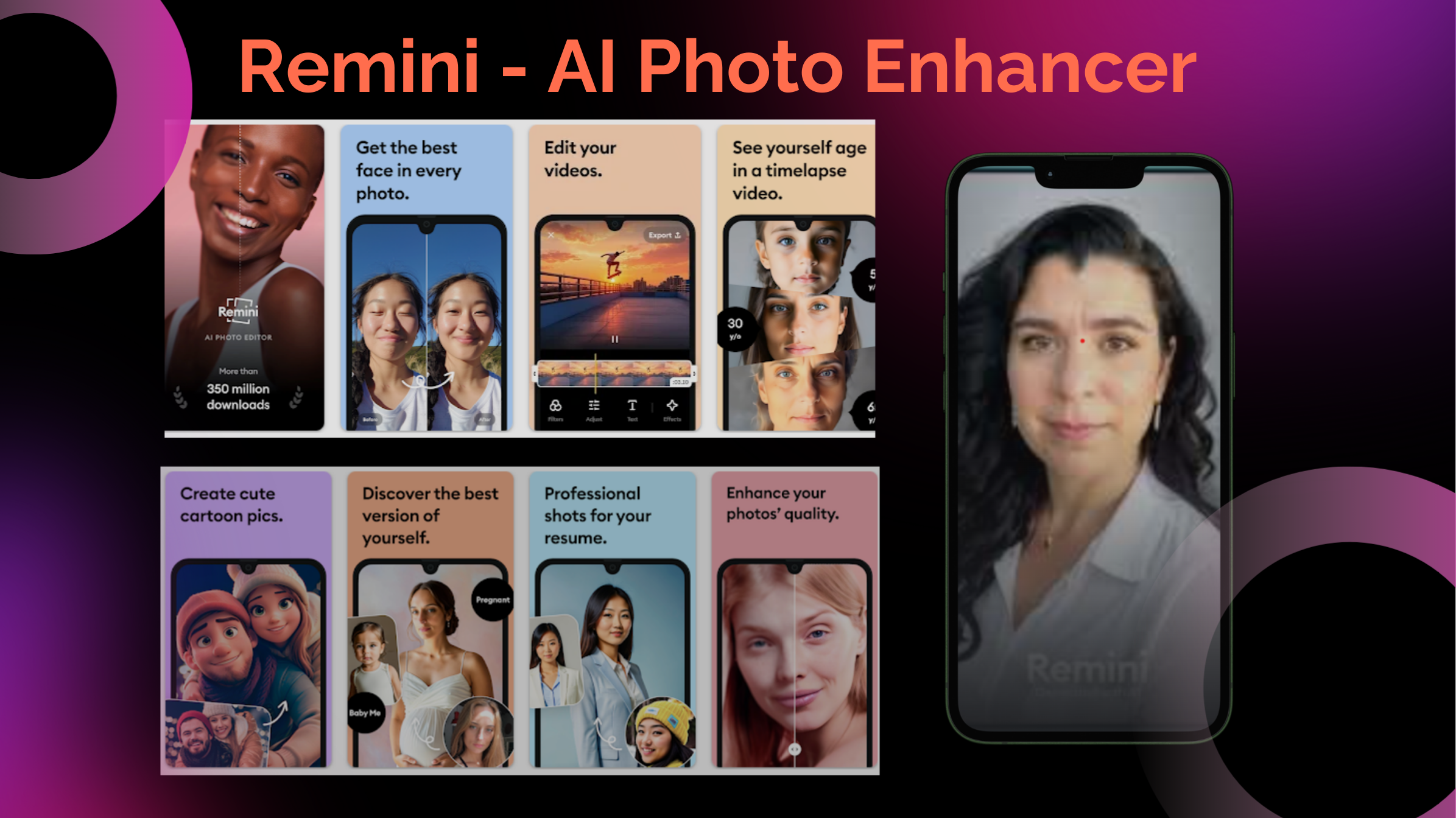
Remini - AI Photo Enhancer worldstan.com

Remini AI is more than just a photo editor — it’s an advanced AI-powered app designed to transform low-quality images and videos into high-definition masterpieces. Whether you’re wondering “what is Remini?” or searching for honest Remini AI reviews, this tool consistently delivers professional-grade results that impress users worldwide.

What Is Remini?

Many users ask, “what is Remini app?” In simple terms, it is a smart photo and video enhancer that uses cutting-edge artificial intelligence to improve clarity, detail, and color in visuals. From old family photos to blurry smartphone images, Remini restores and upgrades every pixel, making your content shine.

Is Remini Safe?

One common question is, “is Remini safe?” or “is Remini AI safe?” The answer is yes. Millions of people trust remini.ai and app.remini every day. The platform follows industry security standards, ensuring that your photos remain private while you enjoy the benefits of advanced AI enhancement.

Features of Remini AI

  1. Face Enhance

Bring out the best in portraits. Remini AI photos sharpen facial details, remove blur, and improve clarity to create professional headshots.

  1. Face Glow

Add a natural glow and flawless finish to your images. It’s like applying digital makeup that feels authentic.

  1. Auto Color

The Remini photo enhancer adjusts tones, restores faded hues, and improves lighting for a perfect balance.

  1. Background Enhance

Not just faces — the entire background gets a boost. Every corner of your remini photo app enhanced image looks sharper and more vibrant.

  1. Generate AI Photos of Yourself

Using the Remini AI app, you can create studio-quality images with realistic details. Perfect for social platforms, resumes, and creative projects.

Remini for Every Industry

Remini isn’t only for casual use — it’s a powerful tool for professionals.

Social Platforms – Turn everyday selfies into content that grabs attention.

Heritage & Family– Restore old photos with the remini photo editor and preserve memories in stunning clarity.

E-commerce– High-quality images improve trust and increase sales.

Education – Enhance graphics and visuals for engaging learning materials.

Magazines & Printing – Create crisp images suitable for large prints.

Remini Video Enhancer

The Remini video enhancer takes blurry or pixelated videos and upgrades them to full HD. With AI precision, every frame becomes sharper, more colorful, and lifelike. Say goodbye to blur and hello to flawless playback.

Remini Reviews – What Users Say

Looking through Remini app reviews and Remini AI reviews, one thing is clear: users love it. People describe the results as “magical,” “fast,” and “beyond expectations.” Whether you use Remini free trial or subscribe to a Remini premium plan, the value is unmatched.

Remini App Cost & Free Trial

Curious about the Remini app cost? The app offers both a free trial and premium subscription plans. Many users start with Remini free app or the app.remini free trial, then upgrade for unlimited access to features.

Why Choose Remini AI?

* It’s the best app to enhance photo quality.

* Works as a photo improver app and AI-powered enhancer.

* Available online through remini.ai and mobile apps.

Used by millions forheadshots, old photo restoration, and product images.

Final Thoughts

Remini AI is the ultimate solution for anyone asking,“is Remini photo enhancer safe?” or “what is Remini app?”  From photo editing  toAI headshots and video enhancement, it’s the one platform that delivers consistent, professional-grade results.

With Remini AI photos and videos, your content goes from ordinary to extraordinary — sharper, brighter, and more engaging than ever before.