Kimi k1.0 by Moonshot AI: A New Multimodal LLM for Complex Reasoning
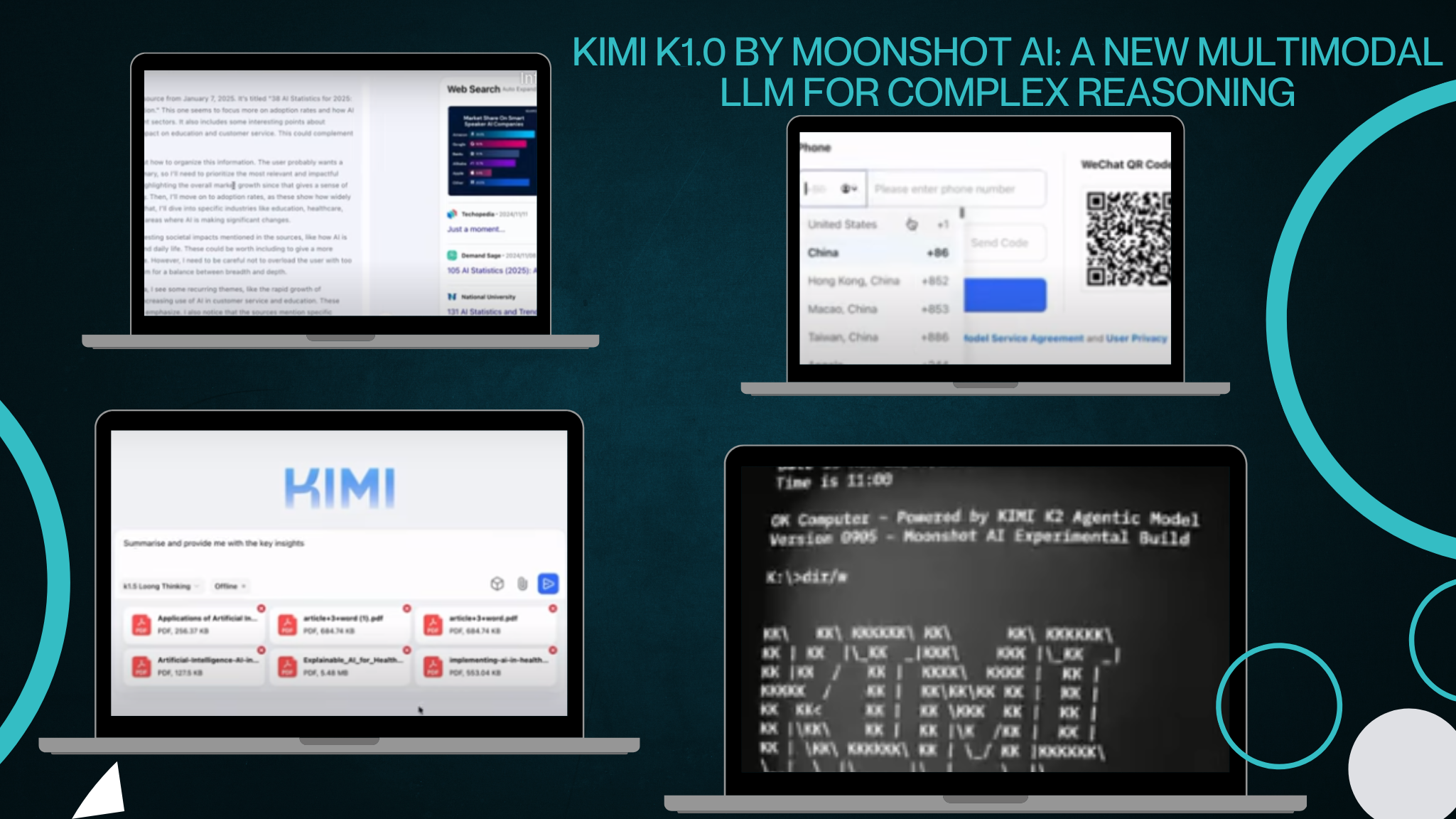
kimi k1.0 by moonshot ai a new multimodal llm for complex reasoning WORLDSTAN.COM

This article provides an in-depth overview of Kimi k1.0, detailing how its multimodal design, dual reasoning modes, and selective training approach redefine advanced AI reasoning.

Kimi k1.0 Signals a New Direction in Multimodal AI Reasoning

Introduction: A Shift in How AI Thinks

The rapid evolution of large language models has moved artificial intelligence beyond simple text generation toward systems capable of reasoning across multiple forms of information. In this context, Kimi k1.0, released by Moonshot AI on January 21, 2025, marks an important development in multimodal AI research. Designed to interpret text, images, and video within a single reasoning framework, the model reflects a broader industry transition toward goal-driven intelligence that prioritizes accuracy, context awareness, and practical problem solving.

Rather than focusing solely on scale or conversational fluency, Kimi k1.0 is positioned as a reasoning-centric system intended for demanding analytical tasks. Its architecture and training strategy emphasize interpretability, long-context understanding, and cross-domain applicability, placing it among a new generation of AI models built for professional and enterprise use.

Moonshot AI and the Strategic Vision Behind Kimi

Moonshot AI has entered the competitive AI landscape with a philosophy that differs from many established players. Instead of racing to produce the largest possible model, the company has concentrated on refining how artificial intelligence reasons, learns, and generalizes. Kimi k1.0 embodies this approach by focusing on decision quality rather than raw parameter expansion.

The development of Kimi aligns with a growing recognition that real-world AI applications require more than fluent language output. Industries such as education, research, law, and software engineering demand systems capable of sustaining complex reasoning over long sessions while maintaining consistency and correctness. Moonshot AI’s strategy reflects this demand, positioning Kimi as a tool for depth rather than surface-level interaction.

Multimodal Intelligence as a Core Capability

One of the defining attributes of Kimi k1.0 is its multimodal design. Unlike traditional large language models that operate exclusively on text, Kimi can process and integrate visual information, including images and video. This capability allows the model to interpret diagrams, screenshots, visual data representations, and recorded demonstrations alongside written instructions or queries.

Multimodal reasoning significantly expands the range of tasks an AI model can address. Technical documentation often combines textual explanations with visual examples, while mathematical and scientific problems frequently rely on graphs and symbolic representations. By unifying these inputs, Kimi k1.0 provides responses that reflect a more holistic understanding of the problem space.

Reasoning Architecture Designed for Flexibility

Kimi k1.0 introduces a dual chain-of-thought reasoning system that enables users to tailor the model’s behavior to specific requirements. This architecture includes two distinct modes that prioritize different outcomes.

The Long-CoT mode emphasizes transparent, step-by-step reasoning. This approach is particularly valuable in educational environments, research analysis, and technical debugging, where understanding the reasoning process is as important as the final answer. By exposing intermediate steps, the model supports validation and trust.

In contrast, the Short-CoT Clip mode is optimized for speed and precision. It delivers concise, high-accuracy responses with minimal latency, making it suitable for enterprise workflows and real-time applications. This flexibility allows Kimi k1.0 to serve a wide range of use cases without compromising reliability.

Selective Training Through Rejection Sampling

The training methodology behind Kimi k1.0 represents a departure from conventional reinforcement learning practices. Moonshot AI employed a selective training approach based on rejection sampling, in which the model retains only correct or high-quality outputs during its learning phase.

By discarding flawed reasoning paths, the system avoids reinforcing errors and reduces noise in the training data. This process prioritizes outcome correctness over exhaustive exposure to all generated possibilities. The result is a model that demonstrates improved accuracy and decision-making consistency without unnecessary complexity.

This training strategy also aligns with the model’s goal-first fine-tuning framework. Instead of optimizing for token-level behavior, Kimi k1.0 is trained to generalize across task modalities while maintaining alignment between reasoning and final outcomes. This approach is particularly effective in high-stakes problem-solving scenarios.

Long-Context Processing and Real-Time Research

Kimi k1.0 supports an extensive context window of up to 128,000 tokens, enabling it to process large volumes of information in a single session. This capability is critical for tasks that involve lengthy documents, multi-chapter reports, or expansive codebases.

In addition to long-context understanding, the model offers real-time file handling with support for more than 50 simultaneous uploads. Users can analyze multiple documents, datasets, or media files without losing contextual continuity. This feature is especially useful in legal, technical, and data-intensive workflows.

The integration of live web search across over 100 websites further enhances Kimi’s research capabilities. By accessing up-to-date information during analysis, the model can synthesize external data with user-provided content, supporting more informed and relevant outputs.

Applications Across Knowledge-Intensive Domains

Kimi k1.0 is designed to operate effectively across a wide range of professional and academic fields. In education, the model can assist with complex problem solving, concept explanation, and curriculum development. Its adjustable reasoning depth allows it to adapt to different learning levels and instructional goals.

In software development, Kimi supports code analysis, debugging, and architectural planning. Its ability to process large code repositories and interpret visual inputs such as diagrams or interface designs makes it a valuable tool for developers working on complex systems.

Research professionals may leverage Kimi’s long-context and multimodal capabilities to analyze academic papers, technical reports, and experimental data. The model’s reasoning consistency and selective training approach contribute to more reliable analytical outcomes.

Enterprise Workflows and Automation Potential

For enterprise users, Kimi k1.0 offers capabilities that align with organizational requirements for efficiency and accountability. The model can be integrated into workflows involving report generation, compliance verification, and decision support.

By emphasizing reasoning accuracy and interpretability, Kimi addresses concerns related to AI transparency and trust. This makes it suitable for deployment in environments where explainability is essential, such as finance, healthcare administration, and regulatory compliance.

Automation scenarios also benefit from Kimi’s design. Its Short-CoT reasoning mode enables rapid response generation, while its underlying training framework ensures that outputs remain aligned with defined goals and quality standards.

Interactive AI Interfaces and User Experience

The multimodal nature of Kimi k1.0 opens new possibilities for interactive AI interfaces. Systems built on top of the model can respond not only to text-based commands but also to visual cues and contextual signals.

This capability supports the development of advanced user interfaces, including intelligent dashboards, virtual research assistants, and adaptive learning platforms. By interpreting diverse inputs, Kimi enhances human-computer interaction and enables more natural, context-aware exchanges.

Positioning in the Global AI Landscape

The release of Kimi k1.0 highlights the growing influence of Chinese AI companies in global research and development. Moonshot AI’s approach contributes to a more diverse AI ecosystem, introducing alternative methodologies for training and reasoning optimization.

As competition intensifies among large language models, differentiation increasingly depends on practical utility rather than benchmark performance alone. Kimi’s emphasis on multimodal reasoning, long-context processing, and selective training positions it as a distinctive option in this evolving landscape.

Implications for the Future of AI Reasoning

Kimi k1.0 illustrates a broader shift in artificial intelligence toward systems that prioritize decision quality, contextual understanding, and adaptability. Its architecture suggests a future in which AI models are evaluated not only on their ability to generate language but also on how effectively they support complex, real-world tasks.

The model’s dual reasoning modes and rejection-based training framework offer insights into how AI can balance transparency and efficiency. As these ideas gain traction, they may influence the design of next-generation large language models across the industry.

Conclusion:

Kimi k1.0 reflects a deliberate shift in how advanced AI systems are being designed and evaluated. Rather than emphasizing size or surface-level fluency, Moonshot AI has introduced a model that centers on reasoning depth, contextual awareness, and outcome reliability. Its ability to work across text, images, and video, combined with flexible reasoning modes and selective training, demonstrates a clear focus on practical intelligence rather than theoretical performance.

The model’s long-context processing and real-time research capabilities further reinforce its role as a tool for knowledge-intensive tasks. By sustaining coherent reasoning across large volumes of information, Kimi k1.0 addresses a growing demand for AI systems that can support complex analysis in professional, academic, and enterprise environments.

As competition among large language models continues to intensify, Kimi k1.0 stands out for its goal-oriented architecture and emphasis on decision quality. Whether its approach becomes a broader industry standard remains to be seen, but its design offers a compelling example of how multimodal AI can evolve beyond conversation toward structured, high-stakes problem solving.

FAQs:

  • What is Kimi k1.0 and who developed it?
    Kimi k1.0 is a multimodal large language model developed by Moonshot AI. It is designed to process and reason across text, images, and video, with a focus on complex analytical and professional use cases.

  • How does Kimi k1.0 differ from traditional language models?
    Unlike text-only models, Kimi k1.0 integrates visual and textual information into a single reasoning process. It also prioritizes decision accuracy and reasoning quality over conversational output or model size.

  • What are the dual reasoning modes in Kimi k1.0?
    Kimi k1.0 offers two reasoning approaches: a transparent mode that provides step-by-step explanations and a fast-response mode optimized for speed and precision. Users can choose the mode based on their specific task requirements.

  • Why is selective training important in Kimi k1.0?
    Selective training allows the model to learn only from correct or high-quality outputs. By filtering out flawed reasoning during training, Kimi k1.0 improves reliability and reduces the risk of reinforcing errors.

  • What is the significance of the 128k token context window?
    A 128k token context window enables Kimi k1.0 to analyze lengthy documents, large codebases, and multi-file research materials without losing coherence, making it suitable for deep analytical tasks.

  • Which industries can benefit most from Kimi k1.0?
    Kimi k1.0 is well-suited for education, research, software development, legal analysis, and enterprise automation, particularly in environments that require long-form reasoning and multimodal understanding.

  • How does Kimi k1.0 contribute to the future of AI development?
    Kimi k1.0 highlights a shift toward reasoning-centric AI models that emphasize accuracy, context, and practical decision-making, offering insights into how next-generation AI systems may be designed.

WuDao 3.0: Trillion-Parameter AI Model from China

https://worldstan.com/wudao-3-0-trillion-parameter-ai-model-from-china/

This article explores WuDao 3.0, China’s trillion-parameter open-source AI model family, examining its architecture, core systems, multimodal capabilities, and strategic role in advancing AI research, enterprise innovation, and technological sovereignty.

WuDao 3.0 and the Evolution of China’s Open-Source AI Ecosystem

The global artificial intelligence landscape is undergoing a structural shift. As competition intensifies among nations, institutions, and enterprises, large-scale AI models have become strategic assets rather than purely technical achievements. In this environment, WuDao 3.0 emerges as a defining milestone for China’s open-source AI ambitions. Developed by the Zhiyuan Research Institute, WuDao 3.0 represents one of the most extensive and technically ambitious AI model families released by China to date, reinforcing the country’s commitment to AI sovereignty, collaborative research, and accessible large-model infrastructure.

With a parameter scale exceeding 1.75 trillion, WuDao 3.0 is not simply an upgrade over its predecessors. Instead, it reflects a broader transformation in how large language models, multimodal AI systems, and open research frameworks are designed, distributed, and applied across academic and enterprise environments.

Redefining Scale in Open-Source AI

Scale has become a defining metric in modern artificial intelligence. Large language models and multimodal systems now rely on massive parameter counts, extensive training datasets, and sophisticated architectural designs to achieve higher levels of reasoning, generalization, and contextual understanding. WuDao 3.0 stands at the forefront of this movement, positioning itself among the largest open-source AI model families globally.

Unlike closed commercial systems, WuDao 3.0 has been intentionally structured to serve the scientific research community. Its open availability enables universities, laboratories, and enterprises to experiment with trillion-parameter architectures without relying entirely on proprietary platforms. This approach reflects a growing recognition that innovation in artificial intelligence accelerates when foundational models are shared, audited, and extended by diverse contributors.

By adopting an open-source strategy at such an unprecedented scale, China signals its intent to balance technological competitiveness with collaborative development, a model that contrasts sharply with the increasingly closed ecosystems seen elsewhere.

A Modular Family of AI Systems

Rather than functioning as a single monolithic model, WuDao 3.0 is organized as a modular AI family. This design philosophy allows different systems within the ecosystem to specialize in dialogue, code generation, and visual intelligence while remaining interoperable under a shared framework.

At the core of this family are several flagship systems, including AquilaChat, AquilaCode, and the WuDao Vision Series. Each model addresses a specific dimension of artificial intelligence while contributing to a broader vision of multimodal reasoning and cross-domain intelligence.

This modular architecture ensures adaptability across industries and research domains. Developers can deploy individual components independently or integrate them into composite systems that combine language understanding, visual perception, and generative capabilities.

AquilaChat and the Advancement of Bilingual Dialogue Models

One of the most prominent components of WuDao 3.0 is AquilaChat, a dialogue-oriented large language model designed for high-quality conversational interaction. Available in both 7-billion and 33-billion parameter versions, AquilaChat reflects a strong emphasis on bilingual performance, particularly in English and Chinese.

Approximately 40 percent of its training data is in Chinese, allowing the model to handle nuanced linguistic structures, cultural references, and domain-specific terminology with greater accuracy. This bilingual foundation enables AquilaChat to function effectively in cross-border research, international collaboration, and multilingual enterprise applications.

Performance evaluations indicate that the 7B version of AquilaChat rivals or surpasses several closed-source dialogue models in both domestic and international benchmarks. Its architecture prioritizes contextual continuity, semantic coherence, and adaptive response generation, making it suitable for customer service systems, research assistants, and educational platforms.

Beyond basic conversation, AquilaChat is designed to manage extended dialogues that require memory retention, topic transitions, and contextual inference. This capability positions it as a practical solution for real-world deployments rather than a purely experimental chatbot.

AquilaCode and the Path Toward Autonomous Programming

As software development becomes increasingly complex, AI-assisted programming has emerged as a critical productivity tool. AquilaCode addresses this demand by focusing on logic-driven code generation across multiple programming languages.

Unlike simpler code completion tools, AquilaCode is engineered to interpret structured prompts, reason through algorithmic requirements, and generate complete functional programs. Its capabilities range from basic tasks such as generating Fibonacci sequences to more advanced outputs like interactive applications and sorting algorithms.

Although still under active development, AquilaCode represents a strategic step toward autonomous coding systems. Its long-term objective is to support multilingual programming environments, enabling developers to work seamlessly across languages and platforms.

In enterprise contexts, AquilaCode has the potential to accelerate development cycles, reduce coding errors, and assist in rapid prototyping. For academic research, it provides a platform for studying how large language models can internalize programming logic and translate abstract instructions into executable code.

WuDao Vision Series and the Expansion of Visual Intelligence

Language models alone are no longer sufficient to address the complexity of real-world AI applications. Visual understanding has become equally critical, particularly in fields such as autonomous systems, medical imaging, and multimedia analysis. The WuDao Vision Series responds to this need with a suite of models designed for advanced visual tasks.

This series includes systems such as EVA, EVA-CLIP, vid2vid-zero, and Painter, each tailored to specific visual challenges. Together, they form a comprehensive toolkit for image recognition, video processing, segmentation, and generative visual tasks.

EVA, built on a billion-parameter backbone, leverages large-scale public datasets to learn visual representations with reduced supervision. This approach allows the model to generalize effectively across diverse image and video domains, reducing the need for extensive labeled data.

EVA-CLIP extends these capabilities by aligning visual and textual representations, enabling multimodal reasoning across images and language. Vid2vid-zero focuses on video transformation tasks, while Painter explores creative and generative applications in visual AI.

By integrating these systems into the WuDao 3.0 ecosystem, the Zhiyuan Research Institute demonstrates a commitment to holistic AI development that extends beyond text-based intelligence.

Multimodal Integration as a Strategic Advantage

One of the defining characteristics of WuDao 3.0 is its emphasis on multimodal integration. Rather than treating language, vision, and generation as isolated capabilities, the model family is designed to support interaction across modalities.

This integrated approach allows AI systems to interpret text, analyze images, generate visual content, and produce coherent responses that reflect multiple data sources. Such capabilities are increasingly important in real-world scenarios, where information rarely exists in a single format.

Multimodal AI systems have applications ranging from intelligent tutoring platforms and digital content creation to industrial monitoring and scientific research. WuDao 3.0’s architecture enables researchers to explore these applications within an open and extensible framework.

Compatibility Across Chip Architectures

Another significant feature of WuDao 3.0 is its compatibility with diverse chip architectures. As AI workloads grow in scale, hardware flexibility becomes essential for cost efficiency and deployment scalability.

By supporting multiple hardware platforms, WuDao 3.0 reduces dependency on specific vendors and enables broader adoption across research institutions and enterprises. This design choice aligns with China’s broader strategy of building resilient and self-sufficient AI infrastructure.

Hardware compatibility also facilitates experimentation and optimization, allowing developers to adapt models to different performance and energy constraints without compromising functionality.

AI Sovereignty and Open Infrastructure

The release of WuDao 3.0 carries implications beyond technical innovation. It reflects a strategic effort to strengthen AI sovereignty by ensuring that foundational technologies remain accessible and adaptable within national and regional ecosystems.

Open-source AI models play a critical role in this strategy. By democratizing access to large model infrastructure, China enables domestic researchers and enterprises to innovate independently while contributing to global AI advancement.

This approach contrasts with closed commercial ecosystems that restrict access to core technologies. WuDao 3.0 demonstrates how open infrastructure can coexist with large-scale innovation, fostering transparency, collaboration, and long-term sustainability.

Lessons from WuDao 2.0 and Cultural Intelligence

WuDao 3.0 builds upon the legacy of WuDao 2.0, which gained international attention through applications such as Zhibing Hua, a virtual student capable of writing poetry, creating artwork, and composing music. These demonstrations highlighted WuDao’s capacity to blend language, vision, and generation in culturally nuanced ways.

The success of WuDao 2.0 underscored the importance of culturally aware AI systems that reflect local languages, traditions, and creative expressions. WuDao 3.0 extends this philosophy by embedding cultural intelligence into its bilingual and multimodal designs.

Such capabilities are particularly valuable for creative industries, education, and digital media, where context and cultural relevance play a critical role in user engagement.

Implications for Academic Research

For the academic community, WuDao 3.0 represents a powerful research platform. Its open-source nature allows scholars to study large-scale model behavior, experiment with architectural modifications, and explore ethical and social implications of advanced AI systems.

Access to a trillion-parameter model family enables research that was previously limited to organizations with vast computational resources. This democratization of AI research infrastructure has the potential to accelerate discoveries and diversify perspectives within the field.

Universities and research institutions can leverage WuDao 3.0 for studies in natural language processing, computer vision, multimodal learning, and AI alignment, contributing to a more comprehensive understanding of artificial intelligence.

Enterprise Innovation and Industrial Applications

Beyond academia, WuDao 3.0 offers significant value to enterprises seeking to integrate AI into their operations. Its modular design allows businesses to adopt specific components that align with their needs, whether in customer interaction, software development, or visual analytics.

Industries such as finance, healthcare, manufacturing, and media can benefit from bilingual dialogue systems, automated coding tools, and advanced visual recognition models. By building on an open-source foundation, enterprises gain flexibility and reduce long-term dependency on proprietary vendors.

This adaptability is particularly important in rapidly evolving markets, where the ability to customize and extend AI systems can provide a competitive advantage.

Challenges and Future Directions

Despite its achievements, WuDao 3.0 also highlights ongoing challenges in large-scale AI development. Training and deploying trillion-parameter models require significant computational resources, energy consumption, and technical expertise.

Ethical considerations, including data governance, bias mitigation, and responsible deployment, remain critical areas of focus. As WuDao 3.0 gains adoption, addressing these challenges will be essential to ensuring its positive impact.

Future iterations may further enhance efficiency, improve multimodal reasoning, and expand support for additional languages and domains. Continued collaboration between researchers, policymakers, and industry stakeholders will play a key role in shaping this evolution.

Conclusion:

WuDao 3.0 reflects a turning point in how large-scale artificial intelligence is built and shared. By combining trillion-parameter scale with an open-source foundation, it shifts advanced AI from a closed, resource-heavy domain into a more accessible and collaborative space. Its modular design, bilingual intelligence, and multimodal systems illustrate how future AI platforms may move beyond single-purpose tools toward integrated ecosystems that serve research, industry, and creative fields alike. As global attention increasingly focuses on transparency, adaptability, and technological independence, WuDao 3.0 stands as a practical example of how open infrastructure can support long-term innovation while reshaping the competitive dynamics of artificial intelligence worldwide.

FAQs:

  1. What makes WuDao 3.0 different from other large AI models?
    WuDao 3.0 distinguishes itself through its open-source design combined with trillion-parameter scale, allowing researchers and enterprises to study, adapt, and deploy advanced AI systems without relying on closed commercial platforms.

  2. Is WuDao 3.0 designed only for language-based tasks?
    No, WuDao 3.0 is a multimodal AI family that supports text understanding, code generation, image recognition, video processing, and creative visual tasks within a unified framework.

  3. How does WuDao 3.0 support bilingual and cross-cultural use cases?
    The model family is trained extensively in both Chinese and English, enabling accurate language handling, cultural context awareness, and effective communication across international research and business environments.

  4. Who can use WuDao 3.0 and for what purposes?
    WuDao 3.0 is intended for academic researchers, developers, and enterprises looking to build AI-driven solutions in areas such as education, software development, visual analysis, and digital content creation.

  5. What role does WuDao 3.0 play in China’s AI strategy?
    WuDao 3.0 supports China’s focus on AI sovereignty by providing open access to large-scale AI infrastructure, reducing dependence on external platforms while encouraging domestic and global collaboration.

  6. Can WuDao 3.0 be adapted to different hardware environments?
    Yes, the model family is designed to be compatible with multiple chip architectures, making it flexible for deployment across varied computing setups and performance requirements.

  7. How does WuDao 3.0 build on the capabilities of earlier WuDao models?
    WuDao 3.0 expands on earlier versions by offering greater scale, improved multimodal integration, and broader application support, transforming experimental capabilities into practical tools for real-world innovation.


MiniMax AI Foundation Models: Built for Real-World Business Use

minimax ai foundation models built for real world business use https://worldstan.com/minimax-ai-foundation-models-built-for-real-world-business-use/

This in-depth report explores how MiniMax AI is emerging as a key Chinese foundation model company, examining its core technologies, enterprise-focused innovations, flagship products, and strategic approach to building efficient, safe, and adaptable AI systems for real-world applications.

MiniMax AI: Inside China’s Emerging Foundation Model Powerhouse Driving Enterprise Intelligence

Artificial intelligence development in China has entered a decisive phase, marked by the rise of domestic companies building large-scale foundation models capable of competing with global leaders. Among these emerging players, MiniMax has steadily positioned itself as a serious contender in the general-purpose AI ecosystem. Founded in 2021, the company has moved rapidly from research experimentation to real-world deployment, focusing on scalable, high-performance models designed to support complex enterprise and consumer use cases.

Rather than pursuing AI purely as a conversational novelty, MiniMax has emphasized practical intelligence. Its work centers on dialogue systems, reasoning-focused architectures, and multimodal content generation, all unified under a broader strategy of operational efficiency, safety alignment, and rapid deployment. Backed by strategic investment from Tencent, MiniMax represents a new generation of Chinese AI companies that blend academic rigor with industrial execution.

This report examines MiniMax’s technological direction, flagship products, architectural innovations, and growing influence within China’s AI market, while also exploring how its approach to foundation models may shape the next wave of enterprise AI adoption.

The Rise of Foundation Models in China’s AI Landscape

Over the past decade, China’s AI sector has transitioned from applied machine learning toward the development of large language models and multimodal systems capable of generalized reasoning. This shift mirrors global trends but is shaped by domestic priorities, including enterprise automation, localized deployment, and regulatory compliance.

MiniMax entered this landscape at a critical moment. By 2021, the foundation model paradigm had proven its effectiveness, yet challenges remained around cost efficiency, latency, personalization, and real-world usability. MiniMax’s early strategy focused on addressing these limitations rather than simply scaling parameters.

From its inception, the company positioned itself as a builder of general-purpose AI models that could operate across industries. This decision shaped its research priorities, pushing the team to invest in architectures capable of handling dialogue, task execution, and contextual reasoning within a single system.

Unlike narrow AI tools designed for isolated tasks, MiniMax’s models aim to support evolving conversations and ambiguous workflows. This orientation toward adaptability has become one of the company’s defining characteristics.

Company Overview and Strategic Positioning

MiniMax operates as a privately held AI company headquartered in China, with a strong emphasis on research-driven product development. While still relatively young, the firm has built a reputation for delivering production-ready AI systems rather than experimental prototypes.

Tencent’s backing has provided MiniMax with both capital stability and ecosystem access. This partnership has allowed the company to test its models across large-scale platforms and enterprise environments, accelerating feedback loops and deployment readiness.

At the strategic level, MiniMax focuses on three guiding principles. The first is performance, ensuring that models deliver reliable outputs under real-world constraints. The second is efficiency, minimizing computational overhead and latency. The third is safety alignment, reflecting the growing importance of responsible AI practices within China’s regulatory framework.

These priorities influence everything from model training pipelines to user-facing product design, setting MiniMax apart from competitors that emphasize scale at the expense of control.

Inspo: A Dialogue Assistant Designed for Action

MiniMax’s flagship product, Inspo, illustrates the company’s applied philosophy. Marketed as a dialogue assistant, Inspo goes beyond traditional chatbot functionality by integrating conversational interaction with task execution.

Inspo is designed to operate in both consumer and enterprise environments. On the consumer side, it supports natural language interaction that feels fluid and responsive. On the enterprise side, it functions as a productivity layer, assisting users with information retrieval, decision support, and multi-step task coordination.

What differentiates Inspo from many dialogue assistants is its ability to maintain contextual awareness across extended interactions. Rather than treating each prompt as an isolated request, the system tracks evolving intent, adjusting responses as clarity emerges.

This capability makes Inspo particularly suitable for business workflows, where users often refine requirements gradually. By anticipating intent and supporting mid-task pivots, the assistant reduces friction and improves task completion rates.

Dialogue and Reasoning as Core Model Capabilities

At the heart of MiniMax’s technology stack lies a commitment to dialogue-driven intelligence. The company views conversation not as an interface layer but as a reasoning process through which users express goals, constraints, and preferences.

MiniMax’s language models are trained to interpret incomplete or ambiguous inputs, leveraging contextual signals to infer likely objectives. This approach contrasts with rigid prompt-response systems that require explicit instructions at every step.

Reasoning capabilities are integrated directly into the model architecture. Rather than relying solely on post-processing logic, MiniMax embeds reasoning pathways that allow the system to evaluate multiple possible interpretations before responding.

This design supports more natural interactions and improves performance in scenarios where users shift direction mid-conversation. For enterprises, this translates into AI systems that feel collaborative rather than transactional.

Multimodal Content Generation and Real-World Relevance

Beyond text-based dialogue, MiniMax has invested heavily in multimodal AI models capable of processing and generating content across multiple formats. This includes text, structured data, and other media types relevant to enterprise workflows.

Multimodal capability enables MiniMax’s systems to operate in complex environments where information is not confined to a single modality. For example, educational platforms may require AI that can interpret lesson structures, generate explanatory text, and respond to visual cues. Similarly, customer service systems benefit from models that can integrate structured records with conversational input.

MiniMax’s multimodal approach is guided by practical deployment considerations. Models are optimized to handle real-world data variability rather than idealized training conditions. This emphasis improves robustness and reduces the need for extensive manual tuning during implementation.

Multi-Agent Collaboration: Simulating Distributed Intelligence

One of MiniMax’s most notable innovations is its multi-agent collaboration system. Rather than relying on a single monolithic model to handle all tasks, MiniMax has developed an architecture that allows multiple AI agents to communicate, delegate, and coordinate.

Each agent within the system can specialize in a particular function, such as information retrieval, reasoning, or task execution. These agents exchange signals and intermediate outputs, collectively solving complex queries that would challenge a single-task model.

This architecture is particularly valuable in real-time environments such as customer service operations, supply chain management, and educational platforms. In these contexts, tasks often involve multiple steps, dependencies, and changing conditions.

By simulating collaborative intelligence, MiniMax’s multi-agent system moves closer to how human teams operate. It represents a shift away from isolated AI responses toward coordinated problem-solving.

Applications Across Enterprise Verticals

MiniMax’s technology has been tested across a range of enterprise use cases, reflecting its general-purpose orientation. In customer service, the company’s models support dynamic query resolution, handling follow-up questions without losing context.

In supply chain operations, multi-agent systems can assist with demand forecasting, logistics coordination, and exception handling. By integrating structured data with conversational input, AI agents can provide actionable insights rather than static reports.

Education represents another key vertical. MiniMax’s dialogue-driven models can adapt explanations to individual learners, responding to questions in real time while maintaining alignment with curriculum objectives.

These applications demonstrate MiniMax’s focus on solving operational problems rather than showcasing abstract capabilities.

Lightweight Adaptive Fine-Tuning and Personalization

Personalization remains one of the most challenging aspects of large-scale AI deployment. Traditional fine-tuning approaches often increase model size and computational cost, limiting scalability.

MiniMax addresses this challenge through a technique known as Lightweight Adaptive Fine-Tuning, or LAFT. This method allows models to adapt to user preferences and organizational contexts without significant parameter expansion.

LAFT operates by introducing adaptive layers that can be updated rapidly, enabling low-latency personalization. This makes the technique well-suited for enterprise environments where thousands of users may require individualized experiences.

By minimizing performance overhead, LAFT supports hybrid deployment models and large-scale rollouts. It also reduces infrastructure costs, an increasingly important consideration as AI adoption expands.

Code-Aware Language Models and Developer Applications

In addition to dialogue and reasoning, MiniMax has quietly developed a code-aware language framework tailored for software development tasks. Unlike general-purpose models that treat code as text, MiniMax’s system is trained to understand syntax, structure, and intent.

This code-native approach enables more accurate code generation, debugging suggestions, and refactoring support. Early pilots have demonstrated particular strength in multi-language environments and legacy codebase modernization.

Fintech companies and developer tooling startups have been among the first adopters, using MiniMax’s models to accelerate development cycles and improve code quality.

By addressing programming as a first-class use case, MiniMax expands its relevance beyond conversational AI into the broader software ecosystem.

Efficiency, Deployment Speed, and Infrastructure Considerations

A recurring theme in MiniMax’s development philosophy is efficiency. Rather than pursuing maximal model size, the company focuses on optimizing performance per parameter.

This approach yields several advantages. Lower latency improves user experience, particularly in interactive applications. Reduced computational requirements lower operational costs, making AI adoption more accessible to mid-sized enterprises.

Deployment speed is another priority. MiniMax designs its systems to integrate smoothly with existing infrastructure, reducing implementation complexity. This focus aligns with enterprise expectations, where long deployment cycles can undermine project viability.

By balancing capability with practicality, MiniMax positions itself as a provider of usable AI rather than experimental technology.

Safety Alignment and Responsible AI Development

As AI systems become more influential, concerns around safety, bias, and misuse have grown. MiniMax addresses these issues through a strong emphasis on safety alignment.

Models are trained and evaluated with safeguards designed to prevent harmful outputs and ensure compliance with regulatory standards. This is particularly important within China’s evolving AI governance framework.

Safety alignment also extends to enterprise reliability. By reducing unpredictable behavior and improving output consistency, MiniMax enhances trust in its systems.

This commitment reflects a broader industry shift toward responsible AI, where long-term sustainability depends on public and institutional confidence.

Market Presence and Competitive Positioning

Within China’s AI ecosystem, MiniMax occupies a distinctive position. While larger players focus on scale and platform dominance, MiniMax emphasizes architectural innovation and applied performance.

The company’s foothold in China provides access to diverse data environments and deployment scenarios. This experience strengthens model robustness and informs ongoing development.

As global interest in Chinese AI companies grows, MiniMax’s focus on general-purpose foundation models positions it as a potential international player, subject to regulatory and market considerations.

Predictive Intent Handling and Adaptive Workflows

One of MiniMax’s less visible but strategically important strengths lies in its ability to handle ambiguity. The company’s models are optimized to predict user intent even when prompts are incomplete.

This capability is especially valuable in enterprise workflows, where users often begin tasks without fully articulated goals. By adapting as clarity emerges, MiniMax’s systems reduce the need for repetitive input.

Adaptive workflows also support multi-turn conversations, enabling AI to remain useful throughout extended interactions. This contrasts with systems that reset context after each exchange.

Such features enhance productivity and align AI behavior more closely with human working patterns.

Future Outlook and Strategic Implications

Looking ahead, MiniMax is well-positioned to benefit from continued demand for enterprise AI solutions. Its emphasis on efficiency, collaboration, and adaptability addresses many of the barriers that have slowed AI adoption.

As foundation models become more integrated into business processes, companies that prioritize real-world usability are likely to gain advantage. MiniMax’s track record suggests a clear understanding of this dynamic.

While competition remains intense, MiniMax’s combination of technical depth and deployment focus distinguishes it within the crowded AI landscape.

Conclusion:

MiniMax represents a new wave of Chinese AI companies redefining what foundation models can deliver in practical settings. Since its launch in 2021, the company has built a portfolio of technologies that prioritize dialogue-driven reasoning, multimodal intelligence, and collaborative AI architectures.

Through products like Inspo, innovations such as multi-agent collaboration and LAFT personalization, and specialized systems for code-aware development, MiniMax demonstrates a commitment to applied intelligence.

Backed by Tencent and grounded in safety alignment and efficiency, the company has established a solid foothold in China’s AI ecosystem. Its focus on adaptability, intent prediction, and enterprise readiness positions it as a meaningful contributor to the next phase of AI deployment.

As artificial intelligence continues to move from experimentation to infrastructure, MiniMax’s approach offers insight into how foundation models can evolve to meet real-world demands.

FAQs:

  • What makes MiniMax AI different from other Chinese AI companies?
    MiniMax AI distinguishes itself by prioritizing real-world deployment over experimental scale. Its foundation models are designed to handle ambiguity, multi-step workflows, and enterprise-grade performance while maintaining efficiency, safety alignment, and low latency.

  • What type of AI models does MiniMax develop?
    MiniMax develops general-purpose foundation models that support dialogue, reasoning, and multimodal content generation. These models are built to operate across industries rather than being limited to single-task applications.

  • How does the Inspo assistant support enterprise users?
    Inspo is designed to combine natural conversation with task execution. For enterprises, it helps manage complex workflows, supports multi-turn interactions, and adapts to evolving user intent without requiring repeated instructions.

  • What is MiniMax’s multi-agent collaboration system?
    The multi-agent system allows several AI agents to work together by sharing tasks and intermediate results. This approach improves performance in complex scenarios such as customer service operations, education platforms, and supply chain coordination.

  • How does MiniMax personalize AI responses at scale?
    MiniMax uses a technique called Lightweight Adaptive Fine-Tuning, which enables rapid personalization without significantly increasing model size or computational cost. This makes it practical for large organizations with many users.

  • Can MiniMax AI be used for software development tasks?
    Yes, MiniMax has developed a code-aware language framework that understands programming structure and intent. It supports code generation, debugging guidance, and refactoring across multiple programming languages.

  • Why is MiniMax AI important in the broader AI market?
    MiniMax reflects a shift toward efficient, enterprise-ready foundation models in China’s AI sector. Its focus on adaptability, safety, and practical deployment positions it as a notable player in the evolving global AI landscape.

Megvii Face++: Real-World AI for Identity and Urban Security

https://worldstan.com/megvii-face-real-world-ai-for-identity-and-urban-security/

This in-depth report explores how Megvii (Face++) has evolved into a leading force in computer vision and facial recognition, examining its real-world AI deployments across smart cities, public security, healthcare, and enterprise infrastructure, while highlighting the company’s focus on scalable, low-latency, and resilient artificial intelligence systems.

Introduction: Megvii and the Rise of Applied Artificial Intelligence

Megvii, operating globally under the brand Face++, stands among China’s most influential artificial intelligence enterprises. Founded in 2011 and headquartered in Beijing, the company has built its reputation by focusing on practical AI deployment rather than theoretical experimentation. Its work in computer vision, particularly facial recognition technology, has positioned Megvii as a key contributor to China’s rapidly evolving digital infrastructure.

Company Background and Strategic Vision

Since its inception, Megvii has pursued a development strategy centered on solving real-world problems through artificial intelligence. The company’s emphasis on “AI for the real world” reflects a commitment to creating systems that perform reliably in diverse and often challenging environments. This vision has guided Megvii’s expansion into sectors such as public security, transportation, healthcare, agriculture, and smart city planning.

Core Expertise in Computer Vision and Facial Recognition

At the heart of Megvii’s technology portfolio lies its advanced computer vision capability. Facial recognition remains one of the company’s most widely adopted solutions, enabling secure identity verification across both public and private sectors. These systems combine facial comparison algorithms with live detection mechanisms to ensure high levels of accuracy and fraud prevention.

FaceID Authentication and Identity Verification Systems

Megvii’s FaceID authentication solutions are designed to meet financial-grade security standards. They support multiple platforms, including mobile applications, web-based interfaces, and embedded systems. The technology is widely used in scenarios such as fintech onboarding, online examinations, livestream verification, and civil service authentication, where reliable digital identity confirmation is essential.

Smart City AI and Urban Infrastructure Deployment

Smart city development represents one of Megvii’s most significant areas of influence. The company’s AI infrastructure has been deployed in more than 80 Chinese cities, supporting applications such as access control, traffic monitoring, and public safety management. By analyzing real-time video data, these systems enable city administrators to improve operational efficiency and respond quickly to emerging situations.

Public Security and Governance Applications

Megvii’s AI-powered solutions play a key role in modern public security systems. Facial recognition and video analytics assist authorities in monitoring public spaces, managing large-scale events, and enhancing situational awareness. These technologies contribute to daily governance by enabling data-driven decision-making and more effective resource allocation.

Transportation and Traffic Intelligence Solutions

In transportation networks, Megvii’s computer vision systems support traffic flow analysis, congestion detection, and violation monitoring. By processing visual data in real time, these solutions help optimize urban mobility and reduce bottlenecks in densely populated areas. The integration of AI into transportation infrastructure demonstrates Megvii’s broader commitment to intelligent urban planning.

Healthcare Applications of Computer Vision AI

Healthcare institutions increasingly rely on AI systems that can operate with speed and precision. Megvii’s technologies support patient identification, medical image analysis, and operational efficiency in hospitals. Optimized for low-latency performance, these AI models are particularly valuable in clinical environments where immediate results are critical.

AI Solutions for Agriculture and Rural Development

Beyond urban environments, Megvii’s AI capabilities extend to agriculture and rural development. Computer vision models can be adapted for crop monitoring, disease detection, and productivity analysis. These solutions highlight the flexibility of Megvii’s technology, especially in regions with limited connectivity and computing resources.

Developer Platforms and Open-Source AI Frameworks

Megvii has invested significantly in empowering developers through open-source platforms such as MegEngine and MegStudio. These frameworks provide pre-trained models, modular tools, and deployment pipelines that simplify the process of building and scaling AI applications. By lowering technical barriers, Megvii accelerates AI adoption across industries.

Production-Ready AI Infrastructure for Enterprises

One of Megvii’s distinguishing features is its focus on production-ready AI systems. Rather than offering experimental prototypes, the company delivers infrastructure designed for real-world operation. Enterprises and government institutions can integrate these solutions into existing systems with minimal disruption, enabling faster returns on AI investment.

Edge AI and Low-Latency Deployment Capabilities

Megvii’s technologies are optimized for edge computing environments where cloud connectivity may be unreliable or unavailable. By enabling offline operation and low-latency processing, the company ensures consistent performance in mobile, remote, and high-risk settings. This capability is particularly valuable in emergency response, transportation hubs, and rural deployments.

Resilience in Harsh and Resource-Constrained Environments

Real-world conditions often present challenges such as poor lighting, weather variability, and limited hardware resources. Megvii’s AI models are engineered for robustness, maintaining accuracy and stability under these constraints. This resilience makes the company’s solutions suitable for high-stakes environments where system failure is not an option.

Role in China’s Artificial Intelligence Ecosystem

Megvii’s growth reflects broader trends within China’s AI ecosystem, where government-led digital initiatives and smart city programs drive large-scale adoption. As a trusted technology partner, Megvii contributes to national efforts aimed at modernizing infrastructure through intelligent systems.

Commercial and Enterprise Market Expansion

In addition to public sector projects, Megvii serves a growing number of commercial clients. Financial institutions, enterprises, and service providers rely on its AI solutions for identity verification, access management, and operational intelligence. This diversification strengthens the company’s market position and long-term sustainability.

Ethical and Regulatory Considerations

The widespread deployment of facial recognition and surveillance technologies has prompted global discussions on privacy and data governance. While Megvii focuses on technical performance and reliability, the regulatory environment and public expectations will continue to influence how such technologies are adopted and managed.

Future Outlook for Real-World AI Deployment

As artificial intelligence becomes more deeply integrated into daily life, demand will increase for systems that can operate reliably outside controlled environments. Megvii’s experience in large-scale deployment positions it well to address future challenges in urban management, digital identity, and intelligent infrastructure.

Conclusion:

Megvii’s journey illustrates how artificial intelligence moves from concept to critical infrastructure when it is engineered for real-world conditions. By concentrating on computer vision systems that deliver reliability, speed, and adaptability, the company has embedded its technology into the everyday functioning of cities, institutions, and industries. Its work in facial recognition and smart city development reflects a broader shift in AI adoption, where practical deployment and operational resilience matter as much as algorithmic sophistication. As demand grows for intelligent systems that can function at scale and under constraints, Megvii’s applied approach positions it as a lasting contributor to the evolution of AI-driven governance, security, and digital services.

FAQs:

  1. What is Megvii best known for in the artificial intelligence industry?
    Megvii is primarily known for its expertise in computer vision and facial recognition technology, particularly through its Face++ platform, which supports identity verification, smart city systems, and large-scale AI infrastructure.

  2. How does Megvii’s facial recognition technology differ from standard AI solutions?
    Megvii’s systems are designed for real-world deployment, emphasizing low-latency performance, live detection, and resilience in environments with limited connectivity or computing resources.

  3. In which sectors are Megvii’s AI solutions most widely used?
    Megvii’s AI technologies are commonly used in public security, smart city management, transportation, healthcare, agriculture, and enterprise identity verification.

  4. What role does Megvii play in smart city development?
    Megvii provides AI-powered video analytics, access control, and traffic intelligence systems that help cities improve governance, public safety, and urban planning through data-driven insights.

  5. Does Megvii offer tools for developers and enterprises?
    Yes, Megvii supports developers through open-source platforms such as MegEngine and MegStudio, which offer pre-trained models and deployment tools for building production-ready AI applications.

  6. How does Megvii ensure AI performance in challenging environments?
    The company optimizes its models for edge computing and offline operation, allowing consistent performance in harsh, mobile, or resource-constrained settings.

  7. What is Megvii’s long-term focus in artificial intelligence?
    Megvii’s long-term strategy centers on applied AI infrastructure, aiming to integrate computer vision and intelligent systems into everyday operations rather than focusing solely on experimental innovation.


Qwen 2.5 Max vs GPT-4o: How Alibaba’s New LLM Stacks Up

qwen 2.5 max vs gpt 4o how alibaba’s new llm stacks up worldstan.com

Alibaba Cloud’s Qwen 2.5 Max marks a major step forward in large language model development, combining efficient architecture, long-context reasoning, multimodal intelligence, and enterprise-ready design to compete with the world’s leading AI systems.


Alibaba Cloud has begun 2025 with a decisive statement in the global artificial intelligence race. During the Lunar New Year holiday in January, the company quietly introduced Qwen 2.5 Max, its most advanced large language model to date. While the timing appeared symbolic, the technical implications were substantial. The release signals Alibaba Cloud’s ambition to compete directly with leading Western and Chinese AI systems, including GPT-4o, Llama-3.1-405B, and DeepSeek V3, while simultaneously addressing the practical demands of enterprise-scale AI deployment.

Qwen 2.5 Max is not positioned merely as an incremental update. Instead, it represents a strategic consolidation of performance, efficiency, and versatility. Built upon the architectural and training groundwork of Qwen 2.0, the model introduces a refined approach to reasoning, multimodal understanding, and tool integration. Its arrival strengthens Alibaba Cloud’s expanding AI ecosystem and reflects China’s broader push to establish competitive, self-sufficient foundational models.

From its design philosophy to its real-world applications, Qwen 2.5 Max is engineered for environments where scale, reliability, and cost control matter as much as raw intelligence.

A strategic evolution of the Qwen model family


The Qwen model series has steadily evolved since its first release, with each iteration expanding capabilities while addressing performance bottlenecks observed in production use. Qwen 2.5 Max builds on this trajectory by refining both the core model architecture and the surrounding infrastructure that enables enterprise deployment.

Rather than focusing solely on parameter growth, Alibaba Cloud optimized the model around selective computation. This approach allows Qwen 2.5 Max to deliver competitive benchmark results without relying on excessive resource consumption. In an era where model efficiency is increasingly scrutinized, this design choice reflects a shift away from brute-force scaling toward smarter utilization of compute.

The model has demonstrated strong results across language understanding, code generation, and complex reasoning tasks. Internal and third-party evaluations indicate that it surpasses several established large models in targeted scenarios, particularly those involving structured output, long-context reasoning, and task decomposition.

These improvements are not accidental. They stem from deliberate architectural choices and a training process that emphasizes real-world usability rather than abstract benchmark dominance.

Mixture of Experts architecture and computational efficiency

At the heart of Qwen 2.5 Max lies a Mixture of Experts architecture. This design enables the model to activate only relevant subsets of parameters for a given task, rather than engaging the entire network every time a prompt is processed. The result is a more efficient inference process that reduces computational overhead while maintaining high performance.

This selective activation mechanism is especially valuable in large-scale deployments where latency, throughput, and cost are critical considerations. By minimizing unnecessary computation, Qwen 2.5 Max achieves a balance between responsiveness and accuracy, making it suitable for both real-time applications and high-volume batch processing.

The MoE framework also allows the model to specialize internally. Different expert pathways handle distinct task types, such as conversational dialogue, programmatic logic, or data-heavy analysis. This internal specialization contributes to the model’s ability to switch seamlessly between natural language interaction, structured code generation, and analytical reasoning.

For enterprises seeking scalable AI solutions, this architectural choice translates into tangible operational benefits, including reduced infrastructure costs and more predictable performance under load.

Long-context reasoning and high token capacity

One of the defining features of Qwen 2.5 Max is its ability to process up to 128,000 tokens within a single session. This extended context window positions the model among a growing class of long-context language models designed to handle complex, multi-document workflows.

Long-context capability is particularly valuable in domains such as legal analysis, financial modeling, academic research, and enterprise knowledge management. Instead of fragmenting information across multiple prompts, users can provide extensive datasets, reports, or documentation in a single interaction. The model can then maintain coherence, track dependencies, and generate consistent outputs across the entire input span.

Qwen 2.5 Max leverages its long-context capacity to support deep reasoning tasks. These include summarizing lengthy documents, cross-referencing multiple sources, and performing step-by-step analysis over large bodies of text. Importantly, the model is designed to preserve response quality even as context length increases, addressing a common weakness observed in earlier long-context systems.

This capability enhances productivity for professional users and reduces the need for complex prompt engineering or external memory management systems.

Advanced instruction tuning and structured output

Beyond raw context length, Qwen 2.5 Max demonstrates strong performance in instruction adherence and output formatting. The model has undergone extensive instruction tuning to ensure that it responds predictably to complex prompts and produces outputs aligned with user expectations.

Structured output is a key strength. The model can generate well-organized responses in formats suitable for downstream processing, including tables, stepwise explanations, code blocks, and machine-readable data structures. This makes it particularly useful in automated workflows where consistency and clarity are essential.

In decision-making scenarios, Qwen 2.5 Max can provide transparent reasoning pathways. Instead of delivering opaque conclusions, it breaks down its logic into intermediate steps, allowing users to understand how results are derived. This approach supports trust and auditability, which are critical in regulated industries such as finance, healthcare, and engineering.

The ability to generate multi-path justifications further enhances the model’s flexibility. For nuanced queries, it can explore alternative reasoning strategies, compare outcomes, and explain trade-offs, enabling more informed decision-making.

Tool integration and ecosystem compatibility

Modern large language models are increasingly evaluated not only on their standalone intelligence but also on their ability to interact with external systems. Qwen 2.5 Max has been designed with modular tool-use capabilities that allow seamless integration with APIs, databases, and third-party plugins.

This integration framework enables the model to perform tasks that extend beyond static text generation. For example, it can retrieve real-time data, execute code through connected tools, or interact with enterprise software systems. These capabilities transform the model into an active participant within broader digital workflows.

Alibaba Cloud has fine-tuned Qwen 2.5 Max using large-scale supervised learning and human feedback to ensure reliable tool invocation and error handling. The result is a system that can follow complex operational logic while maintaining stability in production environments.

For developers and enterprises, this flexibility reduces integration friction and accelerates the deployment of AI-powered applications across diverse use cases.

Multimodal intelligence and visual understanding

Qwen 2.5 Max extends beyond text-only capabilities by incorporating multimodal functionality. Its text-to-image generation feature supports creative and analytical workflows, enabling users to generate visuals directly from natural language descriptions.

The model’s visual-language understanding capabilities allow it to interpret charts, diagrams, forms, and annotated documents. This makes it useful for tasks such as data visualization analysis, technical documentation review, and academic research support.

In addition to image generation, Qwen 2.5 Max can process visual inputs in ways similar to optical character recognition systems. It can extract information from scanned documents, interpret visual layouts, and integrate visual data into its reasoning process.

This multimodal alignment expands the model’s applicability across industries, including education, design, engineering, and enterprise document management. By bridging the gap between text and visuals, Qwen 2.5 Max supports more natural and intuitive human-computer interaction.

Training methodology and alignment strategy

The performance of Qwen 2.5 Max reflects a comprehensive training and alignment strategy. Alibaba Cloud employed a combination of large-scale pretraining, supervised fine-tuning, and human feedback to refine the model’s behavior across diverse scenarios.

Supervised fine-tuning focused on improving task accuracy, instruction compliance, and domain-specific reasoning. Human feedback played a critical role in aligning the model with user expectations, particularly in complex or ambiguous situations.

This layered training approach helps ensure that Qwen 2.5 Max behaves consistently across a wide range of inputs. It also reduces the likelihood of unpredictable responses, which is a common concern in large language model deployment.

The emphasis on alignment and reliability reflects Alibaba Cloud’s focus on enterprise readiness rather than experimental novelty.

Competitive positioning in the global AI landscape

Qwen 2.5 Max enters a competitive field dominated by models such as GPT-4o, Llama-3.1-405B, and DeepSeek V3. While each of these systems has distinct strengths, Alibaba Cloud positions Qwen 2.5 Max as a balanced alternative that combines high performance with cost efficiency.

Benchmark comparisons suggest that the model performs strongly across language understanding, reasoning, and multimodal tasks. In certain evaluations, it matches or exceeds the capabilities of larger parameter models, highlighting the effectiveness of its architectural optimizations.

From a strategic perspective, Qwen 2.5 Max strengthens China’s domestic AI ecosystem by offering a competitive, locally developed foundation model. It also provides global enterprises with an additional option in a market increasingly concerned with vendor diversity and data sovereignty.

Rather than aiming to dominate every benchmark category, Alibaba Cloud appears focused on delivering a practical, scalable model suited for real-world deployment.

Enterprise readiness and product-scale deployment

One of the most compelling aspects of Qwen 2.5 Max is its readiness for product-scale deployment. The model is designed to operate efficiently under sustained workloads, making it suitable for customer-facing applications, internal automation, and large-scale data processing.

Its cost-performance balance is particularly attractive for organizations seeking to integrate AI without incurring prohibitive infrastructure expenses. The MoE architecture, long-context support, and robust tool integration collectively reduce operational complexity.

Qwen 2.5 Max can be deployed across a variety of use cases, including intelligent customer support, enterprise search, software development assistance, and advanced analytics. Its versatility allows organizations to consolidate multiple AI functions into a single model, simplifying system architecture.

This focus on deployment practicality distinguishes Qwen 2.5 Max from models designed primarily for research or demonstration purposes.

Implications for developers and AI practitioners

For developers, Qwen 2.5 Max offers a flexible platform for building advanced AI applications. Its structured output capabilities, API compatibility, and multimodal support reduce development time and enable rapid prototyping.

AI practitioners benefit from the model’s transparent reasoning and instruction adherence. These features make it easier to debug outputs, refine prompts, and integrate AI responses into downstream systems.

The model’s ability to handle long contexts and complex workflows opens new possibilities for automation and decision support. Developers can design applications that process entire datasets or documents in a single interaction, reducing fragmentation and improving coherence.

As the AI ecosystem continues to mature, models like Qwen 2.5 Max illustrate a shift toward systems optimized for collaboration between humans, software tools, and large-scale data.

A broader signal from Alibaba Cloud

Beyond its technical merits, the release of Qwen 2.5 Max sends a broader signal about Alibaba Cloud’s strategic direction. The company is positioning itself not only as a cloud infrastructure provider but also as a leading developer of foundational AI technologies.

By investing in model efficiency, multimodal intelligence, and enterprise integration, Alibaba Cloud demonstrates an understanding of the practical challenges facing AI adoption. This approach aligns with the needs of businesses seeking reliable, scalable solutions rather than experimental prototypes.

Qwen 2.5 Max also reinforces China’s growing presence in the global AI landscape. As domestic models become increasingly competitive, they contribute to a more diverse and resilient AI ecosystem.

Conclusion:

Qwen 2.5 Max reflects a clear shift in how large language models are being built and evaluated. Rather than chasing scale alone, Alibaba Cloud has focused on creating a system that balances intelligence, efficiency, and real-world usability. With its long-context processing, multimodal understanding, structured reasoning, and seamless tool integration, the model is designed to move beyond experimentation into dependable production use. As global demand grows for AI systems that are both powerful and economically sustainable, Qwen 2.5 Max stands out as a practical and forward-looking addition to the evolving AI landscape, signaling where enterprise-grade artificial intelligence is headed next.

FAQs:

  • What makes Qwen 2.5 Max different from earlier Qwen models?
    Qwen 2.5 Max introduces a more efficient architecture, stronger instruction tuning, and extended context handling, allowing it to manage complex tasks with greater accuracy while using computing resources more effectively than previous versions.

  • How does Qwen 2.5 Max compare to other leading language models?
    Qwen 2.5 Max is designed to compete with top-tier models by balancing performance and cost efficiency, offering long-context reasoning, multimodal capabilities, and reliable structured outputs suited for enterprise applications.

  • Can Qwen 2.5 Max handle long and complex documents?
    Yes, the model supports very large context windows, enabling it to analyze, summarize, and reason over lengthy documents or multiple data sources within a single interaction.

  • What types of applications can benefit most from Qwen 2.5 Max?
    Industries such as finance, education, software development, research, and enterprise operations can benefit from its ability to process data, generate code, interpret visuals, and integrate with external tools.

  • Does Qwen 2.5 Max support multimodal inputs and outputs?
    The model can work with both text and visual information, including interpreting charts and documents as well as generating images, making it suitable for analytical and creative workflows.

  • How does Qwen 2.5 Max maintain efficiency at scale?
    By using a selective activation design, the model reduces unnecessary computation, which helps control costs and maintain consistent performance in high-volume production environments.

  • Is Qwen 2.5 Max suitable for enterprise deployment?
    Yes, the model is built with stability, integration flexibility, and scalability in mind, making it well suited for organizations looking to deploy AI solutions across products and internal systems.