How Businesses Use Generative AI Today

how businesses use generative ai today https://worldstan.com/how-businesses-use-generative-ai-today/

Generative AI is rapidly becoming a core enterprise capability, and this report explores how businesses across industries are applying AI technologies in real-world scenarios to improve productivity, automate workflows, enhance customer experiences, and shape the future of organizational decision-making.

Generative Ai Use Cases In Business: A Comprehensive Enterprise Report

Generative AI use cases in business have moved from experimental pilots to mission‑critical systems that influence strategy, operations, and customer engagement. What was once perceived as a futuristic capability is now embedded across enterprise software, workflows, and decision‑making structures. Organizations are no longer asking whether artificial intelligence should be adopted, but how it can be applied responsibly, efficiently, and at scale.

This report examines how generative AI and related AI technologies are reshaping modern enterprises. It presents a restructured, professional analysis of enterprise AI adoption, industry‑specific applications, governance considerations, and the strategic implications for organizations navigating rapid technological change.

The Evolution of Artificial Intelligence in the Enterprise

Artificial intelligence has evolved through several distinct phases. Early AI systems focused on rule‑based automation, followed by statistical machine learning models capable of identifying patterns in structured data. The current phase is defined by generative AI and large language models, which can understand context, generate human‑like content, and interact conversationally across multiple modalities.

Large language models such as OpenAI GPT‑4 have accelerated enterprise interest by enabling tasks that previously required human judgment. These models can draft documents, summarize reports, generate code, analyze customer feedback, and power AI assistants that operate across organizational systems. Combined with advances in computer vision and speech processing, generative AI has become a foundational layer of modern enterprise technology stacks.

Unlike earlier automation tools, generative AI does not simply execute predefined rules. It learns from vast datasets, adapts to new information, and supports knowledge‑intensive work. This shift explains why AI adoption has expanded beyond IT departments into marketing, finance, healthcare, manufacturing, and executive leadership.

Strategic Drivers Behind Generative AI Adoption

Several forces are driving organizations to invest in generative AI use cases in business. Productivity pressure is one of the most significant. Enterprises face rising costs, talent shortages, and increasing competition, creating demand for AI‑driven automation that enhances efficiency without compromising quality.

Another driver is data complexity. Companies generate massive volumes of unstructured data through emails, documents, images, videos, and conversations. Traditional analytics tools struggle to extract value from this information, while generative AI excels at interpretation, summarization, and contextual reasoning.

Customer expectations have also changed. Personalized experiences, real‑time support, and consistent engagement across channels are now standard requirements. AI‑powered chatbots, recommendation engines, and personalization systems allow organizations to meet these expectations at scale.

Finally, enterprise software vendors have accelerated adoption by embedding AI capabilities directly into their platforms. Tools such as Salesforce Einstein Copilot, SAP Joule, and Dropbox AI reduce the technical barrier to entry, making AI accessible to non‑technical users across the organization.

Enterprise AI Applications Across Core Business Functions

Generative AI use cases in business span nearly every enterprise function. In operations, AI‑powered workflows automate routine processes such as document handling, reporting, and compliance checks. AI summarization tools enable executives to review lengthy materials quickly, improving decision velocity.

In human resources, AI assistants support recruitment by screening resumes, generating job descriptions, and analyzing candidate data. Learning and development teams use AI content generation to create personalized training materials tailored to employee roles and skill levels.

Finance departments apply AI models to forecast revenue, detect anomalies, and automate financial reporting. While human oversight remains essential, AI enhances accuracy and reduces manual effort in data‑intensive tasks.

Legal and compliance teams benefit from AI transcription and document analysis tools that review contracts, flag risks, and support regulatory monitoring. These applications demonstrate how generative AI can augment specialized professional roles rather than replace them.

Generative AI in Marketing, Advertising, and Media

Marketing and advertising were among the earliest adopters of generative AI, and they remain areas of rapid innovation. AI‑generated content is now widely used to draft marketing copy, social media posts, product descriptions, and campaign concepts. This allows teams to scale output while maintaining brand consistency.

AI personalization tools analyze customer behavior to deliver tailored messages across digital channels. In advertising, generative models assist with creative testing by producing multiple variations of visuals and copy, enabling data‑driven optimization.

Media and entertainment platforms have also embraced AI. YouTube AI features enhance content discovery and moderation, while Spotify AI DJ demonstrates how AI‑powered recommendations can create dynamic, personalized listening experiences. These use cases highlight the role of generative AI in shaping audience engagement and content consumption.

AI Use Cases in Healthcare, Biotechnology, and Pharmaceuticals

Healthcare represents one of the most impactful areas for enterprise generative AI applications. AI in healthcare supports clinical documentation, medical transcription, and patient communication, reducing administrative burden on clinicians.

In biotechnology and pharmaceuticals, generative AI accelerates research and development by analyzing scientific literature, predicting molecular structures, and supporting drug discovery workflows. Machine learning models identify patterns in complex biological data that would be difficult for humans to detect manually.

AI governance and ethical oversight are particularly critical in these sectors. Responsible AI practices, transparency, and regulatory compliance are essential to ensure patient safety and trust. As adoption grows, healthcare organizations must balance innovation with accountability.

Industrial and Robotics Applications of AI Technology

Beyond knowledge work, AI technology is transforming physical industries through robotics and automation. AI in robotics enables machines to perceive their environment, adapt to changing conditions, and perform complex tasks with precision.

Boston Dynamics robots exemplify how computer vision and machine learning support mobility, inspection, and logistics applications. In manufacturing and warehousing, AI‑driven automation improves efficiency, safety, and scalability.

The automotive sector has also adopted AI in specialized domains such as automotive racing, where machine learning models analyze performance data and optimize strategies in real time. These applications demonstrate the versatility of AI across both digital and physical environments.

AI in Cloud Computing, E‑Commerce, and Digital Platforms

Cloud computing has played a critical role in enabling enterprise AI adoption. Scalable infrastructure allows organizations to deploy large language models and AI tools without maintaining complex on‑premise systems. Nvidia AI technologies power many of these platforms by providing the computational capabilities required for training and inference.

In e‑commerce, AI‑powered recommendations, dynamic pricing models, and customer support chatbots enhance user experience and drive revenue growth. AI personalization increases conversion rates by aligning products and messaging with individual preferences.

Digital platforms increasingly treat AI as a core service rather than an add‑on feature. This integration reflects a broader shift toward AI‑native enterprise software architectures.

AI Assistants and the Future of Knowledge Work

AI assistants represent one of the most visible manifestations of generative AI in business. Tools such as ChatGPT, enterprise copilots, and virtual assistants support employees by answering questions, generating drafts, and coordinating tasks across applications.

These systems reduce cognitive load and enable workers to focus on higher‑value activities. Rather than replacing human expertise, AI assistants act as collaborative partners that enhance productivity and creativity.

As AI assistants become more context‑aware and integrated, organizations will need to redefine workflows, performance metrics, and skill requirements. Change management and training will be essential to realize long‑term value.

Ethical Considerations and AI Governance

The rapid expansion of generative AI use cases in business raises important ethical and governance questions. AI misuse, data privacy, and algorithmic bias pose significant risks if not addressed proactively.

Responsible AI frameworks emphasize transparency, accountability, and human oversight. Organizations must establish clear AI policies that define acceptable use, data handling practices, and escalation procedures for errors or unintended outcomes.

AI governance is not solely a technical challenge. It requires cross‑functional collaboration among legal, compliance, IT, and business leaders. As regulatory scrutiny increases globally, enterprises that invest early in governance structures will be better positioned to adapt.

Measuring Business Value and ROI from AI Adoption

Demonstrating return on investment remains a priority for enterprise leaders. Successful AI adoption depends on aligning use cases with strategic objectives and measurable outcomes.

Organizations should evaluate AI initiatives based on productivity gains, cost reduction, revenue impact, and customer satisfaction. Pilot programs, iterative deployment, and continuous monitoring help mitigate risk and ensure scalability.

Importantly, value creation often extends beyond immediate financial metrics. Enhanced decision quality, faster innovation cycles, and improved employee experience contribute to long‑term competitive advantage.

The Road Ahead for Generative AI in Business

Generative AI is still in an early stage of enterprise maturity. As models become more efficient, multimodal, and domain‑specific, their impact will continue to expand. Integration with existing systems, improved explainability, and stronger governance will shape the next phase of adoption.

Future enterprise AI applications are likely to blur the boundary between human and machine work. Organizations that invest in skills development, ethical frameworks, and strategic alignment will be best positioned to benefit from this transformation.

Rather than viewing generative AI as a standalone technology, enterprises should treat it as an evolving capability embedded across processes, platforms, and culture. This perspective enables sustainable innovation and responsible growth.

Conclusion:

Generative AI use cases in business illustrate a fundamental shift in how organizations operate, compete, and create value. From marketing and healthcare to robotics and cloud computing, AI technologies are redefining enterprise capabilities.

The most successful organizations approach AI adoption with clarity, discipline, and responsibility. By focusing on real‑world applications, governance, and human collaboration, enterprises can harness the full potential of generative AI while managing its risks.

As AI continues to evolve, its role in business will move from augmentation to strategic partnership. Enterprises that understand this transition today will shape the economic and technological landscape of tomorrow.

FAQs:

  • What makes generative AI different from traditional AI systems in business?
    Generative AI differs from traditional AI by its ability to create new content, insights, and responses rather than only analyzing existing data. In business environments, this enables tasks such as drafting documents, generating marketing content, summarizing complex reports, and supporting decision-making through conversational AI assistants.

  • Which business functions benefit the most from generative AI adoption?
    Functions that rely heavily on information processing see the greatest impact, including marketing, customer support, human resources, finance, and operations. Generative AI improves efficiency by automating repetitive work while also supporting creative and strategic activities that previously required significant human effort.

  • How are enterprises using generative AI to improve productivity?
    Enterprises use generative AI to streamline workflows, reduce manual documentation, automate reporting, and assist employees with real-time insights. AI-powered tools help teams complete tasks faster, minimize errors, and focus on higher-value work that drives business outcomes.

  • Is generative AI suitable for regulated industries like healthcare and finance?
    Yes, generative AI can be applied in regulated industries when supported by strong governance, transparency, and human oversight. Organizations in healthcare and finance use AI for documentation, analysis, and decision support while ensuring compliance with data protection and regulatory standards.

  • What role do AI assistants play in modern enterprise software?
    AI assistants act as intelligent interfaces between users and enterprise systems. They help employees retrieve information, generate content, coordinate tasks, and interact with complex software platforms using natural language, reducing friction and improving usability.

  • What are the main risks businesses should consider when deploying generative AI?
    Key risks include data privacy concerns, inaccurate outputs, bias in AI-generated content, and potential misuse. Addressing these risks requires clear AI policies, ongoing monitoring, ethical guidelines, and a structured approach to AI governance.

  • How can organizations measure the success of generative AI initiatives?
    Success is measured by evaluating productivity gains, cost reductions, quality improvements, customer satisfaction, and employee adoption. Many organizations also assess long-term value, such as faster innovation cycles and improved decision-making, rather than relying solely on short-term financial metrics.

The Biggest Challenges of Artificial Intelligence Today

the biggest challenges of artificial intelligence today https://worldstan.com/the-biggest-challenges-of-artificial-intelligence-today/

Artificial intelligence is rapidly transforming industries and public systems, but its widespread adoption also brings critical challenges related to data privacy, bias, transparency, ethics, and workforce disruption that demand responsible governance and informed decision-making.

Challenges of Artificial Intelligence: Navigating Risk, Responsibility, and Real-World Impact

Artificial intelligence has moved beyond experimentation and into the core of modern economies. Governments rely on it to optimize public services, enterprises deploy it to gain competitive advantage, and individuals interact with it daily through digital platforms. Despite these advances, the challenges of artificial intelligence have become increasingly difficult to ignore. As AI systems grow in scale and autonomy, they introduce complex risks related to privacy, fairness, transparency, employment, and ethics.

Understanding artificial intelligence challenges is no longer optional. It is a prerequisite for responsible innovation. This report examines the most critical obstacles shaping AI adoption today, drawing attention to the structural and ethical tensions that accompany rapid technological progress.

The Expanding Role of Artificial Intelligence in Society

Artificial intelligence now influences decision-making across healthcare, finance, law enforcement, education, and national security. Algorithms assess medical images, determine credit eligibility, flag suspicious activity, and automate recruitment processes. While these applications promise efficiency and accuracy, they also magnify errors and biases at unprecedented scale.

The growing reliance on AI systems has shifted the conversation from what AI can do to how it should be used. This shift has placed the challenges of AI at the center of public debate, particularly as automated decisions increasingly affect human lives.

Data Dependency and the Challenge of Privacy Protection

Why AI Systems Depend on Massive Data Collection

At the foundation of every AI system lies data. Machine learning models require large, diverse datasets to identify patterns and make predictions. This reliance has made AI data privacy one of the most critical concerns in modern technology governance.

Data is often collected from users who have limited visibility into how their information is processed or shared. In many cases, consent mechanisms are vague, and data is repurposed beyond its original intent. These practices raise serious questions about ownership, accountability, and user rights.

Data Privacy and Security Risks in AI Environments

Data privacy and security challenges intensify as AI systems scale. Centralized data repositories create attractive targets for cyberattacks, while distributed AI models introduce new vulnerabilities. AI security concerns include unauthorized access, data poisoning, model theft, and inference attacks that can expose sensitive information even without direct breaches.

The consequences of compromised AI systems extend beyond financial loss. In healthcare or law enforcement, data misuse can lead to physical harm, reputational damage, and erosion of public trust. These risks highlight the need for stronger data governance frameworks tailored specifically to AI-driven environments.

Bias and Fairness in AI Decision-Making

How Bias in AI Systems Emerges

Bias in AI often originates from the data used during training. Historical datasets reflect existing social inequalities, and when these patterns are learned by algorithms, they can produce discriminatory outcomes. AI bias and fairness have become central issues as automated systems increasingly influence access to jobs, housing, credit, and public services.

Bias can also emerge from model design choices, feature selection, and deployment contexts. Even well-intentioned systems may generate unfair outcomes if they fail to account for social complexity.

The Societal Impact of Unfair AI Outcomes

Fairness in artificial intelligence is not merely a technical benchmark; it is a social responsibility. Biased AI systems can reinforce stereotypes, marginalize vulnerable groups, and limit economic mobility. In recruitment platforms, biased screening tools may exclude qualified candidates. In financial services, biased credit models may restrict access to capital.

Addressing bias and fairness in AI requires continuous auditing, diverse development teams, and clear accountability mechanisms. Without these safeguards, AI risks institutionalizing discrimination under the guise of objectivity.

Transparency and the Problem of Black Box AI

Understanding the Lack of Transparency in AI Systems

Many advanced AI models function as complex networks with decision processes that are difficult to interpret. This lack of transparency in AI has led to the widespread characterization of such systems as AI black box models.

When users and regulators cannot understand how decisions are made, trust diminishes. This is especially problematic in high-stakes contexts where explanations are essential for accountability.

The Role of Explainable AI in Building Trust

Explainable AI seeks to make algorithmic decisions understandable to humans without compromising performance. Transparency in AI systems enables stakeholders to evaluate fairness, detect errors, and ensure compliance with legal standards.

However, achieving explainability is challenging. There is often a trade-off between model accuracy and interpretability. Despite these limitations, explainable AI remains a critical requirement for responsible deployment, particularly in regulated industries.

AI in Healthcare: Innovation Under Ethical Pressure

Opportunities Created by AI in Healthcare

AI in healthcare has unlocked new possibilities for early diagnosis, personalized treatment, and operational efficiency. Predictive analytics can identify disease risks, while AI-powered imaging tools assist clinicians in detecting abnormalities.

These innovations have the potential to improve outcomes and reduce costs, but they also introduce new challenges that demand careful oversight.

Risks Related to Privacy, Bias, and Accountability

Healthcare data is among the most sensitive forms of personal information. AI data privacy failures in this domain can have severe consequences. Additionally, biased training data can result in inaccurate diagnoses for certain populations, exacerbating health disparities.

Accountability remains another unresolved issue. When AI systems influence clinical decisions, determining responsibility for errors becomes complex. These challenges illustrate why ethical AI development is essential in healthcare settings.

AI in Law Enforcement and Public Surveillance

The Rise of Algorithmic Policing

AI in law enforcement is increasingly used for predictive policing, facial recognition, and threat assessment. These tools aim to enhance efficiency and resource allocation, but they also raise serious ethical and legal concerns.

AI surveillance systems can monitor populations at scale, often without clear oversight. This capability has intensified debates around civil liberties, consent, and proportionality.

Ethical and Social Implications of AI Surveillance

AI surveillance technologies risk amplifying existing biases, particularly when trained on flawed or incomplete data. Misidentification and over-policing can disproportionately affect specific communities, undermining public trust.

Balancing security objectives with individual rights remains one of the most difficult challenges of artificial intelligence in the public sector.

Employment Disruption and the Future of Work

Understanding AI Job Displacement

AI automation impact on jobs has become a defining issue of the digital economy. Automation is reshaping industries by replacing routine tasks and redefining skill requirements. Job displacement due to AI affects manufacturing, administrative roles, customer service, and even professional occupations.

While AI creates new opportunities, the transition can be disruptive, especially for workers with limited access to reskilling resources.

Workforce Reskilling for an AI-Driven Economy

Workforce reskilling for AI is widely recognized as a necessary response, yet implementation remains uneven. Effective reskilling requires collaboration between governments, educational institutions, and employers. Training programs must focus not only on technical skills but also on adaptability, critical thinking, and digital literacy.

Without inclusive reskilling strategies, AI-driven growth risks deepening economic inequality.

Ethical Concerns and Governance Challenges

Defining Ethical Challenges of AI

Ethical concerns of AI extend beyond individual applications. They include questions about autonomy, consent, accountability, and long-term societal impact. As AI systems gain greater decision-making authority, defining acceptable boundaries becomes increasingly urgent.

AI ethics seeks to align technological development with human values, but translating ethical principles into operational standards remains a challenge.

Autonomous Systems and the Limits of Machine Authority

Autonomous weapons and AI represent one of the most controversial ethical frontiers. Delegating lethal decisions to machines raises profound moral questions and has sparked international debate. Critics argue that such systems undermine human accountability, while proponents cite potential reductions in human error.

This debate highlights the need for global governance frameworks capable of addressing AI risks that transcend national borders.

Responsible AI Development as a Strategic Imperative

Embedding Responsibility Across the AI Lifecycle

Responsible AI development requires integrating ethical considerations at every stage, from data collection and model training to deployment and monitoring. This approach emphasizes transparency, fairness, and human oversight.

Organizations that neglect these principles risk regulatory penalties, reputational damage, and loss of public trust.

The Role of Policy and Regulation

Governments worldwide are developing AI regulations aimed at mitigating risk while supporting innovation. However, regulatory fragmentation remains a challenge, particularly for multinational organizations. Harmonizing standards without stifling progress will be critical for sustainable AI growth.

Why Trust Determines AI Adoption

Public trust is a decisive factor in the success of AI technologies. High-profile failures related to bias, surveillance, or data breaches can trigger backlash and restrictive regulation. Addressing artificial intelligence challenges proactively is essential for maintaining societal confidence.

Education and transparency play key roles in building trust. When users understand how AI systems operate and how risks are managed, acceptance increases.

Public Trust and the Long-Term Viability of AI

Preparing for Emerging AI Risks

As AI capabilities continue to evolve, new challenges will emerge. Generative models, autonomous agents, and increasingly human-like interfaces introduce risks related to misinformation, dependency, and manipulation. Anticipating these issues requires adaptive governance and continuous learning.

Conclusion: Confronting the Challenges of Artificial Intelligence

The challenges of artificial intelligence reflect the complexity of integrating powerful technologies into human-centered systems. Issues related to AI data privacy and security, bias and fairness in AI, transparency, job displacement, and ethical governance are deeply interconnected.

Artificial intelligence has the potential to drive progress across nearly every sector, but its benefits are not guaranteed. They depend on deliberate choices made by developers, policymakers, and society at large. By prioritizing responsible AI development, investing in workforce reskilling, strengthening oversight mechanisms, and fostering transparency, it is possible to harness AI’s potential while minimizing its risks.

The future of artificial intelligence will not be defined solely by technological capability, but by how effectively its challenges are understood, addressed, and governed.

FAQs:

  • What are the main challenges of artificial intelligence today?
    The primary challenges of artificial intelligence include protecting data privacy, ensuring security, reducing bias in automated decisions, improving transparency in AI systems, managing job displacement, and establishing ethical governance frameworks that keep pace with rapid innovation.

  • Why is data privacy a major concern in AI systems?
    AI systems rely heavily on large datasets, often containing sensitive personal information. Without strong data governance and security controls, this data can be misused, exposed, or analyzed in ways that compromise individual privacy and regulatory compliance.

  • How does bias affect artificial intelligence outcomes?
    Bias in artificial intelligence occurs when training data or system design reflects existing social inequalities. This can lead to unfair outcomes in areas such as hiring, lending, healthcare, and law enforcement, impacting certain groups disproportionately.

  • What does transparency mean in the context of AI?
    Transparency in AI refers to the ability to understand how a system makes decisions. Many advanced models operate as black boxes, making it difficult to explain results, which raises concerns about accountability, trust, and regulatory oversight.

  • How is artificial intelligence changing the job market?
    Artificial intelligence is automating repetitive and data-driven tasks, which can lead to job displacement in some roles. At the same time, it is creating demand for new skills, making workforce reskilling and continuous learning essential.

  • Are AI systems used in healthcare and law enforcement risky?
    Yes, while AI can improve efficiency and accuracy in healthcare and law enforcement, it also introduces risks related to biased data, privacy violations, and unclear accountability, especially when decisions significantly affect human lives.

  • What is meant by responsible and ethical AI development?
    Responsible and ethical AI development involves designing and deploying AI systems that prioritize fairness, transparency, human oversight, and social impact, ensuring that technological progress aligns with legal standards and human values.

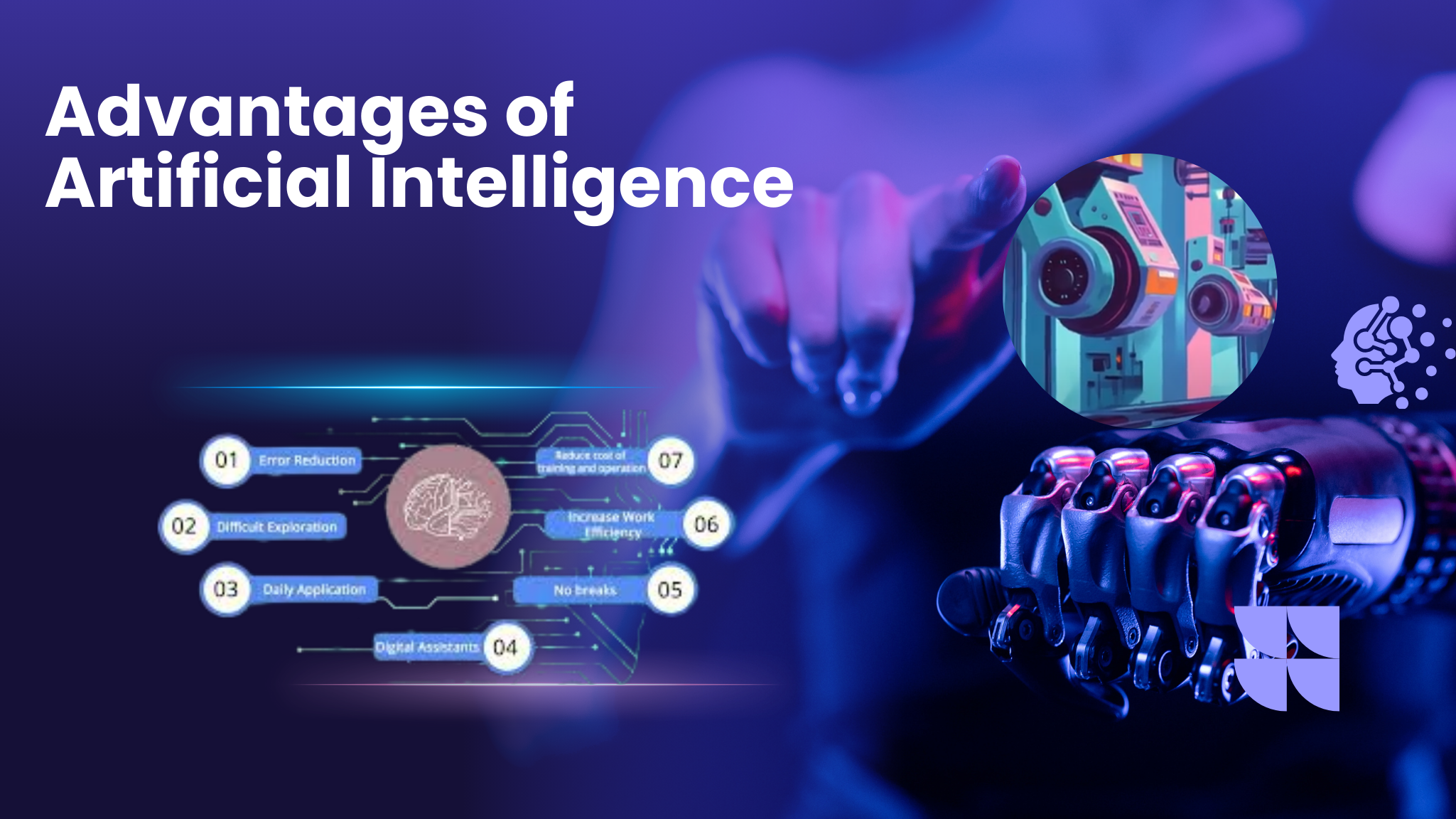
Advantages of Artificial Intelligence: Real-World Applications and Benefits

theAdvantages and biggest challenges of artificial intelligence today https://worldstan.com/advantages-of-artificial-intelligence-real-world-applications-and-benefits/

Artificial intelligence is transforming industries by enabling smarter decision-making, intelligent automation, and personalized experiences, and this article explores the key advantages of artificial intelligence and how its real-world applications are reshaping business, healthcare, finance, and everyday operations.

Advantages of Artificial Intelligence: Driving the Next Era of Intelligent Systems

Artificial intelligence has moved far beyond its early perception as a futuristic concept. Today, it operates at the core of modern digital transformation, reshaping how organizations function, how services are delivered, and how decisions are made. From enterprise operations to everyday consumer interactions, AI has become a foundational technology enabling efficiency, automation, and strategic growth. Its adoption across industries reflects not only technological progress but also a shift toward smarter, data-centric models of work and innovation.

At its core, artificial intelligence refers to systems capable of simulating human intelligence through learning, reasoning, and adaptive decision-making. The advantages of artificial intelligence lie in its ability to process vast amounts of information, identify meaningful patterns, and execute actions with speed and consistency that exceed human limitations. These capabilities have unlocked unprecedented opportunities for businesses, governments, and institutions seeking resilience and competitiveness in an increasingly complex environment.

The Evolution of Efficiency and Automation

One of the most widely recognized AI advantages is its contribution to efficiency and automation. Traditional workflows often rely on manual processes that are time-consuming, error-prone, and difficult to scale. AI automation introduces intelligent systems that can perform repetitive and structured tasks with minimal human intervention, allowing organizations to streamline operations and allocate resources more strategically.

Automation powered by artificial intelligence is not limited to simple rule-based execution. Modern systems learn from historical data, improve over time, and adapt to new conditions. This has transformed areas such as document processing, transaction handling, scheduling, and quality control. Businesses that deploy AI automation frequently report higher operational speed, reduced costs, and improved consistency across processes.

Beyond internal efficiency, automation also enhances service delivery. AI-driven systems ensure faster response times, uninterrupted availability, and uniform performance, all of which contribute to improved customer satisfaction and trust.

Improved Decision Making Through Data Intelligence

Another major benefit of artificial intelligence is its role in improved decision making. In a data-rich world, organizations often struggle not with data scarcity but with data overload. AI systems excel at transforming raw information into actionable insights by analyzing trends, correlations, and anomalies that might otherwise remain hidden.

Data-driven decisions supported by AI reduce reliance on intuition or incomplete analysis. Machine learning applications enable predictive modeling, scenario planning, and real-time assessment of outcomes. This empowers leaders to make informed choices grounded in evidence rather than assumptions.

AI-driven decision support tools are increasingly used in strategic planning, risk assessment, and performance optimization. By continuously learning from new data, these systems provide dynamic insights that evolve alongside market conditions, customer behavior, and operational realities.

Artificial Intelligence in Healthcare: Precision and Predictive Care

Among the most impactful real-world applications of AI is its integration into healthcare systems. AI in healthcare has revolutionized diagnostics, treatment planning, and patient management. Healthcare diagnostics with AI leverage image recognition, natural language processing, and predictive analytics to assist clinicians in identifying diseases at earlier stages and with higher accuracy.

Medical imaging analysis, for example, uses AI to detect subtle patterns in scans that may be overlooked by the human eye. Predictive models analyze patient data to forecast disease progression and recommend preventive interventions. These capabilities not only enhance clinical outcomes but also reduce costs by minimizing unnecessary procedures and hospital readmissions.

AI also supports operational efficiency in healthcare by optimizing scheduling, managing medical records, and improving resource allocation. As a result, providers can deliver higher-quality care while maintaining sustainability in increasingly strained healthcare systems.

AI in Finance: Risk Management and Intelligent Analysis

The financial sector has been one of the earliest adopters of artificial intelligence, recognizing its potential for precision, speed, and risk mitigation. AI in finance plays a critical role in fraud detection using AI, where machine learning models analyze transaction patterns to identify suspicious behavior in real time.

Risk management using AI enables financial institutions to assess creditworthiness, market volatility, and investment risks with greater accuracy. By analyzing historical and real-time data, AI systems provide insights that help organizations anticipate potential threats and respond proactively.

Market analysis using AI has also transformed trading and investment strategies. Automated systems process global financial data, news sentiment, and economic indicators to support faster and more informed decision making. This data-centric approach enhances transparency and stability within financial ecosystems.

Retail Transformation Through AI Personalization

Retail has undergone a significant shift as artificial intelligence enables more personalized and responsive customer experiences. Personalized user experience is now a key competitive differentiator, and AI personalization allows retailers to tailor offerings based on individual preferences, browsing behavior, and purchase history.

Inventory management with AI ensures optimal stock levels by analyzing demand patterns, seasonal trends, and supply constraints. Demand forecasting powered by AI reduces waste, improves availability, and enhances customer satisfaction.

AI in retail also enhances pricing strategies, recommendation engines, and customer engagement channels. By understanding consumer behavior at a granular level, retailers can deliver relevant experiences that foster loyalty and long-term value.

Always-On Support: AI in Customer Service

Customer expectations have evolved toward instant, seamless, and consistent interactions. AI in customer service addresses these demands through 24/7 AI availability and scalable support solutions. AI-powered chatbots provide immediate responses to common inquiries, resolve routine issues, and escalate complex cases to human agents when necessary.

AI customer support systems improve efficiency by reducing wait times and handling high volumes of interactions without compromising quality. Natural language processing enables these systems to understand context, sentiment, and intent, resulting in more meaningful and effective communication.

Over time, AI-powered chatbots learn from interactions, continuously improving accuracy and relevance. This creates a feedback loop that enhances both customer experience and operational performance.

Advanced Data Analysis and Pattern Recognition

A fundamental strength of artificial intelligence lies in data analysis and pattern recognition. AI systems process structured and unstructured data at scale, uncovering insights that drive innovation and strategic advantage. These capabilities are particularly valuable in environments characterized by complexity and rapid change.

Pattern recognition enables predictive maintenance in manufacturing, where AI analyzes sensor data to identify early signs of equipment failure.In supply chain optimization, AI evaluates logistics data to improve routing, supplier selection, and inventory flow. By anticipating disruptions and adjusting plans in real time, organizations can maintain resilience and continuity.

AI in Manufacturing: Intelligent Operations

AI in manufacturing represents a convergence of automation, analytics, and adaptive intelligence. Smart factories use AI to monitor production processes, ensure quality control, and optimize resource utilization. Machine learning applications continuously refine workflows based on performance data, leading to incremental and sustained improvements.

Predictive maintenance is a standout application, allowing manufacturers to transition from reactive to proactive strategies. By predicting when equipment requires servicing, organizations minimize unexpected breakdowns and improve safety.

Supply chain optimization supported by AI enhances coordination across suppliers, distributors, and logistics providers. This holistic view enables manufacturers to respond quickly to market fluctuations and customer demand.

Business Productivity With AI

Across industries, one of the most compelling advantages of artificial intelligence is its impact on business productivity. AI augments human capabilities rather than replacing them, allowing employees to focus on higher-value tasks that require creativity, judgment, and strategic thinking.

Routine activities such as data entry, reporting, and scheduling are increasingly handled by AI systems. This not only improves accuracy but also reduces cognitive load on employees. As a result, organizations benefit from a more engaged and effective workforce.

Machine learning applications support performance management, talent development, and operational planning. By providing insights into productivity drivers and bottlenecks, AI enables continuous improvement across organizational functions.

Ethical and Strategic Considerations

While the benefits of artificial intelligence are substantial, responsible deployment requires thoughtful governance. Transparency, accountability, and fairness are essential to ensuring that AI systems align with societal values and organizational goals.

Ethical AI frameworks guide the development and use of AI technologies, addressing concerns related to bias, privacy, and security. When implemented responsibly, AI enhances trust and supports sustainable innovation.

Strategically, organizations must align AI initiatives with long-term objectives. Successful adoption depends not only on technology but also on culture, skills, and leadership commitment. Investing in data quality, infrastructure, and workforce readiness is critical to unlocking the full potential of AI.

The Expanding Landscape of Real-World Applications of AI

The scope of real-world applications of AI continues to expand as technology matures and integration becomes more seamless. From education and transportation to energy and public services, AI-driven solutions are addressing complex challenges with unprecedented effectiveness.

In logistics, AI optimizes routes and delivery schedules. In energy management, it balances supply and demand to improve efficiency and sustainability. In education, adaptive learning platforms personalize instruction based on individual progress and needs.

These diverse applications underscore the versatility and transformative power of artificial intelligence. As adoption grows, the cumulative impact of AI on productivity, innovation, and quality of life will become increasingly evident.

Conclusion: Why Artificial Intelligence Matters

The advantages of artificial intelligence extend far beyond technological novelty. They represent a fundamental shift in how work is performed, how decisions are made, and how value is created. Through efficiency and automation, improved decision making, and intelligent personalization, AI empowers organizations to operate with greater agility and insight.

From healthcare diagnostics with AI to fraud detection using AI, from AI in manufacturing to AI in customer service, the technology’s influence spans every major industry. Its ability to learn, adapt, and scale makes it a critical enabler of sustainable growth in a data-driven world.

As artificial intelligence continues to evolve, its advantages will become even more pronounced. Organizations that embrace AI thoughtfully and strategically will be better positioned to navigate uncertainty, seize opportunities, and shape the future of intelligent systems.

FAQs:

  • What makes artificial intelligence valuable for modern organizations?
    Artificial intelligence adds value by turning large volumes of data into actionable insights, automating repetitive tasks, and supporting faster, more accurate decision-making across business operations.

  • How does AI improve efficiency compared to traditional automation tools?
    Unlike rule-based systems, AI learns from data and adapts over time, allowing processes to improve continuously and respond intelligently to changing conditions.

  • In what ways is AI transforming customer service experiences?
    AI enables round-the-clock support through chatbots and virtual assistants that resolve common issues instantly while learning from interactions to improve response quality.

  • Why is artificial intelligence important for data-driven decision making?
    AI analyzes complex datasets, identifies patterns, and predicts outcomes, helping organizations make informed decisions based on evidence rather than assumptions.

  • How is AI being applied differently across industries?
    Industries use AI in distinct ways, such as diagnostics and patient monitoring in healthcare, fraud detection and risk assessment in finance, and demand forecasting in retail.

  • What role does machine learning play in artificial intelligence systems?
    Machine learning allows AI systems to learn from historical data, refine their models, and improve performance without being explicitly reprogrammed.

  • Can artificial intelligence help businesses remain competitive in the long term?
    Yes, by increasing productivity, improving customer experiences, and enabling scalable innovation, AI helps organizations adapt to market changes and maintain a competitive edge.

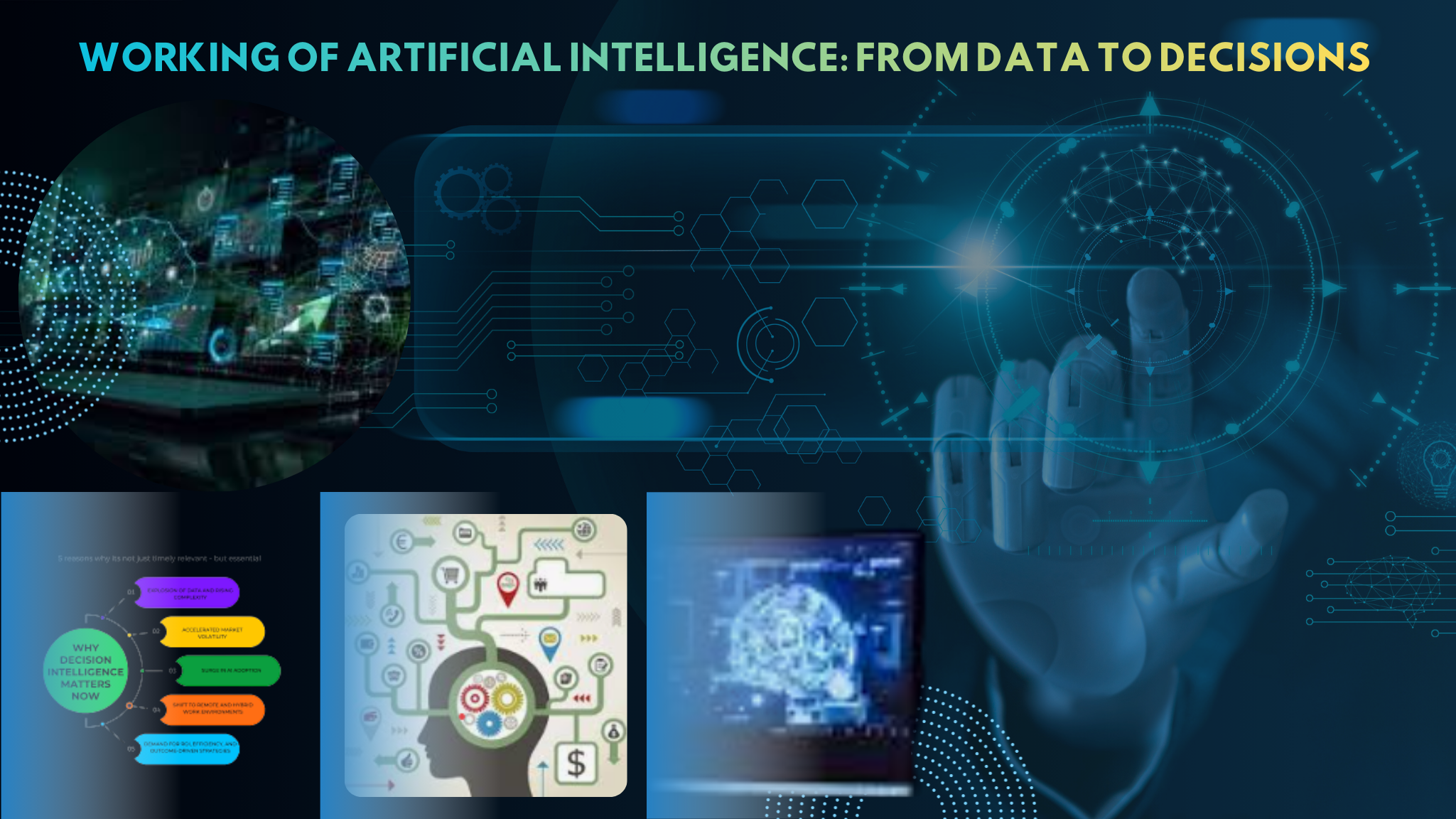
Working of Artificial Intelligence: From Data to Decisions

Working of Artificial Intelligence: From Data to Decisions worldstan.com

This article explains the working of artificial intelligence, examining how AI systems collect data, learn through different models, and make decisions across real-world applications.

Working of Artificial Intelligence: Types, Models, and Learning Explained

Introduction:

Artificial intelligence has transitioned from a speculative concept into a practical foundation for modern digital systems. Governments, enterprises, and individuals increasingly rely on intelligent machines to analyze information, predict outcomes, automate tasks, and support decision-making. To understand why AI has become so influential, it is essential to explore the working of artificial intelligence in a structured and realistic manner. This report presents a comprehensive explanation of how artificial intelligence operates, how AI systems learn from data, and how different forms of intelligence are classified based on capability and design. The discussion reframes familiar concepts using a new structure and professional tone, offering clarity for readers seeking a deeper, yet accessible, understanding.

Foundations of Artificial Intelligence

At its core, artificial intelligence refers to the ability of machines to perform tasks that typically require human intelligence. These tasks include reasoning, learning, perception, pattern recognition, and decision-making. Unlike traditional software, which follows fixed instructions, AI systems adapt their behavior based on data and experience. This adaptability is the defining characteristic that separates AI from conventional rule-based programs.
The working of artificial intelligence begins with a problem statement. Whether the goal is to recognize images, recommend products, drive a vehicle, or forecast market trends, the system must be designed around a specific objective. Engineers translate this objective into a computational framework supported by algorithms, data pipelines, and learning models.

How Artificial Intelligence Works: A System-Level View

Understanding how artificial intelligence works requires examining the interaction between several interconnected components. These components include data collection, data processing, model development, learning mechanisms, and decision execution. Each element plays a distinct role in transforming raw information into actionable intelligence.

Data Collection in AI Systems:
Data serves as the foundation of all AI systems. Without data, artificial intelligence cannot learn, adapt, or make informed decisions. Data collection in AI involves gathering structured and unstructured information from diverse sources such as sensors, databases, user interactions, images, audio recordings, and digital transactions. The quality, relevance, and diversity of this data significantly influence system performance.
In real-world applications, data collection is an ongoing process. For example, self-driving cars continuously capture environmental data through cameras, radar, and lidar sensors. Similarly, AI in gaming records player actions to improve strategic responses. The continuous flow of data enables systems to remain responsive to changing conditions.


AI Data Processing and Preparation:
Raw data is rarely suitable for direct use. AI data processing transforms collected information into a usable format. This step includes cleaning inconsistencies, handling missing values, normalizing inputs, and extracting meaningful features. Data processing ensures that AI algorithms receive accurate and relevant inputs, reducing noise and bias.
Feature engineering plays a central role at this stage. Features represent measurable attributes derived from raw data that help AI models identify patterns. In image classification, for example, features may include shapes, edges, or color distributions. Effective processing enhances learning efficiency and improves prediction accuracy.


AI Algorithms and Model Design:
Algorithms provide the logic that governs how AI systems learn and act. An AI algorithm defines how data is analyzed, how patterns are identified, and how decisions are generated. AI models implement these algorithms within mathematical structures that map inputs to outputs.
Different tasks require different AI models. Pattern recognition systems rely on statistical learning methods, while autonomous systems depend on decision-making models that can operate in uncertain environments. Model selection reflects both the problem domain and performance requirements.


Machine Learning as the Engine of AI:
Machine learning represents the most widely used approach to implementing artificial intelligence. Rather than explicitly programming rules, machine learning allows systems to infer rules from data. The working of artificial intelligence in this context involves training models on historical data so they can generalize to new situations.


Supervised Learning Models:
Supervised learning is based on labeled datasets, where inputs are paired with known outputs. During training, supervised learning models learn to minimize errors between predicted and actual outcomes. This approach is commonly used for tasks such as image classification, speech recognition, and spam detection.
For example, in image classification, a model is trained on thousands of labeled images. Over time, it learns to associate visual features with specific categories. Supervised learning provides high accuracy when labeled data is available, but it requires significant effort in data preparation.


Unsupervised Learning Models:

Unsupervised learning operates without labeled outcomes. Instead, the system identifies hidden structures and relationships within data. Unsupervised learning models are frequently used for clustering, anomaly detection, and pattern discovery.
In customer analytics, unsupervised learning can group users based on behavioral similarities without predefined categories. This capability enables organizations to uncover insights that may not be apparent through manual analysis.


Reinforcement Learning Models:
Reinforcement learning introduces a dynamic learning paradigm where an AI agent interacts with an environment and learns through feedback. Actions are evaluated based on rewards or penalties, guiding the agent toward optimal strategies. Reinforcement learning models are particularly effective in environments that involve sequential decision-making.
AI in gaming provides a well-known example. AlphaGo demonstrated the power of reinforcement learning by mastering the game of Go through repeated self-play. This approach is also central to robotics and AI systems that must adapt to real-time conditions.


AI Decision Making and Execution:
Once trained, AI systems apply learned patterns to make decisions. AI decision making involves evaluating inputs, generating predictions, and selecting actions that align with system objectives. Decision-making models may operate under certainty, probability, or uncertainty, depending on the application.
Autonomous systems such as self-driving cars rely on layered decision-making frameworks. These frameworks integrate perception, prediction, planning, and control. Each layer processes information at different levels of abstraction, ensuring safe and efficient operation.


Feedback and Continuous Improvement in AI:
The working of artificial intelligence does not end with deployment. Feedback and improvement mechanisms allow systems to refine performance over time. User interactions, environmental changes, and performance metrics provide feedback signals that inform model updates.

In many AI systems, continuous learning enables adaptation without complete retraining. Recommendation engines, for instance, update preferences based on recent user behavior. This feedback-driven approach ensures relevance and responsiveness in dynamic environments.

Types of Artificial Intelligence by Capability

Artificial intelligence can be categorized based on its functional scope and level of sophistication. These classifications help clarify what current systems can and cannot achieve.

Narrow AI and Weak AI:
Narrow AI, also referred to as weak AI, is designed to perform specific tasks within a limited domain. Most AI systems in use today fall into this category. Examples include voice assistants, recommendation algorithms, and fraud detection systems.
Although narrow AI can outperform humans in specialized tasks, it lacks general understanding. Its intelligence does not extend beyond the context for which it was trained.


General AI and Strong AI:
General AI, often described as strong AI, represents a theoretical form of intelligence capable of performing any intellectual task that a human can. Such systems would demonstrate reasoning, learning, and adaptability across domains.
Despite significant research efforts, general AI remains a conceptual goal rather than a practical reality. Achieving this level of intelligence would require breakthroughs in cognition, learning efficiency, and ethical alignment.


Superintelligent AI:
Superintelligent AI refers to systems that surpass human intelligence in all aspects, including creativity, problem-solving, and social understanding. This concept raises profound philosophical and ethical questions about control, safety, and societal impact.
While superintelligent AI exists primarily in speculative discussions, its potential implications influence current research in AI governance and safety.

Types of Artificial Intelligence by Functionality

Another way to understand AI systems is through their functional characteristics, which describe how they perceive and respond to their environment.

Reactive Machines:
Reactive machines represent the simplest form of artificial intelligence. They respond to current inputs without memory or learning from past experiences. Early chess programs exemplify this approach, as they evaluate moves based solely on the current board state.


 Limited Memory AI:
Limited memory AI systems can store and use past information for short periods. Most modern AI applications, including self-driving cars, fall into this category. These systems analyze recent data to inform immediate decisions but do not possess long-term understanding.


Theory of Mind AI:
Theory of mind AI refers to systems capable of understanding emotions, beliefs, and intentions. Such capabilities would enable more natural interactions between humans and machines. Although research in this area is ongoing, practical implementations remain limited.


Self-Aware AI:
Self-aware AI represents the most advanced functional classification. These systems would possess consciousness and self-understanding. Currently, self-aware AI exists only as a hypothetical construct and serves as a reference point for ethical and philosophical debate.

Robotics and AI Integration

Robotics and AI combine physical systems with intelligent control. AI enables robots to perceive their environment, plan actions, and adapt to new conditions. Applications range from industrial automation to healthcare assistance.
In autonomous systems, robotics and AI integration is essential. Self-driving cars rely on AI models to interpret sensor data, recognize objects, and navigate complex environments. The success of such systems depends on robust decision-making and real-time learning.

AI Models in Practical Applications

AI models are deployed across diverse sectors, shaping how organizations operate and innovate. In healthcare, AI supports diagnostic imaging and treatment planning. In finance, it enhances risk assessment and fraud prevention. In media, AI drives content personalization and audience engagement.
AI decision-making models must balance accuracy, transparency, and accountability. As reliance on AI grows, understanding the working of artificial intelligence becomes increasingly important for responsible deployment.

Ethical and Operational Considerations

The expansion of AI systems introduces ethical and operational challenges. Bias in data can lead to unfair outcomes, while opaque models may reduce trust. Addressing these issues requires careful design, governance frameworks, and ongoing evaluation.
Transparency in AI decision making helps stakeholders understand how conclusions are reached. Explainable models and audit mechanisms play a crucial role in aligning AI systems with societal values.

Future Outlook of Artificial Intelligence

The future of artificial intelligence will likely involve deeper integration into everyday life. Advances in AI learning models, data processing, and computational power will expand system capabilities. At the same time, regulatory oversight and ethical considerations will shape responsible development.
As research progresses, the boundary between narrow and general intelligence may gradually shift. However, understanding current limitations remains essential for realistic expectations.

Conclusion:

The working of artificial intelligence is a multifaceted process that combines data, algorithms, learning models, and feedback mechanisms. From data collection and processing to decision execution and improvement, each stage contributes to system intelligence. By examining how AI works, the types of artificial intelligence, and the models that enable learning, this report provides a comprehensive and professional perspective on a transformative technology. As artificial intelligence continues to evolve, informed understanding will remain a critical asset for individuals, organizations, and policymakers navigating an increasingly intelligent world.

FAQs:

1. What is meant by the working of artificial intelligence?
The working of artificial intelligence refers to the process through which AI systems collect data, analyze patterns, learn from experience, and generate decisions or predictions without constant human intervention.

2. How does data influence AI system performance?
Data determines how accurately an AI system learns and operates, as high-quality, relevant data enables better pattern recognition, stronger learning outcomes, and more reliable decision-making.

3. Why is machine learning central to modern artificial intelligence?
Machine learning allows AI systems to improve automatically by learning from data rather than relying solely on predefined rules, making them more adaptable to complex and changing environments.

4. What distinguishes supervised, unsupervised, and reinforcement learning?
Supervised learning uses labeled data to predict known outcomes, unsupervised learning identifies hidden structures without labels, and reinforcement learning improves performance through rewards and penalties based on actions taken.

5. Are today’s AI systems capable of independent thinking?
Current AI systems do not possess independent reasoning or consciousness; they operate within defined objectives and rely on data-driven patterns rather than human-like understanding.

6. How do AI systems make decisions in real-world applications?
AI systems evaluate incoming data using trained models, estimate possible outcomes, and select actions based on probability, optimization, or predefined constraints depending on the application.

7. What role does feedback play after an AI system is deployed?
Feedback enables AI systems to refine predictions and adapt to new information, ensuring continued relevance and improved accuracy over time in dynamic environments.

AI in Regulatory Design and Delivery

ai in regulatory design and delivery https://worldstan.com/ai-in-regulatory-design-and-delivery/

This article explores how artificial intelligence is reshaping regulatory design and delivery by enabling data-driven policymaking, adaptive governance, smarter enforcement, and more transparent, accountable regulatory systems across the public sector.

Introduction: The Quiet Reinvention of Regulation

Regulation has always evolved in response to economic change, social complexity, and technological progress. What distinguishes the current moment is the pace and depth of transformation. Artificial intelligence is no longer an experimental tool confined to innovation labs; it is steadily becoming embedded within the machinery of government itself. Across jurisdictions, public authorities are rethinking how rules are designed, implemented, monitored, and enforced. At the center of this shift lies AI in regulatory design and delivery, a concept that signals not just automation, but a reimagining of how governance operates in a data-rich, digitally mediated world.

Rather than replacing human judgment, AI is reshaping the regulatory lifecycle by augmenting analysis, improving responsiveness, and enabling more precise oversight. From early-stage policymaking to frontline regulatory delivery, artificial intelligence is influencing decisions that once relied solely on manual processes and static assumptions. This transformation is redefining regulatory governance, introducing new opportunities while raising fundamental questions about accountability, transparency, and trust.

The Evolution from Static Rules to Adaptive Governance

Traditional regulatory systems were largely built for stability. They relied on periodic reviews, linear policy development, and reactive enforcement models. While effective in predictable environments, these approaches struggle to keep pace with rapidly evolving markets, digital platforms, and cross-border risks. This gap has driven interest in adaptive regulatory governance, where rules and oversight mechanisms evolve continuously based on real-world data.

AI-powered regulation enables this shift by allowing regulators to move beyond retrospective analysis. Machine learning in regulation can identify emerging patterns, forecast risks, and simulate policy outcomes before they materialize. As a result, regulatory design and delivery are becoming more dynamic, evidence-based, and capable of responding to uncertainty without sacrificing legitimacy.

AI in Policymaking and Regulatory Design

The earliest impact of AI is often felt during policy formulation. AI in policymaking supports regulators by analyzing vast datasets that would be impossible to process manually. Economic indicators, market behavior, compliance histories, and public feedback can be synthesized to inform more nuanced regulatory objectives.

Regulatory impact assessment (RIA), a cornerstone of evidence-based policymaking, is being transformed through AI-enabled regulatory assessments. Advanced models can evaluate multiple policy scenarios simultaneously, estimate distributional effects, and test assumptions under different conditions. This allows policymakers to anticipate unintended consequences and design proportionate, risk-based regulation aligned with policy goals.

AI legislative drafting is also gaining traction. Natural language processing (NLP) in regulation can analyze existing legal texts, identify inconsistencies, and suggest standardized language aligned with precedent. While AI-assisted lawmaking does not replace legal expertise, it improves coherence, reduces drafting errors, and accelerates the development of clear and enforceable rules.

Data-Driven Regulation as a New Norm

At the heart of AI in public sector regulation lies data-driven regulation. Regulatory authorities increasingly rely on real-time data streams from businesses, platforms, sensors, and public sources. AI systems process this information to generate insights that inform regulatory priorities and interventions.

In economic and financial oversight, AI in economic regulation supports continuous market monitoring. Algorithms can detect abnormal trading patterns, pricing anomalies, or systemic risks long before traditional reporting mechanisms would flag concerns. AI for market monitoring enhances supervisory capacity while reducing the burden on compliant firms.

This shift has significant implications for regulatory design and delivery. Rather than treating all regulated entities the same, regulators can tailor oversight based on behavior and risk profiles. This enables more targeted interventions and reinforces the principles of proportionality and fairness.

Transforming Regulatory Delivery and Enforcement

While policy design sets the foundation, regulatory delivery determines real-world outcomes. AI for regulatory enforcement is reshaping how rules are implemented and upheld. AI-driven inspections use predictive analytics to prioritize inspections where non-compliance is most likely, improving efficiency and deterrence.

AI compliance monitoring systems continuously analyze data submissions, transaction records, and operational metrics. These systems can identify potential violations in near real time, allowing regulators to intervene early rather than relying solely on post-hoc enforcement. For regulated entities, AI in regulatory compliance offers clearer expectations and faster feedback loops.

Machine learning models also support AI risk modelling by simulating how risks propagate across systems and sectors. This is particularly valuable in areas such as environmental regulation, financial stability, and digital platform oversight, where interconnected risks are difficult to assess through traditional methods.

Enhancing Transparency and Accountability

The increasing use of AI in regulatory governance brings heightened expectations around transparency and accountability. AI and regulatory transparency are essential for maintaining public trust, especially when automated systems influence decisions with legal or economic consequences.

Explainable AI in government has therefore become a critical requirement. Regulators must be able to understand and communicate how AI systems reach conclusions, particularly in enforcement or licensing decisions. Black-box models may offer predictive power, but without interpretability they risk undermining due process and legitimacy.

AI accountability in regulation extends beyond technical design. Clear governance structures are needed to define responsibility for AI-driven decisions, ensure oversight, and provide mechanisms for appeal and redress. This requires integrating AI governance frameworks into existing legal and institutional arrangements rather than treating them as separate technical issues.

Ethical AI and Data Governance in the Regulatory State

Ethical AI in regulation is not an abstract principle; it is a practical necessity. Bias, discrimination, and data misuse can have serious consequences when embedded in regulatory systems. AI data governance frameworks establish rules for data quality, access, security, and use, ensuring that regulatory AI systems operate within legal and ethical boundaries.

Public sector regulators must also consider the societal implications of automation. AI in public administration should reinforce inclusiveness, not create new barriers for smaller firms or vulnerable communities. This requires careful attention to how data is collected, how models are trained, and how outcomes are evaluated over time.

International organizations such as the OECD have provided valuable guidance in this area. OECD AI regulatory guidance emphasizes human-centered design, robustness, and accountability, offering a shared reference point for governments navigating AI adoption in regulation.

Digital Regulation Tools and Stakeholder Engagement

Beyond internal processes, AI is changing how regulators interact with the public. Digital regulation tools are enabling more accessible and responsive stakeholder engagement. AI chatbots for public consultation can provide information, gather feedback, and guide users through complex regulatory frameworks at scale.

AI for stakeholder engagement also supports more inclusive policymaking. NLP tools can analyze large volumes of consultation responses, identifying themes and concerns that might otherwise be overlooked. This enhances the quality of input into regulatory design and strengthens democratic participation.

These capabilities are particularly valuable in complex regulatory domains, where traditional consultation methods struggle to capture diverse perspectives. By improving communication and feedback, AI contributes to more legitimate and effective regulatory outcomes.

AI Governance Challenges and Institutional Readiness

Despite its potential, AI and regulatory innovation face significant challenges. Institutional capacity, legal constraints, and cultural resistance can slow adoption. Many regulators lack the technical expertise needed to evaluate AI systems, manage vendors, or oversee algorithmic decision-making.

AI governance challenges also include interoperability between systems, cross-border coordination, and alignment with existing legal frameworks. As AI-enabled regulatory assessments become more common, questions arise about standardization, validation, and auditability.

Risk-based regulation offers a pragmatic pathway forward. By aligning the intensity of oversight with the potential impact of AI systems, regulators can balance innovation with safeguards. This approach recognizes that not all AI applications pose the same level of risk and allows resources to be allocated accordingly.

Building Future-Ready Regulatory Frameworks

Future-ready regulatory frameworks are those capable of learning and adaptation. They combine human expertise with AI-enabled tools to manage complexity without losing sight of public values. AI in regulatory design and delivery plays a central role in this vision by supporting continuous improvement rather than episodic reform.

Such frameworks require investment in skills, infrastructure, and governance. Training regulators in data literacy, algorithmic oversight, and ethical reasoning is as important as deploying new technologies. Collaboration between governments, academia, and industry can also accelerate learning and reduce duplication of effort.

Importantly, future-ready regulation is not about maximizing automation. It is about using AI where it adds value, while preserving human judgment where discretion, empathy, and contextual understanding are essential.

The Strategic Role of AI in Regulatory Innovation

AI and regulatory innovation are increasingly intertwined. As markets become more digital and data-intensive, regulators must innovate to remain effective. AI offers tools to manage scale, speed, and complexity, but innovation must be guided by clear policy objectives.

AI in regulatory design and delivery enables regulators to shift from reactive compliance models to proactive stewardship. By anticipating risks, engaging stakeholders, and continuously refining rules, regulatory systems can better support economic growth, social welfare, and environmental sustainability.

This transformation also positions regulation as an enabler rather than a constraint. When designed and delivered intelligently, regulation can foster trust, reduce uncertainty, and create a level playing field for innovation.

Conclusion: Governing with Intelligence and Integrity

The integration of AI into regulatory governance marks a defining chapter in the evolution of the modern state. From AI in policymaking and legislative drafting to AI-driven inspections and compliance monitoring, artificial intelligence is reshaping every stage of the regulatory lifecycle.

Yet technology alone does not guarantee better outcomes. The success of AI-powered regulation depends on thoughtful design, robust governance, and a commitment to transparency and accountability. Ethical AI in regulation, supported by strong data governance and explainable systems, is essential for maintaining public trust.

As governments confront increasingly complex challenges, AI in regulatory design and delivery offers a pathway toward smarter, more adaptive, and more resilient governance. By embracing innovation while upholding democratic values, regulators can build systems that are not only efficient, but legitimate and future-ready.

FAQs:

1. What does AI in regulatory design and delivery actually mean?
It refers to the use of artificial intelligence across the entire regulatory lifecycle, from policy formulation and impact assessment to implementation, monitoring, and enforcement, enabling more responsive and evidence-based governance.

2. How is AI changing the way regulations are developed?
AI supports regulators by analyzing large datasets, simulating policy outcomes, and identifying risks early, allowing regulatory frameworks to be designed with greater precision and adaptability.

3. Can AI improve regulatory compliance without increasing burdens on businesses?
Yes, AI enables continuous compliance monitoring and risk-based oversight, allowing regulators to focus on high-risk areas while reducing unnecessary reporting and inspections for compliant entities.

4. What role does transparency play in AI-driven regulation?
Transparency ensures that AI-supported regulatory decisions can be explained, reviewed, and trusted, particularly when automated systems influence enforcement actions or market oversight.

5. How do governments manage risks associated with AI in regulation?
Governments apply governance frameworks, ethical guidelines, and data governance standards to ensure AI systems are accountable, secure, and aligned with legal and public interest objectives.

6. Is AI being used only in enforcement, or also in public engagement?
AI is increasingly used in public consultations and stakeholder engagement, where digital tools help analyze feedback, provide guidance, and make regulatory processes more accessible.

7. What makes a regulatory framework future-ready in the age of AI?
A future-ready framework combines human expertise with AI-enabled tools, supports continuous learning, adapts to emerging risks, and maintains strong safeguards for fairness, accountability, and trust.

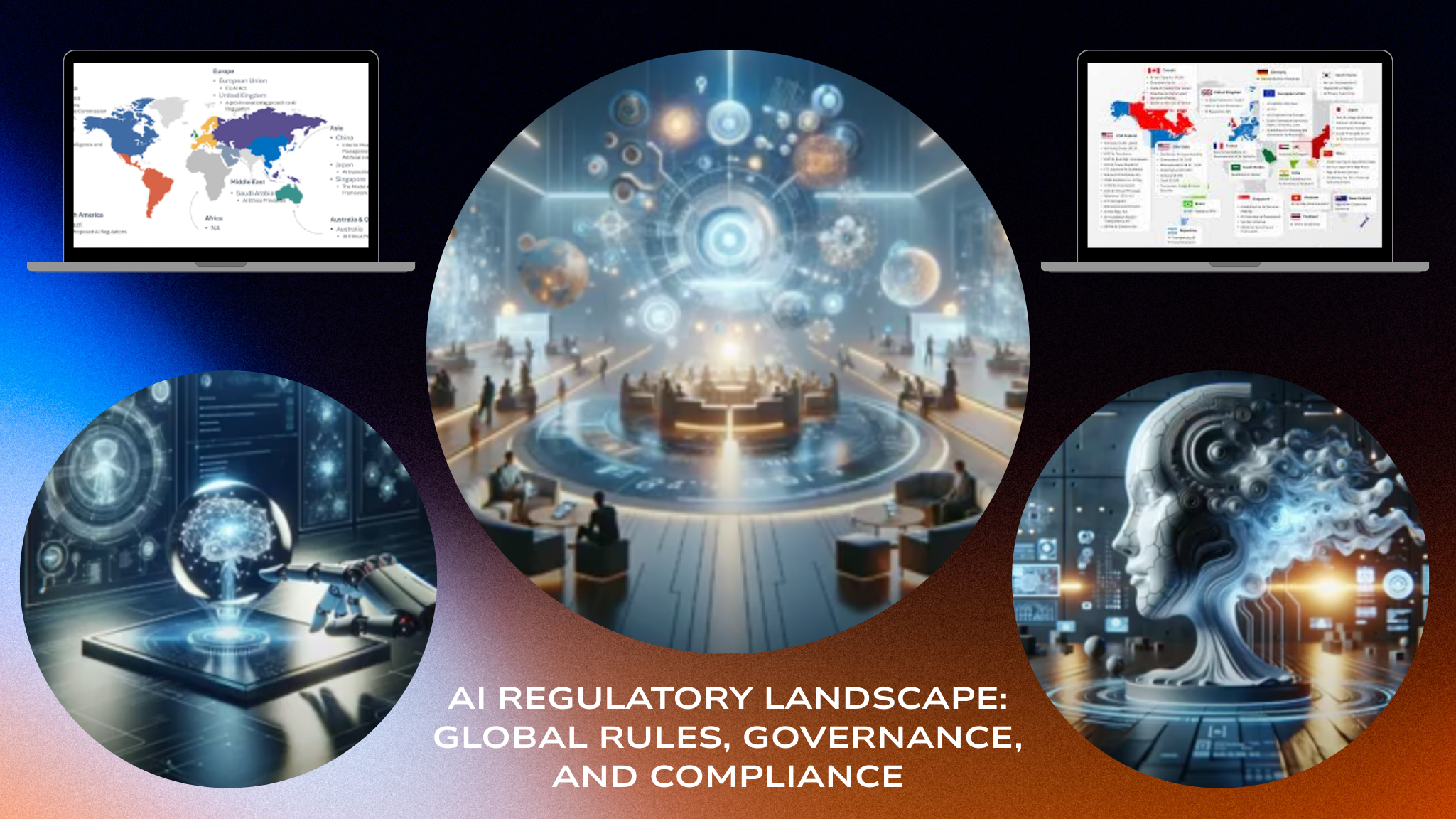
AI Regulatory Landscape: Global Rules, Governance, and Compliance

ai regulatory landscape global rules, governance, and compliance https://worldstan.com/ai-regulatory-landscape-global-rules-governance-and-compliance/

This article examines the evolving AI regulatory landscape, exploring global regulations, governance frameworks, and compliance strategies that are shaping how artificial intelligence is developed, deployed, and managed across industries.

AI Regulatory Landscape: Navigating Governance, Compliance, and Global Policy Shifts

Artificial intelligence has moved from experimental innovation to foundational infrastructure across industries. From automated decision-making systems and predictive analytics to generative models reshaping content creation, AI is now deeply embedded in how organizations operate, compete, and scale. As adoption accelerates, governments, regulators, and international bodies are responding with an expanding body of rules, principles, and enforcement mechanisms. This evolving AI regulatory landscape is redefining how technology is designed, deployed, and governed worldwide.

Understanding AI regulations is no longer a theoretical concern reserved for policymakers. It has become a strategic priority for enterprises, startups, investors, and technology leaders. Artificial intelligence regulation influences product design, market access, risk exposure, and long-term business sustainability. Organizations that fail to align with emerging AI law and policy frameworks risk operational disruption, legal penalties, and reputational damage.

This report provides a comprehensive examination of global AI regulations, the principles shaping AI governance, and the practical implications for businesses operating in an increasingly regulated environment. It explores regional regulatory models, ethical considerations, compliance strategies, and the future trajectory of AI legislation.

The Rise of AI Regulation as a Global Priority

For much of its early development, AI progressed faster than the legal systems designed to oversee it. Innovation thrived in a relatively unregulated space, allowing rapid experimentation but also exposing gaps in accountability, transparency, and public trust. High-profile failures involving algorithmic bias, data misuse, opaque decision-making, and unintended societal harm prompted governments to intervene.

Artificial intelligence regulation emerged as a response to three converging pressures. First, AI systems increasingly influence fundamental rights, including privacy, equality, access to services, and freedom of expression. Second, the economic and strategic importance of AI created concerns about market dominance, national security, and technological sovereignty. Third, the scale and autonomy of advanced systems raised questions about safety, control, and long-term risk.

As a result, AI governance is now viewed as a critical component of digital policy. Rather than banning innovation, most regulators aim to guide responsible AI development while preserving competitiveness. This balance defines the current AI regulatory landscape.

Defining the Scope of AI Governance

AI governance refers to the structures, processes, and rules that ensure artificial intelligence systems are developed and used in ways that align with legal requirements, ethical values, and societal expectations. It extends beyond compliance checklists to include organizational culture, risk management, and accountability mechanisms.

An effective AI governance framework typically addresses several core dimensions. These include data governance and AI data privacy, model design and validation, human oversight, transparency, and post-deployment monitoring. Governance also involves assigning responsibility for AI outcomes, clarifying liability, and ensuring explainability in automated decision-making.

As AI systems become more complex, governance models increasingly emphasize lifecycle oversight. This means regulation and compliance are not limited to deployment but apply from data collection and model training through continuous updates and real-world use.

Ethical AI as a Regulatory Foundation

Ethical AI is not a standalone concept separate from regulation. It forms the philosophical foundation upon which many AI laws and policies are built. Principles such as fairness, accountability, transparency, and human-centric design are embedded in regulatory texts across jurisdictions.

Algorithmic bias in AI has been one of the most significant drivers of ethical regulation. Biased training data and poorly designed models have led to discriminatory outcomes in hiring, lending, healthcare, and law enforcement. Regulators now expect organizations to actively assess, mitigate, and document bias risks.

Explainable AI plays a crucial role in ethical compliance. When AI systems affect individuals’ rights or opportunities, decision-making processes must be understandable to users, regulators, and affected parties. Transparency is no longer optional; it is a legal and ethical requirement in many regions.

Ethical AI also intersects with AI accountability. Organizations must be able to explain not only how a system works but who is responsible when it causes harm. This shift places governance obligations squarely on leadership, not just technical teams.

Global AI Regulations: A Fragmented but Converging Landscape

While AI regulation is global in scope, its implementation varies significantly by region. Different political systems, cultural values, and economic priorities have shaped distinct regulatory models. At the same time, there is growing convergence around shared principles, particularly through international cooperation.

The European Union has positioned itself as a global leader in artificial intelligence regulation. The EU AI Act represents the most comprehensive attempt to regulate AI through binding legislation. It adopts a risk-based approach, categorizing AI systems according to their potential impact on individuals and society.

Under this framework, certain uses of AI are prohibited outright, while others are classified as high-risk and subject to strict compliance obligations. These include requirements for risk management, data quality, documentation, human oversight, and post-market monitoring. The EU AI Act also interacts with existing laws such as GDPR, reinforcing AI data privacy and individual rights.

In contrast, US AI regulations have historically favored sector-specific and principle-based approaches. Rather than a single comprehensive AI law, the United States relies on existing regulatory agencies, industry guidance, and executive actions. This model emphasizes innovation and flexibility but creates complexity for organizations operating across industries.

China AI governance reflects a different set of priorities, focusing on social stability, state oversight, and alignment with national objectives. Chinese regulations address algorithmic recommendation systems, data security, and content control, placing strong obligations on platform providers and AI developers.

At the international level, organizations such as the OECD and the United Nations play a coordinating role. OECD AI principles promote responsible AI development through values-based guidance adopted by many countries. United Nations AI governance initiatives focus on human rights, sustainable development, and global cooperation, particularly for emerging economies.

AI Legislation and Its Impact on Businesses

AI legislation is reshaping how organizations approach innovation, risk, and growth. Compliance is no longer limited to regulated industries such as finance or healthcare. Any business using AI-driven systems must assess its exposure to regulatory risk.

For enterprises, AI compliance strategies are becoming integral to corporate governance. Boards and executive teams are expected to understand AI risks, allocate resources for compliance, and ensure oversight mechanisms are in place. Enterprise AI governance now intersects with cybersecurity, data protection, and ESG reporting.

Startups face a different set of challenges. AI regulation for startups can appear burdensome, particularly when resources are limited. However, early alignment with regulatory expectations can become a competitive advantage. Investors increasingly evaluate AI governance maturity as part of due diligence, and compliance readiness can accelerate market entry in regulated jurisdictions.

AI compliance for businesses also affects product development timelines. Regulatory requirements for documentation, testing, and validation must be integrated into software development lifecycles. AI software development services are evolving to include compliance-by-design, ensuring regulatory alignment from the outset rather than as an afterthought.

AI Risk Management and Regulatory Alignment

Risk management is at the heart of artificial intelligence regulation. Regulators expect organizations to identify, assess, and mitigate risks associated with AI systems. These risks may include technical failures, biased outcomes, data breaches, or unintended societal consequences.

AI risk management frameworks typically combine technical controls with organizational processes. This includes model testing, impact assessments, audit trails, and incident response plans. High-risk AI applications often require formal assessments before deployment, similar to environmental or financial risk reviews.

AI regulatory risk extends beyond fines or enforcement actions. Non-compliance can lead to product bans, loss of consumer trust, and long-term brand damage. As AI systems become more visible to regulators and the public, scrutiny will continue to increase.

Transparency plays a key role in risk mitigation. Organizations that can clearly document how AI systems function, what data they use, and how decisions are made are better positioned to respond to regulatory inquiries and public concerns.

Sector-Specific AI Regulation

While many AI laws apply broadly, sector-specific AI regulation is becoming increasingly common. Industries such as healthcare, finance, transportation, and education face tailored requirements due to the sensitivity and impact of AI applications.

In healthcare, AI regulation focuses on patient safety, clinical validation, and data privacy. Medical AI systems may be subject to approval processes similar to medical devices, requiring extensive testing and documentation.

Financial services regulators emphasize fairness, explainability, and consumer protection. AI-driven credit scoring, fraud detection, and algorithmic trading systems must comply with existing financial regulations while addressing AI-specific risks.

In transportation, autonomous systems raise questions about liability, safety standards, and human oversight. Regulators are developing frameworks to govern testing, deployment, and accountability for AI-driven vehicles and infrastructure.

These sector-specific approaches add complexity to the global AI regulatory landscape, particularly for organizations operating across multiple domains.

AI Governance Frameworks in Practice

Translating regulatory requirements into operational reality requires robust AI governance frameworks. These frameworks align legal obligations with internal policies, technical standards, and organizational roles.

A mature AI governance framework typically includes clear ownership structures, such as AI ethics committees or governance boards. It defines processes for approving AI projects, monitoring performance, and addressing incidents. Training and awareness programs ensure that employees understand their responsibilities.

Governance also involves collaboration between technical, legal, compliance, and business teams. AI law and policy cannot be implemented in isolation; it must be integrated into decision-making across the organization.

As regulations evolve, governance frameworks must remain adaptable. Continuous monitoring of regulatory developments and proactive engagement with policymakers are essential for long-term compliance.

Strategic Implications for AI-Driven Business Growth

Contrary to fears that regulation stifles innovation, effective AI governance can support sustainable growth. Clear rules reduce uncertainty, build trust, and create a level playing field. Organizations that invest in responsible AI development are better positioned to scale globally and form strategic partnerships.

AI strategy and compliance are increasingly interconnected. Regulatory considerations influence decisions about market entry, product design, and technology investment. Businesses that treat compliance as a strategic function rather than a cost center gain resilience in a rapidly changing environment.

AI-driven business growth depends not only on technical capability but also on public confidence. Transparent, accountable, and ethical AI systems are more likely to be adopted by customers, regulators, and society at large.

The Future of the AI Regulatory Landscape

The AI regulatory landscape will continue to evolve as technology advances and societal expectations shift. Emerging topics such as foundation models, generative AI, and autonomous decision-making will require new regulatory approaches.

International coordination is likely to increase, driven by the global nature of AI development and deployment. While regulatory fragmentation will persist, shared principles and interoperability mechanisms may reduce compliance complexity over time.

For organizations, the challenge is not to predict every regulatory change but to build flexible governance systems capable of adapting. Responsible AI, robust risk management, and transparent operations will remain central to compliance regardless of jurisdiction.

Conclusion:

The global expansion of artificial intelligence has transformed regulation from an afterthought into a strategic imperative. The AI regulatory landscape encompasses legal frameworks, ethical principles, and governance structures designed to ensure that AI serves human interests while minimizing harm.

From the EU AI Act and GDPR to US AI regulations, China AI governance, and international initiatives led by the OECD and United Nations, artificial intelligence regulation is shaping the future of technology and business. Organizations that understand and engage with these developments will be better equipped to navigate risk, maintain trust, and unlock AI-driven growth.

As AI continues to redefine industries and societies, governance, compliance, and responsibility will determine not only what is possible, but what is acceptable. In this environment, regulatory alignment is not a barrier to innovation—it is a foundation for its sustainable success.

FAQs:

1. Why is the AI regulatory landscape evolving so rapidly?

The pace of AI regulation is accelerating because artificial intelligence systems are increasingly influencing economic decisions, public services, and individual rights, prompting governments to establish clearer rules for accountability, safety, and ethical use.

2. How do global AI regulations differ across regions?

Global AI regulations vary based on regional priorities, with some jurisdictions focusing on risk-based governance, others emphasizing innovation-friendly oversight, and some adopting strong state-led controls to manage data, algorithms, and content.

3. What types of AI systems are most affected by regulation?

AI systems that impact fundamental rights, safety, or access to essential services—such as those used in finance, healthcare, recruitment, surveillance, or autonomous operations—are typically subject to the highest regulatory scrutiny.

4. How can organizations prepare for AI compliance requirements?

Organizations can prepare by implementing AI governance frameworks, conducting risk assessments, documenting AI lifecycle decisions, and embedding transparency and human oversight into system design and deployment.

5. What role does ethical AI play in regulatory compliance?

Ethical AI principles such as fairness, explainability, and accountability form the foundation of many AI laws, making responsible AI development essential for meeting both legal obligations and societal expectations.

6. Do AI regulations apply to startups and small businesses?

Yes, AI regulations generally apply regardless of company size, although compliance obligations may scale based on risk level, use case, and the potential impact of AI systems on users or the public.

7. How will AI regulation shape future innovation?

Rather than limiting progress, well-designed AI regulation is expected to encourage sustainable innovation by building trust, reducing uncertainty, and creating clear standards for responsible AI adoption.

AI Regulation: How Artificial Intelligence Is Governed

ai regulation https://worldstan.com/ai-regulation-how-artificial-intelligence-is-governed/

This article examines how AI regulation is evolving worldwide, exploring the policies, governance frameworks, and risk-based approaches shaping the responsible development and oversight of artificial intelligence.

AI Regulation in a Transforming World: How Artificial Intelligence Can Be Governed Responsibly

Artificial intelligence is no longer a future concept confined to research laboratories or speculative fiction. It is embedded in everyday decision-making systems, from credit scoring and medical diagnostics to content moderation and autonomous vehicles. As AI systems gain autonomy, scale, and influence, societies across the world are grappling with a critical question: how can AI be regulated in a way that protects public interest without stifling innovation?

AI regulation has become a defining policy challenge of the digital age. Unlike earlier technologies, artificial intelligence evolves dynamically, learns from vast datasets, and can produce outcomes that even its creators cannot always predict. This reality demands a rethinking of traditional technology regulation models. Effective AI governance must address not only technical risks, but also ethical, legal, economic, and societal implications.

This report examines how regulating artificial intelligence can be approached through outcome-based frameworks, risk management strategies, and international cooperation. It explores emerging AI laws, oversight mechanisms, and governance best practices, while analyzing the challenges of AI regulation in a rapidly changing technological environment.

Understanding the Need for AI Regulation

The case for artificial intelligence regulation is grounded in the scale and impact of AI-driven decisions. Algorithms increasingly influence who gets hired, who receives loans, which content is amplified online, and how public resources are allocated. When these systems fail, the consequences can be widespread, opaque, and difficult to reverse.

AI risks and harms can manifest in multiple ways. Bias in AI systems may reinforce discrimination. Deepfakes can undermine democratic processes and public trust. Automated decision systems may deny individuals access to essential services without meaningful explanation or recourse. These risks are amplified when AI systems operate at scale across borders and industries.

AI regulation seeks to establish guardrails that ensure responsible AI use while enabling innovation. The goal is not to halt technological progress, but to align it with societal values, human rights, and consumer protections. Effective AI policy provides clarity for developers, safeguards for users, and accountability mechanisms for those deploying AI systems.

The Unique Challenges of Regulating Artificial Intelligence

Regulating AI presents challenges that differ significantly from those associated with earlier technologies. Traditional laws are often static, while AI systems evolve continuously through updates, retraining, and emergent behavior. This mismatch complicates enforcement and compliance.

One of the most persistent AI regulation challenges is definitional ambiguity. Artificial intelligence encompasses a broad spectrum of systems, from simple rule-based automation to complex general-purpose AI models. Crafting AI laws that are precise yet flexible enough to cover this diversity is an ongoing struggle for policymakers.

Another challenge lies in opacity. Many advanced AI models operate as black boxes, making it difficult to assess AI transparency, traceability, and testability. Without insight into how decisions are made, assigning AI accountability or liability becomes problematic. Regulators must therefore balance technical feasibility with legal expectations.

Finally, AI regulation must contend with jurisdictional fragmentation. AI systems often operate globally, while laws remain national or regional. This creates inconsistencies in AI compliance requirements and raises questions about enforcement, cross-border liability, and regulatory arbitrage.

From Rules to Outcomes: A Shift in Regulatory Philosophy

One emerging approach to AI regulation emphasizes outcomes rather than prescriptive technical rules. Outcome-based AI regulation focuses on the real-world impact of AI systems instead of dictating specific design choices.

Under this model, regulators assess whether an AI system causes harm, violates rights, or creates unacceptable risks, regardless of how it is technically implemented. This approach allows flexibility for innovation while maintaining accountability for societal impact. Regulating AI based on impact is particularly relevant for rapidly evolving general-purpose AI systems.

Outcome-based frameworks also support proportionality. Low-risk applications, such as AI-powered photo enhancement tools, may face minimal oversight, while high-risk systems used in healthcare, policing, or financial services are subject to stricter requirements. This tiered approach recognizes that not all AI systems pose the same level of risk.

Risk-Based AI Regulatory Frameworks

Risk-based regulation has emerged as a central pillar of modern AI governance. These frameworks classify AI systems according to their potential risks and assign obligations accordingly. AI risk management becomes a continuous process rather than a one-time compliance exercise.

High-risk AI systems typically require rigorous testing, documentation, and monitoring. This includes ensuring AI testability, validating training data, and implementing safeguards against bias and system failures. Developers and deployers may be required to conduct impact assessments and maintain audit trails to support AI traceability.

Lower-risk systems may face lighter requirements, such as transparency disclosures or voluntary codes of conduct. This graduated approach helps allocate regulatory resources effectively while reducing unnecessary burdens on innovation.

Transparency, Accountability, and Trust

Public trust is a cornerstone of sustainable AI adoption. Without confidence in how AI systems operate, individuals and institutions may resist their deployment, regardless of potential benefits. AI transparency plays a critical role in building that trust.

Transparency does not necessarily mean revealing proprietary algorithms. Rather, it involves providing meaningful explanations of AI decision-making processes, limitations, and potential risks. Users should understand when they are interacting with an AI system and how decisions affecting them are made.

AI accountability frameworks complement transparency by clarifying who is responsible when AI systems cause harm. Accountability mechanisms may include human oversight requirements, internal governance structures, and clear lines of responsibility across the AI lifecycle. Without accountability, transparency alone is insufficient.

Liability and Legal Responsibility in AI Systems

AI liability remains one of the most complex aspects of AI regulation. When an AI system causes harm, determining responsibility can involve multiple actors, including developers, data providers, system integrators, and end users.

Traditional liability models are often ill-suited to AI-driven harms, particularly when systems exhibit emergent behavior not explicitly programmed by humans. Policymakers are exploring new approaches that distribute liability based on control, foreseeability, and risk allocation.

Clear AI liability rules can also incentivize safer design practices. When organizations understand their legal exposure, they are more likely to invest in robust testing, monitoring, and governance. Liability frameworks thus function as both corrective and preventive tools within AI oversight regimes.

Ethical AI Regulation and Responsible Use

Ethical considerations are integral to artificial intelligence regulation. Ethical AI regulation seeks to embed principles such as fairness, non-discrimination, human autonomy, and respect for privacy into enforceable standards.

Responsible AI use extends beyond compliance with laws. It involves organizational cultures that prioritize long-term societal impact over short-term gains. Many AI governance best practices emphasize ethics committees, stakeholder engagement, and continuous evaluation of ethical risks.

However, ethical principles alone are insufficient without enforcement. Translating ethical commitments into measurable requirements is one of the central challenges of AI regulation. This requires collaboration between technologists, ethicists, lawyers, and policymakers.

AI Training Data and System Integrity

Training data is the foundation of most AI systems, and its quality directly influences outcomes. AI training data regulation addresses issues such as data provenance, representativeness, and consent.

Poor-quality or biased datasets can lead to discriminatory outcomes, undermining both system performance and public trust. Regulatory approaches increasingly emphasize documentation of data sources, processes for bias mitigation, and mechanisms for correcting errors.

Data governance is also closely linked to AI safety and governance. Secure data handling, protection against data poisoning, and safeguards for sensitive information are essential components of responsible AI deployment.

General-Purpose AI and Emerging Risks

General-purpose AI systems present unique regulatory challenges due to their adaptability across multiple domains. Unlike narrow AI applications, these systems can be repurposed in ways not anticipated by their creators.

General-purpose AI regulation must therefore account for downstream uses and potential misuse. This includes risks associated with deepfakes, automated misinformation, and large-scale manipulation. Deepfakes and AI regulation have become particularly urgent as synthetic media grows increasingly realistic and accessible.

Regulators are exploring obligations for developers of general-purpose AI to assess and mitigate foreseeable risks, even when specific applications are determined by third parties.

National and Regional AI Regulation Frameworks

AI regulation frameworks by country vary significantly, reflecting different legal traditions, economic priorities, and cultural values. While some regions emphasize innovation incentives, others prioritize precaution and consumer protection.

The European Union has pioneered a comprehensive risk-based approach, introducing AI regulation tiers that classify systems according to their potential harm. This model emphasizes conformity assessments, transparency obligations, and strong enforcement mechanisms.

Canada has pursued algorithm regulation focused on accountability and impact assessments, particularly within the public sector. Other jurisdictions are adopting hybrid models that combine voluntary guidelines with binding requirements.

Despite these differences, convergence is gradually emerging around core principles such as risk proportionality, transparency, and accountability.

AI Governance Within Organizations

Effective AI governance extends beyond government regulation. Organizations deploying AI systems must establish internal frameworks to manage risks, ensure compliance, and uphold ethical standards.

AI governance best practices include clear policies on system development and deployment, defined roles for oversight, and ongoing monitoring of system performance. Internal audits and third-party assessments can enhance AI accountability and traceability.

Governance is not a one-time exercise. As AI systems evolve, governance structures must adapt. This need for continuous oversight underscores the concept of eternal vigilance in AI regulation.

Consumer Rights and Societal Impact

AI regulation is ultimately about protecting people. AI and consumer rights are increasingly central to regulatory debates, particularly in contexts where automated decisions affect access to essential services.

Individuals should have the right to understand, challenge, and seek redress for AI-driven decisions that impact them. These protections help balance power asymmetries between large technology providers and users.

Beyond individual rights, AI regulation must consider broader societal impact. This includes effects on labor markets, democratic institutions, and social cohesion. AI regulation and societal impact assessments can help policymakers anticipate and mitigate systemic risks.

Technology Regulation Models and Lessons Learned

Historical approaches to technology regulation offer valuable lessons for AI policy. Overly rigid rules can stifle innovation, while laissez-faire approaches may allow harms to proliferate unchecked.

Successful technology regulation models often combine clear standards with adaptive mechanisms. Regulatory sandboxes, for example, allow experimentation under supervision, enabling learning without exposing the public to undue risk.

AI regulation benefits from similar flexibility. Adaptive frameworks that evolve alongside technology are better suited to managing long-term risks than static rules.

The Role of Oversight and Enforcement

AI oversight is essential to ensure that regulatory frameworks translate into real-world protections. Without enforcement, even well-designed AI laws risk becoming symbolic.

Oversight mechanisms may include dedicated regulatory bodies, cross-sector coordination, and international cooperation. Given the global nature of AI, information sharing and harmonization of standards are increasingly important.

Enforcement should also be proportionate. Excessive penalties may discourage innovation, while weak enforcement undermines credibility. Striking the right balance is a central challenge of AI regulation.

The Path Forward: Regulating AI in a Dynamic Landscape

AI regulation is not a destination but an ongoing process. As artificial intelligence continues to evolve, so too must the frameworks that govern it. Policymakers, industry leaders, and civil society all have roles to play in shaping responsible AI futures.

Future AI policy will likely emphasize outcome-based approaches, continuous risk assessment, and shared responsibility. Advances in AI transparency and testability may enable more effective oversight, while international collaboration can reduce fragmentation.

Ultimately, the success of AI regulation depends on its ability to protect public interest while fostering innovation. By focusing on impact, accountability, and trust, societies can harness the benefits of artificial intelligence while managing its risks.

Conclusion:

AI regulation has emerged as one of the most consequential governance challenges of the modern era. Regulating artificial intelligence requires new thinking that moves beyond traditional legal frameworks and embraces adaptability, proportionality, and ethical responsibility.

Through risk-based and outcome-focused approaches, AI governance can address emerging threats such as bias, system failures, and deepfakes while supporting beneficial innovation. Transparency, accountability, and liability are essential pillars of this effort, reinforcing public trust in AI systems.

As artificial intelligence continues to shape economies and societies, effective AI regulation will determine whether this technology serves as a force for shared progress or unchecked disruption. The path forward demands vigilance, collaboration, and a commitment to aligning AI with human values.

FAQs:

1. What is the primary goal of AI regulation?

The primary goal of AI regulation is to ensure that artificial intelligence systems are developed and used in ways that protect public safety, fundamental rights, and societal interests while still allowing innovation to progress.


2. Why is regulating artificial intelligence more complex than regulating traditional software?

AI systems can learn, adapt, and behave unpredictably based on data and context, making it harder to define static rules and assign responsibility compared to conventional, deterministic software.


3. How do governments determine which AI systems require strict oversight?

Most regulatory frameworks classify AI systems based on risk and impact, with stricter oversight applied to systems that influence critical areas such as healthcare, finance, law enforcement, or public services.


4. What role does transparency play in AI governance?

Transparency enables users, regulators, and affected individuals to understand how AI systems operate, identify potential risks or biases, and hold organizations accountable for AI-driven decisions.


5. How does AI regulation address bias and discrimination?

AI regulation addresses bias by requiring better data governance, testing for discriminatory outcomes, and implementing safeguards that reduce the risk of unfair or unequal treatment by automated systems.


6. Are companies legally responsible when AI systems cause harm?

Liability rules are evolving, but many AI laws aim to clarify responsibility by assigning legal accountability to developers, deployers, or operators based on their level of control over the system.


7. Will AI regulation slow down innovation?

Well-designed AI regulation is intended to support sustainable innovation by reducing risks, increasing public trust, and providing clearer rules that help organizations deploy AI responsibly.