
Satellite Constellations Transform Global Surveillance
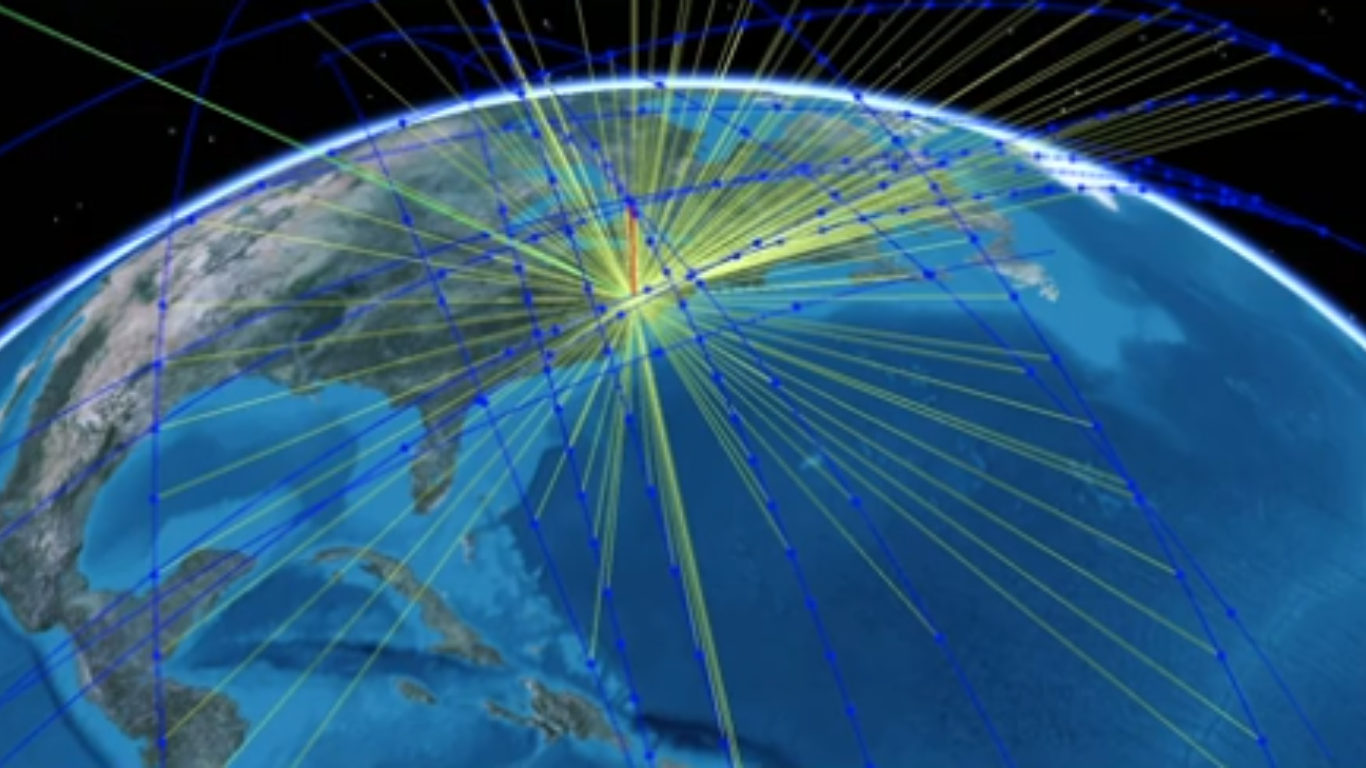
Explore how satellite constellations and megaconstellations are revolutionizing global reconnaissance, enabling real-time intelligence, advanced surveillance, and reshaping modern security systems worldwide. Exclusive insights by Worldstan.
The Rise of Satellite Constellations How Megaconstellations are Changing Global Reconnaissance
Understanding Satellite Constellations
If you look up at the night sky, it may seem calm and empty, but that view is outdated. What is happening above us today is closer to a carefully organized digital web. Satellite constellations are not just a group of machines floating in space. They are coordinated systems designed to work together, almost like a team that never sleeps.
Let me explain this in the clearest, simplest terms. Instead of relying on a single satellite to collect data, organizations now deploy hundreds or even thousands. These satellites communicate with each other, share tasks, and ensure that no part of the Earth goes unnoticed for long. This shift has changed everything about how information is gathered.
In my view, this is one of the most practical innovations in modern technology. It removes gaps, reduces delays, and creates a continuous stream of awareness. Whether it is monitoring weather patterns or tracking military movement, the system works with a level of precision that was once impossible.
The Emergence of Megaconstellations:
Now imagine taking that idea and scaling it massively. That is where megaconstellations come into play. These are not small networks. They consist of thousands of satellites placed in low Earth orbit, moving in carefully calculated paths.
Both companies and governments are making substantial investments in these systems.
A well-known example is the rapid deployment of internet satellites that aim to cover even the most remote regions. But beyond connectivity, these megaconstellations have another powerful role in global reconnaissance.
From my perspective, the real advantage lies in persistence. Traditional satellites might pass over a region once every few hours or even days. Megaconstellations reduce that gap to minutes. That means decisions can be based on current data, not outdated snapshots.
This level of access changes how security agencies, disaster response teams, and even private companies operate. It creates a world where information is always fresh and actionable.
Transforming Global Reconnaissance:
Global reconnaissance used to be slow and selective. Today, it is fast and continuous. Satellite constellations have made it possible to observe changes on Earth almost as they happen.
Think about a natural disaster. In the past, it could take hours before accurate images were available. Now, satellites can provide near real-time updates. This allows rescue teams to respond faster and more effectively.
The same applies to security operations. Monitoring borders, tracking suspicious activity, and analyzing environmental changes are now more precise. From my experience studying these systems, the biggest shift is not just speed but reliability. Data is no longer occasional. It is constant.
This constant flow of information creates a new standard. Decision-makers are no longer guessing. They are working with clear, up-to-date insights.
Geospatial Intelligence (GEOINT) Future of Mapping
The Role of Low Earth Orbit Satellites:
Low Earth orbit satellites are the backbone of these constellations. They operate closer to the planet, which gives them several advantages. They can capture higher resolution images and transmit data faster.
However, they also move quickly across the sky. This is why large numbers are required. One satellite alone cannot provide continuous coverage. But a network of them can.
In practical terms, this means better communication, improved imaging, and faster response times. I often see this as a trade-off that has been solved through scale. Instead of relying on a few powerful satellites, we now use many efficient ones working together.
Real-World Applications and Impact:
The impact of satellite constellations goes far beyond theory.It’s already evident in everyday life.
Navigation systems, weather forecasting, and global communication all benefit from this technology.
In defense, the change is even more significant. Real-time surveillance allows for quicker decision-making. It reduces uncertainty and improves coordination.
Commercial industries are also taking advantage. Agriculture companies use satellite data to monitor crops. Shipping firms track routes with greater accuracy. Even environmental organizations rely on these systems to study climate change.
From my point of view, the versatility of satellite constellations is what makes them so powerful. They are not limited to one field. They serve many purposes at once.
Challenges and Concerns:
Despite the benefits, there are challenges that cannot be ignored. Space congestion is becoming a serious issue. With thousands of satellites in orbit, the risk of collisions increases.
There are also concerns about privacy. Continuous monitoring raises questions about how data is used and who has access to it.
Another issue is space debris. Every new launch adds to the complexity of managing orbital space. Without proper regulation, the situation could become difficult to control.
I believe these challenges are not reasons to stop progress. Rather, they emphasize the importance of developing it responsibly.
Clear policies and international cooperation will be essential.
The Future of Megaconstellations:
Looking ahead, the growth of megaconstellations seems inevitable. Technology is advancing rapidly, and the demand for real-time data continues to increase.
Artificial intelligence is likely to take on an even greater role. Satellites will not just collect data. They will analyze it and provide insights instantly.
There is also the possibility of deeper integration with other technologies. Drones, ground sensors, and communication networks could all connect with satellite systems to create a fully synchronized environment.
In my opinion, this is where the true potential lies. It goes beyond simply observing the world.
It is about understanding it in real time.
Why This Matters More Than Ever?
We are living in an era where information holds real power.,
Satellite constellations have become a key part of how that information is gathered and used.
They provide a level of visibility that was once unimaginable. This visibility supports everything from national security to environmental protection.
At the same time, it challenges us to think carefully about how we use this capability. The balance between innovation and responsibility will define the future.
For platforms like Worldstan, bringing these insights to readers is not just about sharing information. It is about helping people understand the systems shaping the modern world.
Conclusion:
Satellite constellations have moved from an experimental concept to a central pillar of modern technology. They have reshaped how we observe, understand, and respond to the world around us. What stands out to me is not just their technical capability, but their practical value. They solve real problems and create new opportunities across multiple sectors.
At the same time, their growth brings responsibility. Managing space, protecting privacy, and ensuring fair access will be critical challenges. The path forward will require careful planning and global cooperation.
This perspective, shared through Worldstan, aims to offer clarity in a space that often feels complex. By breaking down these systems into simple, understandable ideas, we can better appreciate their impact and prepare for what comes next.