

Gemini Intelligence Brings New AI Features to Android
Google is pushing its AI ambitions even further with Gemini Intelligence, a new branding that combines advanced Gemini-powered features for premium Android phones. From smarter task automation to AI-generated widgets, Gemini Intelligence is designed to make Android devices more personal, interactive, and useful in daily life.
Google has introduced another major AI-focused update called Gemini Intelligence, and it may become one of the company’s biggest Android upgrades in the coming years. The new system brings together several existing and upcoming Gemini-powered tools under one name, aiming to deliver a smarter and more personalized Android experience.
According to Google’s Director of Android Experiences, Ben Greenwood, Gemini Intelligence is designed to deliver “the very best of Gemini” to high-end Android smartphones. Early reports suggest that the feature set could mainly target premium devices such as the Samsung Galaxy S26 and newer Pixel phones.
Google has spent the last year expanding Gemini AI across its ecosystem, but Gemini Intelligence appears to be a larger push toward deeply integrating artificial intelligence into everyday smartphone use. Instead of functioning like a simple chatbot, Gemini is gradually becoming a digital assistant capable of handling actions, organizing information, and even creating interface elements automatically.
One of the biggest parts of Gemini Intelligence is task automation. This feature already exists in limited form on some Pixel and Samsung Galaxy devices, allowing Gemini to perform actions through selected apps. Until now, the feature mostly worked with rideshare and food delivery services. Google says this limitation will soon disappear as Gemini Intelligence expands compatibility to more apps and services.
This means users may soon ask Gemini to complete multi-step actions directly from their phones without manually opening every app. It represents Google’s growing interest in turning Android into a more AI-driven operating system rather than simply adding AI tools on top of existing software.
Another major improvement coming with Gemini Intelligence is multimodal support. Previously, Gemini mainly relied on voice or text prompts to understand commands. With the new update, users can also include screenshots and photos while interacting with the AI assistant.
For example, a user could share a screenshot of a grocery checklist saved in a notes app, and Gemini would automatically add those products to an online shopping cart. While the feature sounds simple, it shows how Google wants AI to understand visual information more naturally in daily smartphone activities.
Many industry observers believe multimodal AI will become one of the most important trends in mobile technology over the next few years. Gemini Intelligence positions Google directly in that race by making Android devices more context-aware and visually intelligent.
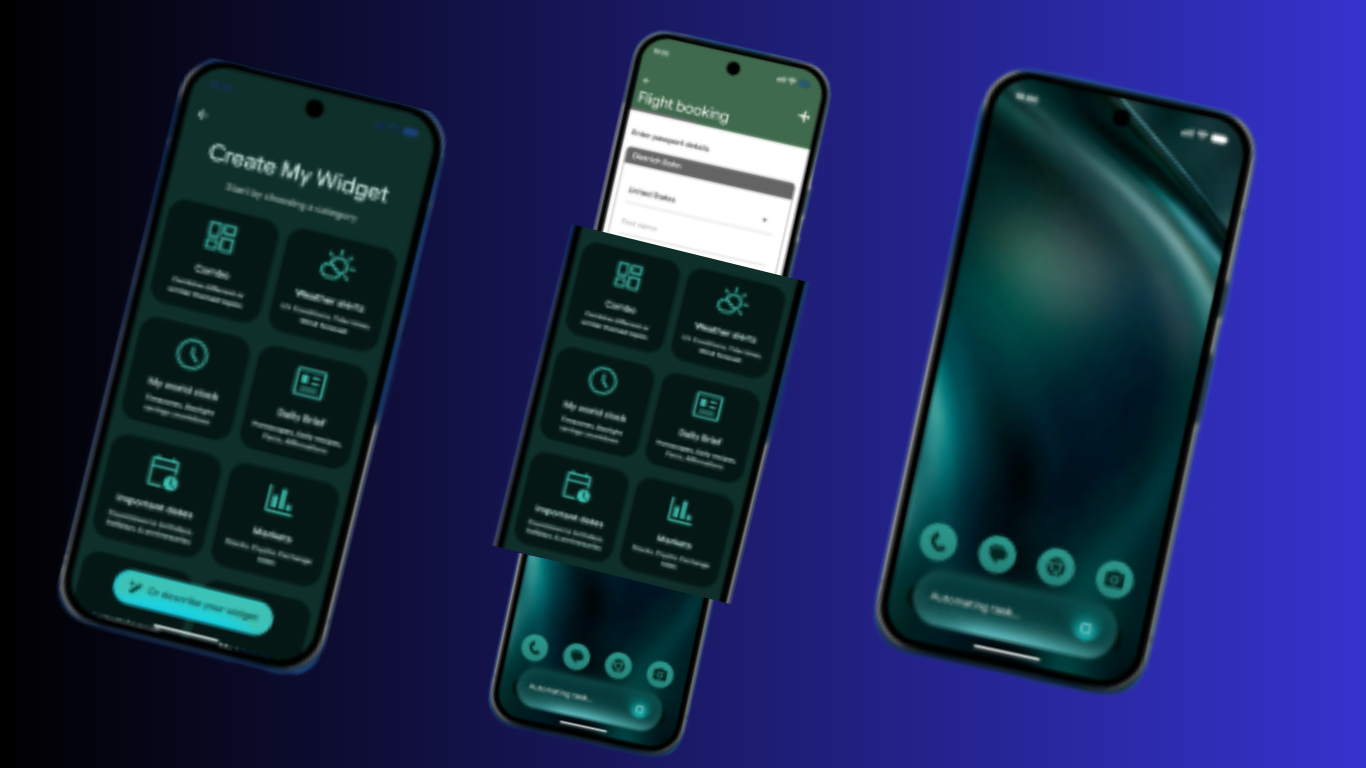
Google also revealed a completely new concept called Create My Widget. This feature allows users to describe the kind of widget they want using natural language, while AI automatically designs and generates it.
The company describes this as an early move toward “generative UI,” where artificial intelligence creates personalized interface elements instead of forcing users to rely on fixed layouts and designs.
Google shared examples such as a cycling weather widget that focuses on wind speed and rainfall, or a custom food dashboard showing weekly high-protein meal recipes. These AI-generated widgets will not remain limited to smartphones either. Google says they will also work across Wear OS smartwatches, creating a connected AI experience across devices.
The idea may sound experimental today, but it could become one of the most exciting parts of Gemini Intelligence. Widgets have existed on Android for years, yet many users rarely customize them because the process feels limited or complicated. AI-generated widgets could completely change that by allowing users to create personalized mini-apps in seconds.
In many ways, Gemini Intelligence reflects Google’s broader strategy in the AI competition. Instead of focusing only on chatbots, the company is trying to make AI part of the core Android experience itself. This approach could help Google stand out against rivals that are still treating AI as a separate feature rather than a system-wide assistant.
Our opinion is that Gemini Intelligence has strong long-term potential if Google can make the features reliable and easy to use. AI automation sounds impressive, but real success will depend on speed, accuracy, and privacy controls. Users may appreciate these tools only if they genuinely save time without creating confusion.
Still, Google’s latest announcement shows that Android is moving toward a future where AI handles more tasks, understands visual content better, and even designs parts of the user interface automatically. If Gemini Intelligence continues evolving at this pace, premium Android devices could soon feel far more adaptive and personalized than today’s smartphones.