Start Your Artificial Intelligence Career Today

Starting an artificial intelligence career may feel confusing at first, but with the right skills and clear direction, anyone can begin this journey step by step and build a strong future in this fast-growing field.

Introduction to Artificial Intelligence Career:

Artificial intelligence is changing the way the world works. From simple mobile apps to advanced systems used in healthcare and finance, AI is becoming part of everyday life. Because of this rapid growth, many people are now interested in building an artificial intelligence career.

Many beginners usually feel confused about how to begin. There are many skills to learn, and it can feel overwhelming at the beginning. The good thing is that you do not need to learn everything at once. You can move step by step and focus on the most important areas first.

In this guide, we will explain the key skills needed to start an artificial intelligence career in a simple and practical way.


Programming Skills:

Programming is the foundation of any artificial intelligence career. It allows you to turn ideas into real working systems. Without coding knowledge, it is difficult to apply AI in real situations.

Python is the most recommended language for beginners because it is simple and widely used in AI. It helps you work with data, create models, and build intelligent systems.

You should start by learning basic programming concepts such as variables, loops, functions, and data structures. Once you understand these basics, you can move to libraries like NumPy and Pandas for data handling.

Programming is not just about writing code. It is about solving problems and building useful solutions.


Mathematics and Statistics:

Mathematics plays an important role in an artificial intelligence career. It helps systems learn from data and make decisions.

You do not need to be an expert in math at the beginning, but understanding basic concepts is very helpful. Topics like linear algebra help you understand how data is structured. Probability and statistics help you understand patterns and make predictions.

Calculus is also useful when training machine learning models. It helps in improving the performance of models.

Instead of memorizing formulas, focus on understanding how these concepts are used in real situations.


Data Handling and Analysis:

Data is the most important part of artificial intelligence. AI systems learn from data, so knowing how to handle and analyze data is a key skill.

You should learn how to collect data, clean it, and organize it properly. Clean data leads to better results, while poor data can cause wrong predictions.

Tools like Excel, Python, and SQL are very helpful for data analysis. Visualization is also important because it helps you understand patterns clearly.

In an artificial intelligence career, working with data becomes a daily task, so building strong data skills is essential.


Machine Learning Fundamentals:

Machine learning serves as the backbone of artificial intelligence. It allows systems to learn from data and improve over time without being directly programmed.

There are different types of machine learning. Supervised learning works with labeled data, while unsupervised learning works with unlabeled data.

You should start with simple algorithms like linear regression, decision trees, and clustering methods. These help you understand how models learn from data.

It is also important to understand concepts like training, testing, and accuracy. These concepts help you measure how well your model is performing.


AI Tools and Frameworks:

In an artificial intelligence career, tools and frameworks make your work easier and faster. They provide ready-made functions that help you build models quickly.

Popular frameworks include TensorFlow, PyTorch, and Scikit-learn. These tools are widely used in the industry and help you focus on solving problems instead of writing everything from scratch.

Platforms like Jupyter Notebook and Google Colab allow you to practice and test your code easily. They are beginner-friendly and very useful for learning.

Learning these tools will save time and improve your productivity.


Problem-Solving and Critical Thinking:

Artificial intelligence is not just about coding. It is about solving real-world problems. Strong thinking skills help you understand challenges and find the best solutions.

You should learn how to break problems into smaller steps and approach them logically. This helps simplify difficult problems and makes them easier to handle.

For example, recommendation systems and chatbots are built by understanding user needs and applying AI techniques to solve them.

Developing this skill will make your artificial intelligence career more effective and practical.


Data Structures and Algorithms:

Basic knowledge of data structures and algorithms helps you write better and faster code. It becomes particularly valuable when dealing with large amounts of data.

Concepts like arrays, stacks, queues, and sorting algorithms are important. These help you manage data efficiently and improve performance.

Starting out does not require deep or complex knowledge.ning. Focus on understanding simple concepts and practice them regularly.


Communication and Domain Knowledge:

In an artificial intelligence career, technical skills are important, but communication is equally important. You need to explain your ideas clearly, especially to people who are not from a technical background.

You should also understand the industry where you want to apply AI. For example, healthcare, finance, and marketing all have different needs.

This knowledge helps you create better solutions and connect AI with real business problems.


Building Projects and Practical Experience:

The best way to learn artificial intelligence is by doing real projects. Practical experience helps you apply what you have learned and improves your confidence.

You can start with small projects like a spam email classifier or a simple chatbot. As you improve, you can work on more advanced projects.

Platforms like GitHub allow you to showcase your work, while Kaggle provides datasets for practice.

Building projects is one of the most important steps in developing a strong artificial intelligence career.


Learning Path and Consistency:

Consistency is the key to success in an artificial intelligence career. Learning a little every day is better than trying to learn everything at once.

Create a simple learning plan and follow it regularly. Start with programming, then move to data handling, and finally learn machine learning.

Stay patient and keep practicing. With time, your skills will improve, and you will gain confidence.

Conclusion:

Building an artificial intelligence career may seem challenging in the beginning, but it becomes easier when you focus on the right skills and follow a clear path. Start with programming, understand basic mathematics, learn how to work with data, and explore machine learning step by step. Practice regularly and work on real projects to gain confidence. Over time, your skills will grow, and you will be ready to take on real-world challenges in the field of artificial intelligence.

FAQs:

1. What is the first step to start an artificial intelligence career?
The first step is to learn basic programming, especially Python. It helps you understand how to build and work with AI systems.

2. Can I build an artificial intelligence career without coding?
Coding is very important in AI. While some tools require less coding, basic programming knowledge is still necessary.

3. Which programming language is best for AI beginners?
Python is the best choice because it is simple, flexible, and widely used in artificial intelligence.

4. How important is data in artificial intelligence?
Data is the core of AI. Systems learn from data, so good quality data leads to better results.

5. Do I need a degree to start an artificial intelligence career?
A degree can help, but it is not required. Skills, projects, and practical experience are more important.

6. How can beginners practice AI skills?
Beginners can practice by working on small projects, using online datasets, and sharing work on platforms like GitHub.

7. Is artificial intelligence a good career option in the future?
Yes, AI is growing rapidly and offers many opportunities across different industries.

A Simple Guide to Start AI Career with the Right Skills

start ai career https://worldstan.com/a-simple-guide-to-start-ai-career-with-the-right-skills/

Starting an artificial intelligence career may look confusing in the beginning, but with the right guidance, simple steps, and consistent practice, anyone can learn the essential skills, understand how AI works, and build a strong path in this growing field.

 What Artificial Intelligence Means in Real Life:

Before you start AI career, it is important to understand the basic idea of AI. Artificial intelligence is about teaching machines to think, learn, and make decisions using data. It helps systems perform tasks that normally need human intelligence.


For example, when you see product suggestions while shopping online or when a chatbot answers your questions, these are real examples of AI applications. AI technologies are everywhere, and they continue to grow every day.


When you learn artificial intelligence, you are learning how to build these smart systems that can solve real-world problems.


Why You Should Start AI Career Today:

Many people are now choosing to start AI career because it offers strong opportunities. Companies are using AI in business to improve their services, reduce costs, and make better decisions.


There are many reasons why this field is attractive:

It offers high demand in the job market
You can work in different industries
It provides good income opportunities
You can solve real problems using AI problem solving
It keeps evolving, so you always keep learning


From AI in healthcare to AI in finance and AI in marketing, every industry needs skilled people. This makes AI career path a smart choice for the future.


Understanding the Core Skills for AI:

To build a successful artificial intelligence career, you need to focus on core skills for AI. These skills are not difficult if you learn them step by step.


Important AI skills include:

Programming for AI
Data analysis skills
Understanding machine learning fundamentals
Basic mathematics knowledge
Problem-solving ability
Communication skills


These AI job skills will help you grow steadily. You do not need to master everything at once. Start small and improve gradually.


Start with Programming for AI:

Programming is one of the most important steps when you start AI career. It helps you create models, process data, and build intelligent systems.


Python for AI is the best choice for beginners because it is simple and powerful. Many AI tools and frameworks are built using Python.

Focus on:

Writing simple programs
Understanding loops and conditions
Learning functions
Practicing basic coding daily

As your AI coding skills improve, you will feel more confident working on real tasks.

Learning Data Handling in AI:

Data works like the fuel behind artificial intelligence. Without it, AI cannot grow, learn, or become better. That is why managing and using data properly is a key part of AI.


You should learn:

How to collect useful data
AI data cleaning techniques
Organizing datasets
Understanding patterns using data analysis

Clean and structured data leads to better AI model training. Poor data gives poor results, so always focus on quality.


Building Strong Mathematics Basics:

Mathematics supports AI development skills. You do not need advanced math, but basic understanding is necessary.


Focus on:

Statistics for AI
Linear algebra for AI
Calculus for AI

These ideas make it easier to see how machine learning models actually function. Rather than just remembering formulas, focus on how they apply in real-life scenarios.


Machine Learning Fundamentals Explained Simply:

Machine learning is a major part of AI learning path. It allows machines to learn from data without being manually programmed for every task.


There are two main types:

Supervised learning where data is labeled
Unsupervised learning where data is not labeled


You will also explore machine learning algorithms like:

Regression models
Decision trees
Clustering methods

These concepts are essential when you start AI career and move toward advanced topics.


Understanding AI Tools and Frameworks:

AI tools and frameworks make development easier and faster. Instead of building everything from scratch, you can use ready-made solutions.


Popular tools include:

TensorFlow
PyTorch

These AI frameworks for beginners help you build, test, and improve models efficiently. Learning these tools is an important part of AI development skills.


Data Science Skills for AI Growth:

Data science skills are closely connected to artificial intelligence. They help you understand data deeply and make better decisions.


You should learn:

Data visualization techniques
Exploring data patterns
Creating reports
Using tools for analysis

These skills improve your ability to solve real-world problems and strengthen your AI industry skills.

AI Learning Step by Step Approach:

A beginner AI roadmap helps you stay focused. Instead of learning everything randomly, follow a structured AI learning step by step plan.


Step 1: Learn programming basics
Step 2: Understand data handling
Step 3: Study machine learning fundamentals
Step 4: Practice with small projects
Step 5: Learn AI tools and frameworks
Step 6: Build real applications


This simple AI learning path makes your journey smooth and organized.


Importance of AI Practical Experience:

Theory alone is not enough. You need AI practical experience to truly understand concepts.


Start with AI projects for beginners like:

Spam email detection
Simple chatbot development
Basic recommendation systems


These projects improve your AI problem solving skills and give you confidence.


Building AI Portfolio Projects:

When you start AI career, having a portfolio is very important. It shows your real work instead of just certificates.


Your AI portfolio projects should include:

Clear problem explanation
Your approach to solving it
Code implementation
Final results


A strong portfolio helps you stand out and increases your chances of getting a job.


Understanding AI Applications in Business:

AI is used in many industries, and understanding this gives you direction.


Examples include:

AI in healthcare for diagnosis
AI in finance for fraud detection
AI in marketing for customer insights
Chatbot development for customer support
Recommendation systems for online platforms


These real-world AI applications help you connect learning with practical use.


AI Model Training and Performance:

When you build AI systems, you need to train models using data. AI model training is the process where the system learns patterns.


You should also understand AI performance metrics to measure how well your model works.


This helps you:

Improve accuracy
Reduce errors
Make better predictions


Learning this step is important for becoming skilled in AI development.


Learning AI Programming Languages:

While Python for AI is the most popular, there are other AI programming languages you can explore later.


These include:

R for data analysis
Java for large systems
C++ for performance-based tasks


Start with one language and build strong basics before moving to others.


Choosing the Right AI Education and Training:

There are many options available for AI education. You can choose based on your comfort and goals.


Options include:

Online tutorials
University programs
AI training courses.


Some popular platforms include upGrad AI courses and KnowledgeHut AI courses. These structured programs help you learn in an organized way.


Improving AI Coding and Development Skills:

To grow in AI, you must keep improving your AI coding skills and development abilities.


Practice regularly by:

Solving coding problems
Working on new projects
Exploring new tools


This continuous learning approach strengthens your AI job skills over time.


Importance of Communication in AI Career:

Communication is often ignored, but it plays a big role in career growth.


You should be able to:

Explain your ideas clearly
Present your projects
Work with teams


Not everyone understands technical language, so simple explanations make a big difference.


Avoiding Common Beginner Mistakes:

Many people struggle because they follow the wrong approach.


Avoid these mistakes:

Skipping AI fundamentals
Not practicing regularly
Ignoring projects
Comparing your progress with others


Focus on your own journey and keep improving step by step.


Staying Consistent in Your AI Journey:

Staying consistent is what leads to real progress. Studying a small amount each day works much better than trying to cover everything in one go.


Create a routine:

Practice coding daily
Work on one project at a time
Review concepts regularly


This habit helps you grow steadily when you start AI career.


Building Confidence Through Small Wins:

Confidence comes with progress. Start with small goals and celebrate achievements.y


Examples include:

Completing your first AI program
Building your first project
Understanding a difficult concept


These small wins keep you motivated and focused.


Future Growth in Artificial Intelligence Career:

The future of AI is very strong. New technologies are being developed every day, and demand for skilled professionals continues to increase.


If you stay consistent and keep learning, you can grow in different roles like:

AI engineer
Data scientist
Machine learning specialist
AI developer


Your AI career guide should always focus on learning, practice, and improvement.

Conclusion:

To start AI career, you do not need to be perfect. You only need the right direction and a willingness to learn. Focus on AI fundamentals, build strong AI skills, and follow a clear AI learning path.


Start with programming for AI, understand data handling in AI, and learn machine learning fundamentals. Practice through AI projects for beginners and build your portfolio..


Stay patient, keep improving your AI development skills, and gain AI practical experience. Over time, your confidence will grow, and new opportunities will open for you.


If you truly want to start AI career, begin today with small steps and keep moving forward.


FAQs:

  1. What is the best way to start AI career as a beginner:
    The best way is to begin with basic programming, especially Python, and then move step by step into data handling and machine learning fundamentals. A structured AI learning path makes things much easier.
  2. Do I need a strong mathematics background to learn artificial intelligence:

    At the start, you don’t have to know complex mathematics.

    Basic understanding of statistics, linear algebra, and simple concepts of calculus is enough to start learning and building confidence.
  3. Which programming language is most useful for AI beginners:
    Python for AI is the most recommended language because it is easy to learn and supports many AI tools and frameworks like TensorFlow and PyTorch.
  4. How long does it take to learn artificial intelligence:
    The time depends on your learning speed and consistency. With regular practice, you can understand AI fundamentals in a few months and continue improving with real projects.
  5. What kind of projects should beginners build in AI:
    Beginners can start with simple AI projects like chatbot development, spam detection systems, or basic recommendation systems to gain practical experience.
  6. Are online courses helpful for building an AI career:
    Yes, AI training courses can provide structured learning and guidance. Platforms like upGrad AI courses and KnowledgeHut AI courses help beginners stay focused and organized.
  7. What skills are most important for AI job roles:
    Important AI job skills include programming, data analysis skills, understanding machine learning algorithms, problem solving, and the ability to work with real data.


How to Learn Artificial Intelligence Easily in 2026

how to learn artificial intelligence easily in 2026.
If you’re wondering how to learn artificial intelligence, this guide breaks it down into simple, practical steps so you can start from scratch, build real skills, and confidently use AI in your daily work or career.

How to Learn Artificial Intelligence: A Simple and Practical Guide for Beginners

Artificial intelligence is no longer a distant idea. It is already part of how we search online, write content, shop, and even make decisions at work. Many people are now asking the same question: how to learn artificial intelligence in a simple and effective way. The truth is, learning AI is not as complicated as it sounds.


 You do not need to be a genius in math or a professional programmer to begin. What you really need is the right direction, patience, and a clear plan.

This guide will walk you through everything step by step in plain language so you can start confidently, no matter your background.

What Artificial Intelligence Really Means

Before learning anything new, it helps to understand what it is.

Artificial intelligence refers to systems that can perform tasks that usually need human thinking. These systems can study patterns, understand language, and make decisions based on data.

For example, when a tool suggests what to write next or recommends a product, that is AI working in the background.

You do not need to go deep into technical definitions at the beginning. A simple understanding is enough to get started.


Why You Should Learn AI Today:

AI is changing how people work in almost every field. It is not limited to technology companies anymore.

People in business, marketing, education, and many other areas are using AI to save time and improve results. Learning AI can help you work smarter and stay updated with modern tools.

Another strong reason is career growth. Many companies are now looking for people who understand AI, even at a basic level. This makes it a valuable skill for the future.

Learn AI from scratch with a clear and simple roadmap.

If you are serious about learning AI, the best approach is to follow a simple path instead of trying to learn everything at once.

Start by setting a goal. Ask yourself why you want to learn AI. Your reason will help you stay focused and choose the right direction.

Once you are clear about your goal, you can begin your learning journey.


Start with the Basics:

You do not need to jump into advanced topics right away. Begin with simple concepts that build your understanding.

Learn Basic Math and Logic:

AI works with numbers and patterns, so a basic understanding of math is helpful. Focus on simple topics like percentages, probability, and basic algebra.

At the same time, improve your logical thinking. Try to understand how problems are solved step by step.

Understand Data:

Data is the foundation of AI. Learn how data is collected, organized, and used. Even simple knowledge about data can make a big difference.


Do You Need Coding to Learn AI:

Many beginners worry about coding. The good news is that you can start learning AI without it.

You can explore AI tools, understand concepts, and even apply AI in daily tasks without writing a single line of code.

However, if you want to go deeper and build systems, learning programming becomes important. Python is the most common language used in AI because it is simple and widely supported.


Learn Programming at Your Own Pace:

If you decide to learn coding, take it slow and keep it simple.

Start with the basics of Python:

  • Understanding variables
  • Writing simple conditions
  • Using loops
  • Creating functions

Once you are comfortable, you can move to more advanced topics related to AI.

The aim isn’t to achieve perfection, but to feel at ease.


Understand Core AI Concepts:

After building a basic foundation, you can start learning the main ideas behind AI.

Machine Learning:

Machine learning allows systems to learn from data and improve over time. It is one of the most important parts of AI.

Deep Learning:

Deep learning is a more advanced form of machine learning. It uses layered systems to process large amounts of information.

Data Science:

Data science focuses on analyzing data to find useful insights. This is closely connected to AI and helps in building smart systems.

You do not need to master everything at once. Take one topic at a time and understand it clearly.


Use AI Tools to Learn Faster:

One of the best ways to understand AI is by using it.

There are many tools available that can help you learn in a practical way. You can use them to write content, summarize information, or generate ideas.

When you use these tools, pay attention to how your input changes the output. This will help you understand how AI responds and improves your ability to work with it.

Practice with Simple Projects:

Learning becomes more effective when you apply it.

Start with small and simple projects. For example:

  • Use AI tools to create content
  • Analyze a small dataset
  • Build a basic workflow using AI

These projects help you gain confidence and improve your understanding.

You do not need complex projects in the beginning. Even small tasks can teach you a lot.


Explore Tools and Libraries:

As you move forward, you will come across tools that make AI development easier.

If you are using Python, you can explore libraries that help with data handling, model building, and visualization.

You do not need to learn all tools at once. Start with one or two and practice regularly.


Choose a Focus Area:

AI is a wide field, and it is not necessary to learn everything.

After understanding the basics, choose an area that interests you the most.

Some options include:

  • Working with data
  • Building smart applications
  • Using AI for business tasks
  • Creating content with AI

Focusing on one area will help you grow faster and stay motivated.


Create a Learning Routine:

Consistency is the key to learning anything.

Instead of studying for long hours once in a while, try to learn a little every day.

Set a schedule that fits your routine. Even one hour daily can bring great results if you stay regular.

Keep your learning simple and avoid overloading yourself with too much information.


How much time is needed to master Artificial Intelligence?

The time required depends on your goal and background.

If you want to understand basic concepts, you can start seeing progress within a few weeks.

If your goal is to build a career, it may take several months of consistent effort.

Everyone learns at a different pace, so do not compare yourself with others.


Build a Portfolio:

If you want to use AI professionally, it is important to show your work.

Create a simple portfolio where you can present your projects and learning.

Your portfolio does not need to be perfect. It should show your effort and understanding.

Even small projects can leave a strong impression if they are well explained.


Common Mistakes to Avoid:

Many beginners make similar mistakes while learning AI.

One common mistake is trying to learn everything at once. This often leads to confusion.

Another mistake is focusing only on theory without practice.

To avoid these issues, keep your learning simple, focused, and practical.


How AI Can Help in Daily Work:

AI is not only for developers. It can help you handle daily activities more efficiently.

You can use AI to:

  • Write emails and reports
  • Generate ideas
  • Summarize long content
  • Organize information

These small uses can save time and improve productivity.


Staying Updated with AI Trends:

AI is growing very fast, so it is important to stay updated.

You can follow blogs, watch videos, and read simple articles to keep your knowledge fresh.

You do not need to follow everything. Just stay connected with basic updates.


A Simple Learning Plan to Follow:

Here is a basic plan you can use as a guide:


First Phase:

Learn basic math, data, and simple programming concepts.


Second Phase:

Understand machine learning and data science concepts.


Third Phase:

Work on projects and explore tools.

This plan is flexible. You can adjust it based on your pace and goals.

Conclusion:

Learning AI may seem confusing at first, but once you break it into small steps, it becomes much easier to manage. If you focus on the basics, practice regularly, and stay patient, you can gradually build strong skills over time. The key is not to rush but to stay consistent and keep applying what you learn in real situations. As technology continues to grow, understanding AI will not only improve your knowledge but also open new paths for personal and professional growth.

FAQs:

1. What is the easiest way to start learning AI as a beginner?
The easiest way is to begin with basic concepts and use simple AI tools. Start by understanding how AI works, then slowly move to learning Python and machine learning at your own pace.


2. Can I learn artificial intelligence without a technical background?
Yes, you can. Many beginners start without any technical knowledge. You can first learn how to use AI tools and later decide if you want to go deeper into coding and advanced topics.


3. How much time should I spend daily to learn AI effectively?
Spending 1 to 2 hours daily is enough if you stay consistent. Regular practice matters more than long study hours, especially in the beginning.


4. Is Python necessary to learn artificial intelligence?
Python is not required at the start, but it becomes important if you want to build AI models or work professionally in this field.


5. What are the most important skills needed to learn AI?
Some key skills include basic math, understanding data, logical thinking, and problem-solving. As you progress, programming and data analysis also become important.


6. Can I use AI tools without learning complex algorithms?
Yes, many AI tools are designed for everyday users. You can use them for writing, research, and productivity without understanding advanced technical details.


7. How do I know if I am ready to apply for AI-related jobs?
You are ready when you can complete projects, understand basic concepts, and explain your work clearly. Having a small portfolio can also help you show your skills to employers.

Gemini Gems Are Changing How People Learn Online

gemini gems
Instead of jumping between endless search results and dozens of browser tabs, many learners are now turning to Gemini Gems to guide their learning. These customizable AI assistants inside Google Gemini act like personal coaches, helping people study languages, understand coding, and explore creative skills with clear explanations and focused guidance tailored to their goals.

Learning something new used to mean opening a search engine, typing a question, and jumping between dozens of websites until you finally found a clear answer. Many people spent hours moving from one browser tab to another just to understand a simple concept.

Today, artificial intelligence tools are changing that process. Instead of endless searching, AI assistants can guide people step by step. One feature that is quietly becoming very powerful is Gemini Gems. These customizable AI learning assistants inside Google Gemini are helping people stay focused and learn faster.

Rather than acting like a normal search engine, Gemini Gems behave more like personal coaches. They can be trained with your goals, your experience level, and your preferred learning style. Once set up, they become assistants that help you study languages, practice coding, explore music creation, or learn almost any skill.

This new approach removes the confusion of traditional search and replaces it with a focused learning path. Many users now turn to Gemini instead of opening a search engine when they want to learn something new.

Why Traditional Online Searching Can Slow Down Learning

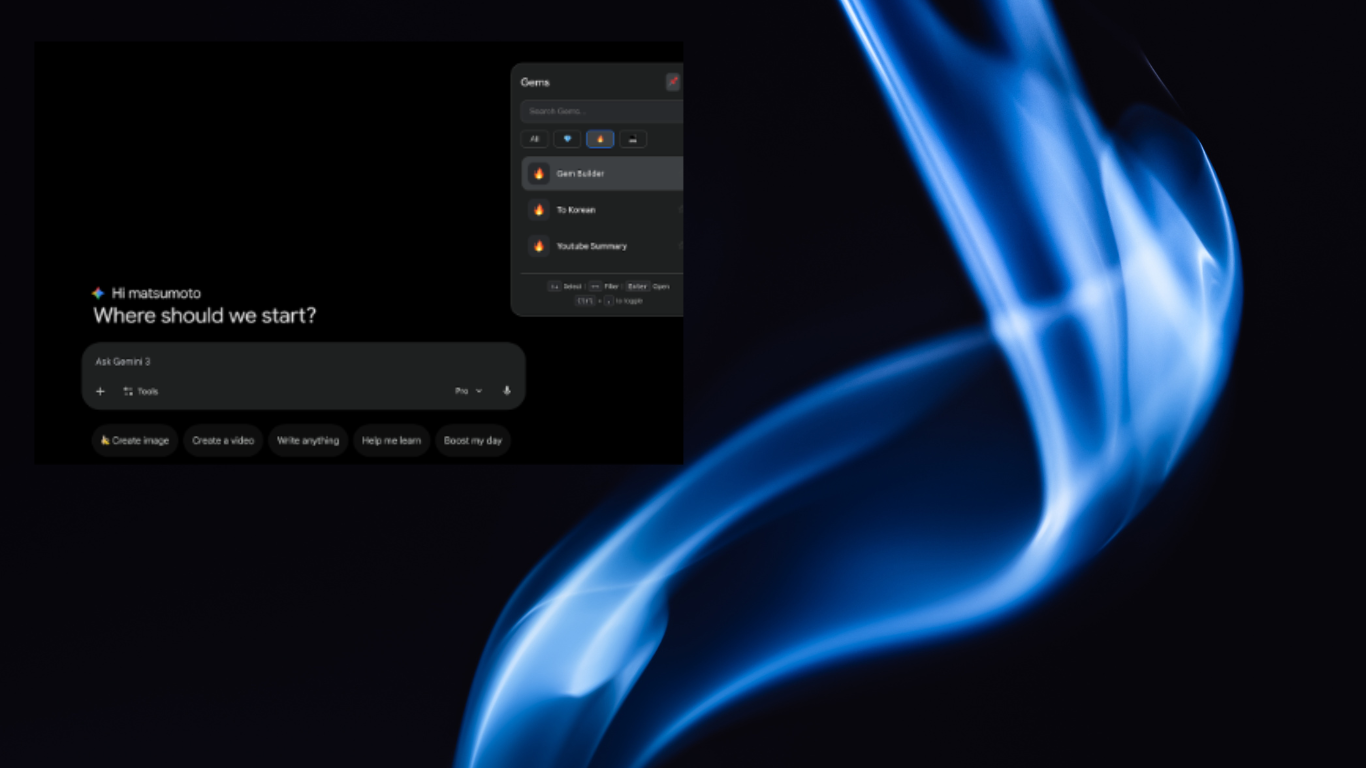
gem menager

For years, online learning depended heavily on search engines. While search engines are extremely powerful, they often lead to information overload.

Imagine searching for a simple topic such as learning a new programming concept or understanding grammar rules in a foreign language. A single search might produce hundreds of links, blog posts, forums, and videos. Each page may explain things differently, and some sources might even contradict each other.

This process creates a common problem known as the “rabbit hole effect.” One article leads to another, and suddenly you have dozens of tabs open without actually learning the concept clearly.

Many learners experience frustration during this process. They spend more time searching for answers than actually studying or practicing.

That is where AI tools like Gemini change the experience. Instead of presenting hundreds of links, Gemini can analyze your question and provide a direct explanation tailored to your understanding.

When combined with Gemini Gems, the experience becomes even more powerful because the AI already understands your learning goals.

What Gemini Gems Actually Are

Gemini Gems are customizable AI assistants built within the Google Gemini platform. They allow users to create specialized AI helpers that focus on specific topics or skills.

When someone creates a Gem, they provide some basic information during setup. This usually includes:

  • The skill they want to learn

  • Their current experience level

  • Their goals for using the skill

  • The learning style that works best for them

Once that information is provided, the AI assistant begins acting as a personalized learning coach.

Instead of giving general answers, the Gem responds in ways that match the learner’s needs. For example, it may provide simple explanations, structured exercises, or guided practice sessions.

The idea is similar to having a private tutor available anytime you need help.

Using Gemini Gems for Language Learning

One of the most practical uses of Gemini Gems is learning new languages. Language learning often requires consistent practice, explanations of grammar rules, and opportunities to apply those rules.

Many people already use language learning apps like Duolingo to build their foundation. These apps provide structured lessons that introduce vocabulary, sentence structure, and pronunciation.

However, structured learning paths sometimes move slowly. Learners may become curious about topics that the course has not reached yet.

This is where a language-focused Gem becomes extremely useful.

Instead of waiting for the lesson plan to reach a certain topic, learners can simply ask their Gem for deeper explanations. The AI can immediately break down grammar rules, explain verb conjugations, or create practice sentences.

For example, if a learner encounters imperative verbs in a lesson but has not studied them yet, the Gem can explain how they work and provide examples. It can even create small exercises to help reinforce the concept.

In this way, Gemini Gems do not replace language learning apps. Instead, they enhance them by offering flexible learning support whenever curiosity appears.

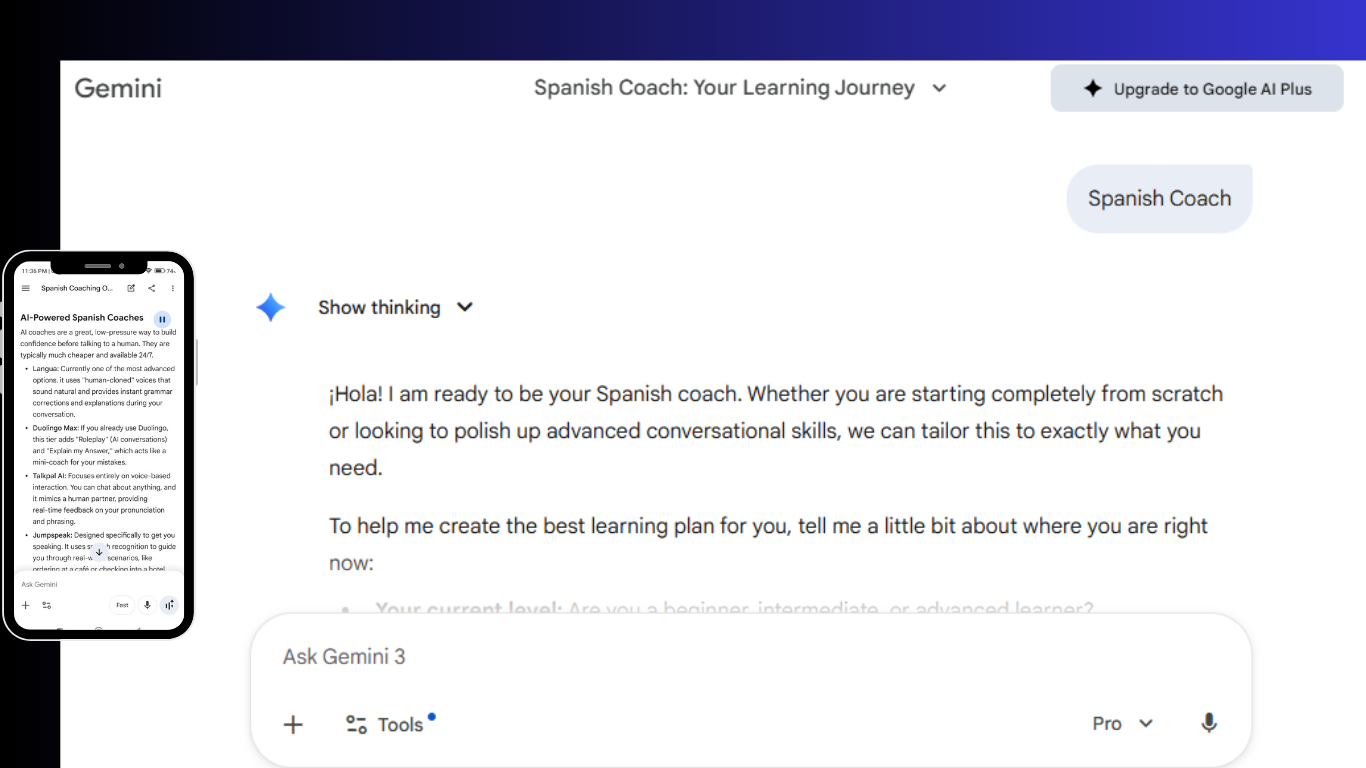
spanish coach

A Personalized Spanish Learning Assistant

Consider the example of someone studying Spanish. They may already use Duolingo to follow daily lessons and build vocabulary.

However, when they want more detail about a particular concept, their Spanish learning Gem becomes their personal tutor.

The Gem might explain:

  • How verb conjugations change depending on context

  • When to use informal versus formal commands

  • Common irregular verbs and how they behave

  • Real-world examples used in everyday conversation

The learner can also ask the AI to create practice exercises or quiz questions. This interactive process helps reinforce knowledge more effectively than simply reading a rule in a textbook.

The biggest advantage is flexibility. Instead of following a rigid curriculum, learners can explore topics the moment they become curious about them.

This style of learning often improves retention and keeps motivation high.


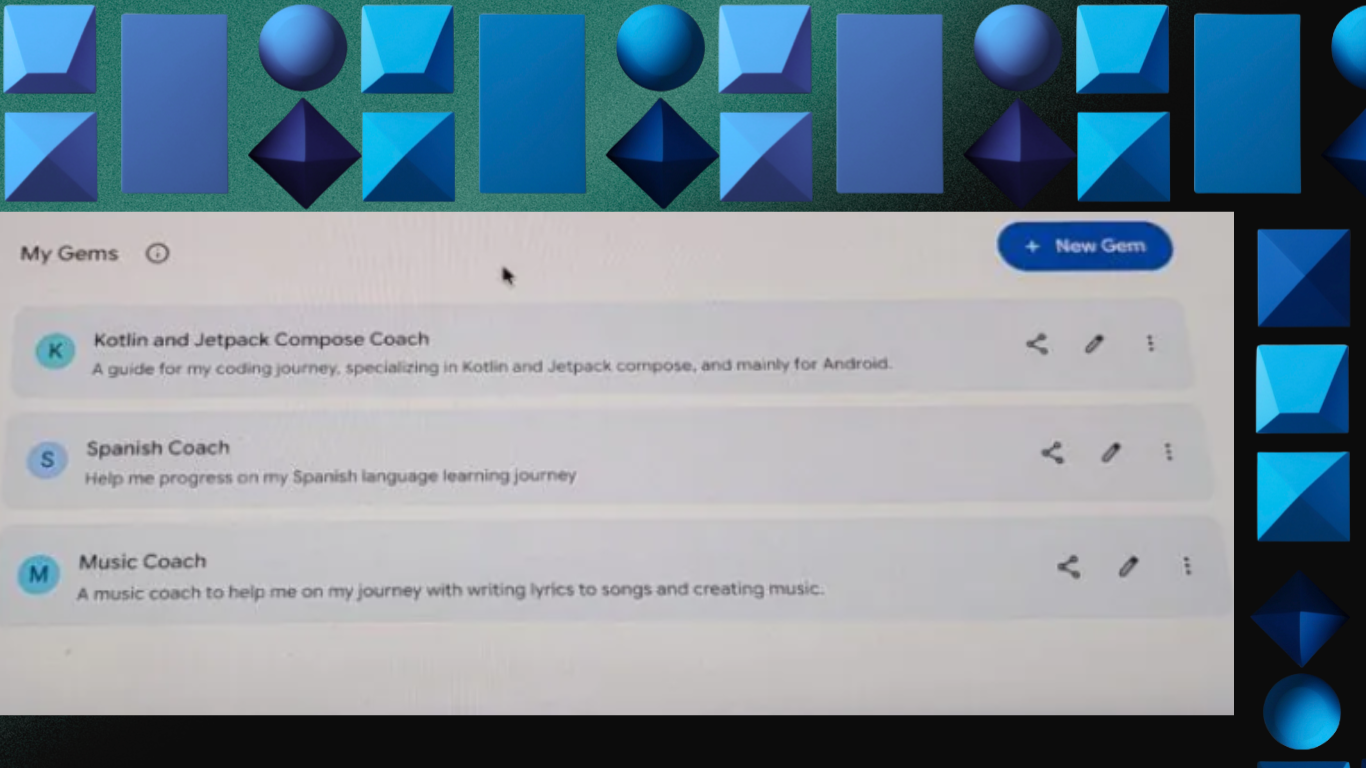
gemini menager

Exploring Creativity with a Music Coach Gem

Not everyone uses Gemini Gems for academic learning. Many people also use them to explore creative hobbies.

Music creation is a great example.

For beginners, the world of music can feel overwhelming. There are many possible starting points:

  • Writing song lyrics

  • Learning music theory

  • Practicing singing techniques

  • Understanding rhythm and beats

  • Using digital audio workstations

Without guidance, beginners may struggle to decide where to begin.

A Music Coach Gem can help solve that problem. By explaining your goals during setup, the AI can create a starting plan tailored to your interests.

For example, someone interested in songwriting might receive exercises designed to improve creativity and storytelling.

One exercise could involve choosing an everyday object and describing it using vivid sensory details. This technique encourages descriptive thinking, which is valuable when writing song lyrics.

These types of guided exercises make learning music feel less intimidating and more enjoyable.


samba music

Learning Coding with an AI Assistant

Coding is another area where Gemini Gems are becoming very useful. Programming can be difficult for beginners because concepts often build on one another.

If someone gets stuck on a concept like loops, variables, or functions, they may struggle to move forward.

In the past, learners would search forums or documentation pages hoping to find an answer. Now, they can ask their coding Gem directly.

The AI can explain concepts in simple language, create examples, and even generate practice challenges.

For example, a beginner learning Kotlin might ask their Gem to explain how functions work. The AI could respond with step-by-step explanations and then offer coding exercises to reinforce the concept.

This process helps learners gain confidence while solving real programming problems.


Combining AI Assistance with Real Projects

One of the most effective ways to learn coding is by building real projects.

Many developers believe the best learning happens when you try to create something meaningful and solve problems along the way.

Gemini Gems support this approach extremely well.

When learners encounter an issue in their project, they can ask their Gem for guidance. Because the Gem already knows their experience level, it can explain solutions in a way that makes sense.

This approach feels more natural than reading complicated documentation.

As learners progress, they often move from simple coding exercises to full development environments like Android Studio.

Gemini Integration Inside Development Tools

Another interesting development is the integration of Gemini directly inside development environments.

For example, Android Studio now includes Gemini features within the IDE. This allows developers to receive assistance without leaving their coding workspace.

Instead of copying code into a separate AI chat, developers can simply ask questions while working on their project.

The AI already understands the surrounding code context, making its suggestions more relevant.

While some people still use coding Gems for structured learning, integrated AI tools are becoming the preferred option for complex development tasks.


The Importance of Context in AI Learning

One reason Gemini Gems work well as learning assistants is their ability to use context.

During setup, users provide details about their experience, goals, and preferred learning style. This information allows the AI to tailor responses.

For example, a beginner may receive simple explanations and basic exercises. Meanwhile, an advanced learner might receive deeper technical insights.

However, one limitation of Gems is that they currently do not store long-term conversation memory.

They remember the initial setup information but do not automatically recall previous discussions from earlier sessions.

Some users see this as a minor drawback.


A Workaround for Long-Term Learning Conversations

Fortunately, there is a simple workaround.

Instead of relying entirely on a Gem, users can keep a regular Gemini conversation pinned in the sidebar. This allows the AI to reference previous discussions when responding.

For long-term learning projects, this method can be very useful. It creates a continuous conversation where the AI remembers earlier questions and explanations.

This approach helps maintain continuity while learning complex subjects.


How AI Is Reducing Friction in Online Learning

Before modern AI tools existed, the internet already made education more accessible. Anyone with a connection could watch tutorials, read guides, and explore new ideas.

However, the process still required significant effort to filter information and find reliable explanations.

AI tools like Gemini simplify this process by acting as intelligent intermediaries.

Instead of searching through dozens of articles, learners can receive personalized explanations instantly.

Gemini Gems push this idea even further by creating specialized assistants that align with personal goals.

This reduces friction and allows people to focus on actual learning rather than searching.


The Future of Personalized AI Learning

The rise of AI learning assistants suggests a major shift in how people acquire knowledge.

In the past, learning was structured around fixed courses and predefined paths. While these systems still have value, many learners prefer more flexible approaches.

AI assistants provide that flexibility.

They allow individuals to explore topics based on curiosity while still receiving guidance.

In the future, we may see even more advanced versions of tools like Gemini Gems. These could include:

  • Long-term learning memory

  • Real-time progress tracking

  • Deeper integration with educational platforms

  • Personalized study plans that evolve over time

As these tools continue improving, AI could become one of the most powerful learning companions ever created.

Conclusion

Learning online has always been powerful, but it has not always been simple. For many years, people depended on search engines to find answers, often spending more time searching than actually learning. The arrival of smarter AI tools is beginning to change that experience in a meaningful way.

Gemini Gems show how artificial intelligence can turn into a personal learning companion rather than just another information tool. By allowing users to create customized AI coaches based on their goals, skills, and interests, Gemini makes the learning process more focused and far less overwhelming. Whether someone wants to practice a new language, understand coding concepts, or explore creative hobbies like songwriting, these AI assistants can provide guidance that feels more direct and personal.

What makes this approach exciting is that it does not replace traditional learning platforms or courses. Instead, it complements them. Apps, tutorials, and online courses still play an important role, but Gemini Gems add an extra layer of support that helps learners explore topics more deeply whenever curiosity appears.

As artificial intelligence continues to evolve, tools like Gemini Gems may become a common part of everyday learning. Instead of getting lost in endless searches, people can move forward with clear guidance, faster answers, and a learning experience that adapts to them. In many ways, this shift represents the next step in how technology helps people gain knowledge and build new skills.


FAQs:

1. What are Gemini Gems and how do they work?
Gemini Gems are customizable AI assistants inside Google Gemini that act like personal learning coaches. Users can create a Gem by adding their goals, experience level, and learning preferences. Once set up, the Gem provides explanations, exercises, and guidance tailored to the user’s needs.

2. How are Gemini Gems different from a normal AI chatbot?
Unlike a regular chatbot that answers general questions, Gemini Gems are designed with a specific purpose. They are configured with context during setup, which allows them to give more focused and personalized responses related to a particular skill or topic.

3. Can Gemini Gems replace learning apps like language platforms?
Gemini Gems are not meant to replace structured learning apps. Instead, they work alongside them. For example, someone using a language learning app can use a Gem to ask deeper questions about grammar, vocabulary, or pronunciation whenever they want extra clarification.

4. What skills can people learn using Gemini Gems?
Gemini Gems can support learning in many areas. People commonly use them for language practice, coding assistance, music creation, writing improvement, and other educational or creative skills. The flexibility of the tool allows users to design Gems for almost any learning goal.

5. Do Gemini Gems remember past conversations automatically?
Currently, Gemini Gems mainly rely on the context provided during the initial setup. They do not automatically store detailed memories from past chats. However, users can keep a conversation pinned in Gemini if they want the AI to reference earlier discussions.

6. Are Gemini Gems useful for beginners?
Yes, beginners can benefit greatly from Gemini Gems. Because the AI can adjust explanations based on the user’s experience level, it can break down complex topics into simple steps, making it easier for new learners to understand difficult concepts.

7. Why are many learners choosing Gemini Gems instead of traditional search?
Many learners prefer Gemini Gems because they provide direct answers and structured explanations without forcing users to search through many websites. This helps reduce distractions and allows people to focus more on understanding and practicing new skills.