
Skip to content
  • HOME
  • AI
    • AI RESEARCH
    • AI LIFESTYLE & INTERACTION
  • AI IN IT
    • TECH RESEARCH IN AI
  • SOCIAL & DIGITAL AI
    • SOCIAL & DIGITAL AI RESEARCH
  • UPDATES

UPDATES

“Digital and Social Media & Artificial Intelligence Technology Updates offers a clear lens on how AI is transforming social platforms, content creation, and the digital ecosystem for professionals and enthusiasts alike.”

AI Foreign Policy and National Security: Jake Sullivan on US-China Tech Risks

February 2, 2026January 7, 2026 by Prof. Mian Waqar Ahmad Hashmi
AI Foreign Policy and National Security: Jake Sullivan’s Insights on US-China Tech https://worldstan.com/ai-foreign-policy-and-national-security-jake-sullivan-on-us-china-tech-risks/

“Former White House adviser Jake Sullivan warns that reversing US AI export controls could reshape global technology competition and national security, highlighting the high-stakes intersection of innovation and geopolitics.”


Jake Sullivan Sounds Alarm on the Fallout of US AI Export Policy Reversal

Understanding the Stakes of AI in Global Geopolitics

The intersection of artificial intelligence and national security is rapidly becoming one of the most critical arenas in global politics. The United States’ AI foreign policy toward China has long used technology as a strategic lever, and artificial intelligence is now at the forefront of this competition. Former national security adviser Jake Sullivan has expressed serious concern over the consequences of reversing policies designed to control AI technology exports to China, emphasizing the profound implications for both innovation and security.

AI, once considered a primarily commercial or research-driven sector, has evolved into a geopolitical instrument. Under Sullivan’s guidance in 2022, the Biden administration implemented rigorous export controls on high-end chips to prevent them from strengthening potential adversaries. These measures reflect a continuation of Cold War-era strategies within AI foreign policy, where technology restrictions serve as a means of protecting national security.

The Role of Jake Sullivan in Shaping AI Foreign Policy

Jake Sullivan’s tenure as national security adviser placed him at the intersection of technological innovation and international diplomacy. In 2022, he orchestrated an interagency planning exercise in the Situation Room that examined the full spectrum of scenarios in a potential AI arms race between the US and China. These scenarios ranged from economic conflicts and trade wars to military escalations, including the speculative arrival of artificial general intelligence (AGI).

Sullivan’s approach highlighted a crucial point: the United States must not only lead in AI development but also ensure that its technological advantages do not inadvertently empower strategic competitors. While the details of the simulation remain classified, Sullivan has publicly acknowledged a major oversight—his team had not anticipated the possibility of a rollback in export controls that could undermine these carefully constructed safeguards.

The Impact of Technology Export Restrictions on National Security

the United States aims to limit the technological capabilities of a strategic competitor in AI.
Reversing these restrictions could have profound consequences. Sullivan warned that allowing High-end semiconductors are the backbone of modern artificial intelligence. Companies such as Nvidia produce chips that power everything from advanced machine learning models to national defense applications. Export restrictions on these components are more than trade policies; they are instruments of national security. By controlling the flow of high-performance chips to China, unrestricted chip exports might enable China to accelerate its AI development faster than anticipated, potentially creating a strategic imbalance. Such developments could undermine US influence in emerging technology standards and weaken the nation’s capacity to maintain leadership in AI-driven innovation.

AI as a Strategic Asset in Geopolitical Competition

The growing importance of artificial intelligence in international relations cannot be overstated. Nations view AI not merely as a commercial tool but as a strategic asset that can shift global power dynamics. Sullivan’s planning exercise explicitly considered how AI could serve as both a defensive and offensive instrument in geopolitical competition.

AI’s potential applications in surveillance, cybersecurity, military decision-making, and economic forecasting make it a critical element of national power. In this context, controlling access to AI-enabling technologies becomes a form of preventive strategy. By restricting exports, the United States aimed to ensure that its competitors could not leverage AI advancements to gain military or economic superiority.

The Tension Between Innovation and Security

One of the most complex challenges in AI foreign policy is balancing innovation with national security. Sullivan, a proponent of technological progress, has always supported AI development in the United States. However, he recognizes that unrestricted technological proliferation could compromise strategic objectives.

American companies, driven by profit and global competitiveness, often push for fewer restrictions on exports. This creates a policy tension: the economic incentives of the AI industry may conflict with national security imperatives. Sullivan’s candid admission that export rollbacks were not considered during the 2022 simulations underscores the difficulty of anticipating the influence of commercial interests on foreign policy decisions.

China and the AI Arms Race

The US-China competition in AI is not hypothetical. China has invested heavily in AI research and development, with government-backed programs designed to achieve global leadership in the field. High-end semiconductors, which remain difficult to manufacture without advanced technology and expertise, are a critical bottleneck in this race.

Sullivan’s export control strategy sought to maintain this bottleneck, slowing China’s ability to deploy cutting-edge AI in military or economic domains. Any policy reversal, such as lifting restrictions on high-end chip sales, could accelerate China’s AI capabilities, shifting the strategic balance. For the United States, this would mean facing a more technologically capable adversary in both economic and security arenas.

Lessons from the Situation Room Simulation

The interagency simulation led by Sullivan provides a blueprint for understanding AI’s role in national security. The exercise explored multiple contingencies, ranging from limited trade conflicts to full-scale technological warfare. Among the key insights was the understanding that AI development is no longer a purely domestic concern; it is a global strategic issue.

The simulation also revealed the potential risks of aligning national policy too closely with commercial interests. Sullivan’s acknowledgment that export rollbacks were not considered reflects a critical lesson: government decision-making must anticipate scenarios where industry priorities could conflict with national security objectives.

The Role of Academic and Policy Institutions

After leaving the White House, Sullivan joined the Harvard Kennedy School of Government, where he continues to engage with AI policy, innovation, and security strategy. Academic institutions play a vital role in analyzing complex scenarios, developing policy recommendations, and educating future leaders.

By studying the intersections of AI, trade policy, and national security, experts like Sullivan aim to provide a measured approach to technological governance. Their work highlights that safeguarding national interests requires foresight, interdisciplinary analysis, and coordination across government agencies, private sector companies, and international partners.

Future Challenges in AI Governance

Looking forward, the United States faces several challenges in AI governance:

  1. Maintaining Technological Leadership – Ensuring that the US remains at the forefront of AI innovation while balancing ethical, economic, and security considerations.
  2. Export Policy Stability – Avoiding abrupt reversals in technology export restrictions that could compromise strategic objectives.
  3. Global Standards and Regulation – Working with allies to establish AI norms and standards that prevent misuse while promoting innovation.
  4. Industry and Government Coordination – Aligning commercial interests with national security goals without stifling innovation.

Sullivan’s commentary highlights that missteps in any of these areas could have far-reaching consequences, both for US technological competitiveness and for global security.

Conclusion:

Artificial intelligence represents both an unprecedented opportunity and a profound responsibility for national leaders. Policies regarding AI exports, innovation incentives, and international cooperation will shape the trajectory of global power in the 21st century.

Jake Sullivan’s warnings serve as a reminder that foreign policy cannot ignore the influence of AI. Strategic foresight, disciplined governance, and an understanding of the complex interplay between innovation and security are essential to safeguarding national interests. The stakes are high, and the choices made today will reverberate for decades to come.

MSQs:

1. What is AI foreign policy, and why is it important?
AI foreign policy refers to the strategies governments use to manage the development, export, and regulation of artificial intelligence technologies in international relations. It is crucial because AI has significant implications for national security, economic competitiveness, and geopolitical influence, particularly in US-China relations.

2. Who is Jake Sullivan, and what role did he play in US AI policy?
Jake Sullivan served as the national security adviser under President Biden. In 2022, he helped shape policies controlling the export of high-end AI chips to China, aiming to maintain US technological leadership and national security.

3. How do export controls affect AI development globally?
Export controls restrict the sale of critical technologies, like high-performance semiconductors, to foreign nations. By doing so, they slow the AI advancement of potential competitors, helping maintain strategic and security advantages for countries like the United States.

4. What are the risks of reversing US AI export policies?
Reversing export controls could accelerate AI development in rival nations such as China, potentially creating a strategic imbalance. It may also weaken US influence in global AI standards and compromise national security objectives.

5. How does AI intersect with national security?
AI is increasingly used in military decision-making, surveillance, cybersecurity, and economic forecasting. Controlling its development and export ensures that adversaries cannot leverage AI capabilities against the United States or its allies.

6. What lessons were learned from the Situation Room simulation led by Sullivan?
The simulation revealed that national policy must anticipate conflicts between industry profit motives and security priorities. It highlighted the global strategic importance of AI and the risks of misaligned policy decisions in export control management.

7. What challenges lie ahead in AI governance?
Future challenges include maintaining technological leadership, ensuring stable export policies, establishing global AI standards, and coordinating between government and private industry to balance innovation with national security concerns.

Categories AI, UPDATES Leave a comment

Lenovo AI Glasses Concept Unveiled at CES 2026

February 2, 2026January 7, 2026 by Prof. Mian Waqar Ahmad Hashmi
Lenovo Introduces Concept AI Glasses at CES 2026 worldstan.com

Lenovo has unveiled a concept pair of AI-powered smart glasses at CES 2026, offering an early look at its vision for lightweight wearable technology featuring a monochrome display, cross-device connectivity, and future-focused AI capabilities.

Lenovo has stepped into the rapidly evolving wearable technology space by unveiling its concept AI glasses at CES 2026. While the device is not yet a functional prototype, it offers a glimpse into Lenovo’s vision for next-generation smart glasses. The lightweight frame, weighing approximately 45 grams, is designed for everyday comfort and features a binocular monochrome LED display integrated into both lenses. According to the specifications shared at the event, the display delivers up to 1,500 nits of brightness with a 28-degree field of view, signaling Lenovo’s focus on visibility and usability in varied lighting conditions.

Hardware Design and Core Capabilities

The concept smart glasses are equipped with a 2MP camera positioned above the nose bridge, along with dual microphones and speakers to support voice interactions and audio playback. Lenovo states that the AI glasses will combine touch and voice controls, enabling hands-free calling, music streaming, and device notifications. A built-in 214mAh battery powers the system, while tethering support allows the glasses to connect not only to smartphones but also to PCs—an uncommon feature in the current smart glasses market. This cross-device compatibility hints at potential productivity use cases beyond typical on-the-go applications.

AI Features and Lenovo’s Future Vision

On the software side, Lenovo envisions AI-powered features such as live translation, intelligent image recognition, and summarized notifications pulled from multiple connected devices. Although the camera specifications fall short of competitors currently offering higher-resolution sensors, Lenovo appears to be positioning this product as an exploratory platform rather than a consumer-ready device. By keeping the AI glasses labeled as a concept, the company leaves room to refine its approach as wearable AI technology continues to mature and user expectations become clearer.

Categories AI, UPDATES Leave a comment

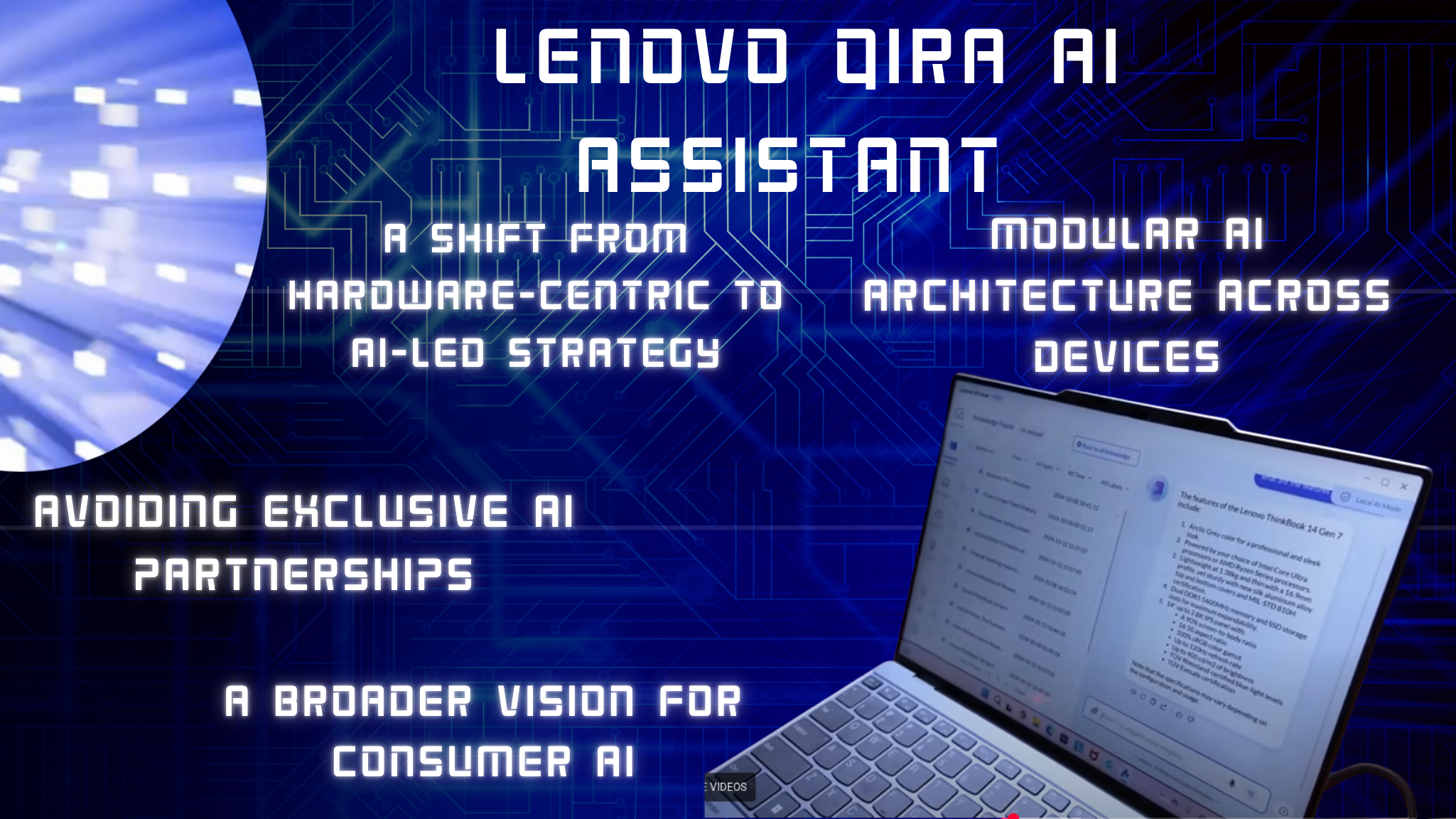
Lenovo Qira AI Assistant Can Act on Your Behalf Across Devices

February 2, 2026January 7, 2026 by Prof. Mian Waqar Ahmad Hashmi
Lenovo Introduces Qira, a Cross-Device AI Assistant Designed to Work on Users’ Behalf worldstan.com

Lenovo’s latest CES announcement introduces Qira, a system-level, cross-device AI assistant designed to seamlessly operate across laptops and smartphones, blending on-device and cloud intelligence to act on users’ behalf in everyday tasks.


Lenovo Introduces Qira, a Cross-Device AI Assistant Designed to Work on Users’ Behalf

Lenovo has introduced Qira, a system-level, cross-device AI assistant aimed at delivering a more unified and intelligent user experience across Lenovo laptops and Motorola smartphones. Announced at CES in Las Vegas, Qira is designed to learn from user interactions, understand context, and assist with everyday tasks by operating seamlessly across devices. As the world’s largest PC maker by volume, Lenovo is using its broad hardware footprint to bring AI closer to end users, positioning Qira as a built-in layer of intelligence rather than a standalone application.


Unlike many AI assistants tied to a single model or provider, Qira uses a modular architecture that blends on-device AI with cloud-based models to balance performance, privacy, and scalability. The platform integrates infrastructure from Microsoft Azure and OpenAI, incorporates generative capabilities from Stability AI, and connects with tools such as Notion and Perplexity. By avoiding exclusive AI partnerships, Lenovo aims to keep Qira flexible as AI technology evolves, signaling a long-term strategy to embed adaptable, system-level intelligence across its consumer devices.

Categories AI, UPDATES Leave a comment

Nvidia Introduces the Vera Rubin Platform to Advance AI Computing

February 2, 2026January 6, 2026 by Prof. Mian Waqar Ahmad Hashmi
nvidia introduces the vera rubin platform to advance ai computing worldstan.com

This report explores Nvidia’s early unveiling of the Vera Rubin AI computing platform at CES 2026, highlighting how its new architecture aims to deliver higher training performance, improved efficiency, and secure, rack-scale AI infrastructure for next-generation data centers.


Overview of the Announcement

At CES 2026, Nvidia revealed its next-generation AI computing platform, Vera Rubin, marking an important milestone in the company’s data center and artificial intelligence roadmap. The launch comes after a period of strong growth driven by widespread adoption of the Blackwell and Blackwell Ultra GPU families, which set new standards for AI performance across cloud and enterprise environments.

A Platform-Centric AI Architecture

Vera Rubin is designed as a fully integrated AI supercomputing platform rather than a single processor upgrade. The architecture combines multiple specialized components, including the Vera CPU, Rubin GPU, sixth-generation NVLink interconnect, ConnectX-9 networking, BlueField-4 data processing, and Spectrum-X high-speed switching. Together, these elements form a rack-scale system built to handle complex AI workloads efficiently and securely.

Performance and Efficiency Gains

According to Nvidia, the Rubin GPU delivers up to five times more AI training compute than its predecessor. The platform is engineered to train large mixture of experts models using significantly fewer GPUs, while also lowering overall token and energy costs. These improvements are aimed at addressing rising concerns around the economics and scalability of large-scale AI development.

Availability and Industry Impact

Nvidia expects partners to begin offering products and services based on the Vera Rubin platform in the second half of 2026. With its emphasis on performance, efficiency, and trusted computing, Vera Rubin is positioned to influence the next phase of AI infrastructure deployment across data centers worldwide.

Categories AI, UPDATES Leave a comment

Viral Reddit Post on Food Delivery Apps Was AI-Generated

February 2, 2026January 5, 2026 by Prof. Mian Waqar Ahmad Hashmi
viral reddit post on food delivery apps was ai generated https://worldstan.com/viral-reddit-post-on-food-delivery-apps-was-ai-generated/

A viral Reddit confession accusing a major food delivery platform of worker exploitation unraveled after investigators found strong signs that both the post and its supporting evidence were generated using artificial intelligence, highlighting how AI-driven misinformation can spread rapidly by exploiting existing public distrust.


A widely circulated Reddit post that claimed to expose unethical practices within a major food delivery platform is now facing serious credibility concerns after multiple indicators suggested it may have been generated using artificial intelligence. The post, which surfaced in early January, quickly gained traction across social media, drawing tens of thousands of upvotes and sparking renewed debate about labor conditions in the delivery app industry.
 
The anonymous Reddit user presented themselves as an insider with direct knowledge of how food delivery apps allegedly manipulate order timing, dehumanize couriers, and take advantage of workers facing financial hardship. Given the sector’s documented history of disputes over pay transparency and gig economy labor rights, the account resonated strongly with readers. However, subsequent investigations have raised doubts about the authenticity of both the claims and the source.
 
Several independent analyses were conducted using popular AI detection tools, including Copyleaks, GPTZero, Pangram, ZeroGPT, and QuillBot. The results were inconsistent, reflecting the broader uncertainty surrounding AI-generated content detection. While some platforms categorized the text as likely human-written, others flagged it as probable synthetic output. Large language models such as Gemini, ChatGPT, and Claude similarly produced mixed assessments, underscoring the limitations of current detection methods.
 
Further scrutiny intensified when the Reddit user attempted to verify their identity by sharing an image purported to be an Uber Eats employee badge. According to Gemini’s image analysis, the badge showed signs of AI-generated manipulation, including visual distortions, alignment irregularities, and branding inconsistencies. Notably, Uber later confirmed that employee badges branded specifically with Uber Eats do not exist, calling into question the legitimacy of the evidence provided.
 
Additional media outlets, including Platformer and the Hard Fork podcast, also engaged with the individual behind the Reddit account. Each reportedly received similar badge images, which were likewise flagged as artificial. In another instance, a Substack publication reported that the user briefly shared what was claimed to be an internal Uber document before deleting their Signal account when pressed for verification. Messages attempting to reestablish contact subsequently failed.
 
Despite the likelihood that the viral Reddit post was fabricated or enhanced by AI tools, the incident highlights a broader issue facing online discourse. The food delivery app sector has long been criticized for its treatment of couriers, including opaque algorithms, fluctuating compensation, and limited worker protections. These realities made the claims plausible enough to spread rapidly, even without solid proof.
 
The episode also illustrates how AI-generated misinformation can exploit existing public skepticism toward large technology platforms. As generative AI tools become more accessible, the challenge for journalists and readers alike is distinguishing legitimate whistleblowing from synthetic narratives designed to provoke outrage.
 
Ultimately, while this particular Reddit confessional appears unreliable, it serves as a reminder that systemic concerns in the gig economy remain unresolved. At the same time, it underscores the growing need for stronger verification practices and greater transparency as AI continues to blur the line between authentic reporting and manufactured controversy.
 
 
Categories AI, UPDATES Leave a comment

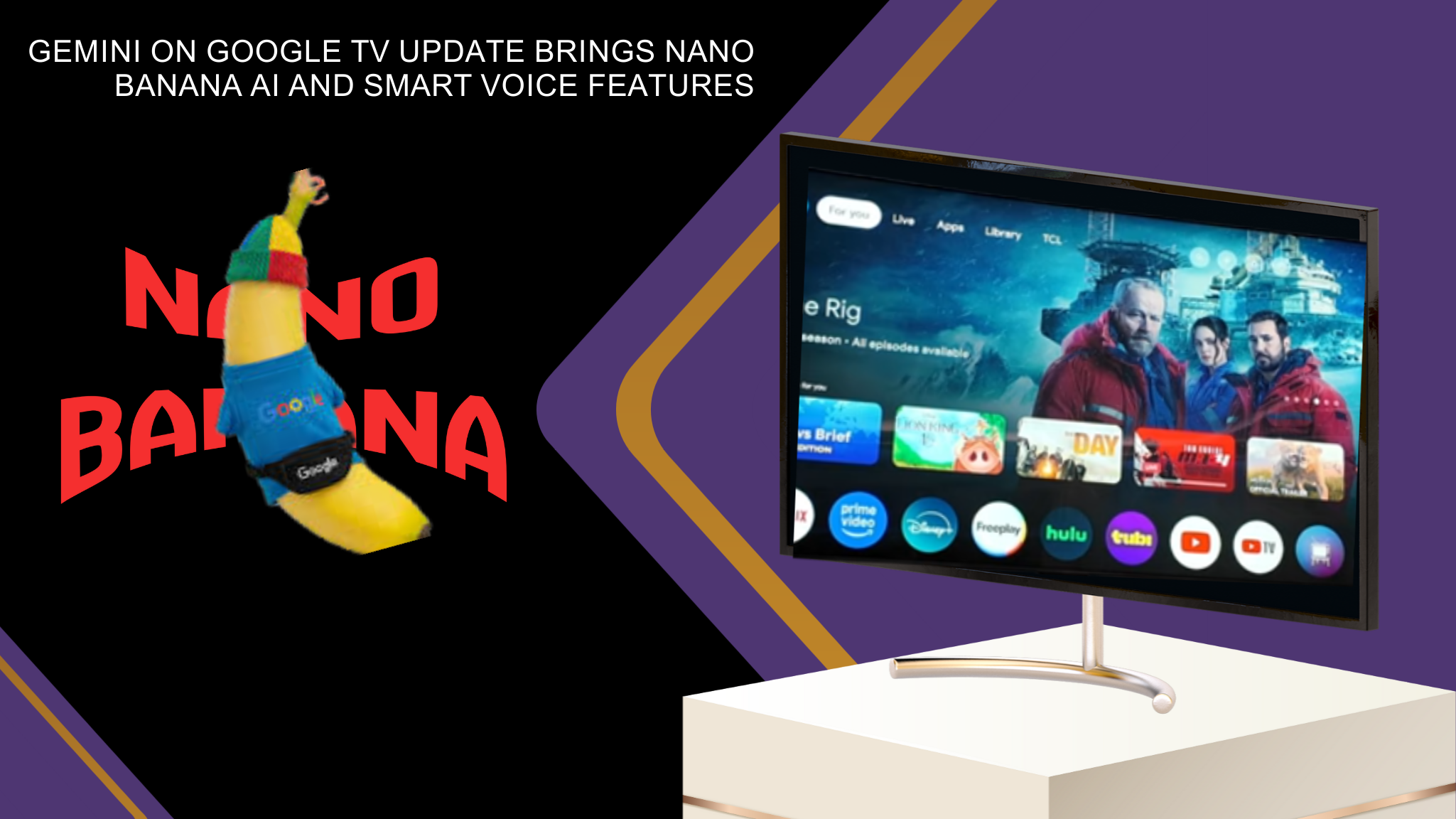
Gemini on Google TV Update Brings Nano Banana AI and Smart Voice Features

February 13, 2026January 5, 2026 by Prof. Mian Waqar Ahmad Hashmi
gemini on google tv update brings nano banana ai and smart voice features https://worldstan.com/gemini-on-google-tv-update-brings-nano-banana-ai-and-smart-voice-features/

Google’s latest Gemini on Google TV update introduces generative AI features that bring intelligent visuals, interactive voice controls, and real-time insights to smart televisions, reshaping how users discover content and interact with their screens.

A New Phase in the Evolution of Smart Television

Television has long moved beyond passive viewing, but Google’s latest developments suggest the medium is now entering a more conversational and adaptive phase. With artificial intelligence becoming deeply embedded across consumer technology, Google TV is emerging as a central platform where generative AI, real-time information, and natural voice interaction converge. This shift is not positioned as a cosmetic update; rather, it represents a strategic step toward redefining how users search, explore, and interact with content on the largest screen in the home.

At the center of this transformation is Gemini on Google TV, a system-level intelligence layer designed to interpret user intent, generate visual responses, and deliver contextual insights without disrupting the viewing experience. Unlike earlier assistants that primarily focused on search queries or basic commands, this new approach integrates creativity, reasoning, and personalization directly into the television interface.

From Utility to Intelligence: The Role of Gemini

For years, Google Assistant served as a functional tool for controlling playback, launching apps, or checking the weather. The introduction of a more advanced Google TV AI assistant signals a departure from command-based interactions toward more natural, dialogue-driven engagement. Instead of simply responding to prompts, the assistant is now capable of understanding broader questions, synthesizing information, and presenting it visually in ways that feel intuitive for a TV environment.

This transition is driven by the broader Gemini AI update, which expands the assistant’s abilities beyond text and voice into multimodal understanding. On Google TV, that means the assistant can process spoken questions, generate images, curate videos, and adapt its responses based on context, time, and user behavior. The result is an experience that feels less like navigating menus and more like having a knowledgeable guide embedded into the screen.

Introducing Creativity to the Living Room Experience

One of the more unexpected additions to the platform is Nano Banana AI, a lightweight generative component designed to work efficiently on consumer hardware. Its role is to enable rapid creative outputs without relying heavily on cloud resources, ensuring responsiveness even during complex tasks. This technology underpins several of the new visual features being introduced, allowing Google TV to generate content dynamically rather than relying solely on preloaded assets.

Creativity extends further through Veo AI video generation, which brings cinematic-style AI video synthesis into the television environment. While generative video has largely been associated with professional tools or experimental platforms, its integration into Google TV suggests a future where users can request short explanatory clips, visual summaries, or themed videos directly from their couch.

These capabilities collectively enable AI-generated videos on TV, shifting the screen from a playback device to a content creation and visualization surface. Whether explaining a historical event, summarizing a sports season, or visualizing a concept for educational purposes, the TV becomes an interactive canvas rather than a one-way display.

Visual Intelligence Beyond Traditional Content

The expansion of AI image generation on Google TV further reinforces this transformation. Users can ask the system to create visuals based on abstract ideas, destinations, or themes, and see those results instantly on a large screen. This is particularly impactful in shared settings, where families or groups can explore ideas together rather than individually on phones or laptops.

Complementing this feature is deeper Google Photos integration, allowing personal media libraries to merge seamlessly with AI-driven experiences. Rather than manually selecting albums or slideshows, users can rely on the system to curate moments intelligently. Through AI-powered slideshows, the platform can group photos by events, moods, or time periods, adding transitions and pacing that feel intentional rather than automated.

The assistant’s ability to provide visual AI responses ensures that information is not just spoken aloud but displayed in ways that enhance understanding. Maps, diagrams, images, and short clips can appear contextually, making complex topics easier to grasp without overwhelming the viewer.

Information That Feels Timely and Relevant

Beyond creativity, Google TV’s AI enhancements focus heavily on real-time awareness. One of the most practical applications is real-time sports updates on TV, where viewers can request live scores, player statistics, or schedule changes without leaving the current broadcast. This eliminates the need to juggle multiple apps or devices, keeping attention focused on the main screen.

For viewers who want more than surface-level information, the system offers AI deep dives that break down topics into structured, digestible segments. Whether exploring a documentary subject, understanding a news event, or learning about a new technology, users can ask follow-up questions and receive layered explanations that build progressively.

These experiences are enhanced through interactive AI narration, where the assistant adapts its tone, pacing, and depth based on user feedback. Instead of a static voiceover, the narration feels conversational, allowing viewers to interrupt, clarify, or redirect the discussion naturally.

Voice as the Primary Interface

A defining characteristic of the update is its emphasis on voice-controlled TV settings. Google is positioning voice not as an optional convenience, but as a primary interaction method that reduces friction and improves accessibility. Through Gemini voice commands, users can navigate menus, search content, and adjust system preferences without touching a remote.

This approach enables true hands-free TV controls, which are particularly valuable in shared or casual viewing environments. Whether cooking, exercising, or managing a household, users can interact with their TV without interrupting their activities. Commands are designed to be conversational rather than rigid, allowing flexibility in phrasing and intent.

Practical examples include the ability to adjust TV picture with voice, enabling changes to brightness, contrast, or color profiles based on lighting conditions or personal preference. Similarly, users can adjust TV volume with voice, making incremental changes without searching for buttons or navigating settings menus.

Accessibility and Inclusivity at the Core

While convenience is a major selling point, the broader implications lie in AI accessibility features that make television more inclusive. Voice interaction, visual summaries, and adaptive responses help accommodate users with mobility limitations, visual impairments, or cognitive challenges. By reducing reliance on complex interfaces, Google TV becomes more approachable for a wider audience.

These enhancements contribute to a growing set of smart TV AI features that prioritize usability alongside innovation. Instead of adding complexity, the system aims to simplify interaction by anticipating needs and presenting options proactively. Over time, the assistant can learn preferences, suggest adjustments, and personalize the experience without explicit input.

Hardware Partners and Platform Expansion

The rollout is not limited to Google-branded hardware. Manufacturers are beginning to adopt the new capabilities, with early signs pointing toward a TCL Google TV update that integrates Gemini features directly into upcoming models. This partnership approach ensures that AI enhancements reach a broader user base rather than remaining confined to a single product line.

As adoption expands, the Gemini Google TV rollout is expected to occur in phases, with features becoming available based on region, hardware capability, and software readiness. Google has indicated that performance optimization and privacy safeguards are key considerations, particularly when deploying generative features on shared household devices.

Implications for Content Discovery and Media Consumption

The introduction of generative AI into the TV environment has broader implications for how content is discovered and consumed. Traditional recommendation systems rely on viewing history and ratings, but Gemini’s conversational approach allows users to articulate intent more clearly. Instead of browsing endless rows, viewers can describe moods, themes, or questions and receive tailored suggestions instantly.

This model also opens new opportunities for educational content, where explanations, visuals, and summaries can be generated on demand. For news consumption, it offers a way to contextualize events without overwhelming users with information overload. In entertainment, it adds an element of exploration, allowing viewers to dive deeper into stories, characters, or production details.

Privacy, Control, and Trust

As with any AI-driven platform, questions around privacy and data usage are inevitable. Google has emphasized that voice interactions and generative outputs are designed with transparency and user control in mind. Users can manage permissions, review activity, and customize how the assistant learns from interactions.

Importantly, many features are designed to process requests efficiently without excessive data retention. On-device components like Nano Banana AI reduce reliance on constant cloud communication, which can improve responsiveness while addressing privacy concerns.

Looking Ahead: The Future of AI-Driven Television

The integration of Gemini into Google TV represents more than a feature update; it signals a broader vision of television as an intelligent hub for information, creativity, and interaction. By combining generative visuals, conversational voice control, and real-time awareness, Google is positioning the TV as a central interface for digital life rather than a secondary screen.

As AI models continue to evolve, future updates may introduce deeper personalization, collaborative viewing experiences, and even more advanced generative capabilities. What remains clear is that the boundary between content consumption and interaction is rapidly dissolving.

Conclusion:

The Gemini on Google TV update marks a significant milestone in the evolution of smart television. By embedding advanced AI directly into the viewing experience, Google is redefining how users interact with their screens, shifting from passive consumption to active engagement. From creative visuals and real-time insights to intuitive voice control and accessibility enhancements, the platform is designed to feel more responsive, inclusive, and intelligent.

As the rollout expands across devices and regions, Google TV is poised to become a showcase for how generative AI can enhance everyday technology in meaningful, practical ways. Rather than overwhelming users with novelty, the focus remains on clarity, usefulness, and seamless integration, setting a new standard for what a modern television can be.

FAQs:

1. What is the Gemini on Google TV update?
The Gemini on Google TV update is a major platform enhancement that integrates Google’s advanced AI model into the TV interface, enabling generative visuals, intelligent content discovery, and more natural voice interactions.

2. How does Gemini improve everyday TV usage?
Gemini enhances daily viewing by understanding conversational requests, generating visual responses, and simplifying navigation through voice, reducing the need for manual browsing or complex menu controls.

3. Can Gemini create content directly on the TV screen?
Yes, the update allows the TV to generate AI-based images and short video visuals in real time, offering explanations, summaries, and creative outputs directly on the display.

4. Does this update change how voice commands work on Google TV?
Voice commands become more flexible and context-aware, allowing users to speak naturally while adjusting settings, searching for content, or requesting detailed information without strict phrasing.

5. Will the Gemini features be available on all Google TV devices?
Availability depends on device compatibility, region, and manufacturer support, with newer models and select partner TVs receiving the update first.

6. How does Gemini support accessibility on smart TVs?
The update improves accessibility through hands-free controls, visual summaries, and adaptive responses that help users with mobility, vision, or interaction challenges navigate TV features more easily.

7. What makes this update different from previous Google TV improvements?
Unlike earlier updates focused on interface or performance, this release embeds generative AI at the system level, transforming Google TV from a content platform into an intelligent, interactive experience.

Categories AI, UPDATES Leave a comment

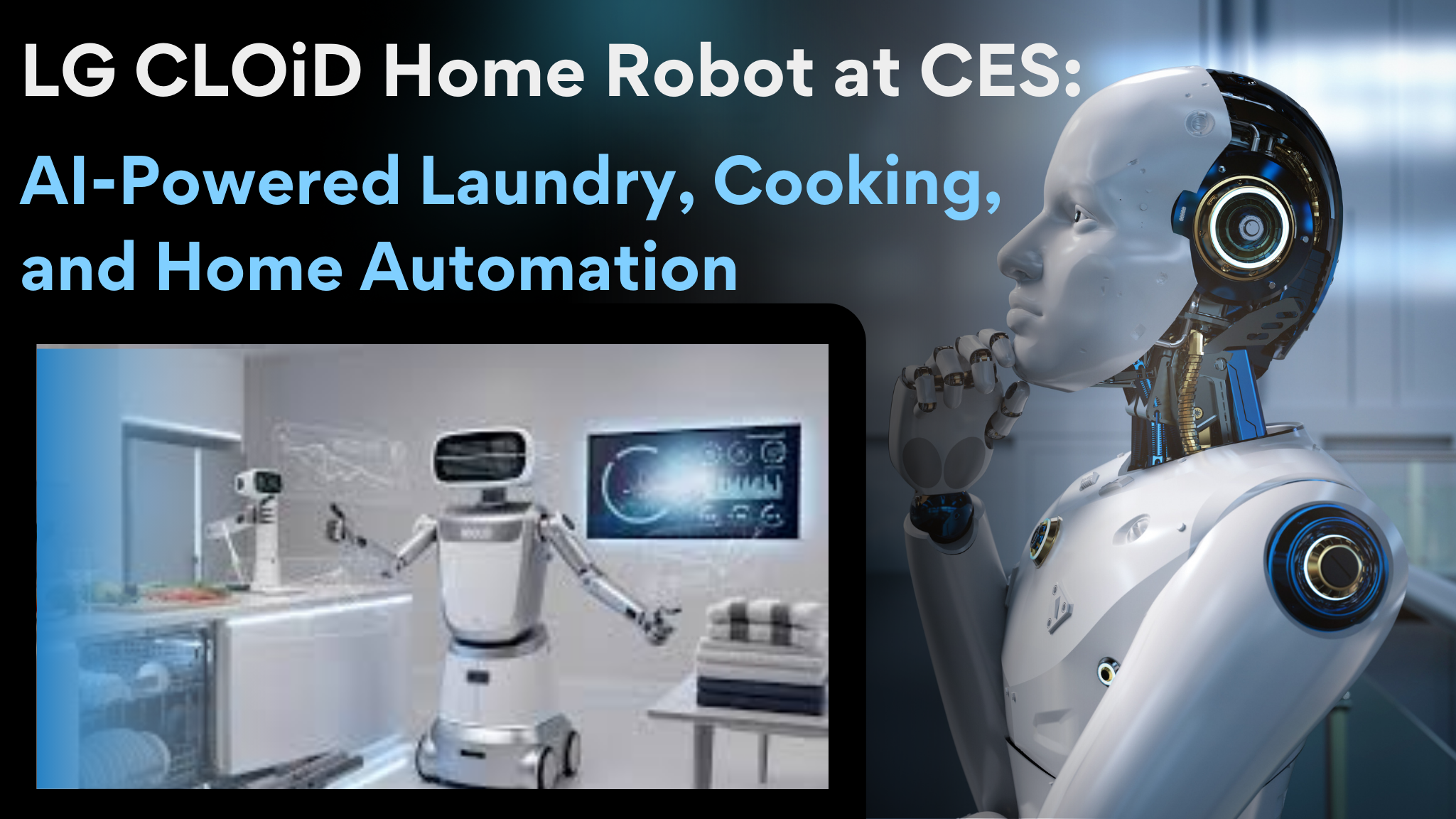
LG CLOiD Home Robot at CES: AI-Powered Laundry, Cooking, and Home Automation

February 13, 2026January 5, 2026 by Prof. Mian Waqar Ahmad Hashmi
lg cloid home robot at ces ai powered laundry, cooking, and home automation https://worldstan.com/lg-cloid-home-robot-at-ces-ai-powered-laundry-cooking-and-home-automation/

At CES, LG unveils its CLOiD home robot, offering a practical look at how AI-powered robotics could transform everyday living through automated laundry, smart cooking, and seamless home management within a zero-labor smart home environment.

LG Redefines Domestic Automation With CLOiD Home Robot at CES

At the Consumer Electronics Show (CES), LG introduced a forward-looking vision of household automation that moves beyond smart devices and into intelligent companionship. The unveiling of the LG CLOiD home robot signals a strategic leap for LG as it positions robotics at the center of future home technology. Rather than presenting a single-purpose machine, LG showcased a multifunctional AI home robot designed to integrate seamlessly into everyday domestic life.

A New Direction for Home Robotics

The CLOiD robot is not positioned as a novelty but as a practical home robot capable of handling routine tasks that consume time and effort. As a home service robot, CLOiD embodies LG’s concept of a zero labor home, where repetitive chores are automated through intelligent systems. This approach aligns with the company’s broader smart home ecosystem, connecting robotics with smart home appliances and AI-driven services.

Unlike earlier experimental concepts, the LG CLOiD home robot focuses on real household needs. From folding laundry to assisting with meals, the robot reflects a shift toward functional, assistive robotics designed for daily use.

Tackling Household Chores With Precision

One of the most discussed demonstrations at CES involved a laundry-folding robot function that showcased advanced laundry folding technology. Using articulated robot arms with seven degrees of motion, the robot carefully handled fabric, adapting to different garment sizes and materials. This capability goes beyond basic automation, demonstrating a nuanced understanding of folding laundry with consistency and care.

In addition to acting as a robot doing laundry, CLOiD extends its utility into the kitchen. The robot cooking breakfast demonstration highlighted its ability to coordinate tasks such as making breakfast, managing utensils, and navigating kitchen layouts. In a lighter moment, the robot fetch milk from a refrigerator, reinforcing its role as a responsive and mobile assistant.

Beyond Mechanics: Communication and Personality

What sets the LG Q9 robot platform apart is its emphasis on interaction. CLOiD features expressive design elements that enable robot facial expressions, allowing it to communicate emotional cues. As a spoken language robot, it can engage users through natural dialogue, making interactions intuitive rather than mechanical.

This communication layer transforms CLOiD into more than a machine. Acting as a robot butler or robot maid, it can receive instructions, provide updates, and adapt its behavior based on household routines. LG demonstrated how spoken commands could trigger tasks such as robot doing laundry or robot cooking breakfast without relying on mobile apps or complex interfaces.

Acting as the Central Smart Home Hub

CLOiD also functions as a smart home hub, integrating with LG ThinQ and ThinQ ON platforms. Through this connection, the robot coordinates various smart home appliances, managing energy usage, scheduling maintenance, and responding to real-time conditions. This integration positions the AI home robot as a central controller rather than an isolated device.

By consolidating control through a home robot, LG aims to simplify household automation. Instead of navigating multiple apps, users can rely on a single interface that understands context and preferences. This vision reflects LG’s long-term strategy to unify robotics, AI, and connected living.

Learning From Industry Innovations

While LG’s approach drew significant attention, CES also featured complementary innovations such as SwitchBot Onero H1, which focuses on specialized automation within the laundry space. By contrast, the LG CLOiD home robot adopts a broader scope, combining mobility, manipulation, and intelligence into one platform.

This comparison underscores LG’s ambition to lead the home robot category rather than compete solely on individual features. The robot at CES was presented as a foundation for future expansion, capable of evolving through software updates and AI training.

Expanding Roles Within the Home

LG envisions CLOiD performing multiple roles depending on user needs. As a robot chef, it assists with meal preparation. As a robot maid, it manages cleaning-related tasks. As a robot butler, it handles errands and coordination. These overlapping roles reflect a flexible design philosophy aimed at long-term adaptability.

The concept of a home service robot also opens possibilities for accessibility and aging-in-place solutions. By reducing physical strain, CLOiD could support users who require assistance while maintaining independence.

A Glimpse Into the Future of Living

The introduction of the LG CLOiD home robot at CES illustrates how future home technology is moving toward embodied intelligence rather than screen-based control. By combining AI reasoning, physical capability, and conversational interaction, LG is redefining how technology participates in domestic life.

Rather than replacing human involvement, the robot is designed to support it, taking over routine tasks so users can focus on higher-value activities. This philosophy reflects LG’s broader vision of human-centered innovation within the smart home landscape.

As robotics continues to mature, the CLOiD robot represents a significant step toward practical, everyday automation. While timelines for consumer availability remain undefined, LG’s presentation at the Consumer Electronics Show (CES) makes one thing clear: the future of household automation is no longer theoretical—it is actively taking shape inside the modern home.


FAQs:

1. What is the LG CLOiD home robot designed to do?
The LG CLOiD home robot is designed to assist with everyday household activities by combining mobility, AI intelligence, and smart home integration to reduce manual effort in routine domestic tasks.

2. How does CLOiD differ from traditional smart home devices?
Unlike standard smart home devices that rely on screens or apps, CLOiD operates as a physical AI assistant that can move, interact verbally, and perform hands-on tasks while coordinating connected appliances.

3. Can the CLOiD robot handle delicate household items like clothing?
Yes, CLOiD uses advanced articulated arms with multiple degrees of motion, allowing it to manage fabrics carefully during tasks such as laundry folding without damaging garments.

4. Does the LG CLOiD home robot support voice interaction?
The robot supports spoken language interaction, enabling users to issue commands, receive updates, and communicate naturally without needing external control interfaces.

5. How is CLOiD connected to LG’s smart home ecosystem?
CLOiD integrates with LG ThinQ and ThinQ ON platforms, acting as a central hub that manages smart home appliances, schedules tasks, and adapts to household routines.

6. Is the CLOiD robot intended for everyday homes or experimental use only?
LG presented CLOiD as a practical home service robot concept, focusing on real-world household applications rather than experimental or purely demonstrative technology.

7. When is the LG CLOiD home robot expected to be available to consumers?
LG has not announced a commercial release timeline, indicating that the CLOiD home robot is part of its long-term vision for future home automation and robotics.

Categories AI, UPDATES Leave a comment
Older posts
Newer posts
← Previous Page1 … Page4 Page5 Page6 Next →

RECENT POSTS:

  • Netflix AI Startup Acquisition Signals Future of Filmmaking
  • Microsoft Copilot Tasks AI Manages Tasks Easily
  • X AI Generated Content Crackdown Begins
  • Trump Pushes AI Data Centers Power Supply Plan
  • Adobe AI Video Editing Tool Launches Quick Cut

CATEGORIES:

  • AI
  • AI IN IT
  • AI LIFESTYLE & INTERACTION
  • AI RESEARCH
  • SOCIAL & DIGITAL AI
  • SOCIAL & DIGITAL AI RESEARCH
  • TECH RESEARCH IN AI
  • UPDATES
  • Facebook
  • Instagram
  • YouTube
  • LinkedIn
© 2026 • Built with GeneratePress