免費人工智慧程式碼 Writer for Everyone AI Code

free ai code writer for everyone worldstan.com

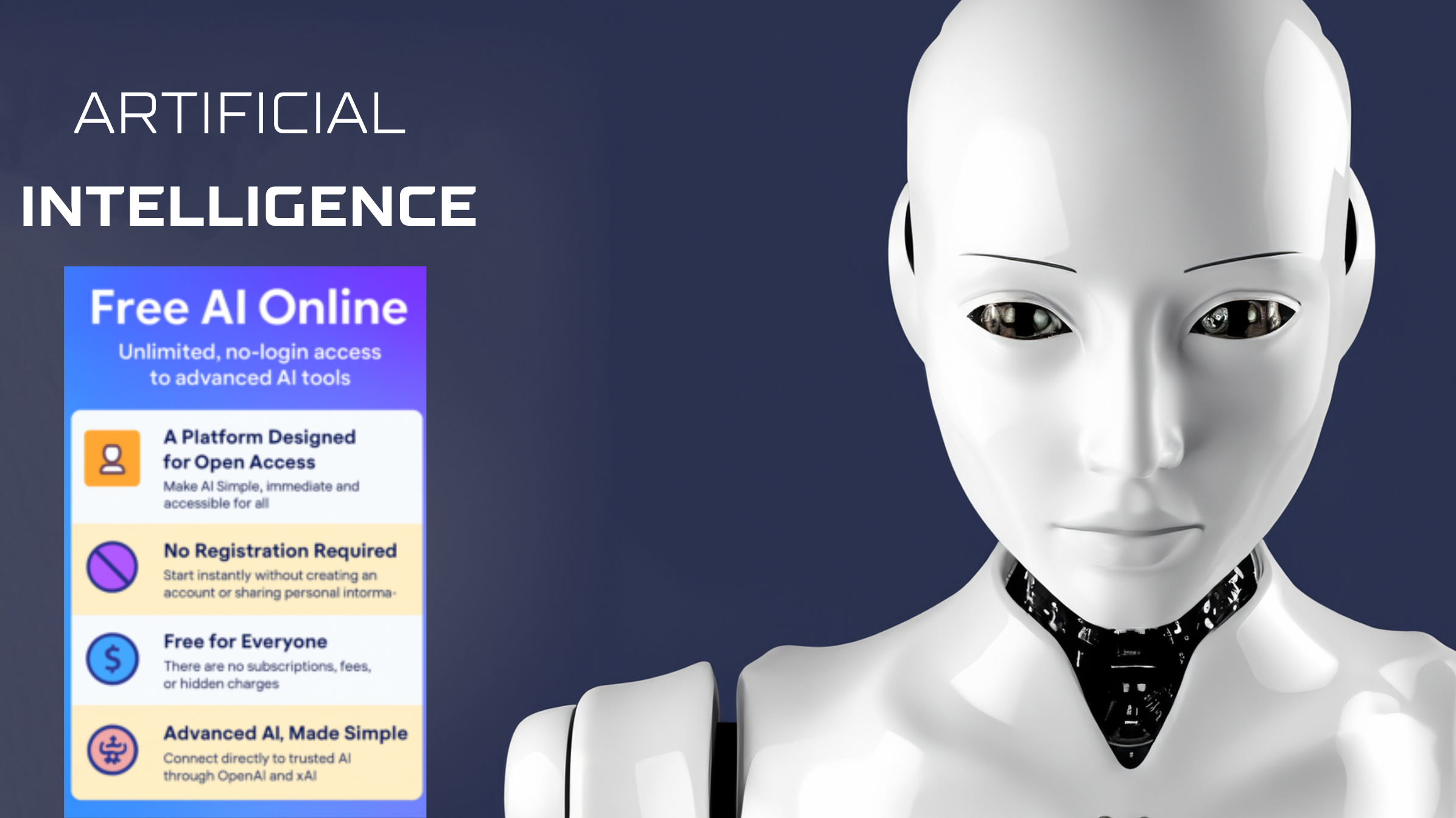
A quick overview of how FREE AI ONLINE’s new free coding assistant empowers students and learners by generating code instantly and simplifying the entire programming process.

A New Path for Learners: Free AI Online Launches an Open, No-Limit Coding Assistant

Free AI Online has announced an important breakthrough with the introduction of its free AI-powered coding assistant, created to support students, new learners, and developers across all experience levels. After years of refining advanced artificial intelligence technologies, the platform now provides a fully open, unlimited programming assistant with no subscriptions, fees, or usage restrictions.


Making Coding More Accessible for Everyone

The newly released AI tool enables users to generate clean, ready-to-use code by simply describing the project they want to build. Whether someone needs a website layout, a mobile app component, a game feature, an automation script, or a data analysis model, the system delivers instant results in multiple leading programming languages. Even those without prior exposure to Python, JavaScript, Java, C++, or similar languages can begin creating software as the tool adjusts to different project scopes and complexity levels.

This coding assistant is especially helpful for:

  • Students learning programming through real, working examples
  • Beginners starting their journey in software development
  • Developers who want to speed up their coding tasks
  • Startups building quick prototypes
  • Learners experimenting with new digital concepts

Key Features That Set This AI Coding Tool Apart

Free AI Online’s coding assistant offers a range of capabilities that make it a standout solution for learners and creators:

  • Completely free access with no hidden conditions
  • Unlimited code generation without caps or watermarks
  • Multi-language support for diverse programming needs
  • Suitable for web development, mobile apps, AI projects, automation, cybersecurity tasks, and game development
  • Built-in learning guidance that explains each code output and suggests ways to improve it

Supporting the Next Generation of Digital Skills:

The mission of Free AI Online is to democratize programming education by removing financial and technical obstacles. With this AI coding assistant, students and self-learners gain a simple and supportive environment to explore software development at their own pace. The tool promotes understanding by breaking down coding logic, making it useful for classrooms, home study, and independent innovation.


Students, educators, and developers can begin using the coding assistant today at free-ai-online.com/ai-for-coding-free/ and join a growing community helping shape a more inclusive digital future.

Conclusion

The introduction of this free AI coding assistant marks a major step toward universal access to programming skills. By offering unlimited generation, multi-language capabilities, and clear instructional support, the platform empowers users to learn efficiently and build confidently. As digital technology continues to advance, tools like this redefine how coding is learned and practiced, enabling anyone with an idea to turn it into a functional project. With Free AI Online, the boundaries to learning, experimentation, and creativity are removed—bringing coding within reach for every learner, everywhere.

FAQs:

1. What makes this AI code generator different from other coding tools?
This AI code generator stands out because it is completely free, offers unlimited usage, and supports multiple programming languages without restrictions. It also explains the generated code, making it ideal for learning and project development.

2. Can beginners use this AI tool without knowing any programming language?
Yes. The tool is designed for beginners and students who may have little to no coding experience. Users simply describe what they want to build in natural language, and the AI produces ready-to-use code along with helpful explanations.

3. Does the AI only work for web development projects?
No. It supports a wide range of project types including mobile applications, automation scripts, data science tasks, game development, AI models, and basic cybersecurity tools.

4. Are there any usage limits or hidden charges?
There are no subscriptions, usage caps, or hidden fees. The platform is fully free and can be used anytime to generate as much code as needed.

5. Can this AI tool help me learn programming over time?
Absolutely. By reviewing generated code and understanding the explanations, learners can gradually build strong programming skills. The tool acts as both a coding assistant and an educational resource.

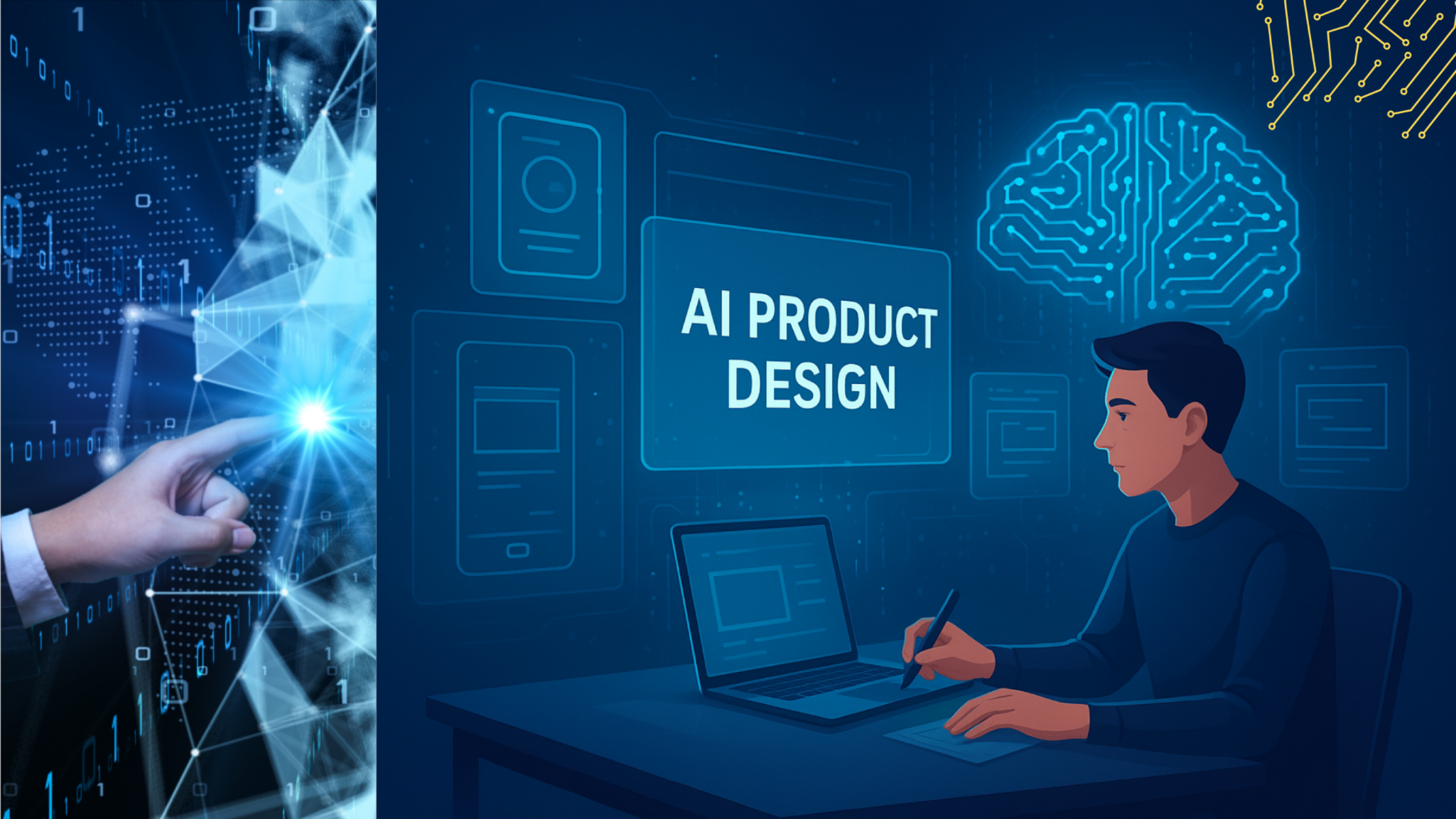
What Is AI Product Design? Tools, Benefits and Real-World Applications

ai product design worldstan.com
Discover how AI product design is revolutionizing the way modern products are imagined, built, and refined—merging human creativity with intelligent automation to create smarter, faster, and more adaptive design solutions.
AI Product Design: How Artificial Intelligence Is Transforming Modern Product Development

Theme / Overview:

Artificial Intelligence is reshaping how we conceptualize, design, and deliver digital and physical products. Through generative design, intelligent prototyping, and data-driven decision-making, AI product design is setting new benchmarks for creativity, precision, and efficiency in the global design landscape.

Introduction: The Era of Intelligent Design

In the age of automation and data intelligence, product design is no longer limited to human imagination alone. Artificial Intelligence (AI) has evolved from being a supportive tool into a collaborative partner that drives innovation at every stage of the design process. Whether it’s building user-centered digital interfaces, optimizing automotive components, or crafting immersive e-commerce experiences, AI is redefining how ideas become tangible products.

AI product design integrates machine learning (ML), generative AI, and predictive analytics into every phase of development — from early ideation and prototyping to testing, launch, and post-market optimization. This new approach enables designers and engineers to create smarter, faster, and more adaptive solutions that respond to real-time user behavior and environmental data.

What Is AI Product Design?

AI product design refers to the application of artificial intelligence in the end-to-end process of creating digital or physical products. It leverages algorithms, neural networks, and large datasets to generate design concepts, test usability, predict user interactions, and optimize performance metrics.

Traditionally, product design relied heavily on human expertise, intuition, and manual iteration. Today, AI-powered design systems such as Figma AI, ChatGPT for design, and Claude for creativity are introducing generative design workflows that accelerate decision-making and minimize human error. These systems can produce hundreds of variations of a prototype, evaluate them under different conditions, and recommend the most efficient or aesthetically pleasing options.

At its core, AI product design is not about replacing human creativity—it’s about enhancing it. By offloading repetitive and analytical tasks to AI, designers can focus more on strategy, innovation, and emotional engagement.

How AI Is Transforming the Design Process

The design process is being reshaped by AI at multiple levels. Let’s explore how each stage benefits from AI-driven tools and insights.
  1. Ideation and Concept Generation

Generative AI tools use vast datasets and contextual prompts to produce early-stage design ideas. Designers can input specific requirements — such as target audience, use case, or design constraints — and receive multiple viable concepts in minutes. This approach encourages rapid experimentation and creative diversity, especially in startups and innovation-driven industries.


  1. Prototyping and Visualization

Prototyping with AI has become faster and more precise. Platforms like Figma AI now generate layout variations, adaptive color palettes, and responsive UI components automatically. These smart systems can simulate user behavior, offering predictive insights on how real users might interact with the interface. Designers can then make data-backed adjustments before development begins.


  1. Testing and Optimization

A/B testing with AI enables real-time evaluation of user experiences. Machine learning algorithms monitor user interactions, engagement rates, and conversion metrics to suggest continuous improvements. This makes it possible to personalize digital experiences dynamically — a key advantage in sectors such as AI in e-commerce and AI in automotive design.


  1. Production and Manufacturing

In physical product design, AI integrates with computer-aided design (CAD) and digital twin technology to simulate real-world conditions before production. This predictive modeling allows engineers to detect flaws, reduce material waste, and optimize resource allocation. AI-driven production environments can also adapt designs in real-time based on performance feedback from sensors and connected devices.

Key Benefits of AI Product Design

The adoption of AI in product design brings tangible improvements across creativity, efficiency, and strategic decision-making.


Enhanced Creativity and Innovation

AI expands creative potential through generative design. Designers can explore unconventional forms, textures, and patterns that human logic might overlook. The result is an explosion of new ideas that merge computational precision with artistic freedom.

Streamlined Design Workflows

AI automates time-intensive tasks such as wire framing, layout alignment, and design audits. This speeds up delivery cycles and allows teams to focus on higher-value problem-solving. Real-time collaboration between human and AI systems leads to faster iterations and reduced production costs.

Real-Time Insights and Adaptation

AI analytics dashboards and machine learning models deliver continuous performance feedback. This enables real-time simulation and design optimization based on live data from users or environmental sensors. The outcome is more responsive, context-aware product design.

Personalized User Experiences

Through behavioral analysis and predictive algorithms, AI systems help create personalized digital experiences that align with individual user preferences. For example, AI-driven UX design can adapt navigation, color schemes, or recommendations according to user context.


Resource and Cost Optimization

AI-driven predictive models optimize resource allocation, pricing strategies, and supply chains. By reducing errors and improving accuracy in production planning, organizations can achieve better sustainability outcomes and higher profitability.

Continuous Learning and Upskilling

Design teams benefit from AI-enabled learning environments that enhance their skills. Interactive systems like Claude for creativity and ChatGPT for design act as design mentors, providing instant feedback and recommendations to improve professional growth.

Use Cases Across Industries

AI product design has found wide-ranging applications across industries.

Startups use AI to test prototypes faster and launch market-ready products without large design teams.

Automotive companies employ generative design to develop lighter, safer, and more efficient vehicle components.

E-commerce brands apply AI to personalize shopping interfaces, simulate product visuals, and optimize conversions.

Healthcare innovators use AI to design patient-centric tools and medical devices with enhanced ergonomics and predictive safety features.

Manufacturing enterprises leverage digital twins for real-time simulation and process optimization, minimizing downtime and energy use.

These use cases demonstrate how AI not only enhances creativity but also strengthens the economic and operational fabric of product development.

Challenges and Ethical Considerations

While the advantages are compelling, the rise of AI in product design also introduces complex challenges. Designers must navigate issues related to intellectual property, data bias, and algorithmic transparency. Generative design models learn from massive datasets that may inadvertently include biased or unverified information, influencing design outcomes.

Moreover, maintaining human oversight is essential. AI systems may produce technically accurate but contextually irrelevant designs if left unsupervised. Ethical design frameworks and human-centered review loops must remain integral to every AI-driven design process.

The Future of AI Product Design


The next decade will see AI product design evolve from assistive technology to autonomous creativity. Agentic AI systems will independently manage design tasks, conduct user research, and propose data-informed innovations with minimal human input. Meanwhile, integration between AI design tools, CAD platforms, and cloud-based analytics will enable fully synchronized design ecosystems.

Emerging technologies like digital twin environments and real-time simulation will continue to push the boundaries of predictive design and adaptive prototyping. As organizations embrace AI-powered product development, the line between designer and machine collaborator will blur, leading to a hybrid future of co-creation.

Conclusion: Redefining the Design Frontier

AI product design marks a pivotal transformation in how we create and experience innovation. It represents a new frontier where creativity, computation, and human intuition coexist. From generative design tools to intelligent analytics dashboards, AI empowers designers and businesses to turn complex challenges into adaptive, user-centric solutions.

The future of design will not simply be digital — it will be intelligent, responsive, and continuously learning. For brands and creators who embrace this transformation early, AI will not just enhance design—it will define it.

Pocket AI Thought Companion Features, Benefits and Real-World Use Cases

Pocket AI Main image worldstan.com

A new generation of AI productivity devices is emerging, and Pocket leads this shift by offering a screen-free companion designed to capture, organize, and clarify ideas the moment they form.

Pocket AI: Introducing the World’s First AI Thought Companion for Fast-Moving Minds

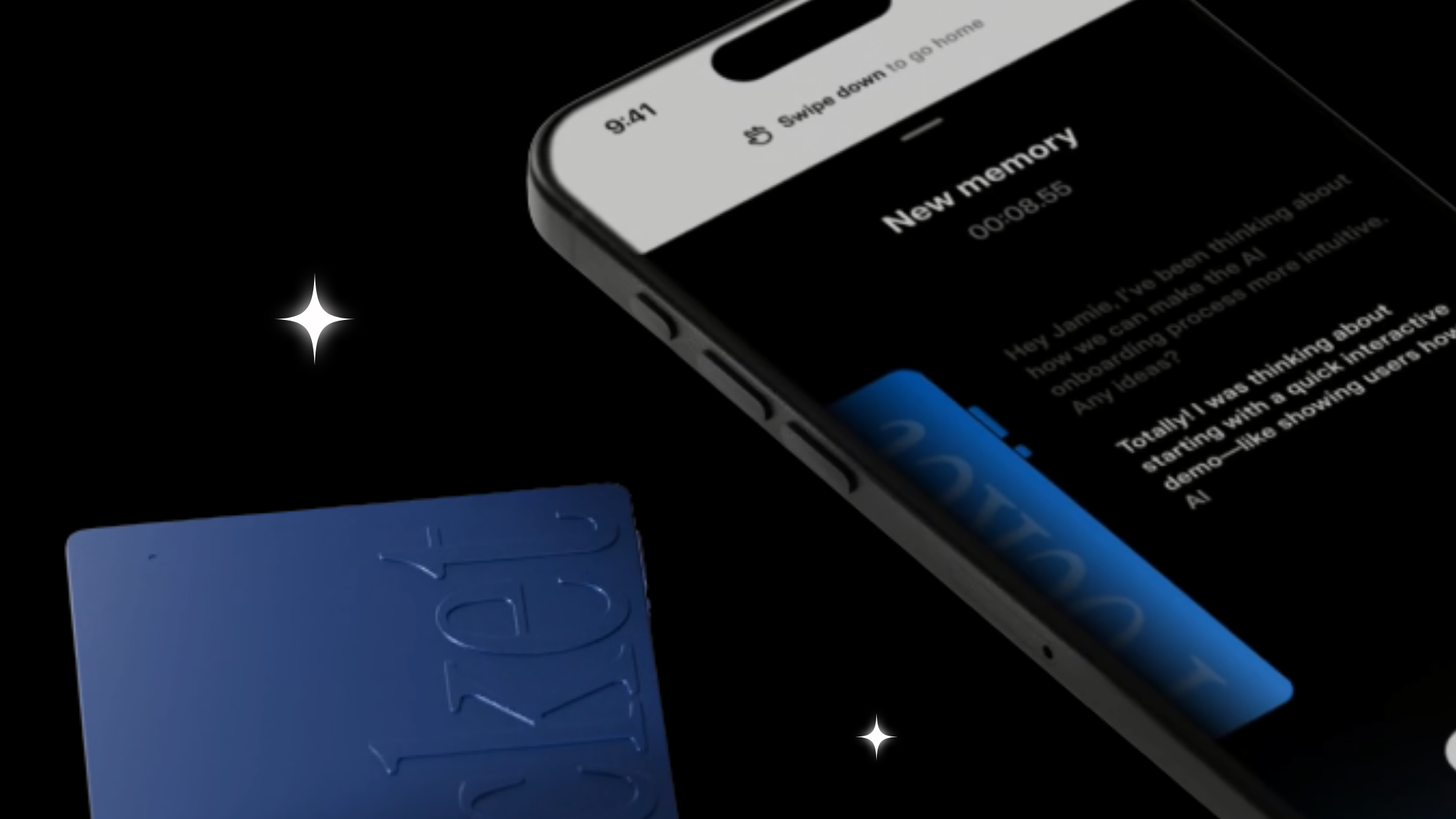
A new category of personal productivity technology is emerging with the introduction of Pocket, a screen-free AI thought companion designed to support individuals who think, create, and collaborate at pace. Unlike conventional mobile apps and note-taking tools, Pocket functions as a dedicated device that captures spoken ideas instantly and transforms them into structured summaries, action items, and visual mind maps. The device positions itself at the intersection of cognitive augmentation, AI-assisted productivity, and seamless human–technology interaction.

The concept behind Pocket stems from a recognizable challenge in modern workflows: ideas tend to surface when our hands are busy and our attention is divided. Switching between apps, typing notes, or rewatching recordings often disrupts the natural rhythm of thinking. Pocket offers a different approach. The device attaches magnetically to a smartphone using MagSafe or an included mounting ring, enabling users to record thoughts and conversations the moment they arise.

A Screen-Free Productivity Device Built for Clarity

Pocket operates without a screen, a deliberate choice that shifts focus away from visual navigation and toward uninterrupted cognitive flow. It captures audio using a combination of studio-grade microphones and a contact microphone that helps separate speakers clearly during meetings and collaborative discussions. Once recorded, the audio is processed through a model-agnostic AI layer that can draw from systems such as GPT-5, Claude, and Gemini. The system selects the best-performing model for each task, whether summarization, transcription, or idea mapping.

The result is an organized and searchable record of conversations, brainstorming sessions, and personal reflections. Users can tag key insights, revisit discussions, and view dynamic thought structures generated by the device’s mind mapping capabilities.

Designed for Creators, Founders, and Professionals

The device has quickly gained traction among creators, founders, consultants, and individuals whose work depends heavily on ideation, strategic thinking, and time-efficient documentation. Many early users emphasize its ability to enable full presence during meetings and discussions, reducing reliance on manual note-taking. For individuals who brainstorm while walking, driving, or working hands-on, Pocket serves as a reliable AI memory tool that captures thoughts before they slip away.

Customer feedback highlights minimal setup time, stable recording performance, and a design intended to blend into daily routines. With a four-day battery life and onboard storage of 128GB, Pocket supports extended offline use and automatic syncing once a connection is restored.

Privacy and Data Control

Security remains a core component of the device’s value proposition. Pocket employs end-to-end encryption and allows users to store their data locally on the device or on encrypted U.S.-based servers. The platform architecture is open-source, supporting transparency and user trust. Even if the device is misplaced or replaced, users retain access to their captured content through account-based backups.

Pocket AI device features worldstan.com

Key Capabilities

Real-time AI summaries and structured action items in over 120 languages

Speaker-separated audio capture through multi-microphone array

Dynamic mind maps for clearer visualization of complex discussions

Four-day battery life, magnetic attachment, and offline recording

No subscription required for core use, with 300 monthly minutes included free

These features position Pocket as more than a voice recorder. It serves as an integrated AI productivity device that helps users progress from raw thoughts to actionable outcomes.

A Dedicated Device Instead of Just Another App

While many productivity systems operate purely as mobile applications, Pocket’s developers argue that hardware matters. A dedicated device is always available, records without navigating screens, and does not drain a smartphone’s primary resources. This approach aims to eliminate common friction points that lead to missed insights and fragmented ideas.

Pocket is compatible with both iOS and Android devices through the companion app available in their respective app stores. The device currently ships within the United States, with an estimated delivery window of 7 to 10 business days. Global expansion is planned as production capacity increases.

Looking Ahead: Thought Technology as a New Category

Pocket represents the early stage of what may become a broader movement toward cognitive augmentation tools: devices that help individuals think more clearly, organize more effectively, and engage more deeply with their work. In environments where speed and clarity are increasingly decisive, a system that simplifies idea capture and meaning-making can become a competitive advantage.

As workflows continue shifting toward distributed collaboration and rapid ideation cycles, devices like Pocket may influence new norms in note-taking, meeting culture, and personal knowledge management. For many early adopters, the value is straightforward: Pocket preserves the ideas that come when inspiration strikes.

Conclusion:

Pocket marks a shift in how personal ideas and professional conversations are captured and transformed into meaningful output. By combining dedicated hardware with advanced AI summarization, transcription, and visualization capabilities, it redefines the role of a note-taking device in modern workflows. Its screen-free design encourages uninterrupted thinking, while its secure, model-agnostic software infrastructure ensures both flexibility and privacy. As digital productivity tools continue to evolve, Pocket stands out as an example of how technology can support human cognition rather than replace it, enabling individuals to work with greater clarity, intention, and focus.

Ideogram AI: The Future of Text to Image Generation

Ideogram AI worldstan.com

This article examines the evolution of Ideogram AI, a pioneering text-to-image generation platform that merges artificial intelligence with creative design, exploring its history, key model updates, features, and growing impact on digital art and visual communication.

Introduction:

Ideogram AI, developed by Ideogram, Inc., represents one of the most significant advancements in generative AI technology. Designed as a freemium text-to-image model, it harnesses deep learning methodologies to create high-quality digital images from natural language descriptions known as prompts. What sets Ideogram apart from other AI image generators is its exceptional ability to generate legible and stylistically accurate text within images—a challenge that has long limited similar tools like DALL-E, Stable Diffusion, and Midjourney. With each version, Ideogram AI continues to redefine the boundaries of AI-driven creativity, offering new opportunities for designers, advertisers, and digital artists worldwide.

Origins and Early Development

Ideogram, Inc. was established in 2022 by a group of leading AI researchers and innovators: Mohammad Norouzi, William Chan, Chitwan Saharia, and Jonathan Ho. These founders, known for their prior work in machine learning and image synthesis, set out to create a model capable of producing precise and contextually relevant visuals with readable embedded text. Their shared vision was to overcome one of the persistent weaknesses in existing AI image generation tools—handling textual content within images.

The company’s mission quickly attracted attention from global investors, and by August 2023, Ideogram had released its initial version, known as Ideogram 0.1. This release followed a successful seed funding round that raised $16.5 million, led by major venture capital firms Andreessen Horowitz and Index Ventures. The early model impressed users with its creative flexibility and text-handling ability, positioning Ideogram as a strong competitor in the rapidly growing generative AI industry.

Growth and Advancements

Building upon the success of its early release, Ideogram continued to improve its algorithms, data architecture, and rendering precision. In February 2024, the company launched its 1.0 model alongside an $80 million funding round, marking a major milestone in its growth. This version brought a significant boost in image clarity, text generation accuracy, and style control, making it particularly appealing for marketing, advertising, and design professionals who require both creativity and accuracy in visuals.

During the summer of 2024, Ideogram welcomed Aidan Gomar to its team, further strengthening its leadership and research capacity. By August 2024, Ideogram introduced the 2.0 model, which expanded its stylistic versatility by including multiple rendering modes such as realistic, 3D, design, and anime. This update also improved text generation quality, allowing users to produce intricate logos, posters, and social media graphics where typography played a central role.

The 2a and 3.0 Model Breakthroughs

In February 2025, Ideogram unveiled the 2a model, a version specifically optimized for speed and efficiency in professional environments like graphic design and photography. This release focused on reducing latency, improving output consistency, and catering to designers who need rapid iterations without compromising on quality.

Just a month later, in March 2025, the company announced its most advanced release to date—the Ideogram 3.0 model. This version introduced enhanced realism, more accurate texture rendering, and a deeper understanding of complex text layouts. While it continued to face limitations in creating ambigrams and mirrored text, it was widely recognized as one of the most capable AI image generation models on the market.

Distinctive Features and Capabilities

What distinguishes Ideogram AI from other generative AI tools is its focus on text comprehension and integration within images. Most AI image generators, such as Midjourney, DALL-E, Stable Diffusion, and Adobe Firefly, have historically struggled to render readable text elements. Ideogram’s architecture overcomes this barrier by combining advanced language modeling with visual pattern recognition.

Among its most praised features are:

  • Accurate Text Rendering: Ideogram generates legible and stylistically cohesive text, making it ideal for use in branding, advertising, and content creation.
  • Multimodal Style Support: The platform supports multiple creative modes such as realistic, 3D, anime, and design aesthetics.
  • Prompt Precision: Its refined prompt interpretation allows users to describe complex visual concepts and textual arrangements with high accuracy.
  • Optimized Performance: The 2a model introduced faster rendering times and better adaptability for graphic design workflows.
  • Realism and Detail: The 3.0 model enhances image depth, texture realism, and contextual understanding, improving overall visual coherence.

These advancements have positioned Ideogram AI as a preferred tool among professionals seeking efficient, AI-powered design capabilities.

Ideogram and the AI Art Industry

The launch and evolution of Ideogram coincide with the ongoing expansion of the AI art industry. With platforms like DALL-E, Midjourney, Stable Diffusion, and Google Imagen leading innovation in text-to-image generation, Ideogram has carved a unique niche by excelling at text synthesis within visuals—a key demand in modern advertising and digital design.

Generative AI tools are now widely used in marketing, film production, architecture, and content creation. Ideogram AI contributes to this ecosystem by empowering creators to turn detailed written ideas into visually compelling imagery without technical design skills. Its text precision makes it particularly valuable for logo design, brand campaigns, and social media assets that require both artistic and linguistic accuracy.

Challenges and Ethical Considerations

Like other major players in the AI image generation field, Ideogram faces questions surrounding AI bias, copyright protection, and ethical usage. The company has emphasized transparency and responsible innovation, implementing guidelines to prevent misuse and ensuring that user-generated content aligns with legal and creative standards.

AI models are often trained on massive datasets sourced from the internet, which can raise concerns about intellectual property and the inclusion of copyrighted material. In the broader context, competitors like Midjourney and Stability AI have already faced lawsuits over copyright infringement. As Ideogram continues to grow, it will likely face similar scrutiny, prompting discussions about fair use, data sourcing, and artist consent in the AI art industry.

The company’s developers have also focused on minimizing representational bias within its model outputs. Generative AI tools are known to sometimes produce skewed results when depicting gender, ethnicity, or culture. Ideogram’s research teams are actively working to address these issues through dataset refinement and ethical model training frameworks.

The Role of Ideogram in the Creative Ecosystem

Ideogram AI’s influence extends far beyond simple image generation. It represents a shift in how creativity is perceived and executed in the digital age. By bridging the gap between human imagination and machine interpretation, it enables professionals and amateurs alike to visualize complex ideas instantly.

The platform is increasingly integrated into creative workflows across industries such as:

  • Graphic Design: Ideogram allows rapid creation of marketing materials, posters, and brand visuals.
  • Advertising: Its high-quality text rendering is ideal for promotional content and social media advertising.
  • Film and Media Production: Storyboard artists and concept designers use it to prototype visual ideas quickly.
  • Education and Research: Educators use Ideogram AI to demonstrate visual storytelling, AI ethics, and computational creativity.

This democratization of design has reshaped creative industries, making professional-grade visuals accessible to everyone, regardless of artistic skill level.

Comparisons with Other AI Image Generators

When compared to other leading AI image generation platforms, Ideogram consistently stands out for its accuracy in handling textual elements and structured layouts.

  • Ideogram vs Midjourney: While Midjourney excels in artistic and cinematic styles, Ideogram provides more accurate and legible text output suitable for commercial use.
  • Ideogram vs DALL-E: DALL-E focuses on versatility and compositional creativity, whereas Ideogram emphasizes typography and graphic design precision.
  • Ideogram vs Stable Diffusion: Stable Diffusion offers open-source flexibility, but Ideogram delivers higher coherence in text and branded content generation.
  • Ideogram vs Adobe Firefly and Google Imagen: These enterprise-oriented tools integrate with design ecosystems, yet Ideogram’s unique text-to-image specialization continues to attract creative professionals seeking focused control over typographic and layout-based design.

The Future of Ideogram AI

As of 2025, Ideogram continues to advance rapidly in its research and development efforts. With each model release, the company refines its neural architecture, expands its stylistic range, and strengthens its position in the generative AI industry. The upcoming versions are expected to integrate more multimodal capabilities, combining text, image, and video synthesis into a single creative framework.

The company’s ongoing commitment to responsible innovation and user-centric design ensures that Ideogram AI will remain a major contributor to the evolution of AI-driven creativity. Future updates may include greater control over image composition, enhanced realism, and possibly the introduction of collaborative tools for team-based design environments.

Conclusion

Ideogram AI stands at the forefront of the AI art revolution, bridging language and imagery with precision and creativity. From its early versions to the advanced Ideogram 3.0 model, the platform has consistently redefined what’s possible in text-to-image generation. Its powerful features, such as accurate text rendering, multiple style modes, and prompt comprehension, have made it a cornerstone for creators and businesses alike.

As the demand for AI-generated art, design, and visual storytelling continues to grow, Ideogram’s dedication to technological refinement and ethical development positions it as a key innovator in the generative AI landscape. Whether used for advertising, design, or content creation, Ideogram AI demonstrates the remarkable potential of artificial intelligence to empower imagination and transform visual communication in the digital era.

Midjourney AI Web Interface and Tools

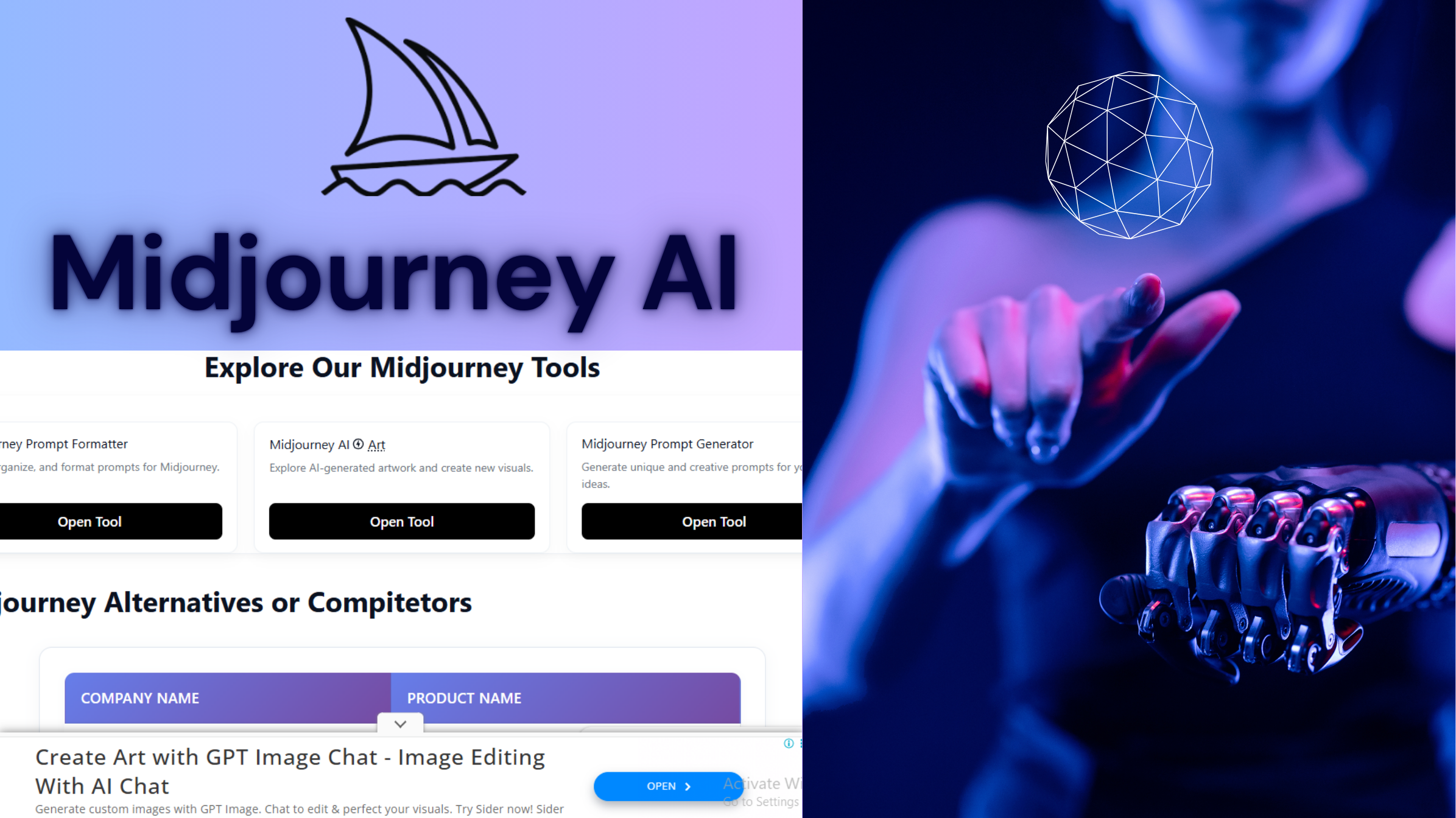
Midjourney AI for Artists and Designers Worldstan.com

This report explores the rise of Midjourney AI, a leading generative art platform that blends technology and creativity, tracing its development, features, controversies, and its growing influence in the world of digital image generation.

Midjourney AI: Evolving the Future of Generative Art and Image Synthesis

Introduction:

In recent years, the rise of generative artificial intelligence has transformed how we create visual content. Among the most visible platforms in this shift is Midjourney — an AI-driven image synthesizer developed by Midjourney, Inc.. Far more than a novelty, Midjourney has become a focal point in discussions around creativity, design, ethics and intellectual property. Through a combination of powerful model versions, prompt-based generation and an accessible web/Discord interface, it offers new pathways for artists, designers and communicators. At the same time, it stands at the heart of controversies around copyright infringement, moderation and the limits of AI art.

In this report we will examine the origins and evolution of Midjourney, explore its features and design capabilities, compare it to competing tools (such as DALL‑E and Stable Diffusion), delve into the legal and ethical debates surrounding generative AI, and reflect on how the technology is reshaping creative industries and what lies ahead.

Origins and Evolution of Midjourney

Founding and early history

Midjourney, Inc. was founded in San Francisco by David Holz (previously co-founder of Leap Motion) with the mission of expanding “the imaginative powers of the human species.” According to sources, the lab began development around 2021–2022, and launched its Discord community in early 2022 before opening an open-beta for the image generation system on July 12, 2022.
Unlike many AI ventures backed by large venture capital rounds, Midjourney reportedly operated as a lean, self-funded setup, focusing on community feedback and iterative model improvements.

Model versions and feature progression

Since its public debut, Midjourney has released successive versions of its generative model, each improving on accuracy, realism, stylization and user controls. Early versions excelled at imaginative and stylised renderings, whereas later versions focused more on photorealistic imagery and better prompt fidelity. For example, version 5.2 introduced the “Vary (Region)” feature (allowing selective editing of image parts), and other tools such as Style Reference, Character Reference and Image Weight give users more precision and control over the generated pictures.
Additionally, Midjourney expanded its interface: originally available only via a Discord bot, the company launched a full web interface in August 2024, enabling users to use panning, zooming, inpainting and other editing tools directly in browser. (As reported by multiple coverage).

Positioning in the AI image generator space

Midjourney is one of the leading platforms in the broader generative AI tools ecosystem. Competing with DALL-E (by OpenAI) and Stable Diffusion (by Stability AI), it is recognised for its unique aesthetic, community-driven prompt sharing, and high-quality output. Its platform enables users to create detailed images from natural-language prompts—a paradigm that has reshaped digital art and design workflows.

Midjourney AI image synthesis and generative AI tools Worldstan.com

Features, Capabilities and Workflow

Prompt-based generation and image synthesis

At its core, Midjourney functions as a text-to-image AI system: a user inputs a description or “prompt”, and the generative AI model synthesises an entirely new image. This workflow falls under the broader category of AI image synthesis and generative AI tools. Because the tool accepts natural-language prompts, it democratizes access for creators, designers and non-specialists alike.

Key tools for control and refinement

What sets Midjourney apart are several advanced controls that give users subtler influence over the output:

  • Image Weight: Users can supply a reference image along with a prompt and set a “weight” value to control how strongly the reference influences the output.
  • Vary (Region): This feature allows selective editing of regions within the generated image—useful for refining specific elements without re-generating everything.
  • Style Reference / Character Reference: These allow the model to apply consistent styling or character appearance across multiple outputs (helpful for concept art or episodic work).
  • Web Editor & Inpainting: With the web interface, creators can pan, zoom, and edit specific parts of a generated image (inpainting) to fine-tune details.
  • Discord Bot Integration: The original workflow remains via a Discord bot, where users type commands, upload references and share prompt results with a community.

These tools together give Midjourney’s users a sophisticated creative workflow: prompt → refine → iterate, allowing rapid prototyping and visual concept generation at scale.

Applications across industries

Because of its capability to generate unique visual content quickly, Midjourney has been adopted across creative sectors:

  • Advertising & Marketing: Agencies use AI image generator tools like Midjourney to create fast visual prototypes, campaign concepts, and custom visuals without relying solely on stock imagery.
  • Architecture & Design: Designers generate mood boards, concept visuals and speculative design renderings using prompt-based image synthesis.
  • Storytelling, Illustration & Publishing: Authors and illustrators use Midjourney to iterate storyboards, character design and scene visuals, sometimes combining with traditional illustration.
  • Personal Creative Work: Hobbyists and creators explore AI-generated art for experimentation, social media shareables, and community engagements.

In many ways, Midjourney and its peer systems are acting as “accelerators” for visual ideation—speeding up what once required human sketching or photo sourcing into seconds of prompt input and iteration.

Midjourney vs Competitors: DALL-E, Stable Diffusion and Others

Midjourney vs DALL-E

Comparing Midjourney with DALL-E (OpenAI):

  • DALL-E has been known for strong adherence to prompts and structured output, especially in earlier versions.
  • Midjourney, meanwhile, often yields more expressive, stylised, and artistically rich imagery—favoured by creative professionals for mood-centric work.
  • In community discussions, users sometimes prefer Midjourney when they want artistic flair or concept art, and DALL-E when they need more literal and controlled imagery.

Midjourney vs Stable Diffusion

On the other front, Stable Diffusion (developed by Stability AI) offers a more open-source flavour, allowing developers to fine-tune models and deploy locally, whereas Midjourney is a managed, subscription-based service.
Stable Diffusion may be chosen for more technical or custom-model use cases (fine-tuning for a brand style, for example). Midjourney appeals when the user wants high-quality output without managing infrastructure or modelling.

Position in the generative AI landscape

Midjourney occupies a unique niche: high-fidelity, visually rich output combined with ease of use and community prompt sharing. In the context of generative AI tools, it stands as a bridge between purely experimental code-first image models and enterprise-level visual platforms.

Consequently, prompts such as “Midjourney vs DALL-E” and “Midjourney vs Stable Diffusion” remain common in forums and creative professional discourse, as practitioners evaluate what system fits their workflow, aesthetic requirements and budget.

Legal, Ethical and Industry Challenges

The copyright-infringement and lawsuit landscape

One of the most serious issues facing Midjourney relates to copyright and intellectual property. A landmark case was brought by artists and major studios, alleging that Midjourney (and its peers) trained models on copyrighted works without permission and produced derivative images infringing on existing work. A U.S. federal judge declined to dismiss core copyright-infringement claims against Midjourney, allowing them to advance.

Notably, on June 11, 2025, media giants The Walt Disney Company and NBCUniversal filed a federal lawsuit against Midjourney, Inc., accusing the company of enabling “endless unauthorized copies” of characters such as those from Star Wars and the Minions. These legal challenges underscore that the generative AI industry is rapidly becoming a battleground for intellectual property rights and creative-economy protection.

Content moderation, bias and ethical concerns

In addition to copyright, other ethical dimensions emerge:

  • AI-powered content moderation: As image generators become more capable (and sometimes more realistic), misuse (e.g., deepfakes, mis-information, sensitive content) is a concern. Platforms like Midjourney must balance openness with responsibility.
  • Bias and representation: Generative AI models reflect the data on which they are trained. If training datasets lack diversity or over-represent certain styles or culture, they may perpetuate biases or limit creative representation.
  • Originality and authorship: When a human sets a prompt and an AI renders the image, questions arise: who is the author? Can such images be copyrighted? The U.S. Copyright Office has rejected some artists’ applications where AI was a significant contributor.
  • Impact on creative labour: Some illustrators and artists worry that widespread access to AI art generators will commoditise concept art and visual design labour, or push prices down. At the same time, others see them as tools that augment rather than replace human creativity.

Industry implications and business-model shifts

For the creative industries (advertising, publishing, entertainment) the rise of platforms such as Midjourney represents a shift in workflow, budget allocation and visual asset creation. Visual content that once required time, photo-shoots or licensing may now be produced via generative prompts—with implications for how agencies budget, how stock-image platforms perform, and how artists position themselves in the market.

At the same time, legal uncertainty—especially around copyright, licensing of training data, and derivative output—introduces risk. Companies using these tools must monitor legal developments and potentially prepare for licensing or attribution obligations.

Technical and Workflow Considerations for Creators

Prompt engineering and best practices

To achieve high-quality results with Midjourney (and comparable systems), users need more than just a text prompt—they need prompt-based generation skill, an understanding of style, composition, image weight, aspect ratios, and iteration. Some key considerations:

  • Use descriptive language: specify subject, composition, style (e.g., “cinematic lighting”, “4k”, “oil painting”).
  • Leverage Midjourney Style Reference and Character Reference to maintain consistency across images when doing series work.
  • Adjust Image Weight when using a reference image to guide the model towards a visual target while still allowing creative flexibility.
  • Use Vary (Region) when you want to refine or redo a portion of the image rather than the whole.
  • Iterate prompts: generate multiple variants, choose the one you like, then upscale, mix or refine.
  • Explore community-shared prompts for inspiration—Midjourney has a large Discord community.

Integration into creative pipelines

Designers and studios adopting Midjourney will typically integrate it into their workflow as follows:

  1. Rapid concept generation: Use Midjourney for mood boards, visual exploration.
  2. Selected iteration: Choose a concept from AI output and refine it via Midjourney tools or traditional image-editing software (Photoshop, Illustrator).
  3. Finalisation: Use the refined image for presentation, assets, storyboard, or as reference for human-driven work.
  4. Licensing/rights considerations: If the output will be used commercially, ensure that the AI-creator’s terms and any copyright implications are understood.

Versioning and quality improvements

As each version of Midjourney model improves, creators should be aware of version differences: e.g., Midjourney V5 produced more photorealistic output than earlier versions; later versions focus on text fidelity and fewer artefacts. Choosing the correct version for your use case (stylised art vs photorealism vs concept art) can influence final results.

Midjourney in Design & Advertising: Real-World Impact worldstan.com

Midjourney in Design & Advertising: Real-World Impact

Visual prototyping and creative acceleration

In advertising, the ability to generate unique visual concepts quickly allows agencies to test more ideas with less time and budget. Where once a mood board would take days, tools like Midjourney reduce it to hours. This accelerates ideation and helps creative teams move faster to client-review phases.

Branding and custom asset creation

Brands are increasingly exploring AI-generated imagery for bespoke visuals (campaigns, social media, packaging) rather than relying solely on stock image libraries. Midjourney gives brands flexibility—prompts can be calibrated to match brand colour schemes, visual tone, and campaign narrative.

Democratization of visual production

Independent creators, freelancers and small studios gain access to powerful image-generation that previously required high budgets or specialist artists. This democratises access to visual production and potentially levels the playing field for smaller players.

Strategic challenges for agencies

However, with these opportunities come strategic challenges:

  • Ensuring output quality and uniqueness (to avoid saturating visuals across brands).
  • Managing copyright risk: reuse of generated images might still raise IP questions.
  • Balancing AI-generated visuals with human craftsmanship to maintain authenticity and brand identity.

Outlook: The Future of Midjourney and Generative AI

Continued model innovation and feature growth

Midjourney will likely continue evolving: version updates will yield higher fidelity, better control (for example improved text rendering inside images, fewer artefacts, more reliable styling), deeper integration into workflows, and perhaps real-time or video generation. Indeed, the company has announced features extending into video generation.

Expansion in creative tooling ecosystem

We can expect Midjourney (and generative AI broadly) to integrate more deeply with creative tools—design software, illustration apps, 3D modelling, and video editing. This convergence suggests that image generation won’t remain isolated; it will become part of a broader creative pipeline.

Regulation, licensing and ecosystem maturity

As the legal and ethical frameworks catch up, licensing models may emerge: rights-cleared training datasets, paid licenses for commercial usage, or platforms that enable creators to monetise prompts and styles. The outcome of major lawsuits (such as those involving Midjourney) will shape the commercial viability of AI-generated art and image synthesis.

Changing creative roles and skill sets

For creatives, the role of the “prompter” or “AI-tool operator” is becoming increasingly important. Understanding how to craft prompts, tweak weights, define style references and iterate becomes a new design literacy. Traditional skills—composition, artistic sensibility, visual storytelling—will remain relevant, but will be complemented by new workflows around generative AI.

Broader cultural and economic implications

Generative AI platforms like Midjourney are part of a larger AI boom, influencing not only design and advertising but how society visualises ideas, interacts with media and thinks about creativity. They open up possibilities for new visual genres—rapid concept art, personalised imagery, immersive storytelling—and invite questions about what it means to create, to be an artist, and to own an image in a world where AI can generate visually compelling results on demand.

Reflecting on Controversy, Responsibility and Opportunity

Midjourney’s story is not just about technical progress; it is also a case study in the complex interplay between creativity, business, law and ethics. On one hand, the platform empowers creators, lowers barriers, accelerates workflows and expands the realm of visual possibility. On the other hand, it raises legitimate concerns about copyright infringement, the displacement of creative labour, AI bias, misuse and the erosion of visual originality.

The lawsuits brought by Disney and Universal signal that generative AI is no longer a novelty—it is a substantive challenge to existing business models, copyright regimes and creative practices. How Midjourney, Inc. responds (in terms of dataset licensing, moderation policies, user controls and transparency) will influence not only its fate but that of generative AI as a whole.

For users and organisations adopting Midjourney or similar systems, the opportunity is enormous—but so is the responsibility. Ethical prompt usage, awareness of derivative risks, transparency regarding output provenance, and sensitivity to creators and rights-holders will be key.

Conclusion:

Midjourney AI stands at the frontier of generative art and image synthesis. Its emergence marks a shift in how we conceive of visual creation: from manual sketching and photo sourcing to prompt-driven, iterative AI generation. As one of the premier tools in this space, Midjourney’s evolution—from its Discord roots to a powerful web-based interface, through multiple model versions—is a blueprint for how creative technology can rapidly transform.

At the same time, this transformation is accompanied by important questions: Who owns the output? How far does “AI-generated art” challenge traditional authorship? What impact will this have on artists, designers and visual industries? And how will business models and legal frameworks adapt?

As we move forward, one thing is clear: generative AI tools like Midjourney will continue to reshape design, advertising, storytelling and digital culture. For creators, the task is not simply to adopt the technology, but to integrate it wisely—balancing innovation, ethics and aesthetic vision.

Midjourney isn’t just a tool—it is a conversation starter about the future of art, imagination and machine-augmented creativity.

Discover the Best AI Apps : From ChatGPT and Claude to Gemini and Grok

Discover the best AI Apps worldstan.com

 Explore how artificial intelligence is reshaping the mobile landscape through powerful apps that simplify daily life, enhance creativity, and redefine productivity across every category — from chatbots and image generators to education, health, and finance tools.

Top AI Apps Transforming the Mobile Experience

The global mobile app industry has evolved into a multi-billion-dollar ecosystem driven by artificial intelligence. As users increasingly seek faster, smarter, and more personalized experiences, developers are integrating AI into every corner of the app landscape. From chatbots that write code to tools that design images, AI is redefining convenience, creativity, and productivity across mobile devices.

Discover the best Mobile AI Apps worldstan.com

The Rise of AI-Powered Mobile Applications

Artificial intelligence has become a defining element of mobile innovation. Today, almost every user need—whether photo editing, language learning, financial planning, or mental wellness—has an AI solution. These applications are powered by machine learning, natural language processing, and generative technologies that continuously adapt to user behavior.

Leading Categories of AI Apps

AI Chatbots and Assistants

ChatGPT — Developed by OpenAI, ChatGPT remains one of the most advanced conversational AI models, capable of generating content, solving problems, and assisting users with research or communication tasks.

Copilot — Microsoft’s Copilot, integrated into its Edge browser and mobile platforms, handles a wide range of activities from creating travel itineraries to generating code or exercise plans.

Gemini — Google’s Gemini offers seamless integration with Android and Google services, enabling real-time information search, brainstorming, and writing support in multiple languages.

DeepSeek — A Chinese open-source chatbot known for its reasoning capabilities and cost efficiency, DeepSeek has rapidly gained popularity for providing reliable, affordable AI interactions.

Claude — Created by Anthropic, Claude supports in-depth discussions, coding, and image analysis while maintaining strong safety and data compliance standards.

Grok — Built by Elon Musk’s xAI, Grok uses real-time data to deliver unfiltered, information-rich answers through X and web applications.

Doubao — Developed by ByteDance, Doubao has become one of China’s most widely used AI chatbots, offering content generation, research tools, and coding assistance.

Discover the best AI Apps Education image worldstan.com

AI Search and Browsing Tools

Perplexity AI provides verified, well-sourced answers and has introduced a specialized browser called Comet for automated search and task execution.

Google Search Generative Experience enhances conventional search by blending AI-generated summaries with traditional results.

Bing with Copilot Search allows users to query images, receive summaries, and generate visuals directly within the search experience.

You.com leverages its proprietary large language model to deliver multiple result formats, including text, visuals, and video summaries.

Fellou introduces agentic browsing, running multiple tabs and summarizing or generating content across tasks simultaneously.

AI Image and Creative Tools

Dall-E 3 by OpenAI transforms text prompts into detailed visuals, now fully integrated into ChatGPT.

Adobe Firefly empowers creators with image generation and editing tools inside Photoshop and Premiere Pro.

FaceApp and Facetune remain favorites for AI-based selfie and video enhancements, while Lensa and StarryAI expand possibilities in digital art, avatars, and NFT creation.

AI in Education

Khanmigo from Khan Academy acts as an AI tutor and teaching assistant, supporting students and educators through interactive learning.

Duolingo customizes language lessons through adaptive AI and gamified experiences.

ELSA Speak offers pronunciation correction and personalized English learning paths using voice recognition.

Socratic by Google helps students with homework through image recognition and visual explanations.

Health and Wellness AI Apps

Calm uses machine learning to recommend personalized meditation and relaxation content.

FitnessAI designs tailored workout routines using data-driven optimization.

Woebot Health and Youper deliver emotional support through AI-guided conversations based on psychological research.

AI Finance and Productivity

Ally Financial applies AI for customer service and fraud prevention.

Cleo connects with user accounts to provide budgeting advice and spending insights in a conversational tone.

Fyle simplifies corporate expense reporting through automated data extraction and integration with financial platforms.

AI Audio and Transcription Tools

Google Recorder provides instant transcription for Pixel users.

Otter.ai and Trint offer detailed meeting transcriptions with speaker recognition and summaries.

Read AI enhances meeting productivity by automatically identifying topics, questions, and engagement peaks.

AI Navigation and Daily Use

Google Maps and Waze both apply machine learning to analyze real-time traffic and predict the fastest routes.

Grammarly, Jasper, Writer, and Quarkle lead the writing assistant category, helping individuals and organizations craft clear, polished, and brand-consistent content.

The Broader Impact of AI Apps

The integration of artificial intelligence into mobile applications has made technology more human-centered than ever. Whether enhancing creativity, improving communication, or simplifying everyday routines, AI apps continue to push the boundaries of digital convenience. As 2025 unfolds, the competition among AI-driven mobile platforms is set to intensify, giving users access to tools that are smarter, faster, and more personalized than ever before.