AI Automation Workflows for Faster Business Growth
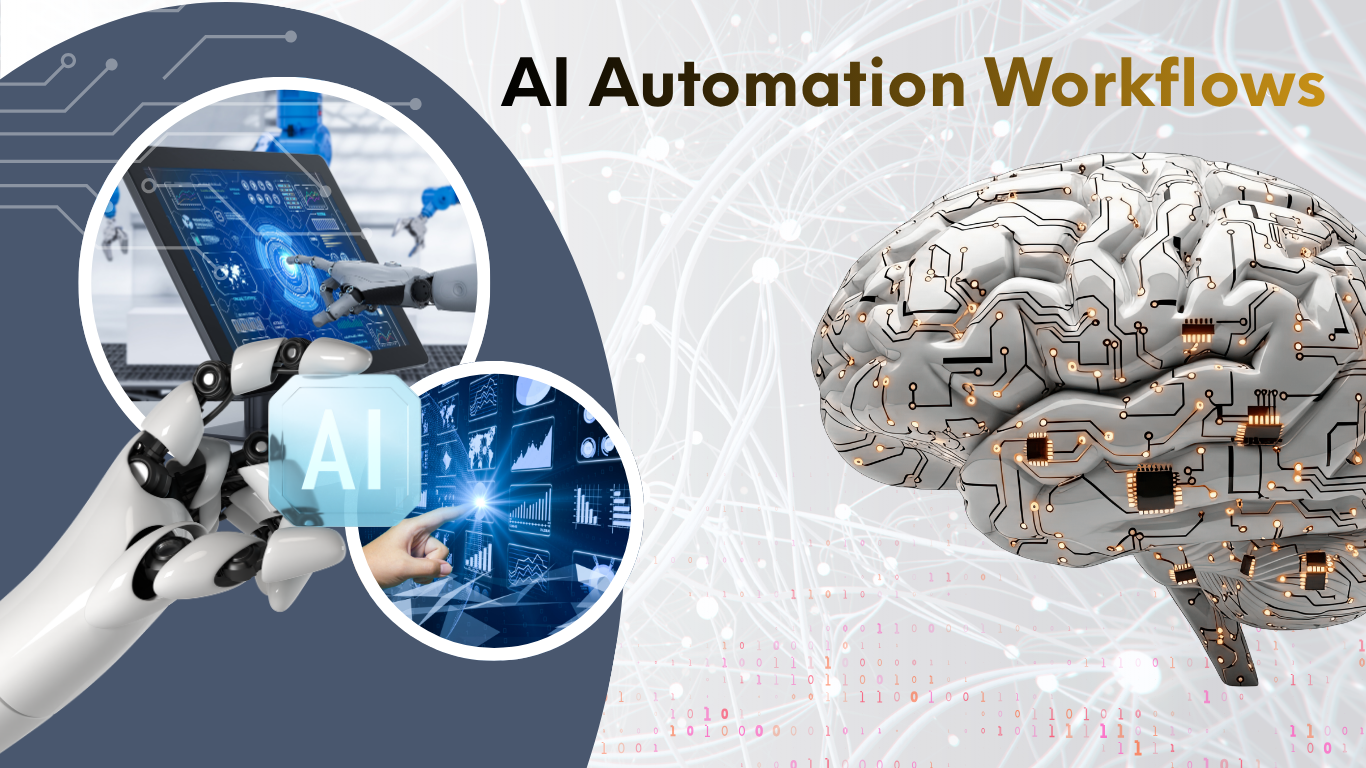
Modern businesses no longer grow through hard work alone because AI automation workflows are now changing how companies manage productivity, save time, and scale operations with greater accuracy and speed. This article explores how intelligent automation is reshaping business systems in practical and realistic ways for modern organizations.
The Fundamentals of AI Automation and Workflows
Businesses no longer grow only through hard work. Growth today depends heavily on speed, smart systems, and the ability to handle repetitive operations without wasting valuable human energy. This is exactly where AI automation workflows are becoming one of the most powerful tools in modern business operations.
I personally believe many companies still misunderstand automation. Some people think automation only belongs to large corporations with huge budgets. Others imagine robots replacing humans entirely. The reality looks very different. Modern AI automation workflows mainly help people remove repetitive pressure so they can focus on creativity, decision making, customer relationships, and business strategy.
At Worldstan, we see automation as a practical business partner rather than a technical luxury. A well designed workflow does not remove human intelligence. Instead, it strengthens it. Companies that understand this early are building systems that save thousands of working hours every single year.
The biggest shift happening right now is not simply technology adoption. The real transformation comes from businesses redesigning how work moves from one step to another. AI is becoming the invisible engine behind emails, scheduling, customer service, project management, marketing campaigns, financial tracking, and data analysis.
A small online business today can automate customer responses, organize leads, schedule meetings, process invoices, and generate reports with very little manual effort. A few years ago, these tasks required entire departments.
Why Businesses Are Rapidly Adopting AI Automation Workflows
Every expanding business eventually encounters the same challenge.
Work increases faster than the team can comfortably manage. Employees become overloaded, delays appear, communication weakens, and productivity begins to decline. This is where automation becomes necessary instead of optional.
AI automation workflows reduce operational friction. They help businesses create consistency in daily operations. When repetitive tasks become automated, employees gain more time to solve meaningful problems.
For example, many customer support teams now use AI powered systems to answer common questions instantly. Human agents then focus only on complex customer situations that require emotional understanding or advanced problem solving.
I have observed another important advantage that many people rarely discuss. Automation improves business confidence. When leaders know their systems can handle larger workloads smoothly, they make growth decisions more aggressively. They expand faster because their operational structure supports scaling.
This is especially important for startups and medium sized businesses. Many smaller companies struggle because their internal systems remain manual while customer demand increases. AI workflows help these companies compete with much larger organizations.
At Worldstan, we strongly believe scalable automation is becoming one of the defining factors behind modern business survival.
Understanding How AI Workflows Actually Function
Many articles overcomplicate this subject using highly technical language. In reality, most AI automation workflows follow a very simple structure.
First, a trigger starts the workflow. This could be a customer submitting a form, receiving an email, placing an order, or booking an appointment.
Second, the AI system processes information and makes decisions based on predefined conditions.
Third, actions happen automatically. Emails get sent, tasks get assigned, files get updated, reminders get scheduled, or reports get generated.
That entire sequence can happen in seconds without human involvement.
Let me explain this in the clearest, simplest terms.
Imagine a business receives 500 customer inquiries daily. Without automation, employees manually read messages, categorize requests, assign tickets, and send responses. With AI automation workflows, the system instantly identifies customer intent, prioritizes urgency, routes requests to the correct department, and sometimes resolves simple problems automatically.
This does not only save time. It improves customer satisfaction because responses become faster and more organized.
The true strength of AI workflows appears when businesses connect multiple systems together. Marketing platforms, CRM systems, accounting tools, analytics dashboards, and communication channels begin operating as one connected ecosystem instead of isolated software tools.
The Role of Productivity in Business Scaling
Productivity is often misunderstood. Many companies believe productivity means forcing employees to work harder or longer. Sustainable productivity actually comes from removing unnecessary interruptions and inefficient processes.
AI automation workflows create productivity by reducing repetitive mental load.
When workers constantly repeat small tasks, their attention becomes fragmented. Over time, this lowers creativity, concentration, and job satisfaction. Automation removes much of this repetitive burden.
For instance, content teams can automate publishing schedules, email campaigns, keyword tracking, and analytics reporting. Sales departments can automate lead scoring, follow ups, and meeting coordination. Financial teams can automate invoice management and expense tracking.
One practical example I frequently mention involves appointment scheduling. Before automation tools became common, businesses spent hours coordinating calendars through endless emails and phone calls. Today, intelligent scheduling systems handle this process automatically.
The productivity gains may appear small individually, but combined across an organization, they create massive operational improvements.
Worldstan believes modern productivity is less about human exhaustion and more about intelligent workflow design.
Real World Industries Benefiting from Automation
Healthcare organizations are using AI automation workflows to manage patient scheduling, medical documentation, and follow up reminders. This reduces administrative pressure and allows medical professionals to spend more time with patients.
Ecommerce businesses are automating inventory management, customer support, shipping notifications, abandoned cart reminders, and product recommendations. These systems improve customer experience while increasing sales efficiency.
Marketing agencies now automate campaign reporting, audience segmentation, email personalization, and performance analysis. Teams can focus more energy on creative strategy instead of repetitive administrative work.
Financial institutions use automation for fraud detection, document verification, compliance monitoring, and transaction analysis.
Even educational institutions are implementing workflow automation to manage admissions, communication, grading systems, and online learning support.
The important lesson here is simple. Automation is not limited to one industry. Any organization handling repetitive digital tasks can benefit significantly.
Common Mistakes Businesses Make with AI Automation
One major mistake is automating broken systems without improving them first.
If a workflow already contains confusion, delays, or poor organization, automation may simply increase the speed of those problems.
Businesses should first understand how work moves internally before introducing AI systems.
Another mistake involves over automation. Some companies try removing human involvement from every process. This can damage customer relationships and reduce flexibility.
Human judgment still matters greatly in leadership, negotiations, emotional communication, and strategic decisions.
I also notice businesses sometimes adopt automation tools only because competitors are doing the same thing. This approach usually fails because successful automation requires clear goals and thoughtful implementation.
At Worldstan, we encourage businesses to begin with smaller workflows first. Once teams gain confidence and understand measurable benefits, larger automation systems become easier to implement successfully.
The Human Side of AI Automation
One concern appears repeatedly whenever automation enters discussion. People worry about job replacement.
In my opinion, the conversation should focus more on job transformation rather than job elimination.
Throughout history, technology has consistently changed how people work. AI automation workflows are creating a similar transition.
Routine repetitive work may decrease, but demand for creative thinking, leadership, communication, strategy, and technical oversight continues growing.
Employees who learn how to collaborate with AI systems will likely become far more valuable in future workplaces.
Businesses also need to invest in employee training. Automation works best when teams understand how systems operate and how to use them effectively.
Another important point involves workplace stress. Many workers experience burnout from constant repetitive digital tasks. Automation can ease this pressure and help create healthier work environments.
When implemented responsibly, automation can improve both business efficiency and employee experience simultaneously.
The Future of AI Automation Workflows
The future of business operations will become increasingly connected, intelligent, and predictive.
AI systems are already learning how to anticipate customer behavior, identify operational risks, and recommend business decisions based on real time data.
Future workflows may automatically adjust marketing strategies, optimize inventory levels, predict staffing requirements, and personalize customer experiences without requiring constant manual adjustments.
Voice based AI assistants may eventually coordinate entire workflow systems through natural conversation.
Smaller businesses will likely benefit the most because automation technology is becoming more affordable and accessible every year.
I believe the companies that succeed in the next decade will not necessarily be the largest organizations. The winners will be businesses that adapt quickly, build flexible systems, and use intelligent automation strategically.
Worldstan continues to observe one consistent pattern across industries. Businesses that combine human creativity with AI powered efficiency usually outperform companies relying entirely on either humans or machines alone.
Building a Smarter Business Through Automation
AI automation workflows are no longer experimental concepts. They are becoming essential business infrastructure.
Organizations that ignore workflow optimization may eventually struggle with operational inefficiency, rising labor pressure, slow customer response times, and limited scalability.
The goal should never be replacing people entirely. The smarter approach involves allowing technology to handle repetitive operational layers while humans focus on innovation, relationships, and strategic thinking.
Businesses do not need massive budgets to begin automation. Even small workflow improvements can create noticeable productivity gains over time.
At Worldstan, we believe the future belongs to businesses that simplify operations intelligently while maintaining strong human connection. Technology alone is not enough. Sustainable growth happens when automation supports people rather than competes against them.
Conclusion
AI automation workflows are redefining how businesses manage productivity, scale operations, and compete in rapidly changing markets. Companies that embrace intelligent workflow systems are discovering faster execution, better organization, improved customer experiences, and healthier working environments. The most successful organizations will not be those with the most employees or the largest budgets.
They will be the businesses that understand how to combine human creativity with intelligent automation in practical and responsible ways. Worldstan believes this transformation is only beginning, and businesses that start adapting today will hold a major advantage tomorrow.